
Review · BANGKOK
Bangkok: City Highlights Temple and Market Walking Tour
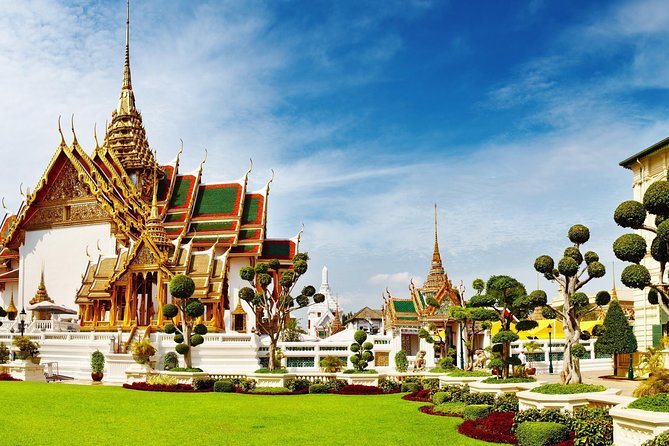
Bangkok’s royal quarter packs an astonishing amount into a few walkable blocks: glittering temple roofs, the Grand Palace, market lanes, river ferries, and the giant reclining Buddha at Wat Pho. This tour gives you that concentrated history lesson with a licensed local guide, usually in a group of no more than 10. The Emerald Buddha Temple and its ornate courtyards are the main event.
I like the mix of sightseeing and ordinary Bangkok movement. You use local transport, pass the amulet market and Tha Thien Market, and may ride a river boat or tuk-tuk, rather than simply being delivered from gate to gate. I also like the practical care built into the morning: guides such as Mina, Kiwi, Johnny, Air, and Pete are praised for explaining customs clearly, stopping for water and shade, and helping people find onward transport.
The main consideration is heat and pacing. Temple grounds are exposed, the Grand Palace can feel crowded, and proper clothing is strictly required. The tour lasts two to four hours depending on the option and timing, so check whether your booking includes Wat Pho and Wat Arun before you set aside the rest of your day.
Key points to know before booking
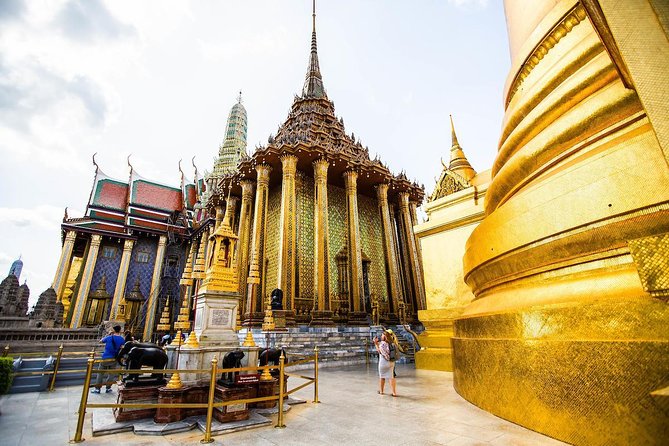
- The Grand Palace and Emerald Buddha Temple anchor the tour: Allow plenty of attention for royal buildings, golden spires, painted walls, and Thailand’s most sacred Buddhist shrine.
- Wat Pho and Wat Arun depend on your selected option: Admission to these temples is included only when that option is chosen.
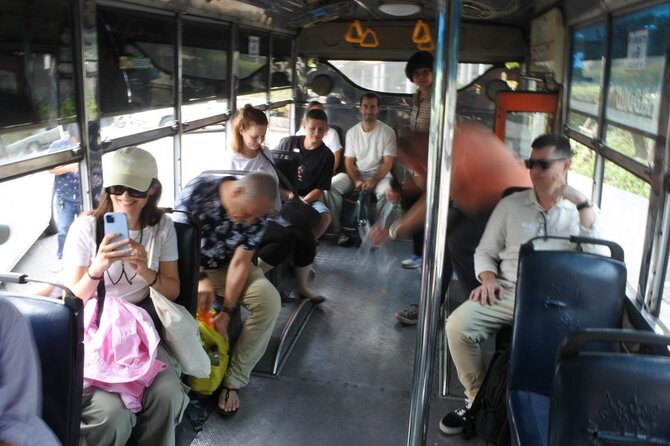
- Local transport is part of the experience: Expect public transport and potentially a river boat or tuk-tuk, with about 30 minutes listed for a transport segment.
- The group is capped at 10 people: That is small enough for questions and personal help without turning the tour into a private visit.
- Your guide makes a real difference: Air, Mina, Kiwi, Johnny, Pete, Peter, Tan, Ong, and others are praised for clear history, humor, water breaks, and help after the tour.
- Dress for a national shrine: Cover your shoulders and knees, avoid sleeveless shirts and strapless heels, and be ready to remove your shoes inside temple buildings.
Why this compact Bangkok tour works
Bangkok can be hard to read at first. The royal district is full of sacred buildings, official names, legends, and visual details that blur together when you walk alone. A good guide gives you a thread to follow: royal power at the Grand Palace, religious devotion at Wat Phra Kaew, public education and Thai massage at Wat Pho, then the river-facing silhouette of Wat Arun.
This experience is designed around that thread. You meet at the Big Country Experience office at River City Bangkok by 9:00 AM, then travel toward the Emerald Buddha Temple using local transport. River City is a practical starting point because it sits beside the Chao Phraya River and is easy to recognize as a major riverside complex.
The group size matters here. With up to 10 people, you should be able to hear the guide in courtyards and ask a question without holding up a large crowd. Guides are also able to provide small but useful help, such as pointing out where to wait, arranging a water pause, or directing you to a boat or taxi after the tour.
The published price is $42 per person. For that amount, the base experience includes the Grand Palace, Emerald Buddha Temple, a licensed guide, and drinking water. Wat Pho and Wat Arun are included only with the relevant option. I consider the price fair if you want historical context and help with Bangkok’s public transport, especially on a first visit. If you only want entrance tickets and prefer to explore quietly at your own pace, the value is less clear.
More Market Walking Tours in Bangkok:
- Tokyo Tsukiji Fish Market Food and Culture Walking Tour
★ 5.0 · 3,184 reviews - Marrakech: Ben Youssef, Secret Garden, & Souks Walking Tour
★ 4.6 · 2,802 reviews - Marrakech: Colorful Medina Souks Guided Walking Tour
★ 4.7 · 2,470 reviews
From River City to the old amulet market
The opening ride is not just a transfer. The route passes the amulet market, one of the best-known historic community markets on Rattanakosin Island. You may see stalls connected with Buddhist practice and local collecting, along with the ordinary movement of a working Bangkok neighborhood.
The tour description lists a 30-minute public-transport segment. That means you should expect a little movement and waiting rather than a private vehicle waiting outside each attraction. I like this because it gives you a brief look at how people move through central Bangkok, but it also means you should wear comfortable shoes and keep your belongings close.
The guide helps make sense of the route. Several guides are praised for explaining things while the group waits or pauses, so even the gaps between sights can carry useful context. One guide used photos to explain details inside the Emerald Buddha chapel that you cannot photograph yourself.
The Grand Palace: ceremony, power, and a lot of gold
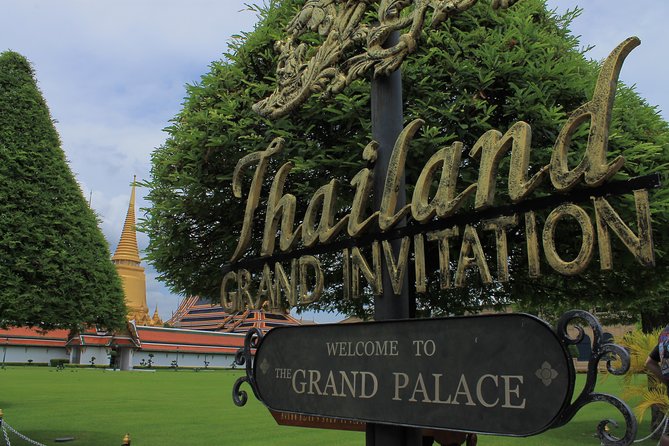
The Grand Palace is the tour’s largest historical stop, with about 1.5 hours listed for guided sightseeing, a visit, walking, and photo stops. It was the official residence of Thailand’s kings and remains a venue for royal ceremonies and state functions.
Do not expect a single palace building. The grounds contain a collection of halls, courtyards, walls, roofs, spires, and ceremonial spaces. Your guide can help separate the religious buildings from the royal ones, explain the purpose of the main structures, and point out the motifs that otherwise become a blur of gold and color.
This is also where the tour’s history can become most useful. Guides such as Peter have explained the figures and stories appearing in palace murals and statues, linking Thai royal tradition with Buddhist and Hindu mythology. That kind of explanation gives the decoration a plot. Instead of seeing only painted walls, you begin to recognize recurring characters and stories.
The drawback is that the Grand Palace can be tiring. The grounds are open, the sun can be strong, and the visual detail is intense. Wear light clothing that still meets the dress code, bring the water provided, and take the shade breaks when your guide offers them. The tour is not a slow museum visit. It is an active walk through a functioning ceremonial site.
Photography is allowed in the Royal Palace grounds and in the compounds of the Emerald Buddha Temple, but not inside the buildings. Your guide may show you photos or explain details that you cannot capture yourself. That is especially helpful for the Emerald Buddha’s seasonal clothing, which one guide explained is changed during the year.
Wat Phra Kaew and the Emerald Buddha
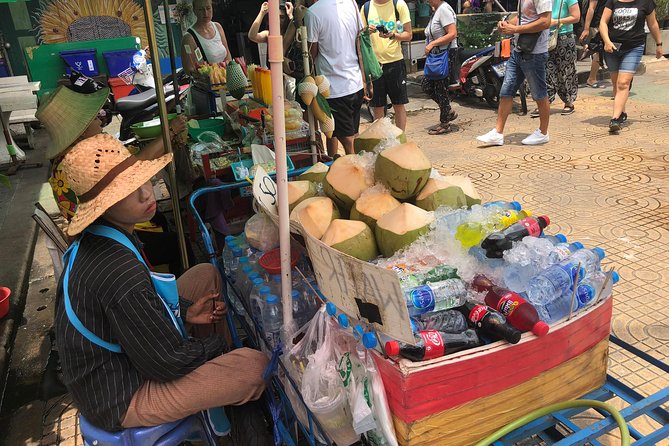
Wat Phra Kaew, officially Wat Phra Si Rattana Satsadaram, is commonly called the Temple of the Emerald Buddha. It is regarded as the most sacred Buddhist temple in Thailand, and the chapel is treated as a national shrine.
The name can mislead you slightly. The Emerald Buddha is made of jade, not emerald, and the figure is small compared with the scale of the surrounding buildings. Its importance comes from its religious and national role, not its size. Inside the chapel, you will need to follow the rules closely, remove your shoes, and leave your camera put away.
Outside, the compound is a feast of colored tiles, golden spires, painted surfaces, guardian figures, and carefully arranged buildings. I find this part of the visit most rewarding when the guide explains what is religious, what is royal, and what reflects stories from Thai tradition.
You need proper clothing before entering. Bare shoulders and knees are not allowed, sleeveless shirts are specifically prohibited, and strapless-heel shoes are not accepted. Shoes must be removed before entering temple buildings. These rules are not minor details, so check your outfit before leaving your hotel. A tour guide can help you understand the customs, but cannot make unsuitable clothing acceptable at the entrance.
More market tours around Bangkok:
- Bangkok: Damnoen Saduak Market and Maeklong Railway Market
★ 4.5 · 26,723 reviews - The Old Siam: Damnoen Saduak and Maeklong Railway Market
★ 4.5 · 10,992 reviews - Bangkok: Train Market & Floating Market with Boat Ride
★ 4.7 · 9,547 reviews - Half-Day Railway Market and Floating Market Tour in Thailand
★ 4.5 · 3,924 reviews
Wat Pho and the Reclining Buddha option
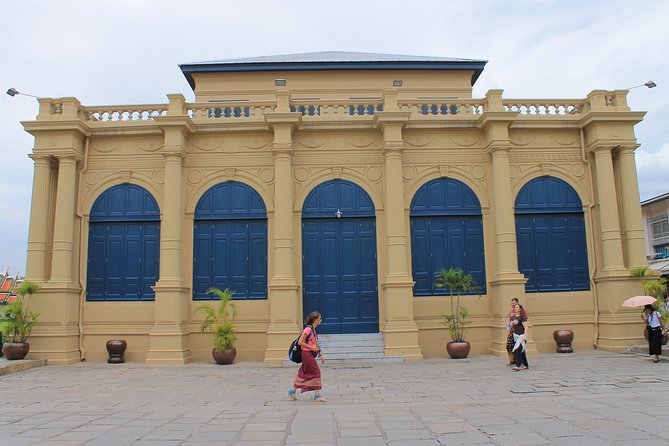
After the Grand Palace, the tour can continue to Wat Pho if you select that option. On the way, you pass Tha Thien Market, a cultural food market known for dried, salted seafood and wholesale goods. This short stretch helps connect the polished royal quarter with a more commercial part of the old city.
Wat Pho is the Temple of the Reclining Buddha and one of Bangkok’s most important temple complexes. It is classed among Thailand’s six highest-grade first-class royal temples. Its grounds offer more than one famous statue, with courtyards, stupas, inscriptions, and buildings that reward a little explanation.
The reclining Buddha is the obvious draw, but the historical story is just as useful. King Rama I rebuilt the complex on an earlier temple site, and Wat Pho became his main temple, with some of his ashes enshrined there. The site also served as an early center for public medical education.
Marble illustrations and inscriptions were placed around the temple to make practical instruction available to the public. The site has been recognized through UNESCO’s Memory of the World Programme. Wat Pho is also regarded as the birthplace of traditional Thai massage, which is still taught and practiced there.
That combination makes Wat Pho a good second stop. The Grand Palace shows monarchy and ceremony. Wat Pho shows learning, medicine, religious practice, and public instruction. If your selected option includes it, I would choose it for the wider picture of Thai culture, not just for the reclining Buddha photograph.
Wat Arun and the river connection
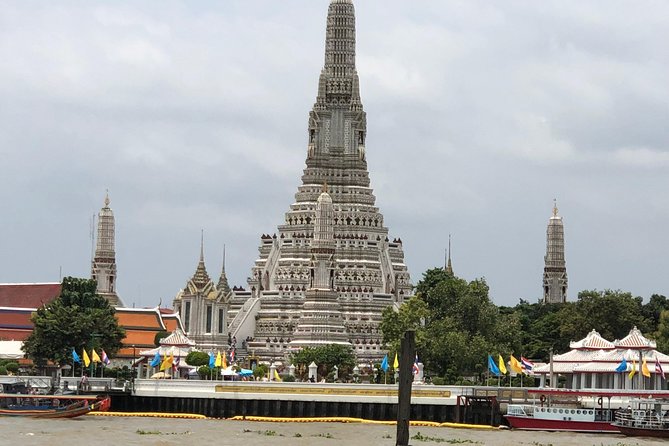
The final major temple option is Wat Arun, the Temple of Dawn. It is one of Bangkok’s best-known landmarks, set beside the Chao Phraya River with a central tower about 70 meters high.
Its appearance differs from the Grand Palace and Wat Pho. Wat Arun’s main tower is decorated with tiny pieces of colored glass and Chinese porcelain, creating a detailed surface that catches the light. The complex also includes a bell tower and giant statues.
The river setting gives this part of the tour a different mood. Instead of being enclosed by palace walls, you see the temple in relation to Bangkok’s main waterway. Several tour experiences include a boat ride or help with a river ferry, though the exact transport depends on the selected arrangement and day’s route. One useful benefit is that guides have helped people board the correct boat afterward, including boats toward Iconsiam.
Wat Arun is worth choosing if you want the classic riverside view and another style of temple architecture. Keep in mind that adding Wat Arun and Wat Pho makes the morning longer and more active. If you are sensitive to heat or have an afternoon appointment, check the duration shown for your booking.
The guide quality is central to the experience
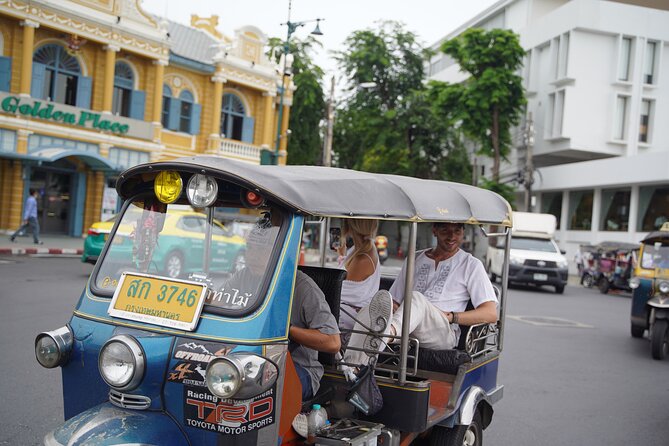
This tour depends heavily on the person leading it. The strongest guide comments describe clear explanations, good English, friendly humor, and close attention to the group.
Mina is praised for being energetic, interactive, and careful with practical details. Kiwi is described as warm and lively, with useful food advice at the end and help getting people onto the right boat. Johnny is noted for both historical explanation and entertainment, while Air is praised for giving the group time to look around rather than rushing from one sight to the next.
Other guides named in the feedback include Tan, Philips, Pete, Peter, Ong, Mimi, and Minna. Their strengths vary, but the common pattern is clear: the guide is expected to explain the sites, answer questions, manage the group, and help with the next part of your day.
That last point is valuable in Bangkok. The tour does not simply finish with a goodbye at a gate. Guides have helped people find a taxi, locate the river ferry, reach Iconsiam, and get to a later show. The advertised meeting point is River City Bangkok, with drop-off listed near Tha Tien and the Grand Palace. Since the exact finish can depend on the option and transport used, confirm the end point with your guide.
Heat, clothing, and the walking reality
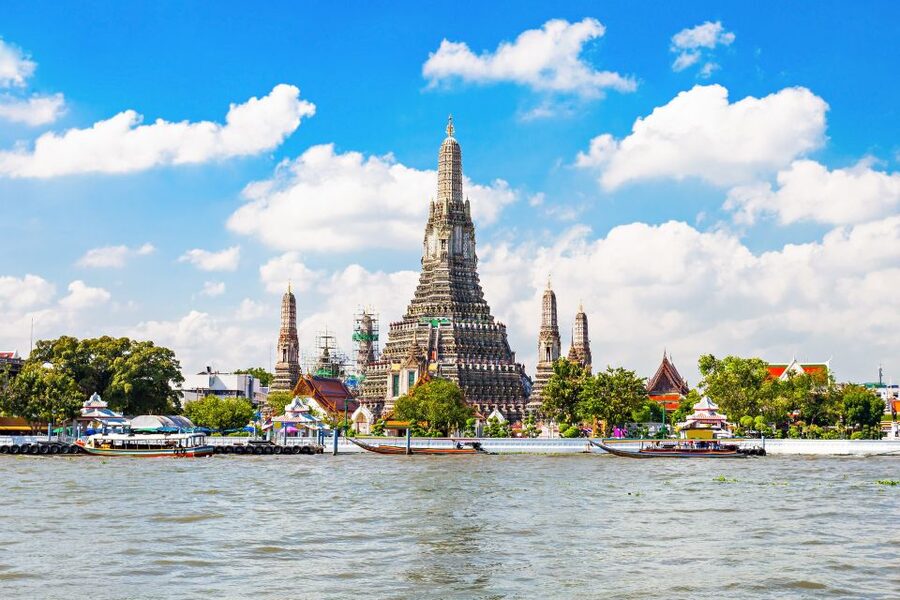
This is a walking tour through major religious and royal sites, not a gentle sightseeing ride. You will spend time on your feet, cross open courtyards, use local transport, and remove your shoes at temple buildings.
Bangkok can feel very hot even when the season seems mild. Guides have provided water stops, shade breaks, and restroom pauses when needed. Drinking water is included, but I would still plan your clothing and pace carefully.
Wear comfortable walking shoes that you can remove easily. Keep your shoulders and knees covered from the start. Avoid sleeveless tops and strapless-heel shoes. Photography rules are strict inside the sacred buildings, so expect to put your camera away at key moments.
The small group helps, but it cannot remove the basic demands of the route. If someone in your party needs to leave early, guides have helped arrange taxis and onward transport, but you should not treat that as a guaranteed separate itinerary. Tell the guide early if you have a time limit.
Who should book this Bangkok temple tour?
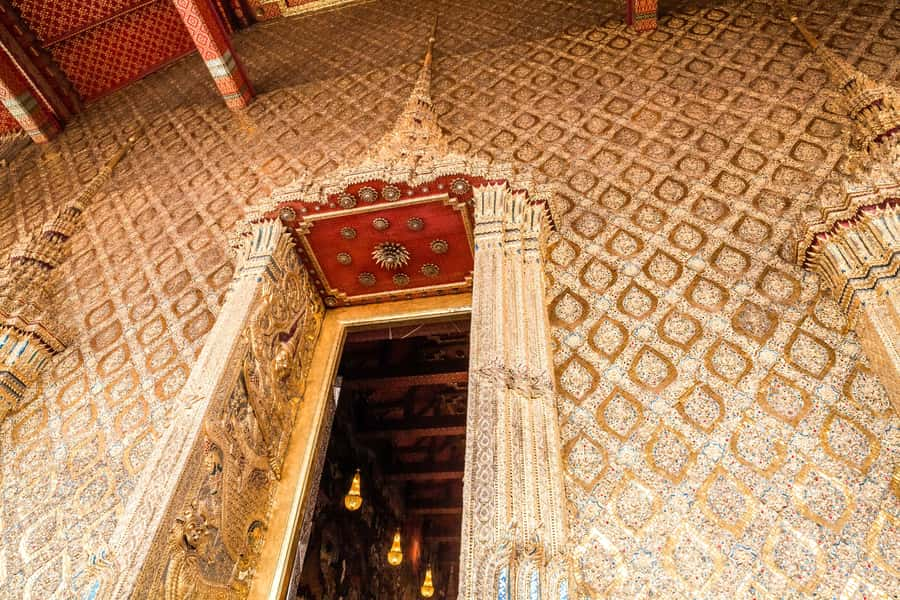
I would choose this tour if you want the main Bangkok temple sights explained in one organized morning. It suits first-time visitors, people who want help with local transport, and anyone who prefers a small group over a large coach.
It is also useful if you care about the meaning behind the buildings. The best part is not simply seeing gold roofs and taking photographs. It is learning why the Emerald Buddha is important, how royal ceremonies shaped the Grand Palace, why Wat Pho mattered to public education, and how Wat Arun fits Bangkok’s river life.
I would hesitate if you dislike fixed pacing, crowded attractions, or strict temple rules. Independent visitors may prefer to spend an entire morning at one complex. You should also check the selected option carefully, since Wat Pho and Wat Arun admission is not part of every version.
Free cancellation is available up to 24 hours before the tour, and you can reserve now and pay later. Those terms are useful if your Bangkok schedule is still shifting, but the bigger booking decision is the route: choose the shorter version if you want the Grand Palace and Emerald Buddha, and the longer version if you want Wat Pho and Wat Arun as well.
Should you book it?
Book this tour if you want Bangkok’s royal quarter explained by a local guide and you value help with ferries, tuk-tuks, markets, and temple etiquette. At $42, the combination of admission to the Grand Palace and Emerald Buddha Temple, a small group, a licensed guide, and local transport support is solid value.
Choose the Wat Pho and Wat Arun option if this is your main temple morning and you can handle the heat. If you have only a short window, select the route that matches your energy and schedule. The experience is at its best when you arrive properly dressed, wear easy shoes, and leave enough time to listen instead of racing through the courtyards.
FAQ
Where does the tour start?
You meet your guide at the Big Country Experience office at River City Bangkok. Two starting location listings are provided at River City Bangkok.
What time should I arrive?
The group meets by 9:00 AM. Check the current availability details for the exact starting time connected to your booking.
How long does the tour last?
The activity is listed as lasting two to four hours. The exact duration depends on the selected option and starting time.
Which temples are included?
Admission to the Grand Palace and Emerald Buddha Temple is included. Wat Pho and Wat Arun are included when you select the option that covers them.
Is public transport used?
Yes. The route includes local public transport, with one transport segment listed as about 30 minutes. Some experiences also include a river boat or tuk-tuk, depending on the route and selected option.
What languages are offered?
Live guiding is available in English and German.
What clothing is required?
You must cover your shoulders and knees. Sleeveless shirts and strapless-heel shoes are not allowed for the national shrine. You must also remove your shoes before entering temple buildings.
Can I take photographs inside the temples?
Photography is allowed in the Royal Palace grounds and the compounds of the Emerald Buddha Temple, but not inside the buildings. Restroom facilities are available during the activity.
New market tours around Bangkok
- Longtail Boat Adventure to the Local Weekend Floating Market★ 5.0 · 12 reviews
- Sathon: Hands-on Thai Cooking Class & Market Tour in Bangkok★ 5.0 · 19 reviews
- Private Unseen Mangrove Forest and Floating & Railway Market★ 5.0 · 2 reviews
- Private Tour from Bangkok: Railway & Floating Markets★ 4.9 · 11 reviews
- From Bangkok: Floating Market & Ayutthaya Private Day Trip★ 5.0 · 42 reviews
- Private Floating & Train Market + DRAGON Temple + Thai Cafe★ 4.9 · 13 reviews
- Mahachai & Maeklong Railway Market Day Tour From Bangkok★ 4.7 · 14 reviews
- Grand Palace, Damnoen Floating Market & Maeklong Market Tour★ 4.8 · 173 reviews
Bangkok Market Tours, side by side.
Bangkok: Damnoen Saduak Market and Maeklong Railway Market
Read our review →
The Old Siam: Damnoen Saduak and Maeklong Railway Market
Read our review →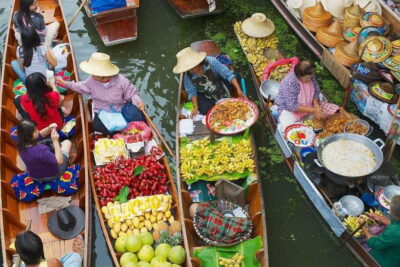
Bangkok: Train Market & Floating Market with Boat Ride
Read our review →
Half-Day Railway Market and Floating Market Tour in Thailand
Read our review →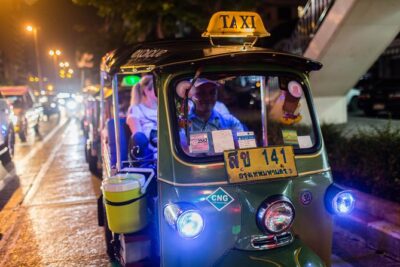
Bangkok by Night: Temples, Markets and Food Tuk-Tuk Tour
Read our review →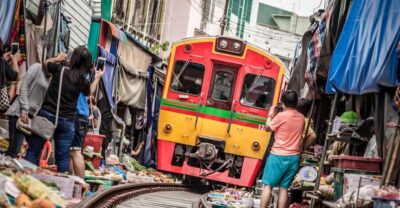
Bangkok: Damnoen Saduak, Train Market & Mahanakhon Day Trip
Read our review →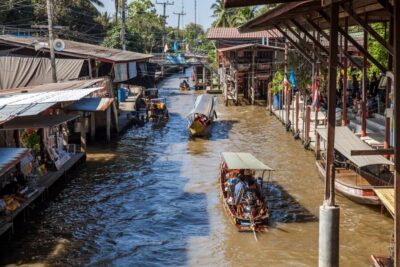
From Bangkok: Damnoen Saduak Floating Market Guided Tour
Read our review →
Bangkok: Hands-on Thai Cooking Class and Market Tour
Read our review →This tour also appears in