
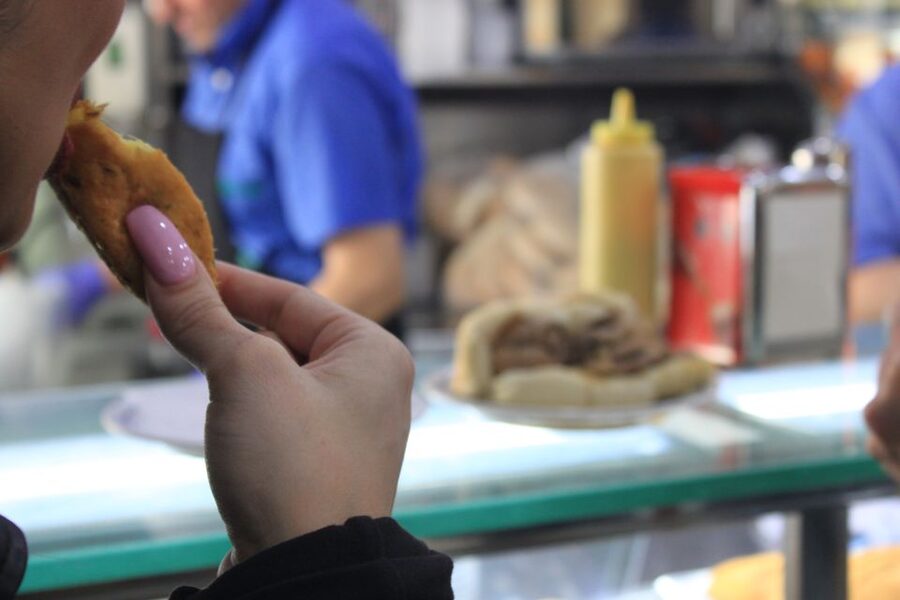
Review · LISBON
Lisbon: Local Market, Food, and Culture Walking Tour
Lisbon’s food story makes more sense when you move through the city instead of sitting at one restaurant. This tour links the Time Out Market, a short ferry ride, seafood in Cacilhas, and old downtown stops where you taste familiar Portuguese favorites. I like the coffee-and-custard-tart start, and I like that the tour crosses the Tagus rather than staying only in the tourist center. The main drawback is the amount of walking, plus a little uncertainty around market timing.
I also like the small group, capped at 12 people, and the relaxed guides. Luis, Bruno, Alexandra, and Tania have led departures praised for their warmth, clear answers, and good mix of food and local stories. Bring sturdy shoes and an appetite. This is not a sit-down meal, and it is not designed for wheelchair users or people with mobility limits.
Key points at a glance

- Portuguese breakfast first: Begin with coffee and a Pastel de Nata at Mercado da Ribeira.
- A ferry ride with a purpose: Cross the Tagus to Cacilhas for soup, seafood, and a shrimp patty.
- Several small tastings: Expect Bifana, Ginjinha, salty snacks, cheese, wine, and Portuguese coffee.
- Small group format: The maximum group size is 12, so it is easier to ask questions and keep together.
- Three hours on foot: The route covers market halls, ferry connections, Baixa, and Rossio Square.
- Good guide-led context: The strongest part is the blend of food, everyday city life, culture, and Lisbon history.
Why this food walk works better than a single restaurant

Food tours are often sold as a string of snacks. This one has a useful sense of place. You start beside the river at Time Out Market, cross to the south bank, and return to central Lisbon for more tastings. The route shows you how the city’s food habits connect to its streets, markets, cafés, ferry system, and old squares.
That movement matters. You get more than a plate of Portuguese food with no context. You see where local shopping happens, ride the ferry used to cross the Tagus, and finish in the central area around Rossio. The guide fills in the history and explains what you are eating as the route unfolds.
At $82 per person, the tour is not the cheapest way to eat in Lisbon. You are paying for a guide, several tastings, ferry travel, and the convenience of having the stops arranged. I see the price as reasonable if you want an introduction to Portuguese food and would otherwise spend time guessing where to go. It is less appealing if your main goal is one large meal or if you already know Lisbon’s food scene well.
The small group helps. With no more than 12 people, you can usually hear the guide and ask about ingredients, customs, or the parts of Lisbon you pass. This also keeps the walk from feeling like a large procession through narrow city streets.
More Local and Farmers Market Tours in Portugal:
- Porto Local Market Visit & Cooking Class / Showcooking
★ 5.0 · 206 reviews - Porto: Local Market Tour & Cooking Class/Showcooking
★ 4.9 · 32 reviews - Madeira : Santo de Serra Local Farmers’ Market half day trip
★ 4.3 · 26 reviews
Starting with coffee and Pastel de Nata at Mercado da Ribeira
The tour begins at the river-side entrance of Time Out Market Lisboa, also known as Mercado da Ribeira. The market is one of the city’s best-known food spaces, so it gives you an easy meeting point and a lively first look at Lisbon’s modern food culture.
The first tasting is simple and very Portuguese: coffee with a Pastel de Nata. The small custard tart has a crisp pastry shell and creamy filling, and it is a sensible way to begin a morning food walk. Think of it as a Portuguese breakfast rather than dessert.
You also get a look at the market itself and hear about its place in the city. One practical caution: market activity can vary by time of day. A departure that reaches the market later may find some stalls winding down. One person arrived around 2 p.m. and found the market packing up, although the other stops still worked well. If seeing the market at full pace matters to you, check the available starting time carefully.
Time Out Market is also more polished and visitor-oriented than a traditional neighborhood market. That is not a flaw, but it helps to set expectations. The tour uses it as a starting point, then takes you to less polished, more local-feeling stops.
Crossing the Tagus by ferry to Cacilhas
The ferry ride takes about 15 minutes each way. It is more than a transport link between tastings. From the water, you get a different view back toward Lisbon and a useful sense of how the river shapes the city.
You cross to Cacilhas, on the south side of the Tagus, where seafood takes the lead. The change in setting is one of the most memorable parts of the route. Instead of moving from one central Lisbon café to another, you see a working connection between the capital and its southern bank.
The ferry is public transport, not a private sightseeing cruise. That means the experience can feel more like ordinary city life than a staged photo stop. You should still keep your expectations practical: the ride is short, and the view is part of the journey rather than a full river excursion.
If you dislike boats, this is worth knowing before booking. The ferry is a required part of the route, and you take it in both directions. The walking and ferry combination also makes comfortable footwear important.
Seafood and local flavor in Cacilhas
Cacilhas is the tour’s seafood stop. You taste fish soup and a shrimp patty, with the guide explaining the food and the local setting. These are small portions meant to let you sample several dishes across the afternoon or morning, not a full seafood lunch.
This stop adds balance to the route. The Pastel de Nata shows you a sweet breakfast favorite, while the fish soup and shrimp pastry move into savory coastal cooking. You also get a view of Lisbon from across the river, which gives the tour a change of pace.
The Cacilhas portion lasts about 45 minutes. That is enough time for food and conversation, but not enough for a long, leisurely restaurant meal. You may want a proper lunch later, especially if you have a large appetite.
The guide’s role matters here. A strong guide can explain how a dish fits into Portuguese eating habits instead of simply naming it. Luis, Bruno, Alexandra, and Tania have each been praised for making the food stops easygoing and for answering questions. Your guide will depend on the departure, but the format favors conversation rather than a memorized lecture.
More Market Walking Tours in Portugal:
- Bangkok: City Highlights Temple and Market Walking Tour
★ 4.5 · 3,990 reviews - Tokyo Tsukiji Fish Market Food and Culture Walking Tour
★ 5.0 · 3,184 reviews - Marrakech: Ben Youssef, Secret Garden, & Souks Walking Tour
★ 4.6 · 2,802 reviews - Marrakech: Colorful Medina Souks Guided Walking Tour
★ 4.7 · 2,470 reviews
Returning to Baixa for familiar Lisbon bites
After the second ferry ride, the group returns to Lisbon and continues through Baixa, the central district rebuilt after the 1755 earthquake. The tour uses the streets as part of the lesson, so the guide can connect food, architecture, daily routines, and the capital’s past.
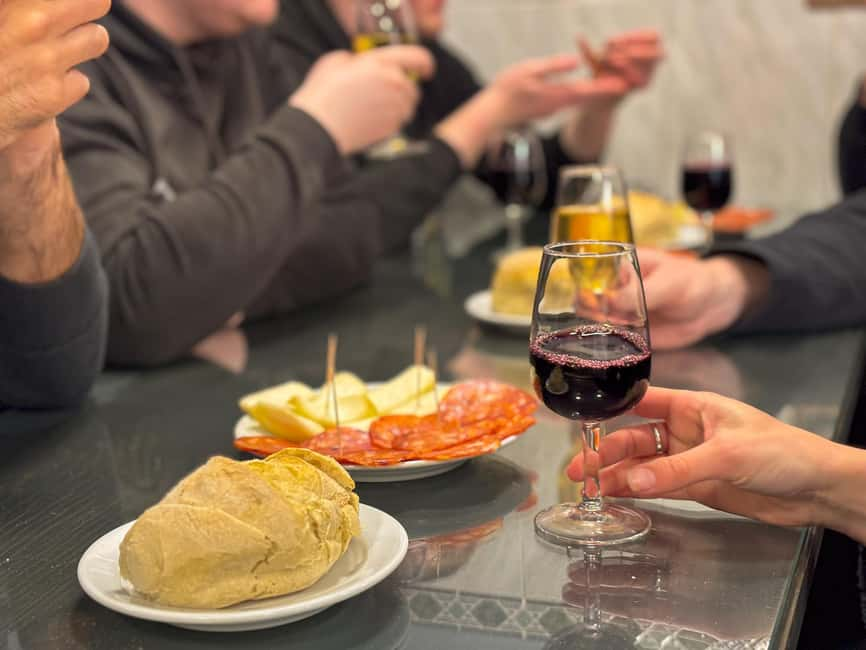
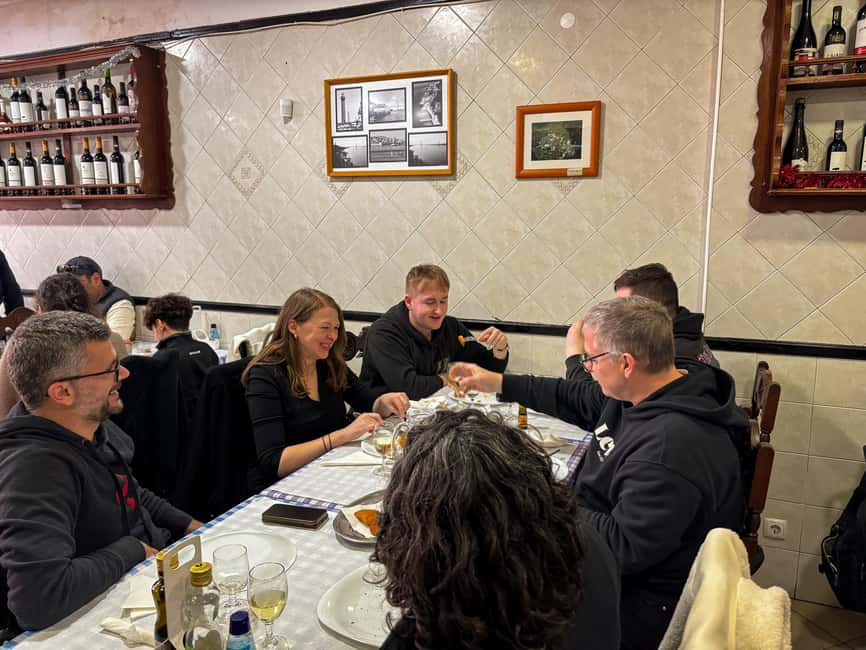
The Baixa tasting includes salty delicacies, Portuguese cheese, wine, and other traditional flavors listed for the tour. Exact portions and the order can vary, but the broad idea is clear: you move from breakfast pastry and seafood toward snacks and drinks enjoyed in ordinary cafés and shops.
This is a good place to pay attention to the difference between a food you recognize and a food you understand. The guide can tell you how to approach each item, what to pair it with, and why it belongs on the route. You do not need to arrive with a long list of Portuguese dishes. The point is to sample several rather than spend the whole tour chasing one famous item.
Baixa is also where the amount of walking becomes obvious. You are not simply seated while plates arrive. You move through central streets, stop to taste, then move again. The route is manageable for people who are comfortable walking for three hours, but it is not suitable for wheelchair users or people with mobility impairments according to the activity information.
Rossio Square, Bifana, and a sip of Ginjinha
The final section reaches Rossio Square, one of central Lisbon’s key gathering places. The square is a fitting end because it puts you close to major downtown routes and gives the guide another setting for explaining Lisbon’s past and present.
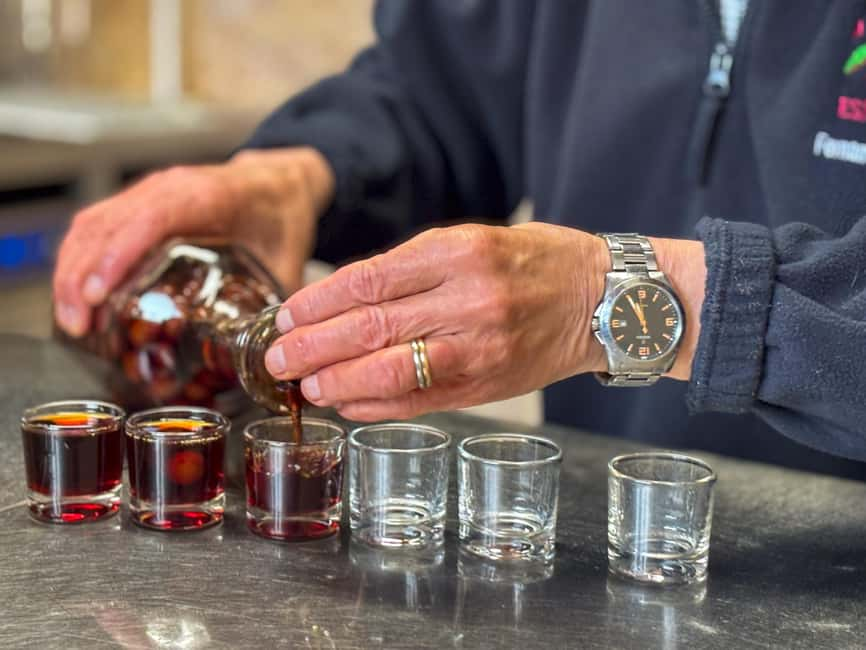
Here you taste more local specialties, including Bifana and Ginjinha. Bifana is a pork sandwich, often served as a quick, unfussy meal. It is exactly the sort of food that helps you see Lisbon beyond formal dining rooms. Ginjinha is a sour-cherry liqueur usually served in a small glass, and its sweet, sharp flavor makes a memorable finish.
The Rossio stop lasts about 45 minutes. By this point, you have sampled sweet, savory, seafood, cheese, wine, coffee, and liqueur. The portions are intended to add up to a broad tasting experience. Still, do not assume you will receive the equivalent of a full lunch or dinner.
The tour ends at Rossio Square, although the meeting information also describes the activity as returning to the meeting point. Since the route begins at Time Out Market and finishes in the Rossio area, it is sensible to confirm the exact end point for your departure and plan your next stop from there.
What the guides add to the experience
The food is the hook, but the guide determines how much you take away. The best version of this tour is a conversation while walking, with history and culture attached to each stop rather than delivered as a long speech.
The guides named in the supplied feedback, Luis, Bruno, Alexandra, and Tania, were praised for being friendly, informative, and fun. One departure lasted more than three hours because the group continued enjoying the route. That suggests the schedule may have some flexibility, but you should not count on extra time if you have a train, museum booking, or dinner reservation immediately afterward.
The language options are English, Spanish, and Portuguese. A tour may use up to two languages, so an English departure could include Spanish or Portuguese as well. This can affect the pace slightly, especially when the guide repeats explanations.
I would choose this tour early in a Lisbon visit. You get practical food guidance, hear the city’s story, and collect ideas for later meals. It can also help you recognize dishes on menus after the tour, when you are ordering on your own.
Walking, weather, and food restrictions
Wear tennis shoes or other comfortable walking shoes. The route includes the market, ferry connections, Cacilhas, Baixa, and Rossio, with several standing stops. Bring water, sunscreen in summer, and a jacket in winter. Lisbon’s weather can feel different beside the river than it does on a sheltered city street.
The activity is not suitable for pregnant women, people with mobility impairments, or wheelchair users. That restriction is important because the route includes considerable walking and ferry travel. If you have questions about a particular limitation, contact the provider before booking rather than assuming the route can be changed.
Tell the provider about food restrictions in advance. The tour includes dairy, meat, seafood, alcohol, and pastry-based foods, so advance notice gives the team time to make arrangements. The available information does not promise that every restriction can be handled, but it does ask you to raise the issue ahead of time.
Is $82 a fair price?
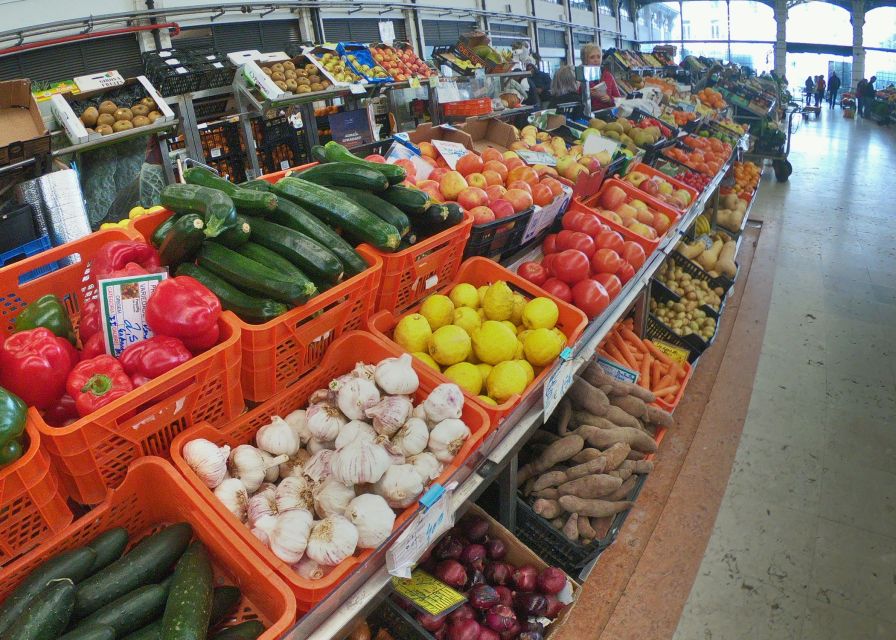
The value depends on what you want from the morning or afternoon. If you bought the tastings separately, added two ferry rides, and paid for a guide to explain the food and neighborhoods, the price could make sense. The small group also gives you more personal attention than a large coach-style food outing.
The value is weaker if you are mainly looking for a large meal. This is a tasting route, with several stops and modest portions. You are paying for variety and guidance, not for one generous restaurant lunch.
Free cancellation up to 24 hours before the start and the option to reserve now and pay later make the booking less rigid. The tour lasts three hours, though one departure ran longer. Check the starting times before booking, especially if you want to catch the market while it is fully active.
Who should book this Lisbon food tour?
I would recommend it to a first-time Lisbon visitor who wants a friendly introduction to Portuguese food without spending a week researching restaurants. It also suits solo visitors and couples who like asking questions and walking through different parts of a city.
It is a good match if you enjoy variety: a custard tart, coffee, seafood, soup, a shrimp patty, Bifana, Ginjinha, cheese, wine, and salty snacks. You will also appreciate the ferry crossing and the chance to see Lisbon from the south bank.
I would skip it if you need a fully accessible route, dislike ferry travel, want a quiet sit-down meal, or already have a detailed food plan. I would also avoid scheduling it directly before an important appointment, since the route can run beyond three hours.
Final verdict
Book this tour if you want Lisbon explained through everyday food, not just landmarks. The strongest features are the small group, the ferry to Cacilhas, the broad range of tastings, and guides such as Luis, Bruno, Alexandra, and Tania who bring an easy human touch to the route.
Come hungry, wear good shoes, and choose a start time that lets you see Mercado da Ribeira at its best. For a first taste of Lisbon, $82 buys more than snacks. It buys a useful orientation to the city, its river, and the foods you will keep seeing after the tour ends.
FAQ
Where does the Lisbon food tour start?
It starts at the river-side entrance of Time Out Market Lisboa, also called Mercado da Ribeira.
Where does the tour finish?
The stated finish is Rossio Square. The meeting information also describes the activity as ending back at the meeting point, so confirm the exact end point when checking your departure details.
How long does the tour last?
The planned duration is three hours. One departure lasted more than three hours, so leave some extra time after the tour if you have another booking.
What food and drinks are included?
The tastings include Pastel de Nata, Ginjinha, Bifana, fish soup, salty delicacies, Portuguese coffee, cheese, and a wine tasting. The route also includes a shrimp patty in Cacilhas.
Is the ferry ride included in the route?
Yes. The tour crosses to Cacilhas by ferry, with each crossing taking about 15 minutes.
What languages are available?
The live guide languages are English, Spanish, and Portuguese. Up to two languages may be spoken during one tour.
Is the tour suitable for people with mobility limitations?
No. The activity is not suitable for pregnant women, people with mobility impairments, or wheelchair users. You should also expect considerable walking and bring comfortable shoes.
New market tours around Portugal
- South of Lisbon: Local Market & Canned Sardines Factory Tour★ 5.0 · 2 reviews
- Porto: Coastal Villages Market & Seafood Cooking Tour★ 5.0 · 2 reviews
- Porto: Cooking Class with Local Market Visit★ 5.0 · 15 reviews
- Porto: Bolhão Market Guided Food Tour★ 4.6 · 15 reviews
- Olhão Fish Market & Food Tour★ 4.8 · 9 reviews
- Lagos: Market Tour and Cataplana Cooking Class★ 5.0 · 9 reviews
- Madeira: Levada Walk and Santo da Serra Market Tour★ 4.5 · 2 reviews
- Madeira: Sunday Market in Santo da Serra★ 5.0 · 2 reviews
Lisbon Market Tours, side by side.
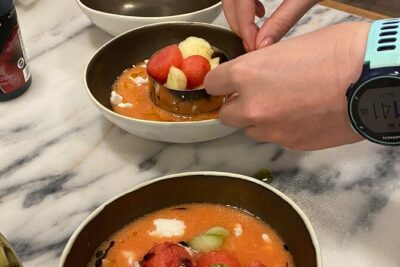
Lisbon Market and Food Tour with Cooking Class and Lunch
Read our review →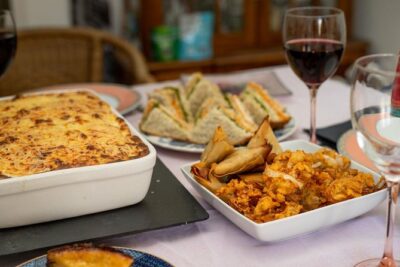
Private Lisbon Market Tour & Portuguese Cooking Class with Paula
Read our review →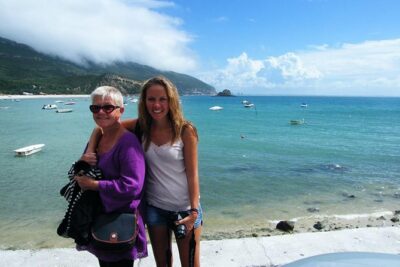
Arrábida Jeep Tour – Incredible Market & Hidden Gems
Read our review →
Lisbon: Setúbal Market and Wine tour with Cooking class
Read our review →This tour also appears in