
Review · THAILAND
Bangkok: Ayutthaya, Railway & Floating Markets Full-Day Tour
A train rolls straight through a market, vendors pull back their awnings, and moments later the stalls return to business. That is the sharpest image on this full-day trip, which then moves from the canals of Damnoen Saduak to the ruined temples of Ayutthaya.
I like the way this tour combines three very different sides of Thailand in one day, and I like the small group size, capped at nine people. Guides such as Jack, Ratima, Angie, Tank, and Cherry are praised for clear explanations, good humor, and helping with photos. The catch is simple: this is a long day with a lot of road time, and the lunch stop can come late.
Key points at a glance

- Watch a train pass through Maeklong Railway Market, with stalls folding away from the tracks and reopening almost at once.
- Ride a one-way longtail boat through canals to Damnoen Saduak Floating Market, where vendors sell food, fruit, and souvenirs from their boats.
- Visit three Ayutthaya temples, including Wat Mahathat and its Buddha head wrapped in tree roots.
- Travel in a small group of up to nine in an air-conditioned vehicle with an English or Spanish-speaking guide.
- Plan for a full 11 hours, with roughly 300 kilometers of driving and only about 30 minutes at each Ayutthaya temple.
- Bring extra water and cash, and wear clothing that covers your shoulders and knees for temple visits.
Why this Bangkok day trip works
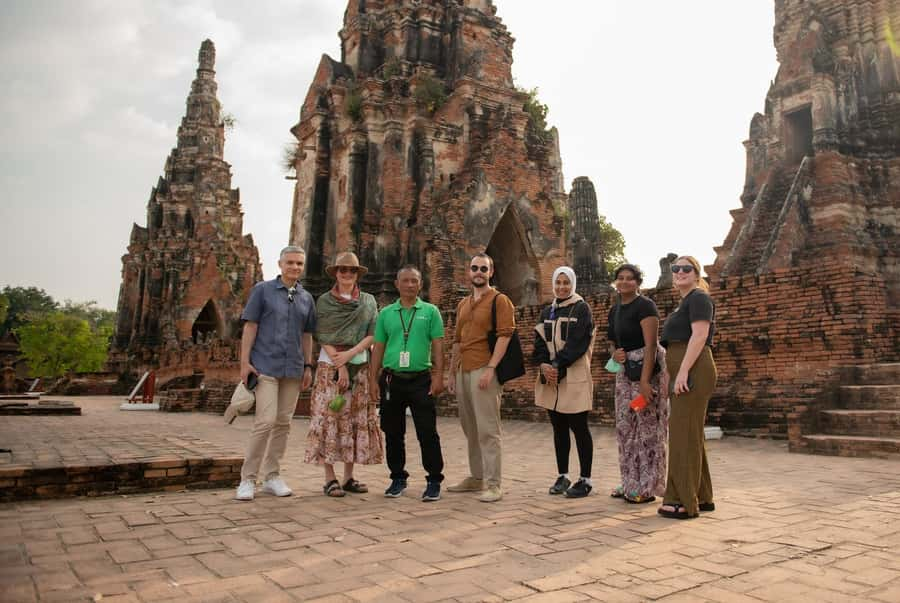
Bangkok has enough nearby sights to fill several day trips, but many visitors have limited time. This tour solves that problem by linking destinations that are difficult to reach efficiently on your own: Maeklong, Damnoen Saduak, and Ayutthaya.
The route is not geographically tidy. You first travel southwest from Bangkok to the railway market and floating market, then head northwest toward Ayutthaya. That explains the long drives, but it also explains the appeal. In one day, you see modern roadside Thailand, traditional canal commerce, and the remains of a royal capital.
At $69 per person, the price is reasonable if you value convenience. The fee covers hotel pickup and drop-off in selected areas, an air-conditioned vehicle, guide services, drinking water, insurance, transportation, the longtail boat ride, and the entrance fees to three temples. Those temple fees total 180 baht, so you are mainly paying for transport and coordination.
Lunch is not included. You will need cash for food, drinks, and personal purchases. One practical point deserves emphasis: one small bottle of water may not be enough for a hot day. Bring your own refill or buy extra stops along the way.
More Floating Market Tours around Thailand:
- Bangkok: Damnoen Saduak Market and Maeklong Railway Market
★ 4.5 · 26,723 reviews - The Old Siam: Damnoen Saduak and Maeklong Railway Market
★ 4.5 · 10,992 reviews - Bangkok: Train Market & Floating Market with Boat Ride
★ 4.7 · 9,547 reviews
Starting early and getting organized
The exact start time depends on your selected option, but this is an early morning tour. Pickup is available from hotels or registered accommodations in Khao San Road, Narathiwas Ratnakarin, Sathorn Road, and Wireless Road areas, along with Wireless Road. Other participants meet at National Stadium BTS Station, Exit 2, on the second floor.
The guide holds a TripGuru sign. You receive an email the evening before confirming the pickup time and meeting point, so check your inbox rather than relying only on the original booking details.
The vehicle is air-conditioned, which matters here. You spend several hours on the road, and the cold air gives you a useful break between outdoor stops. The group limit of nine is also important. It is easier to hear the guide, get in and out of the van, and keep the day moving than it would be with a large coach.
The schedule is tight, so arrive ready. Wear shoes suitable for uneven temple ground, bring sunscreen and insect repellent, and carry a scarf or light cover-up. Thai temples may require covered shoulders and knees.
Maeklong Railway Market and the famous train crossing
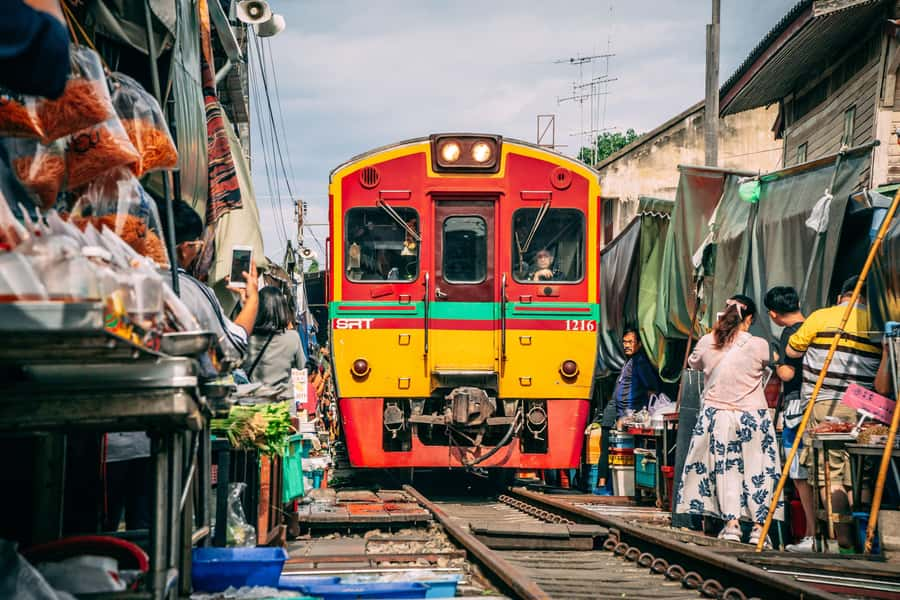
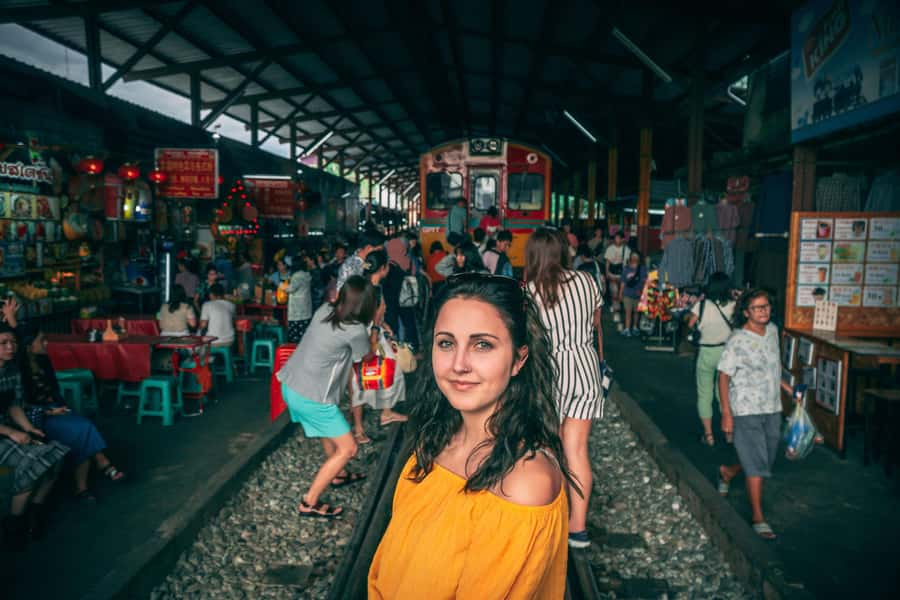
The first major stop is Maeklong Railway Market, about 1.5 hours from Bangkok. The market is built directly beside the tracks, so the railway is not a decorative backdrop. It is part of the working market.
When the train approaches, vendors pull back umbrellas and move goods away from the rails. The train passes close enough to make the scene feel almost absurdly narrow. Once it has gone, the awnings return and selling resumes.
The guide helps you understand where to stand and what to watch for. Some departures are timed so you can see the train arrive or leave, and one guide, Angie, was especially praised for arranging a view of the train in both directions.
This is a quick, theatrical stop, but it can feel crowded. The market is now a major sightseeing point, and some people find the spectacle more touristy than authentic. I would treat it as a fascinating piece of daily logistics rather than a quiet local market. If you enjoy unusual transport scenes and photography, you will probably like it. If you prefer slow shopping and local conversation, this may be the least satisfying part of the day.
You spend about an hour here, including the guided visit. Keep your camera ready, but stay alert and follow the guide’s instructions near the tracks.
The longtail boat to Damnoen Saduak
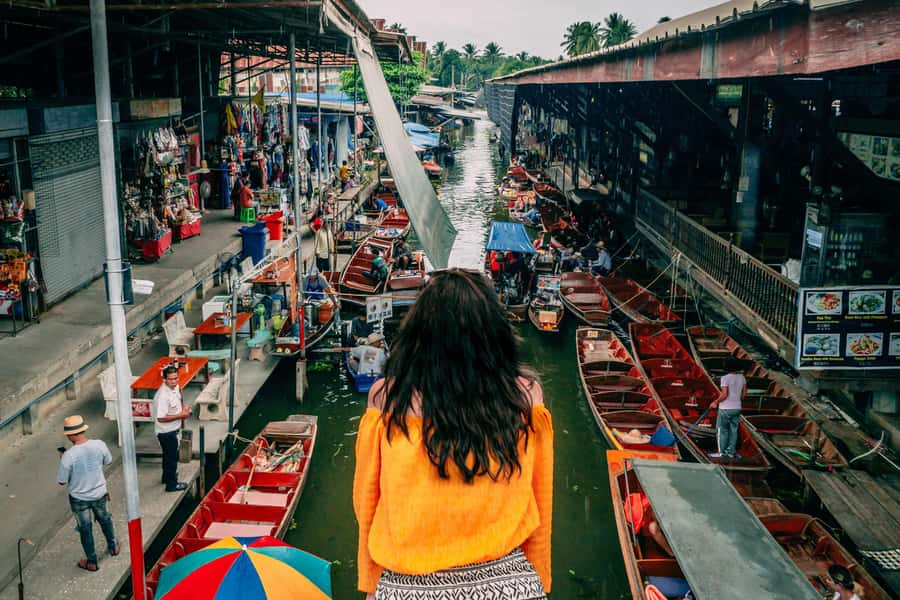
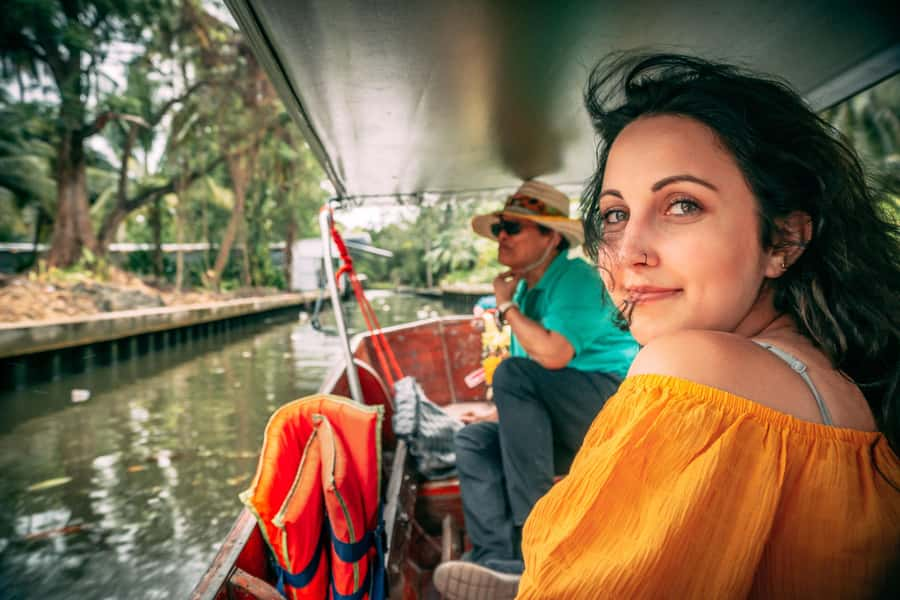
From Maeklong, the vehicle travels about 30 minutes to Damnoen Saduak Floating Market. The included one-way longtail boat ride is one of the better parts of the tour because the trip to the market is not simply a drop-off beside souvenir stalls.
You travel through canals and pass homes, waterways, and boats carrying goods. The ride can be bumpy, and one account described being bounced around for much of the journey. Sit securely, keep your belongings close, and do not expect a smooth sightseeing cruise.
Damnoen Saduak is lively and highly visited, but it still gives you a clear picture of canal-based trade. Vendors sell fruit, snacks, prepared food, and souvenirs from their boats. Mango sticky rice received special praise, and this is a good place to keep some cash handy for small bites.
You have about an hour at the market, including the guided visit. The boat ride itself is part of the attraction, so do not judge the stop only by the shopping. I like the contrast between the train market, where transport cuts through the stalls, and the floating market, where the water is the road.
Prices for purchases are not included, and you may find the market geared toward visitors. Still, the movement of boats and the canal setting give it more character than a standard indoor market.
More market day trips around Thailand:
- From Bangkok: Ayutthaya & Ayothaya Floating Market Day Trip
★ 4.7 · 6,084 reviews - Bangkok: Damnoen Saduak, Train Market & Mahanakhon Day Trip
★ 4.7 · 2,162 reviews - Day Trip to Bangkok Floating Market & Maeklong Railway
★ 5.0 · 1,528 reviews - From Bangkok: Floating Market and Ayutthaya Guided Day Tour
★ 4.6 · 1,398 reviews
Lunch, with one important timing warning
Lunch takes place at a local restaurant and lasts about an hour. The meal is not included, so you choose and pay for your food. Several people enjoyed the freshness and quality of the stop, while one pointed out that the meal was served late, around 3 p.m. on that day.
That timing can be hard if you eat early. The floating market has snacks, but you should still have breakfast before departure and carry a small snack in your bag. The restaurant experience may vary, and there was one account of slow service and incorrect orders.
This is a minor part of the day, but it affects your energy. You will be leaving the markets and then facing a drive of about 2 hours and 45 minutes toward Ayutthaya. Eat when you can, drink water, and do not assume the formal lunch will arrive early.
Ayutthaya’s first temple: Wat Yai Chai Mongkhon
The road to Ayutthaya is long, but the ancient capital rewards the effort. Ayutthaya was Thailand’s royal capital before Bangkok, and its ruins spread across a broad area rather than forming one compact monument.
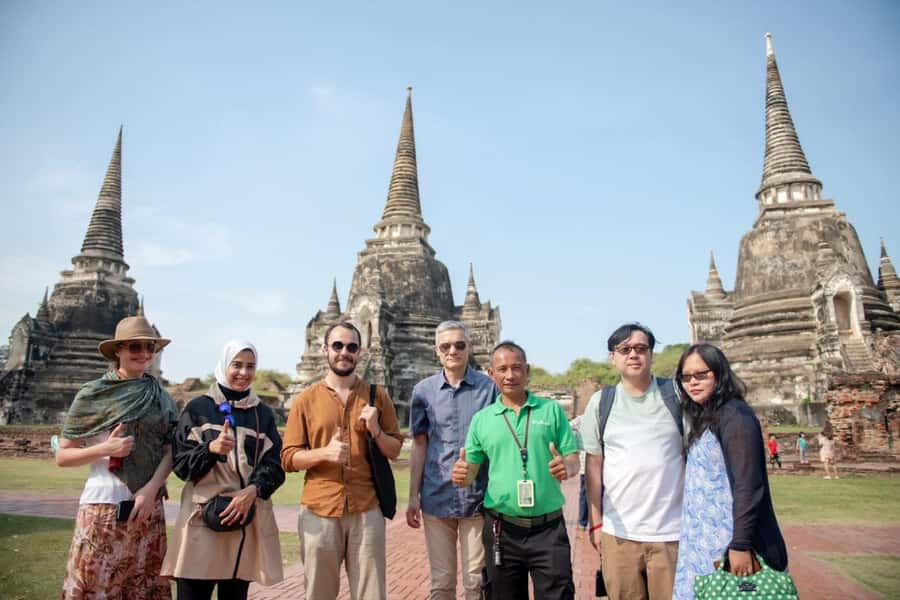
Wat Yai Chai Mongkhon is the first temple visit and lasts about 30 minutes. The site is known for its large chedi and rows of Buddha images. The scale gives you an immediate sense that this was once a major center of power and worship.
Thirty minutes is enough for a guided orientation and photographs, but not enough for a slow, detailed visit. Your guide fills in the context, points out key features, and keeps the group moving. Guides such as Jack, Tank, and Ratima were praised for explaining Thai history in a clear, entertaining way without making the day feel like a lecture.
The heat can be strong around the open ruins. A hat, sunscreen, and comfortable shoes make a real difference. You may also need to climb or walk over uneven ground, which is why moderate fitness is recommended.
Wat Phra Si Sanphet and the royal precinct
Next comes Wat Phra Si Sanphet, another 30-minute stop. This temple once formed part of the royal palace complex and is one of Ayutthaya’s most recognizable ruins.
The tall chedis create a strong photograph, but the site is more meaningful when you understand its royal role. This was not simply a neighborhood temple. It was tied to the center of political and religious life in the former capital.
The short visit works well if you want the main sights in one day, but it leaves little room for wandering. If you have a strong interest in archaeology or temple architecture, you may wish for more time here. If your goal is to see Ayutthaya’s principal landmarks without arranging transport, the quick pace is a fair trade.
Your guide is valuable at this stop because the ruins do not explain themselves. The stone structures, damaged Buddha images, and surviving towers make much more sense when someone connects them to the old capital.
Wat Mahathat and the Buddha in the tree roots
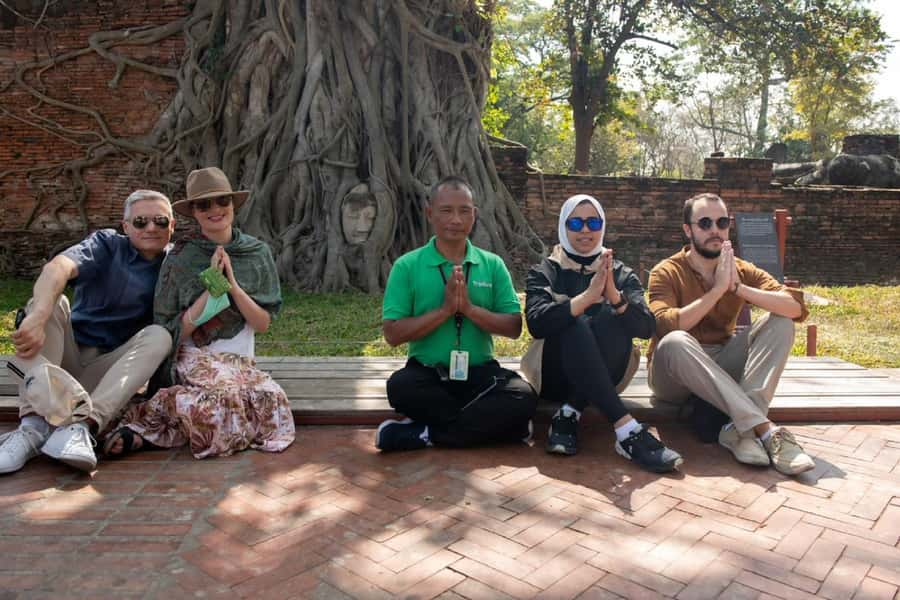
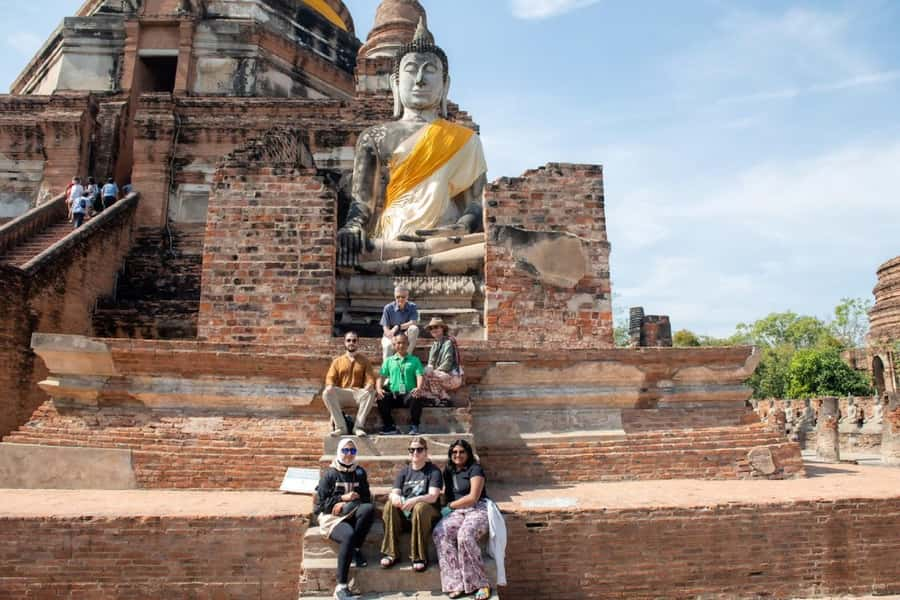
Wat Mahathat is the final temple and the emotional high point for many visitors. It contains the famous Buddha head entwined in tree roots, one of Thailand’s most recognizable sights.
The image is striking, but remember to approach respectfully. The Buddha head is a religious object, not simply a photo prop. Your guide can explain the site and help you understand why the image has become associated with Ayutthaya.
The temple grounds also show the scale of destruction and survival across the old capital. Broken brick structures, leaning towers, and weathered images create a very different mood from the busy markets earlier in the day. This is where the tour’s two halves finally come together: you move from present-day trade to the remains of a former kingdom.
Some guides add explanations of Buddhist beliefs and practices. One guide also included a Buddhist meditation or blessing experience, but this should not be treated as guaranteed on every departure. The standard plan is the guided temple visit.
You have about 30 minutes here. That is enough to see the Buddha head and receive useful background, but not enough to explore Ayutthaya at a relaxed pace. Keep expectations realistic.
The guide can make or break the long day
The route is demanding, so the guide matters. The strongest part of the operation is the personal attention offered by the small group and the range of guides working on the tour.
Jack was repeatedly praised for explaining temple history, helping with photos, and keeping a friendly tone. Ratima was noted for clear English, useful explanations, and telling people what was coming next. Angie helped with the BTS and even assisted one person with reaching the meeting point. Tank was praised for adjusting stops for drinks, restrooms, and the restaurant.
Other named guides include Mr. Tee, Cherry, Rach, Bonnie, Fern, Eddy, Jacky, Nancy, Kulsaya, and Jeerawat. The quality of the day depends partly on which guide leads your departure, but the consistent pattern is clear: the best guides keep the timetable under control while still making room for questions and photographs.
The guides also often take pictures for the group. That is helpful at crowded sites, especially if you are traveling alone or with a small family. Still, do not expect a private guide. You share the pace with the rest of the group.
Transport, comfort, and the cost of the schedule
The air-conditioned minivan is a major practical benefit. The full route can cover more than 300 kilometers, and the return drive to Bangkok takes about 2.5 hours. Without organized transport, fitting all three destinations into one day would be difficult.
The downside is obvious. You spend more time in the van than at the temples. Some people consider the road hours worthwhile, while others feel that 30 minutes at each Ayutthaya site is too brief after such a long journey.
The roads and vehicle experience can vary. One person found the ride very bumpy, while others described the minivan as comfortable and appreciated the driver cooling it before each stop. A professional driver helps keep the schedule intact, but no vehicle can remove the basic fact that this is a road-heavy day.
At $69, the tour offers good value for a first visit if you want breadth. You get transport, a guide, boat travel, temple admission, and a carefully linked route. It is less attractive if you already know Ayutthaya well or want long, quiet periods at each ruin.
Who should book this tour?
I would choose this tour if you have only a few days in Bangkok and want a broad introduction to central Thailand. It suits first-time visitors, families who prefer organized transport, solo visitors who want company, and anyone who would struggle to arrange three separate stops.
It is also a good fit if you enjoy variety. The train market is a quick spectacle, the floating market adds food and canal scenery, and Ayutthaya supplies the cultural weight.
I would think twice if you dislike early starts, long van rides, hot weather, or fixed schedules. Pregnant women and people with mobility impairments, heart problems, respiratory issues, or other pre-existing medical conditions should not book this activity. Moderate fitness is required, and uneven temple grounds may be difficult.
Pack a proper breakfast, extra water, sunscreen, insect repellent, cash, a hat, sunglasses, comfortable shoes, and a scarf or shoulder cover. That small preparation can make the difference between a tiring day and a manageable one.
Should you book it?
Book this tour if your priority is seeing a lot in one day with the least transport fuss. The train market and floating market are interesting on their own, but Ayutthaya gives the day its lasting value. The best guides add context, humor, photos, and calm organization.
Do not book it expecting a leisurely archaeological visit. You will cover a great deal of ground, sit in the van for hours, eat lunch late in some cases, and spend only 30 minutes at each Ayutthaya temple. For a first look at three major sights, $69 is fair. For a deep visit to Ayutthaya, choose a dedicated Ayutthaya tour instead.
FAQ
How long does the tour last?
The planned duration is 11 hours, though the day can run longer depending on traffic, weather, and other conditions.
What destinations does the tour visit?
You visit Maeklong Railway Market, Damnoen Saduak Floating Market, and three Ayutthaya temples: Wat Yai Chai Mongkhon, Wat Phra Si Sanphet, and Wat Mahathat.
Is transportation included?
Yes. The tour includes transportation between the stops in an air-conditioned vehicle, along with hotel pickup and drop-off where the pickup option applies.
Is the longtail boat ride included?
Yes. One-way longtail boat transportation to Damnoen Saduak Floating Market is included.
Is lunch included?
No. Lunch is not included, and you pay for your meal and personal purchases yourself.
How many people are in the group?
The small group is limited to nine participants.
What languages are available?
Live guiding is available in English and Spanish.
Where is the meeting point?
The meeting point is National Stadium BTS Station, Exit 2, on the second floor. Your guide holds a TripGuru sign.
What should I wear to the temples?
Wear clothing that covers your shoulders and knees. A scarf can help if you need extra coverage during the day.
Is the tour suitable for people with mobility or medical conditions?
The activity is not suitable for pregnant women or people with mobility impairments, heart problems, respiratory issues, or pre-existing medical conditions. Moderate fitness is recommended.
More full days at the markets around Thailand
- Phuket: Full Day City Tour with Night Market
★ 4.5 · 2,888 reviews - Floating Market Full-Day Bicycle Tour from Bangkok
★ 5.0 · 5 reviews - Full Day Thai Cooking Class in Organic Farm and Market
★ 5.0 · 3 reviews - Versailles Full-Day Electric Bike Tour : Market, Picnic & Palace
★ 5.0 · 239 reviews
New market tours around Thailand
- Longtail Boat Adventure to the Local Weekend Floating Market★ 5.0 · 12 reviews
- Sathon: Hands-on Thai Cooking Class & Market Tour in Bangkok★ 5.0 · 19 reviews
- Private Unseen Mangrove Forest and Floating & Railway Market★ 5.0 · 2 reviews
- Private Tour from Bangkok: Railway & Floating Markets★ 4.9 · 11 reviews
- From Bangkok: Floating Market & Ayutthaya Private Day Trip★ 5.0 · 42 reviews
- Private Floating & Train Market + DRAGON Temple + Thai Cafe★ 4.9 · 13 reviews
- Phuket: Thai Cooking Class with Market Tour★ 5.0 · 2 reviews
- Phuket: Half Day Thai Cooking Experience with Market Tour★ 5.0 · 11 reviews
Thailand Market Tours, side by side.
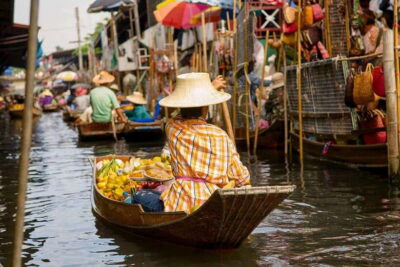
Bangkok: Damnoen Saduak Market and Maeklong Railway Market
Read our review →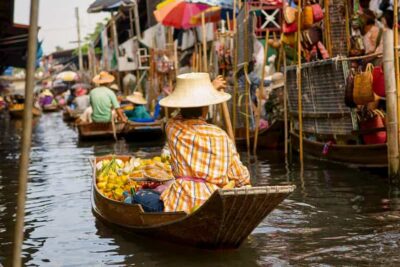
The Old Siam: Damnoen Saduak and Maeklong Railway Market
Read our review →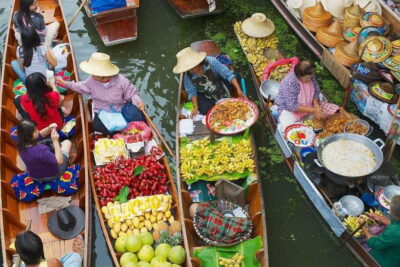
Bangkok: Train Market & Floating Market with Boat Ride
Read our review →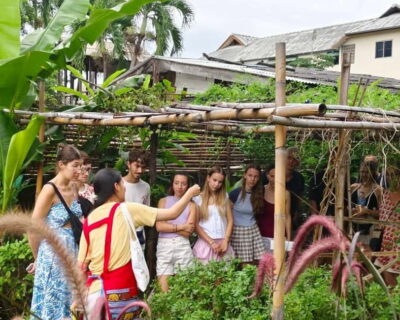
Chiang Mai: Cooking Class, Market & Thai Herbs Garden Tour
Read our review →
Chiang Mai: Authentic Cooking Class with Market & Farm Visit
Read our review →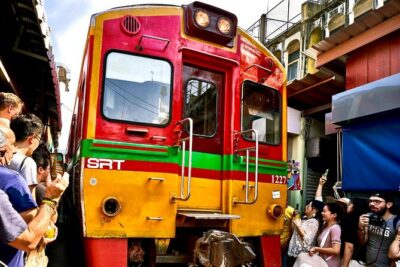
Bangkok: Floating Market and Train Market Experience
Read our review →
Half-Day Railway Market and Floating Market Tour in Thailand
Read our review →
Bangkok by Night: Temples, Markets and Food Tuk-Tuk Tour
Read our review →This tour also appears in