Review · BANGKOK
Sathon: Hands-on Thai Cooking Class & Market Tour in Bangkok
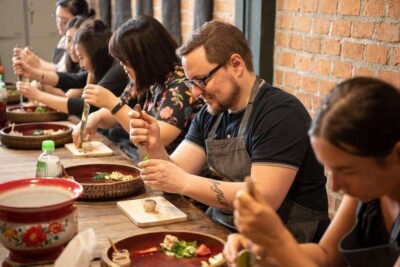
Thai cooking makes more sense once you see the ingredients before they reach the wok. This Suan Phlu market tour takes you to a local fresh market, then brings those ingredients into the kitchen for four dishes, including curry, noodles, soup, salad, and mango sticky rice. You also make coconut milk and curry paste from scratch.
I like the hands-on format and the clear connection between the market and the meal. I also like the price: $45 covers the market visit, ingredients, equipment, four-course meal, water, locker, and recipes. The main consideration is the fixed daily menu, so check the day you want before booking.
Key points at a glance
- Suan Phlu Market is one minute from the school, making the shopping stop easy to fit into a Bangkok day.
- You make curry paste and coconut milk from scratch, not just watch an instructor cook.
- Four dishes are cooked and eaten hot, with the exact menu changing by day.
- Pitch is one named instructor, praised for humor, clear English, and well-paced instruction.
- Dietary substitutions are available for vegetarian, halal, kosher, and allergy-sensitive diets.
- The $45 fee includes nearly everything, while alcohol costs extra if you want it.
Starting at Suan Phlu Market in Sathon
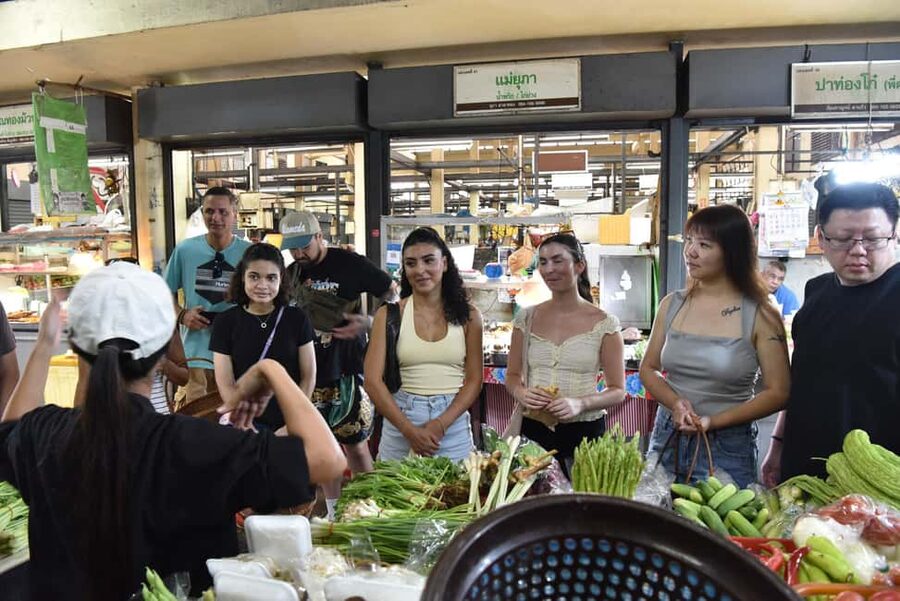
The class meets at House of Taste Thai Cooking School, behind Suan Phlu Market at 33 Thanon Suan Phlu, Thung Maha Mek, Sathon, Bangkok 10120. Search the full address in your map app. The wording matters because the school is behind the market, not simply somewhere in the wider Sathon district.
The market is only about a one-minute walk from the school. That short distance keeps the outing practical. You do not lose much cooking time traveling across Bangkok, and you can move from shopping to preparation while the ingredients are still the focus of the lesson.
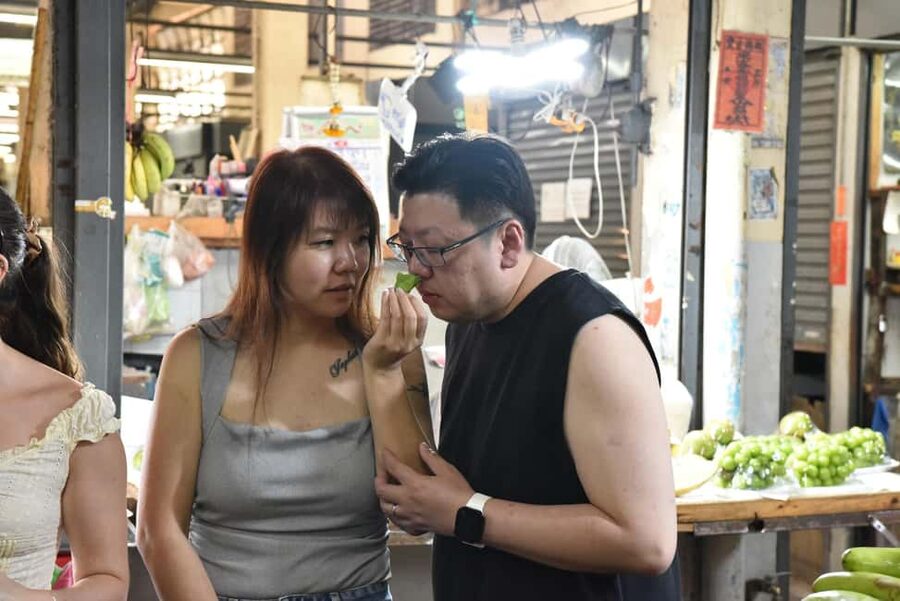
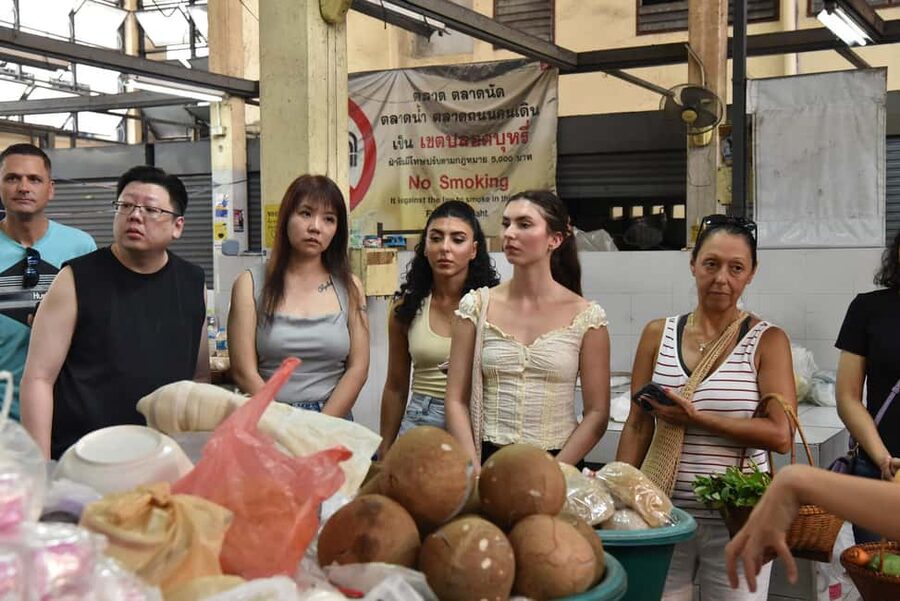
Your instructor leads the market visit during morning, afternoon, and evening classes. This is not an optional add-on for selected sessions. You look at the vegetables, rice, herbs, spices, and other ingredients used in the day’s menu, then help select what goes into the meal.
I like this start because it gives the cooking class a useful foundation. Thai recipes can seem like long lists of unfamiliar items when you only see them in English. At the market, you connect those names with actual produce and seasonings. You also get a better sense of how much fresh food shapes Thai cooking.
The market stop is short, so do not expect a full food-market expedition or a long free period to browse. Its purpose is clear: learn what you are cooking with, shop with your guide, and return to the school. For a first Thai cooking class, that focus is a plus.
More Market and Cooking Class Tours in Bangkok
- Bangkok: Hands-on Thai Cooking Class and Market Tour
★ 4.9 · 1,614 reviews - Bangkok: Maliwan Thai Cooking Class with Market Tour
★ 4.9 · 1,133 reviews - Hands on Thai Cooking Class and Market Tour
★ 5.0 · 660 reviews
Making coconut milk and curry paste by hand
Once you return to the school, the class shifts from market orientation to preparation. One of the most useful parts is making fresh coconut milk and curry paste from scratch. These are central Thai cooking techniques, not decorative demonstrations.
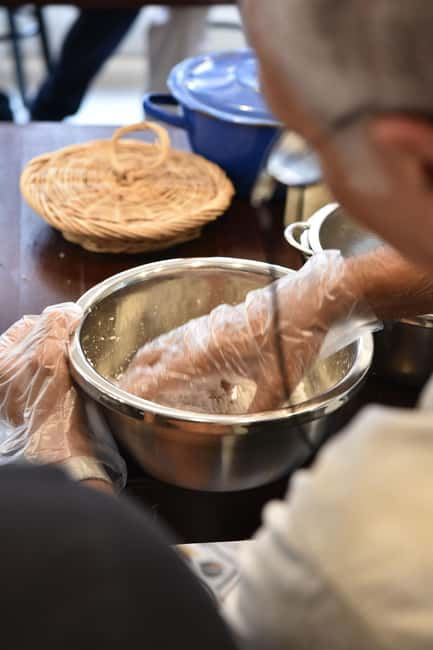
Curry paste is where the class gets especially physical. You get your hands dirty as you work through the ingredients rather than opening a prepared packet. That helps you understand why Thai curry has so many layers of aroma and heat.
Fresh coconut milk also shows you a basic ingredient in a more direct way. You do not simply pour coconut milk from a carton and move on. You learn how it is made, which gives the curry and soup dishes more context.
I would pay close attention during this part and take notes beyond the printed recipes. The standard recipes are included, but your own memory of texture, smell, and consistency will help when you cook at home. The recipes give you a framework. Your work with the paste and coconut milk gives you a feel for the process.
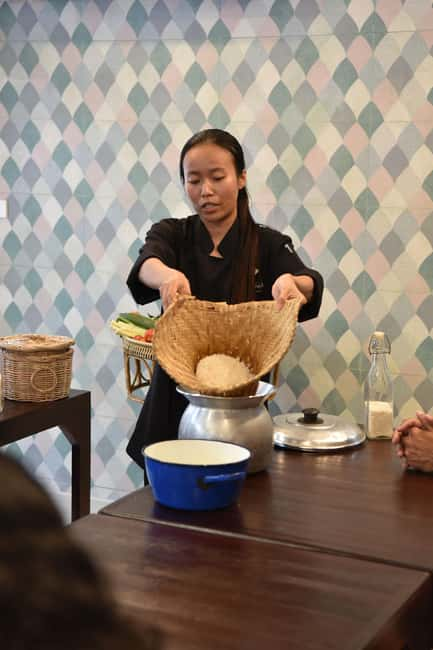
The class is taught in English and Thai. Pitch is one instructor associated with the school, and the available feedback describes his classes as funny, clear, and well paced. That combination matters in a cooking class. You need enough explanation to understand the method, but not so much talking that the meal gets pushed aside.
Two hours of cooking four Thai dishes
The cooking portion lasts about two hours, followed by eating what you make. The four-course structure gives you a broad look at Thai food in one sitting. You are not learning one recipe in isolation. You are moving among salad, noodles, soup or curry, and dessert, depending on the day.
The precise sequence changes through the week:
- Monday: Som Tum, Pad Thai with shrimp, green curry with chicken, and mango sticky rice
- Tuesday: Tom Kha Gai, Pad Krapow Gai, red curry with chicken, and mango sticky rice
- Wednesday: Tom Yum Goong, Pad See Ew with chicken, green curry with chicken, and mango sticky rice
- Thursday: Larb Gai, Pad Thai with shrimp, Panang curry with chicken, and mango sticky rice
- Friday: Som Tum, Pad Krapow Gai, red curry with chicken, and mango sticky rice
- Saturday: Tom Kha Gai, Pad Thai with shrimp, green curry with chicken, and mango sticky rice
- Sunday: Tom Yum Goong, Pad See Ew with chicken, Panang curry with chicken, and mango sticky rice
This schedule gives you a simple booking decision. If you have a favorite dish, choose the day that serves it. Pad Thai appears Monday, Thursday, and Saturday. Green curry is offered Monday, Wednesday, and Saturday. Tom Yum Goong comes on Wednesday and Sunday. Panang curry is served Thursday and Sunday.
The menus also show a sensible range of Thai cooking styles. Som Tum and Larb Gai bring fresh, seasoned salads. Pad Thai and Pad See Ew cover two different noodle dishes. Tom Kha Gai and Tom Yum Goong show the contrast between creamy coconut soup and hot, sour soup. The curries vary in flavor and paste, while mango sticky rice provides a familiar finish each day.
You cook and eat each dish while it is hot and fresh. That timing is important. Stir-fried noodles are best understood straight from the pan, when you can notice texture and seasoning. Soups also reveal their balance more clearly before they sit for too long.
The four-dish format is satisfying, but it may feel busy if you want a slow, detailed lesson on every single recipe. You are covering a lot in one session. The benefit is variety and a full meal. The tradeoff is that you may need to practice at home to master every technique.
What each menu teaches you
Som Tum, or Thai papaya salad, gives you a lesson in balancing sharp, sweet, salty, and spicy tastes. It is a good choice for learning how Thai food can be bold without relying on long cooking times.
Pad Thai focuses on stir-fried noodles with shrimp. You work with a dish many people know from Thai restaurants, but the class places it beside the market ingredients and other recipes. That helps you see it as one part of Thai cooking rather than the whole story.
Green, red, and Panang curries let you compare styles across different days. The curriculum uses chicken in these dishes, so the main lesson is the curry paste, coconut base, seasoning, and cooking method rather than a wide range of proteins.
Tom Kha Gai offers a spicy coconut soup with chicken. It is softer and creamier in character than Tom Yum Goong, the hot and sour shrimp soup offered on other days. If you are curious about how Thai cooks balance heat with sourness and coconut richness, choose a day with one of these soups.
Pad Krapow Gai, stir-fried Thai basil chicken, gives you a fast wok-based dish with a strong herbal note. Pad See Ew uses flat rice noodles with chicken and offers a different noodle shape and flavor profile from Pad Thai.
Larb Gai, the spicy minced chicken salad, gives Thursday’s menu a lighter, sharper option before the noodles and curry. Mango sticky rice appears every day, which makes dessert the one constant in the weekly schedule. It is also a practical dish to learn because the main work is in preparing the sticky rice, coconut mixture, and mango together in the right balance.
More Market and Cooking Class Tours in Thailand
- Tingly Thai Cooking Class with Morning Market Tour
★ 5.0 · 589 reviews - Hands-on Thai Cooking Class & Market Tour in Sukhumvit
★ 5.0 · 571 reviews - Pink Chili – Thai Cooking Class and Market Tour in Bangkok
★ 5.0 · 416 reviews - Authentic Thai Cooking with the Largest market visit &TukTuk ride
★ 5.0 · 350 reviews
The value of $45 for a Bangkok cooking class
At $45 per person, this is a fair price for a 210-minute activity in central Bangkok. You are not paying only for a cooking demonstration. The fee includes the guided market visit, all ingredients, cooking equipment, drinking water, a personal locker, the four-course meal, and standard recipes.
The meal alone gives the price some weight. You prepare and eat four dishes, rather than sampling one finished plate. The recipes add lasting value because you can repeat the experience at home instead of leaving with only a few photographs.
I also like that the market tour is included in every session. Some cooking classes treat market shopping as a separate premium feature. Here, it is built into the morning, afternoon, and evening classes.
Alcohol is not included, though it is available to buy. That keeps the base price clear. If you want a drink with your meal, plan for an extra charge.
The class is likely strongest value for someone who wants both food and instruction. If you only want to eat Thai dishes, a restaurant meal costs less and takes less time. If you want a practical skill, a market connection, and several recipes in one afternoon, the $45 fee makes more sense.
Choosing the right day and timing
The activity lasts 210 minutes, or three and a half hours. Starting times vary, so check availability for the date you want. Morning, afternoon, and evening sessions all include the market tour.
The daily menu should guide your choice more than the time of day. If Tom Yum Goong is a priority, choose Wednesday or Sunday. If you want Pad Thai, look at Monday, Thursday, or Saturday. For Panang curry, Thursday and Sunday are the useful options.
You should also allow time to reach Sathon. The school is near several public transport points, but the final approach is by motorcycle taxi or taxi from the listed BTS and MRT stations:
- BTS Saint Louise, Exit 1
- BTS Chong Nonsi, Exit 2
- BTS Sala Daeng, Exit 2
- MRT Lumphini, Exit 2
- MRT Silom, Exit 2
The address behind Suan Phlu Market is the best navigation reference. Bangkok streets can be confusing, and a broad search for the school name may not place you at the right entrance.
Dietary needs and accessibility
The school can provide suitable substitute ingredients for vegetarian, halal, kosher, and allergy-sensitive diets. Tell the provider about your needs when booking or before the class so the kitchen can prepare properly.
The menu descriptions include chicken and shrimp on several days, but substitutions are available. Do not assume that every dish will automatically be changed without notice. A clear request ahead of time is the sensible approach.
The activity is wheelchair accessible. That makes it an option for more people than many hands-on cooking classes, though the supplied information does not specify details about every part of the route or kitchen setup. If you need a particular arrangement, ask the school before arrival.
What the teaching feels like
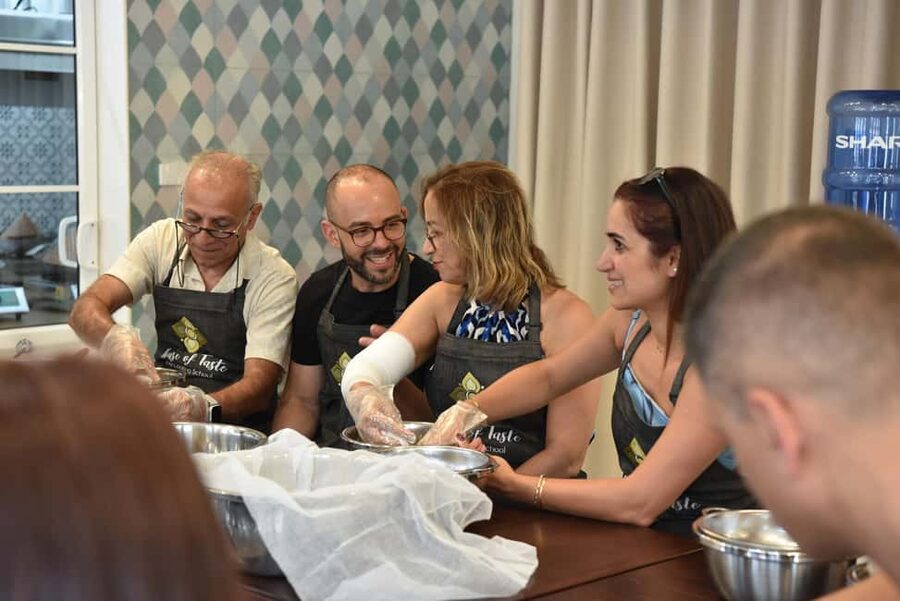
The best available details point to a class that is friendly, social, and well paced. Pitch is specifically praised for humor and clear English, while the school’s instructors teach in English and Thai.
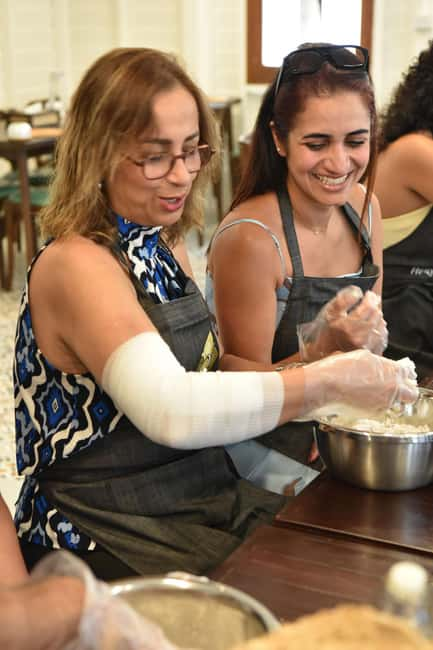
That mix can help if you want more than a recipe sheet. You can ask questions, follow the steps, and learn why ingredients are used. The class also puts you with other cooks, so there is a social side to the meal.
The instruction appears designed for cooks of ordinary ability. One useful detail is that the dishes are described as easy to make under guidance. You should not need advanced kitchen skills, but you still need to stay involved. This is a hands-on class, not a meal served while you watch.
The format also suits solo visitors. You cook, eat, and meet people in the same setting. The social element is not guaranteed to be the same at every session, but the class structure naturally gives you time around a shared meal.
Cancellation and booking flexibility
You can cancel up to 24 hours in advance for a full refund. The reserve-now-and-pay-later option also lets you hold a place without paying immediately, which is useful while you are still arranging your Bangkok schedule.
Because the menu changes daily, check both the start time and the dishes before confirming. That small step can make the difference between getting the meal you want and simply accepting the available menu.
Should you book this Sathon cooking class?
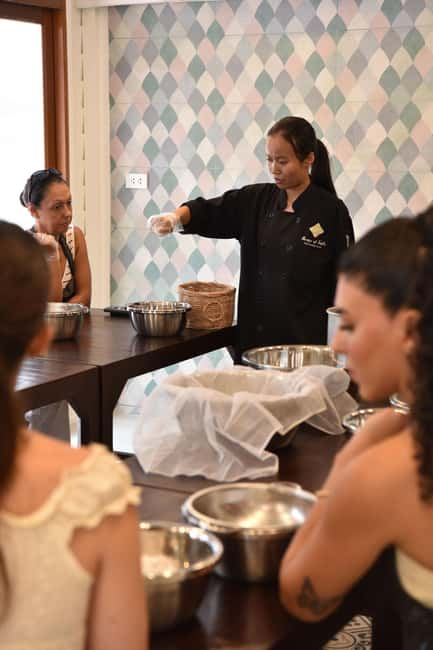
I would recommend this class if you want a practical introduction to Thai food with a clear market connection. It suits first-time visitors, solo food lovers, couples, and anyone who wants recipes they can use after returning home.
Choose carefully if you have one must-eat dish, since the menus rotate by day. Also remember that the class is three and a half hours, so it is not a quick stop between major Bangkok sights.
For $45, the combination is strong: a local market visit, fresh curry paste, homemade coconut milk, four cooked dishes, dessert, recipes, and an English-speaking instructor. Book it for the day that matches your menu interests, arrive with dietary needs clearly stated, and expect to leave with both a full stomach and a better grasp of how Thai flavors are built.
FAQ
Where does the Thai cooking class meet?
It meets at House of Taste Thai Cooking School at 33 Thanon Suan Phlu, behind Suan Phlu Market, Thung Maha Mek, Sathon, Bangkok 10120. Search the full address on a map.
How long does the experience last?
The class lasts 210 minutes, or three and a half hours. Check availability for the current starting times.
Is the market tour included in every class?
Yes. The guided Suan Phlu Market visit is included in morning, afternoon, and evening classes.
What dishes will I cook?
The menu depends on the day. Every class includes four dishes, with options such as Som Tum, Pad Thai, Thai curries, Tom Yum Goong, Tom Kha Gai, Pad Krapow Gai, Pad See Ew, Larb Gai, and mango sticky rice.
Can dietary restrictions be accommodated?
Yes. Suitable substitute ingredients can be provided for vegetarian, halal, kosher, and allergy-sensitive diets.
What languages are spoken?
The instructors teach in English and Thai.
Is the activity wheelchair accessible?
Yes, the activity is listed as wheelchair accessible.
New market tours around Bangkok
- Longtail Boat Adventure to the Local Weekend Floating Market★ 5.0 · 12 reviews
- Private Unseen Mangrove Forest and Floating & Railway Market★ 5.0 · 2 reviews
- Private Tour from Bangkok: Railway & Floating Markets★ 4.9 · 11 reviews
- Private Floating & Train Market + DRAGON Temple + Thai Cafe★ 4.9 · 13 reviews
- From Bangkok: Floating Market & Ayutthaya Private Day Trip★ 5.0 · 42 reviews
- Mahachai & Maeklong Railway Market Day Tour From Bangkok★ 4.7 · 14 reviews
- Grand Palace, Damnoen Floating Market & Maeklong Market Tour★ 4.8 · 173 reviews
- From Bangkok:Damnoen Floating Market and Railway Market Tour★ 4.5 · 15 reviews
Bangkok Market Tours, side by side.

Bangkok: Damnoen Saduak Market and Maeklong Railway Market
Read our review →
The Old Siam: Damnoen Saduak and Maeklong Railway Market
Read our review →
Bangkok: Train Market & Floating Market with Boat Ride
Read our review →
Half-Day Railway Market and Floating Market Tour in Thailand
Read our review →
Bangkok by Night: Temples, Markets and Food Tuk-Tuk Tour
Read our review →
Bangkok: Damnoen Saduak, Train Market & Mahanakhon Day Trip
Read our review →
From Bangkok: Damnoen Saduak Floating Market Guided Tour
Read our review →