
Review · BANGKOK
Bangkok by Night: Temples, Markets and Food Tuk-Tuk Tour
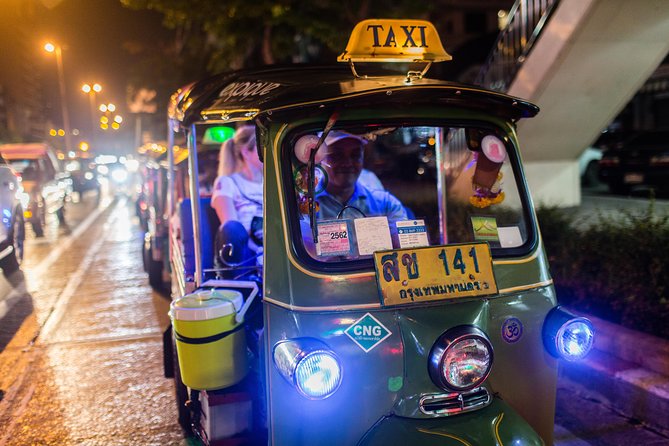
Bangkok after dark is best understood from the back of a tuk-tuk, where temple roofs glow, traffic roars, and food stalls appear at every turn. This four-hour outing links the old city, a flower market, Chinatown, and several food stops without making you plan a route through Bangkok’s tricky evening traffic.
I like the mix of short rides and walks, which keeps the night moving, and the chance to try snacks chosen by a local guide rather than guessing at a stall menu. I also like the 24-hour flower market, a working market rather than a polished attraction. The main drawback is that temple buildings are closed at night, and the dinner stop, food choices, and some sights can change.
Key points to know before booking
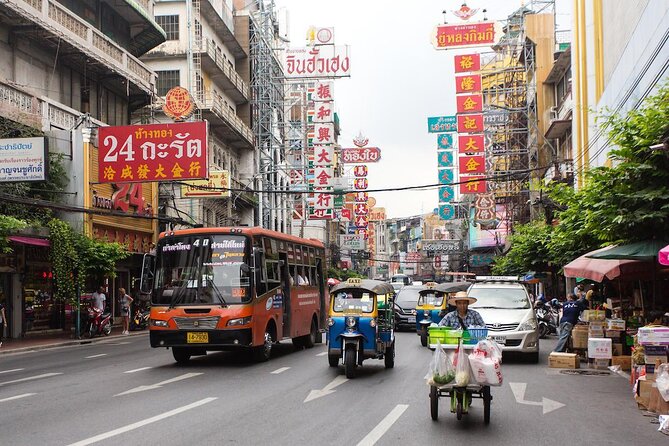
- Tuk-tuk travel connects several parts of Bangkok: You ride between Thonburi, the old city, the flower market, and Chinatown instead of staying in one neighborhood.
- The food is spread across the evening: Expect street snacks, a sit-down dinner, soft drinks, and a dessert stop, with vegetarian food available.
- The flower market is a real working market: Pak Khlong Talat is open around the clock and is particularly atmospheric after sunset.
- Wat Prayurawongsawat replaces Wat Arun at times: The temple visit can change because of renovation or nighttime closures.
- The tour ends in Chinatown: You can continue your night in Yaowarat or receive a lift toward central Bangkok or a public transport station within the limited drop-off area.
- Small groups keep the outing manageable: Join-in groups are limited to 10 people, with a maximum of 12 listed for the activity.
Why Bangkok by tuk-tuk works after sunset
Bangkok can be hard to read on a first visit. The city spreads across both sides of the Chao Phraya River, major sights close early, and evening traffic can turn a short road trip into a slow crawl. This tour handles the awkward parts for you by starting at a BTS station and using tuk-tuks to connect the stops.
The tuk-tuk is more than transport here. You sit close to the street, hear the city, and get quick views of lit temples, shopfronts, bridges, and passing traffic. It is not the quietest way to move around, and you should not expect a smooth ride, but that is part of the character.
Usually two people share a tuk-tuk. If you book alone, you may share with another person. Groups of three or five may have three people in one vehicle. That arrangement is worth understanding before you book, especially if you want a private ride for your own party.
The advertised price is $79.08 per person. That is not the cheapest way to buy dinner or visit a temple, but it covers four hours of transport, a guide, snacks, a full restaurant meal, dessert, and soft drinks. The bigger value is time: you get a planned route through several areas that would be difficult to connect efficiently on your own.
More market rides by bike or tuk-tuk around Bangkok:
- Bangkok: Markets, Temples and Food Night Tour by Tuk Tuk
★ 4.9 · 2,371 reviews - Bangkok: Night Bike Tour with Temples & Flower Market Visit
★ 4.8 · 751 reviews - Bangkok: Night Bike Tour with Temples & Flower Market Visit
★ 5.0 · 223 reviews
Starting at Krung Thonburi BTS Station
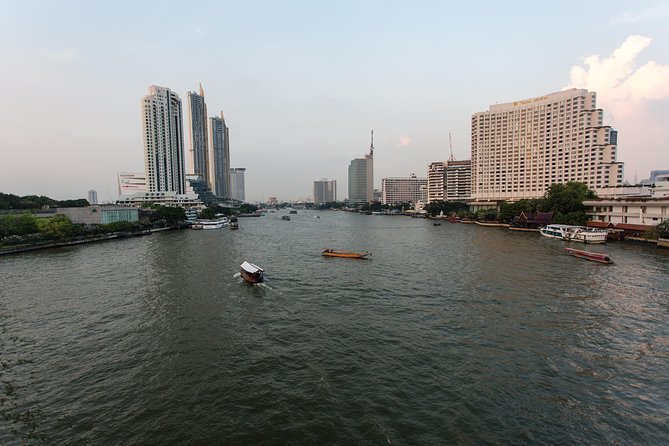
You meet at the Lawson 108 beside Krung Thonburi BTS Station, on the Thonburi side of the river. The meeting point is practical because evening traffic can be heavy, and the operator strongly encourages using the Skytrain or another form of public transport to get there.
Allow extra time to find the exact station exit and meeting spot. One person described the location as difficult when arriving by another method, while also noting that the guide waited for a late arrival. I would still aim to arrive early. Missing the tuk-tuk departure could be more troublesome than missing a conventional walking tour.
At the start, the guide introduces the evening and places you into the tuk-tuks. Guides used for this experience include Sasa, Tony, Kevin, Jazzie, P, Jib, Kung, and Nylan, though you should not assume a particular person will lead your departure. The strongest part of the guiding is the combination of food explanations, temple context, and practical help choosing dishes.
Wongwian Yai, where the food begins
The first proper stop is a local street food market around Wongwian Yai. You spend about 30 minutes tasting a selection of snacks and hearing how the market fits into ordinary Bangkok life.
This is a good early stop because it gives you a gentle introduction to Thai food before dinner. You can ask what you are eating, how it is prepared, and which flavors to expect. Guides such as Kung have been especially helpful with explaining dishes and choosing items for the group.
The format may be less hands-on than some dedicated food tours. The guide may collect snacks and bring them back to the group rather than walking you from stall to stall for a long time. If you want close contact with individual vendors, ask questions as the food is served.
You should tell the operator about dietary needs when booking. Vegetarian guests can be accommodated, but the guide needs notice. This is also a useful point to mention any foods you cannot eat, since the evening includes several different vendors and a restaurant.
Wat Prayurawongsawat and the quiet temple grounds
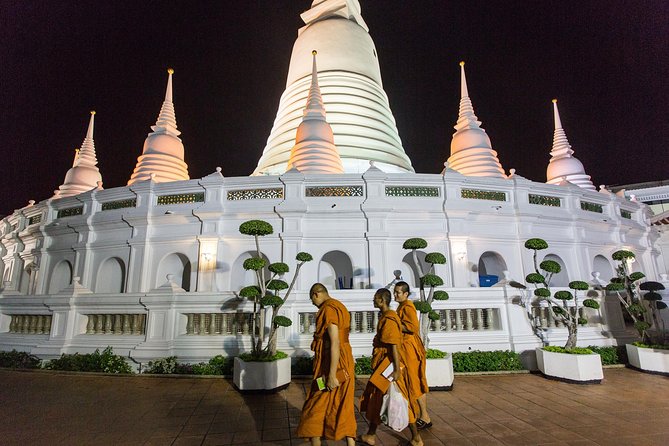
The temple stop takes place at Wat Prayurawongsawat Worawihan, a 19th-century temple complex on the Thonburi side of the river. It is being used as an alternative to Wat Arun when that temple is unavailable or under renovation.
The temple buildings are generally closed at night, so this is not a chance to walk through every interior or study detailed murals. Instead, you see the grounds in the cooler evening air and learn about the site from your guide. The change in mood from the noisy market to the calmer temple garden is one of the tour’s better contrasts.
A particularly memorable option is feeding turtles in the temple garden, something included in the evening experience described by one participant. It is a small detail, but it gives this stop more life than a quick photograph outside a locked building.
The tour has also used Wat Arun when Wat Pho is closed at night. Because temple access can change, check the current plan close to departure if a particular temple matters most to you. The tour is strongest when you treat the temples as atmospheric evening places, not as substitutes for a full daytime temple visit.
More market tours around Bangkok:
- Bangkok: Damnoen Saduak Market and Maeklong Railway Market
★ 4.5 · 26,723 reviews - The Old Siam: Damnoen Saduak and Maeklong Railway Market
★ 4.5 · 10,992 reviews - Bangkok: Train Market & Floating Market with Boat Ride
★ 4.7 · 9,547 reviews - Bangkok: City Highlights Temple and Market Walking Tour
★ 4.5 · 3,990 reviews
Pak Khlong Talat, Bangkok’s flower market at night
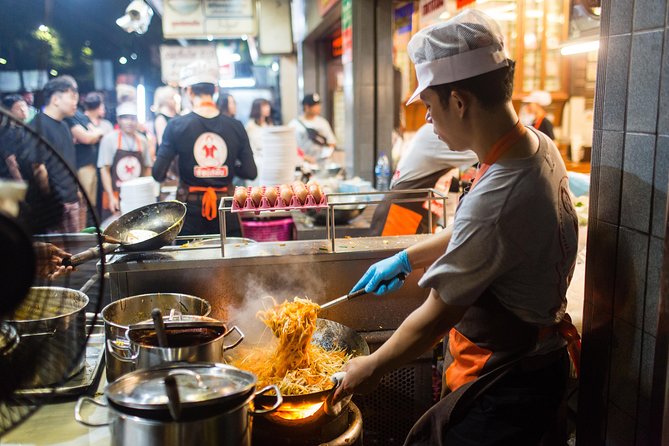
Pak Khlong Talat is the tour’s most distinctive stop. This 24-hour flower market comes alive at night, when flowers are being sorted, arranged, and moved through the market for shops, ceremonies, and homes.
You walk through the market for about 30 minutes. Expect color, fragrance, workers handling flowers, and a more practical setting than a sightseeing attraction. The market is one of those places that gives you a sense of Bangkok’s daily economy, not just its famous monuments.
The timing matters. During the day, the heat can make a market visit tiring. At night, the cooler air and working rhythm make it easier to linger. Keep your group together and watch your footing, since this is a working market rather than a quiet display hall.
If you enjoy photography, bring a phone or camera that performs well in low light. Ask before photographing workers or close-up arrangements. The guide can add useful context about what you are seeing, which is far better than walking through without knowing why the market is active at that hour.
Dinner, with changing restaurants and local choices
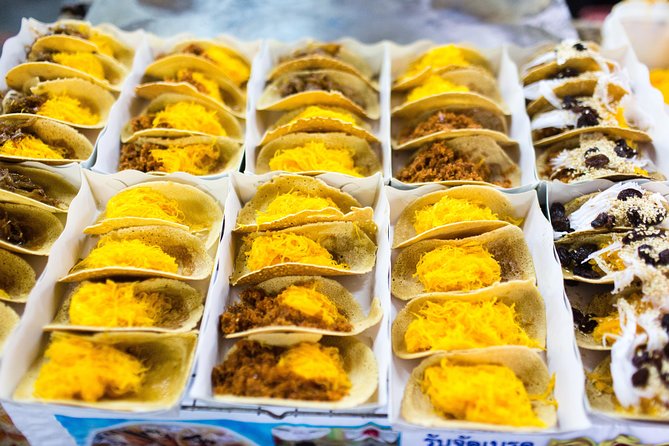
Dinner lasts about 40 minutes at a local restaurant, with non-alcoholic drinks included. The restaurant changes from day to day, depending on what is open and what works best for the group.
That flexibility has two sides. It allows the operator to keep the experience running when a restaurant is unavailable, but it also means you cannot book this tour with a guaranteed restaurant or guaranteed dish. Some evenings have included the well-known Thipsamai pad Thai restaurant, and other meals have been served at a riverside restaurant with an attractive view.
The meal may be ordered from a limited choice rather than served as a large family-style spread. If you want to sample many dishes at dinner, a dedicated food tour may offer more variety. If you prefer a reliable sit-down meal after several snacks, this arrangement is easier.
The restaurant stop is also a chance to rest. Four hours of tuk-tuk rides, market walking, temple paths, and food can feel busy, so use the meal to catch up with your group and ask the guide about the next sights.
Crossing into Rattanakosin and the Grand Palace photo stop
After dinner, the tuk-tuks cross back toward Rattanakosin, Bangkok’s old city and the area with many of the city’s best-known monuments. The ride itself is part of the sightseeing. From the tuk-tuk, you see the streets change as the route moves from local neighborhoods toward the grander historic center.
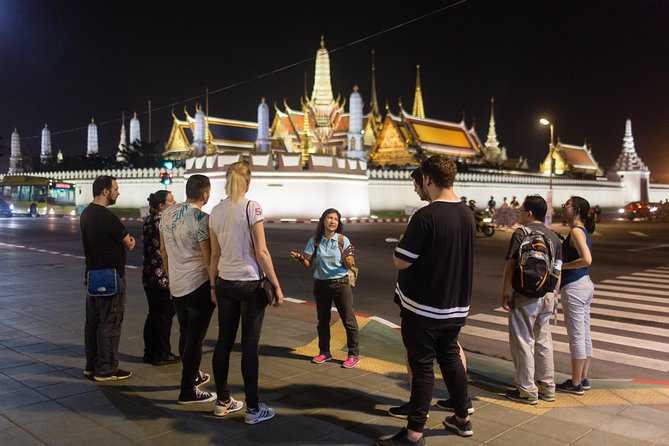
The Grand Palace is a photo stop rather than an evening visit. It is closed at this hour, but the illuminated exterior makes a strong backdrop. This is important to know before booking: you are seeing the palace from outside, not entering the complex.
The same practical rule applies to several temples on the route. You get nighttime views, the atmosphere of the grounds, and explanations from the guide. For interior access, detailed architecture, and a longer look at religious art, plan a separate daytime temple visit.
The Giant Swing and a short history lesson
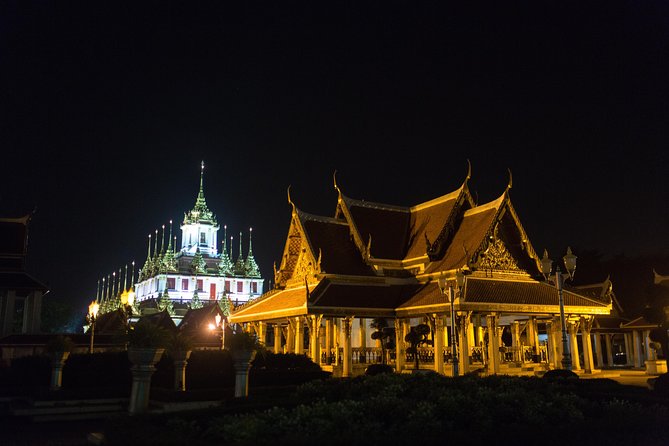
The stop at Sao Chingcha, the Giant Swing, lasts about 10 minutes. It is a quick pause, but it helps fill in the story of Bangkok’s old ceremonial center.
The Giant Swing is easy to recognize and works well as a short photo stop. Your guide explains its role and history, then the group moves on. Do not expect a long lecture or a museum visit here. The value comes from placing a famous landmark within the larger route through old Bangkok.
The evening pace is generally well judged. You stop often enough to eat and walk, but no single sight consumes the whole tour. People who prefer slow, detailed visits may find the schedule brisk. Those who want to cover several parts of Bangkok in one night will appreciate the movement.
Chinatown, dessert, and the end of the evening
The final stop is Yaowarat, Bangkok’s Chinatown. At night, the area fills with food vendors, restaurants, lights, and pedestrians. It is a lively finish after the quieter temple and flower market stops.
Dessert is served here, and mango sticky rice has been a memorable choice on some evenings. The group may also sample other sweets depending on what is available. Food stalls and restaurants can change, so consider the dessert part of the local evening rather than a fixed menu promise.
Chinatown is a useful ending point. You can stay and continue eating on your own, or use the limited drop-off service toward central Bangkok locations or a public transport station. The operator does not provide hotel pickup at the start, and the return is not an unlimited hotel transfer, so check whether the final drop-off suits your accommodation.
One important exception is Monday. Chinatown can be quieter or some businesses may be closed, and the tour may adjust the route or make a drive-through visit. If Yaowarat is your main reason for booking, choose a night when more of the area is operating.
Group size, comfort, and who should book
The join-in version is limited to 10 people per group, with a maximum of 12 listed for the activity. That is small enough for a guide to explain food and keep the group together, but it is not a private evening.
A private option is available and makes more sense for families or couples who want more control over food choices and pacing. Children can join private tours, but everyone over age five must buy a ticket. The small-group option has a minimum age of 10, and the tour finishes around 11 p.m., so it is not a good fit for young children.
You should be comfortable climbing into a tuk-tuk, walking through markets, and standing or moving around temple grounds. The tour is not recommended if you have walking difficulties. Most people can take part, but Bangkok’s uneven paths, traffic, and heat earlier in the evening can make it tiring.
This is an alcohol-free experience. Soft drinks are included, and drinking in the tuk-tuk is illegal. The operator can stop the tour if there is drunken behavior, so treat it as a cultural and food outing rather than a nightlife pub crawl.
Rain does not normally cancel the tour. Ponchos, rain covers, and umbrellas are provided, though you may still get wet. Light rain can make the tuk-tuk ride memorable, but bring a positive attitude and shoes suited to wet pavement.
Is the $79.08 price fair?
For four hours, the cost is fair if you value structure and local guidance. You are paying for several tuk-tuk rides, an English-speaking guide, market snacks, dinner, dessert, non-alcoholic drinks, and a final limited drop-off. Buying each part separately would require time, bargaining, route planning, and a willingness to navigate Bangkok at night.
The price is less compelling if you mainly want temple interiors or a serious food education. The temples are viewed from the outside, and dinner can be a choice between limited options rather than a long series of shared plates. You may also prefer arranging your own tuk-tuk rides if flexibility matters more than convenience.
The strongest value is the range. In one evening, you see Thonburi, a local food market, a temple, the flower market, the old city, the Grand Palace exterior, the Giant Swing, and Chinatown. That is a lot of Bangkok without spending the night studying maps.
Should you book this Bangkok night tour?
Book it if you want a lively first-night introduction to Bangkok, enjoy trying unfamiliar snacks, and like moving between sights rather than spending two hours at one temple. The guides, including Sasa, Tony, Kevin, Jazzie, P, and others used for this experience, are central to the quality, especially when explaining food and adjusting choices to the group.
I would choose the tour early in a Bangkok stay. It gives you useful bearings, points out places you may want to revisit, and lets you sample food before ordering alone. It also works well for couples, friends, and families with older children who want sightseeing mixed with dinner.
Skip it if you need guaranteed restaurant reservations, a fixed temple schedule, alcohol, or an accessible route with little walking. For most people who want Bangkok’s streets, food, temples, and night markets in one organized outing, the $79.08 cost is reasonable, and the tuk-tuk rides make the city feel far more immediate than a standard coach tour.
FAQ
Where does the tour start?
You meet at Lawson 108 beside Krung Thonburi BTS Station in Bangkok. Hotel pickup is not included, and public transport is strongly recommended because evening traffic can be heavy.
Where does the tour finish?
The final stop is Chinatown, also called Yaowarat. From there, the operator can provide a lift toward central Bangkok locations or a public transport station within a limited distance.
How long does the tour last?
The experience lasts approximately four hours and usually finishes around 11 p.m.
Is dinner included?
Yes. The tour includes a restaurant dinner, street food snacks, dessert, and non-alcoholic drinks. Restaurant and food choices can change from day to day.
Can vegetarians join?
Yes. The tour is suitable for vegetarians, but you should provide dietary requirements when booking.
Can I cancel for a full refund?
You can cancel at least 24 hours before the local start time for a full refund. Cancellations or changes made within 24 hours are not refunded or accepted.
New market tours around Bangkok
- Longtail Boat Adventure to the Local Weekend Floating Market★ 5.0 · 12 reviews
- Sathon: Hands-on Thai Cooking Class & Market Tour in Bangkok★ 5.0 · 19 reviews
- Private Unseen Mangrove Forest and Floating & Railway Market★ 5.0 · 2 reviews
- Private Tour from Bangkok: Railway & Floating Markets★ 4.9 · 11 reviews
- Private Floating & Train Market + DRAGON Temple + Thai Cafe★ 4.9 · 13 reviews
- From Bangkok: Floating Market & Ayutthaya Private Day Trip★ 5.0 · 42 reviews
- Mahachai & Maeklong Railway Market Day Tour From Bangkok★ 4.7 · 14 reviews
- Grand Palace, Damnoen Floating Market & Maeklong Market Tour★ 4.8 · 173 reviews
Bangkok Market Tours, side by side.
Bangkok: Damnoen Saduak Market and Maeklong Railway Market
Read our review →
The Old Siam: Damnoen Saduak and Maeklong Railway Market
Read our review →
Bangkok: Train Market & Floating Market with Boat Ride
Read our review →
Half-Day Railway Market and Floating Market Tour in Thailand
Read our review →
Bangkok: Damnoen Saduak, Train Market & Mahanakhon Day Trip
Read our review →
From Bangkok: Damnoen Saduak Floating Market Guided Tour
Read our review →
Bangkok: Hands-on Thai Cooking Class and Market Tour
Read our review →
Damnoen Saduak Floating Market and Maeklong Railway Market Tour
Read our review →This tour also appears in