
Review · BANGKOK
Bangkok:4Hour Flower Market and Little India Tour Mini Group
The most interesting part of this four-hour tour is the way it links several working parts of Bangkok that many visitors miss. You begin with a public boat ride to Pak Khlong Talat, Thailand’s biggest flower market, then walk through Little India, Phahurat textile market, Sampeng Market, and finally Chinatown. It is a look at daily commerce, faith, food, and craft rather than a checklist of grand monuments.
I like the small-group format, which gives a guide time to answer questions and adjust the pace. I also like the hands-on possibilities reported with guide Sunee, including making a floral decoration and trying snacks along the way. The main consideration is that this is a culture tour, not a lunch tour, and the market portions involve walking, crowds, and uneven access.
Key points to know
- Public boat arrival: Meet at Sathorn Pier near Taksin BTS Station and travel along the Chao Phraya River to Pak Khlong Talat.
- Flower market focus: See Bangkok’s major flower marketplace, with colorful arrangements and fresh market activity.
- Little India and Phahurat: Walk past curry houses, textile shops, and a prominent Sikh temple.
- Sampeng shopping: Browse low-priced goods ranging from bags and shoes to jewelry, stationery, decorations, and handicrafts.
- Food limits: Snacks and drinking water are included, but lunch and other food purchases are not.
- Simple logistics: Bring identification and comfortable shoes. Large bags and luggage are not allowed.
Starting at Sathorn Pier and Riding the Chao Phraya
The tour begins at Sathorn Pier, the central pier near Taksin BTS Station. This is a practical meeting point if you are using Bangkok’s Skytrain, but you need to arrive ready for registration before the boat departure. Hotel pickup and drop-off are not included, so you arrange your own way to the pier.
The public boat ride is more than a transfer. It gives you a quick look at Bangkok from the Chao Phraya River and avoids beginning the tour in a road vehicle. You travel to Pak Khlong Talat, the city’s largest flower market, where the walking portion starts.
Because this is a four-hour tour with several stops, the boat helps set a brisk rhythm. I would arrive early, keep your belongings compact, and wear shoes that will be comfortable for a good deal of walking. The operator does not allow luggage or large bags, so this is not a good outing to schedule while carrying suitcases.
More Flower and Flea Market Tours in Bangkok:
- Bangkok: Night Bike Tour with Temples & Flower Market Visit
★ 4.8 · 751 reviews - Bangkok: Night Bike Tour with Temples & Flower Market Visit
★ 5.0 · 223 reviews - Jaipur Tuk-Tuk Tour with Flower Market Visit
★ 5.0 · 124 reviews
Pak Khlong Talat, Bangkok’s Flower Market
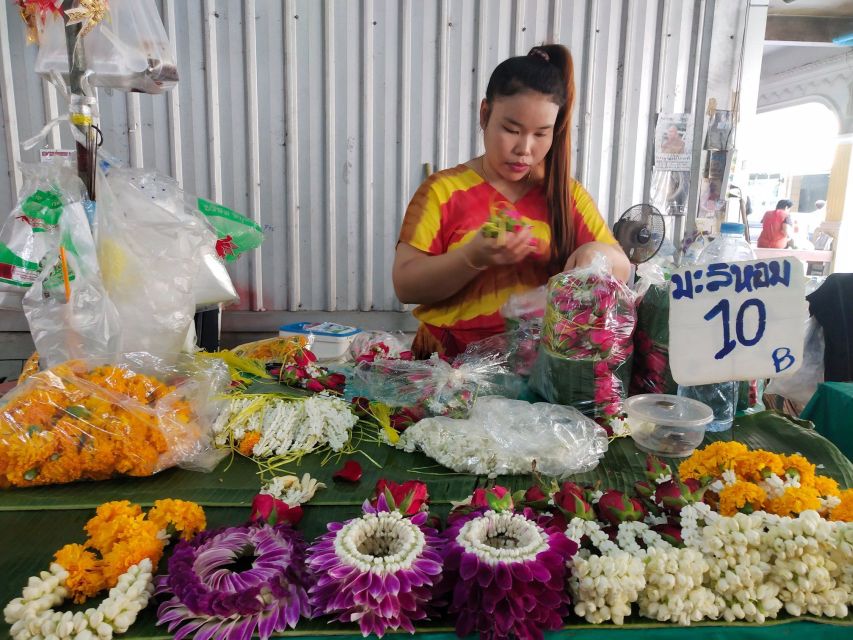
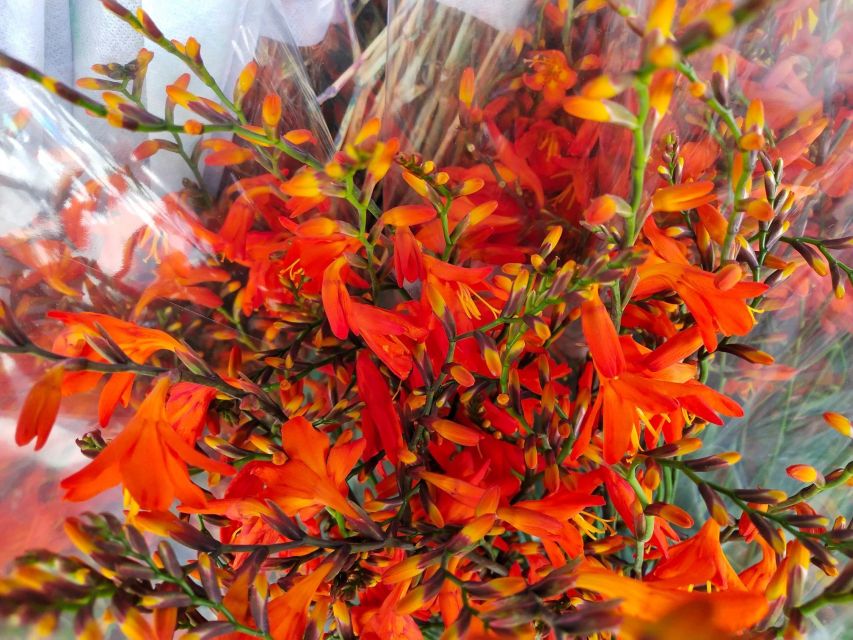
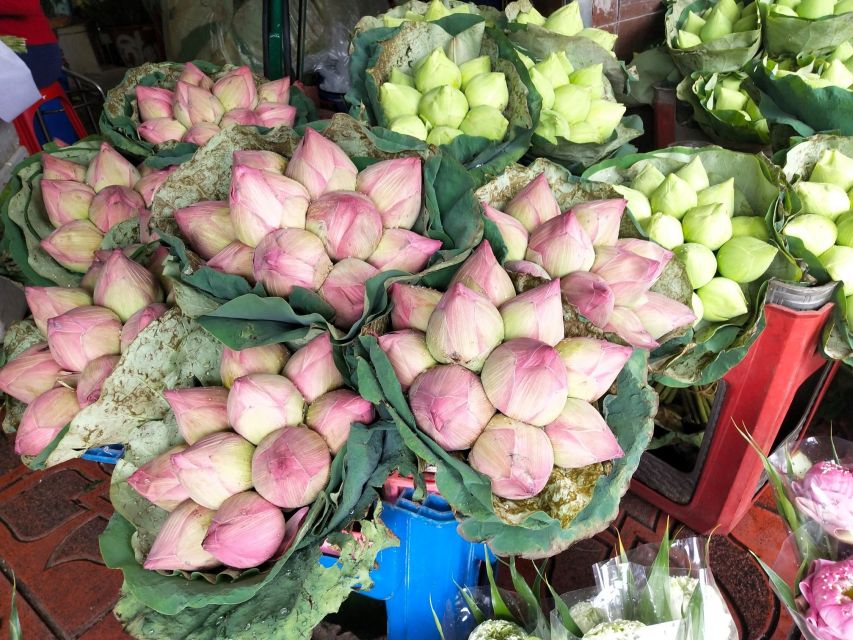
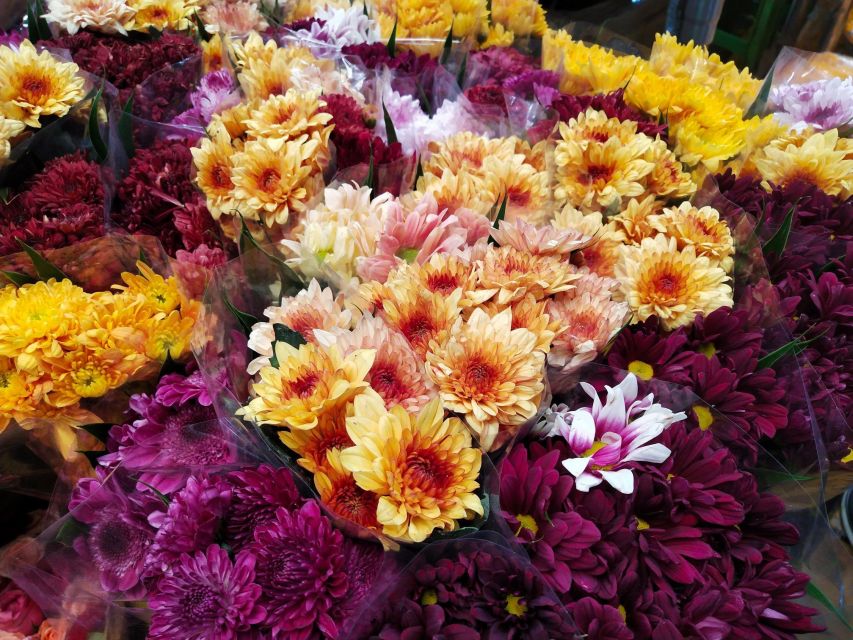
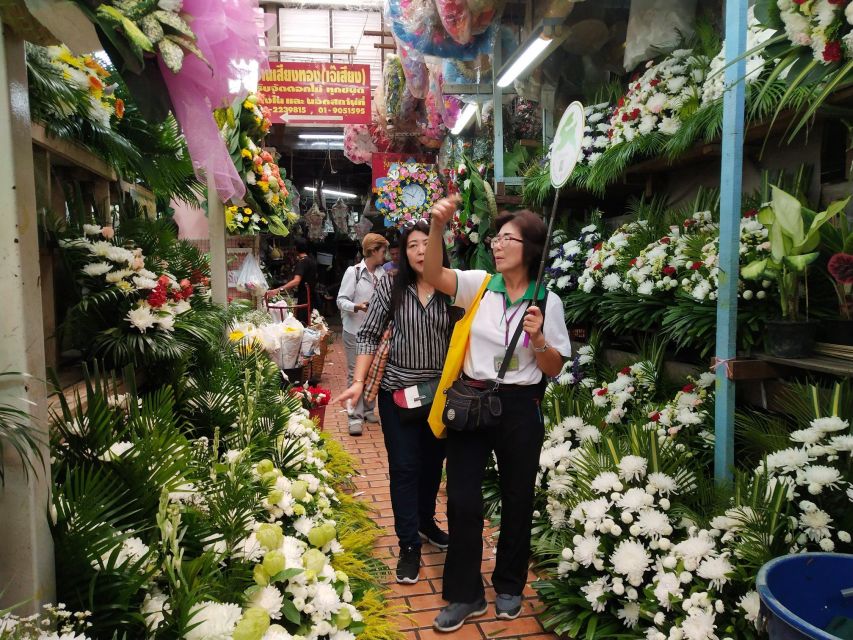
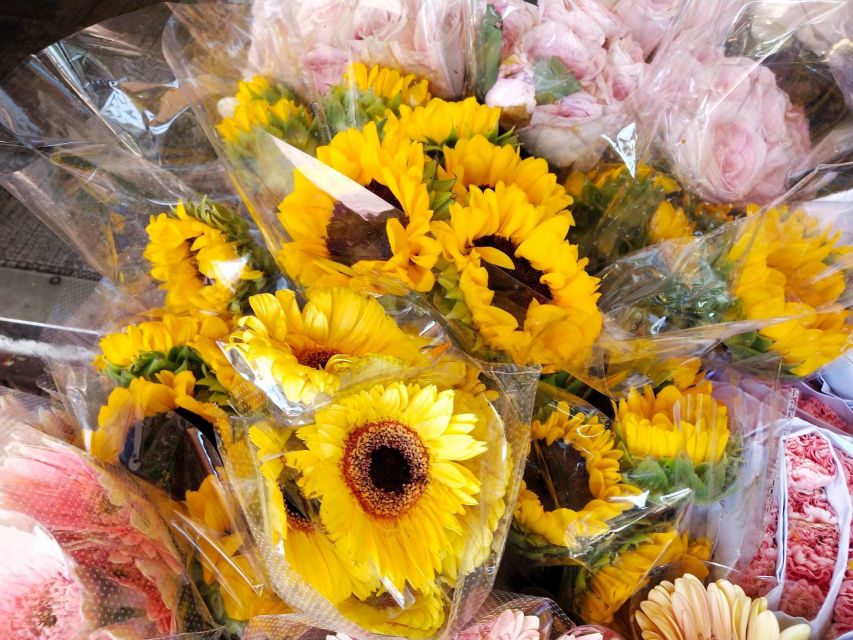
Pak Khlong Talat is the visual centerpiece of the tour. The market is filled with flowers and arrangements, and it offers a more useful look at Bangkok’s flower trade than a quick photo stop outside a shop. You can expect colorful displays, sellers preparing flowers, and the practical work behind religious offerings, celebrations, and everyday decoration.
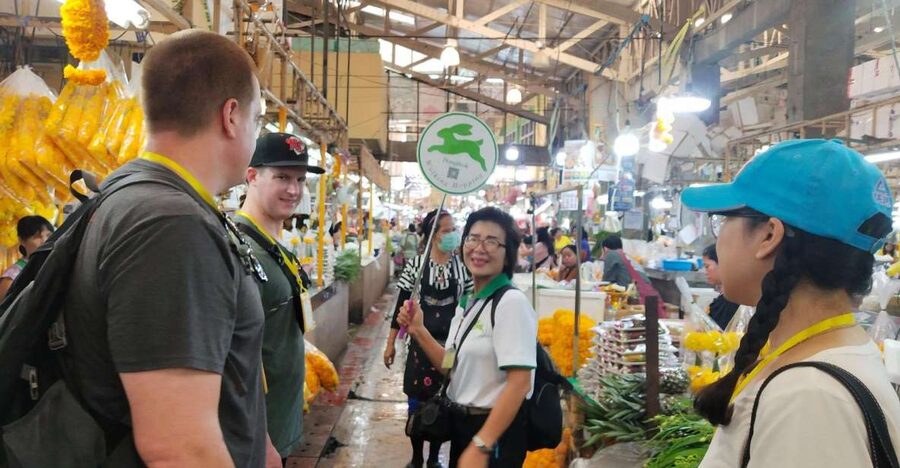
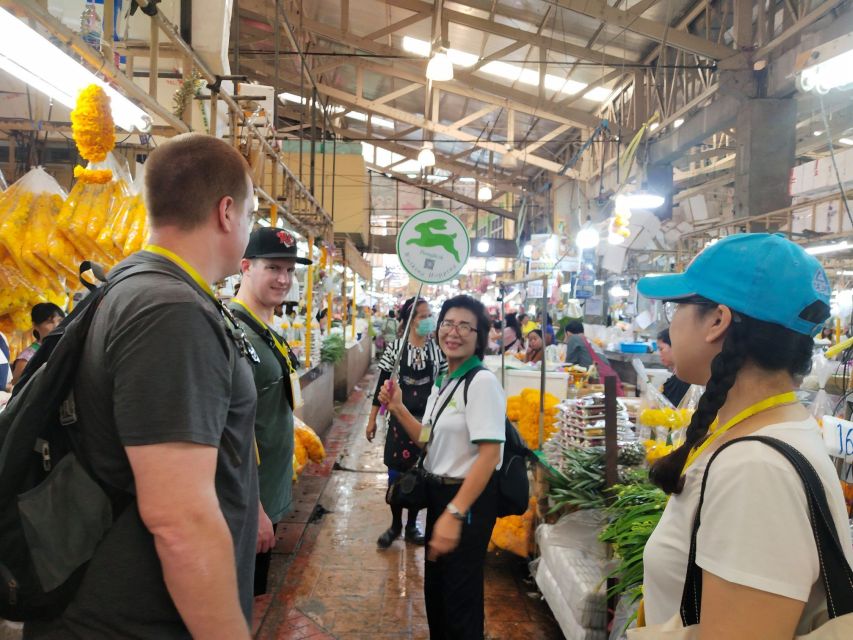
A guide adds value here by explaining what you are seeing instead of leaving you to wander through rows of flowers without context. The guide can also point out the difference between a finished arrangement and the market work that goes into it.
One of the most appealing details from the guided visits is the chance to make a floral decoration yourself. That hands-on moment is not guaranteed with every guide or group, but it has been part of the experience with Sunee. If the market pace allows, this can turn a short visit into a more memorable activity.
You should also keep expectations sensible. The flower market is a working market, not a polished attraction built for sightseeing. The floor, aisles, and displays may feel crowded, and the experience is about observation and local trade more than comfort. I consider that a fair exchange for seeing a real part of Bangkok’s daily life.
Little India and the Religious Side of Bangkok
From the flower market, the route continues into Little India. This neighborhood is known for curry houses, Indian goods, textile shops, and a prominent Sikh temple. The tour gives you a chance to see how Bangkok’s ethnic and religious communities shape the city block by block.
The Sikh temple is an important stop because it adds religious context to a route that could otherwise become just a shopping walk. Your guide can help explain the role of the temple and the community around it. As with any place of worship, dress and behavior should be respectful, and you should follow the guide’s instructions about where to walk and what you may photograph.
The food here is part of the atmosphere, but the tour is not designed as a food crawl. You may receive small snacks along the way, and the information allows for Thai and Indian snack experiences. One visit with Sunee included typical sweets and Thai omelets. Still, lunch is not included, and you should budget separately if you want a proper meal in Little India or later in Chinatown.
That distinction matters. At $75 per person, the tour price covers the guide, public boat ticket, taxes and fees, travel insurance, snacks, and water. It does not cover lunch or drinks beyond the supplied refreshments. If you are comparing it with a food tour, this is the wrong product. If you want cultural explanation while walking through food and market districts, it makes more sense.
Phahurat, Bangkok’s Textile Market
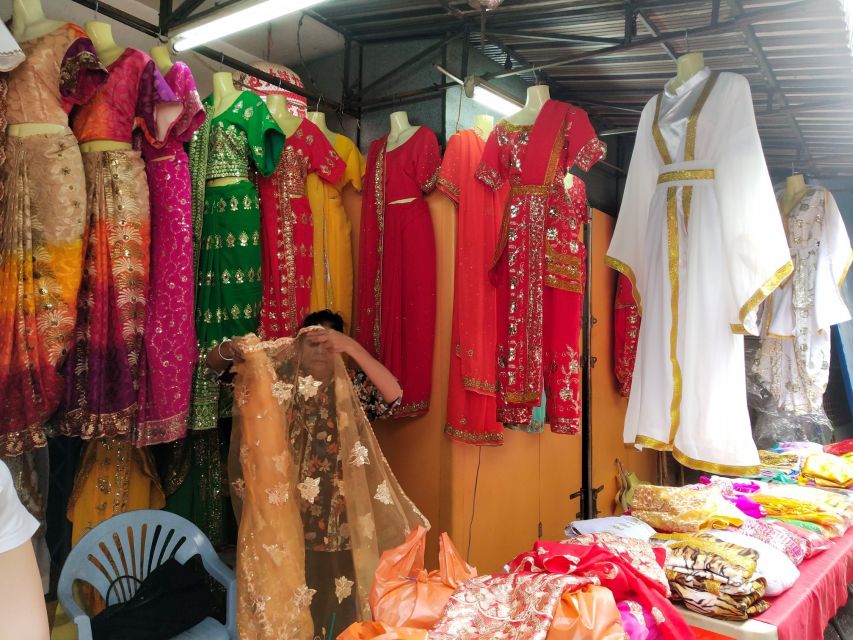
Phahurat is described as Bangkok’s largest textile market, and it gives the tour another angle on local commerce. Little India and Phahurat overlap in character, but the textile focus makes this section useful for anyone interested in fabric, clothing, color, and wholesale-style shopping.
You will see textile shops and a wide range of material rather than only finished souvenirs. The guide can help you understand what makes the area different from a regular shopping mall or tourist market. Even if you do not plan to buy fabric, the market shows how Bangkok’s commercial neighborhoods serve both local shoppers and small businesses.
The value here depends on your interests. If you like browsing materials, clothing, and shop displays, this may be one of the most rewarding parts of the walk. If you are looking only for famous sights, it may feel less essential. I would treat it as a chance to see Bangkok’s working retail culture, not as a landmark stop.
The route also helps connect the communities around Little India. You move from religion and food to trade and textiles, then into the wider web of Bangkok markets. That mixture is the point of the outing.
More market tours around Bangkok:
- Bangkok: Damnoen Saduak Market and Maeklong Railway Market
★ 4.5 · 26,723 reviews - The Old Siam: Damnoen Saduak and Maeklong Railway Market
★ 4.5 · 10,992 reviews - Bangkok: Train Market & Floating Market with Boat Ride
★ 4.7 · 9,547 reviews - Bangkok: City Highlights Temple and Market Walking Tour
★ 4.5 · 3,990 reviews
Sampeng Market and the Art of Bargain Shopping
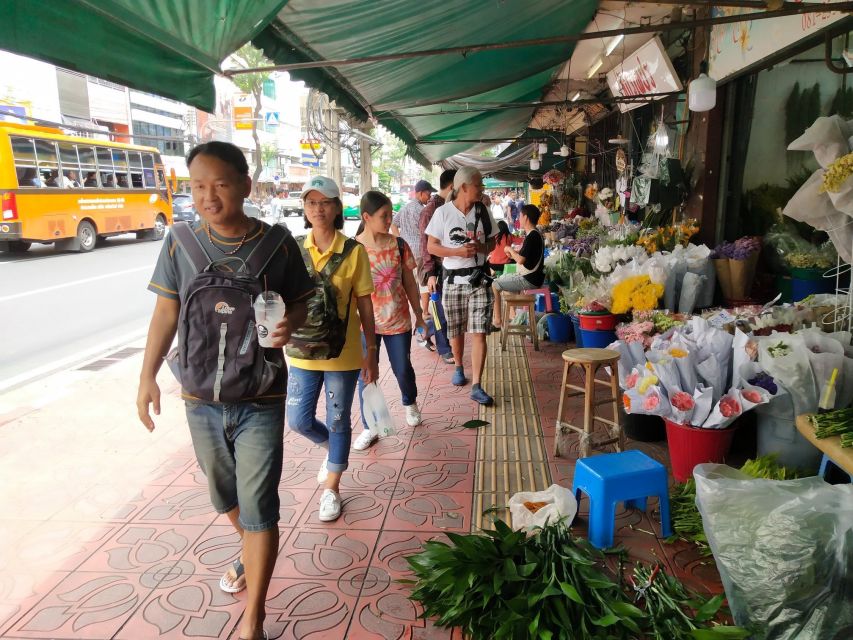
Sampeng Market is a large shopping area where you can find almost anything sold in small market stalls. The listed range includes gifts, decorations, handicrafts, clothes, jewelry, stationery, shoes, and bags. Prices are generally low, though you need to inspect items carefully because quality can vary.
This is a place where the guide can save you time. Sampeng is extensive, and a first visit can become a blur of narrow passages and repeated product categories. With local direction, you can better understand where you are and how the market fits into Chinatown’s commercial life.
The buying tip is simple: some shops offer a better deal when you buy more than three items. That makes Sampeng more useful for small gifts or several similar purchases than for a single expensive souvenir. Bring a short list if you are shopping, but leave room for unexpected finds. The market sells too many small items to browse efficiently if you inspect every stall.
Do not confuse low prices with guaranteed bargains. Check condition and compare a few stalls before buying. The tour gives you access to the market, but it does not turn every purchase into a special deal. You are still responsible for judging quality and negotiating politely when appropriate.
The large-bag restriction is especially relevant here. A compact day bag is much easier to manage than luggage, and it leaves your hands free for browsing. Comfortable shoes matter because the market walk can be more tiring than the short itinerary description suggests.
Ending in Chinatown With Time to Continue
The tour finishes back at the meeting point after the route reaches Chinatown, but the guide can recommend a suitable area for free time along the way. This gives you a useful choice. You can follow suggestions for more exploring, continue looking around Chinatown, or make your own way back after the organized portion ends.
The Chinatown section is described as a walk through one of the area’s many lanes lined with stalls. It is a fitting final stop because the tour has already introduced you to flowers, Indian culture, textiles, and general market shopping. Chinatown brings those commercial threads together in one of Bangkok’s best-known market districts.
Do not assume the tour includes a full Chinatown food experience. The cultural focus remains the same through the final section. You might receive snacks and local recommendations, but lunch, drinks, and personal purchases are on your own.
The end point is also the original meeting point, Sathorn Pier. That is convenient if you want to continue using the river or BTS afterward, but there is no hotel drop-off. Plan your next move before you arrive, especially if you are tired or carrying shopping.
What the $75 Price Really Covers
At $75 per person, this tour is priced above a simple self-guided market visit. You are paying for the guide, the boat ticket, taxes and fees, travel insurance, water, and snacks, plus the structure of a four-hour route through several districts.
The strongest value comes from the explanation and organization. You could visit a flower market or walk through Little India without a guide, and one person specifically felt the flower market was easy to explore independently. That is fair. The market itself does not require a ticketed guide.
The value improves if you want the districts connected for you. A guide can explain what you are seeing, help you move between areas, answer questions, and point out food or shopping details you might miss alone. Small groups matter here because crowded markets are easier to manage when the guide can stay attentive to each person.
I would book it if you have only a short time in Bangkok and want several local neighborhoods in one outing. I would skip it if you prefer to browse slowly, eat a full lunch, or spend an entire morning in one market. In that case, independent exploration may give you more freedom for less money.
The Guide Makes the Difference
The tour is offered in English, and the guide is a licensed professional. Guide quality matters a great deal on a route like this because markets do not automatically explain themselves. The best part of the service is not simply getting from one stop to the next. It is learning what the flowers, temple, textiles, and shops mean within Bangkok life.
Sunee is one guide associated with especially personal visits. Her tour included flower arranging, Thai and Indian snacks, and careful attention to questions. She has also guided in German, according to one experience, but the standard language listed for this activity is English. Do not assume a German-speaking guide unless the operator confirms it for your date.
The guide can also make the outing feel less rushed. One small group had only two participants, which allowed extra time at the market and a hands-on activity. Group size can vary, so you should not expect that same level of personal attention every time, but the mini-group design is still a positive feature.
There was also a complaint about photographs not being supplied. If the guide takes pictures for you, ask clearly how and when you will receive them. Do not assume photos are automatically delivered.
Who Should Book This Four-Hour Walk
This tour suits you if you want to see the everyday side of Bangkok and do not mind walking through active markets. It is especially good for first-time visitors who want a guide to explain the city’s ethnic and religious mix, or for repeat visitors who have already seen the major temples and want a different route.
You will probably enjoy it if you like:
- Flowers, textiles, neighborhood markets, and small shops
- Local snacks without needing a full food tour
- Cultural explanation and stories from a licensed guide
- Public transport as part of the experience
- Shopping for inexpensive gifts and practical goods
- A compact four-hour introduction to several central districts
It is less suitable if you use a wheelchair, need hotel pickup, dislike crowded shopping areas, or want a relaxed meal-focused morning. Wheelchair users are specifically advised not to book, and the route’s market setting makes comfortable footwear important for everyone.
Bring your passport or another form of identification, as requested. Leave large bags and luggage behind. Since cancellation is allowed up to 24 hours in advance for a full refund, the booking has some flexibility, and you can reserve now and pay later if that option is offered at booking.
Should You Book the Bangkok Flower Market and Little India Tour?
Book this tour if you want Bangkok explained through its markets rather than presented only through famous sights. The flower market, Sikh temple, textile shops, Sampeng stalls, and Chinatown lanes create a varied four-hour route, and the boat ride gives the outing a distinctly local start.
The best reason to book is the guide. With someone attentive such as Sunee, the tour can include small touches that are hard to arrange alone, from making a floral decoration to finding a snack or understanding a neighborhood custom. The main tradeoff is price and pace. You pay more than you would for self-guided wandering, and you will need to keep moving to fit several districts into four hours.
For a first look at Bangkok’s working markets, I think the guided structure is worthwhile. Just arrive at Sathorn Pier ready to walk, keep lunch money separate, and do not expect a dedicated food tour.
FAQ
How long is the tour?
The activity lasts four hours.
Where does the tour start?
It starts at Sathorn Pier, the central pier near Taksin BTS Station.
Where does the tour end?
The activity ends back at the meeting point.
Is hotel pickup included?
No. Hotel pickup and drop-off are not included.
How do you reach the flower market?
You meet the guide at Sathorn Pier and take a public shuttle boat along the Chao Phraya River to Pak Khlong Talat.
Is lunch included?
No. This is a culture tour rather than a food tour. Snacks and drinking water are provided, but lunch and other food purchases are not included.
What markets does the tour visit?
The route includes Pak Khlong Talat flower market, Phahurat textile market, and Sampeng Market, and it finishes in Chinatown.
What language is the tour offered in?
The listed tour language is English.
What should you bring?
Bring your passport or another form of identification and comfortable shoes.
Can I bring luggage or a large bag?
No. Luggage and large bags are not allowed.
Is the tour suitable for wheelchair users?
No. The activity is listed as not suitable for wheelchair users.
Can I cancel for a full refund?
Yes. You can cancel up to 24 hours in advance for a full refund.
New market tours around Bangkok
- Longtail Boat Adventure to the Local Weekend Floating Market★ 5.0 · 12 reviews
- Sathon: Hands-on Thai Cooking Class & Market Tour in Bangkok★ 5.0 · 19 reviews
- Private Unseen Mangrove Forest and Floating & Railway Market★ 5.0 · 2 reviews
- Private Tour from Bangkok: Railway & Floating Markets★ 4.9 · 11 reviews
- From Bangkok: Floating Market & Ayutthaya Private Day Trip★ 5.0 · 42 reviews
- Private Floating & Train Market + DRAGON Temple + Thai Cafe★ 4.9 · 13 reviews
- Mahachai & Maeklong Railway Market Day Tour From Bangkok★ 4.7 · 14 reviews
- Grand Palace, Damnoen Floating Market & Maeklong Market Tour★ 4.8 · 173 reviews
Bangkok Market Tours, side by side.
Bangkok: Damnoen Saduak Market and Maeklong Railway Market
Read our review →
The Old Siam: Damnoen Saduak and Maeklong Railway Market
Read our review →
Bangkok: Train Market & Floating Market with Boat Ride
Read our review →
Half-Day Railway Market and Floating Market Tour in Thailand
Read our review →
Bangkok by Night: Temples, Markets and Food Tuk-Tuk Tour
Read our review →
Bangkok: Damnoen Saduak, Train Market & Mahanakhon Day Trip
Read our review →
From Bangkok: Damnoen Saduak Floating Market Guided Tour
Read our review →
Bangkok: Hands-on Thai Cooking Class and Market Tour
Read our review →This tour also appears in