Review · BANGKOK
Hands-on Thai Cooking Class & Market Tour in Sukhumvit
The best part of this Bangkok class is that you make the food from the ground up. You pound curry paste, work with fresh herbs, and cook four separate dishes at your own station before sitting down to eat them hot. April and Peach are among the instructors praised for clear, patient teaching.
I like the morning market visit, which gives the ingredients some context, and I like that the class serves each dish as you make it rather than piling everything on one cold plate. The main caution is practical: finding the school can take a little effort, and the experience is non-refundable once booked.
Key points at a glance
- Four dishes, four cooking sessions: You prepare and eat each dish individually, keeping the pace comfortable.
- Market shopping in the morning: You walk through a local market and learn about the ingredients before cooking.
- Your own cooking station: You prepare the food you will eat instead of sharing one station with several other people.
- Fresh curry paste and coconut milk: The chef makes key ingredients from scratch rather than relying on jars and cans.
- A different menu each day: Your dishes depend on the weekday you attend.
- Small, social class: The maximum group size is 18, with personal lockers and hot and cold drinking water.
What this Sukhumvit cooking class gets right
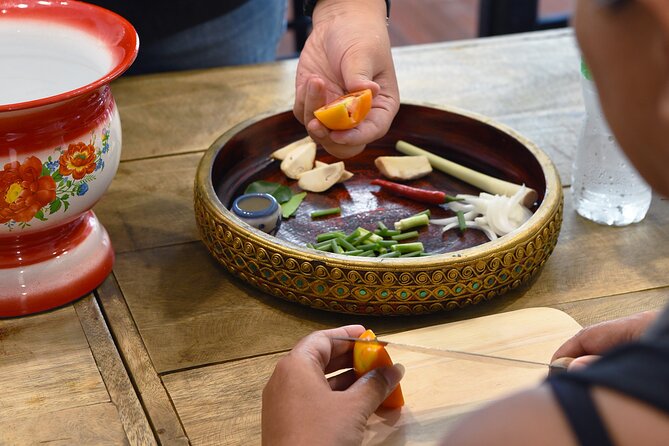
Thai food is easy to admire and surprisingly rewarding to make. A good class should show you why the food tastes the way it does, not just hand you a recipe card and point to a wok. This one focuses on the basics that matter: pounding curry paste, chopping herbs, balancing spicy, salty, sour, and sweet flavors, and working with coconut milk.
You spend about two hours cooking four dishes. The rest of the roughly three-and-a-half-hour experience includes the market visit or fruit carving, teaching, eating, and time with the group. That is a useful balance. You get enough instruction to learn something, but you are not trapped in a long lecture while lunch waits.
The teaching style is a strong point. April receives especially warm praise for her friendly explanations and ability to keep the class moving. Peach is also singled out as an excellent teacher. The atmosphere is generally relaxed and easy to follow, with time to ask questions. One account describes a curt instructor, so the tone may depend on the chef leading your session, but the overall format is patient and beginner-friendly.
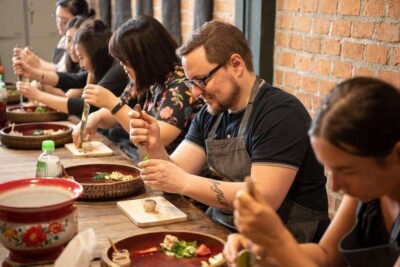
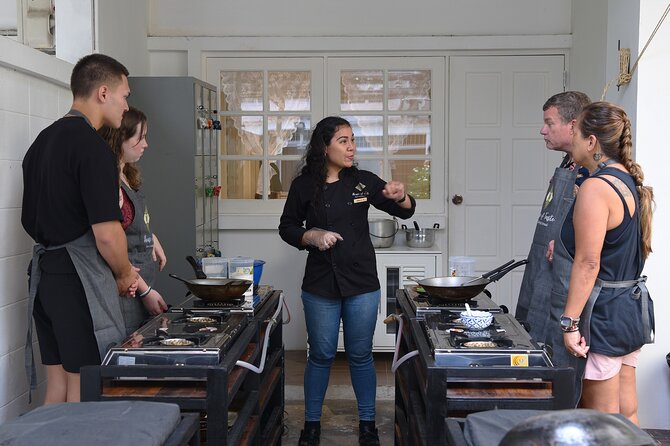
You are not just watching a demonstration. Each participant has a personal cooking station and prepares the portions they will eat. That matters. You can see how much paste goes into your curry, adjust your cooking, and remember the process more easily when you return home.
More Market and Cooking Class Tours in Bangkok
- Bangkok: Hands-on Thai Cooking Class and Market Tour
★ 4.9 · 1,614 reviews - Bangkok: Maliwan Thai Cooking Class with Market Tour
★ 4.9 · 1,133 reviews - Hands on Thai Cooking Class and Market Tour
★ 5.0 · 660 reviews
The morning market visit in Sukhumvit
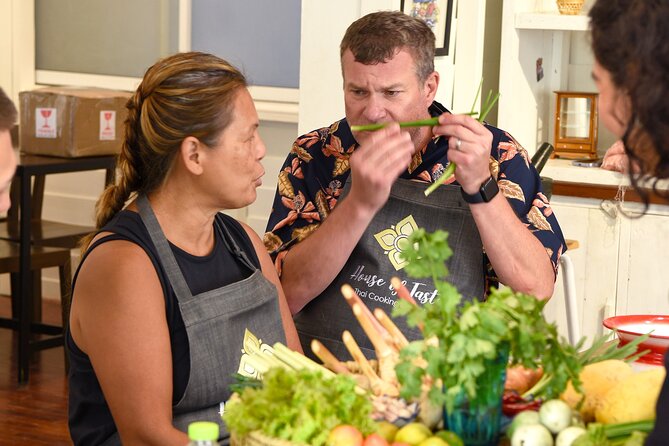
Morning classes begin with a walk through a small local market. This is not simply a scenic add-on. It gives you a chance to see the herbs, vegetables, spices, and other ingredients before they reach the cooking table.
A guide introduces the products used in Thai cooking and explains how they fit into the dishes. For someone unfamiliar with Thai food, this can make a big difference. Galangal, Thai basil, curry ingredients, coconut products, and chilies can look like a blur when you first encounter them. Seeing them in a market, then using them a short time later, helps you connect the name, appearance, and flavor.
The market portion also adds a more local feel than a class held entirely inside a studio. You shop for ingredients and get a brief look at everyday food buying in Bangkok. Keep your expectations sensible. This is a short ingredient tour connected to a cooking lesson, not a full market tour or a food crawl.
Finding the school requires attention. The meeting point is House of Taste Thai Cooking School at Sukhumvit 4, and you may need to walk through the market to reach the house at the back. GPS can bring you to the street but not necessarily to the exact classroom. Allow roughly 10 to 15 minutes on foot from the nearby BTS area, and keep your phone available in case the school needs to guide you.
Afternoon fruit carving instead of the market
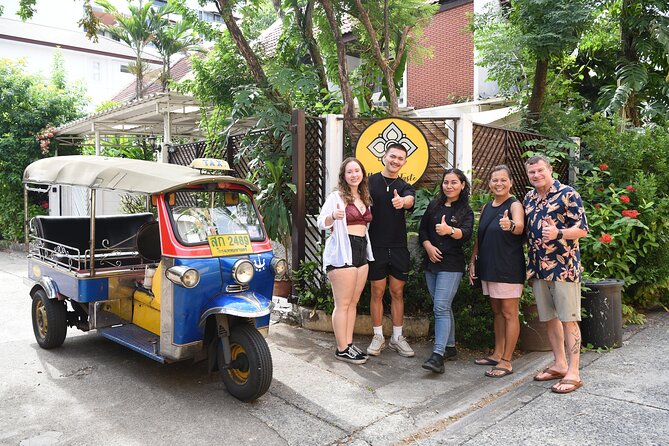
If you choose an afternoon class, the program replaces the market visit with fruit carving. This gives the session a different character. Rather than beginning with ingredient shopping, you learn a decorative Thai food skill and make a fruit flower.
Fruit carving is not the main reason to book the class, but it adds variety and a little visual flair to the meal. You get a break from chopping and frying, and you leave with another small technique connected to Thai food culture.
The trade-off is clear. Choose the morning if you want to see a local market and learn about ingredients before cooking. Choose the afternoon if fruit carving sounds more appealing or if your Bangkok schedule makes a later start easier. The food preparation remains the heart of both versions.
Four dishes, cooked and eaten in sequence
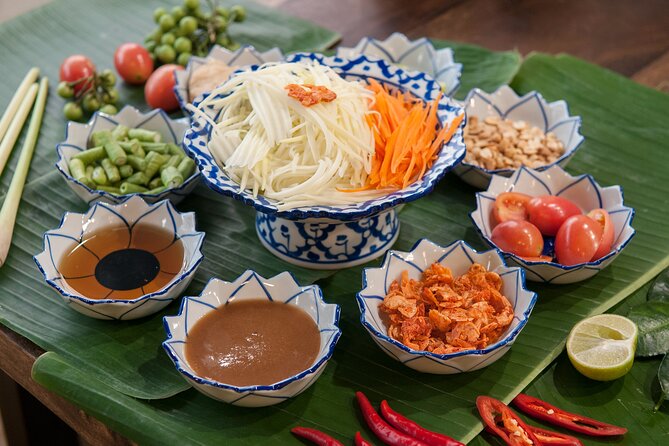
The class menu changes by day. This is important when comparing dates, because you are not choosing only a time. You are also choosing the dishes you will learn.
More Market and Cooking Class Tours in Thailand
- Tingly Thai Cooking Class with Morning Market Tour
★ 5.0 · 589 reviews - Pink Chili – Thai Cooking Class and Market Tour in Bangkok
★ 5.0 · 416 reviews - Authentic Thai Cooking with the Largest market visit &TukTuk ride
★ 5.0 · 350 reviews - Bangkok: White Lotus Thai Cooking Class with Market Tour
★ 5.0 · 285 reviews
Monday and Friday: familiar Thai favorites
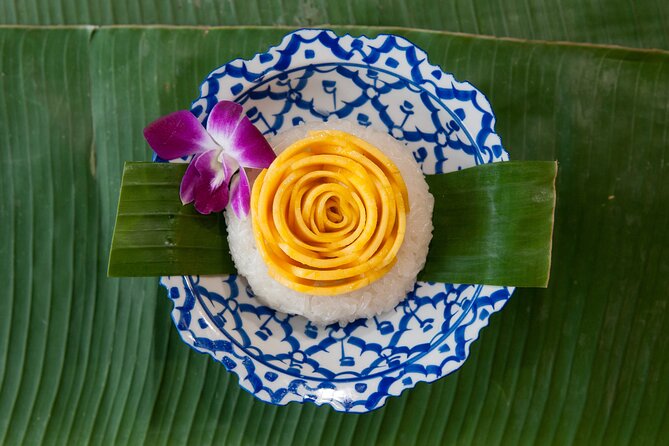
Monday offers som tam, pad Thai, green curry, and mango sticky rice. Friday includes som tam, pad krapow gai, red curry, and mango sticky rice.
Som tam teaches the balance of sharp, sweet, salty, and spicy flavors in a mortar. Pad Thai is a useful home-cooking lesson because the sauce and noodle texture matter as much as the ingredients. Green and red curries let you compare the effect of different curry pastes and seasoning.
Pad krapow gai, the basil and chicken dish on Friday, is one of the quicker, more practical Thai meals to recreate at home. These menus suit first-time visitors who want recognizable Thai staples, though the class still gives you more than a restaurant meal because you learn the method behind them.
Tuesday and Saturday: soup, stir-fry, and curry
Tuesday features tom kha gai, pad krapow gai, red curry, and mango sticky rice. Saturday offers tom kha gai, pad Thai, green curry, and mango sticky rice.
Tom kha gai introduces the fragrant, creamy side of Thai cooking. You learn how coconut milk and aromatic ingredients work together rather than simply tasting the finished soup. The second dish changes between pad krapow gai and pad Thai, so check the day before booking if one is a priority.
Both menus offer a useful spread: soup, stir-fry, curry, and dessert. You will handle different textures and cooking methods instead of repeating the same technique four times.
Wednesday and Sunday: hot-and-sour dishes with curry
Wednesday includes tom yum goong, pad see ew, green curry, and mango sticky rice. Sunday includes tom yum goong, pad see ew, panang curry, and mango sticky rice.
Tom yum goong brings a sharper, hotter flavor profile, while pad see ew focuses on broad noodles and a savory stir-fry. Green curry and panang curry offer two different curry experiences, with panang generally giving the meal a thicker, more rounded character.
This menu is a good pick if you want contrast. You move from soup to noodles, then curry and dessert. If you prefer a milder class, ask about spice levels and dietary needs when booking, since the menu is set by the day.
Thursday: larb, pad Thai, and panang curry
Thursday serves larb gai, pad Thai, panang curry, and mango sticky rice. Larb gives you a different style of Thai dish, built around seasoned minced chicken and fresh herbs rather than a coconut sauce.
The menu has a good mix of fresh, tangy, noodle-based, curry, and sweet elements. It is also a strong choice for someone who wants to learn a dish that may be less familiar than pad Thai or green curry.
Why cooking from scratch matters
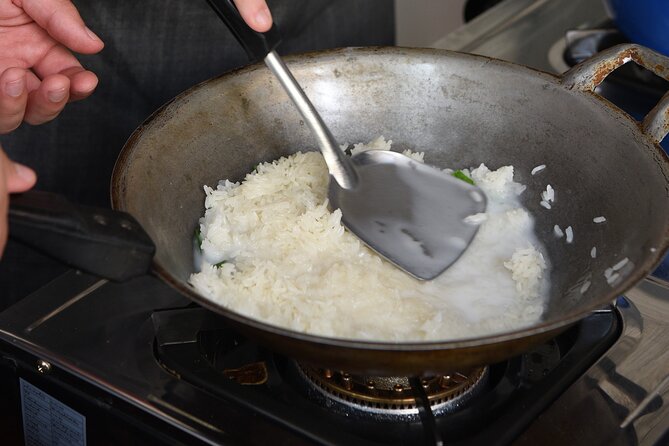
The most valuable lesson here is not a single recipe. It is understanding the building blocks of Thai flavor.
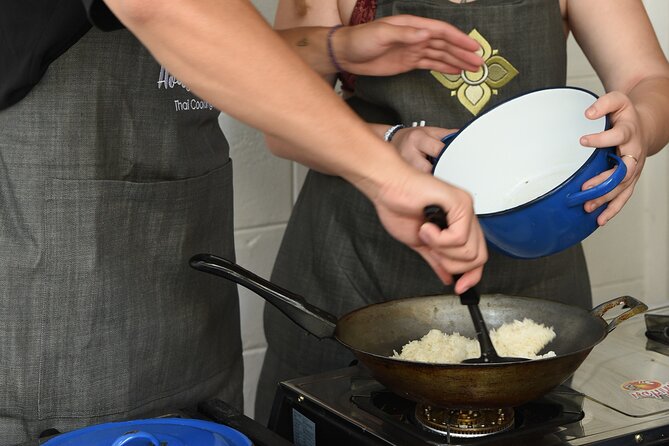
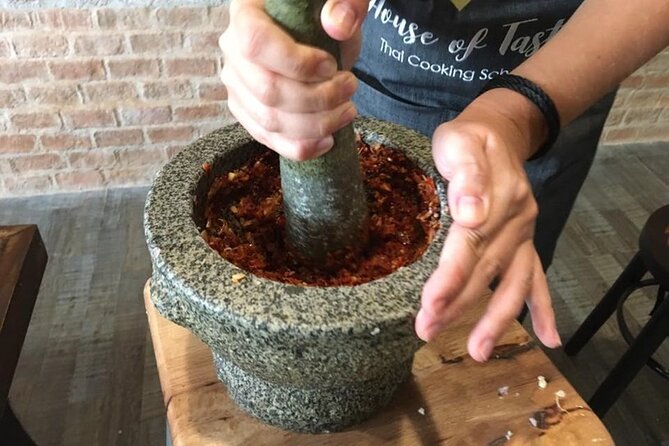
The chef demonstrates the preparation of coconut milk and curry paste from scratch. That takes more work than opening a can or jar, but it explains why fresh ingredients can change the taste and texture of a curry. You also get hands-on practice with pounding and chopping, which are central to the cooking process.
The class does not leave you waiting until the end to eat. You prepare one dish, sit down and enjoy it while it is hot, then move on to the next. I like this sequence because it lets you taste your work with a fresh memory of what you just did. It also keeps the class from becoming a race to finish four plates at once.
You receive the recipes afterward, including a standard recipe set. That makes the class more useful than a one-time meal. You can try the dishes at home, though ingredients and heat levels may vary depending on what you can find.
Food, comfort, and the social side
The room has air conditioning, which is no small matter in Bangkok. Cooking over heat in a warm city can become tiring, so a cool classroom helps you stay focused and enjoy the meal.
Hot and cold drinking water are included. Alcohol is not included, but alcoholic drinks can be purchased. The format is social without forcing you into a long group performance. You cook, eat, and meet people from different places around the same table.
The maximum group size is 18. That is small enough for the chef to demonstrate and answer questions, though the experience will still feel like a group class rather than a private lesson. A personal locker is included, which gives you a convenient place to store belongings while you work.
The food receives strong praise, but keep in mind that the class is designed for participation. You will chop, pound, stir, and cook. If you want a polished chef-prepared meal with no work, book a restaurant. If you want to understand how the meal comes together, this is the better choice.
Price, value, and who should book
At $45.66 per person, the class offers solid value for a three-and-a-half-hour activity in central Bangkok. The price includes the chef, ingredients, four dishes, the market or fruit-carving component, drinking water, recipes, taxes, and a locker. You are also getting lunch or dinner, not just a demonstration.
The value is strongest if you plan to use the recipes later. Homemade curry paste and coconut milk preparation are lessons you can carry into your own kitchen. The personal station is another important part of the price. You are not simply watching someone else cook or dividing one small portion among several people.
The class suits couples, friends, solo visitors, and families with older children. Children under seven must be accompanied by an adult, and the child rate applies only when the child shares with two paying adults. A small amount of walking is involved, so wear comfortable shoes.
Vegetarian, halal, and kosher options are available, but you must request them when booking. The same applies to allergies and other dietary needs. Do not wait until you arrive. The menu is structured in advance, and the kitchen needs notice.
This is not the best choice if you dislike group activities, cannot manage basic walking, or want a flexible menu that changes to suit every preference. It is also a poor fit for anyone who needs the option to cancel, since the booking is non-refundable and cannot be changed.
Getting there without frustration
The activity begins and ends at House of Taste Thai Cooking School, Sukhumvit 4147/4, Sukhumvit 4. There is no hotel pickup or drop-off, so you arrange your own transport.
Give yourself extra time to locate the entrance. The school is reached through a market, and the classroom is at the back. GPS may identify the street without making the final approach clear. If you are standing at the market and cannot see the school, use the contact details from your booking. The staff have guided people to the entrance through WhatsApp.
The meeting point is near public transportation, but the walk can take 10 to 15 minutes from the BTS area. Bangkok heat, traffic, and the market route can slow you down, so arriving early is a sensible move. Wear shoes you can walk in and clothing you do not mind wearing around food and cooking heat.
Should you book this cooking class?
Book it if you want a hands-on introduction to Thai cooking rather than another meal eaten at a restaurant. The strongest reasons are the personal cooking stations, the four-dish format, the fresh curry paste work, and the chance to eat each dish immediately after preparing it.
Choose your weekday carefully. Monday, Friday, and Saturday offer familiar favorites, Thursday adds larb, and Wednesday and Sunday bring tom yum goong and pad see ew. Pick a morning session for the market, or an afternoon session for fruit carving.
I would recommend this class to curious eaters, first-time Thai cooks, couples, and anyone who wants recipes they can use after Bangkok. Check dietary needs before paying, allow time to find the entrance, and book only when your schedule is firm. With those points handled, this is a practical and enjoyable way to turn a Bangkok meal into a skill you can take home.
FAQ
How long does the Thai cooking class last?
The experience lasts approximately 3 hours and 30 minutes, including the market visit or fruit-carving activity, cooking, and the meal.
Where does the class begin and end?
It begins and ends at House of Taste Thai Cooking School at Sukhumvit 4 in Bangkok. Hotel pickup and drop-off are not included.
How many dishes will I prepare?
You prepare four Thai dishes from scratch and eat each one during the class. The exact menu depends on the weekday.
Does the morning class include a market visit?
Yes. Morning classes include a market tour where you shop for fresh ingredients and learn about Thai cooking products.
What happens during an afternoon class?
Afternoon sessions feature fruit carving instead of the morning market tour.
Are vegetarian, halal, and kosher options available?
Yes. Vegetarian, halal, and kosher options are available, but you must request them when booking. You should also provide details about allergies or other dietary needs at that time.
Are drinks included?
Hot and cold drinking water are included. Alcoholic drinks are not included, but they are available to purchase.
Is the class suitable for children?
Children under seven must be accompanied by an adult. The child rate applies only when sharing with two paying adults.
New market tours around Bangkok
- Longtail Boat Adventure to the Local Weekend Floating Market★ 5.0 · 12 reviews
- Sathon: Hands-on Thai Cooking Class & Market Tour in Bangkok★ 5.0 · 19 reviews
- Private Unseen Mangrove Forest and Floating & Railway Market★ 5.0 · 2 reviews
- Private Tour from Bangkok: Railway & Floating Markets★ 4.9 · 11 reviews
- From Bangkok: Floating Market & Ayutthaya Private Day Trip★ 5.0 · 42 reviews
- Private Floating & Train Market + DRAGON Temple + Thai Cafe★ 4.9 · 13 reviews
- Mahachai & Maeklong Railway Market Day Tour From Bangkok★ 4.7 · 14 reviews
- Grand Palace, Damnoen Floating Market & Maeklong Market Tour★ 4.8 · 173 reviews
Bangkok Market Tours, side by side.

Bangkok: Damnoen Saduak Market and Maeklong Railway Market
Read our review →
The Old Siam: Damnoen Saduak and Maeklong Railway Market
Read our review →
Bangkok: Train Market & Floating Market with Boat Ride
Read our review →
Half-Day Railway Market and Floating Market Tour in Thailand
Read our review →
Bangkok by Night: Temples, Markets and Food Tuk-Tuk Tour
Read our review →
Bangkok: Damnoen Saduak, Train Market & Mahanakhon Day Trip
Read our review →
From Bangkok: Damnoen Saduak Floating Market Guided Tour
Read our review →