
Review · MARRAKECH
Evening Marrakech: Gastronomic and Market Tour Inside the Medina
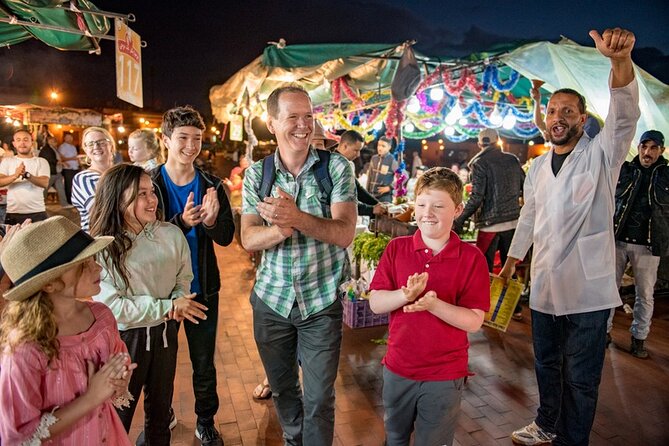
The most memorable part of this 3.5-hour walk is not the final meal. It is the route through Marrakech after sunset, when Djemaa El Fna fills with food stalls, smoke, music, sellers, and people out for their nightly stroll. You move from the famous square into the Mellah markets, a spice souk, and the narrow lanes of the Medina before eating back at the square.
I like two things here: the chance to try food you might skip on your own, including ghoulal, or Moroccan snail soup, and the small group size of no more than 12 people. Guides such as Atika, Ibrahim, Brahim, and Jihad have been praised for explaining local customs, food, clothing, and how to find your way around the souks. The main drawback is that the food is simple street fare, not a polished restaurant tasting, and quality can vary.
Key points to know
- The evening setting matters: Djemaa El Fna is at its most active after dark, with hot food stalls and entertainers filling the square.
- You try unusual local food: Tastings may include ghoulal, spiced sardines, olives, nuts, pastries, and dishes made with sheep or beef.
- The walk has real local context: You see meat sellers bargain, visit the Mellah market, and learn how saffron, cumin, anise, turmeric, and cardamom are used.
- The group is capped at 12: That gives you a better chance to ask questions and stay close in crowded lanes.
- Dinner is included, extra food is not: The price is $46.08 per person, with three market tastings and a local dinner covered.
- It suits an early visit: This is a useful first or second-night activity because it helps you get your bearings in the Medina.
Why Djemaa El Fna works best after sunset
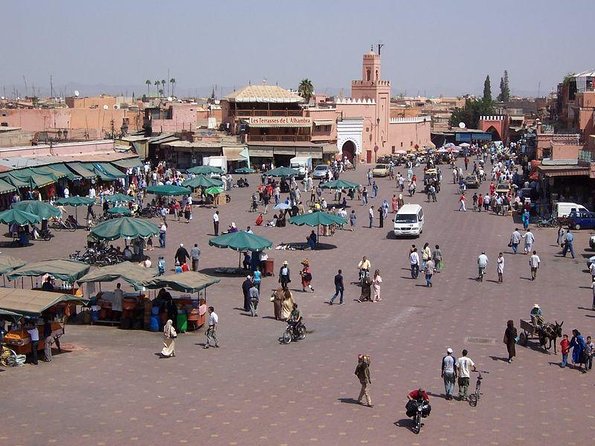
Meet at Café de France beside Djemaa El Fna at 6:00 p.m. This is a practical meeting point, but the square can feel confusing when you first arrive. Look for the guide carefully, since one person found the meeting instructions clear but the guide hard to identify.
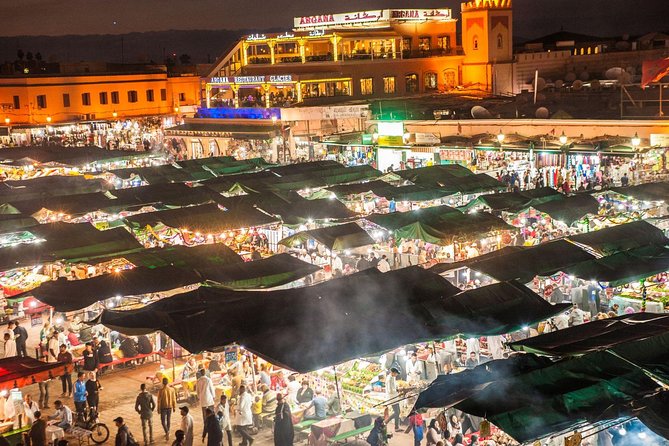
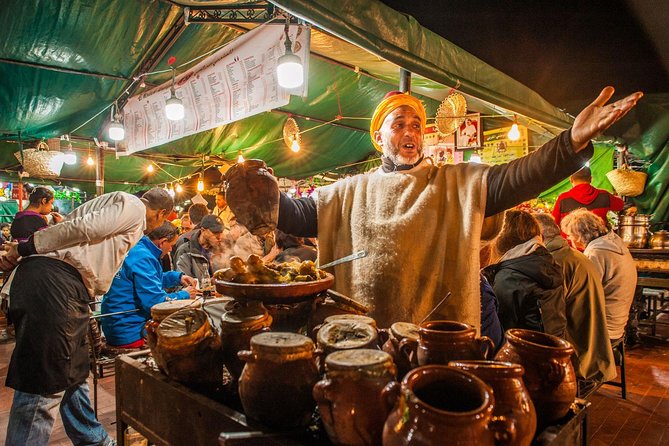
In daylight, Djemaa El Fna can feel like a broad public square. In the evening, it changes character. Food stands light up, cooking smoke hangs over the pavement, and performers, storytellers, water sellers, snake charmers, and casual strollers fill the open space.
Your guide begins with a short explanation of the evening, then gives you time to take in the scene. That pause is useful. You are not rushed straight into a tasting, and you can start to understand how the square functions as a social center rather than just a sightseeing stop.
I would book this early in your Marrakech stay. Several people found that the walk helped them feel more comfortable in the Medina, understand the layout, and approach food stalls with more confidence. You finish back at the same general meeting point, so you can return to your accommodation or continue your night independently.
More market tours around Marrakech:
- Marrakech: Bahia Palace, Saadian Tombs, Souk and Medina Tour
★ 4.7 · 4,974 reviews - Marrakech: Ben Youssef, Secret Garden, & Souks Walking Tour
★ 4.6 · 2,802 reviews - Marrakech: Colorful Medina Souks Guided Walking Tour
★ 4.7 · 2,470 reviews
Riad Zitoun Jdid and the lanes behind the square
From Djemaa El Fna, the walk moves through Riad Zitoun Jdid. This area has riads, small bistros, rooftop terraces, hammams, pottery shops, kaftan sellers, and leather goods stores.
The stop is brief, around 15 minutes, so do not expect a full architectural tour. Its value is orientation. You see how the Medina shifts from the wide, theatrical square into quieter lanes filled with homes, shops, and small places to eat.
The area also sits near Bahia Palace and Dar Si Said Museum, though those attractions are not part of the evening entry. Your guide may help you place them on the map and offer tips for later. The local advice can be one of the more useful parts of the walk, especially if you are unsure which streets lead back to the square.
This is also where the tour begins to show its limits. It is primarily a food and market walk, not a palace or museum visit. If you want detailed lessons in Moroccan architecture, choose a separate Medina or palace tour.
Mellah market, meat bargaining, and Moroccan food customs
The walk spends roughly 45 minutes around Mellah, the old Jewish quarter of Marrakech. Its narrow passages lead to food stalls, meat sellers, produce vendors, and the spice souk near Bab Mellah.
The meat market is not staged for visitors. Buyers and sellers bargain over poultry and beef, and your guide explains what you are seeing. Haggling is part of daily shopping here, not simply a performance for tourists. That makes this section more useful than a quick look at decorated spice jars.
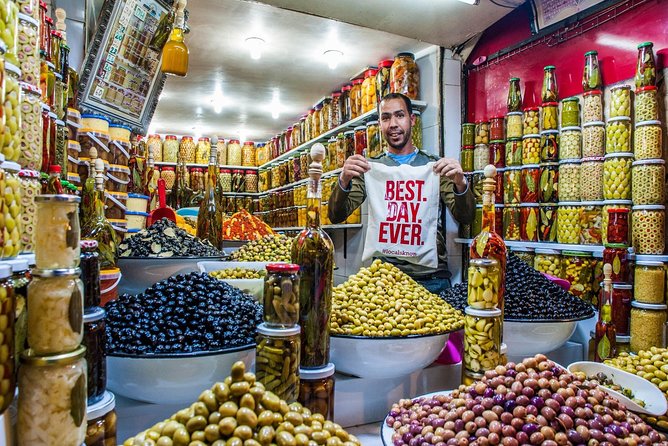
You also learn about the ingredients that shape Moroccan cooking. Saffron, paprika, cumin, anise, turmeric, and cardamom are displayed in strong colors and distinct scents. The guide explains how spices are used in tagines and other staples, rather than treating them as souvenirs with no context.
This is a good place to ask practical questions. You can ask how to judge spices, which flavors are common in Moroccan food, and how local cooks balance sweet, savory, herbal, and hot notes. The exact tasting choices may change, but the included plan calls for three typical market tastings.
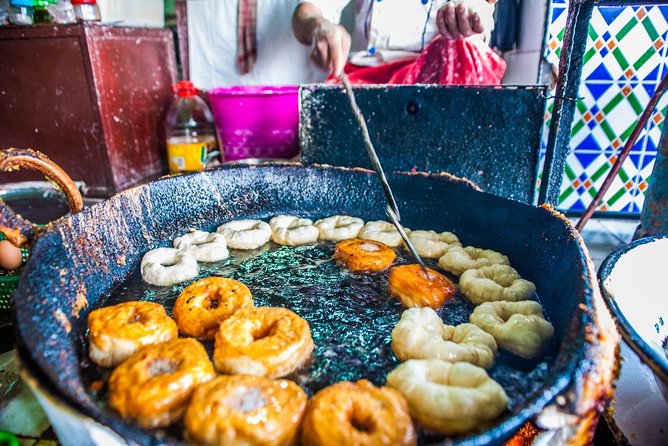
Possible samples include olives, nuts, pastries, sardines, and small local dishes. The tour can accommodate vegetarians and vegans if you give notice at least 24 hours ahead. It cannot cater to gluten intolerance, so you should not book without discussing your needs first.
Ghoulal and the more daring tastings
The tour may take you to a souk stall for ghoulal, a Moroccan snail soup flavored with herbs and spices. If you have never tried snail soup, this is the sort of small food challenge that makes a market walk memorable.
You do not have to pretend every sample will suit you. Some people love the herbal broth and chewy snails. Others find the texture or seasoning difficult. The point is to try a traditional food in its normal setting, with an explanation of what it is and why it appears in the market.
Other possible samples include sheep’s head and cow’s hoof. These are not guaranteed to appeal to every palate, and the tour description is clear that the food can be adventurous. I would approach the tastings with curiosity, but not expect a neat sequence of restaurant-sized courses.
Food hygiene deserves sensible attention. Most of the available feedback is positive, including accounts of groups eating street food without trouble, but one serious account described cold soup and illness, while another found some food stalls unhygienic. That does not prove a general problem, but it is a fair reason to use your judgment, carry hand sanitizer, and tell the guide if you are uncomfortable with a particular sample.
Same city, another market:
- Marrakech: Traditional Moroccan Cooking Class & Market Visit
★ 4.8 · 1,861 reviews - Marrakech Monuments & Souks 3-Hour Tour
★ 3.8 · 1,540 reviews - Moroccan Cooking Class & Marrakech Market Visit with Chef Khmisa
★ 5.0 · 1,504 reviews - Marrakech: Saadian Tombs, Bahia Palace, Medina and Souk Tour
★ 4.7 · 673 reviews
Mechoui Alley and the final Moroccan dinner
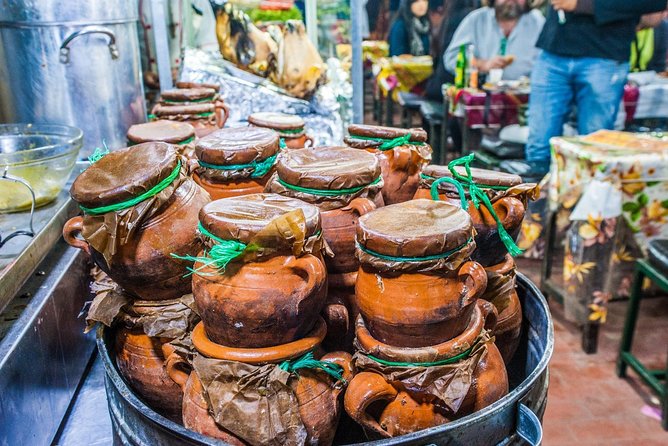
One of the most distinctive food stops is Chez Lamine Hadj Mustapha in Mechoui Alley behind The Alhambra restaurant. The stand is marked by sheep’s heads and tangia cooking pots, so this is not a quiet or refined dining room.
Mechoui is slow-roasted meat, while tangia is a Marrakech specialty cooked in a clay pot. The description says the pots are cooked in the ashes of coals from a local bathhouse. Beef pots are served throughout the day, and the juices at the bottom are eaten with local bread.
You should see this as a traditional market meal, not a formal dinner. The setting is basic, the food can be rich, and portions may not feel generous to everyone. One poor account described a very small plate of bones as the main meal, so expectations matter. The included dinner is authentic in style, but it is not designed to satisfy every appetite with several full courses.
At its best, this stop gives you a taste of Marrakech cooking that you would be unlikely to arrange alone. The combination of bread, meat, cooking juices, and the noisy square nearby feels tied to the place. You can also ask your guide where to eat later in your stay.
Additional food is not included. If you have a large appetite, budget for another snack after the tour. That is easy enough because Djemaa El Fna remains active after the group finishes.
Souk Semmarine and the final walk through the Medina
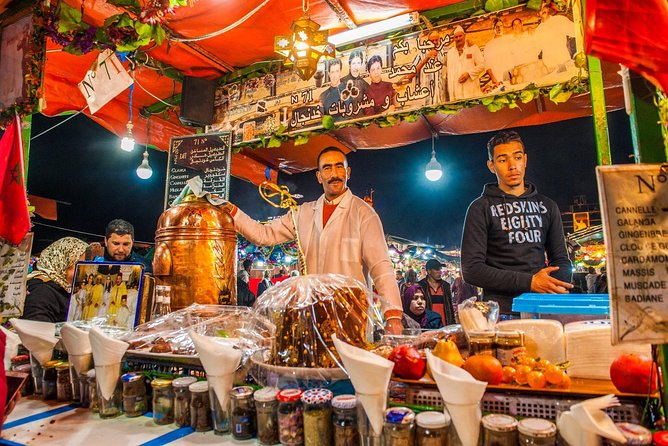
The last major section takes about an hour in Souk Semmarine, the main shopping artery of the Medina. It runs from Djemaa El Fna through a network of covered and open lanes.
The souk once served caravan traffic, and its name is linked to farriers who shod animals. Today, you may see shops selling crafts, clothing, leather goods, pottery, and other items, though the exact route depends on the guide and the pace of the group.
This is where a local guide can save you time and frustration. The Medina has many similar-looking passages, and it is easy to lose your sense of direction. The best guides do more than lead you from stall to stall. They explain how to walk without blocking shop entrances, how to handle sales pitches, and how to return to the square.
Past participants have singled out guides including Atika, Brahim, Ibrahim, Yousif, Mustafa, and Jihad for their warm manner and clear explanations. Guide quality is never completely predictable, but the repeated praise for local food knowledge and practical Medina advice is a strong point.
One caution: a guide who does not engage can make the same route feel flat. Two low ratings described a guide who arrived late, offered little explanation, and ended early. Most feedback is much more favorable, but I would ask questions and tell the guide what interests you. The experience improves when you take part rather than simply follow.
What the $46.08 price really covers
At $46.08 per person, the cost is reasonable if you value a guide, several tastings, and dinner in the square. You are paying for access to a route that can be difficult to arrange smoothly on your own, plus help with language, local customs, and food choices.
The price is less attractive if you expect a long list of full dishes or a high-end dining experience. The included food consists of three market tastings and an authentic local dinner. Extra food, hotel pickup, and hotel drop-off are not covered.
The group limit of 12 helps protect the value. In a crowded Medina, a group of 20 or more would be hard to manage. A smaller group gives you a better chance to hear the guide, ask about ingredients, and stay together in the lanes.
Group discounts are available, and the booking uses a mobile ticket. The tour is carbon neutral and operated by an eco-certified company, which may matter if you are comparing similar activities.
Free cancellation is available up to 24 hours before the 6:00 p.m. start. Inside that window, you lose the payment, and changes are not accepted. Plan your food and walking schedule with that cut-off in mind.
Who should book this Marrakech food walk
I would suggest this for first-time visitors who want an introduction to the Medina without spending a full day on a formal sightseeing tour. It is also a good fit for people who enjoy small portions, unfamiliar ingredients, and busy public spaces.
Families can join, and children under six are free. Still, the evening includes crowds, smoke, narrow lanes, and unusual foods, so you know your child best. A young child who dislikes noise or waits may not enjoy the full 3.5 hours.
Vegetarians and vegans can be accommodated with at least 24 hours notice. Gluten intolerance cannot be handled, which is a firm limitation rather than a minor detail. If you have other dietary needs, contact the provider before the tour.
You should skip this if you want a polished food class, a quiet meal, or a carefully measured tasting menu. You should also think twice if you are very cautious about street food or uncomfortable around meat markets. The appeal is its direct contact with everyday food culture, and that comes with rough edges.
The overall rating is 4.7 out of 5 from 283 ratings, with 92 percent recommending it. That matches the main pattern: strong praise for guides who explain culture and food well, plus a small but important set of complaints about weak guiding, basic portions, and food quality.
Should you book the evening Marrakech food tour?
Book it if you want an active first taste of Marrakech, especially if you are curious about souks, spices, market food, and the nightly life of Djemaa El Fna. The best reason to go is not the amount of food. It is the combination of local explanation, unusual samples, and practical help finding your way.
Choose an early date in your stay, request dietary adjustments at least 24 hours ahead, and arrive ready for a simple meal rather than a restaurant feast. If your guide is as engaged as Atika, Brahim, Jihad, Ibrahim, or Yousif are described, you will gain both a better dinner and a much clearer sense of how Marrakech works.
FAQ
Where does the tour start?
It starts at Hôtel Restaurant Café de France on Rue des Banques beside Djemaa El Fna in Marrakech.
What time does the tour begin?
The start time is 6:00 p.m.
How long does the food tour last?
The experience lasts about 3 hours and 30 minutes.
Where does the tour finish?
It finishes back at the meeting point near Djemaa El Fna.
How many people can join?
The group has a maximum of 12 travelers.
Is dinner included?
Yes. The price includes an authentic local dinner along with three typical market tastings.
Is extra food included?
No. Additional food is not included in the tour price.
Can vegetarians and vegans join?
Yes, the tour can cater to vegetarians and vegans if you provide the request at least 24 hours before the start.
Can the tour cater to gluten intolerance?
No. The tour cannot cater to gluten intolerance.
Are children allowed?
Yes. The activity is child-friendly, and children under six can join free of charge.
Is hotel pickup included?
No. Hotel pickup and drop-off are not included.
Can I cancel for a refund?
You can cancel at least 24 hours before the start time for a full refund. Cancellations or changes made less than 24 hours before the start are not accepted and are not refunded.
New market tours around Marrakech
- Souks tour of Marrakech ( 3 hours )★ 5.0 · 5 reviews
- Marrakech: Hidden Souks Shopping Tour with Private Guide★ 4.1 · 53 reviews
- Marrakech: Half-Day Medina Markets Tour★ 4.5 · 11 reviews
- Edgy 8 Dish Private, Fusion Cooking Class, Menu Plan, Market★ 4.9 · 31 reviews
- Marrakech: Bahia Palace, Madrassa & Souks Guided Tour★ 4.8 · 47 reviews
- Marrakech: Vibrant Souks, Local Artisans & Medina Experience★ 4.5 · 66 reviews
- Marrakesh: Private Cooking Class & Local Market Shopping★ 4.7 · 15 reviews
- Marrakech Private Souks Shopping Tour★ 4.4 · 4 reviews
Marrakech Market Tours, side by side.
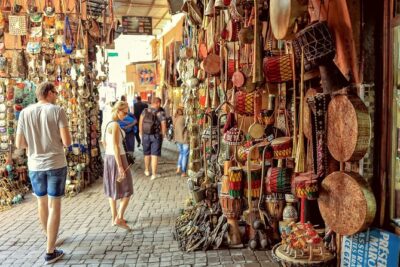
Marrakech: Bahia Palace, Saadian Tombs, Souk and Medina Tour
Read our review →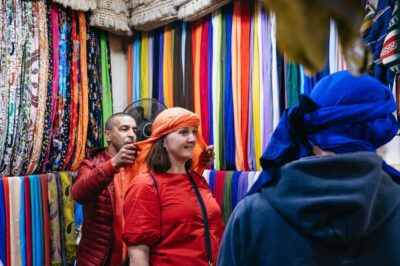
Marrakech: Colorful Medina Souks Guided Walking Tour
Read our review →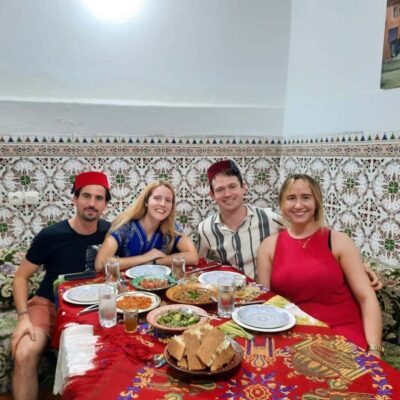
Marrakech: Traditional Moroccan Cooking Class & Market Visit
Read our review →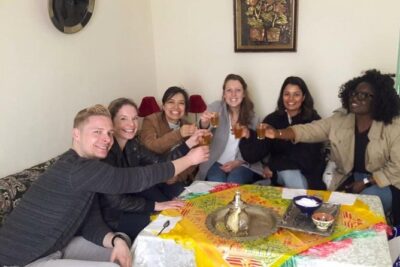
Moroccan Cooking Class & Marrakech Market Visit with Chef Khmisa
Read our review →
Shopping in the Souks of Marrakech Private Tour
Read our review →
Marrakech: Bahia Palace, Ben Youssef Medersa, & Souks Tour
Read our review →
Marrakech: Ben Youssef Medersa, Le Jardin Secret & Souk Tour
Read our review →This tour also appears in