Review · MEXICO CITY
Essence of Mexico: Authentic Mexican Cooking Class & Market Tour
The best part of this Mexico City experience is the link between Mercado Medellín and the cooking table. You see fruits, vegetables, tortillas, spices, and unusual snacks at the market, then use that food in a four-course lunch. It gives Mexican cooking a clear sense of place instead of treating it as a list of recipes.
I especially like the small groups, capped at eight, and the unusual menu. Mextlapiques, a tamale without masa, and white mole are not the same old taco lesson. The class also includes thoughtful touches: agua fresca on arrival, printed recipes, hot chocolate, dessert, and a choice of mezcal, craft beer, or Mexican wine. The main caution is the nut allergy restriction, since the white mole uses pine nuts, almonds, peanuts, sesame seeds, and other ingredients.
Key points to know before booking
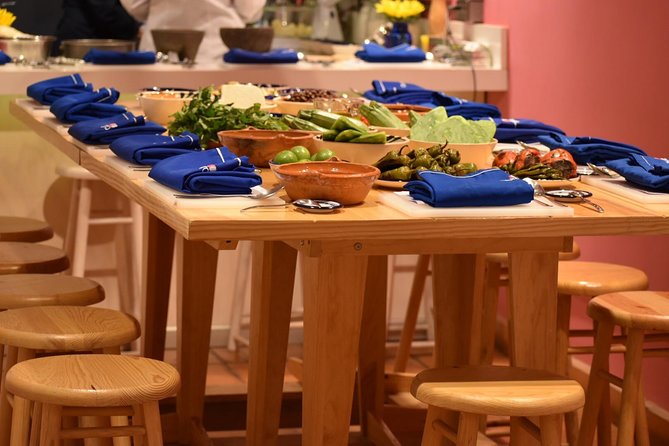
- Mercado Medellín comes first: A chef guides you through the market, explains its layout and traditions, and leads tastings at selected stalls.
- The menu goes beyond tacos: You prepare sopes, two salsas, mextlapiques, tortillas, white mole, and corn bread.
- Your chef shapes the experience: Lorena, Pame, Mariana, Ana, and other Aura instructors have led classes, with English instruction and plenty of kitchen guidance.
- Eight people is the maximum: That small group makes it easier to ask questions and get hands-on help.
- The meal and drinks are included: Lunch, dessert, hot chocolate, and artisanal mezcal, Mexican beer, or wine are part of the four-and-a-half-hour visit.
- Dietary planning matters: Chicken is standard with the white mole, but panela cheese or mushrooms can be requested. The class is not suitable for nut allergies.
Starting with agua fresca at Aura Cocina Mexicana
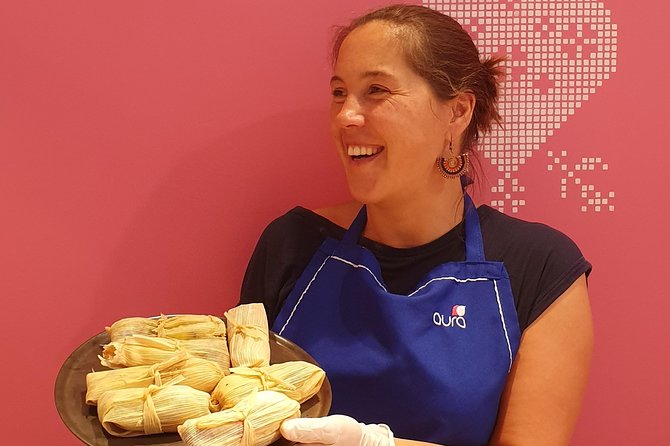
Your morning begins at Aura Cocina Mexicana, at Eje 3 Pte 191 in Roma Norte. The start time is 9:30 a.m., and the activity returns to this same meeting point after roughly four hours and 30 minutes.
The welcome is an agua fresca while your chef explains the background of Mexican cuisine. This opening matters. Before you chop or cook, you get a bit of context about how ingredients, regional habits, and older food traditions fit together. Chefs such as Lorena, Pame, Mariana, Ana, and Nitze have been praised for making this part easy to follow, even for people with little kitchen experience.
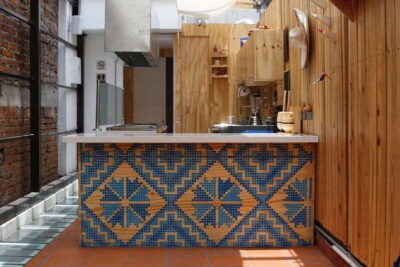
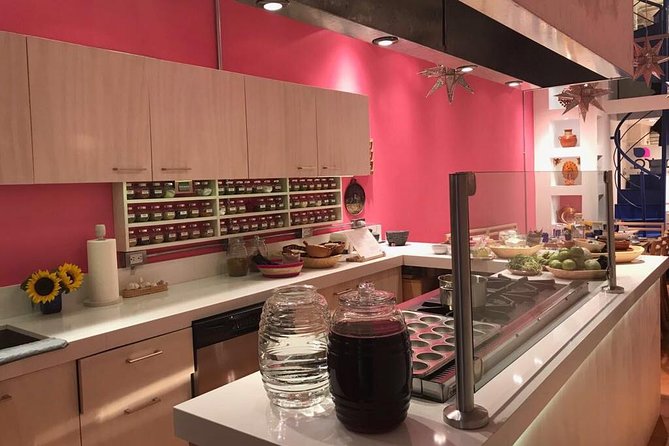
The cooking space is described as clean, attractive, and well organized. An apron is provided, so you do not need to pack one. I would wear comfortable shoes and simple clothing. Avoid scarves, long necklaces, and loose jewelry, since you will be working around a kitchen and handling food.
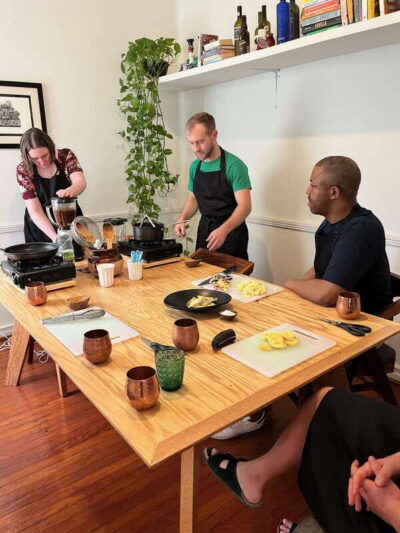
The group limit of eight is a real advantage. Cooking classes can become frustrating when one instructor has to move between a large crowd and a single cutting board. Here, you have a better chance to handle the ingredients yourself, ask about substitutions, and get help with tortillas or sauces before the meal reaches the table.
More Market and Cooking Class Tours in Mexico
- Cabo San Lucas Mexican Cooking Class Experience and Local Markets
★ 5.0 · 915 reviews - Puerto Vallarta Cooking Class Experience with Market Tour
★ 5.0 · 698 reviews - Mexican Cooking Class with Food Market Visit in Mexico City
★ 5.0 · 506 reviews
Mercado Medellín: a useful guide to a busy market
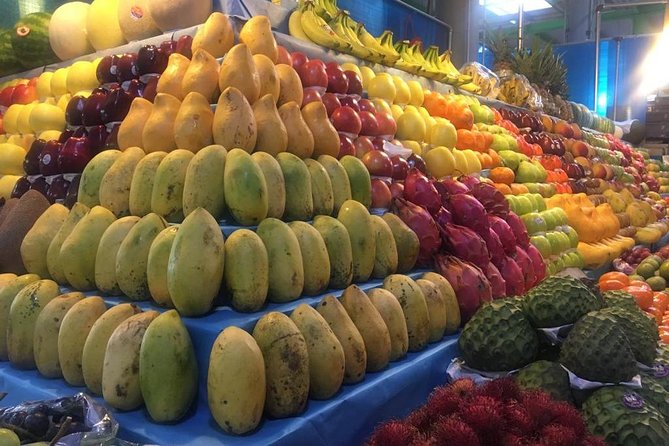
The market portion takes place at Mercado Medellín, within walking distance of the cooking space. Your chef explains the market’s organization, history, and main offerings while leading you through selected halls and stands.
A market can be a lot to take in on your own. You may not know which fruit is ready to taste, what a particular herb is used for, or how to approach a stand when you do not speak much Spanish. The guide gives the visit a purpose. Instead of simply looking around, you learn which foods matter to the class and how they are used at home and in Mexican cooking.
Tastings are part of the route. The stops can include fruit, tortillas, and even insects, depending on the class. The insect tasting has surprised some people, but it is optional in spirit and fits the larger idea of trying food in a thoughtful, local setting. If you are cautious with unfamiliar flavors, you can still get plenty from the explanations and the produce stops.
The pace is fairly brisk. That helps you see several parts of the market before returning to the kitchen, but it also means this is not a long, free-form shopping visit. You are there to learn and taste, not to fill a basket with ingredients for your apartment.
I particularly like the stop at a tortilleria when it is part of the route. Tortillas can seem like a basic side dish until you see how central they are to the meal and how much better they taste when freshly made. The market also gives you a better sense of the ingredients you will soon be asked to shape, toast, grind, or combine.
Sopes and salsas begin the hands-on work
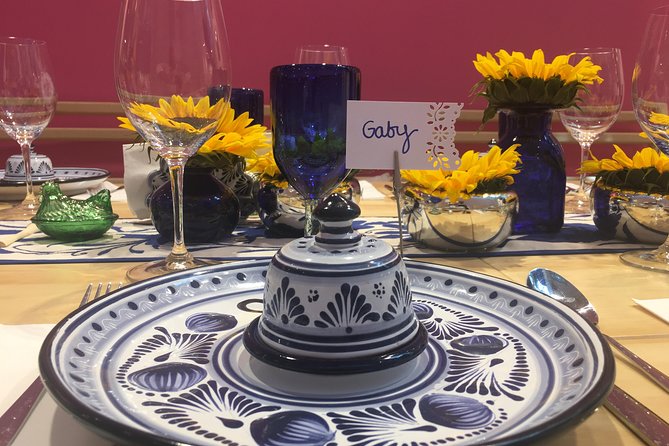
Back at Aura, the kitchen work starts with Mexican street appetizers. You prepare sopes with two salsas: a red molcajete sauce and a green sauce.
This is a smart first course because it introduces several basic skills without making the class feel like a formal lesson. You work with masa, shape the small bases, and learn how different salsas change the same simple food. The two sauces also give you a practical comparison of color, flavor, and heat.
You will not simply watch the chef make everything. The point is to take part, and the instructors are used to mixed skill levels. Children have been given kitchen roles, and adults who do not cook often have been able to follow along. That makes the class suitable for families with older children, couples, solo visitors, and friends who want more than a sightseeing stop.
A small hygiene issue is worth mentioning. Everyone should wash their hands before touching shared food and use tasting spoons properly. The staff can guide the group, but good kitchen habits also depend on each person paying attention. This is a minor consideration, yet it matters when several people prepare food together.
Mextlapiques bring something less familiar
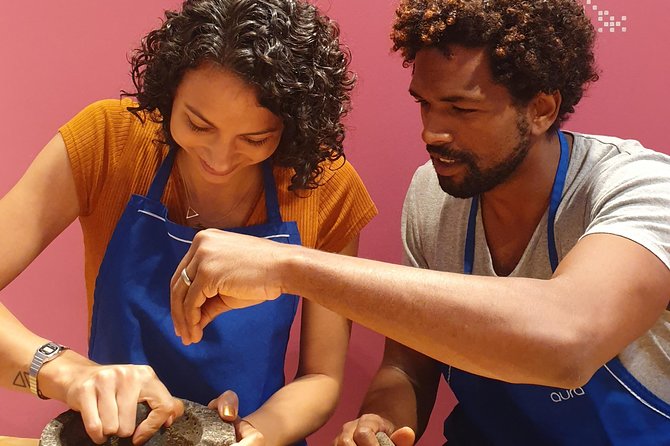
The second starter is a mextlapique, described here as a tamale without masa. It is filled with vegetables and topped with a spearmint sauce.
This dish is one of the most interesting reasons to choose this particular class. Many Mexican cooking lessons focus on dishes you already see on menus at home. Mextlapiques offer something less common, so you leave with a recipe and a food memory that feels more specific to the class.
The course also shows how Mexican cooking is not only about heavy sauces or layers of cheese. Vegetables, herbs, texture, and cooking technique all matter. The spearmint sauce adds a fresh note to the dish and gives you another example of how a small finishing element can change the whole plate.
The printed recipes are useful here. You may not remember every step after a morning of shopping, chopping, tasting, and eating. Having the recipes in hand gives you a fair chance to recreate the meal at home, though some market ingredients may require a visit to a Latin grocery store or a practical substitute.
Same city, another market:
- Frida Kahlo VIP [Museum Tickets Included] Bike, Markets & Churros
★ 5.0 · 1,072 reviews - Frida Kahlo VIP [Museum Tickets Included] Walk, Markets & Churros
★ 5.0 · 982 reviews - Cancun Taco Tour, Local Beer and Night Market with Transportation
★ 5.0 · 816 reviews - Cancun Street Food Tour with Food Stalls, Local Market and Murals
★ 5.0 · 723 reviews
White mole is the main lesson
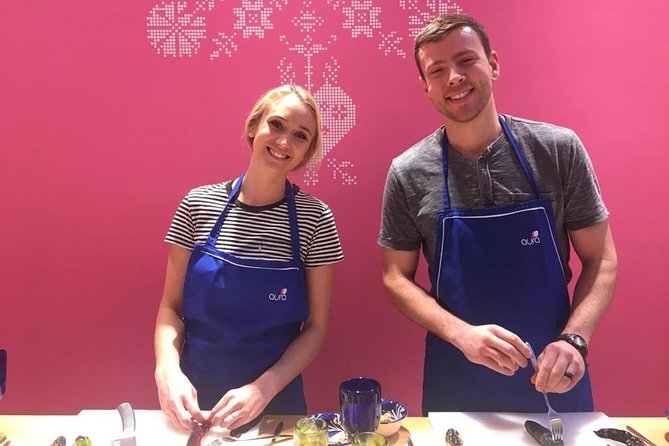
The main course is mole blanco, or white mole. Its pale color comes from ingredients such as white pine nuts, almonds, peanuts, sesame seeds, blonde raisins, and chile guero.
White mole is a good teaching dish because it makes clear that mole is not one fixed sauce. It can be built from nuts, seeds, dried fruit, chiles, and careful seasoning, with each ingredient affecting the final taste and texture. The chef explains the recipe as you prepare it, rather than handing you a finished sauce to pour over dinner.
The standard serving is usually chicken pieces. If you prefer a vegetarian option, you can request panela cheese or mushrooms, but give that preference when booking or before the class begins. The dish contains several nuts and seeds, so this is not a safe choice for anyone with a nut allergy. The supplied information specifically says the activity is not suitable for nut allergies.
This is also the point where the experience feels most useful for home cooks. You are not just sampling mole in a restaurant. You learn how the ingredients are handled and how a sauce with many parts comes together. The recipe is more demanding than a quick salsa, but the chef’s step-by-step guidance keeps it manageable.
Tortillas, corn bread, and the final meal
Handmade tortillas are part of the preparation, and they may be the most satisfying task in the kitchen. The process is simple in theory but takes practice. The instructor can show you how to shape and cook them, and you get to eat the results with the dishes you prepared.
Dessert is corn bread, followed by hot chocolate made with water. This is not an afterthought. Corn is so important to Mexican food that finishing with a corn-based sweet keeps the meal tied to the ingredients introduced earlier in the day.
Once the cooking is complete, you sit down to eat the four-course meal. Drinks include artisanal mezcal, Mexican craft beer, or Mexican wine. You can choose what suits you, and the alcohol pairing gives the meal a social finish without making the class feel like a drinking tour.
The pace is worth noting. Four and a half hours sounds long if you imagine standing at a counter nonstop, but the market walk, explanations, preparation, cooking, and meal break up the morning. Still, you should not schedule a museum reservation or long-distance excursion immediately afterward. The start is fixed at 9:30 a.m., and the end is approximate.
How the $178.77 price holds up
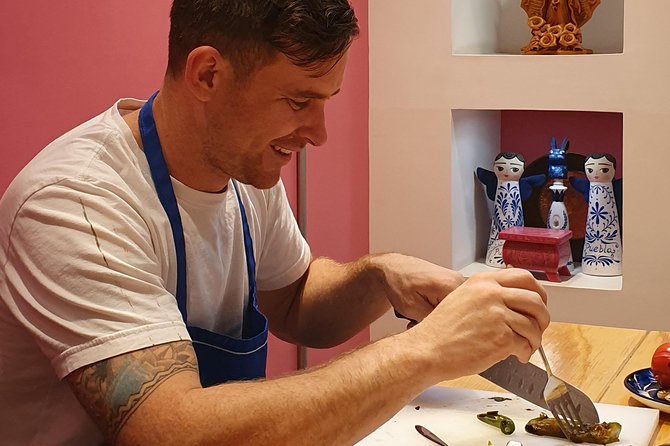
At $178.77 per person, this is not a budget cooking lesson. The value depends on what you want from the morning.
You are paying for a chef guide, a guided market visit, all cooking ingredients, an apron, printed recipes, a four-course lunch, dessert, hot chocolate, and alcoholic drinks. You also get a small group, English instruction, and a structured introduction to Mexican food rather than a single demonstration.
I think the price makes the most sense if you want three experiences in one: a market orientation, a cooking class, and a full meal. If you only want to learn how to make tortillas or salsa, you can find a shorter and less expensive class. If you want a polished morning with the shopping, teaching, cooking, and cleanup organized for you, the cost is easier to justify.
The small group is especially important to the value. Eight people is enough for a social atmosphere but not so many that you disappear into a crowd. Past classes have included families, couples, solo participants, and mixed groups, so you should be comfortable meeting other people at the table.
Who should book this Mexico City class?
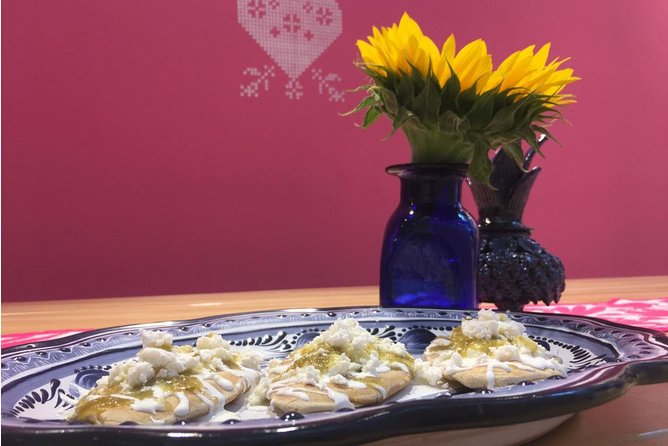
I would choose this for anyone who plans meals around food, wants practical recipes, or prefers a local market to another bus tour. It is also a good early-trip activity because the opening food discussion and market walk give you useful context for the rest of your time in Mexico City.
Families with children around 11 and 14 have enjoyed the format, especially because the work can be divided into small tasks. Young children may find the four-and-a-half-hour schedule long, and the kitchen setting requires attention.
You do not need advanced cooking skills. The instructors have worked with people who cook often and people who hardly cook at all. The class is also friendly for solo participants, since the shared meal and small group make conversation easy.
I would skip it if you have a serious nut allergy, dislike shared food preparation, or want a quiet, private meal. I would also check the menu preference carefully if you do not eat chicken. Panela cheese or mushrooms are available for the white mole, but you should request your choice in advance.
Booking details worth knowing
The activity is offered in English and uses a mobile ticket. Service animals are allowed, and the meeting point is near public transportation. The end point is the same as the start point, so you do not need to arrange a separate pickup after lunch.
Free cancellation is available up to 24 hours before the 9:30 a.m. start time for a full refund. Changes or cancellations inside that window are not accepted for a refund.
Because the activity is often reserved well ahead of time, I would not leave it until the last morning of your trip if the date matters. The small capacity can fill early, especially for visitors looking for an English-language class.
Should you book it?
Book it if you want to understand Mexican food through its ingredients, not just eat it at restaurants. The market visit, mextlapiques, white mole, handmade tortillas, and small-group instruction give the morning more substance than a standard taco class.
The price is high, and the nut restriction is firm. But if you value a well-organized food experience with a real market visit, hands-on cooking, a generous meal, and a recipe folder to take home, this is a strong choice in Mexico City. I would put it near the top of your list for a food-focused day, especially with chefs such as Lorena, Pame, Mariana, or Ana leading the class.
FAQ
Where does the cooking class begin?
It begins at Aura Cocina Mexicana, at Eje 3 Pte 191, Roma Norte, Cuauhtémoc, 06700 Ciudad de México.
What time does the activity start?
The start time is 9:30 a.m. The full experience lasts approximately four hours and 30 minutes.
Is the market tour included?
Yes. The class includes a walking tour of Mercado Medellín, including explanations of the market’s organization, offerings, and history, along with tastings from selected stands.
What food will I prepare?
The menu includes sopes with red and green salsas, mextlapiques, handmade tortillas, white mole, and corn bread with hot chocolate.
Can I request a vegetarian main course?
Yes. The white mole is usually served with chicken, but panela cheese or mushrooms are available as alternatives. You should indicate your preference.
Is the class suitable for someone with a nut allergy?
No. The activity is not suitable for nut allergies. The white mole includes ingredients such as pine nuts, almonds, and peanuts.
New market tours around Mexico
- San Jose del Cabo: Guided Food Tour & Visit to Local Market★ 4.8 · 17 reviews
- Puerto Escondido: Boat Cruise and Market Visit★ 4.5 · 7 reviews
- Oaxaca Markets Food Tour★ 5.0 · 15 reviews
- Oaxaca: Traditional Oaxacan Cooking Class with Market Visit★ 4.9 · 80 reviews
- Oaxaca: Cooking Class with No Set Menu &Local Market Tour★ 5.0 · 7 reviews
- Mexico City: Street Taco Cooking Class & Market Tour★ 5.0 · 12 reviews
- Mexico: Salsa Making Class in a Market with a Chef★ 5.0 · 10 reviews
- Mexico City: Bazaar Saturday, Convent of Carmen & San Angel★ 4.1 · 7 reviews
Mexico City Market Tours, side by side.

Frida Kahlo VIP [Museum Tickets Included] Bike, Markets & Churros
Read our review →
Mexican Cooking Class with Food Market Visit in Mexico City
Read our review →
Mexico City: Hidden Markets, Street Food & Salsa-Making Tour
Read our review →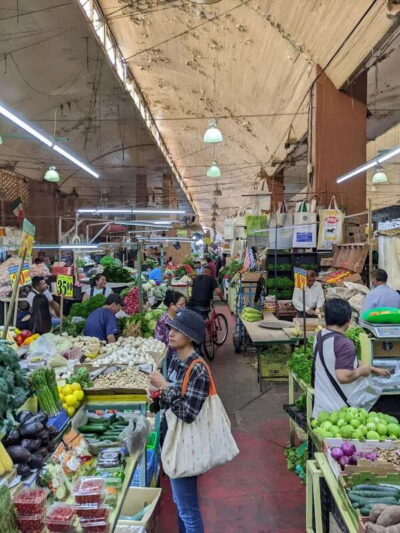
Mexico City: Mystic Markets La Merced & Sonora Culinary Tour
Read our review →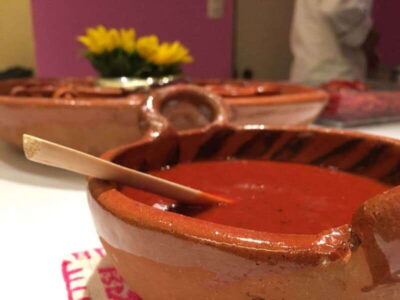
Mexico City: Authentic Mexican Cooking Class & Market Tour
Read our review →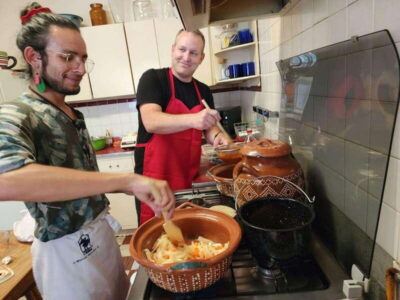
Market tour, cooking class & three-course Mexican feast
Read our review →