
Review · PORTO
Porto Local Market Visit & Cooking Class / Showcooking
Mercado do Bolhão is the heart of this four-hour experience. You begin among Porto’s food sellers, learn how local ingredients fit into Portuguese cooking, and help gather items for lunch before crossing the Luis I Bridge by metro to a cooking studio in Gaia. It is a smart way to connect the city’s daily life with its table.
I especially like the market-to-kitchen flow and the small group size, capped at eight people. I also like the relaxed format: you can take part in chopping, stirring, and other short tasks, or simply watch, ask questions, eat, and enjoy the wine. The main thing to know is that this is a showcooking class, not a full session where each person prepares every dish.
Key points
- Start at Mercado do Bolhão: Meet at 10 a.m. and explore one of Porto’s most important food markets with a local guide.
- Ride across the Luis I Bridge: The short metro trip offers a memorable view toward Jardim do Morro and the Douro.
- Watch traditional dishes come together: The planned meal includes alheira croquettes, cod with cream, and pastel de nata.
- Expect limited hands-on cooking: You may help with small steps, but the chefs handle much of the preparation.
- Taste more than the main courses: Olives, lupines, grilled sausage, bread, cheese, jams, coffee, tea, and local wine may also appear.
- Plan around the dietary limits: The food is not suitable for vegetarians or people with lactose intolerance, and the menu cannot be changed.
Starting with Porto’s famous Mercado do Bolhão
Meet at R. Formosa 324 at 10 a.m. The first part takes place at Mercado do Bolhão, the city market that gives this tour its local footing. Rather than beginning in a restaurant designed for tourists, you start where people shop for food and where Portuguese cooking makes practical sense.
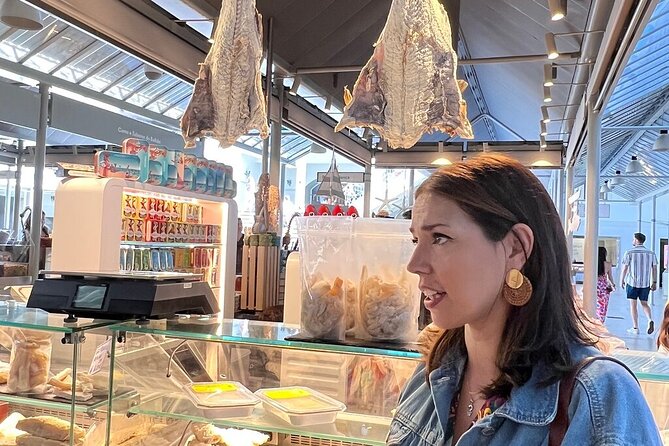
Your guide leads you through the market and explains the ingredients used in the meal. You may see the group select products from individual stalls, including items that later become part of lunch. The market visit also provides a useful introduction to Portuguese food customs, from the way locals shop to the role of salt cod, sausage, olive oil, bread, and preserves.
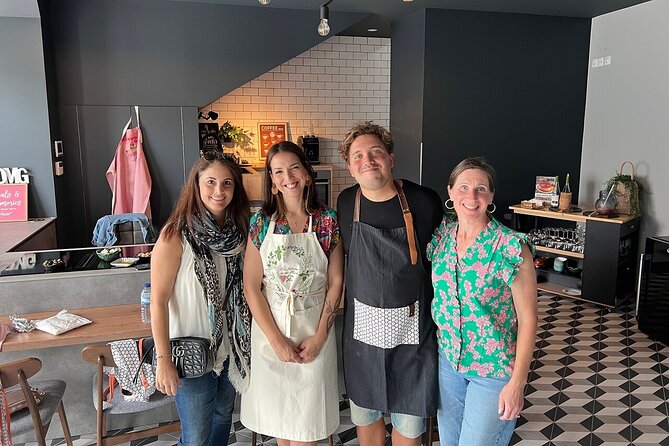
This is more than a quick stop for photographs. The guide connects products with Porto’s food traditions and with Portugal’s influence around the world. Hosts named in the experience include Nuno, Ana, Maria, Joseph, and Catia, though the exact team can vary. Nuno is described as especially lively and entertaining, while Ana and Joseph have been praised for keeping the group involved and explaining the cooking clearly.
Arrive on time. If you miss the scheduled meeting, you will miss the market visit, which is one of the strongest parts of the morning. The class itself may still be the main attraction for you, but the market is what gives the meal context.
More Local and Farmers Market Tours in Portugal:
- Lisbon: Local Market, Food, and Culture Walking Tour
★ 4.7 · 40 reviews - Porto: Local Market Tour & Cooking Class/Showcooking
★ 4.9 · 32 reviews - Madeira : Santo de Serra Local Farmers’ Market half day trip
★ 4.3 · 26 reviews
Crossing the Luis I Bridge by metro
After the market, you take a short metro ride toward Jardim do Morro. The route passes over the upper level of the Luis I Bridge, giving you a fine view of Porto, the Douro River, and the riverfront below. The ride takes about five minutes, followed by a walk of less than five minutes to the kitchen.
This transfer is part of the experience rather than a private ride. You are using public transport with the group, and transport beyond the announced metro journey is not included. The view from the bridge adds a small sightseeing bonus to what could otherwise be a simple transfer.
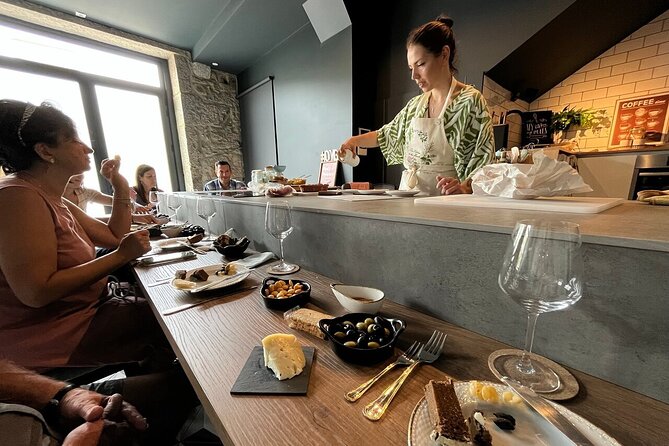
The kitchen is in Gaia, across the river from Porto. It is described as clean, cozy, and set up for a small group. Jardim do Morro also gives you one of the best broad views of Porto, so pay attention during the move between the market and the cooking space.
The stated end point is back at the original meeting point. Still, one practical detail deserves care: at least one account of the experience describes taking the metro back independently rather than being escorted all the way to the starting point. Ask your guide before the class ends how the return works, especially if you are not comfortable finding your way through Porto’s transport system.
A Portuguese meal built around familiar classics
The planned menu is simple, traditional, and filling:
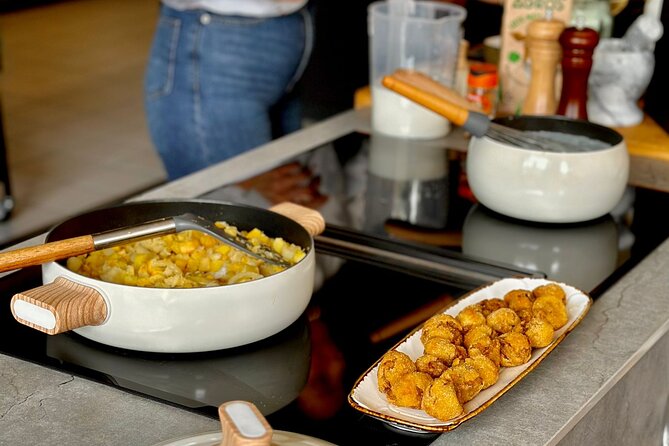
- Alheira croquettes
- Cod with cream, often known as bacalhau com natas
- Pastel de nata
The meal may also include olives, lupines, grilled sausage, bread, cheese, jam, and alheira served with marmalade mayonnaise. Local wine is included, with Vinho Verde appearing in some sessions. Coffee and tea are also provided.
Alheira is a Portuguese sausage with a distinctive place in the country’s food story. It is often made with bread and meat or other fillings, and it is served here as a croquette. That gives you a chance to try a Portuguese specialty in a familiar fried form, even if you have never seen alheira on a menu before.
The cod dish is the centerpiece. Salted cod is one of Portugal’s defining ingredients, and cod with cream is a comfort-food preparation rather than a delicate tasting portion. Expect a proper lunch, not just a series of tiny samples.
Pastel de nata provides the sweet finish. You watch the group prepare the custard tart and then eat it with coffee or tea. The dessert is a useful part of the lesson because it shows how a famous Portuguese pastry is assembled, rather than simply placing one on a plate without explanation.
What the cooking class really involves
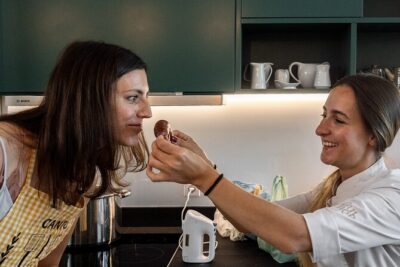
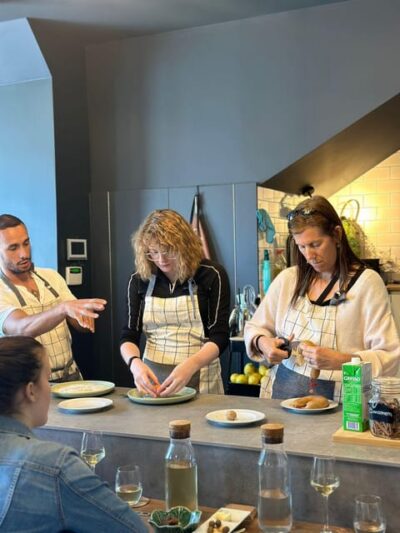
Set your expectations correctly. This is a demonstration-led class with selected hands-on moments. The chefs do most of the work, while participants may take turns with tasks such as cutting, stirring, or helping prepare parts of the meal.
That format suits me better than a class where everyone spends the whole time worrying over a recipe. You have space to watch the technique, listen to the explanation, ask questions, and talk with the other people at the table. Several sessions have included participation in the main dish and dessert, but you should not expect to prepare every course from start to finish.
If you want a serious culinary workshop with your own chopping board and a complete set of assigned tasks, this may feel too light. One person found the class less hands-on than expected, calling it more of a demonstration. That is the most important limitation to understand before booking.
If you prefer a social food experience with a few chances to help and plenty of time to eat, the format works well. The small group, with no more than eight people, allows the instructors to include participants without turning the class into a crowded production line.
More Market and Cooking Class Tours in Portugal:
- Lisbon Market and Food Tour with Cooking Class and Lunch
★ 5.0 · 117 reviews - Private Lisbon Market Tour & Portuguese Cooking Class with Paula
★ 5.0 · 89 reviews - Porto Market Tour & Cooking Class – Half Day
★ 5.0 · 34 reviews - Porto: Cooking Class with Local Market Visit
★ 5.0 · 15 reviews
The value of the small group
The maximum group size of eight matters here. At that size, you can see the cooking clearly, hear the explanations, and get a turn at some of the short tasks. It also makes the meal feel more like a shared table than a formal lecture.
The atmosphere depends partly on the instructors. Nuno is described as energetic, funny, and passionate about Portuguese food and history. Ana has been praised for her market explanations and friendly manner. Joseph is noted for patient cooking instruction, while other sessions have included Maria and Catia.
The hosts do not just recite recipes. They connect the food with families, local habits, language, and the past. Conversations can move from how a dish is cooked to why a product matters in Portugal. That makes the experience useful even if you are not planning to reproduce every recipe at home.
The group setting also gives you a chance to meet other people over lunch. You may end up talking as much about Porto, family, and travel as about food. That social side is a major part of the appeal, but it also means the exact tone depends on the mix of people in your group.
Wine, timing, and what is included
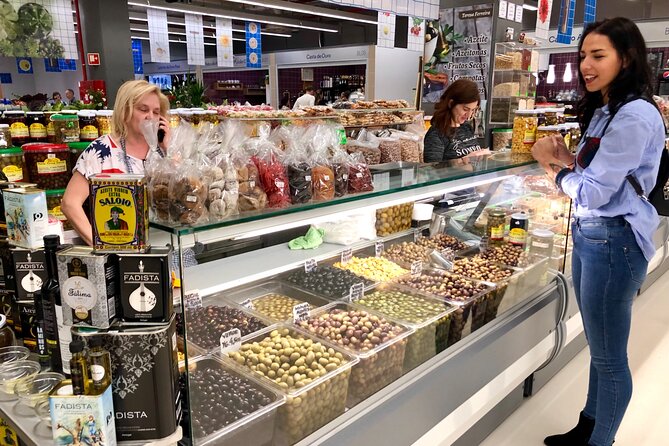
The start time is 10 a.m., and the full experience lasts about four hours. Since you begin with the market and finish with lunch, this is best treated as a major morning activity rather than a quick food stop.
Portuguese wine is included, and Vinho Verde has been served in some sessions. The wine helps turn the cooking demonstration into a long lunch, but you can also choose coffee or tea. Alcoholic drinks are part of the planned meal, so tell the host if you do not drink and want to focus on the nonalcoholic options.
Lunch consists of the dishes prepared during the class. The included food is substantial enough to replace a meal, and extras such as olives, sausage, bread, cheese, and jam add variety. The exact side items can vary, but the core menu is alheira croquettes, cod with cream, and pastel de nata.
The value depends on what you want from a food tour. You are paying not only for lunch, but also for a market visit, local explanations, public transport between Porto and Gaia, instruction, wine, and a small-group setting. Since no tour price is provided here, I cannot judge the cost in euros, but the package offers more than a standard restaurant meal. It is less compelling if your only goal is to eat cod and pastry as cheaply as possible.
Dietary needs and family considerations
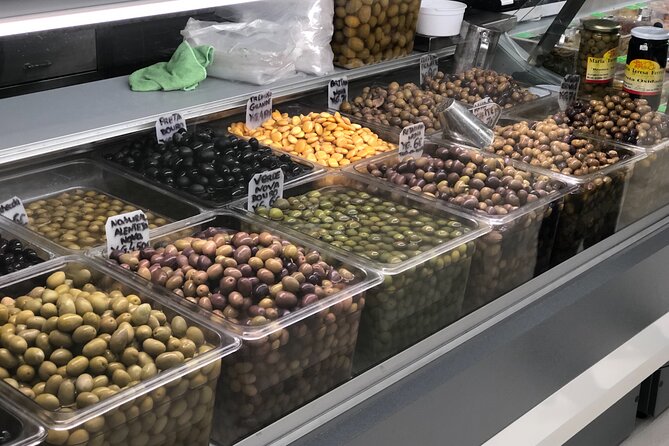
This experience is not recommended for vegetarians or people with lactose intolerance. The fixed menu includes sausage, fish, dairy, and other ingredients that make substitutions difficult. Changes to the pre-established menu are not included, so you should treat the food restrictions as a firm limit rather than something the kitchen can easily adjust.
Children and teenagers may attend with an adult, but their participation is limited. For safety reasons, the guide may prevent younger participants from taking part in certain cooking steps, even if a parent believes they can manage them. Minors cannot attend without an accompanying adult.
Animals, including service animals, are not allowed. The activity requires at least four participants to operate, and the maximum is eight. If the minimum is not met and the experience is canceled, you are offered another date or experience, or a full refund.
Who will enjoy this Porto food experience
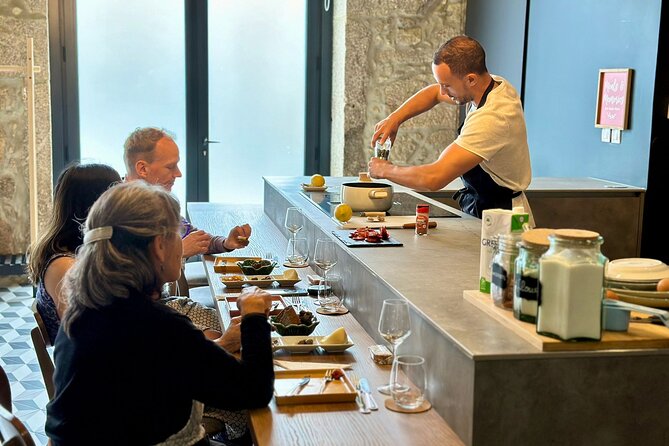
I would choose this tour if you want food to open a door into Porto’s everyday culture. It suits first-time visitors who want a market introduction, a traditional meal, and a clear view of how Portuguese dishes are built.
It is also a good fit if you enjoy watching a skilled cook and joining in for a few steps without being responsible for an entire recipe. The guides bring much of the energy, and the small group makes it easy to ask questions.
You may want a different class if you are vegetarian, lactose intolerant, traveling with animals, or looking for a fully practical lesson. It is also not the best match if you want a private transfer, a completely customized menu, or a class where every participant cooks every dish.
Book only if you can reach the meeting point by 10 a.m. The market portion is not repeated for late arrivals, and arriving at the wrong place would cost you the part that most clearly connects the food to Porto.
Should you book the Mercado do Bolhão cooking experience?
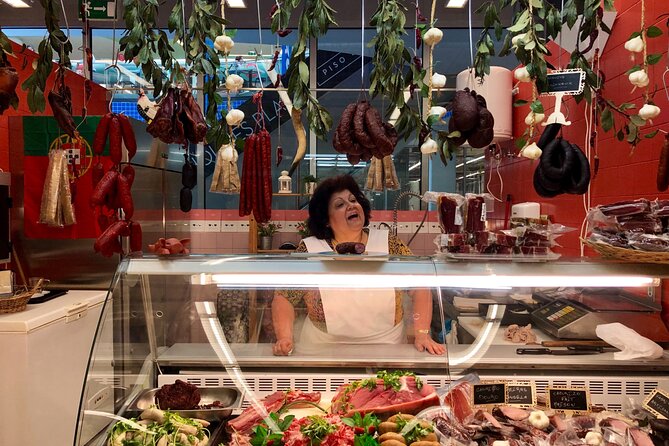
Yes, if you want a friendly, food-focused morning that combines market life, local stories, a scenic metro ride, and a traditional Portuguese lunch. The strongest elements are the Bolhão visit, the knowledgeable guides, the small group, and the chance to taste dishes that you might not order on your own.
Just remember the format: it is a showcooking experience with limited participation, not a full culinary course. With that expectation, the four hours offer a pleasant and useful introduction to Porto’s food culture. If cod, sausage, dairy, wine, and pastry all suit you, this is a strong choice for a memorable meal with context.
FAQ
Where does the experience begin?
Meet at R. Formosa 324, 4000-248 Porto, Portugal, at 10 a.m. The first stop is Mercado do Bolhão.
How long does the experience last?
The experience lasts approximately four hours.
Is this a fully hands-on cooking class?
No. It is mainly a showcooking session. You may help with small steps, but the instructors prepare much of the meal.
What food is included?
The planned menu includes alheira croquettes, cod with cream, and pastel de nata. Olives, lupines, grilled sausage, bread, cheese, jam, coffee, tea, and local wine may also be included.
Is the food suitable for vegetarians or people with lactose intolerance?
No. The experience is not recommended for vegetarians or people with lactose intolerance, and changes to the set menu are not included.
Can I cancel for a full refund?
You can cancel at least 24 hours before the start time for a full refund. Cancellations or changes made less than 24 hours before the start time are not refunded or accepted.
New market tours around Portugal
- South of Lisbon: Local Market & Canned Sardines Factory Tour★ 5.0 · 2 reviews
- Porto: Coastal Villages Market & Seafood Cooking Tour★ 5.0 · 2 reviews
- Porto: Cooking Class with Local Market Visit★ 5.0 · 15 reviews
- Porto: Bolhão Market Guided Food Tour★ 4.6 · 15 reviews
- Olhão Fish Market & Food Tour★ 4.8 · 9 reviews
- Lagos: Market Tour and Cataplana Cooking Class★ 5.0 · 9 reviews
- Madeira: Levada Walk and Santo da Serra Market Tour★ 4.5 · 2 reviews
- Madeira: Sunday Market in Santo da Serra★ 5.0 · 2 reviews
Porto Market Tours, side by side.
Chef Led Porto Market Tour and Portuguese Tapas Class with Wine
Read our review →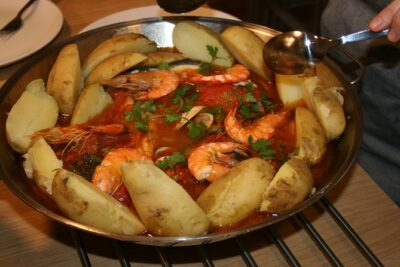
Porto: Local Market Tour & Cooking Class/Showcooking
Read our review →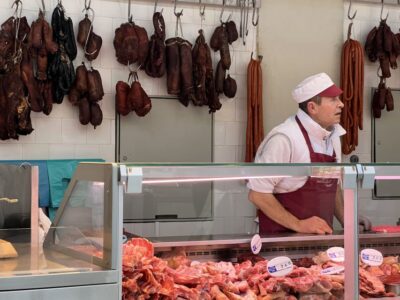
This tour also appears in