
Review · TORONTO
Toronto’s Multicultural Heart – Kensington & Chinatown Walk
Toronto’s Kensington Market and Chinatown sit side by side, but they feel like two different chapters of Toronto. One is a bohemian maze of vintage shops, bakeries, cafés, murals, and small food stalls. The other follows the broad streets around Spadina Avenue and Dundas Street West, where Chinese Canadian history, restaurants, shops, and busy sidewalks shape the scene.
I like this tour for two clear reasons: you get local food and coffee rather than only a street-by-street lecture, and the small group lets guides such as Kieran, Jackie, Robert, and Jason adjust the walk to your questions. The main thing to consider is the amount of standing and walking. Some people found the pace easy, while others felt the tour involved more standing than expected.
Key points to know
- Two distinct neighborhoods in one walk: Kensington Market and Chinatown are close enough to explore together in about three hours.
- A café stop and local snack are included: You receive coffee or tea and a taste from a street vendor or market stall.
- Guides make the difference: Kieran, Jackie, Robert, Jason, Roydon, and others have been praised for storytelling, humor, and personal attention.
- Small groups keep it personal: The maximum group size is 12, with a private upgrade available.
- Street art is part of the route: Expect murals, decorated brick walls, and side lanes with strong visual character.
- Come ready to walk: Comfortable shoes matter, and extra food and drinks cost more.
Why these neighborhoods are worth your morning
If you have already seen Toronto’s central sights, this walk gives you a more local-feeling view of the city. You are not simply ticking off monuments. You are looking at the places where immigrant communities built businesses, where independent shops still hold their ground, and where food tells part of the story.
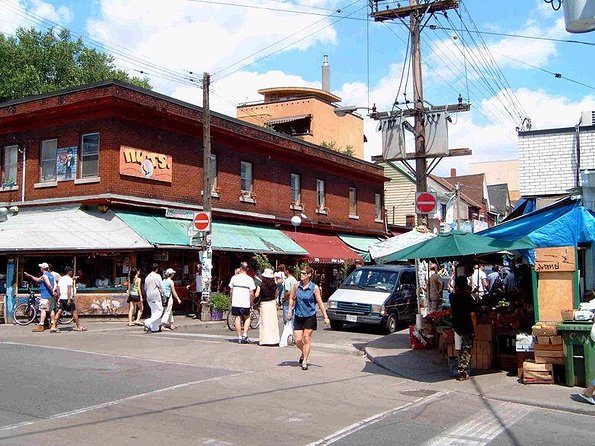
Kensington Market began as a working-class Jewish market. Over time, new groups settled in the area and changed its shops, cooking, languages, and street life. The result is an unusual mix of international food, vintage clothing, cafés, bakeries, bars, and brightly painted walls.
Chinatown adds a different layer. Its development began in the late 19th century, and it grew into one of Canada’s largest Chinese communities. The walk uses both areas to explain how Toronto changed as people arrived, opened businesses, formed communities, and faced the pressures of life in a large city.
I find that pairing useful. A standalone Kensington Market walk can focus heavily on food and street art. A standalone Chinatown walk may focus more on immigration and local history. This tour connects the two, so you can see how nearby neighborhoods developed different identities.
More stalls, halls and bazaars to walk around Canada:
- The Only Locally Owned Non-Touristy Food Tour by Spade & Palacio
★ 5.0 · 701 reviews - Toronto: St Lawrence Market Food Tour with 6 Food Tastings
★ 5.0 · 685 reviews - Granville Island Market Food Tour by Vancouver Foodie Tours
★ 5.0 · 552 reviews
Starting beside the Art Gallery of Ontario
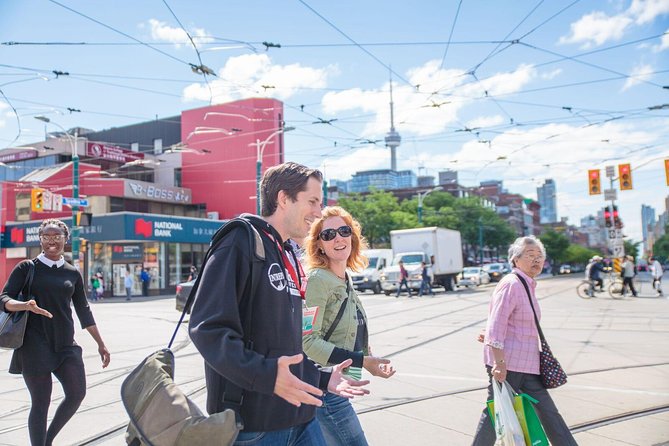
The meeting point is at the southwest corner of McCaul Street and Dundas Street West, beside the Art Gallery of Ontario. The start time is 10:00 a.m., and the tour ends at Dragon City Shopping Centre at the southwest corner of Spadina Avenue and Dundas Street West.
That location makes the tour easy to fit into a day of sightseeing. You begin near a major Toronto attraction and finish close to restaurants, shops, and public transportation. Hotel pickup is not included, so you need to make your own way to the starting point.
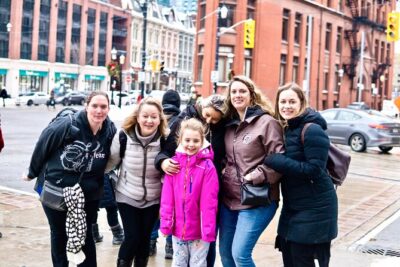
The group can include up to 12 people. That is a useful size for an urban walk. You can hear the guide without needing a microphone, and there is a fair chance to ask questions. Some departures may be smaller, even just a couple or a single participant, which can make the walk feel more like a personal introduction than a formal tour.
Guide quality matters here. The strongest experiences have come from guides who treat the route as a conversation rather than a memorized script. Kieran has been praised for humor, storytelling, and his ability to connect with families and repeat visitors to Toronto. Jackie has been noted for tying city history to graffiti artists and local food. Robert has guided personalized walks for solo visitors, couples, and families.
Guide assignments can change, so book this for the neighborhoods and format rather than for a guaranteed individual guide. Still, the range of positive names gives you a good sense of the kind of guide the company uses.
Kensington Market: food, murals, and independent shops
Kensington Market is the most visually playful part of the walk. The streets are lined with old brick buildings, painted signs, small storefronts, and walls covered in murals. You might see vintage clothing, specialty groceries, cafés, bakeries, bars, and shops selling goods from different parts of the world.
The tour explains how the neighborhood moved from its Jewish market roots toward its current bohemian identity. That change is not presented as a clean replacement. The area reflects several waves of immigration, with each group adding food, business traditions, and cultural habits.
One detail helps explain the neighborhood’s character: Kensington Market has no McDonald’s or Starbucks. Large chains are not part of its identity, and local businesses remain central to the area. That does not mean every shop is untouched by change, but it does show why Kensington feels different from a standard commercial district.
The street art is more than background decoration. Guides point out murals and artists, and they can explain how some walls became legal canvases with the owners’ approval. Several past guides have used the art to keep teenagers and families interested while also talking about the people and events behind the neighborhood.
The route includes a café stop for coffee or tea. This is a small feature, but it improves the walk. You get a break from standing, a chance to ask questions in a quieter setting, and a practical look at how residents use the neighborhood. The drink is included, while additional beverages are not.
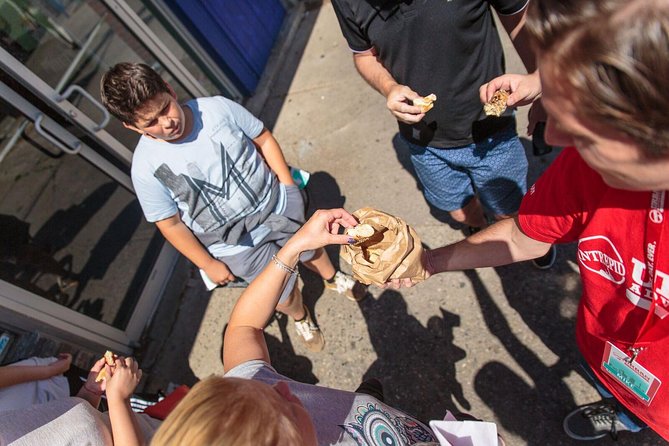
You also sample a local snack from a street vendor or market stall. The exact food can vary, which is sensible in a neighborhood where shops and vendors change. Past departures have included a pastry or another small bite, and the food stop has been one of the strongest parts for people who want more than visual sightseeing.
Do not expect a full food tour. The snack is a taste, not a meal. If you arrive hungry, plan to eat before the meeting point or stay in the area afterward. Your guide can suggest places for lunch, and that advice may be one of the most useful takeaways of the morning.
Chinatown: stories along Dundas and Spadina
Chinatown begins close to Kensington Market, so the transition is simple. You do not lose time on transportation, and the contrast between the two neighborhoods becomes part of the experience.
This section follows the Chinatown area around Dundas Street West and Spadina Avenue. It is one of the city’s busiest commercial districts, with restaurants, shops, historic markers, and a steady flow of people. The guide adds the context that you would miss by walking through on your own.
The focus is on Toronto’s Chinese community, its development, and the wider story of immigration to the city. You learn about the forces that shaped the neighborhood and the challenges immigrant communities faced as they established themselves in Toronto.
The best part of this section is the chance to ask specific questions. If you want to know where to eat, what certain shops sell, or how the neighborhood has changed, your guide can make the walk more practical. Restaurant recommendations are especially useful because the area offers many choices, and a local suggestion can help you avoid choosing at random.
Chinatown is not presented as a museum district. It is a working neighborhood with shops and restaurants serving daily customers. That means the sidewalks can feel crowded, and the surroundings may be noisy. I see that as part of the point, but it may not suit you if you prefer a quiet, slow-paced walk.
Same city, another market:
- Toronto’s First Food Tour: Taste the World in Kensington Market
★ 5.0 · 526 reviews - Bike / E-bike tour : Plateau, Mile-End, Jean-Talon Market by Fitz
★ 5.0 · 269 reviews - Toronto: St Lawrence Market Food Tour with 6 Tastings
★ 4.7 · 168 reviews - Toronto: Kensington Market International Food Tour
★ 4.9 · 67 reviews
What the guide adds to the experience
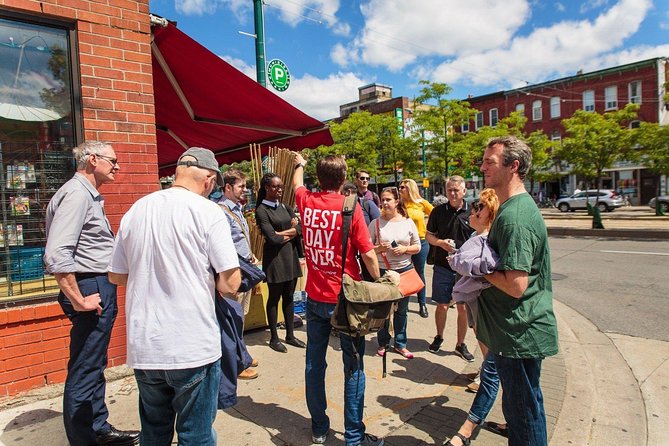
You can walk through these streets without a guide. You can see murals, browse shops, and find a pastry on your own. The real value of paying for this tour is the explanation and the human connection.
The strongest guides combine facts with stories. Robert has been praised for adjusting the walk to a group’s interests and abilities. Roydon has been described as setting a comfortable pace and using questions to keep people involved. Jason has received praise for mixing history, food, coffee, and humor into a personal experience.
Several guides have also made an effort to learn about the people in their group. That matters if you have visited Toronto before or if you are traveling with children. Instead of repeating information without pause, the guide can connect the neighborhood to your own questions and background.
That said, this is not a performance every minute of the morning. There are periods of walking, standing, looking, and moving between stops. One lower-rated experience felt more like a stroll than a fully structured tour, while another person found the food and drink good but wanted a more engaging presentation.
That difference is worth understanding before you book. If you want a tightly timed tour with a constant stream of facts, this may feel loose. If you like conversation, local recommendations, and time to look around, the format should suit you well.
How much walking and standing to expect
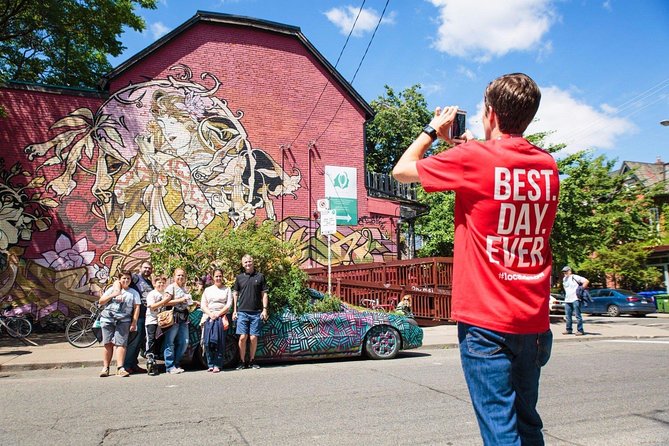
The tour lasts about three hours, though the neighborhood route itself is described as roughly two hours, with time for meeting, transitions, and stops. The itinerary gives about one hour to Kensington Market and one hour to Chinatown.
You should wear comfortable shoes. The tour moves through city streets rather than following a smooth indoor path, and you will stop often to hear stories or examine a shop, mural, or street scene. One person specifically found the amount of standing greater than expected, so do not treat this as a fast-paced hike.
Most people can participate, and the tour is near public transportation. Children are welcome, and children under six can join free of charge if you notify the operator in advance. Families with teenagers have had good results when the guide used food, murals, questions, and humor to keep the group involved.
The walk is offered in English. Mobile tickets make the admission side simple, but you still need to arrive at the correct corner near the Art Gallery of Ontario. Since there is no hotel pickup, allow time to reach the starting point.
Is the price fair at $64.25?
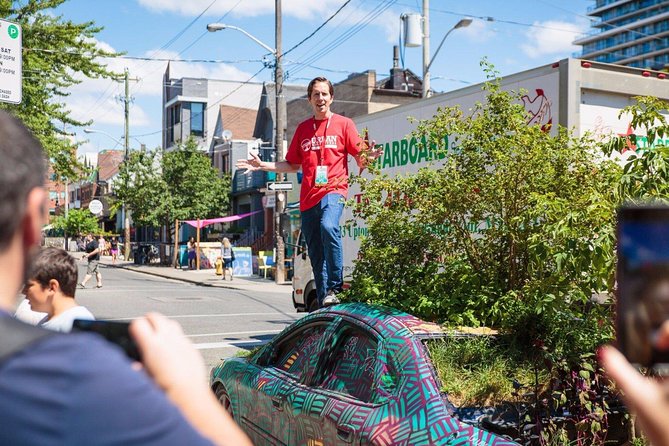
At $64.25 per person, this is not the cheapest way to wander through Kensington Market. You could explore the streets for free, buy your own coffee, and choose a snack from a vendor.
The price makes more sense if you want interpretation. You are paying for a local guide, a small group capped at 12, a café drink, a food sample, and a planned route through two neighborhoods. You also receive advice about restaurants and shops, which can help you use the area after the tour ends.
I consider the value strongest for a first visit to Toronto, especially if you have only a few days. The tour helps you get your bearings and points you toward places you may return to for lunch, shopping, or a second look at the murals.
The value is weaker if you already know both neighborhoods well or mainly want a meal. In that case, spend the money on food and explore independently. You will get the most from the tour if you care about local stories, immigration history, neighborhood change, and personal recommendations.
The cancellation terms are fair but firm. You receive a full refund if you cancel at least 24 hours before the start time. Changes or cancellations inside that window are not refunded.
Who should book this walk?
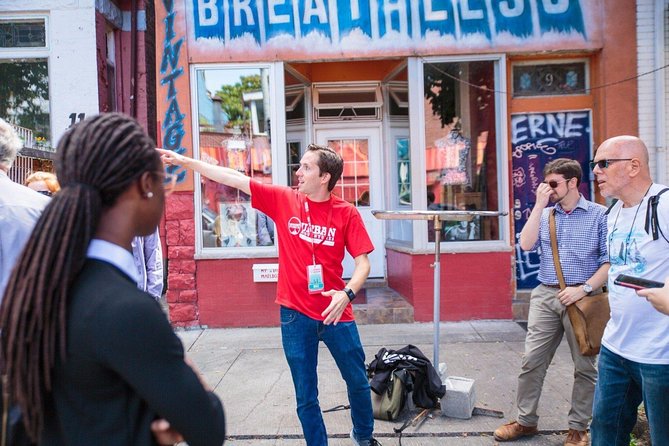
I would recommend it to first-time visitors who want to see Toronto beyond its central attractions. It also works well for solo visitors, couples, and families with older children.
Families should appreciate the short format and the mix of food, art, shops, and stories. Teenagers may connect more with the murals and independent stores than with a traditional history lecture. Solo visitors can benefit from the social feel of a small group, especially if their guide invites questions.
Food-focused visitors should book with realistic expectations. You receive a coffee or tea and a local snack, but this is not a full tasting tour. The food is there to open the door to the neighborhood, not replace lunch.
Private-tour seekers can upgrade for a more tailored experience. That may be worthwhile if your group has specific interests, mobility concerns, or a tight set of questions. For everyone else, the regular small-group format should provide enough personal attention.
Should you book Toronto’s Kensington and Chinatown walk?
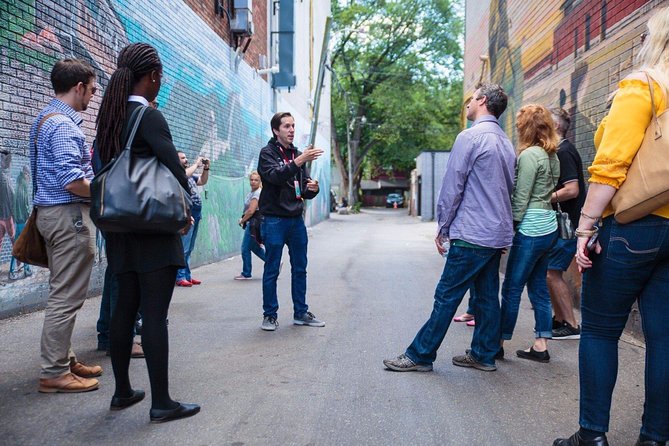
Book it if you want context, local food tips, street art, and two very different neighborhoods in one morning. The best guides turn the walk into a friendly conversation about immigration, city change, independent businesses, and the people who shaped these streets.
Skip it if you prefer to explore at your own pace, dislike standing, or want a substantial meal rather than a snack. Also remember that guide quality can vary, even though many named guides, including Kieran, Jackie, Robert, Jason, and Roydon, have earned strong praise.
For most first-time visitors, I think the $64.25 price is reasonable because the tour gives structure to an area that can otherwise feel scattered. Go with comfortable shoes, arrive ready to ask questions, and save room for lunch at the end.
FAQ
Where does the tour start?
The tour starts at the southwest corner of McCaul Street and Dundas Street West, beside the Art Gallery of Ontario in Toronto.
Where does the tour end?
The tour ends at Dragon City Shopping Centre, at the southwest corner of Spadina Avenue and Dundas Street West.
What time does the tour begin?
The scheduled start time is 10:00 a.m.
How long does the tour last?
The experience lasts approximately three hours. The neighborhood walking portion is described as about two hours, with time for stops and transitions.
Is food included?
A coffee or tea at a local café and a local snack from a street vendor or market stall are included. Additional snacks and beverages are not included.
Can children join the tour?
Yes. The tour is child-friendly, and children under six may join free of charge. You should notify the operator if you are bringing a child under six.
How large is the group?
The regular tour has a maximum of 12 travelers, and a private-tour upgrade is available.
New market tours around Canada
- Ottawa: Taste of the ByWard Market Food Tour★ 4.9 · 50 reviews
- Ottawa: Evening Taste of the ByWard Market Food Tour★ 4.6 · 21 reviews
- Montreal: Jean-Talon Market & Beyond Locally Owned Food Tour★ 5.0 · 50 reviews
- Kensington Market ‘Taste the World’ Food Tour★ 4.5 · 4 reviews
- Toronto: Kensington Market International Food Tour★ 4.9 · 67 reviews
- Vancouver: Granville Island Market Tour with Tastings★ 5.0 · 45 reviews
- Quebec: German Christmas Market Tasting Tour★ 4.0 · 15 reviews
- Bike/E-bike tour Plateau,MileEnd, Jean-Talon Market by Fitz★ 4.5 · 33 reviews
Toronto Market Tours, side by side.
Toronto: St Lawrence Market Food Tour with 6 Food Tastings
Read our review →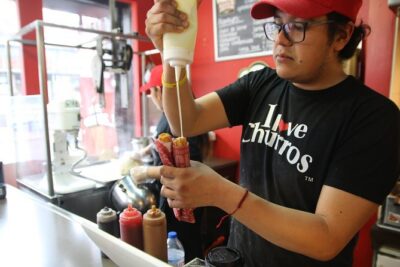
Toronto’s First Food Tour: Taste the World in Kensington Market
Read our review →
Toronto: Kensington Market International Food Tour
Read our review →This tour also appears in