
Review · BARCELONA
Barcelona Markets Tour
La Boquería is only the beginning. This two-hour walk links Barcelona’s famous food market with old streets, a colorful covered market, a wonderfully odd Catalan tradition, and the archaeological remains beneath El Born. You get a quick lesson in how food, faith, trade, and city planning shaped Barcelona.
I like the way the tour mixes small tastings with real history, rather than treating the markets as a string of snack stops. I also like the personal touch: guides such as Eoghan know regular stallholders, while Alberto and Zeynep have been praised for making food history lively and easy to follow. The main drawback is time. Two hours moves quickly, and you may wish for another half-hour at La Boquería to shop and eat.
Key points at a glance
- La Boquería sets the table: Taste Catalan olives and nougat while learning how the market works.
- Three neighborhoods, one compact walk: The route connects La Rambla, the Gothic Quarter, and El Born.
- A caganer stop adds local character: You hear the story behind one of Catalonia’s strangest holiday figures.
- El Born gives the tour its strongest historical finish: The former market now protects the remains of a 16th-century neighborhood.
- The $34 price is fair for a guided overview: You get an expert guide and several tastings, but market purchases cost extra.
- An optional upgrade adds a private food and wine tasting: Expect cured meats, quality cheeses, tomato bread, and wine with a sommelier.
Why this Barcelona market walk works
Barcelona can feel like several cities layered on top of each other. Roman walls, medieval lanes, grand boulevards, neighborhood markets, churches, and modern food stalls all share a small area. This tour gives you a useful framework for reading those layers.
You start outside Dunkin’ Donuts, where your guide holds an ExperienceFirst sign. The meeting point is easy to spot, though it may feel a little ordinary for a tour that soon leads into some of the city’s most atmospheric quarters.
The tour is conducted in English and lasts two hours. That is long enough to see a lot without turning into an exhausting half-day march. It is also short enough to fit neatly into a first day in Barcelona, especially if you want an introduction before deciding where to return on your own.
I would think of this as a food-and-city orientation walk, not a full food tour. You receive small tastings, but you are not served a complete meal. Bring water, wear comfortable shoes, and save room in your budget for anything you want to buy along the way.
More market tours around Barcelona:
- Barcelona: Paella Cooking Experience & Boqueria Market Tour
★ 4.8 · 3,661 reviews - Barcelona Paella Cooking Class with Market Visit, Tapas & Sangria
★ 5.0 · 2,531 reviews - Barcelona: Paella Cooking Class with Market Visit and More
★ 4.9 · 711 reviews
La Boquería: start with Catalan flavor
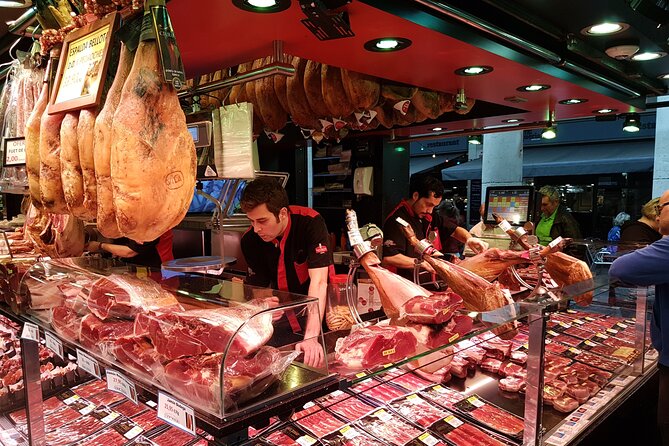
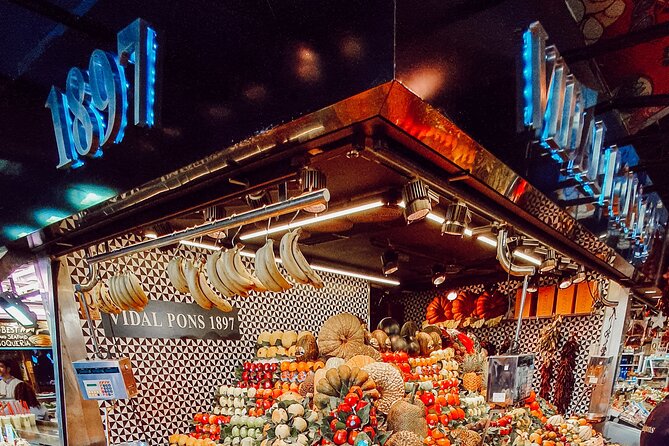
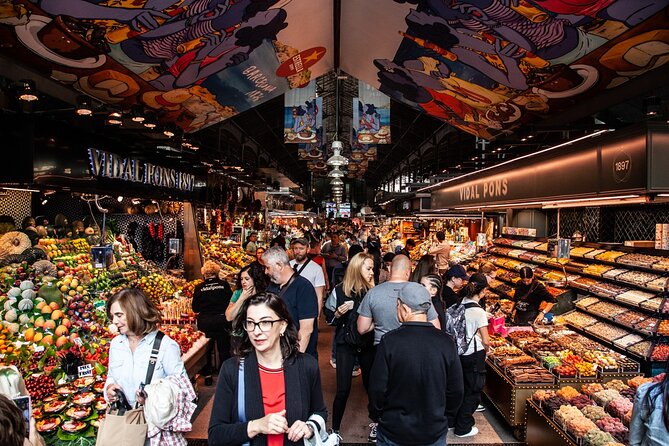
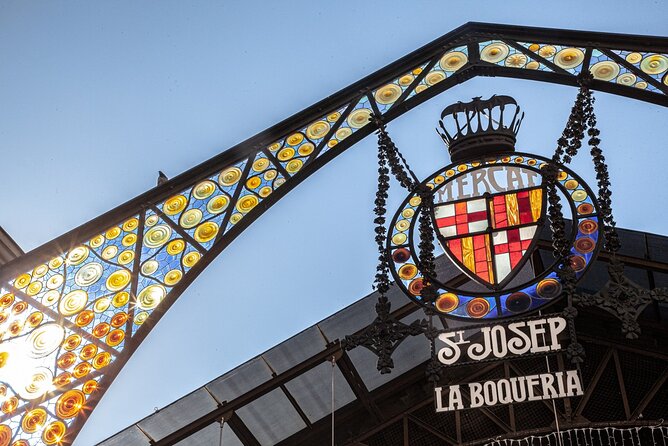
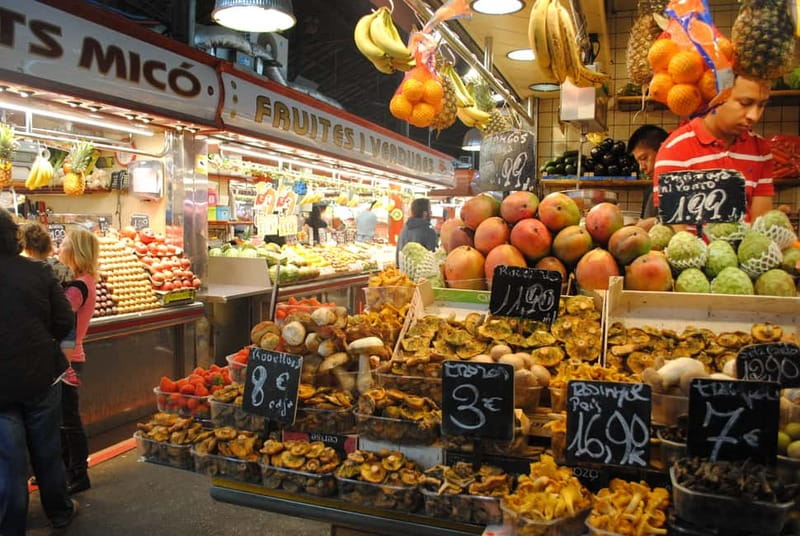
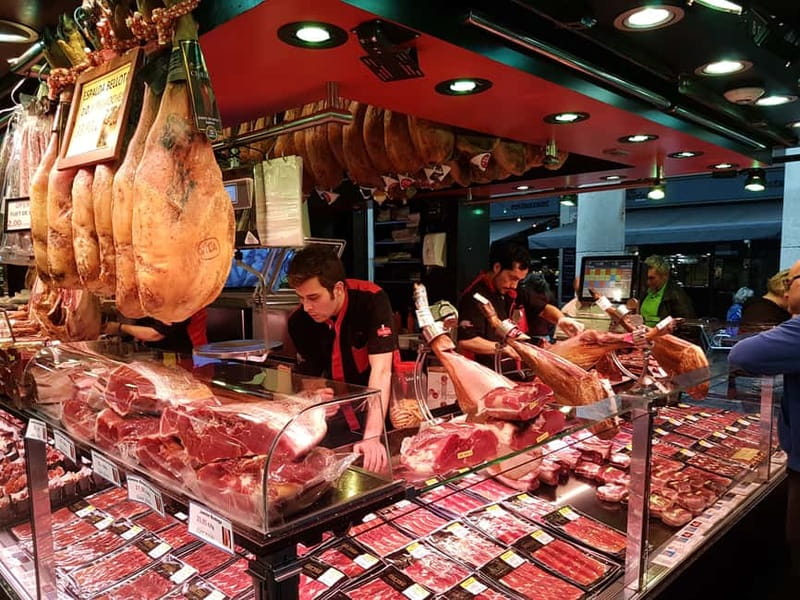
La Boquería is the tour’s most famous stop and usually the busiest. The market sits just off La Rambla behind an ornate entrance, and its patterned aisles lead past produce, seafood, cured meats, sweets, spices, and prepared foods.
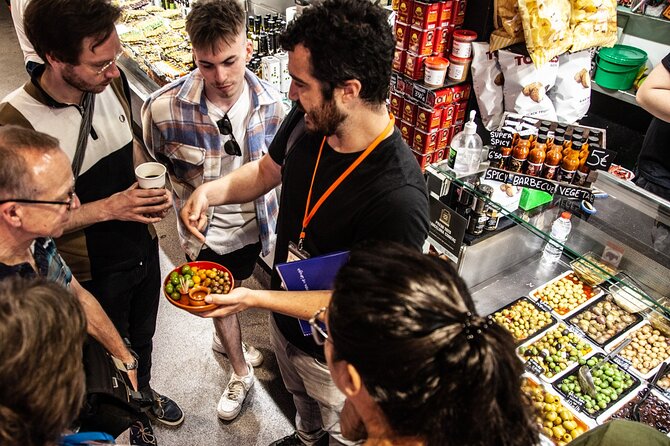
Your guide helps you make sense of what you are seeing instead of leaving you to wander through a wall of color and noise. You learn about Catalan food traditions and receive at least two small tastings. The listed examples are nougat and olives, with Catalan olives singled out as one of the main treats.
The olive tasting is especially useful because it turns an everyday food into a lesson in local taste. You can ask your guide what to look for and which flavors offer good value. There is also time to buy food if you wish, but those purchases are not included in the $34 price.
That distinction matters. If your main goal is to eat your way through La Boquería, two hours may feel tight. You will see the market with a guide, taste a few items, and receive suggestions, but you will not have unlimited time to sit down or browse every stall.
A guide with strong market knowledge makes a real difference here. Eoghan, for example, has been praised for shopping at the stalls himself and knowing the shopkeepers personally. That kind of connection can make the market feel less like a tourist display and more like a working neighborhood food hall.
La Rambla and the Miró mosaic
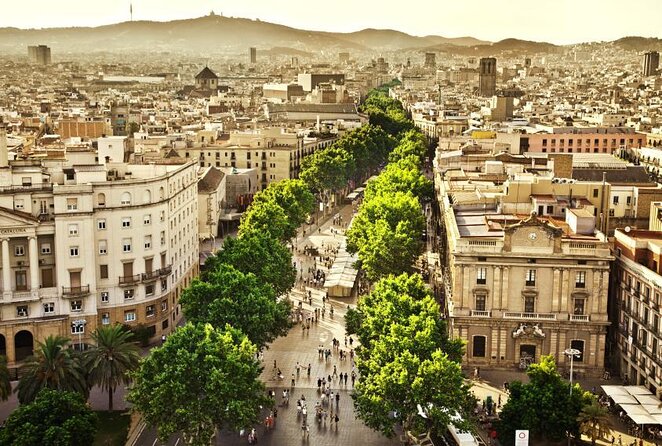
From La Boquería, the route moves onto La Rambla. This broad promenade is one of Barcelona’s best-known public spaces, lined with cafés, flower stalls, kiosks, street activity, and architecture from several periods.
The tour treats La Rambla as a former market area rather than just a busy pedestrian avenue. That gives you a better way to understand it. You are not simply walking from one attraction to the next. You are learning how commerce once shaped this route and how the promenade changed over time.
Look down for the unusual Miró mosaic set into the pavement. It is easy to miss if you are focused on nearby buildings or the people around you. Your guide can point it out and explain why it belongs in the story of La Rambla.
This part of the walk is also a good moment for photos. You get open-air cafés, flower stands, and the city’s constant movement in one frame. The tradeoff is that La Rambla can be crowded, so stay close enough to hear your guide and keep your belongings secure.
Santa Caterina Market and a wavy roof
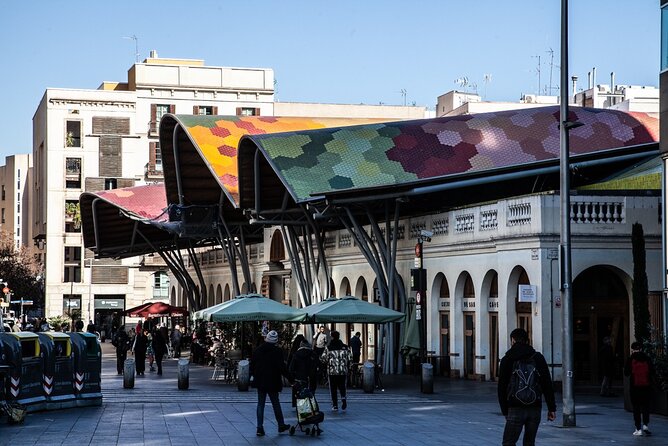
The route then heads toward Santa Caterina Market, the city’s first covered market. Its roof is the visual hook: an undulating surface covered in bright colors, designed to recall the produce sold below.
Inside, the market offers a different mood from La Boquería. La Boquería is the famous stop that many first-time visitors already have on their list. Santa Caterina helps show you a more local side of Barcelona’s market life, with less emphasis on postcard fame and more on the idea of a neighborhood food center.
Your guide explains the market’s place in the city and points out the ruins of a medieval monastery. This is one of the tour’s useful habits: it connects what you eat with what once occupied the ground beneath your feet.
The market stop is guided rather than free-form. You are there to understand the building, its traditions, and its role in the neighborhood. If you want to shop at length, you may need to return later.
Same city, another market:
- Ultimate Barcelona Food Tour with visit to a Local Market
★ 5.0 · 507 reviews - Half-Day Spanish Cooking Class & Boqueria Market Tour
★ 4.9 · 383 reviews - Barcelona Markets Tour
★ 5.0 · 376 reviews - Interactive Paella & Market: Bottomless Wine & Rambla Views
★ 5.0 · 376 reviews
The caganer shop and Catalan humor
The caganer stop is brief but memorable. A caganer is a traditional Catalan figure shown in a humorous, private moment, often tucked into nativity scenes. The custom may seem startling if you first encounter it as a visitor, but it reflects a local taste for earthy humor and irreverence.
The shop visit gives your guide a chance to explain the tradition without turning it into a strange novelty. This is one of those small stops that helps you understand Catalan identity through something ordinary, comic, and slightly mischievous.
It also breaks up the market-and-monument rhythm. You get a glimpse of a living custom rather than another grand building. Families may appreciate this stop, especially since guides such as Eoghan have been praised for keeping children involved and encouraging them to try unfamiliar foods.
Santa Maria del Mar and the old merchant quarter
The walk continues to the Basilica of Santa Maria del Mar, often called St. Mary of the Sea. The church is one of the key landmarks in the El Born area, and its setting helps explain the neighborhood’s connection to trade and maritime life.
You should expect a guided exterior visit or a concise look at the church as part of the walking route. The tour information does not promise a long interior visit, so do not book this experience expecting a detailed church tour. The value here is the building’s place in the wider story of the district.
This stop also gives the route a welcome change of pace. After the color and noise of the markets, the church offers a more formal architectural pause. Your guide can connect the building with the surrounding medieval streets and the people who lived and worked here.
Guides such as Nicholas have been praised for explaining how Barcelona developed from its earliest foundations through later changes and modern life. That broad approach is useful because the church is not treated as an isolated sight. It becomes part of a changing city.
El Born Market and the 16th-century remains
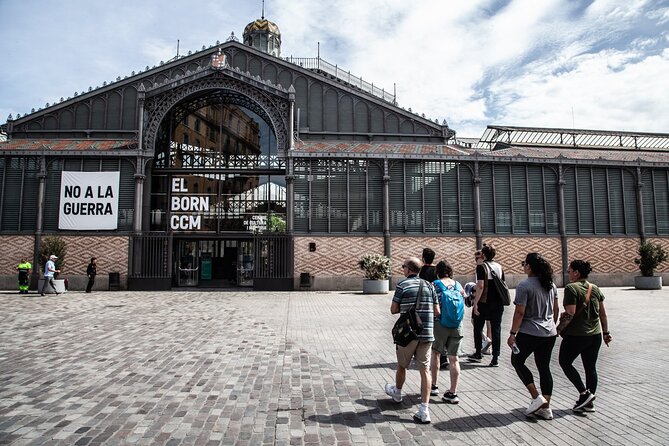
The final major stop is El Born Market, a striking iron-and-glass building that no longer functions mainly as a food market. Instead, it protects the remains of the old Born neighborhood beneath its roof.
This is the tour’s strongest historical finish. Beneath the market building are the remains of streets, homes, and a market from the 16th-century city. You can see how urban archaeology preserves an entire neighborhood rather than a single statue or wall.
The site gives real weight to everything that came earlier. Markets were not just places to buy food. They were tied to streets, homes, workshops, churches, and the daily routines of the people who lived around them.
The tour ends at Plaça Comercial, 12, close to El Born Market. That is a practical finish because you can continue exploring the district, find a restaurant, or return to a market stall that caught your eye earlier.
An olive oil tasting is included in El Born. The listing also describes an optional food and wine upgrade, held in a private room with a professional sommelier and your guide. That upgraded tasting includes cured meats, premium cheeses, Catalan tomato bread, known locally as pa amb tomàquet, and wines.
What the $34 price really buys
At $34 per person, the tour offers good value if you want context and direction. You are paying for a two-hour guided walk, an English-speaking guide, at least two small tastings at La Boquería, and an olive oil tasting in El Born.
The value is less convincing if you only want food. Your included portions are described as small, and you must pay separately for market purchases. A self-guided visit to La Boquería costs less, of course, but it will not give you the same explanations about Catalan food customs, the neighborhoods, or the archaeological remains.
The strongest value comes from the range of stops. In two hours, you connect La Boquería, La Rambla, Santa Caterina Market, the caganer tradition, Santa Maria del Mar, and El Born. That is a lot of ground, but the route has a clear theme: how Barcelona eats, trades, worships, and builds over time.
The optional tasting upgrade makes sense for people who want the food portion to feel more substantial. It adds cured meats, cheeses, tomato bread, and wine in a private room. You should choose it only if that sounds more appealing than spending your own money at the markets.
Guides who make the short route count
The guide is the biggest variable on a compact walking tour. The strongest guide profiles connected food, architecture, and local life instead of reciting dates.
Zeynep has been praised for making the walk fun while adding historical and architectural detail. Alberto has a clear strength in food history and is described as warm, funny, and easy to follow. Eoghan brings personal market connections and a family-friendly approach.
Valentina has been praised for responding well to a group’s needs and offering restaurant and shopping suggestions. Cal has a particular enthusiasm for La Rambla and the surrounding streets. Nicholas is known for giving a wide view of Barcelona’s development.
You cannot guarantee a particular guide unless the booking system allows a request, but these names give you a good sense of the style to expect: personal stories, food explanations, practical recommendations, and plenty of questions along the way.
Who should book this tour?
I would recommend it to first-time visitors who want to get their bearings fast without spending half a day indoors. It suits people who enjoy food but also want architecture and neighborhood context.
Families can also do well here. The route is described as easy-paced, and guides have worked successfully with children aged 8 and 12. The caganer stop, colorful market displays, and tastings give younger visitors several things to focus on.
It also works for a larger family or friend group that needs one shared activity. The small-group format can make the walk feel more personal, though the exact group size is not stated.
You may want something else if your priority is a long meal, serious wine education, or extended shopping time. In that case, choose the food and wine upgrade or use the tour as an introduction, then return to La Boquería or Santa Caterina on your own.
The walk is wheelchair and stroller accessible, according to the activity information. That is helpful for families and visitors with mobility needs, though crowded market aisles and busy streets can still require patience.
Should you book the Barcelona Markets Tour?
Book it if you want Barcelona’s markets explained rather than simply photographed. The combination of olives, nougat, olive oil, market traditions, the caganer custom, Santa Maria del Mar, and the preserved streets beneath El Born gives you more substance than a basic tasting walk.
The main caution is pace. Two hours is efficient, not leisurely. If you want extra time at La Boquería, plan to return after the tour or budget for the optional private tasting.
For $34, I think it is a sensible first-day choice. You get a clear introduction to three central areas, useful food advice, and enough local context to make the rest of your Barcelona visit more rewarding.
FAQ
Where does the Barcelona Markets Tour begin?
The tour begins outside Dunkin’ Donuts. Your guide will be holding an ExperienceFirst sign.
Where does the tour finish?
The tour finishes at Plaça Comercial, 12, 08003 Barcelona, near El Born Market.
How long does the tour last?
The walking tour lasts two hours.
What language is the tour conducted in?
The live tour guide speaks English.
What tastings are included?
The tour includes two small tastings at La Boquería Market and an olive oil tasting in El Born. The examples given include Catalan olives and nougat.
Do I pay extra for food purchased at the markets?
Yes. Any food you choose to buy at the markets is not included in the tour price.
Is a wine tasting included?
The standard inclusions list an olive oil tasting in El Born. An optional upgrade adds cured meats, premium cheeses, Catalan tomato bread, and wines in a private room with a professional sommelier and your guide.
Is the tour wheelchair and stroller accessible?
Yes. The walking tour is described as accessible for wheelchairs and strollers.
What should I bring?
Wear comfortable shoes and clothes, and bring water. You may also want extra spending money if you plan to buy food at the markets.
New market tours around Barcelona
- Barcelona: Boqueria Market & Barrio Gotico Street Food Tour★ 5.0 · 12 reviews
- Barcelona: La Boqueria & Santa Caterina Market Private Tour★ 5.0 · 5 reviews
- Barcelona: Seafood Paella Cooking Class & Boqueria market★ 4.5 · 2 reviews
- Barcelona: Street Food & Sightseeing Tour with Local Market★ 4.9 · 84 reviews
- Barcelona Street Food Tour: Boqueria Market & Barrio Gotico★ 4.7 · 3 reviews
- Barcelona Market Food Tour, Local & Artisanal Tastings★ 4.7 · 30 reviews
- ⭐︎ Barcelona: Paella Maestro Market Tour & Sangria & Tapas★ 4.6 · 14 reviews
- Barcelona: Market, Tasty Tapas/Food and Gothic History Tour★ 4.7 · 48 reviews
Barcelona Market Tours, side by side.
Barcelona: Paella Cooking Experience & Boqueria Market Tour
Read our review →
Barcelona Paella Cooking Class with Market Visit, Tapas & Sangria
Read our review →
Barcelona: Paella Cooking Class with Market Visit and More
Read our review →
Half-Day Spanish Cooking Class & Boqueria Market Tour
Read our review →
Interactive Paella & Market: Bottomless Wine & Rambla Views
Read our review →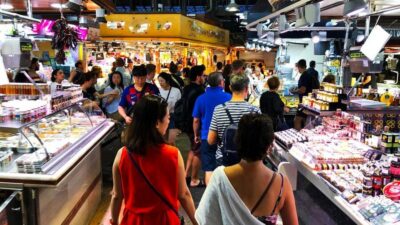
Barcelona: Street Food & Sightseeing Tour with Local Market
Read our review →
Barcelona: Market, Tasty Tapas/Food and Gothic History Tour
Read our review →This tour also appears in