
Review · GREECE
Chania: Morning Bites & Market Delights Food Tour
Chania’s best morning souvenir may be a better understanding of how Cretans eat. This four-hour walk links 1866 Square, small bakeries, cheese tastings, the Old Venetian Harbour, and a full mezze meal. I like the family-run food stops and the way guides such as Elena and Kostas connect dishes to customs, history, and everyday life.
I also like the small group limit of 10, which makes conversation easy, and the harbor coffee break gives the morning a scenic pause. The main drawback is that the tour is not a good fit for anyone with serious food restrictions, mobility problems, or a dislike of a substantial morning meal.
Key points at a glance
- Start with breakfast at 1866 Square: Try sesame-crusted koulouri and handmade Cretan cheese pies soon after meeting at the Ottoman Fountain.
- Taste more than pastries: Cheese, lychnaraki, olive oil, raw honey, Greek coffee, raki, and local mezze all appear during the morning.
- Meet Chania through food: Walk the Old Town with guides who explain local customs, preparation methods, and the people behind family-run businesses.
- Pause beside the Venetian Harbour: The coffee stop lasts about 30 minutes and gives you time for photos and a look at Chania’s waterfront.
- Finish with a real meal: The final 45-minute stop includes seasonal Cretan dishes, drinks, and enough food to leave you comfortably full.
- Plan for a walking food morning: You need comfortable shoes, an early arrival, and the ability to manage several tastings on foot.
Why this Chania food tour feels different
Many food walks are really restaurant crawls with a few facts added between courses. This one has a broader shape. You begin in a public square, pass through bakeries and food shops, pause at the harbor, and finish at a traditional restaurant. The food gives the walk its purpose, but Chania itself remains part of the experience.
I like that the morning starts with ordinary foods rather than a formal tasting menu. A koulouri is simple, portable, and familiar across Greece. Kalitsounia show off Crete’s love of fresh cheese in pastry form. Later, olive oil, honey, coffee, and mezze add more layers to the island’s food culture.
The local guides are central to the experience. Elena is described as warm and attentive, with a knack for explaining both Chania and its food. Kostas brings the same mix of city knowledge and food interest. The important point is not the script. It is the chance to ask why a dish is made a certain way, how it fits into local life, and where to eat later in your stay.
The group size is capped at 10. In practice, that means you are less likely to get lost in a crowd and more likely to hear the guide while standing in a narrow Old Town lane. A particularly small group can make the walk feel relaxed, though the final size depends on how many people book your date.
More Market Food Tours in Greece:
- Athens: Food Market Visit and Cooking Class with Wine
★ 4.9 · 1,087 reviews - Athens, Greek food tour including market visit
★ 5.0 · 618 reviews - Classic Athens Food Tour with Local Drink & Market Visit
★ 4.9 · 99 reviews
Meeting at 1866 Square
The tour begins at the Ottoman Fountain in Platia 1866, also called 1866 Square. Look for the historic fountain at the center of the square and a guide holding the company sign. Arrive 15 minutes early. This is useful advice in Chania, where Old Town lanes and busy streets can make a last-minute search more stressful than it needs to be.
The square gives you a quick sense of modern Chania before the walk moves into older streets. There is no hotel pickup, so you need to make your own way to the meeting point. The tour returns to the same square after roughly four hours, which makes it easy to plan around other activities.
From there, the route is on foot. The walking sections are generally short, but they add up, and one section takes about 20 minutes before the Agios Nikolaos church stop. This is a sightseeing walk with food, not a seated tasting with a little movement between tables.
Koulouri, kalitsounia, and the Cretan breakfast
The first food stop is a local bakery, reached after about three minutes. You start with freshly baked koulouri, the sesame-covered bread ring found across Greece. It is a practical opening bite: light enough not to slow you down, but substantial enough to take the edge off your appetite.
A second bakery stop follows after another short walk. Here, handmade kalitsounia bring you closer to Cretan cooking. These small cheese pies can be sweet or savory, and they show how often dairy and pastry appear together in island food.
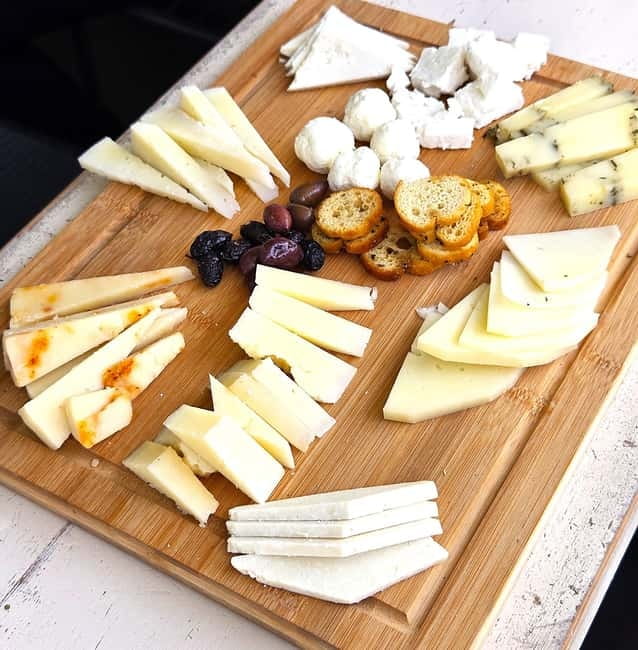
The tour then spends about 20 minutes on a cheese tasting in Chania. This is one of the more useful parts for anyone who wants to understand Cretan meals rather than simply sample them. You can compare local cheeses and learn how dairy fits into the island’s cooking.
Next comes lychnaraki, a sweet cheese-filled pastry. It changes the pace from salty breakfast bites to a dessert-like taste without waiting for the end of the meal. If you are not used to cheese in both savory and sweet dishes, this sequence helps you see the range of Cretan pastry.
The order also matters. You are not asked to sit down for a large lunch right away. Small portions build gradually, leaving room for the later mezze spread. Still, people with lactose intolerance or strong dairy sensitivities should skip this tour. Cheese is not a minor detail here.
Olive oil, honey, and a local food shop
After the bakery and cheese stops, the route takes you to a specialty shop for olive oil, raw honey, and other local products. This is where the tour shifts from ready-to-eat food to ingredients that shape the Cretan table.
Olive oil deserves attention in Crete. Tasting it on its own can help you notice qualities that disappear when it is mixed into a dish. The guide can also explain how it is used in everyday cooking and why it is such a central part of local eating.
Raw honey offers a different taste and texture, and it gives you another way to compare Cretan products beyond pastries and cheese. Shopping is discouraged during the tour because the group needs to stay on schedule. That is reasonable, but it means you should treat this as a tasting stop, not a dedicated shopping break.
If you find something you want to buy, note the name and return later on your own. The guide may also offer useful suggestions for shops and restaurants during the rest of your stay. The food walk is most valuable when you stay with the group and listen rather than pause over every shelf.
More market tours around Greece:
- Athens: Classic Cooking Class with Market Visit and Wine
★ 5.0 · 1,101 reviews - Day Trip To Heraklion City Center & Market & CretAquarium
★ 4.5 · 205 reviews - Crete: Knossos Palace, Heraklion City, Market Guided Tour
★ 4.2 · 164 reviews - Athens Market Tour and Cooking Class in a Beautiful Garden
★ 5.0 · 122 reviews
Greek coffee and the Venetian Harbour
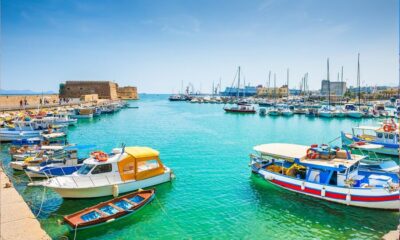
The route then reaches the Old Venetian Harbour, where you get about 30 minutes for photos, coffee, and a short guided look at the waterfront. This is one of the tour’s nicest changes of pace. After several food tastings and Old Town lanes, the open harbor gives you room to sit, look around, and let the morning settle.
The coffee is prepared in the traditional Greek style. It is strong, unfiltered, and usually served in a small cup, so do not expect a large modern café drink. The old-fashioned preparation is part of the point. You are tasting a drink tied to daily routines and social time, not just taking a caffeine break.
The harbor stop also helps place Chania’s food culture in its wider setting. The Venetian waterfront is one of the city’s most recognizable areas, but this tour uses it briefly rather than making the entire morning about postcard views. You get photos and context, then continue toward the quieter parts of the route.
Bring a camera if you like taking pictures, but keep the morning moving. The guide is balancing several stops, and the coffee break is a scheduled pause rather than unlimited free time.
Agios Nikolaos and the final mezze table
After the harbor, expect about 20 minutes of walking to the Church of Agios Nikolaos. The stop lasts around five minutes and includes time for a photo and a short explanation. It is a small cultural pause between the scenic waterfront and the final meal.
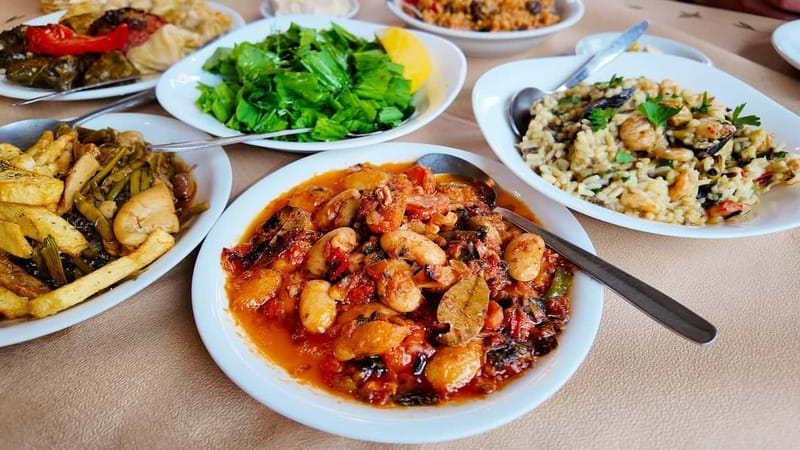
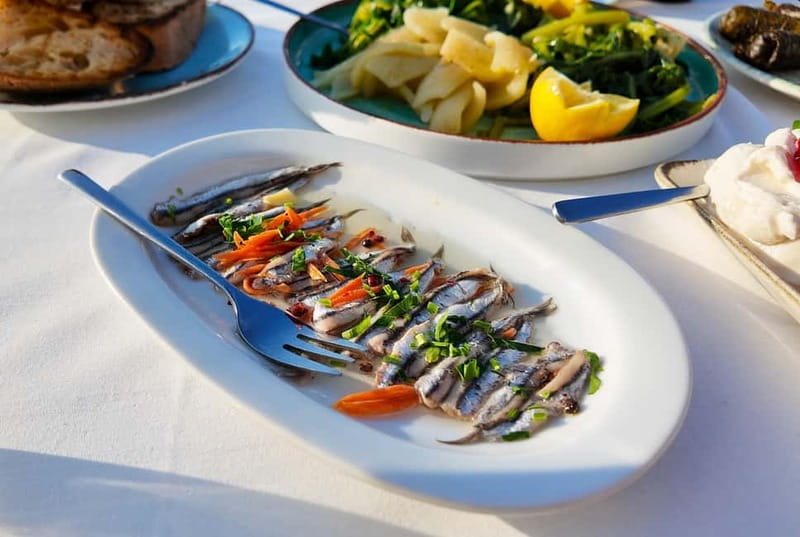
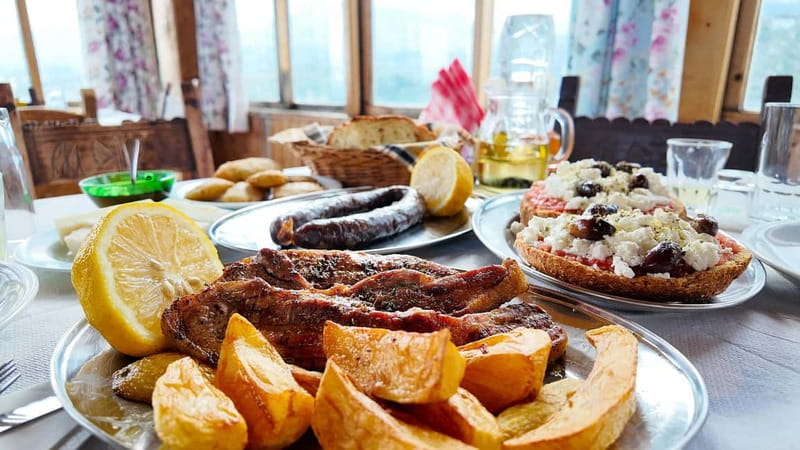
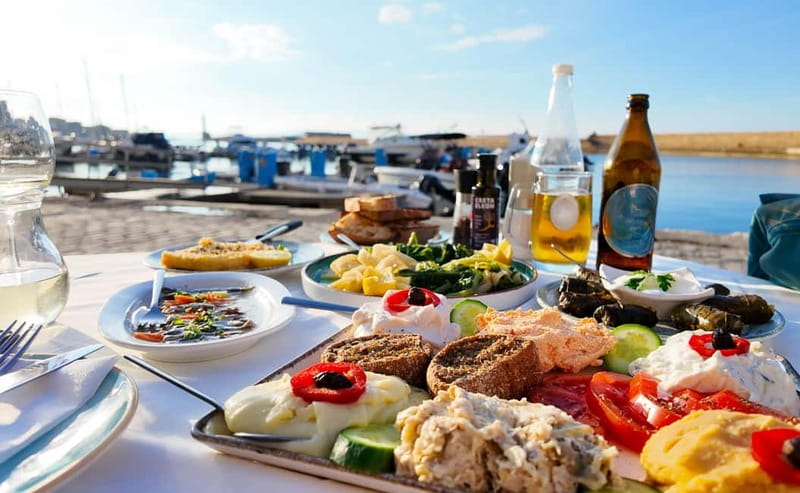
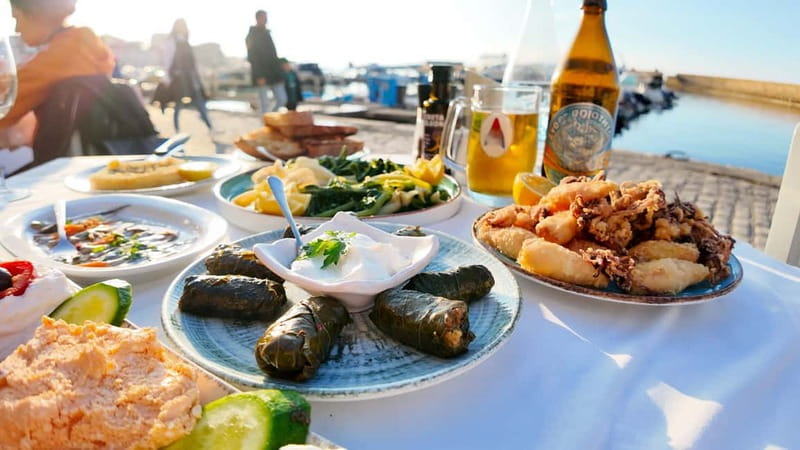
The last stop is a traditional local restaurant. You spend about 45 minutes here with a spread of regional mezze, seasonal Cretan dishes, and drink options that can include beer, wine, spirits, and raki. The exact dishes may vary with the season and what is being served locally, so you should expect a broad tasting rather than a fixed menu you can choose in advance.
This meal is the reason you should avoid eating a large breakfast before the tour. By the end, you have already sampled bread, pastries, cheese, sweets, oil, honey, and coffee. The mezze adds the savory finish and turns the morning into a proper meal.
Raki toasts are part of the experience described for the tour, but alcohol is not compulsory in the sense that you should never drink beyond your comfort level. The tour does not allow intoxication, and you should be cautious if you are driving later or have a medical reason to avoid alcohol.
One small point: a dessert is not clearly part of the final spread. If you have a strong sweet tooth, the lychnaraki earlier in the morning provides a sweet course, but do not book this expecting a separate dessert finale.
What the guides add
Food is easier to remember when someone explains where it fits. The guides are expected to discuss preparation, Cretan customs, local history, and the people connected to the businesses you visit. That personal link is especially useful at family-run stops, where a product has a story beyond its ingredients.
Elena has been singled out for making people feel welcome, sharing practical Chania advice, and keeping the group involved in conversation. Kostas is noted for combining food information with a strong sense of the city. You may have one of them, or another local guide, depending on the date.
The best use of your guide is to ask questions. Ask where to find a good local meal later, how to order mezze, or which Cretan dishes are worth seeking out. You should come away with more than a full stomach. You should have a short list of places and foods to try during the rest of your time in Chania.
Is $106 a fair price?
At $106 per person, this is not a cheap breakfast. It is also more than the cost of buying a koulouri, coffee, and a few snacks on your own. The value comes from the combination of food, a four-hour walking route, a local guide, several tastings, and a final restaurant meal.
You are paying for access and organization as much as for ingredients. A first-time visitor could find some of these foods independently, but would need to choose the right bakeries, understand what to order, manage the timing, and locate places away from the main tourist flow. The guide handles that work.
The small group makes the price easier to justify than a large coach-style food outing. You have a better chance to ask questions, hear explanations, and keep the meal feeling personal. If you mainly want a cheap meal, spend the money elsewhere. If you want a guided introduction to Cretan food and Chania, the cost is reasonable.
The overall rating is 4.9 from 20 ratings, with repeated praise for the food, the guides, the balance of history and culture, and the relaxed pace. That pattern suggests the strongest value is the complete morning, not one spectacular dish.
Who should book this morning walk?
I would recommend it to first-time visitors who want an easy introduction to Cretan eating. It works particularly well near the start of a Chania stay, since the guide can point you toward restaurants and local foods to try later.
It also suits people who enjoy tasting many small portions rather than ordering one large dish. Couples, friends, and solo visitors who like conversation should find the group format comfortable, especially when numbers stay low.
You should think twice if you are vegan, gluten intolerant, lactose intolerant, allergic to nuts, or managing high blood pressure. The food includes bread, pastry, dairy, honey, and other ingredients that may not suit you. The tour is also not recommended for people with heart problems, wheelchair users, people with mobility impairments, or those over 80.
Wear comfortable shoes. A hat, sunscreen, water, and a camera are sensible, especially in warm weather. High heels, large bags, luggage, and pets are not allowed.
Book at least 24 hours before you might need to cancel if you want the full refund option. You can reserve now and pay later, which helps if your Chania plans are still shifting.
Should you book it?
Book this tour if you want a guided introduction to Chania through food, not just a list of tastings. The strongest features are the local guides, family-connected food stops, harbor coffee, and generous final mezze meal.
Skip it if you need a tightly controlled diet, dislike walking, or prefer to explore independently. For everyone else, $106 buys a well-paced morning that gives you a useful start in Chania and plenty of ideas for eating well afterward.
FAQ
Where does the Chania food tour start?
It starts at the Ottoman Fountain in 1866 Square, also called Platia 1866. Look for the historic fountain in the center and a guide holding the company sign.
How long does the food tour last?
The experience lasts four hours and returns to 1866 Square at the end.
What languages are available?
The tour is offered in English and Greek.
How many people can join the group?
The group is limited to 10 participants.
Is hotel pickup included?
No. Hotel pickup and drop-off are not included, so you need to reach 1866 Square on your own.
What food and drinks are included?
The experience includes food tastings and drink sampling, including koulouri, kalitsounia, local cheeses, lychnaraki, olive oil, raw honey, Greek coffee, and a mezze meal. Raki and other alcoholic drinks may also be served.
Is lunch included?
Yes. The final restaurant stop lasts about 45 minutes and includes regional food in the form of a mezze spread.
What should I bring?
Bring comfortable shoes, a hat, sunscreen, water, and a camera. Arrive 15 minutes before the scheduled start.
Is shopping part of the tour?
Shopping during the tour is discouraged because the group needs to stay on schedule. The specialty shop is used for tasting olive oil, honey, and other products.
Can I cancel the booking?
You can cancel up to 24 hours in advance for a full refund. The reserve-now, pay-later option is also available.
New market tours around Greece
- Crete: Knossos Palace, Heraklion City, Market Guided Tour★ 4.2 · 164 reviews
- Heraklion: Heraklion Market & CretAquarium *SKIP The Line★ 3.8 · 17 reviews
- Crete: Day Tour to Heraklion City, Market & CRETAquarium★ 3.8 · 13 reviews
- Knossos Palace guided tour – Heraklion City tour + market★ 3.6 · 51 reviews
- Athens: Greek Food Tasting and Market Walking Tour★ 4.1 · 7 reviews
- Day Trip To Heraklion City Center & Market & CretAquarium★ 4.5 · 205 reviews
- Crete: Heraklion Center, Local Market and Creta Aquarium★ 3.9 · 61 reviews
- Athens: Cooking Class, Market Visit & Lunch at Local Tavern★ 4.9 · 27 reviews
Greece Market Tours, side by side.
Athens: Classic Cooking Class with Market Visit and Wine
Read our review →
Day Trip To Heraklion City Center & Market & CretAquarium
Read our review →
Crete: Knossos Palace, Heraklion City, Market Guided Tour
Read our review →
Athens Market Tour and Cooking Class in a Beautiful Garden
Read our review →
Classic Athens Food Tour with Local Drink & Market Visit
Read our review →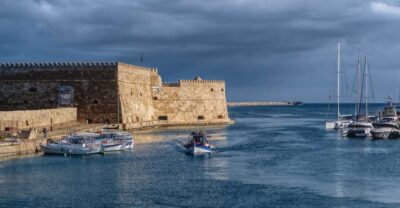
Crete: Heraklion Center, Local Market and Creta Aquarium
Read our review →
Athens: Cooking Class, Market Visit & Lunch at Local Tavern
Read our review →This tour also appears in