
Review · THAILAND
Chiang Mai: Thai Cooking and Market Tour with Lanna Smile
A local market visit gives this class a useful start: you see the vegetables, herbs, curry ingredients, and other produce before turning them into lunch or dinner. Then Pim and Nim guide you through six Thai dishes at AC Cooking Studio, a small Lanna-style kitchen where each person cooks at an individual station.
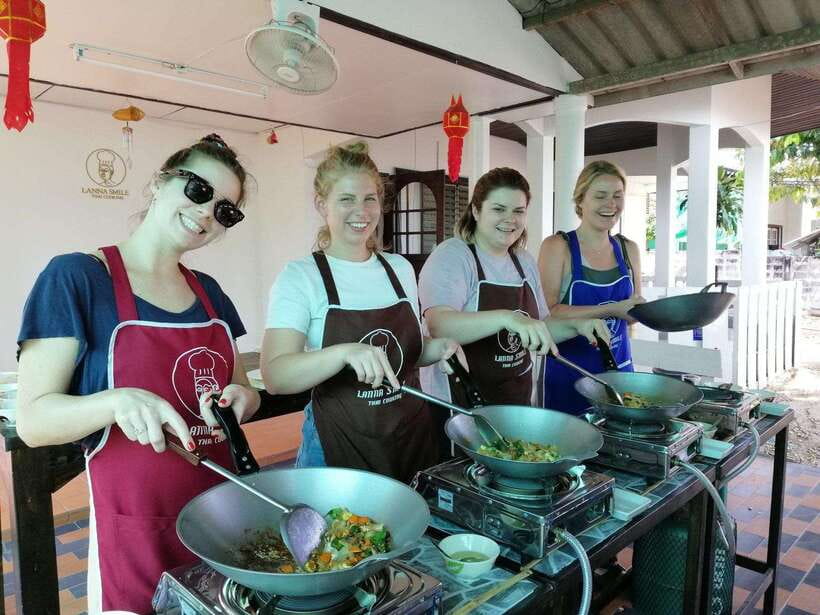
I like the choice of dishes, since you can build a menu around pad Thai, green curry, tom yum, mango sticky rice, and other familiar favorites. I also like the personal scale: with no more than eight people, Pim and Nim can explain each step, adjust the spice, and help you make vegetarian or vegan versions.
The main thing to consider is time. Five hours is a large block of a Chiang Mai day, and the class may feel long if you only want a quick cooking demonstration. Pickup is included only within 3 km of the Old Town, so people staying farther out need to reach a meeting point.
Key points to know before booking
- Market first, cooking second: Learn about fresh ingredients before using them in the kitchen.
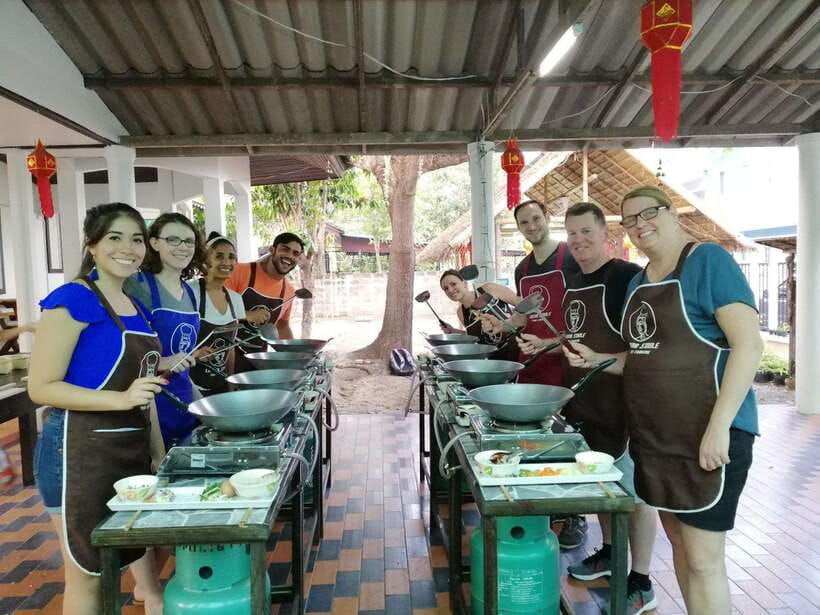
- Six dishes at your own station: You cook rather than simply watch, with one choice from most menu categories.
- Pim and Nim lead the class: Their friendly, personal teaching style suits first-time cooks.
- Small groups of up to eight: The class can feel almost private when numbers are low.
- Spice and dietary needs are flexible: Vegetarian options are available, and you can set the heat to your taste.
- $31 includes quite a lot: Transport within the Old Town area, ingredients, a meal, drinks, recipes, and the five-hour class are all covered.
Starting at the market with Pim and Nim
The class begins with pickup in Chiang Mai, usually in the morning between 8:30 and 9:00, or in the afternoon between 4:00 and 4:30. You should wait in your hotel lobby 15 minutes early and look for the Lanna Smile Thai Cooking apron sign. Traffic can cause delays, so do not plan a tight appointment immediately afterward.
Pickup is free for hotels within 3 km of Chiang Mai Old Town. If you stay farther away, you need to meet the group at a designated point in town. That is a small but important cost and time detail when comparing cooking classes.
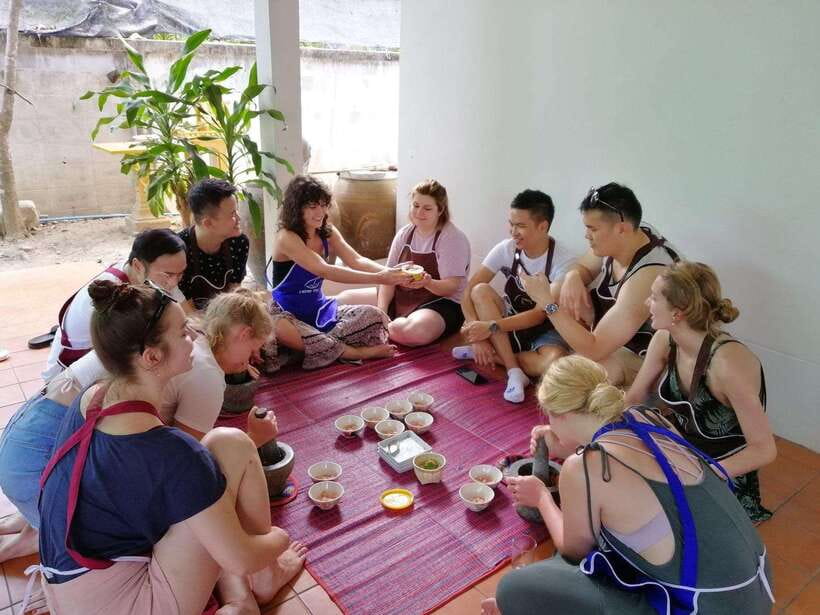
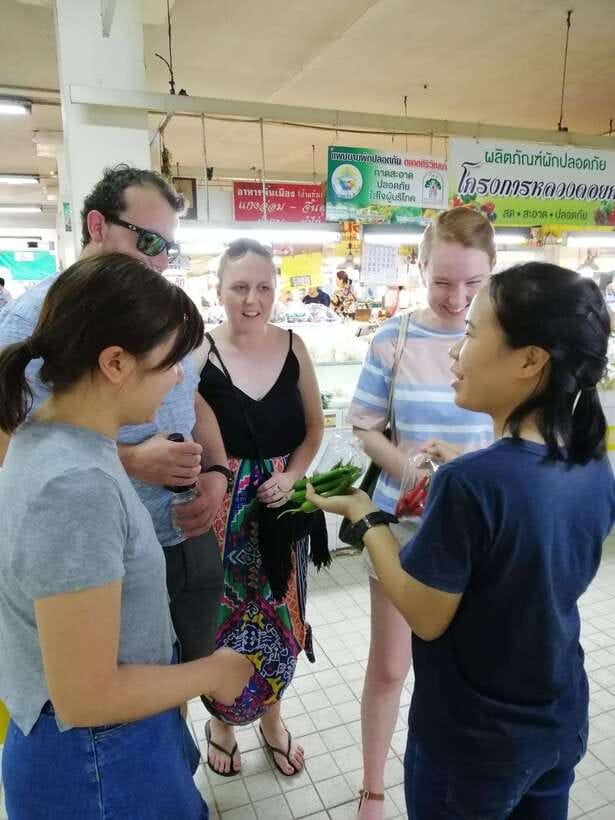
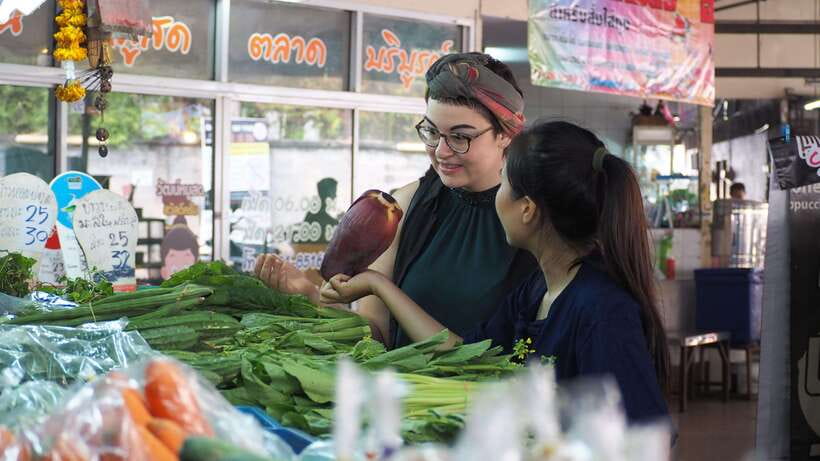
The market visit is not just a shopping stop. Pim explains the local vegetables and ingredients as you look for the supplies used in class. This gives you a clearer sense of what makes Thai food work: fresh herbs, curry components, coconut milk, rice, noodles, and the balance between salty, sweet, sour, and spicy flavors.
I find this part especially useful because many Thai dishes seem complicated when presented on a restaurant menu. Seeing the raw ingredients first makes the recipes easier to understand. It also gives the class a local connection that a kitchen-only lesson cannot provide.
The market portion is guided in English. You will not simply be handed a bag of ingredients and sent into the kitchen. The teachers use the shopping time to introduce the food, which helps you recognize some of the items later when you cook.
More Market and Cooking Class Tours in Thailand
- Chiang Mai: Cooking Class, Market & Thai Herbs Garden Tour
★ 4.9 · 4,824 reviews - Chiang Mai: Authentic Cooking Class with Market & Farm Visit
★ 4.9 · 4,546 reviews - Phuket Thai Cooking Class with Market Tour Option
★ 5.0 · 2,665 reviews
Six dishes, chosen from familiar Thai favorites
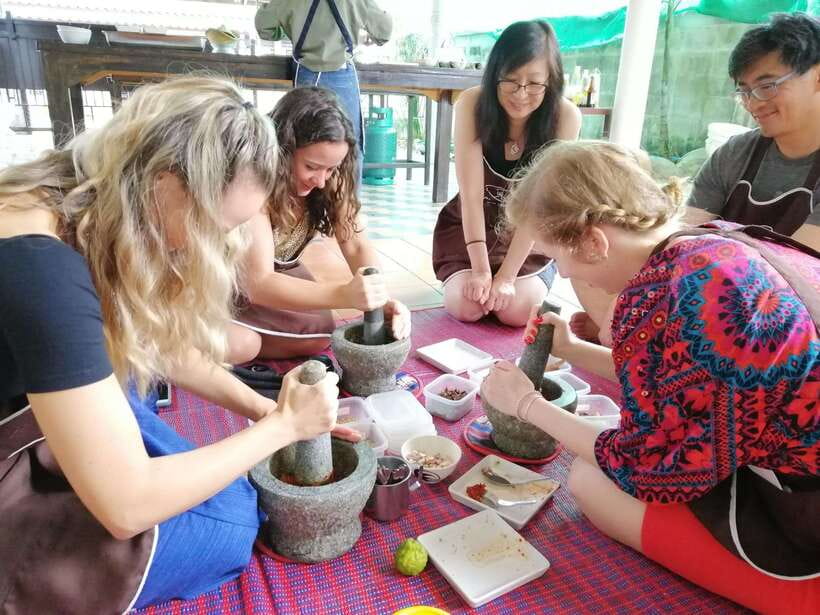
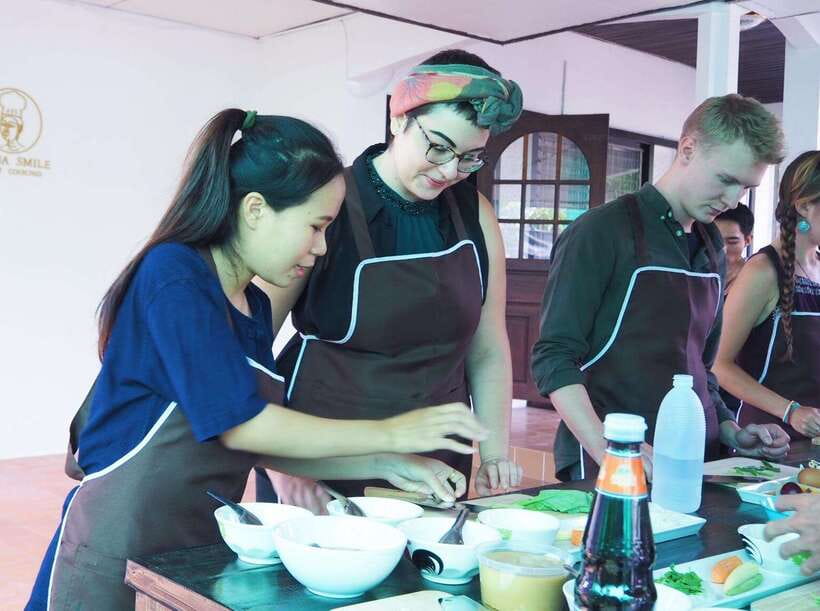
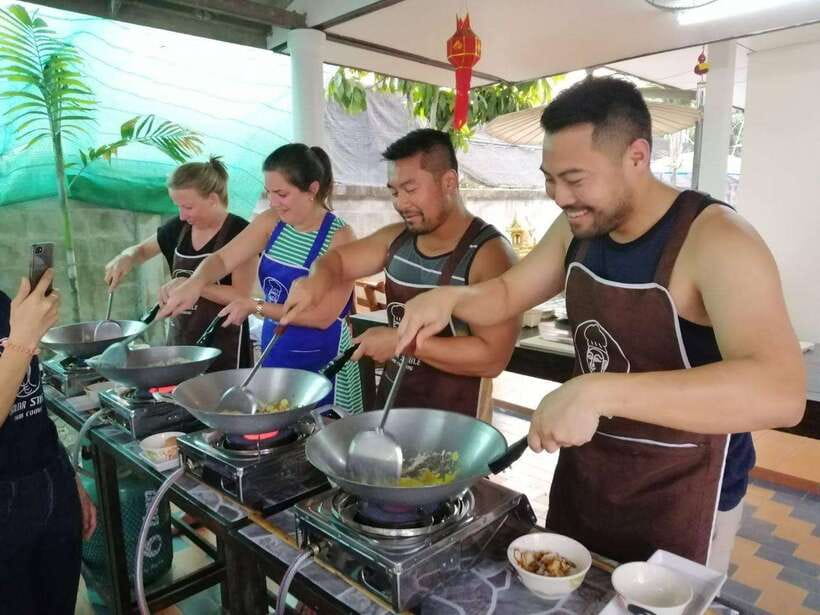
At the studio, you cook at your own individual station. That matters. Instead of standing behind a demonstration counter, you handle the ingredients and follow the method yourself, with the instructor nearby to help.
The menu is arranged by food category. You choose one dish from each group, with a few variations in each category.
Curry pastes and curries
You can choose green curry paste, panaeng curry paste, or Massaman curry paste. You then select the matching curry, such as green curry, panaeng curry, or Massaman curry.
Making curry paste from scratch is one of the more useful skills to take home. It shows you what goes into a Thai curry before the coconut milk and other ingredients soften the mixture. Massaman offers a milder, warmer flavor, while green curry is usually a sharper choice. Panaeng sits in its own middle ground, with a thicker, more concentrated style.
The exact heat is not fixed. You can ask for a level that suits you, which is helpful if you enjoy Thai food but do not often eat very spicy dishes.
Noodles
The noodle choices are pad Thai, drunken noodles, and pad see ew. These are familiar dishes, but they use different sauces and cooking methods, so the lesson is more useful than simply learning one stir-fry.
Pad Thai is the easy crowd-pleaser, especially if this is your first Thai cooking class. Drunken noodles bring a stronger, hotter profile, while pad see ew offers a sweeter, darker soy-based taste with thick noodles.
You prepare the dish yourself, so you can see how quickly the cooking comes together. Pay attention to timing here. Stir-fried noodles are not a slow process, and having your ingredients ready before the pan gets hot is part of the lesson.
Same city, another market:
- Bangkok: Damnoen Saduak Market and Maeklong Railway Market
★ 4.5 · 26,723 reviews - The Old Siam: Damnoen Saduak and Maeklong Railway Market
★ 4.5 · 10,992 reviews - Bangkok: Train Market & Floating Market with Boat Ride
★ 4.7 · 9,547 reviews - From Bangkok: Ayutthaya & Ayothaya Floating Market Day Trip
★ 4.7 · 6,084 reviews
Soups
The soup choices include tom yum kung with prawns, tom kha kai with chicken and coconut milk, and tom sab kai with chicken.
Tom yum gives you the hot and sour balance many people associate with Thai cooking. Tom kha is softer and creamier because of the coconut milk. Tom sab provides another hot and sour option with chicken.
This category is a good place to learn how Thai soups get their character from seasoning rather than long simmering. The class does not simply serve the soup to you. You make it, taste it, and can adjust the spice to your preference.
Desserts
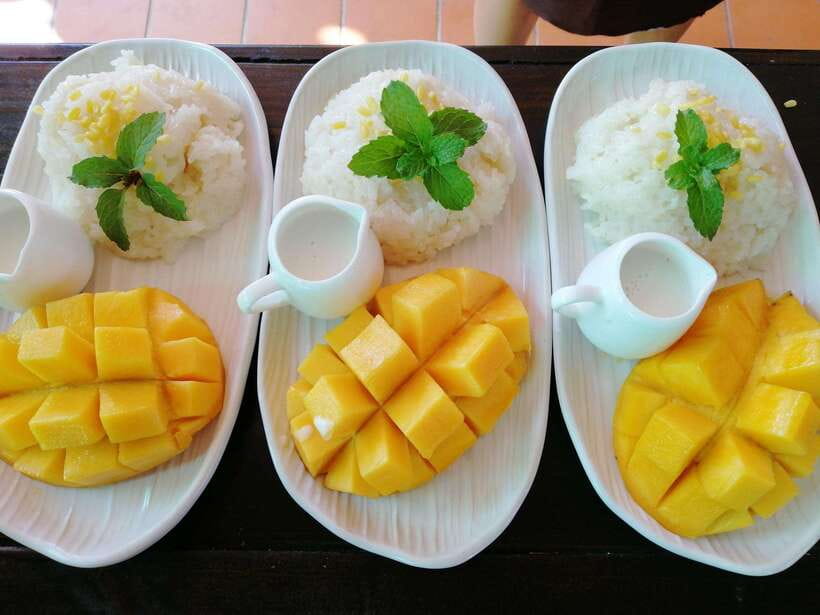
For dessert, you can prepare mango sticky rice, banana in coconut milk, or sago balls in coconut milk.
Mango sticky rice is the most recognizable choice, but the other desserts show a wider side of Thai home cooking. Banana in coconut milk is simple and comforting. Sago balls offer a different texture and a gentle coconut flavor.
Dessert also gives the class a pleasant finish. After handling curry paste, noodles, and spicy soup, a sweet coconut-based dish rounds out the meal.
Appetizers
The appetizer choices are fried spring rolls and papaya salad. These take you in opposite directions: one is crisp and fried, while the other is fresh, sharp, and spicy.
Papaya salad is particularly useful if you want to understand Thai balance. The dish brings several strong flavors together, and the spice can be adjusted. Fried spring rolls are more familiar and may appeal to you if you prefer a milder start.
The menu allows plenty of combinations. A person who wants classic comfort food can choose pad Thai, green curry, tom kha, mango sticky rice, and spring rolls. Someone looking for more heat can choose drunken noodles, tom yum, and papaya salad.
A personal class rather than a cooking show
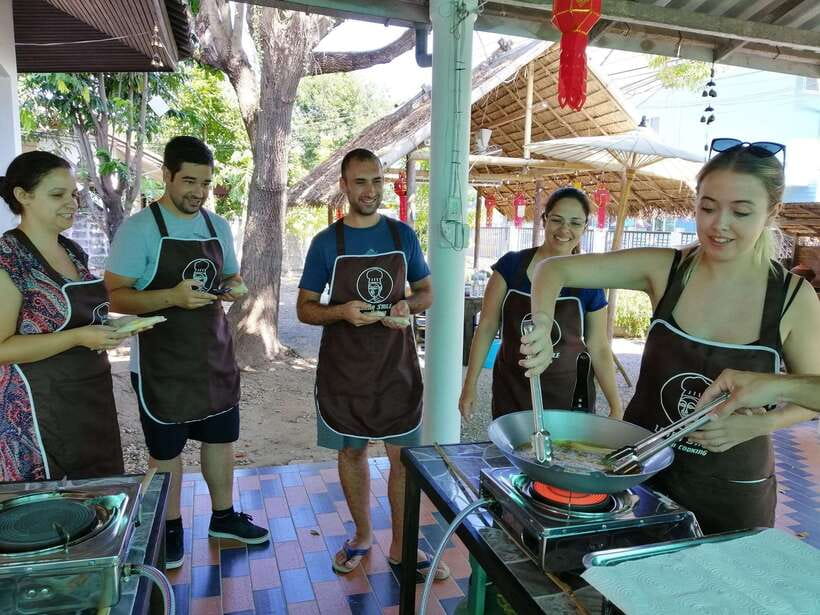
The small-group limit is eight people. That is a good number for a hands-on lesson because the instructors can watch what you are doing and answer questions without leaving you waiting too long.
The class can feel even more personal when numbers are low. On one occasion, two participants had what was essentially a private lesson, but the class still ran as planned. That is not something you should assume every time, yet it shows the format can work well for couples and small groups.
Pim and Nim are central to the experience. Their role is not limited to measuring ingredients. They explain the dishes, help at the cooking stations, and keep the tone relaxed. Conversations may also touch on Thai language and local culture, adding context beyond the recipes.
I would choose this class if you like learning through conversation. If you want a silent, highly formal lesson with exact restaurant-style technique, this may feel too casual. The appeal here is the friendly teaching and the sense that you are being looked after from pickup through the final meal.
Vegetarian options and adjustable spice
Vegetarians are welcome, but you should notify Lanna Smile in advance. The class can adapt dishes into vegetarian or vegan forms, including versions of familiar recipes. That is more useful than having one separate vegetarian dish while everyone else follows a different menu.
The ingredients are bought fresh from the market each day. The cooking school also uses fresh rice bran oil and says it does not reuse the oil. No MSG is used, and cleanliness is treated as a priority for the equipment.
You should still explain your needs clearly when booking. Vegetarian cooking, vegan cooking, allergies, and spice preferences are not the same thing. The supplied details confirm vegetarian and vegan adjustments, but they do not promise that every allergy can be accommodated.
The ability to control the heat is a real advantage. Thai recipes can be adjusted without losing their basic character, and a class is a better place to learn your personal limit than a restaurant table where the dish has already been finished.
What the five-hour schedule feels like
Five hours gives enough time for transport, the market visit, instruction, cooking, and eating. You will not be rushed through six dishes in a single short session.
The morning class begins with pickup around 8:30 to 9:00. The afternoon option begins with pickup around 4:00 to 4:30. Depending on the timing, you eat the food you prepare as lunch or dinner.
A welcome drink is included, with coffee, tea, or an herbal drink available. Wi-Fi is also provided, though the main reason to attend is the cooking rather than staying connected.
Comfortable clothes are the sensible choice. You will be working around food and cooking equipment for several hours, so this is not the moment for restrictive clothing or an outfit that needs careful protection.
The class is not suitable for people who want a party atmosphere. Alcohol and drugs are not allowed, alcoholic drinks cannot be taken in the vehicle, and party groups are not accepted. Pets are also not allowed.
What you take home besides a full stomach
You eat the dishes you prepare, so the meal is part of the value rather than an extra restaurant stop. Depending on your choices, you may finish with several courses covering curry, noodles, soup, dessert, and an appetizer.
The recipe booklet is the most practical souvenir. It lets you try the dishes again after returning home, when the market experience is still fresh in your mind. The cooking school also offers a limited Lanna Smile souvenir, and photos from the class are shared on its Facebook page.
You should not expect to leave with professional chef credentials. The value is more modest and more useful for most holiday cooks: you learn a workable set of recipes, see the ingredients in their fresh form, and get practice with Thai flavor combinations.
The class also gives you a social experience. You may cook alongside up to seven other people, share the meal, and compare your menu choices. For solo participants, that can be a pleasant way to meet people without the forced structure of a large group outing.
Is $31 a fair price?
At $31 per person, this is strong value if you use the full package. You receive a five-hour class, ingredients, equipment, market tour, a meal, drinks, a recipe booklet, a small souvenir, and hotel transfer within the stated Old Town radius.
The price looks even better for couples or small groups because the class remains personal without requiring a private booking. The only extra charge listed is 400 baht for a person who comes along but does not cook.
The main comparison point is time. A shorter demonstration class may cost less, but it will not give you the same amount of hands-on practice. A private lesson may offer more attention, but it could cost more. This class sits in a useful middle position: personal enough for help, yet affordable as a shared activity.
Remember to account for transport if you stay outside the 3 km pickup area. The class itself remains good value, but the free transfer is not citywide.
Who will enjoy Lanna Smile most?
I would recommend this for people who want to cook, not just eat. It suits first-time Thai cooks, food-focused visitors, couples, solo participants, and anyone who likes a relaxed lesson with room for questions.
It is also a good fit if you want a little more contact with everyday Thai ingredients. The market visit makes the experience feel connected to Chiang Mai rather than sealed inside a cooking studio.
Vegetarians and people who prefer mild food have good reasons to consider it, provided they give advance notice. The menu has enough range to suit different tastes, and the spice level can be adjusted.
Families may need to consider the five-hour length and the cooking setup. The available information does not specify a minimum age, so ask before booking if you plan to bring children.
I would skip it if your Chiang Mai schedule is packed and you only have time for a brief activity. It is also not the right match if you want alcohol, a party setting, or a purely sightseeing-based outing.
Should you book this Chiang Mai cooking class?
Book it if you want a practical, friendly introduction to Thai food with a market visit and a meal you make yourself. The combination of Pim and Nim’s personal teaching, individual cooking stations, flexible spice levels, and six-dish menu gives you more than a simple recipe demonstration.
The strongest reason to choose Lanna Smile is the balance of local contact and hands-on work. You start by seeing the ingredients, then learn how to turn them into familiar Thai dishes. At $31, the included transport, food, recipes, and five-hour format make the price easy to justify.
Before booking, confirm your pickup location, tell the school about vegetarian or vegan needs, and choose comfortable clothes. If those details work for your schedule, this is a tasty and useful way to spend half a day in Chiang Mai.
FAQ
How long does the Lanna Smile Thai cooking class last?
The activity lasts five hours, including the market tour, cooking instruction, and meal.
What dishes can I cook?
You choose one dish from most menu categories. Options include green, panaeng, or Massaman curry; pad Thai, drunken noodles, or pad see ew; tom yum, tom kha, or tom sab; mango sticky rice, banana in coconut milk, or sago balls; plus fried spring rolls or papaya salad.
Is the class suitable for vegetarians and vegans?
Yes. Vegetarian options are available, and dishes can be prepared in vegetarian or vegan forms. Tell Lanna Smile in advance.
Is hotel pickup included?
Free pickup and drop-off are included for hotels within 3 km of Chiang Mai Old Town. If you stay outside that area, you need to meet at a designated point in town.
Is the cooking class taught in English?
Yes. The class is conducted in English, with Pim and Nim leading the instruction.
Can I cancel or pay later?
You can cancel up to 24 hours before the activity for a full refund. The booking option also allows you to reserve now and pay later.
New market tours around Thailand
- Longtail Boat Adventure to the Local Weekend Floating Market★ 5.0 · 12 reviews
- Sathon: Hands-on Thai Cooking Class & Market Tour in Bangkok★ 5.0 · 19 reviews
- Private Unseen Mangrove Forest and Floating & Railway Market★ 5.0 · 2 reviews
- Private Tour from Bangkok: Railway & Floating Markets★ 4.9 · 11 reviews
- From Bangkok: Floating Market & Ayutthaya Private Day Trip★ 5.0 · 42 reviews
- Private Floating & Train Market + DRAGON Temple + Thai Cafe★ 4.9 · 13 reviews
- Phuket: Thai Cooking Class with Market Tour★ 5.0 · 2 reviews
- Phuket: Sunset View and Seafood Market Dinner Guided Tour★ 5.0 · 4 reviews
Thailand Market Tours, side by side.

Bangkok: Damnoen Saduak Market and Maeklong Railway Market
Read our review →
The Old Siam: Damnoen Saduak and Maeklong Railway Market
Read our review →
Bangkok: Train Market & Floating Market with Boat Ride
Read our review →
Chiang Mai: Cooking Class, Market & Thai Herbs Garden Tour
Read our review →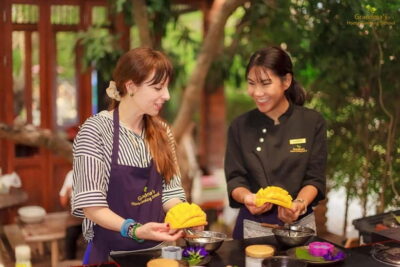
Chiang Mai: Authentic Cooking Class with Market & Farm Visit
Read our review →
Bangkok: Floating Market and Train Market Experience
Read our review →
Half-Day Railway Market and Floating Market Tour in Thailand
Read our review →
Bangkok by Night: Temples, Markets and Food Tuk-Tuk Tour
Read our review →This tour also appears in