
Review · MARRAKECH
Guided walking tour in Marrakech Medina and Souks
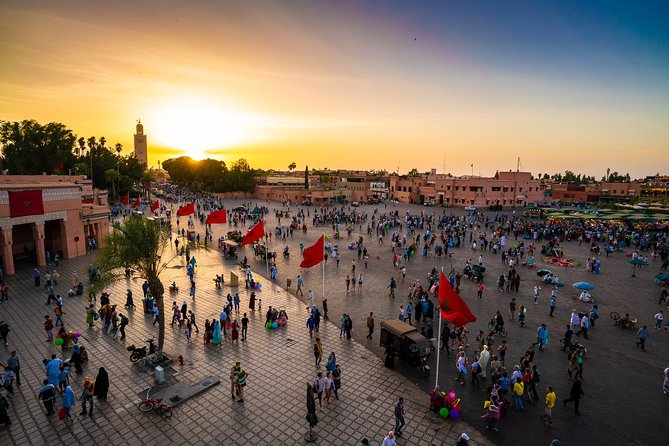
Marrakech makes the most sense on foot, and this tour puts you right into the action: red-walled lanes, spice stalls, workshops, palace courtyards, and the great square of Jemaa el-Fna. Your guide helps turn a confusing first walk through the Medina into a readable story, with stops at the Koutoubia Mosque, Bahia Palace, Mellah, and the city’s traditional markets.
I like the private format, since your own group can ask questions and set the pace. I also like the practical route through the souks, including carpenters, dyers, tanners, blacksmiths, and the Place des Épices, rather than simply being led past souvenir stalls. The main consideration is that Koutoubia can only be visited from outside, and Bahia Palace admission, listed at 7 euros, costs extra.
Key points before you book
- Koutoubia is an exterior visit: You can photograph the famous 70-meter minaret, but non-Muslim visitors do not enter the mosque.
- Bahia Palace takes about 45 minutes: Its ticket is not included and costs about 7 euros.
- The souk route has real variety: Expect craft areas for dyers, carpenters, tanners, blacksmiths, and spice sellers.
- Your guide matters here: Mouhssine, Rachid, Hamid, and Alya are among the guides associated with especially strong feedback for clear explanations and friendly help.
- It is a private four-hour walk: Only your group participates, so this suits couples, families, and small groups wanting a personal introduction.
- Start early in your visit: The route gives you useful bearings before you return to the Medina on your own.
Why this is a smart first walk in Marrakech
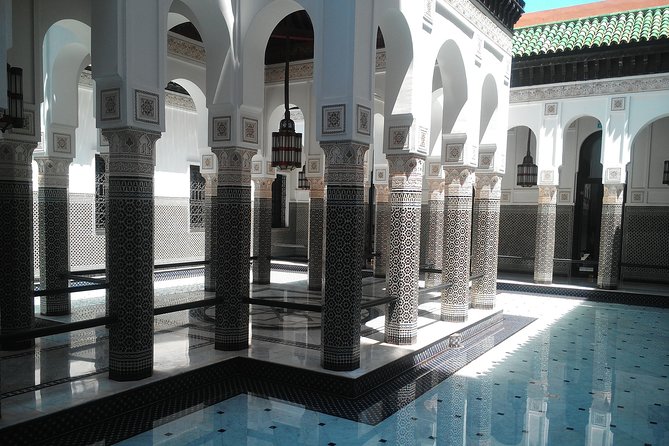
The Medina is exciting, but it can also feel like a maze. A lane that looks like a dead end may lead to a workshop, a small square, or another market street. Motorbikes, handcarts, shoppers, and shopkeepers add to the motion. Having a local guide beside you gives the walk structure and removes much of the guesswork.
This tour is not just a checklist of monuments. Its value comes from linking the major sights with ordinary Medina life. You see where crafts are made, how the old quarters fit together, and how the souks are divided by trade. That context makes it easier to understand what you are seeing and easier to return later without a guide.
The tour lasts about four hours, which is enough time for a useful introduction without consuming your entire day. You should still expect a fair amount of walking. Comfortable shoes are a sensible choice, and you will want water, sun protection, and modest clothing for moving through historic and religious areas.
The activity is listed at $56.77 per person. For a private tour, that can be fair value, especially if you are traveling with several people and can use the group discount. You are paying for a guide’s time, local orientation, historical explanation, and help with navigating the souks. The value is lower if you prefer to wander alone or are mainly interested in shopping rather than history and local crafts.
More Market Walking Tours in Morocco
- Marrakech: Ben Youssef, Secret Garden, & Souks Walking Tour
★ 4.6 · 2,802 reviews - Marrakech: Colorful Medina Souks Guided Walking Tour
★ 4.7 · 2,470 reviews - Marrakech: Medina Souks Guided Walking Tour
★ 4.5 · 381 reviews
Starting near Jemaa el-Fna
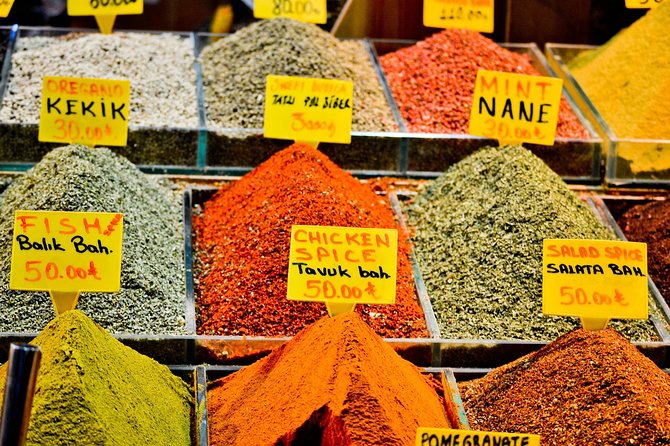
The stated meeting point is Jemaa el-Fna, the central square of Marrakech’s old city. Pickup from a riad is also offered, so confirm the exact arrangement when you book. The tour ends back at the meeting point, which is useful if you want to continue exploring the square, eat nearby, or return to your accommodation.
Jemaa el-Fna is a fitting place to begin. It is one of the city’s key gathering points and a practical reference for finding your way around the Medina. Starting here lets your guide explain the shape of the old city before you turn into narrower lanes.
The tour is private, even though group discounts are available. That distinction matters. You are not joining a large public group, and the guide can respond to your questions rather than giving one fixed speech to a crowd. The exact guide can vary, but the people associated with this experience include Mouhssine, Rachid, Hamid, and Alya.
Several of these guides are praised for strong English, patient answers, and clear explanations of Moroccan culture and history. Rachid is also noted for useful local suggestions, including a good pastry shop. These small recommendations can be one of the pleasant extras of a walking tour, though they should not be treated as guaranteed stops.
Koutoubia Mosque and the 70-meter minaret
The first major stop is Koutoubia Mosque, built in the 12th century under the Almohad dynasty. Its minaret rises about 70 meters and remains the tallest structure in Marrakech, making it an easy landmark when you are trying to orient yourself around the city.
You visit from the outside, with roughly 30 minutes for explanation and photographs. This is important to understand before booking. The mosque is not an interior sightseeing visit for non-Muslim visitors, so the stop focuses on the architecture, the minaret, the surrounding grounds, and the role of the building in Marrakech.
The exterior visit is still worthwhile. Koutoubia’s proportions and position give you a clear introduction to the city’s Islamic architecture. Your guide can also place the mosque within the wider story of Marrakech and explain why it remains such a useful point of reference.
One guest felt disappointed because an interior visit was expected. That is an avoidable problem if you know the rule in advance. Think of Koutoubia as a photo and history stop, not as an entry visit.
The Mellah and a pause with herbal traditions
The route continues toward the Mellah, the historic Jewish quarter of Marrakech. The Mellah was established as a separate residential area within the protected walls of the Kasbah. The quarter adds another layer to the city’s story, showing that Marrakech was shaped by different religious and cultural communities.
This stop lasts about 15 minutes and includes time for photographs. The guide may suggest a break with a Berber herbalist, which can offer an introduction to traditional herbs and local products. Since the supplied details do not promise a purchase or tasting, treat this as a possible stop rather than a fixed part of the schedule.
The Mellah is a useful contrast to the grand palace and mosque. Instead of looking only at royal power, you begin to see how neighborhoods functioned and how communities lived within the old city. Ask questions here if you want more social and cultural context, since a private guide can adapt the conversation.
More Market Walking Tours in Marrakech:
- Marrakech: Monuments, Souks and Medina Guided Walking Tour
★ 4.8 · 208 reviews - Marrakech: 3-Hour Monuments, Souks & Old Medina Walking Tour
★ 4.7 · 133 reviews - Marrakech: Medina and Souks Walking Tour
★ 4.4 · 67 reviews - Bangkok: City Highlights Temple and Market Walking Tour
★ 4.5 · 3,990 reviews
Bahia Palace and its tilework
Bahia Palace is the tour’s main paid sight. Built in the 19th century, it is known for its Eastern architectural style, decorated rooms, courtyards, and detailed surfaces. The visit takes about 45 minutes, and admission is not included. The listed cost is 7 euros.
I consider the extra ticket worthwhile if you care about architecture. Bahia Palace gives you a close look at the decorative side of Marrakech, with the kind of pattern, color, and craftsmanship that can be easy to miss when you are rushing through the souks.
Your guide’s role is especially useful here. Without context, a palace can become a sequence of attractive rooms. With explanation, you can better understand how the spaces relate to courtly life, privacy, decoration, and Moroccan building traditions.
Budget for this fee in advance. The tour price does not cover palace or museum tickets, and the exclusions also include food, drinks, gratuities, and transportation in an air-conditioned vehicle. The tour is primarily a walking experience, not a vehicle-based sightseeing trip.
Bab Agnaou and the royal Kasbah entrance
Bab Agnaou is included as a photo stop. This southern entrance to the royal Kasbah is one of Marrakech’s notable historic gateways, and it gives you another chance to see how the old city’s walls and entrances shaped movement through the city.
The supplied schedule gives the clearest timing for Koutoubia, Mellah, Bahia Palace, and the souks, so the exact length of the Bab Agnaou stop may vary. That is normal on a private walking route. If this gate is a priority for you, ask the guide to confirm where it fits and how much time you will have for photographs.
A stop at Bab Agnaou also helps connect the monuments. You are not just moving from one isolated attraction to another. The gates, walls, Kasbah, palace areas, and market lanes form part of the same old urban system.
The Medina souks by craft district
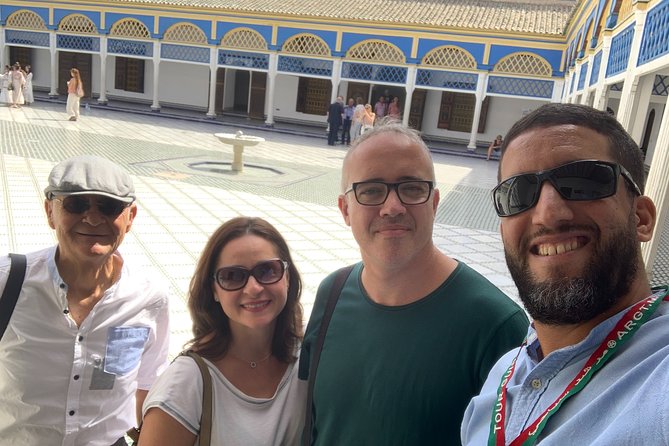
The final major portion takes you into the souks of the Marrakech Medina. This is where the tour becomes most practical. Instead of treating the market as one huge shopping area, the route moves through different craft sections.
You may pass areas associated with:
- Tanners
- Carpenters
- Dyers
- Blacksmiths
- Spice sellers
- Other traditional workshops
That organization by trade gives the souks a logic. You can see how work, sales, and movement fit together. It also helps you return later to a particular section instead of trying to locate it from memory.
The souks are not a passive museum. You will encounter active shops and sales conversations. Your guide can help you understand what you are seeing and show you how to move through the lanes. The experience is best if you remain curious but do not feel pressured to buy.
A mint tea break at the Place des Épices is included in the route description. Food and drinks generally are not included, so clarify what you will pay for before ordering. The tea stop gives your feet a rest and creates a natural point to ask about spices, crafts, shopping customs, or places to return later.
One important balance: one French-language comment felt that the souk portion needed more explanation. That suggests the quality of interpretation can vary by guide or by moment. If you want detailed commentary in the craft districts, say so early. A private tour works best when you tell the guide what interests you.
What the guides add to the experience
The strongest part of this tour is the guide’s personal help. Mouhssine is repeatedly associated with excellent English, patient answers, and strong knowledge of local history and culture. Rachid is praised for warmth, detailed explanations, and practical advice. Hamid is noted for helping a group navigate the Medina’s maze, while Alya is described as friendly, interactive, and attentive to good stopping points.
I would not book based on a guaranteed guide name unless the company confirms it. Still, these repeated strengths tell you what to expect from the better version of the experience: a guide who explains rather than merely leads, answers questions without rushing, and helps you feel comfortable in the old city.
The language mix is broad. Feedback includes English, French, Portuguese, and Spanish, but the booking information does not specify a guaranteed language for every departure. Confirm your preferred language if that matters to you.
Who will get the most from this tour?
This is a good fit for first-time visitors who want to understand Marrakech before exploring alone. It is also useful for families and small groups that prefer a private guide to a large walking party.
You will probably appreciate it most if you enjoy architecture, local history, photography, and craft traditions. The route gives you more than a shopping stroll, but it does not provide a long sit-down meal or a broad tour of modern Marrakech.
People with limited mobility should consider the format carefully. The activity lasts about four hours and takes place on foot through Medina streets and souks. The information says most participants can take part, but it does not provide detailed accessibility specifications.
Book early if your schedule is fixed. The experience is booked, on average, 22 days ahead. Confirmation is provided at booking, and free cancellation is available up to 24 hours before the start time. Changes or cancellations inside that 24-hour window are not accepted for a refund.
Is the $56.77 price fair?
For a private four-hour walk, $56.77 per person is a reasonable price when the group has enough people to share the cost. You receive a local guide, historical interpretation, help with navigation, and a planned route through several important parts of the Medina.
The price is less attractive if you expect every admission, drink, and meal to be covered. Bahia Palace costs about 7 euros extra, and lunch, drinks, other palace or museum tickets, gratuities, and vehicle transport are excluded.
I would set aside extra cash for the palace, refreshments, and a tip if the guide provides good service. The tour itself is the main purchase. Any shopping is separate, and you should never feel that buying an item is required to make the tour worthwhile.
Should you book it?
Book this tour if you want a private, well-organized first look at Marrakech’s old city, especially if the souks feel intimidating or you want historical context at Bahia Palace, Koutoubia, the Mellah, and Bab Agnaou.
Skip it if you prefer to explore without a schedule, do not want to walk for four hours, or expect to enter Koutoubia Mosque. For most first visits, though, the route offers a useful balance of major sights and working craft districts. Start near the beginning of your stay, ask for the kind of commentary you want, and treat the guide as your key to getting your bearings before returning to the Medina on your own.
FAQ
How long does the Marrakech Medina and souks tour last?
The walking tour lasts approximately four hours.
Where does the tour begin?
The stated meeting point is Jemaa el-Fna, Jamaâ El-Fna, Marrakech 40000, Morocco. Pickup from a riad is also offered, so confirm the arrangements when booking.
Where does the tour end?
The activity ends back at the meeting point.
Is this a private tour?
Yes. Only your group participates in the activity.
Can non-Muslim visitors enter Koutoubia Mosque?
No. The tour visits Koutoubia Mosque from the outside and includes time for photographs.
Is Bahia Palace admission included?
No. Bahia Palace admission is not included. The listed cost is about 7 euros.
Are meals and drinks included?
No. Lunch and all food or drinks are excluded. The route includes a possible mint tea break at the Place des Épices, but refreshments are not covered in the tour price.
Is transportation included?
No air-conditioned vehicle is included. This is a walking tour, though pickup from a riad is offered.
Can I cancel for a full refund?
Yes, if you cancel at least 24 hours before the experience start time. Cancellations or changes made less than 24 hours before the start time are not accepted for a refund.
New market tours around Marrakech
- Souks tour of Marrakech ( 3 hours )★ 5.0 · 5 reviews
- Marrakech: Hidden Souks Shopping Tour with Private Guide★ 4.1 · 53 reviews
- Marrakech: Half-Day Medina Markets Tour★ 4.5 · 11 reviews
- Edgy 8 Dish Private, Fusion Cooking Class, Menu Plan, Market★ 4.9 · 31 reviews
- Marrakech: Bahia Palace, Madrassa & Souks Guided Tour★ 4.8 · 47 reviews
- Marrakech: Vibrant Souks, Local Artisans & Medina Experience★ 4.5 · 66 reviews
- Marrakesh: Private Cooking Class & Local Market Shopping★ 4.7 · 15 reviews
- Marrakech Private Souks Shopping Tour★ 4.4 · 4 reviews
Marrakech Market Tours, side by side.
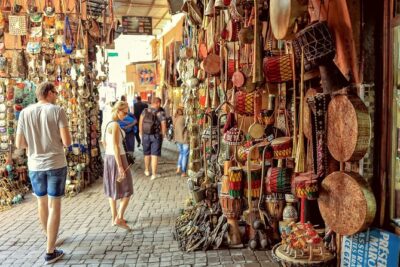
Marrakech: Bahia Palace, Saadian Tombs, Souk and Medina Tour
Read our review →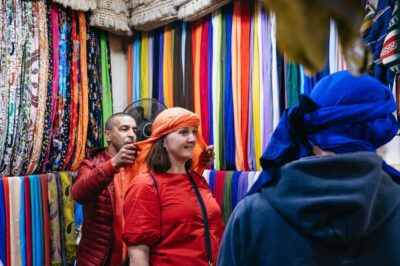
Marrakech: Colorful Medina Souks Guided Walking Tour
Read our review →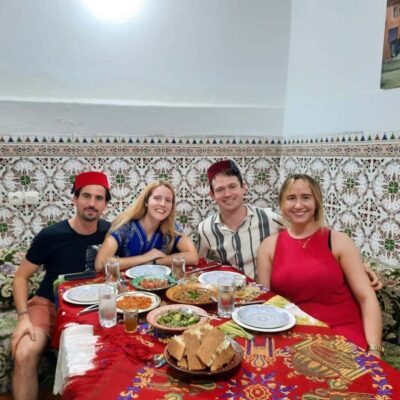
Marrakech: Traditional Moroccan Cooking Class & Market Visit
Read our review →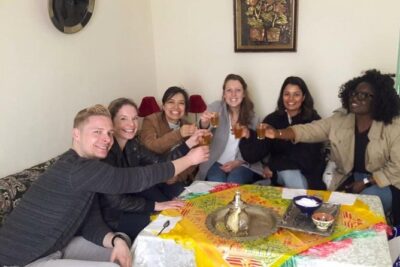
Moroccan Cooking Class & Marrakech Market Visit with Chef Khmisa
Read our review →
Shopping in the Souks of Marrakech Private Tour
Read our review →
Marrakech: Bahia Palace, Ben Youssef Medersa, & Souks Tour
Read our review →
Evening Marrakech: Gastronomic and Market Tour Inside the Medina
Read our review →This tour also appears in