
Review · PHNOM PENH
Phnom Penh Morning Market & Food Tour by Tuktuk – Includes All Food & Drinks!
Phnom Penh is best understood at breakfast, when noodle shops fill with regulars, grills fire up, and wet markets are still doing their daily work. This three-hour tuk-tuk food tour takes you to six stops that are easy to miss without a local guide, from a long-running neighborhood breakfast spot to a family pork-and-rice shop.
I especially like the small maximum of eight people, which makes it easier to ask questions and keep the pace relaxed. I also like that the price covers every dish, drink, coffee, tuk-tuk ride, and a handmade market souvenir. The main thing to consider is the sheer amount of food: this is a large breakfast, not a light tasting walk.
Key points to know before booking
- Six stops in about three hours: Expect noodle soup, market tastings, pork and rice, turmeric crepes, and specialty coffee.
- A real morning schedule: The tour starts at 8:30 am, when breakfast shops and markets are at their most useful.
- Food and drinks are included: You do not need to budget extra for the tastings or Cambodian coffee.
- Tuk-tuk transport between stops: Centrally located hotel pickup and drop-off are provided, with short walks at the food stops.
- Small-group format: The group is limited to eight people, a good size for conversation and close attention from the guide.
- Guides who add local context: Guides including Neara, Soaly, and Lang Barom have been praised for explaining dishes, food history, and daily life.
Why a morning food tour works so well in Phnom Penh
I like beginning a Phnom Penh stay with food. Cambodian dishes can be hard to identify at first, and menus do not always explain how a dish fits into ordinary life. A local guide gives you a useful starting point: what people eat early in the day, how ingredients reach the market, and which shops have served the neighborhood for years.
This tour does not simply place you at one restaurant and hand you a menu. It moves through several kinds of food businesses: street-side seating, a family-run shop, an open-air wet market, and a cafe. That range gives you a better sense of Phnom Penh than a single polished restaurant would.
The 8:30 am start matters. You are eating breakfast foods at breakfast time, rather than ordering a morning dish after the city has already moved on to lunch. The early hour also puts you close to the daily rhythm of the markets, where fresh herbs, fruits, vegetables, and other ingredients are being sold.
The tour lasts about three hours and includes private tuk-tuk transport. You will ride between food stops, then walk around the market or sit down for each tasting. Since the group is capped at eight, you should have a reasonable chance to hear the guide and ask about unfamiliar ingredients.
More Market Food Tours in Cambodia:
- Phnom Penh Local Market & Morning Food Tour Include Drinks
★ 5.0 · 9 reviews - Phnom Penh: Morning Foodie, Market Walking & Street Art Tour
★ 5.0 · 3 reviews - Phnom Penh Morning Foodie & Market Tour by Tuk Tuk
★ 5.0 · 3 reviews
Stop one: getting oriented before the first bite
The opening portion introduces Phnom Penh as a city that has changed and rebuilt many times since its early beginnings. That context is brief, but useful. Food here is not separate from the city’s past or its daily life. It is tied to family businesses, neighborhood routines, market trade, and the movement of people through the capital.
This first stop is not described as a major tasting, so think of it as an introduction rather than a full course. You are getting your bearings, meeting the guide, and preparing for a morning built around several small food businesses.
If you are new to Phnom Penh, this opening explanation can help you read the city as you ride through it. If you already know the capital well, you may find this part less important than the food stops that follow.
Stop two: local coffee and a bowl of noodles
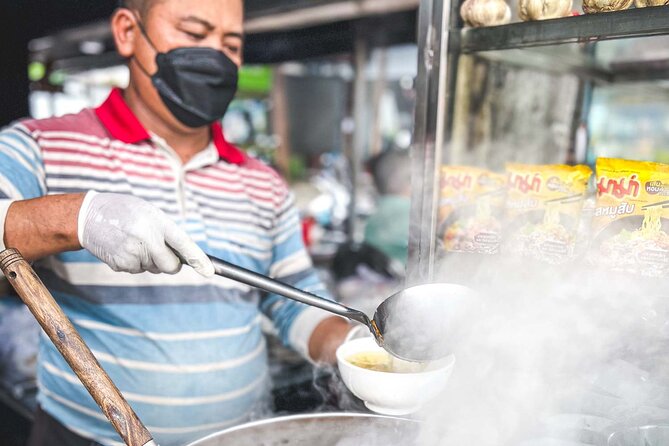
The first substantial stop is a neighborhood hangout that has served breakfast for more than 15 years. You will have local coffee with a bowl of savory noodle soup, a practical pairing for a Cambodian morning.
The value here is the setting. A long-running neighborhood shop tells you more about ordinary eating habits than a restaurant designed mainly for visitors. You are not just trying noodles. You are seeing how a typical breakfast stop works and learning which flavors and textures are common at the start of the day.
The coffee is also part of the experience, not an afterthought. Local coffee can be strong, so take the guide’s explanation seriously if you are sensitive to caffeine. The portion sizes across the tour add up quickly, and this is only the first food stop.
Your guide can explain the dish as you eat it. Neara, Soaly, and Lang Barom are among the guides associated with this experience, and the strongest part of their role is helping you understand what is in front of you rather than simply naming it.
Stop three: the wet market and Sister Mao
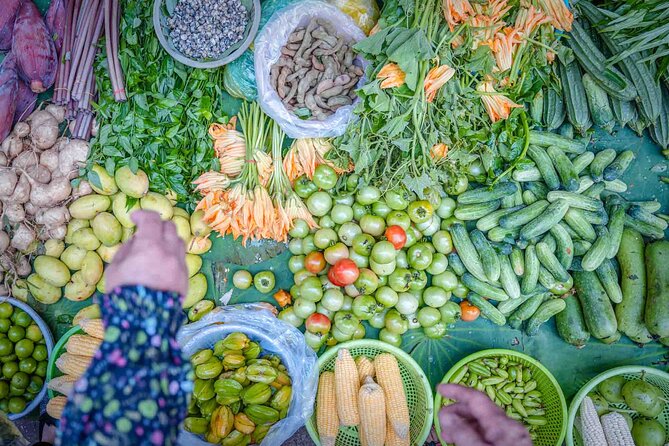
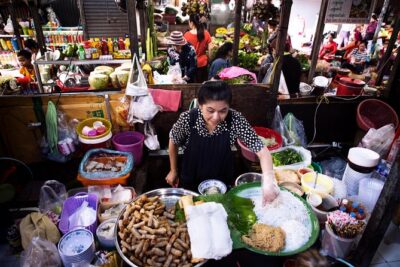
The open-air wet market is where the tour shifts from prepared food to ingredients. You will walk through stalls, try what is in season, and meet Sister Mao, who sources fresh herbs for cooking.
This is one of the more useful stops for anyone who plans to eat independently in Cambodia. You get to see the raw materials behind dishes you may order later, including the herbs and produce that can be difficult to identify on your own. A guide can also help you understand why a market looks and smells the way it does without turning the visit into a simple photo stop.
A handmade souvenir is included here. That small extra has a practical advantage: it connects the object to the market visit, rather than giving you a generic gift at the end of the morning.
Wet markets are active working places, so this stop may feel less polished than a cafe or sit-down restaurant. You should expect a real market environment, with movement, food preparation, and unfamiliar ingredients. That is part of the point, but anyone who prefers quiet indoor dining should keep it in mind.
More market tours around Cambodia:
- Kampot: Tuk Tuk Trip to Pepper Farm, Kep, Crab Market & More
★ 4.9 · 143 reviews - Phnom Penh’s Morning Market and Street Art Tour by Tuk tuk
★ 5.0 · 128 reviews - KAMPOT TRAVEL-Pepper farm. Cave.Secret lake-Crab market & Salt…
★ 5.0 · 87 reviews - Battambang: Cooking Class and Market Touring
★ 4.8 · 80 reviews
Stop four: pork, rice, and plastic chairs
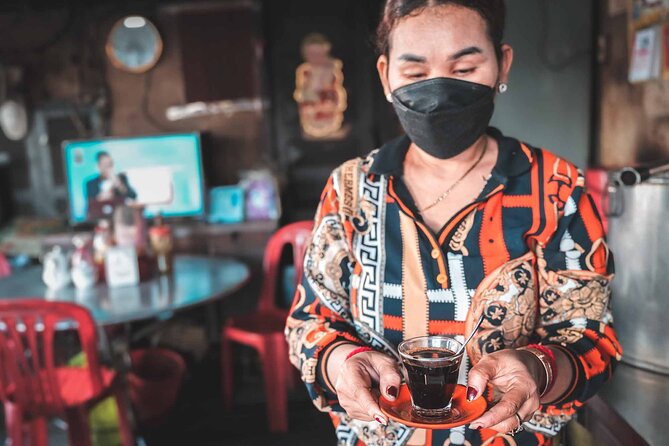
At the family-run pork-and-rice shop, you sit street-side on a plastic chair and eat freshly grilled pork with rice and homemade pickles. The setting is simple and direct. You are close to the cooking, the shop, and the everyday street scene.
I like this stop because it explains how Cambodian food often works at the neighborhood level. A family business, a familiar breakfast plate, and homemade pickles offer a clearer picture of local eating than a carefully staged tasting menu.
The pickles matter. They provide contrast to the grilled pork and rice, and the guide can explain how the parts of the plate work together. If you normally think of rice as a side dish rather than the center of breakfast, this is a good chance to adjust your expectations.
The drawback is comfort. Plastic chairs and street-side seating are part of the experience, but they are not the same as a formal dining room. The stop is likely to appeal most if you care more about local character than table service.
Stop five: yellow turmeric crepes
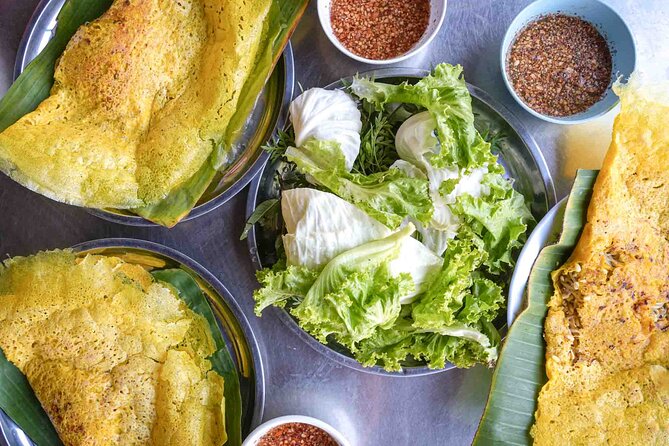
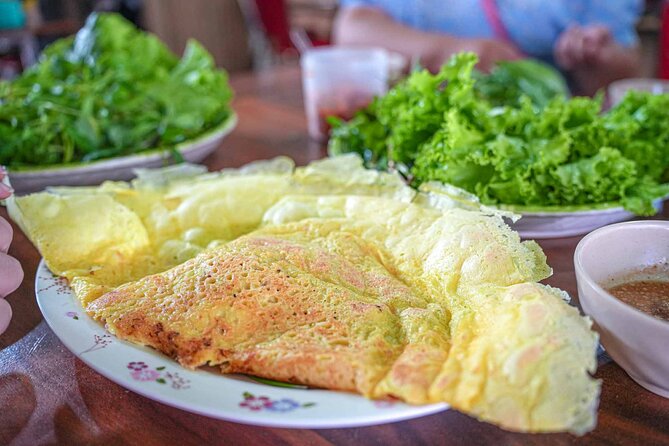
The savory turmeric crepes are one of the tour’s most distinctive dishes. The batter is made with rice milk and turmeric, which gives the crepes their yellow color. They are filled with ground pork, bean sprouts, and dried shrimp.
This is a useful dish for understanding how Cambodian cooking brings together crispness, savory filling, herbs, and sharp or fresh accompaniments. The dried shrimp may be important for anyone with seafood concerns, so ask your guide before eating if you need to avoid particular ingredients.
I would save room for this stop. The tour is not a sequence of tiny samples. You are receiving a lot of food, and the crepe is substantial enough to feel like part of a meal.
The guide’s explanation is particularly helpful here because the name alone will not tell you what to expect. If you have never tried a turmeric crepe, the color may suggest sweetness, but the pork, bean sprouts, and shrimp make it a savory breakfast dish.
Stop six: award-winning coffee at Kompi Coffee
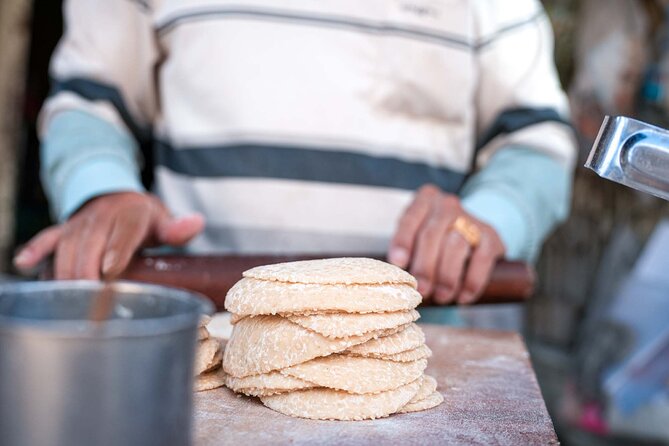
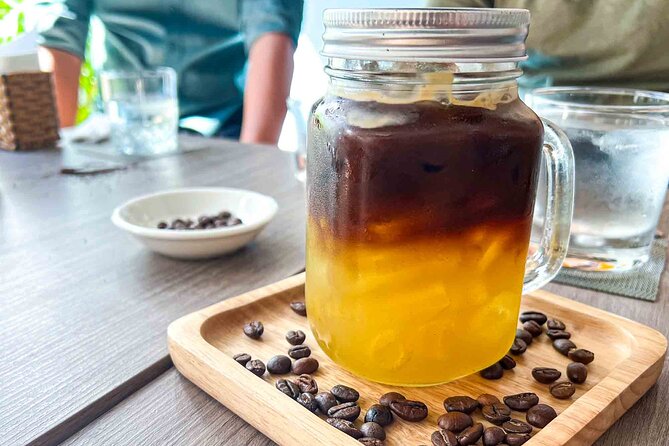
The tour ends at Kompi Coffee, a cafe within walking distance of the Russian Market. The final drink uses a signature recipe that won the National Barista Gold Medal in Cambodia.
Ending with coffee gives the morning a clean finish, especially after several filling dishes. It also provides a change of pace. The earlier stops focus on neighborhood breakfast and market life, while this cafe shows a more modern side of Phnom Penh’s coffee culture.
The location is useful for planning the rest of your day. Since the tour ends within walking distance of the Russian Market, you can continue exploring that area afterward if you wish. The tour information does not promise additional activities there, so treat the nearby market as a convenient next stop rather than part of the guided experience.
If you are caffeine-sensitive, plan carefully. You may already have had local coffee at the noodle stop, followed by the signature drink here. The tour includes coffee, but that benefit can become a drawback if you usually limit caffeine.
What the tuk-tuk and small group add
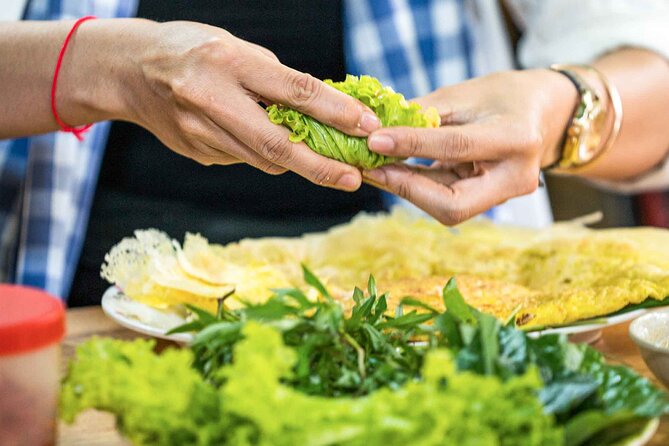
The tuk-tuk is not merely a way to save time. It gives you a short view of Phnom Penh between meals and keeps the morning from becoming a long walk in the heat. Private tuk-tuk transportation is included, and pickup and drop-off are offered at centrally located hotels.
You will still walk at the market and between nearby food areas, so this is not a completely vehicle-based outing. Most people can participate, but anyone concerned about mobility should note the combination of tuk-tuk rides, market walking, and street-side seating.
A maximum of eight people is a sensible limit for this type of tour. At a crowded market, a much larger group would be harder to keep together and more awkward around small food stalls. In a group this size, the guide can spend time explaining a dish and responding to individual questions.
The guide is central to the quality of the morning. Neara has been praised for explaining food history and looking after people carefully. Soaly has been singled out for explaining fruits and vegetables at the market and for finishing the morning with strong Cambodian coffee. Lang Barom has been described as friendly and engaging. Guide assignments can vary, so you should not assume a particular person will lead your date, but these examples show the kind of personal attention to expect.
Is $45 a fair price for this Phnom Penh food tour?
At $45 per person, the price is not the cheapest way to eat breakfast in Phnom Penh. You could certainly spend less by visiting one local shop on your own.
The value comes from the range and the guidance. The fee covers six stops, all food and drinks, coffee, private tuk-tuk transportation, centrally located hotel pickup and drop-off, a local guide, and a handmade souvenir. You are paying for access to several small businesses in one morning, plus help ordering and understanding what you eat.
I consider that fair for a first morning in the city, especially if you are unsure which dishes to try or do not speak Khmer. It is also good value if you would otherwise spend time researching restaurants and arranging transport between them.
The price makes less sense for a confident repeat visitor who already knows Phnom Penh’s food neighborhoods and prefers to choose each meal independently. It is also less suitable if you want a slow, single-dish breakfast rather than a full tasting route.
The experience is often booked well ahead, with an average booking lead time of 41 days. That suggests you should arrange it early if the date matters to you, particularly during a busy visit.
Who should book this experience?
I would choose this tour for a first visit to Phnom Penh, for anyone who wants food context without a full-day commitment, and for people who enjoy trying several dishes in one morning. It also suits anyone who feels cautious about street food and wants a local guide to explain where the food comes from and how each dish is eaten.
Families and small groups may appreciate the private transport and limited group size, though the available information does not specify special child arrangements. People with dietary restrictions should ask before booking, since the menu includes pork, shrimp, dried shrimp, and noodle dishes, and all six stops are built into the route.
This is less ideal for a late riser. The start time is 8:30 am, and the tour is designed around breakfast. It is also not the right pick if you dislike markets, street-side seating, or a strong coffee finish.
Free cancellation is available up to 24 hours before the start time. Changes or cancellations inside that window are not accepted for a refund, and the tour requires a minimum number of participants. If that minimum is not met, you are offered another date or experience, or a full refund.
Should you book the Phnom Penh morning food tour?
Book it if you want a well-organized introduction to Cambodian food with the work of finding the right stalls taken care of. The strongest reasons are the small group, the six-stop variety, the included food and transport, and guides who explain both the dishes and the people behind them.
I would especially recommend it early in your Phnom Penh stay. You will leave with a better sense of what to order later, how local breakfast works, and where to continue exploring after the final coffee near the Russian Market.
Skip it if you want to sleep late, avoid caffeine, or choose every meal yourself. For most first-time visitors who want an easy, filling, local start, the $45 price is justified by the amount of food, transport, and personal guidance included.
FAQ
What time does the Phnom Penh food tour start?
The tour starts at 8:30 am.
How long does the experience last?
It lasts approximately three hours.
How many food stops are included?
The tour includes six stops, covering restaurants, street-food stalls, a local wet market, and a cafe.
Is food included in the price?
Yes. All food and drinks are included, including coffee.
Is hotel pickup available?
Yes. Pickup and drop-off are provided for centrally located hotels.
What type of transportation is used?
The tour uses private tuk-tuk transportation between stops.
How large is the group?
The maximum group size is eight people.
Is a souvenir included?
Yes. A handmade souvenir from the market is included.
Where does the tour finish?
The tour ends at Kompi Coffee, within walking distance of the Russian Market.
New market tours around Cambodia
- Phnom Penh: Morning Foodie, Market Walking & Street Art Tour★ 5.0 · 3 reviews
- Siem Reap Morning Market & Food Tour by Tuk Tuk★ 5.0 · 2 reviews
- Siem Reap: FREE Market & Local Temple Tour★ 4.8 · 3 reviews
- Siem Reap Khmer Cooking Class and Local Market Tour★ 4.1 · 4 reviews
- Siem Reap: Morning Cooking Class & Market Tour★ 5.0 · 7 reviews
- Siem Reap Cambodian Buddhist Water Blessing and Local Market★ 4.8 · 3 reviews
- Siem Reap Cambodian Buddhist Water Blessing and Local Market★ 4.8 · 11 reviews
- Siem Reap: Angkor Wat Sunrise and Market Tour by Jeep★ 5.0 · 5 reviews
Phnom Penh Market Tours, side by side.
Phnom Penh’s Morning Market and Street Art Tour by Tuk tuk
Read our review →
Phnom Penh Local Market & Morning Food Tour Include Drinks
Read our review →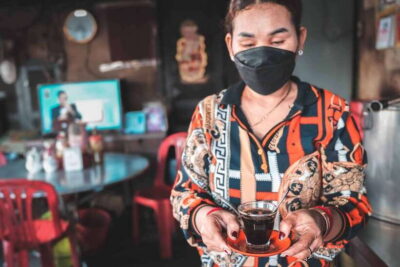
Phnom Penh: Morning Market & Guided Breakfast Tour by Tuktuk
Read our review →
Phnom Penh Morning Foodie & Market Tour by Tuk Tuk
Read our review →
Phnom Phnom: Local Market & Culture Walking of City Tour
Read our review →This tour also appears in