Review · SEOUL
Seoul: Guided Food & Market Tour with 8+ Tastings
Seoul’s best food lesson may begin with a simple market walk. This three-hour tour takes you from Gwangjang Market through Ikseondong Hanok Village and into Insadong, pairing familiar Korean favorites with dishes you might not think to order alone. The final stop is a quiet teahouse, where herbal tea and rice cake provide a calm finish after a serious amount of eating.
I like the range of food: chewy tteokbokki, freshly made dumplings, crisp mung bean pancakes, gimbap, fish cake soup, sweet snacks, bread, and a secret dish. I also like the guides’ personal touch. Jae, Alex, Taeseong, Youla, Ji-yoon, and others are praised for explaining food, history, and customs while adapting to different tastes.
The main drawback is that this is not a light nibble tour. You may leave very full, and several tastings include fish or meat. The route also includes walking on crowded market streets and is not suitable for wheelchair users, so plan accordingly.
Quick take: what makes this Seoul food tour useful
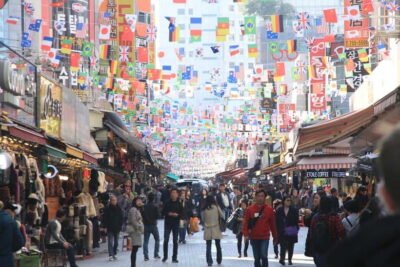
- Gwangjang Market first: You begin in one of Seoul’s oldest and largest food markets, where the stalls can feel confusing without a guide.
- Eight or more tastings: Expect a full spread of savory dishes, sweets, drinks, tea, and a surprise Secret Dish.
- Three distinct neighborhoods: The route links Gwangjang Market, Ikseondong Hanok Village, and Insadong.
- A gentle finish: Traditional tea and rice cake in a peaceful teahouse slow the pace after the market feast.
- Friendly English-speaking guides: Guides may include Jae, Alex, Taeseong, Youla, Ji-yoon, Chris, or Jenny, depending on the date.
- Good first-day choice: You get food, orientation, restaurant confidence, and ideas for the rest of your Seoul stay.
Starting at Jongno 5-ga and entering Gwangjang Market
Meet outside Exit 8 of Jongno 5-ga Station, on Seoul’s dark blue Line 1. The meeting point is beside the police station, and your guide carries an orange umbrella. That clear landmark matters in this part of town, where station exits and market lanes can make a first meeting harder than expected.
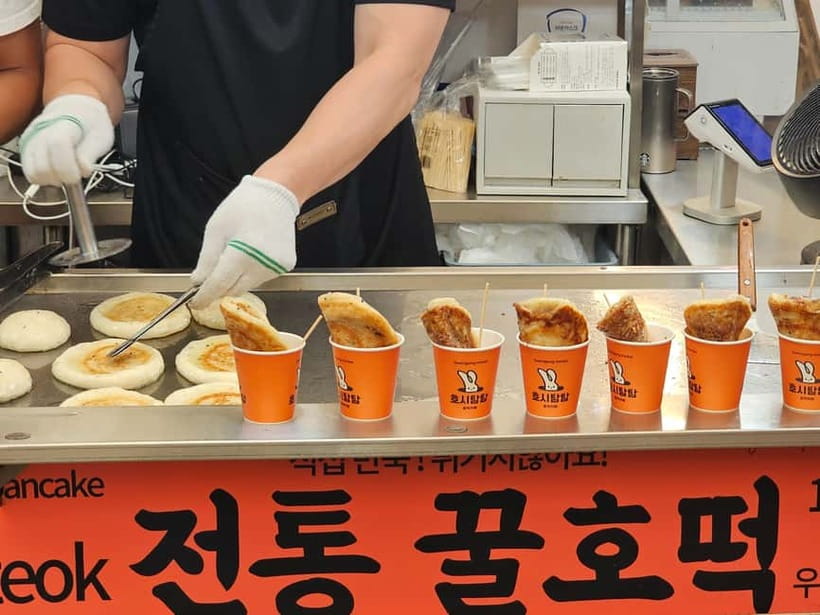
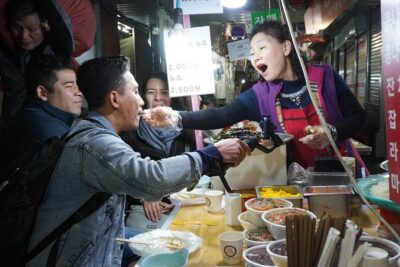
The tour begins in Gwangjang Market, a useful place to have a local guide. The market is famous, busy, and packed with food stalls, but the sheer choice can be a problem if you are unfamiliar with Korean dishes or ordering customs. Your guide leads you to several stops and explains what you are eating before you try it.
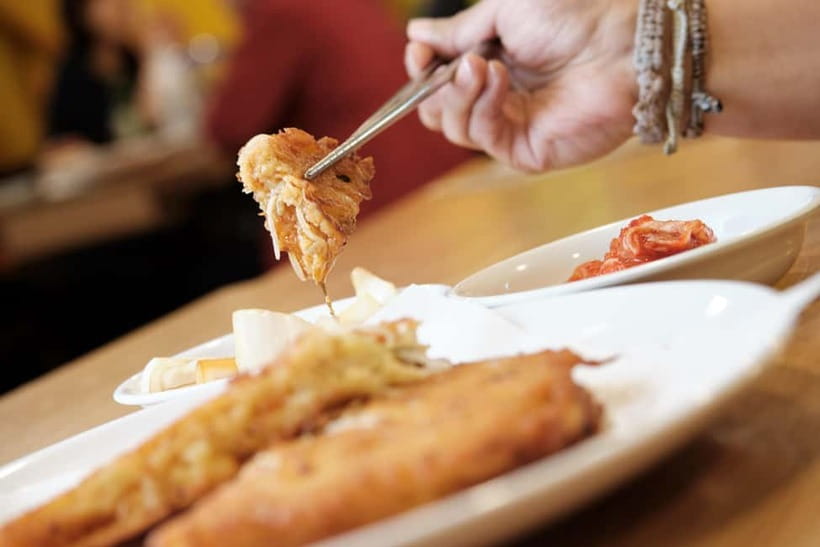
The first tastings give you a broad introduction rather than one large meal. You may try handmade mandu, Korean dumplings, alongside freshly rolled gimbap. You also get mung bean pancake, often called bindae-tteok or nokdujeon, served with sweet onions. It has a crisp edge and a soft, savory middle, and it is one of the dishes I would pay closest attention to here.
The tour also includes minced fish fillets hot from the grill, paired with fish soup. This is a useful pairing because you get both a snack and a warm broth, with the guide explaining how each fits into everyday Korean eating. The exact order of the tastings may vary, but the experience moves between stalls rather than asking you to sit down for one long restaurant meal.
More Market Food Tours in Seoul
- Seoul Street Food Market Tour
★ 5.0 · 1,226 reviews - Seoul: Night Market Food Tour with Local Guide
★ 4.9 · 943 reviews - Seoul: Palace, Temple and Market Guided Foodie Tour at Night
★ 4.9 · 750 reviews
Tteokbokki, honey snacks, and the food Seoulites actually eat
Tteokbokki is one of the key stops. These chewy rice cakes come in a sweet and mildly spicy sauce. The texture is unlike most Western comfort food, and calling it Korea’s answer to gnocchi gives you a rough starting point, though the flavor and texture are distinctly Korean.
If you are sensitive to heat, tell your guide early. The tour describes the tteokbokki as slightly spicy, not an extreme chili challenge, but spice tolerance varies. The guides are praised for checking preferences and adjusting tastings when possible.
The sweet part of the market visit includes a Korean honey snack, the sort of treat you may have seen in a K-drama without knowing its name. There is also sweet and salty cream bread later in the route. These stops keep the tour from becoming a parade of hot and savory food.
Drinks are included in several forms, including water and tea. Depending on the route and any selected upgrade, you might also encounter traditional rice drink, makgeolli, or somaek, a mix of beer and soju. Extra drinks are not included unless you choose the upgrade option, so check the booking details if alcohol matters to you.
Walking from the market to Ikseondong Hanok Village
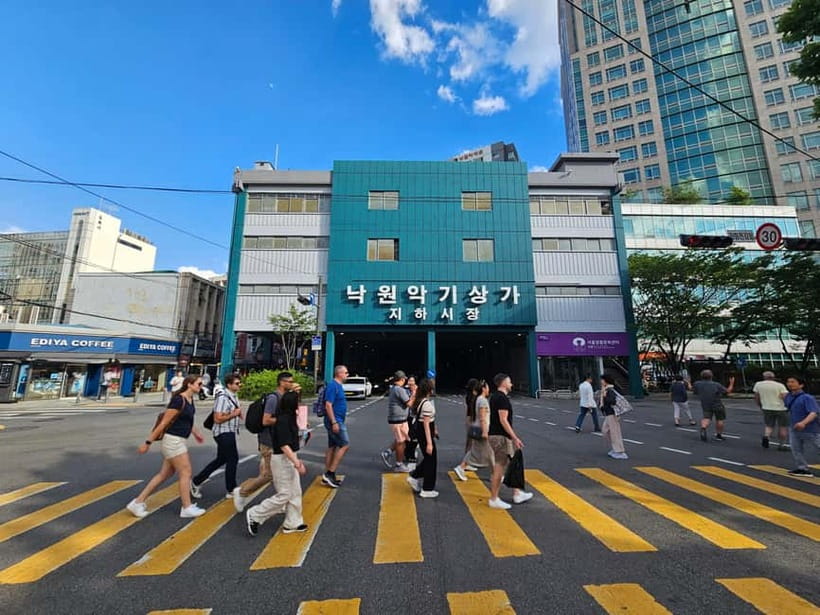
After roughly 80 minutes at the market, the route shifts from food stalls to a 20-minute walk. This break is welcome. It gives you time to digest, and it lets the tour become more than a list of dishes.
The walk includes photo stops and views of traditional backstreets. You move toward Ikseondong Hanok Village, an area known for its old Korean houses and small shops. The setting changes the feel of the tour. Gwangjang is about food and movement, while Ikseondong offers a slower look at older Seoul mixed with newer cafés and shops.
The walk is also one reason comfortable shoes are important. The tour takes place rain or shine, and the route includes market streets and neighborhood walking. Bring a light rain layer if the forecast looks uncertain, since weather does not cancel the experience.
Ikseondong’s hanok lanes and a sweet break
The stop at Ikseondong lasts around 30 minutes and includes another food tasting. You may try the sweet and salty cream bread mentioned in the tour plan, a modern-style snack that contrasts with the traditional dishes from Gwangjang Market.
This contrast is one of the tour’s strengths. Korean food is not presented as a frozen tradition. You see old market recipes, familiar street food, newer bakery items, and tea culture in the same short route. The guide adds the social and historical context, which helps you understand why Korean food can move so easily between home cooking, market stalls, cafés, and drinking snacks.
Ikseondong is a good place for photos, but do not expect a long sightseeing visit. The tour gives you a short guided look rather than a full neighborhood exploration. If you want to browse every lane or shop, return on your own after the food tour.
More Market Food Tours in South Korea
- Seoul Night Palace & Market Food Tour with Vehicle
★ 5.0 · 275 reviews - Seoul: Namdaemun Market Food Tour
★ 4.9 · 34 reviews - Seoul: Gwangjang Market Netflix Food Tour
★ 4.7 · 31 reviews - Seoul: Gwangjang Market Vegan & Vegetarian Food Tour
★ 5.0 · 16 reviews
Insadong and the quiet teahouse ending
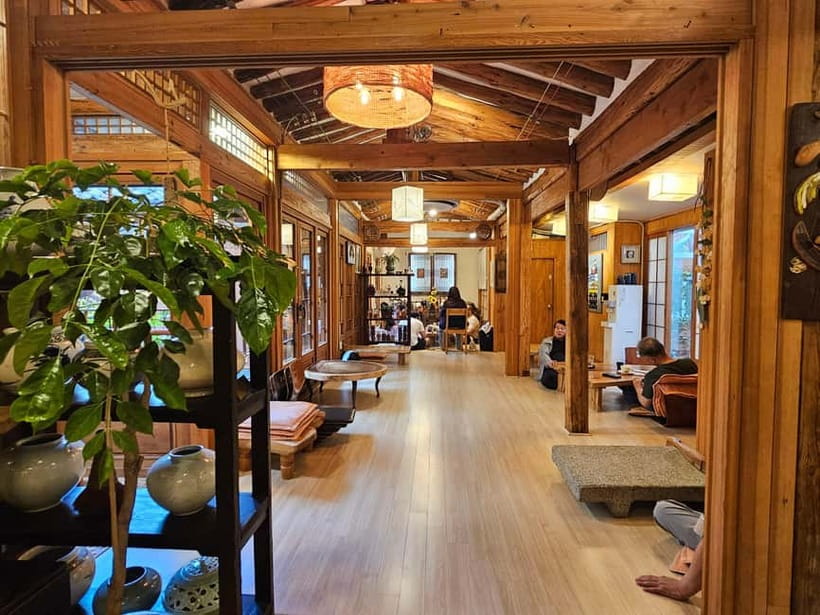
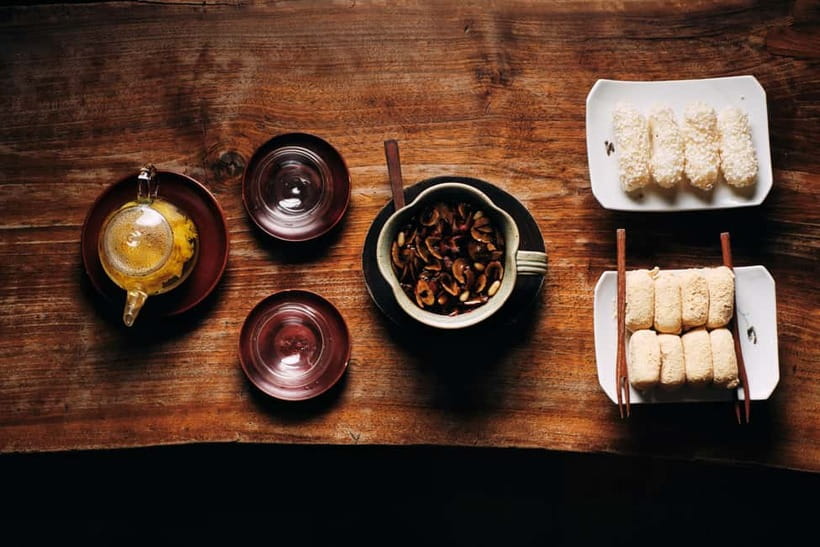
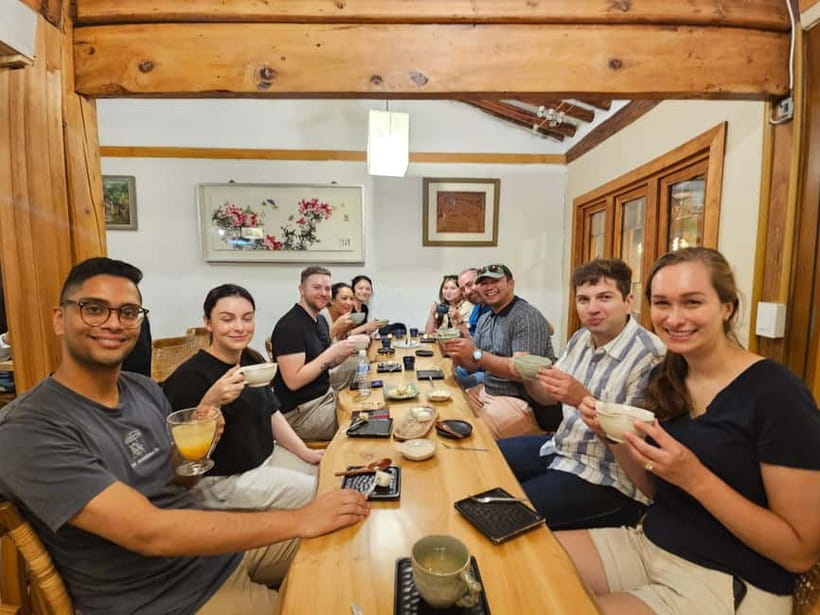
The final 40 minutes take place in Insadong. Here, the route includes a grilled rice cake with a traditional tea, followed by a visit to a peaceful teahouse. You finish with freshly brewed herbal tea and a delicate rice cake.
I especially like this ending because it changes the rhythm. After spicy sauce, hot soup, grilled fish, dumplings, and sweet snacks, tea gives you room to sit, talk, and remember what you have eaten. The teahouse also makes the experience feel connected to Seoul’s older traditions rather than ending at the last market stall.
Tea choices can include traditional Korean options such as omija-cha, depending on the guide and stop. The experience is not only about tasting. It is also about learning how tea, sweets, and conversation fit together in Korean hospitality.
Insadong is the finishing point, which is practical for continuing your day. You are already in a central sightseeing area, with access to more traditional shops, cafés, and nearby historic neighborhoods. The tour does not include transportation back to your hotel, although one guide helped arrange a taxi for a participant who needed one. Treat that as personal assistance, not a standard transfer service.
How much food do you really get?
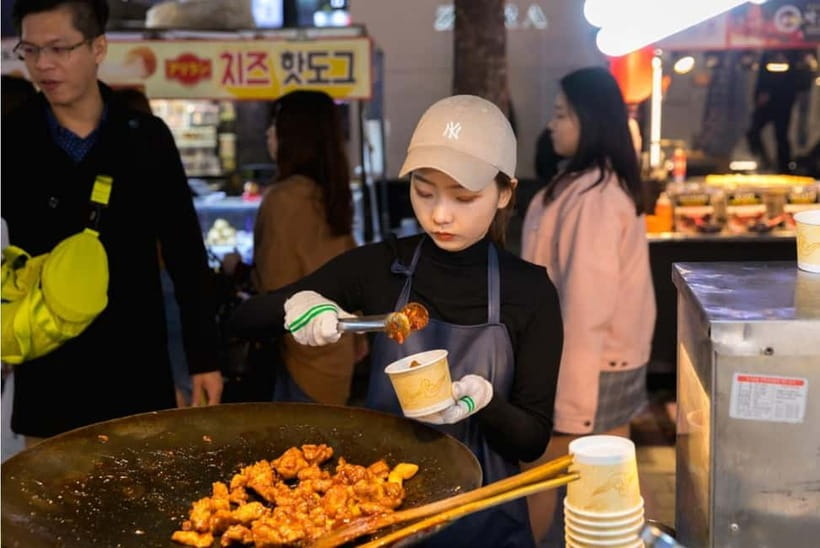
The short answer is: enough for many people to treat this as breakfast and lunch. The tour includes at least eight tastings, and some stops include more than one item. Past menus have included:
- Mung bean pancake with sweet onions
- Mandu, or Korean dumplings
- Freshly rolled gimbap
- Slightly spicy tteokbokki
- Minced fish fillets with fish soup
- Korean honey snack
- Sweet and salty cream bread
- Grilled rice cake
- Traditional tea and herbal tea
- Rice cake at the teahouse
- A Secret Dish revealed during the tour
The exact Secret Dish is deliberately not disclosed. That gives the tour a small element of surprise, but it also means you cannot plan around that particular ingredient.
Bring an appetite, but do not arrive uncomfortably hungry. The pacing includes breaks between tastings, and one guide was praised for spacing the food well so the group did not fill up too quickly. Still, this is a substantial meal in small portions, not a token sampling of two or three bites.
Dietary needs, spice, and food confidence
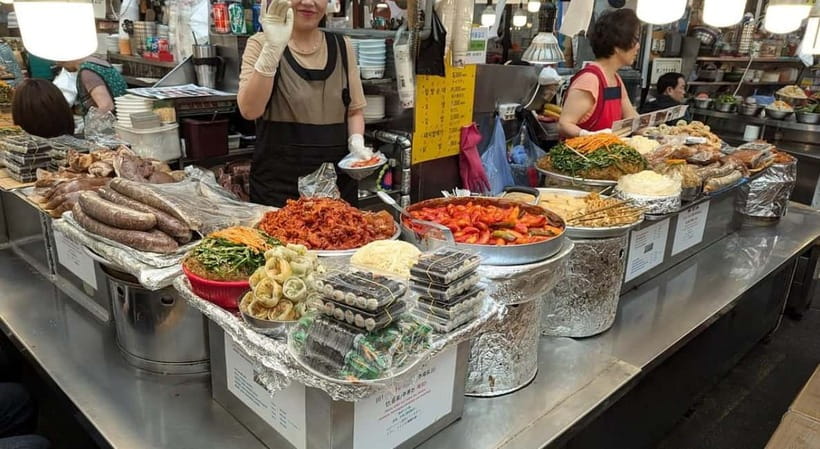
Vegetarian and other dietary options are available if you tell the provider when booking. The standard selection includes fish and meat, so advance notice matters. One vegetarian participant found that most of the tour could work by leaving out a few offerings, but you should not assume every stop can be modified without warning.
The guides are used to discussing ingredients and preferences. They have adjusted tastings for people who did not want octopus, helped participants who were unsure about market food, and made different tastes feel welcome. Still, food restrictions are not the same as simple dislikes. Give specific information when you book.
You should also be comfortable trying unfamiliar textures. Tteokbokki is chewy, mung bean pancake is soft inside and crisp outside, and fish-based dishes have flavors that may be new to you. That is the point of the tour, but you should choose another activity if you want only familiar food.
The guides make a real difference
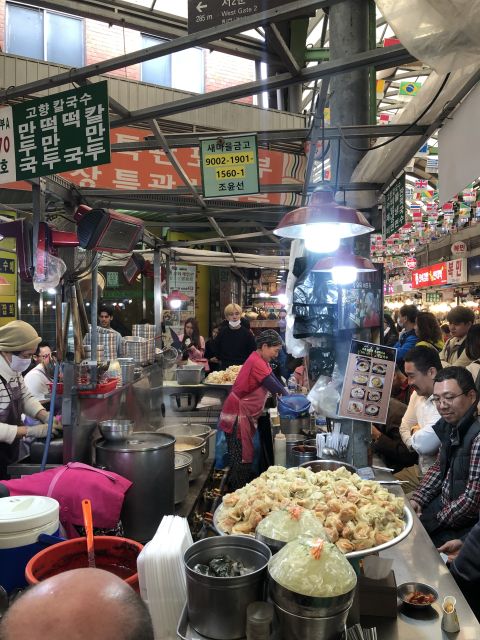
The tour is conducted in English, and guide quality is central to the experience. Names that appear across the available guide roster include Jae, Alex, Taeseong, Youla, Ji-yoon, Chris, Jenny, and Chloe. You cannot generally choose a particular guide unless the provider allows it, but the descriptions point to a team that combines food knowledge with local stories and practical help.
Jae is described as especially friendly, clear in English, and able to explain both food and culture. Taeseong is praised for humor, patience, and a calm way of including the entire group. Alex is noted for explaining history and helping people feel comfortable in market settings. Youla and Ji-yoon are also singled out for warmth and strong knowledge of Korean food and customs.
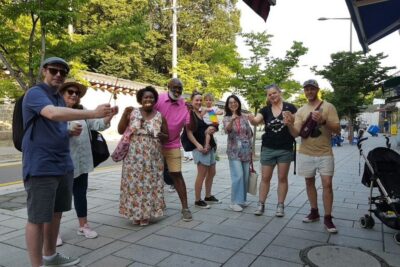
Group size can vary. Some departures have been intimate, including a private-feeling tour with one guest, while another had nine participants. A smaller group makes it easier to ask questions and gather around stalls, but you should not book on the assumption that every departure will be private.
Is $71 a fair price?
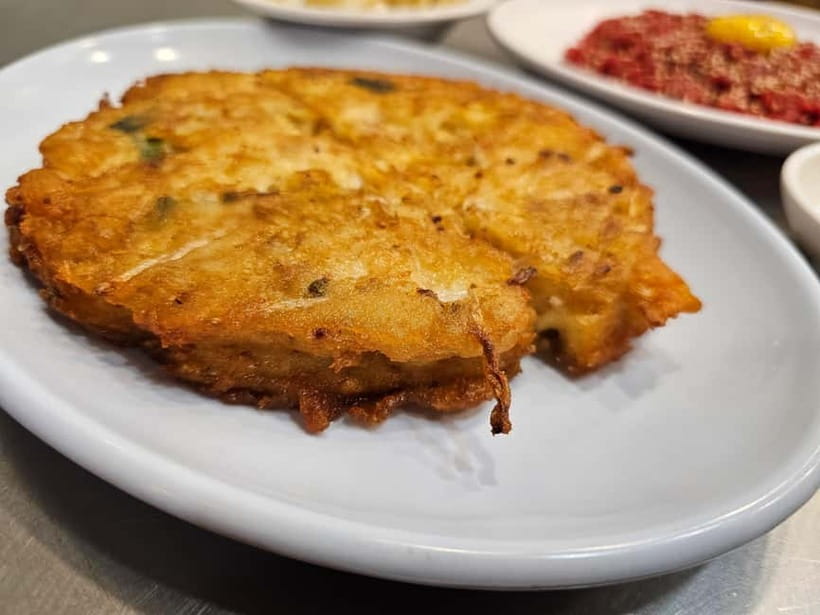
At $71 per person, this is not the cheapest way to eat in Seoul. You could buy individual market snacks for much less. The value comes from the combination of food, translation, neighborhood orientation, and confidence.
You are paying for more than eight tastings, drinks such as water and tea, a local English-speaking guide, and access to small eateries and stalls you might hesitate to enter alone. You also save the time and guesswork involved in finding each dish, working out what it is, and understanding how it fits into Korean food culture.
The price makes the most sense on your first or second day in Seoul. You get a practical introduction to foods you can seek out later, plus a sense of how Gwangjang Market and the Jongno area work. If you already know Seoul’s markets well and prefer to choose every dish yourself, the guided format may feel less necessary.
The alcohol upgrade costs extra, and additional drinks are not part of the standard price. The included food is plentiful enough that you do not need the upgrade to feel you received a full experience.
Who should book this tour?
I would recommend it to first-time visitors, solo visitors who feel shy about approaching food stalls, couples who want a shared introduction to Korean food, and families with older children who are open to new flavors. It also works well for people who enjoy local history in small portions rather than spending several hours in a formal museum.
It is a particularly good fit if you want guidance without giving up neighborhood atmosphere. You walk through markets, old lanes, a hanok village, and Insadong instead of sitting in one restaurant for the whole afternoon or evening.
I would be more cautious if you use a wheelchair, dislike walking in crowded areas, have strict dietary restrictions, or want a quiet meal with plenty of personal space. The route is not wheelchair suitable, takes place rain or shine, and includes a wide range of ingredients.
Practical details before you go
Wear comfortable shoes and arrive at Exit 8 of Jongno 5-ga Station. Look for the orange umbrella beside the police station. The tour lasts three hours and begins at a scheduled time, so check availability when booking.
Free cancellation is available up to 24 hours before the start for a full refund. You can also reserve now and pay later, which helps if your Seoul plans may shift.
The food is included, but extra drinks are not unless you select the upgrade. Tell the provider about vegetarian needs or other dietary requirements at booking, not after the first stall.
Should you book the Seoul Secret Food Tour?
Book it if you want a full meal, local guidance, and a useful first look at Seoul’s food culture in one compact outing. The strongest parts are the wide selection, the market access, the thoughtful pacing, and the quiet tea stop at the end.
I would book it early in your stay, then use what you learn to return to Gwangjang Market or explore Insadong on your own. Skip it only if you need a fully accessible route, cannot eat fish or meat without careful advance planning, or prefer independent food hunting. For most visitors who want to understand what they are tasting, $71 is a fair price for three hours of food and orientation.
FAQ
Where does the Seoul food tour meet?
Meet outside Exit 8 of Jongno 5-ga Station on Seoul’s dark blue Line 1. The meeting point is beside the police station, and the guide carries an orange umbrella.
Where does the tour finish?
The tour finishes in Insa-dong, also known as Insadong.
How long does the tour last?
The tour lasts three hours.
What language is the tour conducted in?
The live tour guide speaks English.
What food is included?
Included tastings include mung bean pancake with sweet onions, mandu, freshly prepared gimbap, tteokbokki, minced fish fillets with fish soup, a Korean honey snack, sweet and salty cream bread, grilled rice cake, tea, and a Secret Dish.
Are drinks included?
Water and tea are included. Extra drinks are not included unless you select the upgrade option.
Can vegetarians join the tour?
Vegetarian and other dietary options are available. Tell the activity provider about your dietary needs when booking.
Is the tour suitable for wheelchair users?
No. The tour is listed as not suitable for wheelchair users.
What should I bring, and does the tour run in bad weather?
Bring comfortable shoes. The tour operates rain or shine.
New market tours around Seoul
- Seoul: The Biggest Sea-food Noryangjin Market Tour★ 4.3 · 30 reviews
- Seoul: Sokcho beach, market, hot spring and Seorak Cable Car★ 4.8 · 5 reviews
- Seoul: Mt.Seorak(+CableCar Option)+Sokcho Fish Market&Beach★ 4.5 · 9 reviews
- Seoul: Namdaemun Market Food Tour★ 4.9 · 34 reviews
- Seoul: Gyeongbokgung Palace Tour & Lunch at Authentic Market★ 4.5 · 2 reviews
- Seoul: Guided Street Food Tour at Namdaemun Market★ 5.0 · 10 reviews
- Seoul: Gwangjang Market Vegan & Vegetarian Food Tour★ 5.0 · 16 reviews
- Seoul Gwangjang Market Foody Walking Tour★ 4.1 · 7 reviews
Seoul Market Tours, side by side.
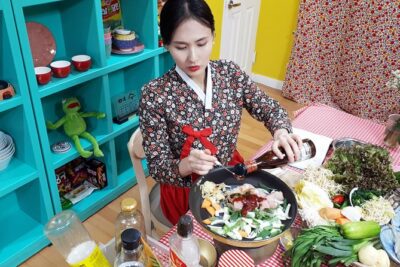
Local Home Korean Cooking Class & Market Adventure in Seoul
Read our review →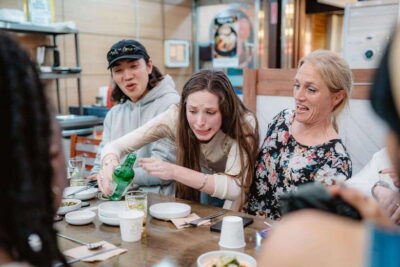
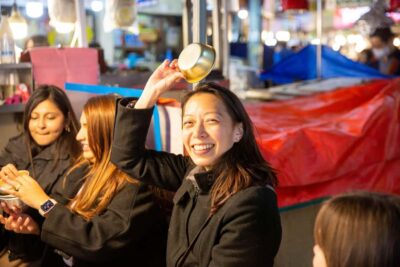
Seoul: Palace, Temple and Market Guided Foodie Tour at Night
Read our review →
Seoul: Nighttime Tour of Palace, Market, Naksan Park & More
Read our review →
Seoul: Gyeongbok Palace, N Tower, & Local Market City Tour
Read our review →