
Review · THAILAND
Thai cooking class &Market tour by Amazon Prime Series Chef.
The best part of this experience is that Thai cooking starts at the market, not at the stove. You tour Bang Niang Fresh Market, learn what the herbs, vegetables, seafood, coconut products, and spices are used for, then cook with ingredients chosen for that day. Chef Wandee brings experience from Thailand, New Zealand, and Iceland, plus training in traditional and royal Thai recipes.
I especially like the freedom to choose your own dishes from a menu of 29 recipes, and the fact that you make curry paste from scratch instead of opening a can. The small group, capped at nine people, also gives you a fair chance to ask questions and get help at your station. The main consideration is the open-air setting: in hot weather, cooking can be sweaty, and one visitor advises bringing insect repellent.
Key points to know
- A real local market comes first: Learn about Thai ingredients at Bang Niang Fresh Market before cooking with them.
- Chef Wandee leads the class: She taught two finalists connected with Amazon Prime’s The World Cook Season 2 and has worked as a Thai chef overseas.
- You choose the menu: Select dishes from 29 recipes, with extra menu requests possible.
- Curry paste is made by hand: You learn the base of Thai curries rather than relying on processed paste.
- Small groups keep it practical: The class is limited to nine participants, with assistants available to help.
- The $70 price covers a full half-day: Hotel transport, market tour, soft drinks, cooking, lunch, recipes, and online video clips are included.
Why the market tour matters before you cook
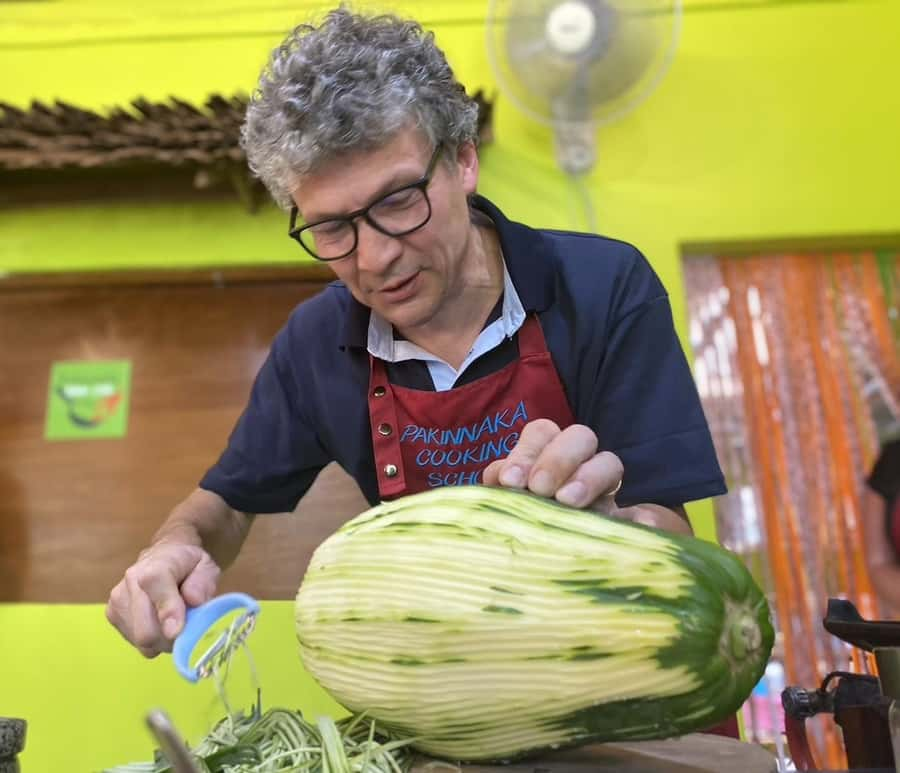
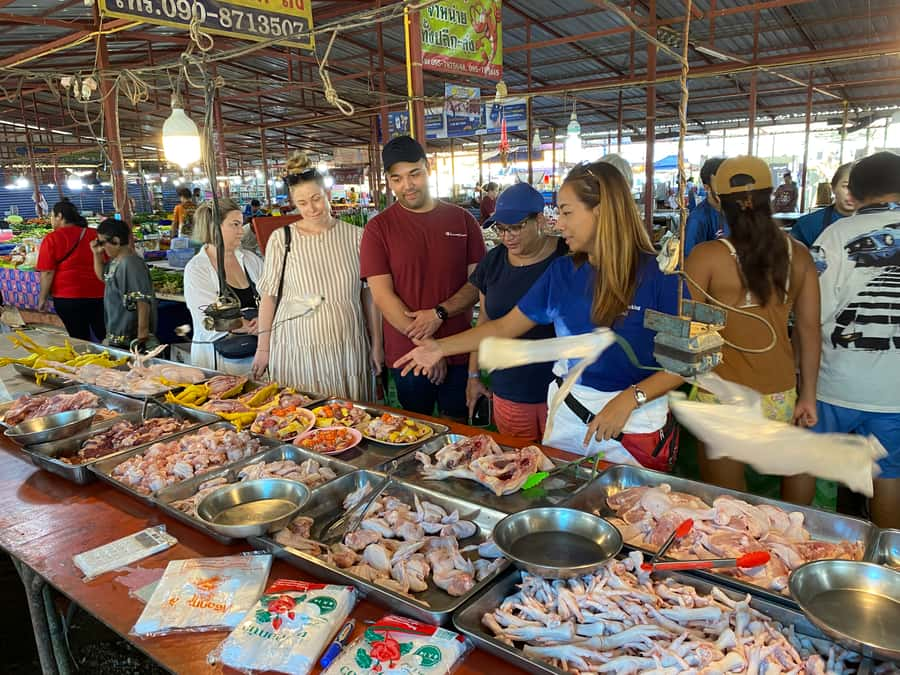
Many Thai cooking classes begin with pre-measured ingredients laid out on a table. This one gives you a useful bit of context first. At Bang Niang Fresh Market, you learn to identify the produce, herbs, spices, meats, seafood, and tropical fruit that shape Thai food.
Your market guide explains ingredients such as Thai basil, eggplant, chilies, and galangal, along with the spices used in homemade curry pastes. You also see how coconut cream and coconut milk are made. That detail matters because the two are often treated as the same thing outside Thailand, yet they bring different textures and uses to a dish.
The market visit is not only a shopping trip for the class. You have time to buy items for yourself, too. If you want to take home fruit, spices, or other local products, bring some Thai baht and a small bag. The exact amount of free shopping time is described as about 20 minutes, so this is a chance for a few purchases rather than a long market outing.
The market can be warm, crowded, and full of strong smells. That is part of its value, but it may not suit anyone who prefers a quiet, polished food demonstration. You should also expect the market to be a working local market rather than a display made for tourists.
More Market and Cooking Class Tours in Thailand
- Chiang Mai: Cooking Class, Market & Thai Herbs Garden Tour
★ 4.9 · 4,824 reviews - Chiang Mai: Authentic Cooking Class with Market & Farm Visit
★ 4.9 · 4,546 reviews - Phuket Thai Cooking Class with Market Tour Option
★ 5.0 · 2,665 reviews
Cooking in a bamboo hut and organic garden
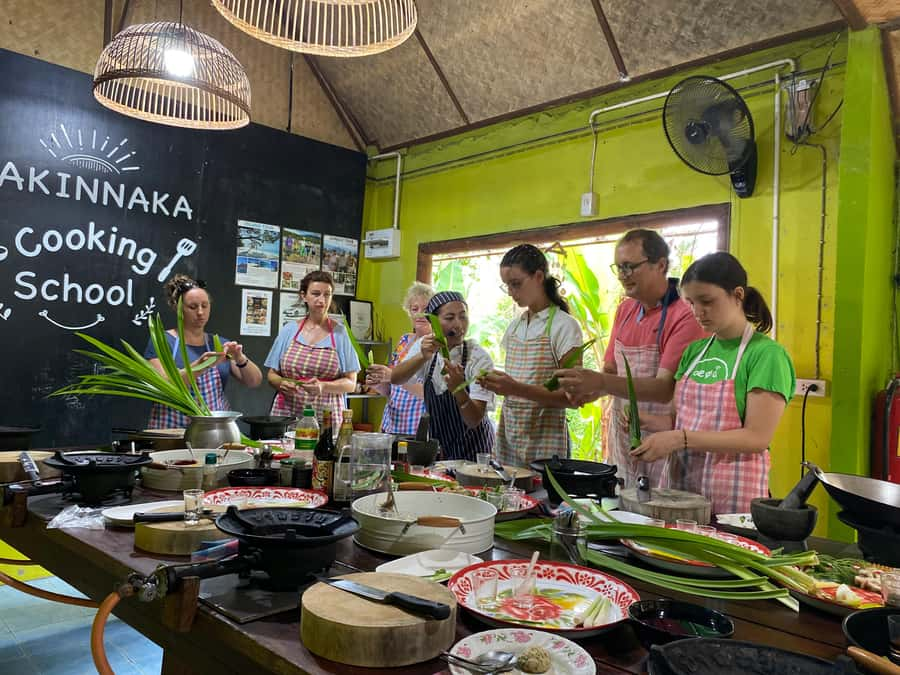
After the market, you travel to Pakinnaka Thai Cooking School. The class takes place in a garden setting with an open-air kitchen and a bamboo hut. It is a more relaxed backdrop than a formal culinary school, though the outdoor design means you feel the heat more than you would in an air-conditioned room.
The class is hands-on. You prepare the dishes yourself with guidance from Wandee and her assistants, rather than watching a chef do all the work. Instructions are designed for beginners, and the teaching style is patient and easy to follow. You do not need to be an experienced home cook to take part.
Chef Wandee’s role is a major reason to choose this class. She has worked in Thailand and abroad for more than 10 years, including time in New Zealand and Iceland. She also learned royal Thai recipes from the mother of a friend who had worked as a chef in the Thai palace.
Her background gives the session a useful balance. You learn practical home cooking, but you also get explanations about older Thai methods and the purpose of particular ingredients. Wandee is described as lively and funny as well as clear in her teaching, so the class is not likely to feel like a stern kitchen lesson.
Every class includes time for questions. Ask about substitutions if you want to recreate the food at home. This is one of the most useful parts of a cooking course because ingredients available in Britain, Australia, Europe, or North America may not match what you find in Thailand.
Choosing dishes from 29 Thai recipes
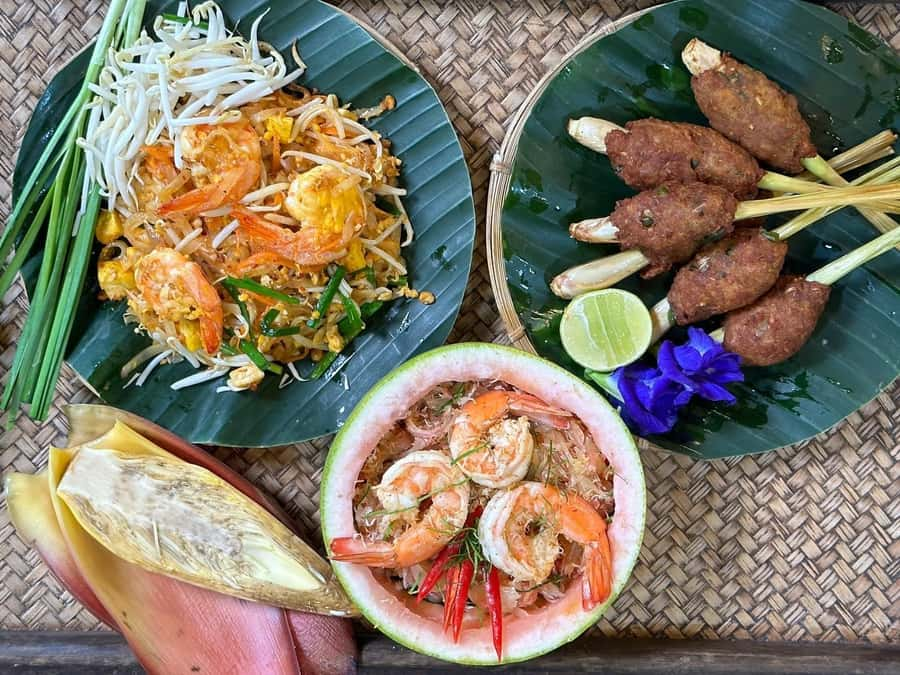
You can choose your dishes from a menu of 29 recipes, and additional requests may be possible if you discuss them in advance. The selection includes starters, main dishes, curries, soups, salads, and desserts.
Past menus have included:
- Papaya salad
- Spring rolls
- Chicken satay
- Pad Thai
- Fried rice
- Red or green curry
- Massaman curry
- Tom Kha soup
- Galangal soup with coconut milk
- Pork skewers with lemongrass
- Coconut pancakes
- Mango sticky rice
The exact dishes are not fixed for every group. Some participants have prepared a starter, main course, and dessert, while others have made several starters and main dishes. Groups may split recipes among themselves, allowing everyone to taste a broader range of food.
This flexibility is a strong point, especially if you already know your favorite Thai dishes. Contact the school before the class if you have a particular request, dietary need, or food allergy. Vegetarian adaptations have been handled successfully, and the team has also adjusted dishes for a nut allergy.
The one limitation is that four hours gives you only so much cooking time. You may wish you could make more dishes, especially if you are keen on Thai food. The experience is better understood as a focused introduction to several recipes, not as a full professional cooking course.
Making curry paste from scratch
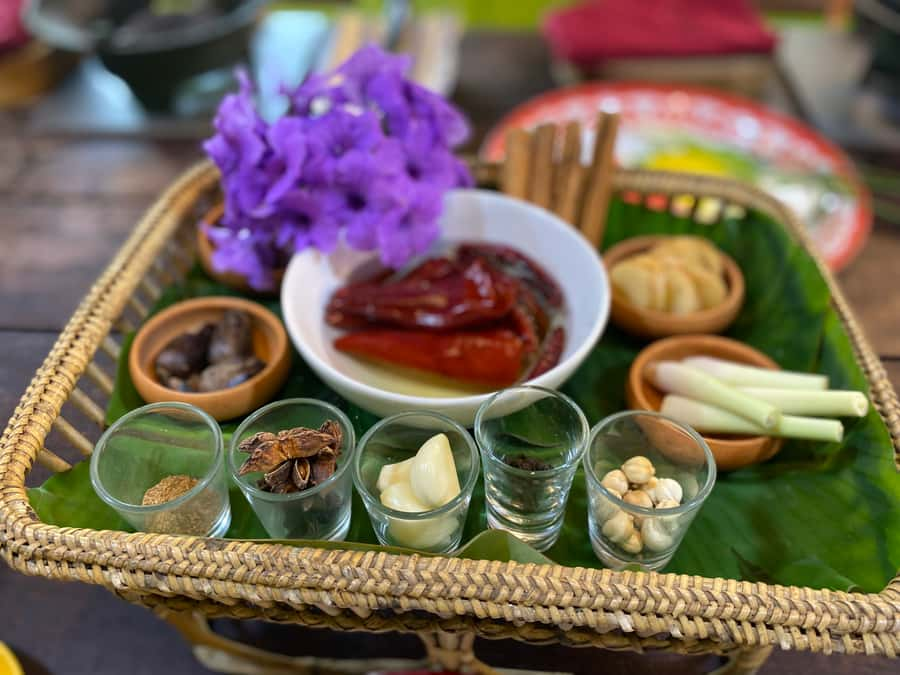
The curry paste lesson is one of the most valuable parts of the class. Thai curry often tastes different at home because cooks use a jarred paste and miss the fresh aromatics that give the dish its shape.
Here, you work with fresh ingredients and learn how the paste is built. The class avoids processed foods and canned ingredients as much as possible. You then cook with the paste you have made, so you can taste how the work affects the finished curry.
This also helps you understand Thai balance. Curry is not just about heat. Fresh chilies, herbs, spices, coconut milk, salt, sweetness, and sour notes all need to work together. Wandee can explain how to adjust flavors to your taste and how to make sensible substitutions once you return home.
You should expect some chopping, mixing, and preparation rather than restaurant-style speed. The assistants help keep things moving, but the point is for you to understand the process. Wear comfortable clothes and be ready to spend time standing in a warm outdoor kitchen.
Same city, another market:
- Bangkok: Damnoen Saduak Market and Maeklong Railway Market
★ 4.5 · 26,723 reviews - The Old Siam: Damnoen Saduak and Maeklong Railway Market
★ 4.5 · 10,992 reviews - Bangkok: Train Market & Floating Market with Boat Ride
★ 4.7 · 9,547 reviews - From Bangkok: Ayutthaya & Ayothaya Floating Market Day Trip
★ 4.7 · 6,084 reviews
The meal you make is part of the lesson
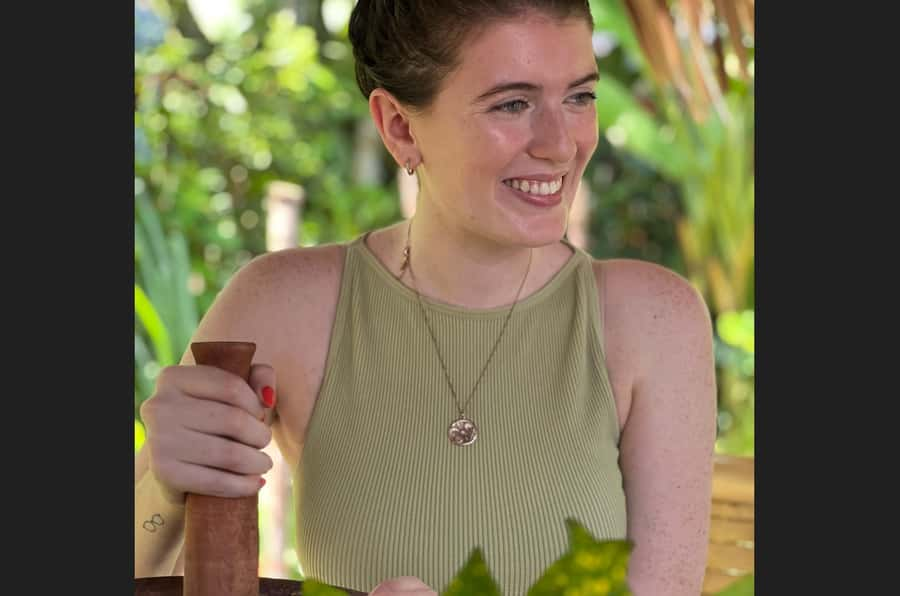
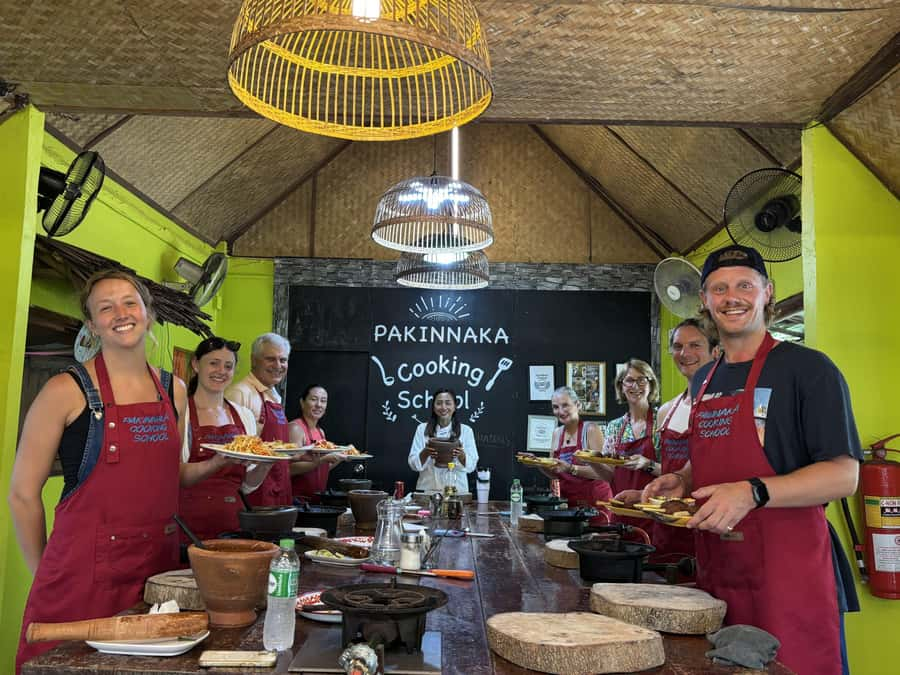
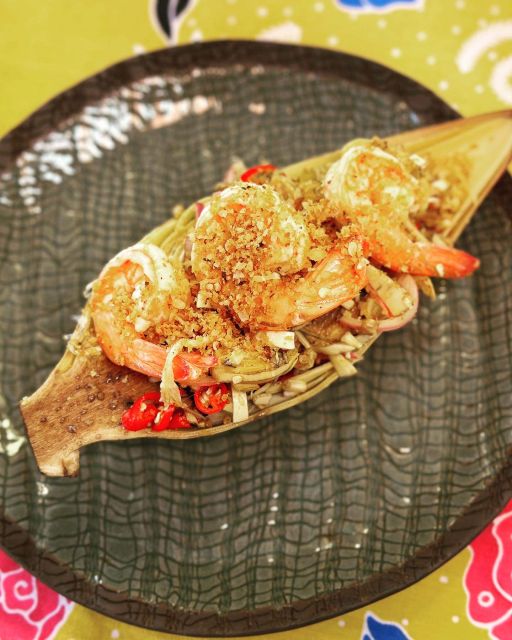
Once each dish is ready, everyone sits down together to eat. This shared meal is a simple but important part of the experience. You get to taste your own work, compare dishes with the other participants, and see how different combinations of herbs, coconut, chili, and spice fit together.
The portions are described as generous, with some groups preparing two starters, two main dishes, and a dessert. The exact amount depends on the recipes selected, but you should not expect a small tasting plate.
Soft drinks are included. Beer and wine can be purchased separately at reasonable prices, and the school has sometimes offered local craft beer. Alcohol is optional, so you can keep the meal focused on the food if you prefer.
The meal also gives you a chance to ask follow-up questions. If a curry tastes too hot, a salad needs more sourness, or a dessert has a texture you want to repeat, this is the moment to ask Wandee while the steps are still fresh.
Morning and afternoon schedules
The morning class usually runs from about 10:00 a.m. to 2:00 p.m. Hotel pickup times vary by location. Accommodation near Merlin Resort may be collected around 9:45 a.m., the Nangthong area around 10:00 a.m., and Bang Niang around 10:10 a.m.
The usual morning sequence is:
- Hotel pickup between about 9:40 and 10:00 a.m.
- Market tour at approximately 10:20 a.m.
- Cooking from about 11:00 a.m. to noon
- Shared meal at around 12:10 p.m.
- Garden photographs at about 1:20 p.m.
- Return to your hotel near 2:00 p.m.
The afternoon class generally runs from about 3:30 p.m. to 7:30 p.m. It follows the same pattern, with the market around 4:00 p.m., cooking around 4:40 p.m., a meal near 5:50 p.m., and garden photographs around 7:20 p.m.
The published times contain small variations, so treat them as a guide rather than a railway timetable. The school confirms the pickup time the evening before, usually around 8:00 p.m. Keep your phone available and wait in your hotel lobby.
The afternoon schedule can work well if you want a slower morning or have another activity planned. The morning class leaves your afternoon free. Both options include photographs in the garden, which gives the day a pleasant finish without adding another separate attraction.
Transport, group size, and practical comfort
Hotel pickup and return are included for accommodations in the service area. The vehicle is air-conditioned, and transport has received a 96 percent perfect score. The pickup is intended to remove the hassle of finding the cooking school yourself.
The group limit is nine participants. That is small enough for personal assistance, but it is still a social class rather than a private lesson. You cook alongside people from different countries, which becomes part of the appeal when everyone sits down to share the meal.
The cooking area is open to the garden. Bring water, though refreshments are included, and use insect repellent. A September participant found the kitchen hot and noticed mosquitoes, practical warnings that are easy to overlook when you are focused on the food.
The school is suited to beginners and families. A family with two teenagers divided into different cooking groups and found the instructions easy to follow. Vegetarians can ask for adapted recipes, and allergy requirements should be raised before the class rather than at the cooking station.
Is $70 good value?
At $70 per person, the price covers more than the cooking lesson. You receive hotel transport, the market tour, soft drinks, instruction from Chef Wandee and her team, the meal you prepare, access to recipes, and online cooking video clips.
The recipe access is especially useful. You receive the instructions for what you cook, and the school provides a wider set of recipe downloads, including dishes that may not be selected during your session. The video clips give you a visual reminder when you try the food at home.
The value is strongest if you want a full half-day activity rather than a short demonstration. You get local food shopping, ingredient explanations, preparation, cooking, a shared meal, and time in the garden. If you only want to learn one recipe quickly, the class may feel longer than necessary.
A 4.9 rating from 266 reviews reflects unusually consistent satisfaction, and the praise focuses on the same points: friendly staff, clear teaching, delicious food, smooth transport, and a worthwhile market visit. I would still judge the price against your own interests. Food lovers and curious beginners get more from this than someone who dislikes cooking or cannot handle heat.
Who should book this class?
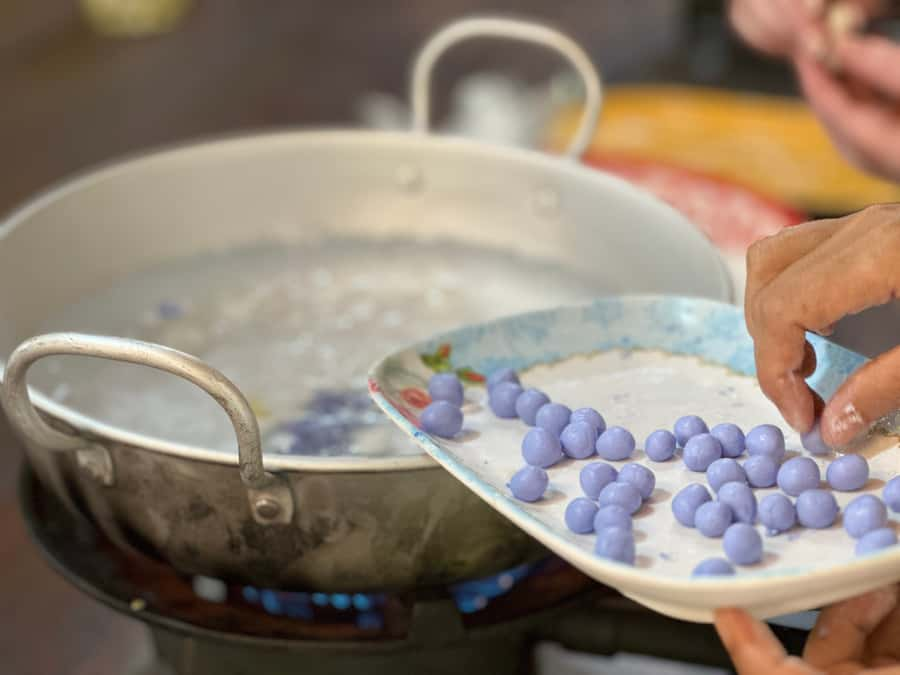
I would recommend it to you if you want Thai food explained through actual ingredients rather than a generic demonstration. It suits couples, families with older children, solo visitors who enjoy meeting people, and anyone who wants recipes they can repeat at home.
It is also a good rainy-day option. The class is not dependent on clear skies, though the market and garden are still open-air parts of the experience. You should be comfortable with warm conditions, local market smells, and a little standing and chopping.
Choose the morning if you want the rest of the day free. Choose the afternoon if you prefer a later start and an evening meal. If you have a dish you especially want to make, contact the school before arrival and ask about availability.
Should you book the Pakinnaka class?
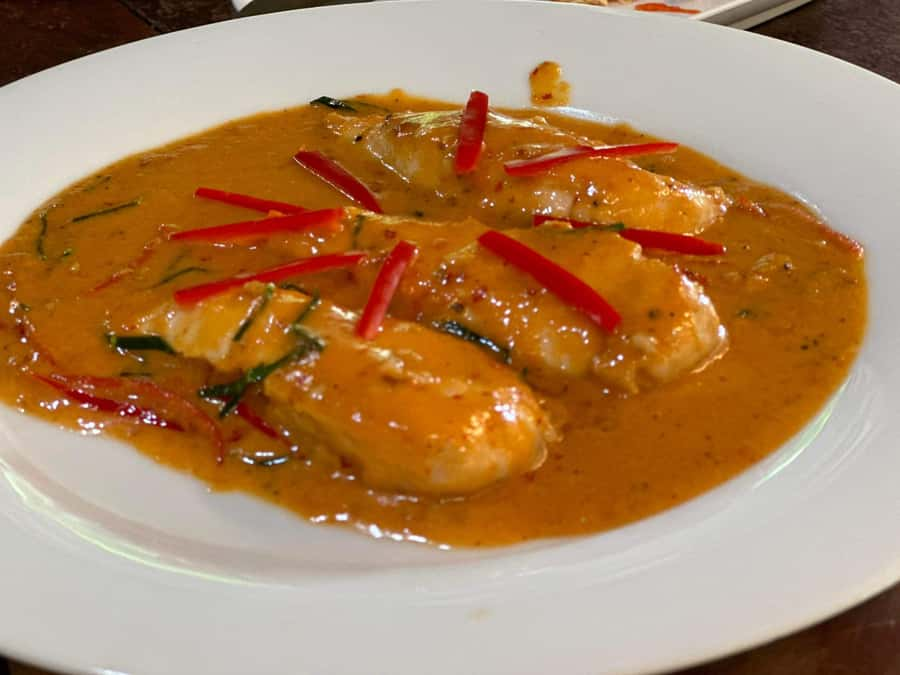
Yes, if your idea of a good Thai food experience includes learning where the ingredients come from, making curry paste by hand, and eating a meal you prepared yourself. Chef Wandee’s background, the small group, and the flexible menu make this more useful than a class built around watching a chef perform.
Be realistic about the setting. This is a warm garden kitchen, not a cool professional studio, and four hours may leave you wishing for more recipes. Bring insect repellent, tell the school about dietary needs in advance, and keep your pickup confirmation handy.
For $70, the combination of transport, market education, hands-on cooking, lunch, recipes, and video support makes this a strong choice in Khao Lak. Book it if you want to take home more than a photograph of Thai food. You will leave with a better sense of how the dishes are built and a practical way to cook them again.
FAQ
Where does the Thai cooking class take place?
The experience takes place in the Khao Lak area of Thailand, with the cooking session at Pakinnaka Thai Cooking School in a garden setting with a bamboo hut and open-air kitchen.
How long does the activity last?
The experience lasts about four hours, including hotel pickup and return, the market tour, cooking, the shared meal, and garden photographs.
Is hotel pickup included?
Yes. Hotel pickup and return are included. Pickup time depends on your accommodation area, and the final time is updated the evening before.
What language is the class taught in?
The class is taught in English.
How many people are in each group?
The class is limited to nine participants.
Who teaches the cooking class?
Chef Wandee leads the class. She owns and runs Pakinnaka Thai Cooking School and has worked as a Thai chef in Thailand, New Zealand, and Iceland.
Can I choose the dishes I cook?
Yes. You can choose dishes from a menu of 29 recipes. Additional requests may be possible if arranged with the school.
Are vegetarian or allergy adaptations available?
Vegetarian dishes can be adapted, and nut allergy adjustments have been provided. Tell the school about dietary needs before the class.
Are drinks included?
Soft drinks and refreshments are included. Wine and beer can be purchased separately.
Do I receive the recipes after the class?
Yes. Recipes for the dishes you cook are provided, along with free recipe downloads and online cooking video clips.
New market tours around Thailand
- Longtail Boat Adventure to the Local Weekend Floating Market★ 5.0 · 12 reviews
- Sathon: Hands-on Thai Cooking Class & Market Tour in Bangkok★ 5.0 · 19 reviews
- Private Unseen Mangrove Forest and Floating & Railway Market★ 5.0 · 2 reviews
- Private Tour from Bangkok: Railway & Floating Markets★ 4.9 · 11 reviews
- From Bangkok: Floating Market & Ayutthaya Private Day Trip★ 5.0 · 42 reviews
- Private Floating & Train Market + DRAGON Temple + Thai Cafe★ 4.9 · 13 reviews
- Phuket: Thai Cooking Class with Market Tour★ 5.0 · 2 reviews
- Phuket: Half Day Thai Cooking Experience with Market Tour★ 5.0 · 11 reviews
Thailand Market Tours, side by side.

Bangkok: Damnoen Saduak Market and Maeklong Railway Market
Read our review →
The Old Siam: Damnoen Saduak and Maeklong Railway Market
Read our review →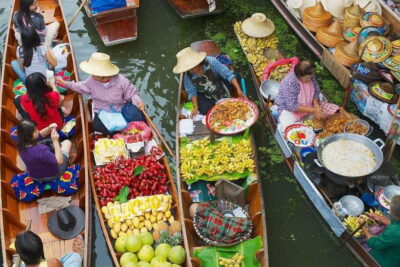
Bangkok: Train Market & Floating Market with Boat Ride
Read our review →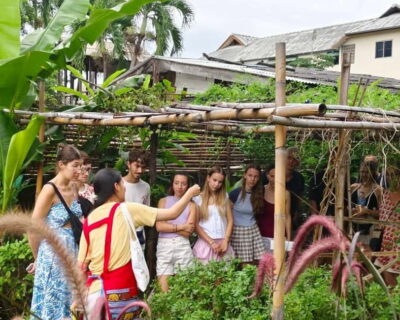
Chiang Mai: Cooking Class, Market & Thai Herbs Garden Tour
Read our review →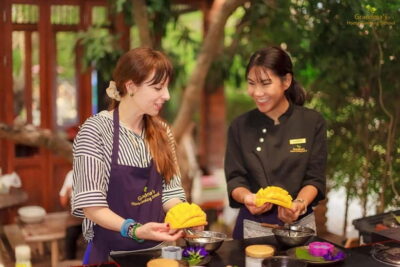
Chiang Mai: Authentic Cooking Class with Market & Farm Visit
Read our review →
Bangkok: Floating Market and Train Market Experience
Read our review →
Half-Day Railway Market and Floating Market Tour in Thailand
Read our review →
Bangkok by Night: Temples, Markets and Food Tuk-Tuk Tour
Read our review →This tour also appears in