Review · THAILAND
Koh Samui: Thai Cooking Class with Local Market Tour
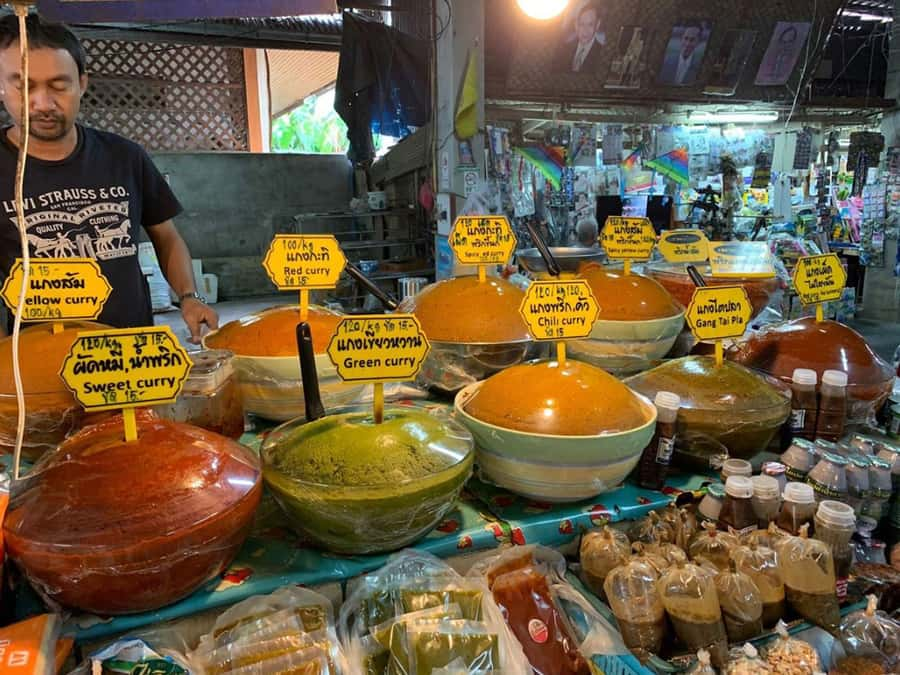
The best part of this Koh Samui cooking class happens before the cooking begins. You walk through a real local market with your teacher, learn what the herbs and vegetables are used for, then return to a home-based kitchen to turn those ingredients into lunch. The market visit gives the class a strong sense of place, while the small group keeps the lesson personal.
I like the freedom to choose dishes, and I like that you eat what you prepare while it is still fresh. The main thing to consider is the three-hour schedule: the market visit lasts only about 30 minutes, so this is a focused introduction rather than a long food tour. Pickup also covers selected areas, not every part of the island.
At a glance
- A local market comes first: Spend about 30 minutes learning about Thai herbs, vegetables, spices, and imported produce before cooking.
- Choose your own menu: Options include pad Thai, green curry, tom yum, som tam, spring rolls, fried rice, and banana in coconut milk.
- Small groups matter: A maximum of six participants means more direct help with chopping, seasoning, and timing.
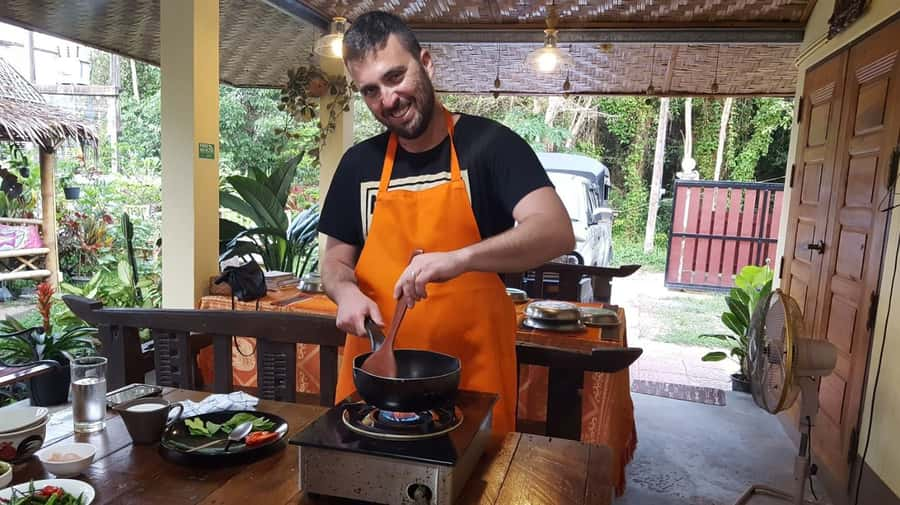
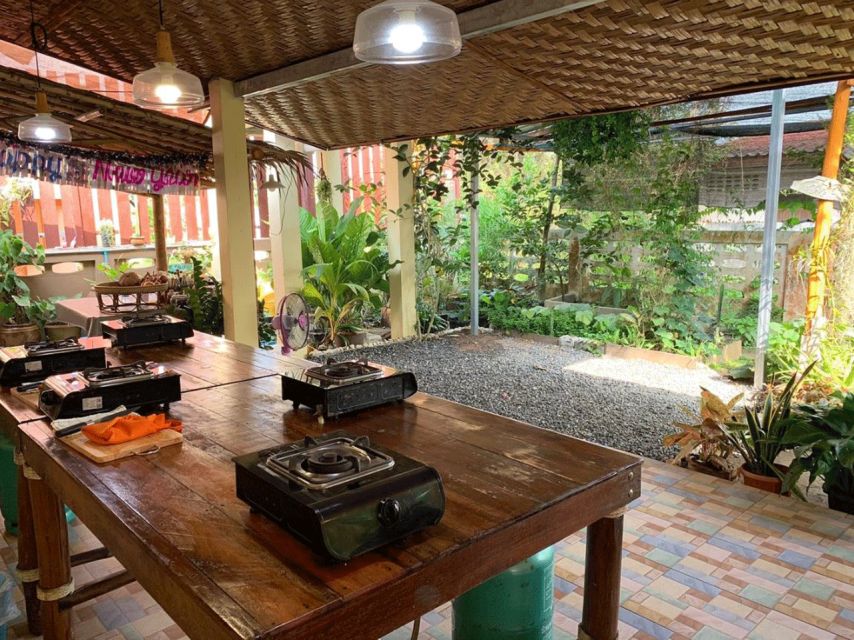
- The kitchen feels personal: Cooking takes place in a fully equipped setting, with individual workspaces and, in some sessions, a garden kitchen beside the teacher’s home.
- Hotel pickup is included: Pickup is available from Bophut, Choeng Mon, Chaweng, and Chaweng Noi near the main road.
- You leave with usable skills: Teachers explain the ingredients, theory, and methods clearly enough for you to try the recipes at home.
Why the market tour makes the class better
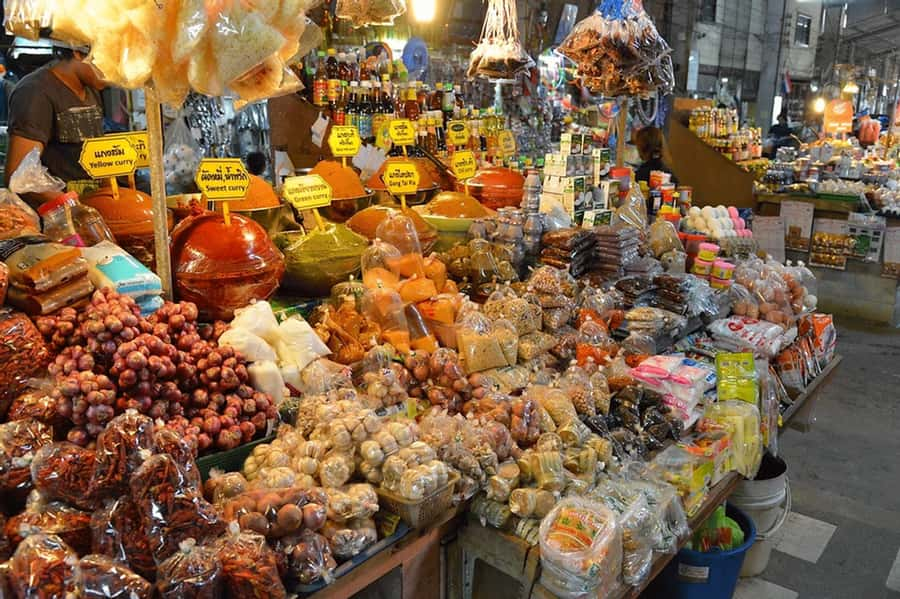
Many cooking lessons begin with ingredients already laid out on a counter. This one starts with a short visit to a local market, which gives you a useful look at how Thai cooking begins. You are introduced to herbs, vegetables, and spices before they appear in your dishes.
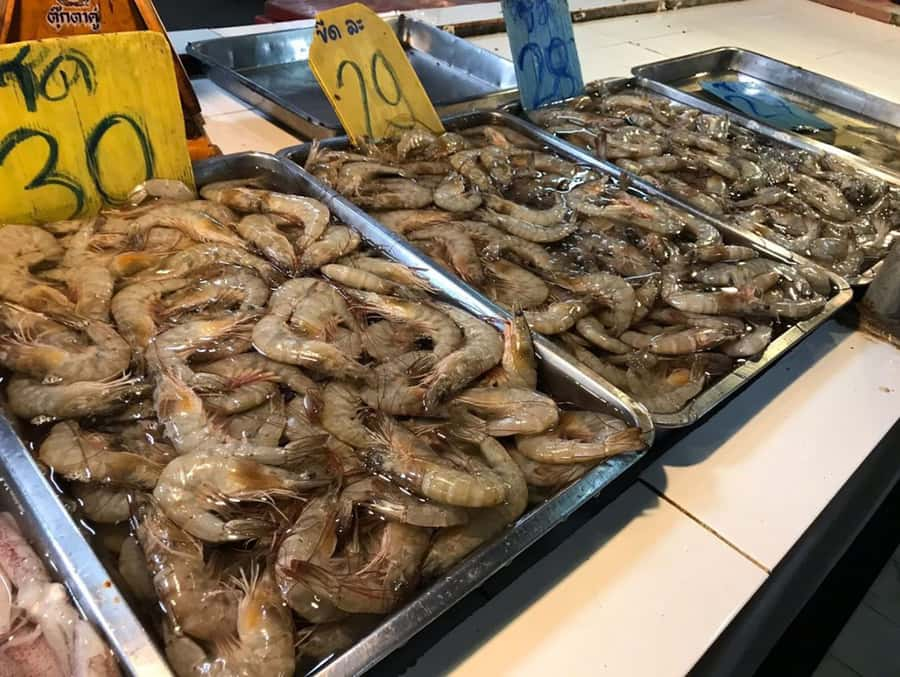
The 30-minute tour is not long enough to cover every corner of a market, but it is enough to put names and uses to ingredients that can seem unfamiliar. You might see the produce planned for your meal, learn which foods grow on Koh Samui, and hear which items need to be brought in from elsewhere.
That context adds value. Thai recipes often rely on a balance of hot, sour, salty, sweet, and creamy flavors. The market visit helps you understand that these flavors come from specific ingredients, not from a generic curry paste poured into a pan.
You should also expect the market to be a working place rather than a polished attraction. The appeal is in seeing where local ingredients are bought and how much fresh food is part of everyday life. If you want a long market walk with time to shop independently, this class will feel brief. If you want a useful introduction before cooking, the timing works well.
More Local and Farmers Market Tours in Thailand
- Phuket: Half Day Easy Thai Cooking Class & Local Market Tour
★ 4.9 · 725 reviews - Chiang Mai: Evening Cooking Class and Local Market Visit
★ 4.9 · 648 reviews - Evening Cooking Class in Organic Farm with Local Market Tour
★ 5.0 · 394 reviews
Choosing three dishes from a broad Thai menu
Before going to the market, you choose three dishes from the available menu. That choice gives the class a more personal feel than a fixed demonstration, and it lets you focus on food you already enjoy or have been hoping to learn.
The choices cover a good spread of Thai cooking:
- Spring rolls
- Tom yum or tom kha
- Som tam or glass noodle salad
- Green, Massaman, or Panang curry
- Pad Thai or pad kee mao
- Fried rice or pad ka pao
- Banana in coconut milk
This range lets you build a meal around different skills. Pad Thai and pad kee mao teach noodle preparation and stir-frying. Curries show how aromatics, coconut milk, and spice work together. Som tam introduces pounding and seasoning, while tom yum and tom kha show two very different approaches to soup.
The dessert, banana in coconut milk, gives the session a simple finish. It also rounds out the lesson by showing that Thai food is not only about chilies and savory sauces.
There is a small point to clarify. The information for the class describes choosing three dishes, while the cooking session is also described as covering four authentic dishes and a dessert. In practice, the menu may produce several dishes for the group, especially when each person or family chooses different items. If you need an exact dish count, confirm it with Oh-Hoo before booking.
A two-hour lesson with room to ask questions
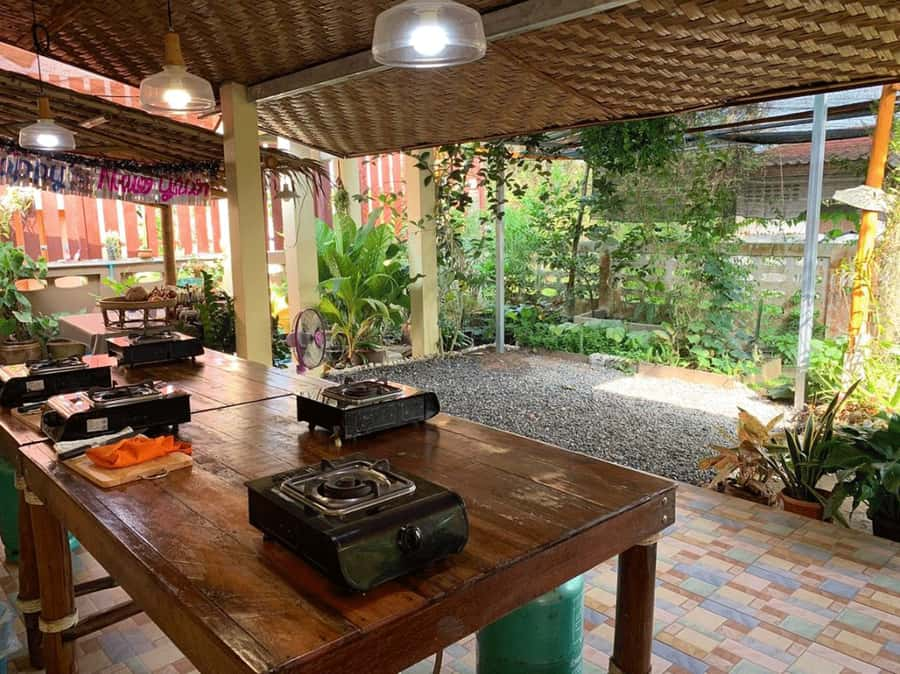
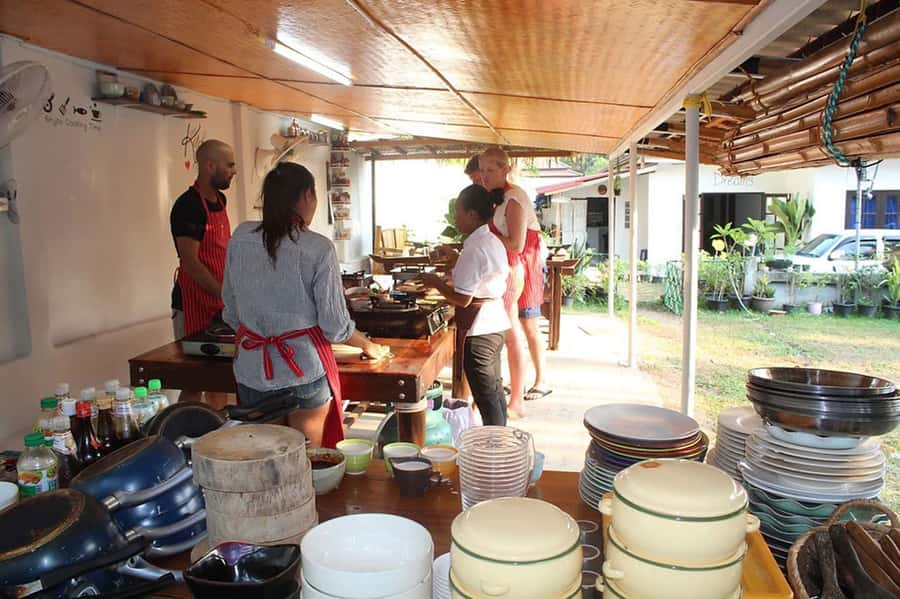
After the market, you return to the cookery school for about two hours of hands-on work. This is not a class where you sit at a counter and watch someone else do everything. You have an individual working space, ingredients, and cooking equipment, then follow the teacher through the preparation.
That arrangement matters. Thai cooking moves quickly, especially when several ingredients need to be chopped, pounded, or added at the right moment. A maximum of six participants gives the teacher time to check your work and help when a sauce needs adjusting.
The class also begins with explanation before practical work. You learn what the main ingredients do and how Thai flavors are built, then put that information into use. One teacher, Jul, was praised for explaining the theory before the practical steps, while June was noted for clear instruction and useful tips.
The teaching style seems friendly and direct. Some sessions have taken place in a covered garden kitchen beside the teacher’s home. That setting can feel more connected to local life than a hotel cooking room, and it may let you see plants growing in the garden. One class included an explanation of health benefits connected with the ingredients and a look at what the teacher grows herself.
You should not expect a formal culinary school with restaurant-level presentation. The strength here is the personal instruction and the chance to cook food you will actually eat. It is a good fit if you want recipes and methods rather than a staged show.
What you will actually learn
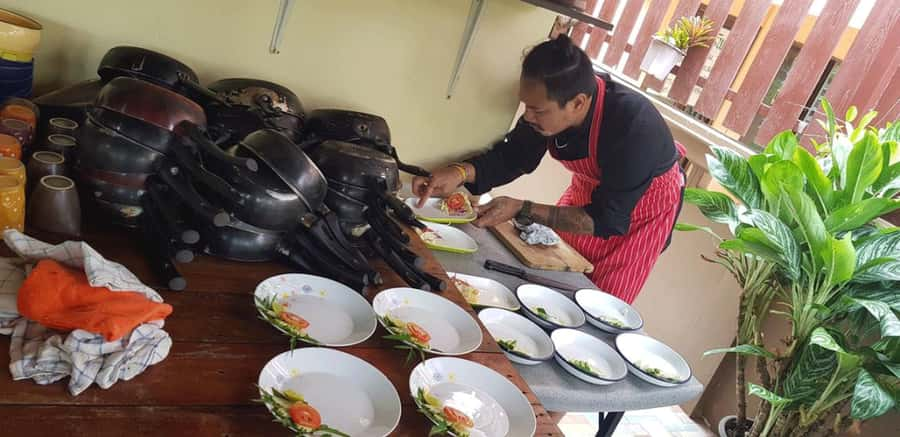
The class gives you more than a list of ingredients. You learn how Thai food gets its character from fresh herbs, spices, sauces, coconut milk, and heat. The exact detail depends on your chosen dishes and the teacher leading your session.
For curry, you may learn how to combine a paste with coconut milk and seasonings so the final dish has balance instead of just heat. For tom yum, the focus is likely to be on the sharp, spicy profile of the soup. Tom kha offers a softer coconut-based style.
Noodle dishes teach timing. Pad Thai and pad kee mao need quick work, so the lesson can show you how ingredients come together in a hot pan without turning soft or dry. With som tam, you get a different kind of preparation, using fresh produce and seasoning to build flavor without a long cooking time.
The menu also gives you a chance to compare dishes. If your group chooses different items, the final meal can include several styles of Thai food. You may cook your own selected dishes while sampling other dishes prepared by the group. This makes the shared meal more varied than a fixed one-dish lesson.
The most useful result is that you can take the methods home. You may not find every Thai ingredient in your local shop, but you will better understand what each ingredient contributes and how to adjust flavors.
More Market and Cooking Class Tours in Thailand
- Chiang Mai: Cooking Class, Market & Thai Herbs Garden Tour
★ 4.9 · 4,824 reviews - Chiang Mai: Authentic Cooking Class with Market & Farm Visit
★ 4.9 · 4,546 reviews - Phuket Thai Cooking Class with Market Tour Option
★ 5.0 · 2,665 reviews - Bangkok: Hands-on Thai Cooking Class and Market Tour
★ 4.9 · 1,614 reviews
Eating the meal you prepared
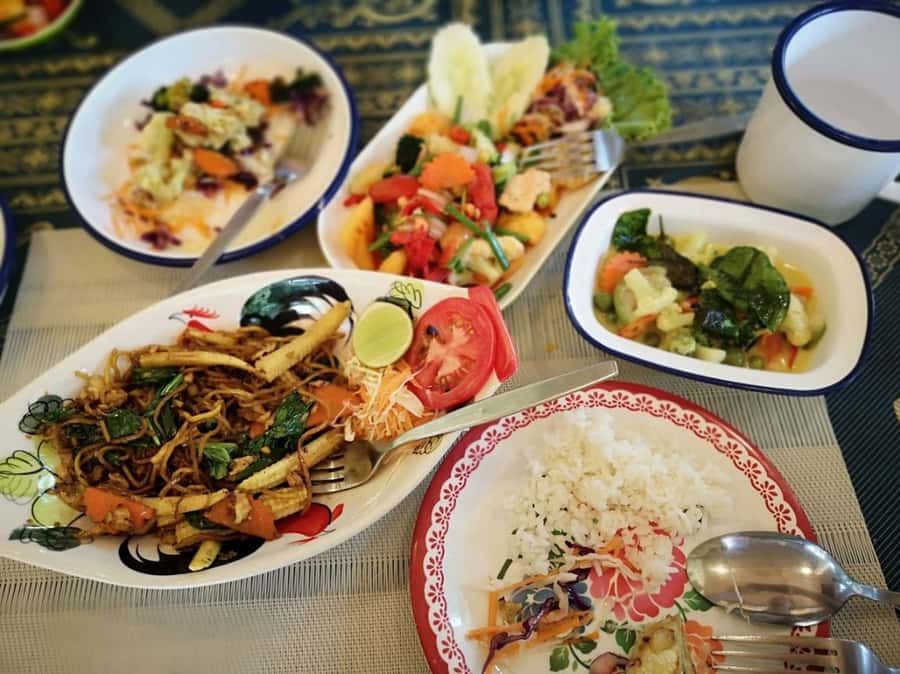
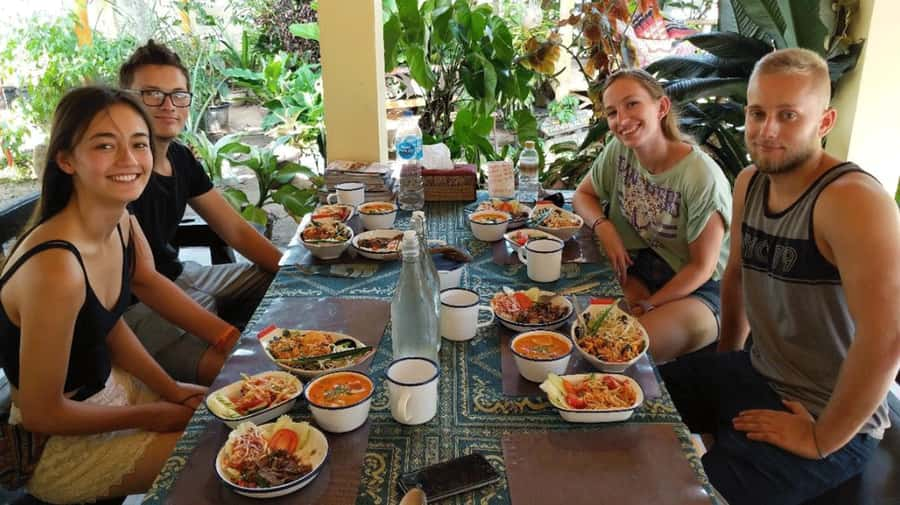
At the end, you sit down and eat the food made during the class. That simple moment is a major part of the value. You are not tasting a chef’s finished plate while trying to remember what happened. You can connect the final flavor to the chopping, mixing, pounding, and seasoning you just did.
The meal may be served in stages as each dish is finished. One session involved several different dishes being prepared at the same time, then tasted between courses. That approach keeps the meal active and gives you a chance to compare the results.
The food has received especially strong praise. Guests have singled out the curry, with one person calling the curry they made the best they had eaten in Thailand so far. Others found every dish delicious and easy to recreate at home.
Keep your expectations realistic. This is not a restaurant meal with a large menu or elaborate plating. You are eating a group of freshly prepared dishes, and the pleasure comes from having made them yourself. For food lovers, couples, and families, that personal connection is worth more than a polished dining room.
An intimate setting for families and couples
The class suits families particularly well. A family of five can take part in the menu choices together, and the small group format means children and adults can stay involved rather than watching from the side. Parents should still decide if the pace and kitchen tasks suit their children, since the class is hands-on and the food can be spicy.
Couples also get plenty from the format. You can choose different dishes, share the work, and compare the results over the final meal. It is a more active choice than another hotel lunch, and the market and garden setting give you topics to talk about beyond the food.
Solo visitors can fit in too. The group limit of six makes it easier to meet other participants without being lost in a large tour. You will have direct access to the teacher, which is helpful if you have never cooked Thai food before.
The class is less suited to someone who wants a quiet food tasting with no participation. You will be expected to choose, prepare, and cook. That is the point of the experience, but it is worth knowing before you book.
Pickup areas, timing, and the price
The listed price is $93 per person for three hours. That is not the cheapest way to eat in Koh Samui, but the fee includes hotel pickup in the covered areas, the market visit, instruction from a certified Thai teacher, ingredients, equipment, your cooking space, and the meal.
I see the price as reasonable if you value personal instruction and want to carry the experience home. A restaurant meal would cost less, but it would not teach you how the dishes were made. A larger cooking class might offer similar recipes, but the limit of six gives this session a more personal feel.
Pickup is available from Bophut, Choeng Mon, Chaweng, and Chaweng Noi, as well as nearby hotels near the main road. If you stay on a hill, you may need to meet the driver at a nearby hotel or agreed meeting point.
The exact pickup time is confirmed by email. Check that message carefully and meet your guide in the hotel lobby at least 10 minutes early. Arriving late can cause you to miss the transfer, especially if the vehicle has already left for the market.
The activity lasts three hours, but the operator asks you to arrive 30 to 50 minutes before the scheduled start. Check the confirmed timing so you know whether that early arrival applies to your pickup or meeting arrangement.
What the strongest feedback tells me
The most consistent praise focuses on the teachers. June, Jun, Jul, and Num are described as warm, clear, and generous with practical advice. The names vary across sessions, so you may not have the same person, but the teaching style appears to be a major strength.
The market tour is another repeated highlight. It adds local context and shows you the ingredients before they reach the kitchen. The home and garden setting also matters, especially for people who want something less polished and more connected to daily life on Koh Samui.
Food hygiene and organization have also been praised. One participant specifically found the class well arranged and appreciated the explanation before practical work. That is important in a compact kitchen, where good timing and clean work areas make the lesson easier to follow.
The only clear limits are the short market visit, the fixed three-hour schedule, and the pickup boundary. You also need to be comfortable with a menu that may change slightly depending on the group and teacher. None of these issues weaken the class, but they help set the right expectations.
Should you book this Koh Samui cooking class?
Book it if you want to do more than eat Thai food. The combination of a local market, a small class, personal instruction, and a meal made by you gives the experience real substance. It is especially good for families, couples, solo food lovers, and anyone who wants recipes to try after returning home.
I would choose this over a large hotel class if you care about local contact and a relaxed home-style setting. I would skip it only if you want a long market tour, a strictly fixed menu, or a purely passive food experience. For most visitors who have three hours to spare, the $93 price buys both a meal and a useful piece of Koh Samui food culture.
FAQ
How long does the Koh Samui cooking class last?
The activity lasts three hours. About 30 minutes is used for the guided local market tour, followed by roughly two hours of cooking and eating.
What dishes can I choose?
Options include spring rolls, tom yum, tom kha, som tam, glass noodle salad, green curry, Massaman curry, Panang curry, pad Thai, pad kee mao, fried rice, pad ka pao, and banana in coconut milk.
How many people are in the class?
The class is limited to six participants. Individual working spaces are provided.
Is hotel pickup included?
Yes. Free pickup is included from hotels in Bophut, Choeng Mon, Chaweng, and Chaweng Noi near the main road.
What if I am staying on a hill?
If your hotel is on a hill, you must go to a nearby hotel or meeting point for pickup. The operator confirms the exact arrangement by email.
Is the class taught in English?
Yes. The listed tour language is English.
Can I cancel for a full refund?
Yes. You can cancel up to 24 hours in advance for a full refund. You can also reserve now and pay later.
New market tours around Thailand
- Longtail Boat Adventure to the Local Weekend Floating Market★ 5.0 · 12 reviews
- Sathon: Hands-on Thai Cooking Class & Market Tour in Bangkok★ 5.0 · 19 reviews
- Private Unseen Mangrove Forest and Floating & Railway Market★ 5.0 · 2 reviews
- Private Tour from Bangkok: Railway & Floating Markets★ 4.9 · 11 reviews
- From Bangkok: Floating Market & Ayutthaya Private Day Trip★ 5.0 · 42 reviews
- Private Floating & Train Market + DRAGON Temple + Thai Cafe★ 4.9 · 13 reviews
- Phuket: Thai Cooking Class with Market Tour★ 5.0 · 2 reviews
- Phuket: Sunset View and Seafood Market Dinner Guided Tour★ 5.0 · 4 reviews
Thailand Market Tours, side by side.

Bangkok: Damnoen Saduak Market and Maeklong Railway Market
Read our review →
The Old Siam: Damnoen Saduak and Maeklong Railway Market
Read our review →
Bangkok: Train Market & Floating Market with Boat Ride
Read our review →
Chiang Mai: Cooking Class, Market & Thai Herbs Garden Tour
Read our review →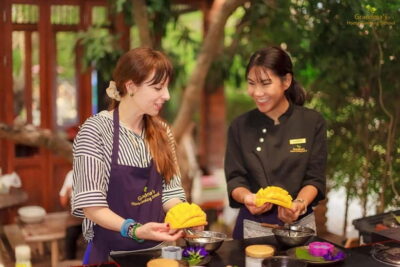
Chiang Mai: Authentic Cooking Class with Market & Farm Visit
Read our review →
Bangkok: Floating Market and Train Market Experience
Read our review →
Half-Day Railway Market and Floating Market Tour in Thailand
Read our review →