Review · HANOI
Hanoi: Cooking Class in a Local Villa with Market Tour
The best part of this Hanoi experience happens before the cooking begins. You walk through a local market, learn what the ingredients are, and help choose the produce that will become your meal. Back at the villa, guides such as Linh, Hazel, Aroma, and Chloe explain the food, share family cooking stories, and get everyone involved.
I like the market-to-table format and the chance to eat what you prepare, rather than watching a chef do all the work. I also like the small-group size, capped at 10, which gives you room to ask questions. The market visit can feel a little short, and at $37 it costs more than many meals in Vietnam, so the value depends on how much you want the cultural lesson and hands-on cooking.
Key points
- The market visit sets the scene: Choose fresh ingredients while learning about daily food shopping in Hanoi.
- The setting is a local villa: This is a cozy home-style kitchen, not a formal cooking school.
- Recipes can include three Vietnamese favorites: Past sessions have featured banana flower salad, fried spring rolls, and bun cha.
- Guides make the difference: Linh, Hazel, Aroma, Chloe, Apple, Wendy, and others lead different sessions in English.
- You eat the meal you make: Mulberry wine, herbal tea, fruit, and sometimes egg coffee round out the meal.
- Pickup keeps the half-day simple: Hotel collection and return are included for hotels in Hanoi’s Old Quarter.
A Hanoi cooking class that begins at the market
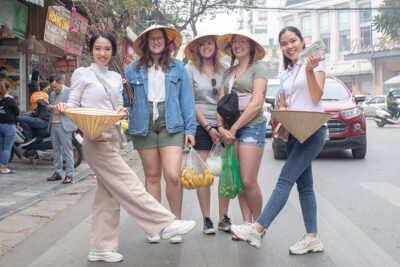
Many cooking classes start with ingredients already measured and waiting on a clean counter. This one starts closer to ordinary Hanoi life. After pickup from your Old Quarter hotel, you visit a local market with your guide and look at the vegetables, herbs, fruit, and other ingredients needed for the meal.
That first stop gives the food some context. You are not simply told that Vietnamese cooking uses fresh produce. You see the shopping process, hear about local food customs, and learn what the ingredients look and smell like before they reach the kitchen.
The market also gives you a useful introduction to daily life outside the main tourist streets. Your guide explains the food culture as you move through the stalls, pointing out produce and describing how certain dishes fit into Vietnamese meals. For many people, this is the part that makes the class feel like a cultural activity rather than a recipe lesson.
Keep your expectations sensible. The market visit is guided and purposeful, not a long free period for browsing. One participant wanted another five to ten minutes to wander, and that is a fair point. You will see the market and help gather ingredients, but this is not a dedicated market tour.
More Market and Cooking Class Tours in Vietnam
- Hanoi Cooking Class: Culture, Local Market & Meaning CSR Impact
★ 5.0 · 5,147 reviews - 5 Traditional Dishes Hanoi Cooking Class with Market Trip
★ 5.0 · 4,890 reviews - Vietnamese Food Cooking Class in Hanoi with Market Experience
★ 5.0 · 778 reviews
Choosing ingredients for the cooking table
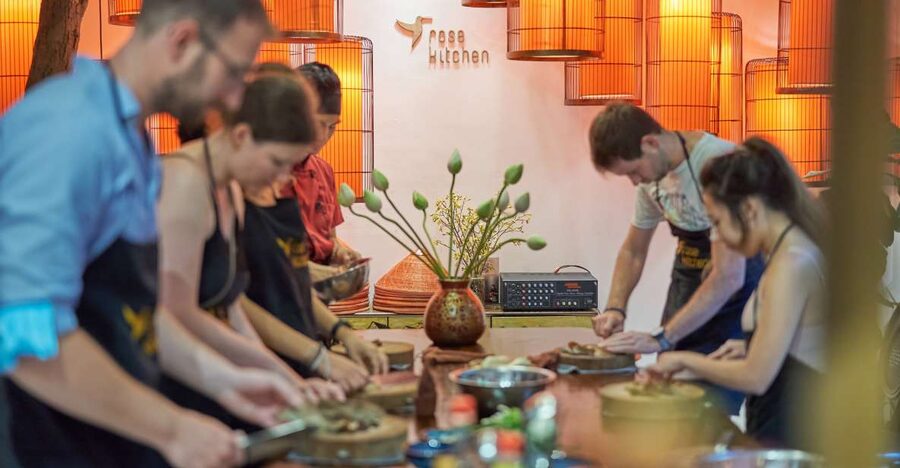
The shopping stop is more useful when you take an active role. You may help select vegetables and other fresh ingredients, then follow the guide’s explanations about what to look for. The information is especially helpful if Vietnamese produce is new to you or if you want to recreate the dishes later.
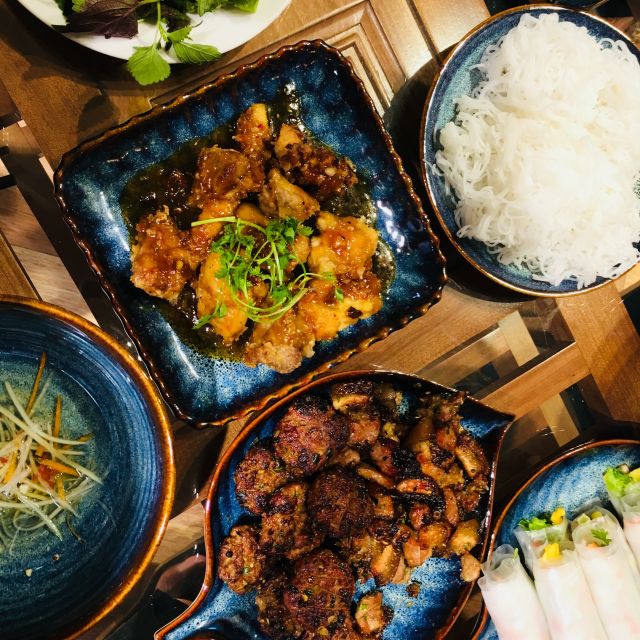
The exact menu can vary, but sessions have included banana flower salad, fried spring rolls, and bun cha. That gives you a good mix of techniques and textures: slicing and mixing for the salad, wrapping and frying for the spring rolls, and preparing the components of a familiar Hanoi dish.
The guides also connect the food to family life. Wendy has explained how her grandmother taught her some of the recipes, while other instructors have shared stories about Vietnamese customs and the meaning behind particular foods. Those details give the cooking a human scale. You are learning how a dish is made, but also why it matters at home.
If you have allergies or special food requests, raise them when booking and again at the start of the class. The activity has accommodated dietary needs in past sessions, but the supplied information does not promise every request can be met.
Cooking in a cozy local villa
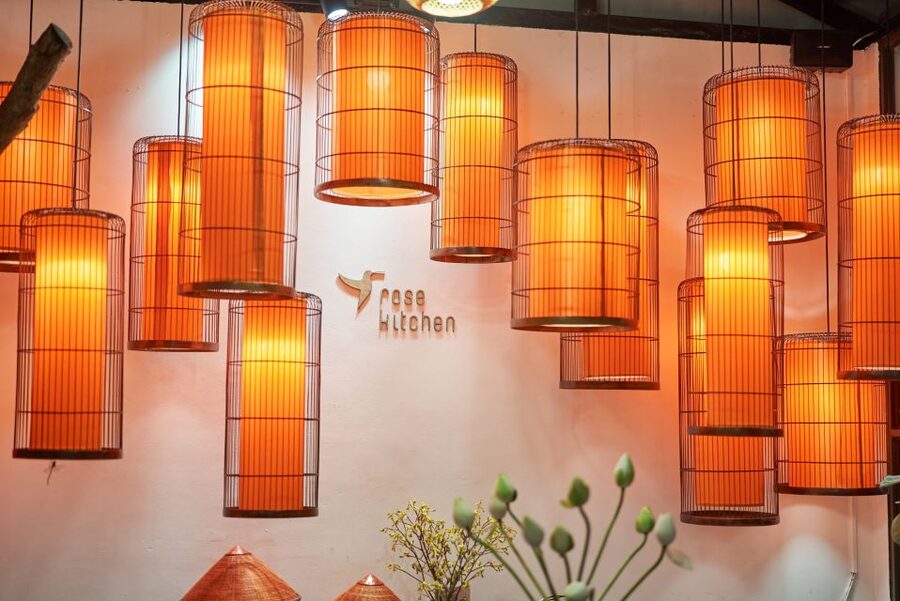
After the market, you head to the local villa for the main lesson. This is not a professional cooking school with rows of identical stations and a formal demonstration kitchen. It is a more relaxed home-style setting, which suits beginners and anyone who prefers a social class.
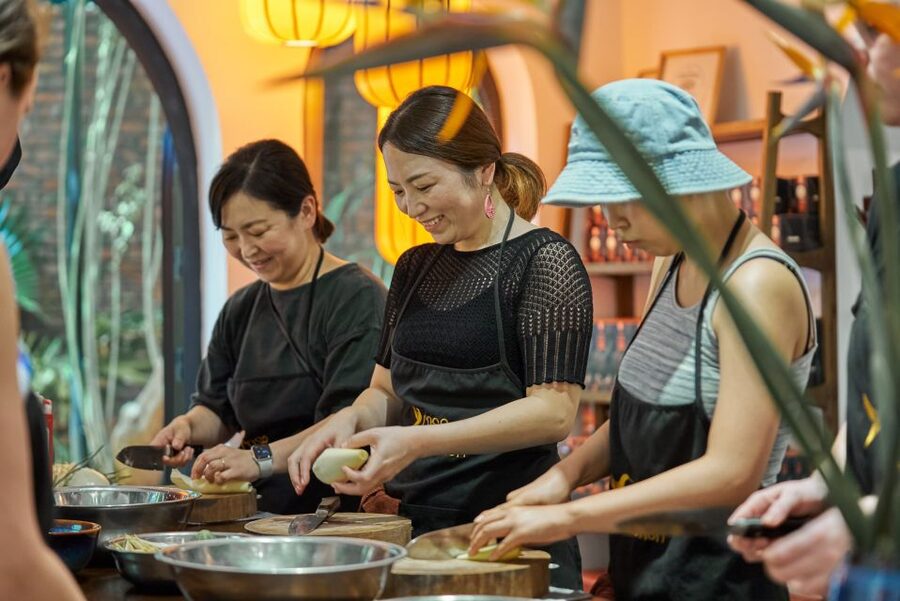
That choice has advantages. The atmosphere feels less like a performance, and the guide can focus on getting you involved. You may chop, mix, wrap, season, and assemble the dishes rather than simply watching from the side. The small group, limited to 10 people, helps the instructor keep an eye on the work.
The class is designed for first-time cooks, so you do not need advanced kitchen skills. Hazel has been praised for giving clear instructions and making sure everyone took part. Chloe has also been noted for explaining the steps carefully and keeping the group involved.
Different instructors lead different departures. Names connected with this experience include Linh, Hazel, Aroma, Chloe, Apple, Wendy, Vanessa, Gracie, and Tung. You should not assume you will meet a particular person unless the booking specifically confirms it, but the repeated pattern is clear: the guide is central to the quality of the afternoon or evening.
English is the teaching language. Guides explain the ingredients, demonstrate the recipes, answer questions, and share stories while you cook. The class has received especially strong praise for clear communication, good humor, and an easygoing manner.
Making spring rolls, bun cha, and local salads
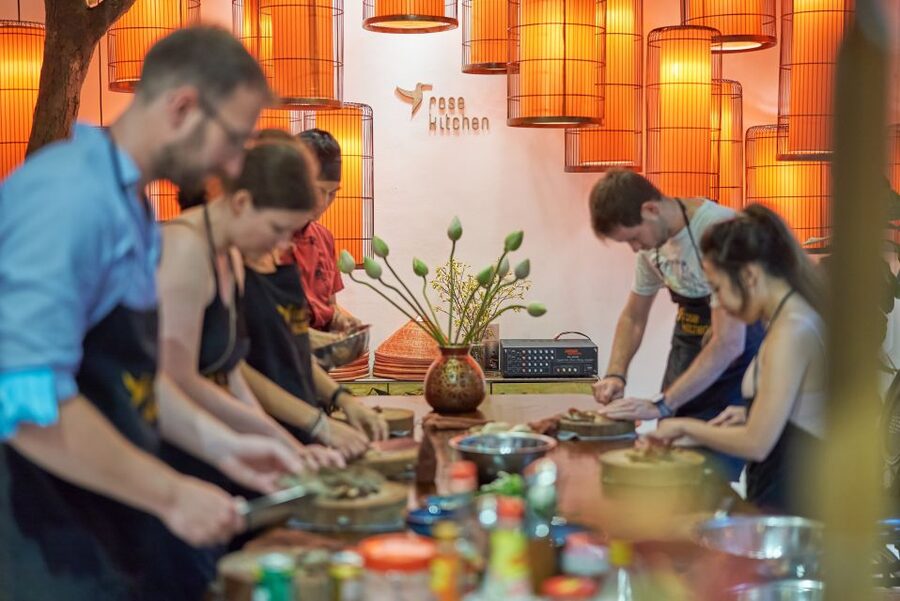
The class works well because the recipes are familiar enough to be approachable but still teach techniques you may not know at home.
Spring rolls give you a hands-on task right away. You learn how to prepare the filling, handle the wrappers, and shape the rolls before they are fried. This is the sort of dish where small practical tips matter, and the instructor can correct your technique before the rolls reach the pan.
Bun cha introduces you to one of Hanoi’s best-known meals. The dish brings together grilled components, noodles, herbs, and dipping flavors. Even if you have already eaten bun cha in a restaurant, making it yourself helps you understand how the elements work together.
Banana flower salad offers something less familiar. It is a useful choice for a cooking class because it introduces a local ingredient that many visitors might otherwise pass without noticing. The combination of preparation and explanation gives you a better chance of recognizing it on another menu.
The menu is not guaranteed to be identical on every session. The information provided names these dishes from individual classes, rather than promising one fixed menu for every date. If a particular recipe matters to you, check the current details before booking.
More Market and Cooking Class Tours in Hanoi:
- Hanoi: 5 Local Dishes Cooking Class with Meal & Market Visit
★ 5.0 · 420 reviews - Hanoi Cooking Class and Market Tour in Ancient House
★ 5.0 · 379 reviews - Rose Kitchen Hanoi: Market, Cooking & Culture Tour + Free PickUp
★ 5.0 · 342 reviews - Hanoi Maya Kitchen: Traditional Cooking Class & Market Tour
★ 5.0 · 287 reviews
Eating what you prepared
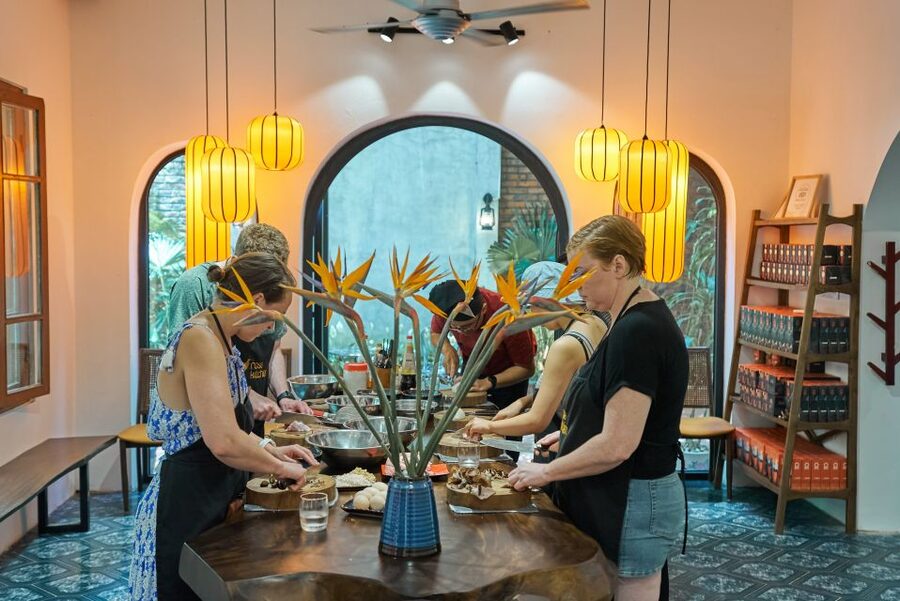
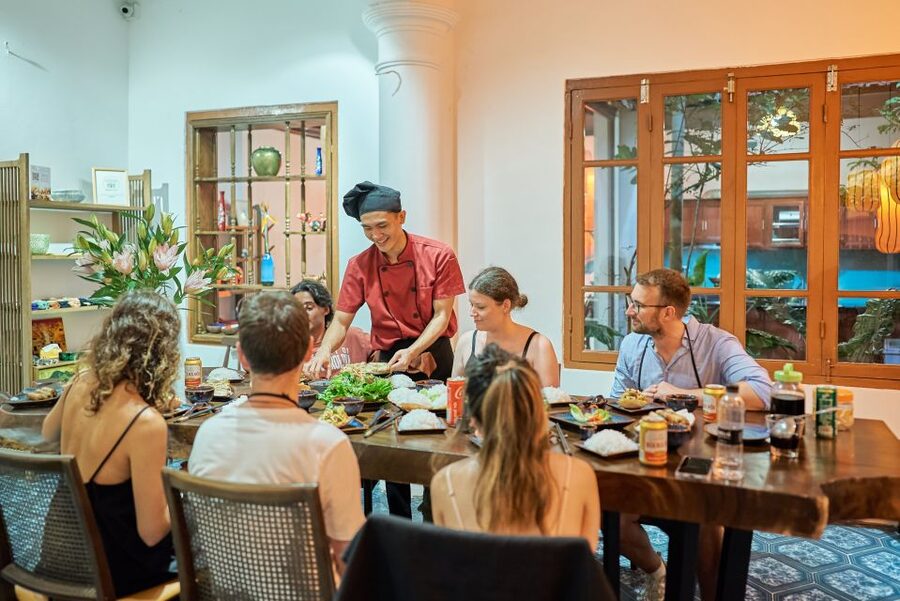
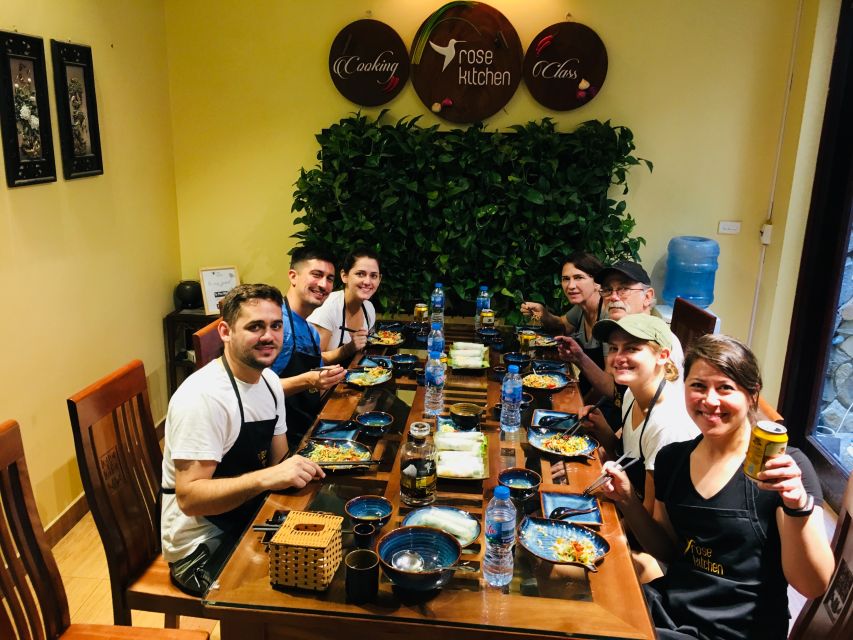
Once the cooking is finished, you sit down and eat the meal together. This is more than a final tasting. It gives you time to compare the dishes, ask follow-up questions, and talk with the guide about life in Vietnam.
The food can feel especially satisfying because you have handled every stage. You know what went into it, you have seen the ingredients at the market, and you have worked through the preparation yourself. That connection is one reason the class can be worth more than the price of an ordinary restaurant meal.
The meal includes mineral water, herbal tea, seasonal fruit, and a welcome drink. Wine tasting is also included, with local wine mentioned in the program and mulberry wine served in at least one session. Additional alcoholic drinks are not included and can be purchased separately.
Some classes have finished with egg coffee. It is a sweet Hanoi specialty with a creamy texture, and it makes a pleasant final taste after the savory food. Egg coffee is not listed as a guaranteed inclusion for every departure, so treat it as a possible extra rather than a promise.
The amount of food appears generous. You are not simply sampling tiny portions after a demonstration. The structure is built around preparing and eating a proper Vietnamese meal, with fruit and drinks afterward.
The guides shape the experience
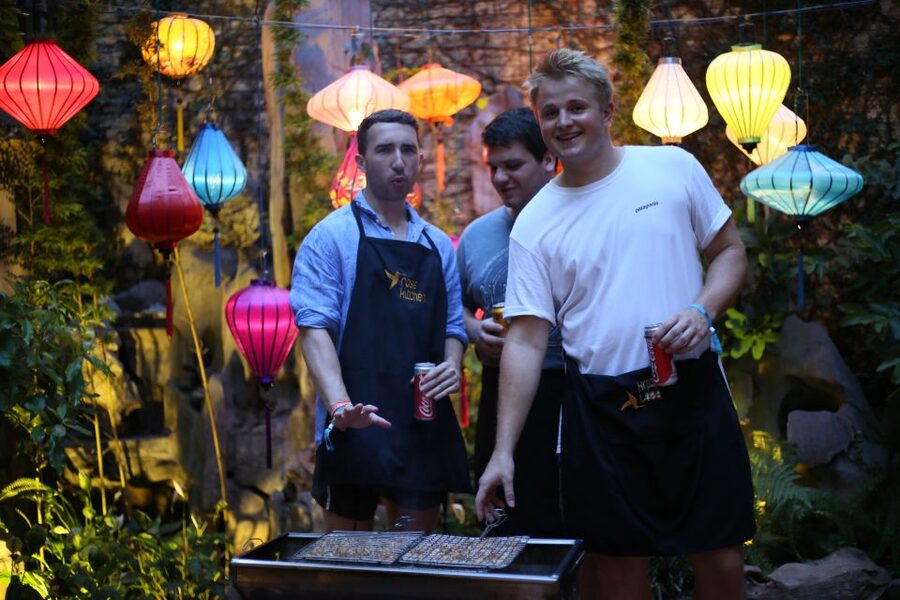
The strongest reason to choose this class is the guide. The recipes matter, but the day depends on how well the instructor handles the market, the cooking pace, and the conversation around the table.
Linh has been praised for combining food instruction with stories and cultural details. Hazel is known for clear English, quick answers, humor, and careful preparation. Aroma has led groups through the market, explained local food culture, and helped prepare dishes in a warm, friendly way.
Chloe has been described as organized and attentive, making sure each person had a role. Apple has been praised for her food knowledge, good English, and relaxed sense of humor. Tung has led sessions that included both well-known spring rolls and less familiar local recipes and drinks.
You may also meet Wendy, Gracie, Vanessa, or another member of the team. Since the guide is assigned by departure, the names above are useful examples of the teaching style, not a guaranteed roster for your date.
This matters if you are choosing between several cooking classes. A recipe sheet alone is not enough. You want someone who can explain what you are doing, keep a mixed group moving, and make room for questions. This activity appears strongest when the instructor treats the class as a shared meal rather than a strict demonstration.
Is $37 good value in Hanoi?
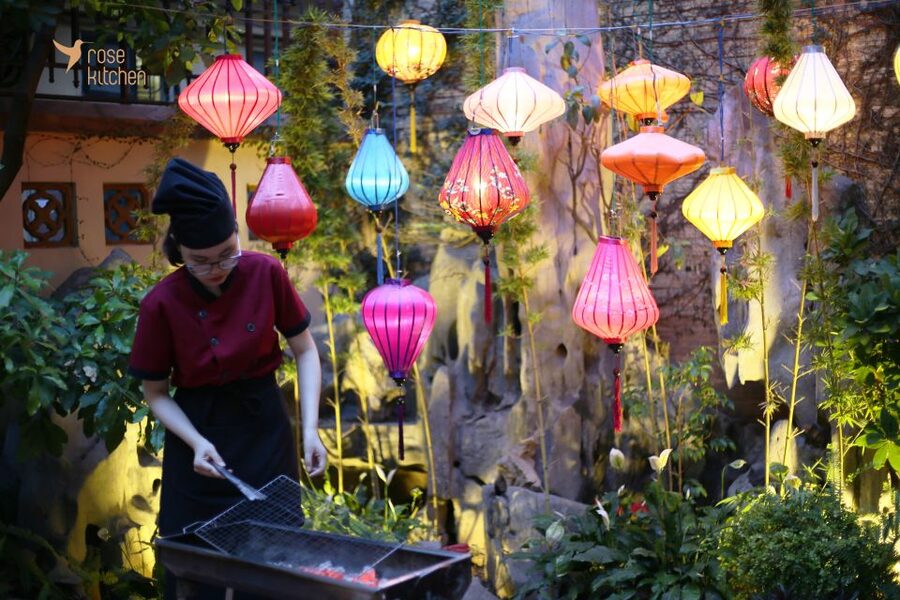
At $37 per person, this is not the cheapest way to eat Vietnamese food. You can find excellent inexpensive meals in Hanoi for far less. If your only goal is a large plate of bun cha, a restaurant will win on price.
The comparison changes when you count what is included. The fee covers Old Quarter pickup and drop-off, an English-speaking guide, the market visit, the cooking lesson, the food you prepare, wine tasting, herbal tea, mineral water, a welcome drink, and seasonal fruit. You are paying for roughly four and a half hours of instruction, transport, food, and conversation.
I see the price as reasonable for someone who wants a structured cultural activity and a practical skill to take home. It is also easier to justify for families, couples, and friends who enjoy doing something together rather than moving from one sightseeing stop to another.
The value is weaker if you dislike group activities, already cook Vietnamese food confidently, or mainly want a quick meal. The class takes about half a day, and the market portion is not long enough to satisfy someone seeking an extended food-market exploration.
Some participants have received recipes afterward, including an electronic book with more than 60 Vietnamese recipes. That material is a useful bonus, but it is not clearly listed as guaranteed for every booking. Ask before you count it as part of the package.
Who will enjoy this class most?
This experience fits first-time visitors who want an easy introduction to Vietnamese food and everyday culture. You get transport from the Old Quarter, a guide in English, and a clear activity from start to finish.
It also suits people who do not think of themselves as cooks. The class is designed for home cooks and beginners, and the instructors focus on participation rather than advanced technique. You can enjoy the market, stories, and meal even if you are not planning to become a serious cook.
Families and friend groups should find the format practical. Several people can share the preparation, and the small group size keeps the session from feeling anonymous. If you are traveling alone, the meal and shared kitchen provide a natural way to meet others, though the activity remains a group experience.
Food lovers will get the most from the market explanations and the chance to make dishes that may be harder to understand from a restaurant menu. You will also appreciate the chance to ask about ingredients and adapt what you learn at home.
This is less suitable if you want a long market walk, a luxury cooking-school setting, or a guaranteed private class. The villa is intentionally local and informal, and the group can include up to 10 participants.
Timing, pickup, and practical details
The total duration is about 4.5 hours, with starting times that vary by availability. Pickup and drop-off are included for hotels in Hanoi’s Old Quarter. If your hotel is outside that area, do not assume transport is included.
The activity is offered in English. The group is capped at 10, which is small enough for personal help but not the same as a private lesson.
Free cancellation is available up to 24 hours before the activity for a full refund. You can also reserve now and pay later, which helps if your Hanoi schedule is still changing.
Wear clothes you are comfortable cooking in. The supplied information does not specify a dress code, but a relaxed outfit makes more sense than clothing you want to keep spotless. Keep your expectations focused on participation, conversation, and food rather than a polished culinary-school production.
Should you book the Rose Kitchen experience?
I would book this class if you want to connect a Hanoi market visit with a meal you help create. The best features are the market-to-kitchen flow, the warm English-speaking guides, the manageable group size, and the chance to eat dishes such as spring rolls, bun cha, and banana flower salad.
I would hesitate only if your main concern is price or if you want a long, leisurely market tour. At $37, you are paying for the full half-day experience, not just dinner. For a first visit to Hanoi, a family activity, or a food-focused day, that added time and personal instruction make the cost easier to defend.
FAQ
How long does the Hanoi cooking class last?
The activity lasts about 4.5 hours. Starting times depend on availability.
What is included in the price?
The price includes hotel pickup and drop-off from Hanoi’s Old Quarter, an English-speaking guide and instructor, the market visit, cooking lesson, wine tasting, herbal tea, mineral water, a welcome drink, and seasonal fruit.
Is hotel pickup included?
Yes, free pickup and drop-off are included for hotels in Hanoi’s Old Quarter.
How many people are in the group?
The activity is a small-group experience limited to 10 participants.
What language is the class taught in?
The instructor and guide provide the experience in English.
Does the class take place in a professional cooking school?
No. The activity takes place in a cozy local villa kitchen rather than a professional cooking school.
Can I cancel the booking for a refund?
Yes. You can cancel up to 24 hours in advance for a full refund. You can also reserve now and pay later.
New market tours around Hanoi
- Hanoi: Vietnamese Cooking Class- Market Tour with Local Chef★ 5.0 · 2 reviews
- Hanoi’s Culinary: Authentic Cooking Class and Local Market★ 4.8 · 5 reviews
- Hanoi: Old Quarter Market Tour and Cooking Class with Meal★ 4.8 · 192 reviews
- Hanoi Food Adventure: Vietnamese Market Tour & Cooking Class★ 4.8 · 5 reviews
- Hanoi Cooking Class: Market Tour, Free Recipe & Beverages★ 5.0 · 10 reviews
- 2 Day Sapa-Bac Ha Market: Night Train& Homestay-Bus Ha Giang★ 5.0 · 2 reviews
- Weekend Hanoi Night Market & Street Food Tour★ 4.5 · 47 reviews
- Hanoi: Maya Traditional Cooking Class & Market Tour★ 4.9 · 243 reviews
Hanoi Market Tours, side by side.
Hanoi Cooking Class: Culture, Local Market & Meaning CSR Impact
Read our review →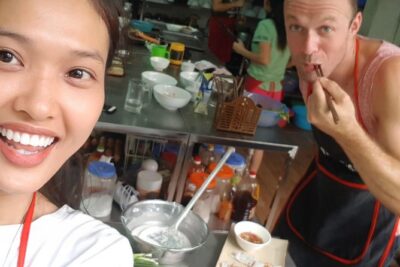
5 Traditional Dishes Hanoi Cooking Class with Market Trip
Read our review →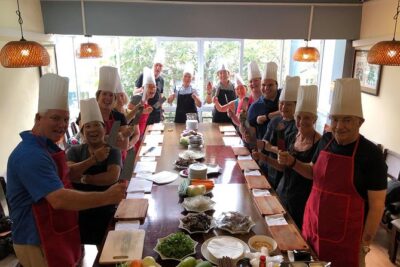
Vietnamese Food Cooking Class in Hanoi with Market Experience
Read our review →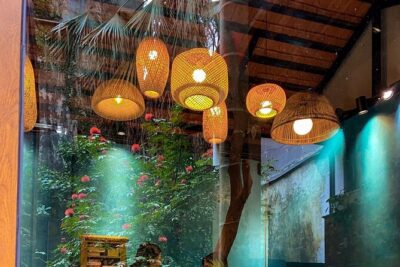
Hanoi: Handcrafted Wood Carving Workshop with Local Artisan
Read our review →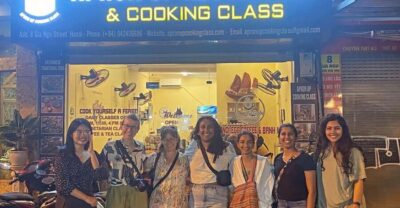
Hanoi: 5 Local Dishes Cooking Class with Meal & Market Visit
Read our review →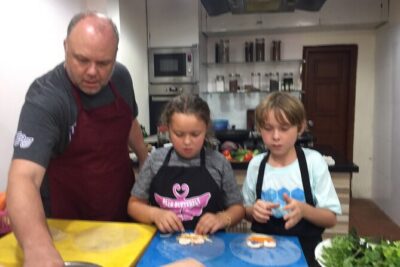
Hanoi Cooking Class and Market Tour in Ancient House
Read our review →
Rose Kitchen Hanoi: Market, Cooking & Culture Tour + Free PickUp
Read our review →