Review · PALERMO
Palermo: Street Food and Local Market Tasting Tour
Palermo’s street food is not shy. This three-hour walk takes you from the Teatro Massimo to the Capo and Vucciria markets for arancina, chickpea fritters, thick pizza, spleen sandwich, local meats, cheese, olives, and dessert. The food is the main event, but guides such as Angelo, Simona, Vinz, and Salvo also explain how Palermo’s past still shapes its plates.
I like the full-meal portions and the way the tour uses real neighborhood food stops instead of polished tourist restaurants. I also like the small group, capped at 12, which makes it easier to ask questions and chat with vendors. The main drawback is clear: this is a fried, fatty, carb-heavy food crawl with little sitting, so it is not a good match for vegans, people with serious food restrictions, or anyone who struggles with long walks.
Key points at a glance
- The arancina stop is the food centerpiece: You taste the original recipe at a place described as the only secret spot in town making it.
- Two major markets shape the walk: Capo and Vucciria provide the setting for food, local characters, and talk about Palermo life.
- The tastings replace a meal: Expect several savory dishes, three drinks, and a seasonal dessert rather than small sample bites.
- Sicilian specialties get adventurous: Pani ca’ meusa, sheep intestines, and other meat dishes may appear alongside more familiar fried foods.
- Guides bring the city to life: Angelo, Simona, Vinz, Salvo, Alessandra, and other local guides are praised for humor, warmth, and strong food knowledge.
- Come prepared: Wear comfortable shoes, bring water and a sun hat, and tell the operator about dietary needs when booking.
Starting between Palermo’s bronze lions
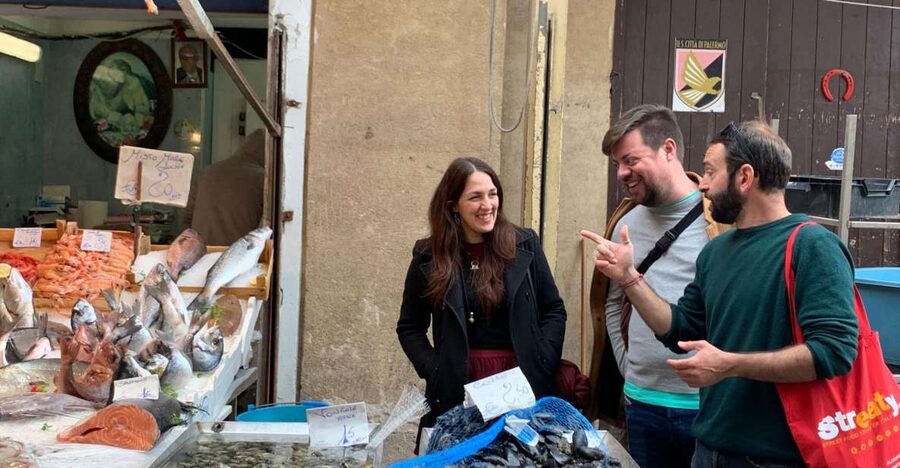
The meeting point is easy to find at the main gate of Teatro Massimo, Palermo’s grand opera house. Look for the guide between the two bronze lions, carrying a red umbrella and a red Streaty bag.
That clear landmark matters in central Palermo, where side streets and busy squares can make a meeting point vague. I would still arrive a few minutes early. The tour starts on foot, and there is no hotel pickup or drop-off.
The group limit is 12 people. That is a sensible size for market lanes and small food counters. A group much larger than this would make it harder to hear the guide, keep together, or find room at each stop.
The walk lasts about three hours and is conducted in English. It is not a formal restaurant meal with a long seated course structure. You move from place to place, eat at stops, walk through markets, and pause for stories about food, customs, history, and present-day Palermo.
More Local and Farmers Market Tours in Italy
- Cooking Class and Lunch at a Tuscan Farmhouse with Local Market Tour from Florence
★ 5.0 · 4,831 reviews - Pasta and Tiramisu Cooking Class with optional Local Market Tour
★ 5.0 · 515 reviews - Florence: Cooking Class at a Tuscan Farm & Local Market Tour
★ 4.9 · 354 reviews
Arancina first, then the food gets bolder
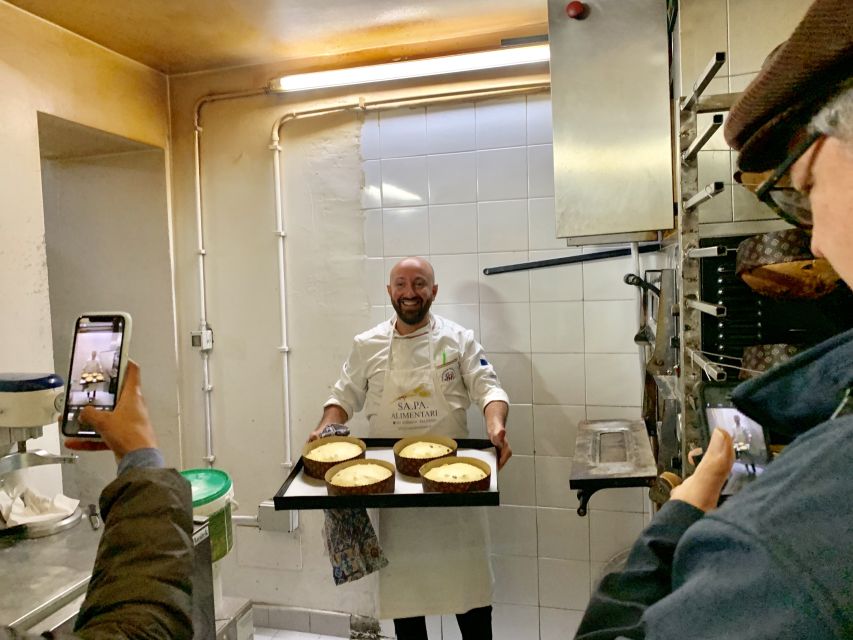
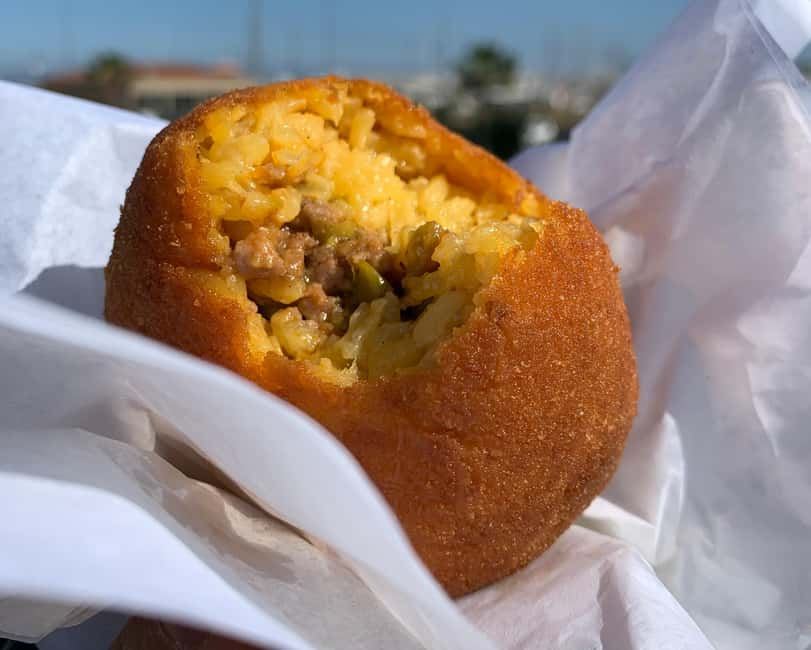
The promised arancina is one of the strongest reasons to book this tour. Palermo’s arancina is a golden fried rice ball, usually filled and shaped into a round or pointed form depending on local tradition. Here, the focus is an original recipe served at a place known for making it the old-fashioned way.
For you, the value is not just the taste. A local guide can explain why this simple rice snack matters in Sicily, how it fits into daily life, and why the food is sold as street fare rather than treated like a special restaurant course.
The rest of the menu moves through Palermo’s working-class food traditions. Panelle are chickpea fritters with a crisp outside and soft center. Cazzilli are potato croquettes. Sfincione is Palermo’s thick, soft local pizza, usually more substantial than the thin slices many people associate with Italian pizza.
These are filling foods. You do not need to approach each one as a full portion. If you want to try everything, take smaller bites and pace yourself. The tour is designed to provide enough food for a full meal, and the repeated warning to arrive hungry is worth taking seriously.
Capo Market reveals Palermo’s everyday side
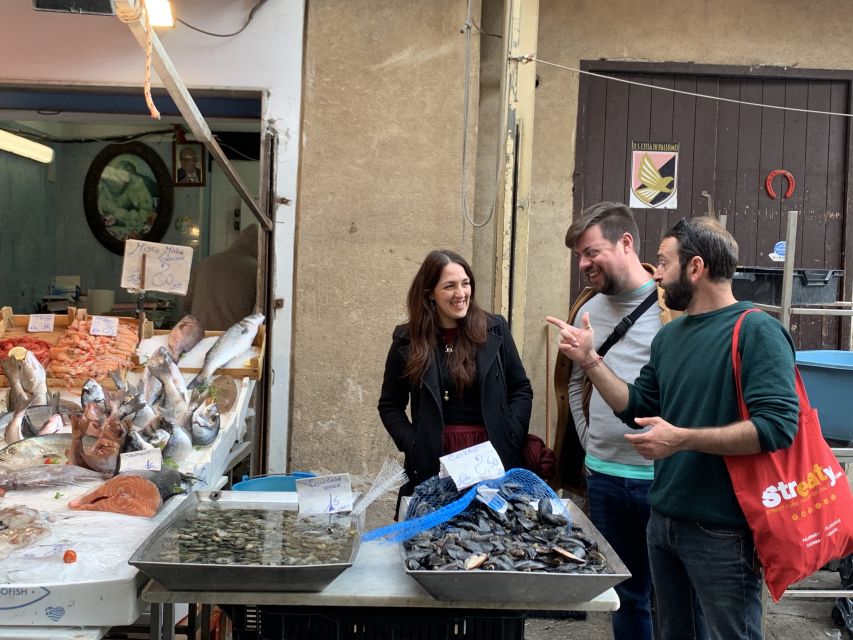
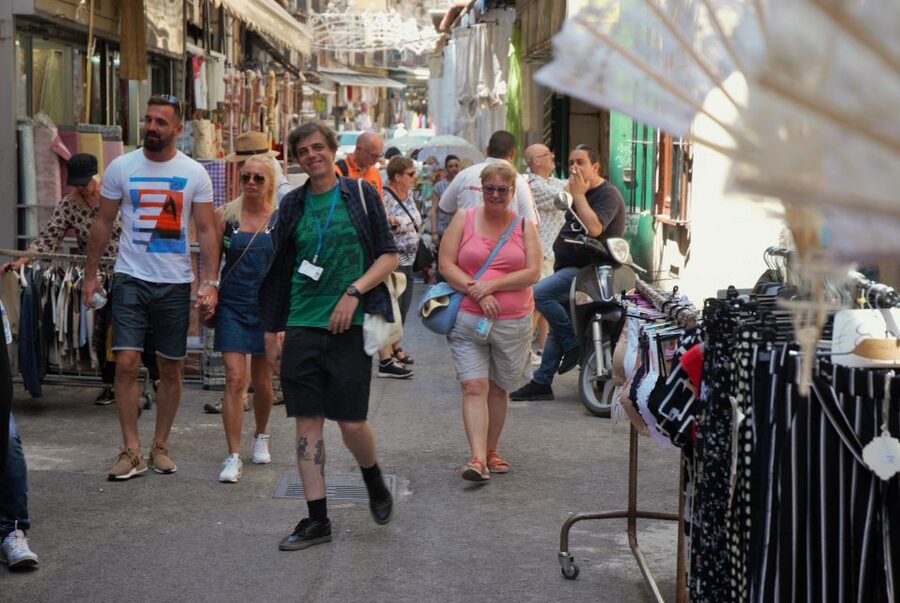
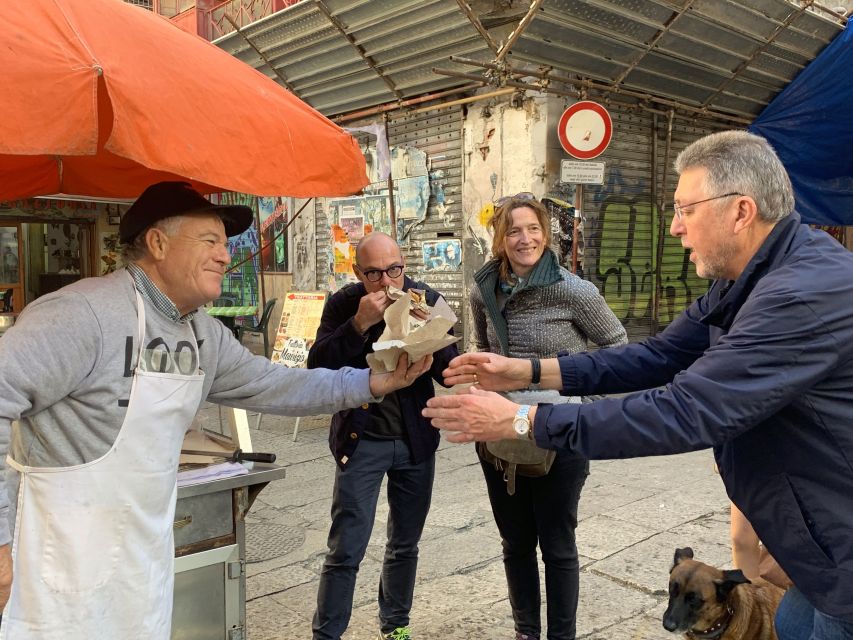
The Capo market is one of the key settings for the walk. You move through stalls and backstreets while the guide explains ingredients, cooking habits, and the way food fits into local routines.
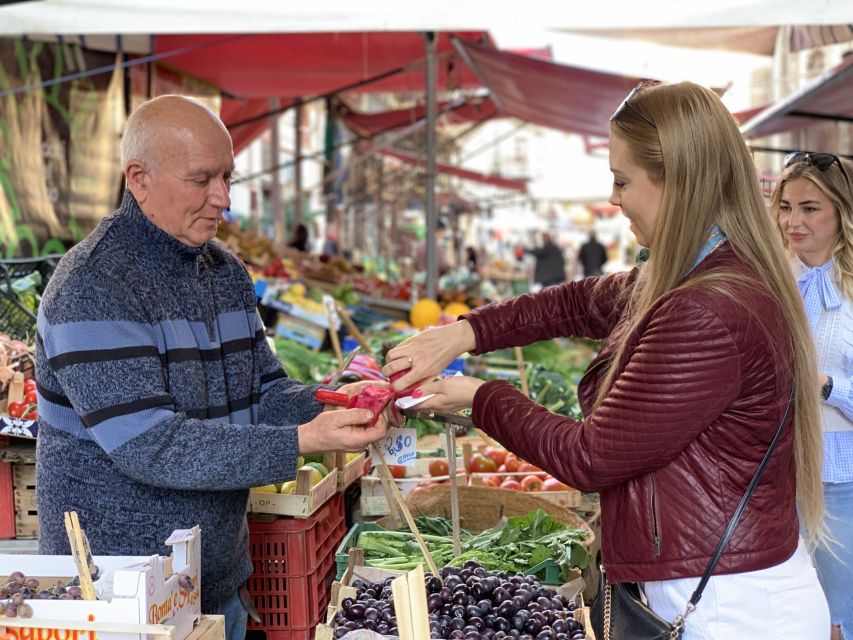
The useful part is the connection between what you see and what you eat. Instead of hearing a general lecture about Sicilian cuisine, you can look at produce, meat, cheese, olives, and prepared foods in the places where local shopping happens.
The market also gives the guide a chance to discuss Palermo beyond food. The tour covers customs, language, social life, controversial topics, and changes in the city. One guide, described as a former restaurant server, was especially appreciated for explaining both ingredients and cooking methods. That sort of background can make a fried snack or sandwich easier to understand.
You should not expect a slow shopping excursion. One person felt the time in the actual markets was a little rushed, while others liked the pace. That is a fair trade-off: the tour needs to cover several tastings in three hours, so market observation shares time with eating and walking.
Vucciria and the old bar stop
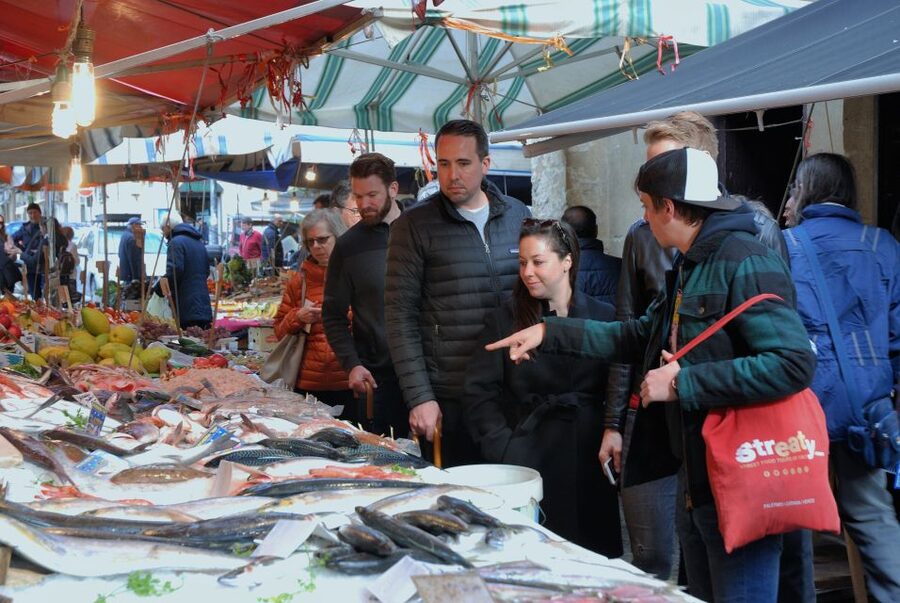
The walk also reaches Vucciria, one of central Palermo’s best-known market areas. The food stops and narrow lanes help you see a side of the city that can be easy to miss if you stay only on the main sightseeing route.
A memorable feature is a stop at one of the oldest working-class bars downtown. You share a drink with local people rather than simply passing through with a camera. This is a small detail, but it gives the tour a social quality that a standard market visit lacks.
Three drinks are included. Beer is the local pairing with street food, according to the tour’s food philosophy, and Sicilian beer is offered. Wine is available as an alternative at one stop. If you prefer wine, say so clearly to the guide, but know that beer is the more traditional choice for this particular experience.
The drink stops also help break up the food. Even so, there are few chances to sit, and the streets can be tiring in warm weather. Bring water, wear shoes suited to uneven city walking, and use a sun hat during the hotter part of the day.
More Market Food Tours in Italy
- Small Group Cooking Class & Market Food Tour in Florence
★ 5.0 · 1,574 reviews - Bologna Food & Market Tour with 6 Tastings, Pasta, Wines & More
★ 5.0 · 1,328 reviews - Venice Street Food Tour with Local Guide with Local Food Market Visit
★ 5.0 · 822 reviews - Roman Food Tour with Visit to the Trionfale Food Market
★ 5.0 · 471 reviews
Pani ca’ meusa is not a timid sandwich
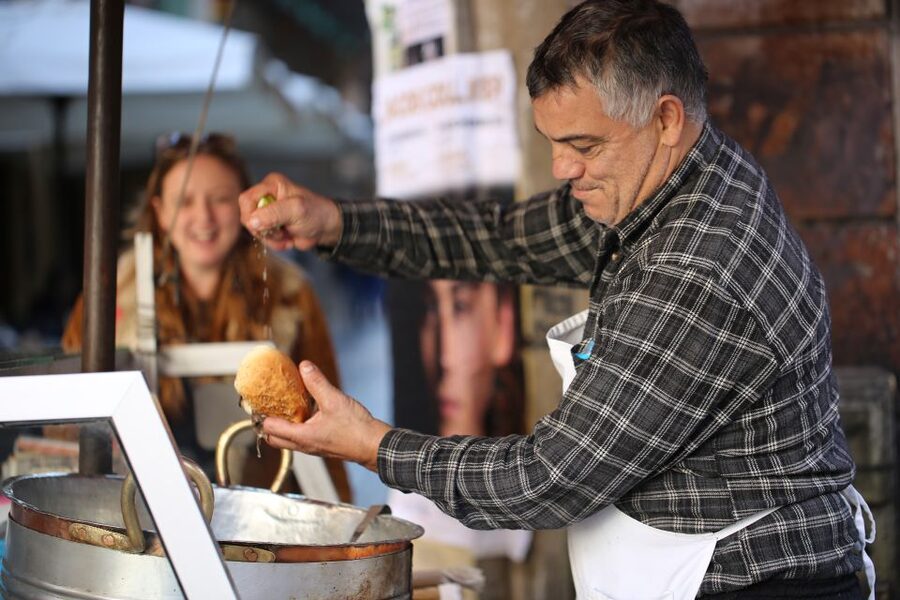
The most adventurous tasting is likely pani ca’ meusa, Palermo’s famous spleen sandwich. It is made with cooked spleen and is closely tied to the city’s working-class food culture.
Some people will find it surprisingly tasty. Others may prefer to take only a small bite. That is exactly where a food tour can help: you can try a dish with context and support, rather than ordering an unfamiliar sandwich on your own and wondering what you have been served.
The menu may also include mangia e bevi, cheese, olives, and meat dishes such as sheep intestines. One person would have preferred a cappuccino and pastry instead of the more unusual meats. That is an important warning for cautious eaters. This is not a gentle introduction built around pizza, gelato, and pastries.
At the same time, the tour does not consist only of challenging dishes. Arancina, panelle, cazzilli, sfincione, cheese, olives, and dessert provide plenty of familiar entry points. You can be selective, but you should expect the guide to encourage you to try at least a bite of everything.
Sunday and seasonal foods can change the menu
The exact food selection is not fixed in every detail. On Sundays, you may receive different specialties, including a crostino with béchamel and ham or a ravazzata filled with ragù.
Seasonal celebrations can also affect the food. A November 2 tour included dishes made only once a year. That is a real advantage if your timing happens to coincide with a local holiday or seasonal tradition, though it also means you should not expect every departure to have the identical menu.
The final course is a seasonal dessert. It may be cannolo, gelato, or another sweet that locals enjoy at that time of year. This gives the walk a proper finish and provides a welcome change after so much fried and savory food.
I like this flexible approach more than a rigid menu. It reflects real food culture, where availability and religious or seasonal customs matter. The trade-off is that you cannot plan around one exact dish beyond the advertised specialties.
History comes through food, not just monuments
The tour is also a walking lesson in Palermo. Guides explain how the city’s history, outside influences, traditions, and social changes appear in its food.
That can mean discussing why certain ingredients became common, how working-class dishes developed, or how market life connects with modern Palermo. One guide was especially praised for explaining the end of the Mafia and the changes taking place in the city. This kind of conversation gives the walk more weight than a sequence of tastings.
I would book this early in a Palermo visit. You get a basic map of the center, learn which foods to seek out later, and collect practical suggestions from someone who lives in the city. Guides such as Angelo, Vinz, Simona, Alessandra, Salvo, and Raffa are repeatedly described as warm, funny, and engaging, but the exact guide depends on the departure.
The best guides make the history easy to follow while keeping the group moving. That balance matters because food tours can become either a lecture with snacks or a rushed eating contest. This one aims for both food and local context.
Is $81 a fair price?
At $81 per person, the tour is not the cheapest way to eat in Palermo. You could buy individual street foods for less if you already knew where to go and were comfortable ordering in Italian.
The price makes more sense when you count the full package: three hours with a local guide, multiple tastings, three drinks, a dessert, access to small local stops, and a walking introduction to two markets. The food is intended to replace lunch or dinner, not merely provide two or three nibbles.
I see the strongest value for a first visit. You are paying to avoid guesswork, learn what you are eating, and reach places you might not identify on your own. If you are already an experienced Palermo eater and know the markets well, the price may feel less necessary.
The small group also adds value. A limit of 12 keeps the experience more personal and allows direct questions. You are not paying for a private tour, but you get more contact with the guide than on a large coach-style outing.
Dietary needs require a careful decision
Traditional Palermo street food is mostly fried or baked, heavy on carbohydrates, and often made with meat. The tour specifically says it is not suitable for vegans.
Vegetarians and pescatarians can receive alternatives if they inform the operator at booking. The food description says traditional street food on this tour does not contain fish or seafood, but that does not make the menu broadly suitable for every diet.
Gluten and lactose alternatives may be available if requested in advance. At the same time, the activity information lists gluten and lactose intolerance among conditions for which the tour is not suitable. If you have a serious allergy or need strict separation, I would treat this as a potential mismatch and ask the provider before paying.
The same applies to anyone who dislikes meat or offal. You can skip a particular tasting, but the tour’s purpose is to present local food as it is eaten, including the less familiar dishes.
Who will enjoy this three-hour walk?
I would recommend it to you if you:
- Want a full meal made from Palermo street food
- Like trying foods outside your comfort zone
- Prefer local markets and working-class food stops to formal dining rooms
- Want history and city life explained along the way
- Are comfortable walking for three hours with limited sitting
- Are visiting Palermo for the first time
- Want practical food suggestions for the rest of your stay
I would think twice if you want a quiet, seated tasting, a pastry-focused food tour, or a precise menu. The pace can feel quick in the markets, and the food is deliberately rich, fried, and meat-heavy.
The tour can work during a cruise stop because it stays in central Palermo and lasts three hours, but you should allow enough time to return to your ship. No transportation is included, so you are responsible for getting to the Teatro Massimo and back.
Booking advice and final verdict
Book this tour if you want Palermo explained through what people eat every day. The arancina, pani ca’ meusa, panelle, cazzilli, sfincione, market lanes, old bar, and seasonal dessert create a broad introduction in a short time.
I especially like that the experience does not soften the city’s food traditions for visitors. You can try the familiar dishes, then decide how far you want to go with spleen, intestines, and other meat specialties. Just arrive hungry, pace yourself, and tell the operator about dietary needs before the tour.
At $81, I think it is good value for a first visit, particularly because the food replaces a full meal and the guide adds substantial local context. Skip it if you are vegan, need strict dietary control, dislike fried food, or have mobility problems. For everyone else, this is a lively and practical way to get your bearings in Palermo through its markets, its people, and its unapologetically hearty food.
FAQ
Where does the Palermo street food tour meet?
Meet at the main gate of Teatro Massimo, between the two bronze lions. The guide will carry a red umbrella and a red bag with the Streaty logo.
How long does the tour last?
The walking tour lasts about three hours. Starting times vary, so check availability when booking.
Which markets are included?
The route explores Palermo’s Capo and Vucciria markets, along with central backstreets and local food stops.
What food is included?
Tastings can include arancina, panelle, cazzilli, sfincione, mangia e bevi, cheese, olives, pani ca’ meusa, and a seasonal dessert such as cannolo or gelato. Sunday menus may include different specialties.
Are drinks included?
Yes. Three drinks are included, usually Sicilian beer, with wine offered as an alternative at one stop.
Can vegetarians or pescatarians join?
Alternatives can be provided for vegetarians and pescatarians, but you must inform the activity provider when booking.
Is the tour suitable for wheelchair users or people with walking difficulties?
No. The tour is not wheelchair accessible, is not suited to people with mobility impairments, and includes limited opportunities to sit.
New market tours around Italy
- Taormina: Sicilian Cooking Class & Market Tour★ 4.9 · 212 reviews
- Florence: Markets and Food Tasting Tour★ 5.0 · 2 reviews
- Taormina: Sicilian Cooking Class w/ a Visit to Local Market★ 4.9 · 76 reviews
- From Taormina: Syracuse Tour with lunch in Food Market★ 4.9 · 12 reviews
- Syracuse: Traditional Cooking Class & Ancient Market Visit★ 4.9 · 72 reviews
- Spoleto: Market Tour and Meal at a Local’s Home★ 5.0 · 2 reviews
- Sorrento: Markets and Cooking Class at a Cesarina’s Home★ 3.7 · 3 reviews
- Taormina Half-Day Sicilian Cooking Class & Market Tour★ 5.0 · 82 reviews
Palermo Market Tours, side by side.
Palermo: Walking Tour of Historic Markets and Monuments
Read our review →
Discover Palermo in 3 hours. Art, history, markets and street food
Read our review →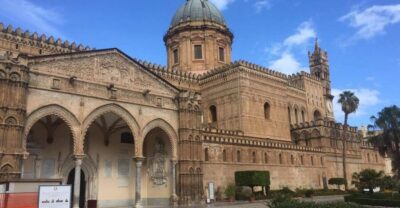
Palermo: Markets and Monuments City Center Walking Tour
Read our review →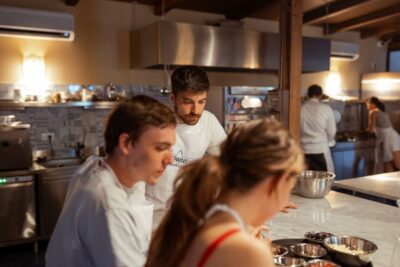
Palermo: Market Tour and Sicilian Cooking Class with Lunch
Read our review →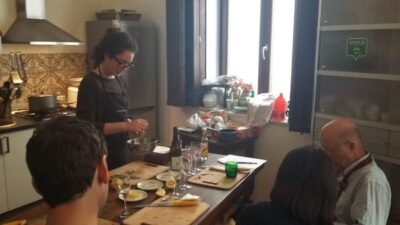
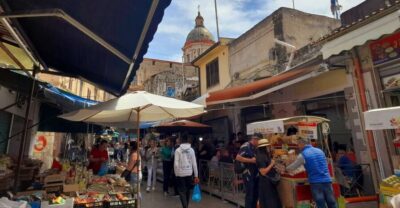
Palermo: Street Food Tour in Ballarò and Vucciria Markets
Read our review →
Palermo: Shopping at Capo Market and Sicilian Cooking Class
Read our review →