
Review · ITALY
Syracuse: Traditional Cooking Class & Ancient Market Visit
Syracuse’s best food lesson begins before you reach the stove. Chef Ettore takes you through Ortigia’s ancient market, where fishmongers, produce sellers, and familiar stallholders help shape the meal. You taste a few local products, choose what looks best, then cook and eat it together.
I like two things here. First, the menu is not locked into one tourist-friendly recipe: it can change with the market and your preferences. Second, the class feels personal, with a maximum of eight participants and a chef who knows the vendors by name. The main drawback is that the market is closed on Sundays, and the meeting point at Bar Cristina can be vague in a busy square.
Key points to know before booking
- Market-led menu: You help select the ingredients, so the meal can include seafood, pistachio pesto, fresh pasta, tuna, arancini, or other Sicilian dishes.
- Chef Ettore’s personal touch: Ettore is the chef most closely associated with this experience and has worked as a pasta chef in a two-Michelin-starred restaurant.
- Four hours from market to lunch: Allow enough time for the market walk, cooking, and a generous meal.
- Small group setting: The class is limited to eight people, which gives you more time at the counter and with the chef.
- Sunday limitation: Ortigia Market is closed on Sundays. On that day, the chef instead takes you through the island streets to buy local products.
- Meeting point detail: Start at Bar Cristina, Piazza Pancali 24. Look for the chef rather than assuming the bar staff will organize the introduction.
Why the market is the real beginning of the class
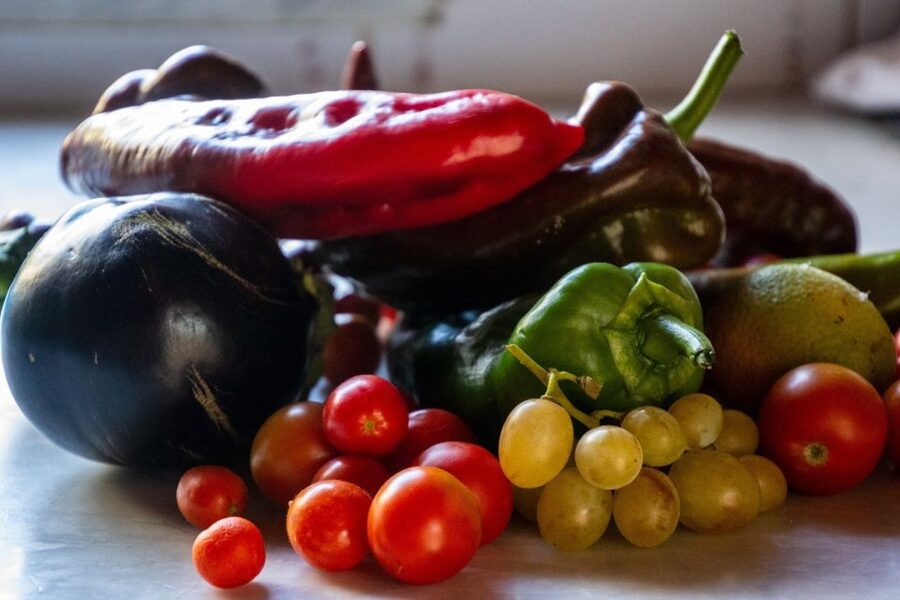
The market visit gives this experience its local pulse. You meet at Bar Cristina in Piazza Pancali, then walk into the food stalls of Ortigia, Syracuse’s historic island district. This is not simply a quick stop to collect ingredients. The chef uses the market to explain what is fresh, what is typical, and what deserves a place on your plate.
Ettore knows many of the sellers, which makes the visit more than a silent walk past counters. You may taste items such as red prawns, mortadella, pistachio spread, fresh fruit, or other products available that day. The exact menu is not promised, and that is part of the appeal. Sicilian cooking makes more sense when you see the ingredients first and decide what to do with them second.
The fish stalls are especially important. Several menus described in the experience include prawns, mussels, squid, sardines, mullet, tuna, or cuttlefish ink. Ettore may use shrimp shells with olive oil to build a seafood sauce, or pair tuna with peppers, onions, olives, garlic, and capers. You get to see how a cook turns a market purchase into a complete dish rather than treating seafood as a ready-made restaurant course.
I also like the chance to tell the chef what you do and do not eat. One menu was changed for people who were not keen on fish. Another group asked for seafood and received a menu shaped around that preference. This does not mean every request can be met, but the format gives you more say than a fixed class usually does.
The market can be noisy and crowded, with sellers calling out to customers. That is part of the scene, but it may feel hectic if you prefer a quiet, carefully scripted tour. Wear comfortable shoes and keep your attention on the group while moving between stalls.
More Market and Cooking Class Tours in Italy
- Cooking Class and Lunch at a Tuscan Farmhouse with Local Market Tour from Florence
★ 5.0 · 4,831 reviews - Small Group Cooking Class & Market Food Tour in Florence
★ 5.0 · 1,574 reviews - Seaview Cooking Class & Taormina local flavors with Chef Mimmo
★ 5.0 · 665 reviews
Choosing the menu with chef Ettore
After the market, you move to the cooking location. A transfer from the market is arranged if the kitchen is not within easy walking distance. The exact setting can vary, and past menus have taken place in a restaurant kitchen, at Cortile Di Bacco, or in another local cooking space.
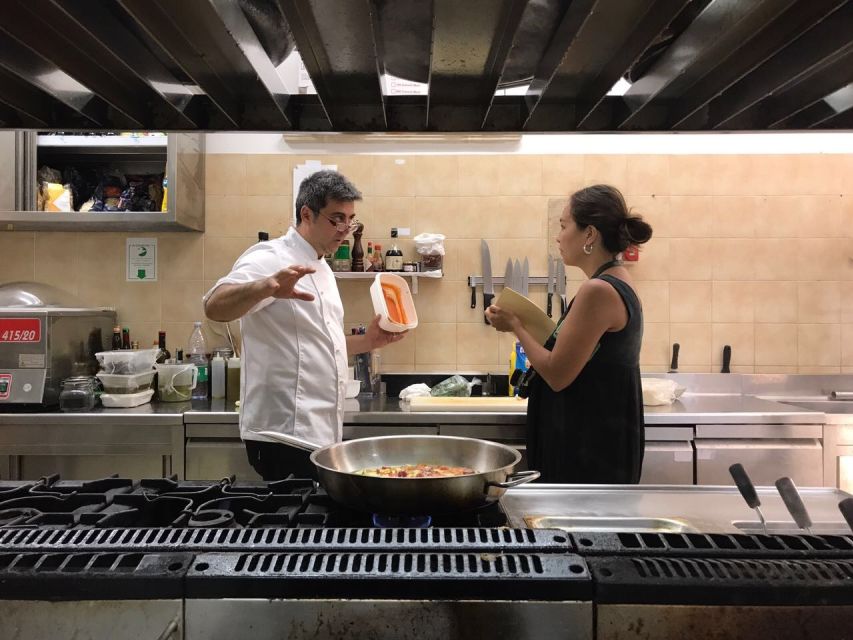
That variety matters because this is not presented as a polished cooking studio with a fixed display kitchen. You may get a glimpse of a working restaurant kitchen, including the practical rhythm of preparing a meal for several people. One account described the professional kitchen as a fascinating look at the chef’s daily work. Another mentioned cooking in a rugby club with a striking view.
The setting may therefore be more informal than a purpose-built culinary school. I see that as a plus if you want a local connection, though it means you should not expect identical surroundings every time. The ingredients and the chef’s instruction are the reliable parts of the experience.
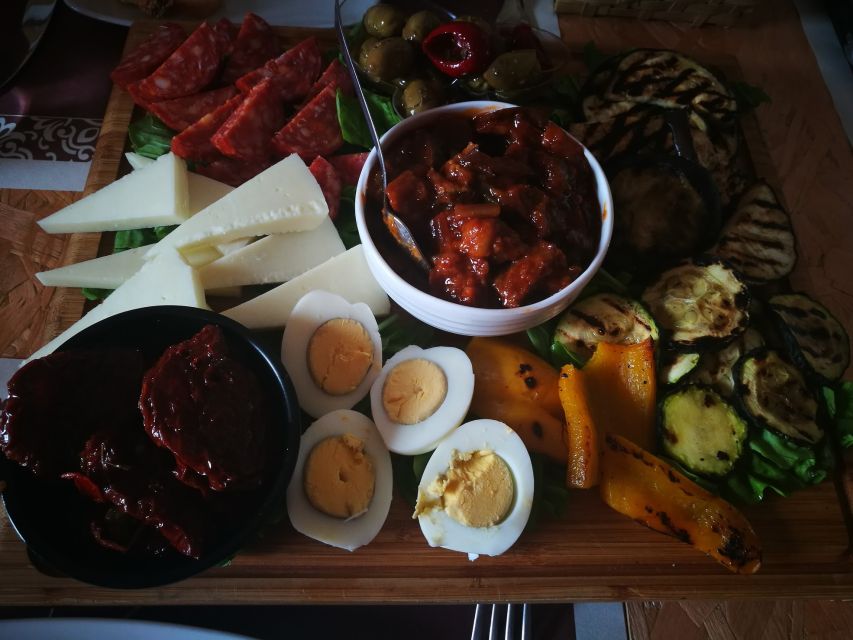
The menu can be generous. Past combinations have included two fresh pasta dishes, tuna or another fish, a salad, bread, dessert, and a tasting board of local products. You might make cavatelli with mussels and squid, pasta with pistachio pesto, seafood pasta with a shellfish sauce, or pasta with cuttlefish ink and meatballs.
Other dishes have included veal involtini, fried mullet, eggplant with tomato and cheese, arancini, sardines, strawberry salad, cannoli, and fresh fruit with apricots and strawberries. These examples show the range, but they are not a guaranteed menu. The chef chooses according to the market, the season, and the group’s preferences.
What you actually do at the stove
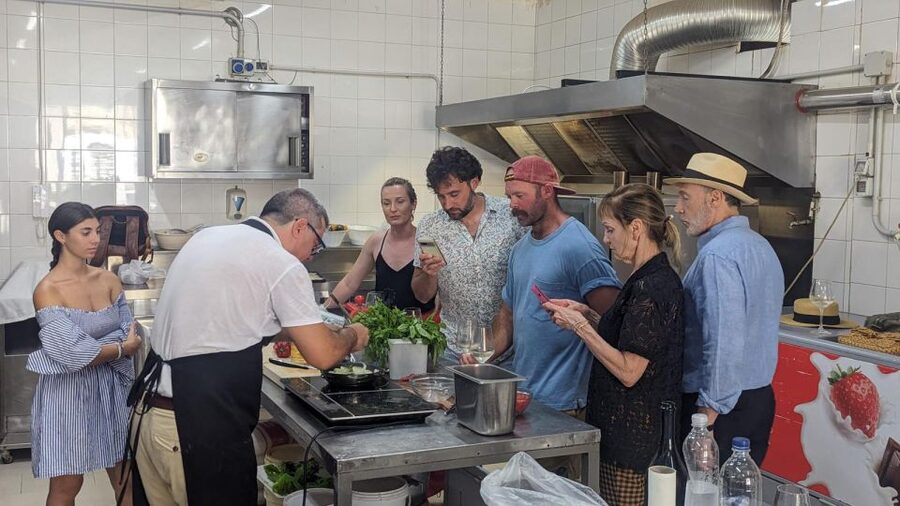
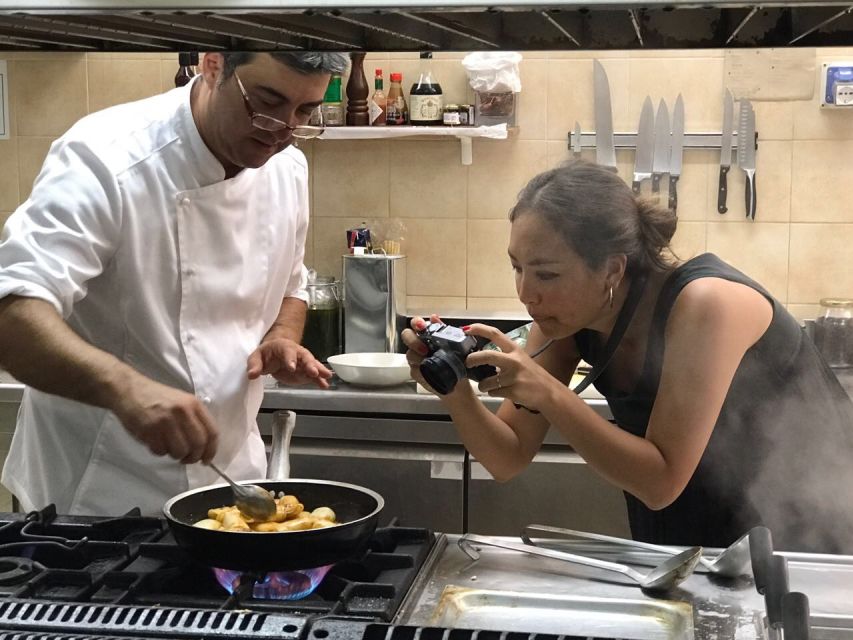
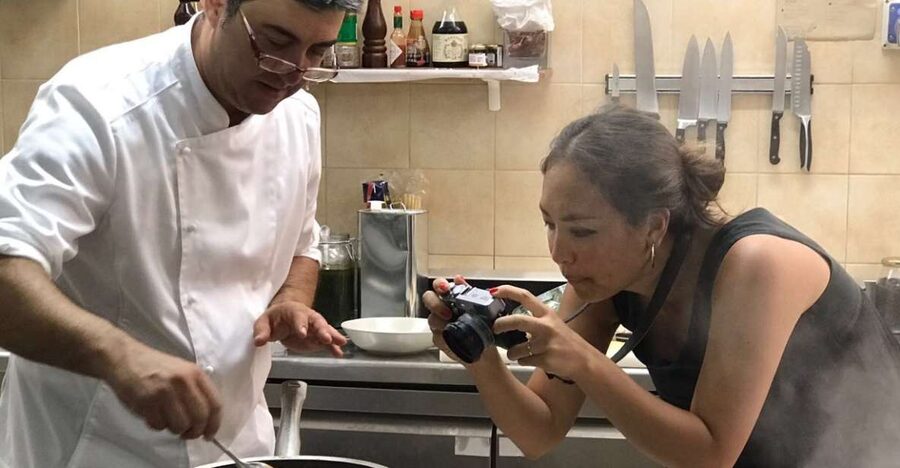
This is a hands-on lesson, not a demonstration followed by a plate of food. You help prepare the dishes, and the chef explains the methods as you work. Fresh pasta is a repeated highlight, with one session covering how to make it in about seven minutes.
The useful part is not just learning a recipe. You see how Sicilian cooks build flavor from simple ingredients. For seafood pasta, that can mean using shrimp shells and olive oil for the base of the sauce. For tuna, it may mean combining sweet peppers, onion, olives, garlic, capers, and tomatoes instead of covering the fish with a heavy sauce.
Pistachio appears often in the menus and tastings. You might make pistachio pesto or try a pistachio spread at the market. This gives you a taste of southeastern Sicily’s fondness for nuts, seafood, citrus, vegetables, and pasta in the same meal.
The chef’s professional background is a useful bonus. Ettore previously worked as a pasta chef at a two-Michelin-starred restaurant, but the class is described as warm and practical rather than formal or intimidating. He shares cooking tips, answers questions in English, and adjusts the pace to the group.
That said, a small group does not mean private instruction at every moment. With eight people around a kitchen, you may share tasks and wait briefly for your turn. If you want an intensive one-to-one lesson with exact measurements and a printed recipe for every dish, this may feel less structured. If you want to cook, talk, taste, and learn by doing, the format is a good match.
Lunch is part of the lesson, not an afterthought
Once the cooking is finished, you sit down to eat what you helped prepare. This is where the four-hour schedule pays off. You are not rushing through a single plate before the next activity. The experience includes a full lunch, and the menus described have ranged from seafood pasta and tuna to bread, salads, sweets, and local tastings.
Wine and limoncello have been served during some sessions. The included element is lunch, while extra food and drinks outside the planned menu are not included. Ask the chef what is covered if you want to order anything beyond the meal being prepared.
Portions can be substantial. The cooking may include several courses, and leftover food may sometimes be available to take away. This makes the price easier to assess, especially when you consider that the cost includes the market tour, chef, class, lunch, and any needed transfer from the market.
At $134.81 per person, this is not a budget lunch. But it combines several things you would otherwise pay for separately: a guided food-market visit, local interpretation, ingredient shopping, a cooking lesson, and a meal. The value is strongest if you enjoy food enough to treat the class as one of the main activities of your Syracuse stay.
It is less compelling if you mainly want to eat and have little interest in cooking. In that case, a market tour or restaurant meal will likely cost less and require less time. Here, the meal is the reward for participating in the preparation.
Same city, another market:
- Rome: Colosseum, Roman Forum & Trajan’s Market Exterior Tour
★ 4.3 · 2,038 reviews - Taste of Testaccio: Special 15 Year Anniversary Edition
★ 5.0 · 1,658 reviews - Bologna Food & Market Tour with 6 Tastings, Pasta, Wines & More
★ 5.0 · 1,328 reviews - Venice Street Food Tour with Local Guide with Local Food Market Visit
★ 5.0 · 822 reviews
The details that make the experience personal
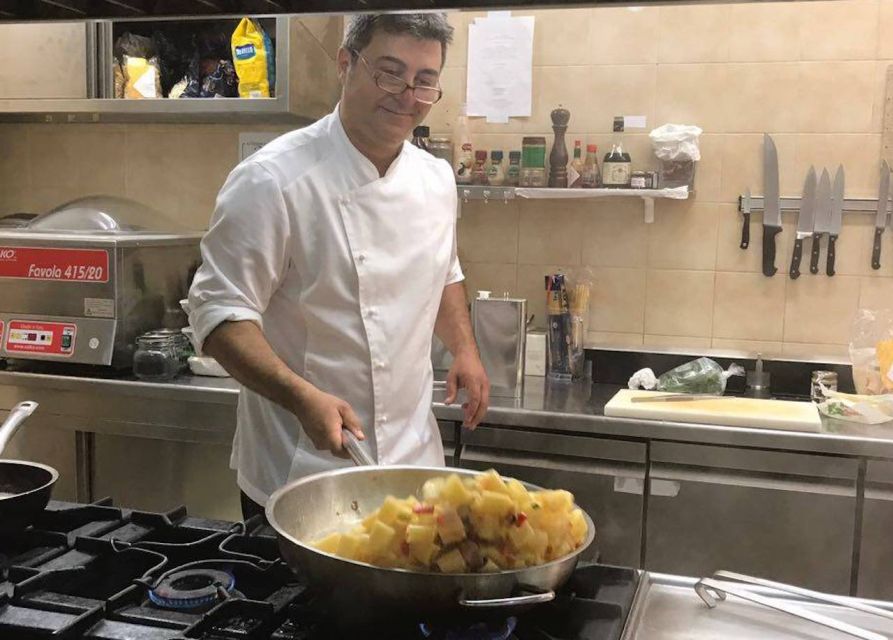
The chef’s relationships in the market are one of the strongest features. A seller may recognize him, offer a taste, or discuss a product with him. You get a better sense of how local food buying works when the chef is choosing ingredients from people he already knows.
The teaching style also seems flexible. Ettore can build a menu around seafood, tone down the fish, or change the dishes based on what looks best that morning. That flexibility helps couples and mixed groups, especially when one person has strong food preferences.
The class can also suit a special occasion. It has been used to mark a wedding anniversary, and the shared work gives the meal a social feel. You are cooking with the group, then eating together, rather than sitting at separate restaurant tables.
English and Italian are offered. The chef has been described as comfortable speaking English, but cooking is also a visual activity. You can follow much of the process by watching, tasting, and joining in even if your Italian is limited.
Timing, meeting point, and Sunday planning
The experience lasts four hours, but starting times vary. Check the available time before booking, especially if you are fitting this around Syracuse’s archaeological park, a boat outing, or a train connection.
The starting point is Bar Cristina at Piazza Pancali 24 in Syracuse. The square and bar can be busy, so do not assume the first person you meet will know exactly whom you are seeking. The clearest plan is to arrive a little early and look for the chef or host. The meeting instructions could be more precise about where inside or outside the bar to stand.
The activity ends back at the meeting point. A transfer to the kitchen is included if the location requires it, so you do not need to arrange your own ride between the market and cooking class.
Do not book the market portion for Sunday. Ortigia Market is closed that day. The chef will still take you through the island streets to buy local products, but the experience will not include the normal market visit.
Cancellation is flexible up to 24 hours before the start for a full refund, and you can reserve now and pay later. Those terms are useful if your Syracuse plans are still shifting.
Who will enjoy this Syracuse cooking class
I would choose this for anyone who wants food to be a main part of a Sicily visit, not just a break between monuments. It works particularly well for couples, families, and small groups who enjoy sharing a meal and are happy to take part in the preparation.
It is also a good pick for repeat visitors to Sicily. You may already know pasta and pizza, but the market-led format can introduce you to dishes such as pistachio pesto, cuttlefish-ink pasta, arancini, seafood sauces, or tuna prepared with local vegetables.
You should think twice if you dislike seafood, because fish and shellfish appear often in the menus. The chef has adapted dishes for people with different tastes, but the market and local cooking style naturally lean toward seafood.
This is not the best choice for a tightly scheduled morning. Four hours is a serious part of your day, and the meal may be generous enough to leave you ready for a slow afternoon rather than another fast-paced sight.
Should you book it?
Book this experience if you want a personal introduction to Sicilian food, enjoy choosing ingredients, and value a chef who cooks with what the market offers. The small group, flexible menu, and chance to eat your own work give it more character than a standard recipe class.
I would be careful about booking on Sunday, and I would confirm the meeting details before setting out. If you want a fixed menu, highly polished classroom, or a short demonstration, choose something else. If you want four hours of market shopping, cooking, conversation, and a serious lunch with chef Ettore, this is a strong use of a day in Syracuse.
FAQ
How long does the Syracuse cooking class last?
The activity lasts four hours. Starting times vary, so check availability for the date you want.
Where does the experience begin?
Meet the chef at Bar Cristina, Piazza Pancali 24, in Syracuse.
Where does the activity end?
The experience ends back at the meeting point.
Is the Ortigia Market open every day?
No. Ortigia Market is closed on Sundays. On Sunday, the chef guides you through the streets of the island to purchase local products instead.
Is transportation included?
A transfer from the market to the cooking class is arranged if the location of the kitchen requires it.
What is included in the price?
The price includes a guided visit to the Ortigia Street Market, a local chef, the cooking class, and lunch. Food and drinks outside the planned menu are not included.
How large is the group?
The group is limited to eight participants. The host or greeter speaks Italian and English.
New market tours around Italy
- Taormina: Sicilian Cooking Class & Market Tour★ 4.9 · 212 reviews
- Florence: Markets and Food Tasting Tour★ 5.0 · 2 reviews
- Taormina: Sicilian Cooking Class w/ a Visit to Local Market★ 4.9 · 76 reviews
- From Taormina: Syracuse Tour with lunch in Food Market★ 4.9 · 12 reviews
- Spoleto: Market Tour and Meal at a Local’s Home★ 5.0 · 2 reviews
- Sorrento: Markets and Cooking Class at a Cesarina’s Home★ 3.7 · 3 reviews
- Taormina Half-Day Sicilian Cooking Class & Market Tour★ 5.0 · 82 reviews
- Rome: Trajan’s Markets & Museum of The Imperial Fora Tour★ 4.8 · 4 reviews
Italy Market Tours, side by side.
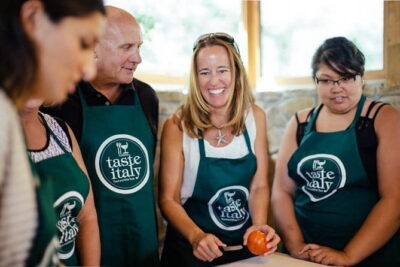
Cooking Class and Lunch at a Tuscan Farmhouse with Local Market Tour from Florence
Read our review →
Rome: Colosseum, Roman Forum & Trajan’s Market Exterior Tour
Read our review →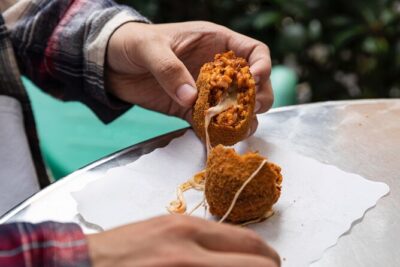
Taste of Testaccio: Special 15 Year Anniversary Edition
Read our review →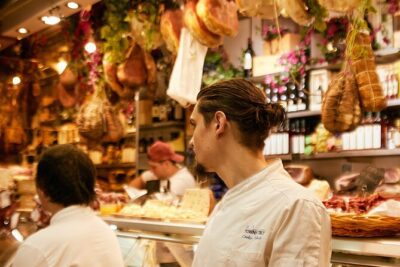
Small Group Cooking Class & Market Food Tour in Florence
Read our review →
Bologna Food & Market Tour with 6 Tastings, Pasta, Wines & More
Read our review →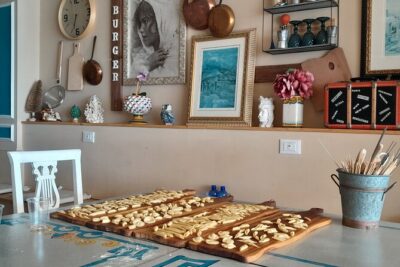
Seaview Cooking Class & Taormina local flavors with Chef Mimmo
Read our review →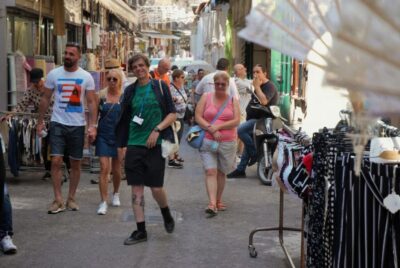
Palermo: Street Food and Local Market Tasting Tour
Read our review →
Palermo: Walking Tour of Historic Markets and Monuments
Read our review →This tour also appears in