
Review · ROME
Taste of Testaccio: Special 15 Year Anniversary Edition
Testaccio is where Rome’s food story feels most like daily life, not a greatest-hits parade. You’ll eat at neighborhood shops and restaurants, make bruschetta from market ingredients, and see the ancient pyramid and the hill made from broken oil jars. The local setting is the main attraction.
I like the hands-on market stop and the full serving of three Roman pastas, which makes this more substantial than a quick snack walk. I also like the guides’ mix of food and place: Luca, Katherine, Francesca, Giuseppe, and others are praised for making the tour relaxed and personal. The main consideration is the price, $131.81 per person, and the fact that stops and tastings can change with the season.
Key points at a glance
- Three classic Roman pastas: Try carbonara, amatriciana, and cacio e pepe at Flavio al Velavevodetto.
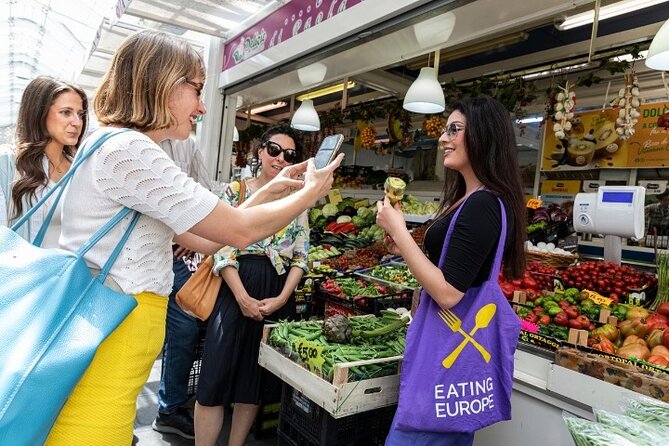
- A real market activity: Buy or receive fresh ingredients from Testaccio vendors, then make your own bruschetta.
- Food with Roman context: See the Pyramid of Cestius, Protestant Cemetery, former slaughterhouse, and Monte Testaccio.
- A proper amount of food: Charcuterie, cheese, bruschetta, caprese, supplì, trapizzino, pasta, pastry, espresso, and gelato are part of the planned tastings.
- Small-group format: The group is limited to 12 people, with a minimum of two required.
- Useful gelato advice: At Giolitti, you’ll learn how to tell traditional gelato from the mass-produced sort.
Why Testaccio is a smart place for a food tour
Rome’s historic center is filled with famous sights, but Testaccio gives you a different picture of the city. It has long been tied to food, workers, markets, restaurants, and the former slaughterhouse complex that helped shape its cooking.
That background matters because Roman cuisine here is not presented as a museum piece. The neighborhood’s famous quinto quarto tradition grew from using the less prized cuts left after better meat went elsewhere. You hear that story while walking through a district still known for straightforward food and local businesses.
The route also gives you something many food walks miss: a sense of place between bites. You are not simply moved from one restaurant to the next. You pass an ancient pyramid, a cemetery, a former slaughterhouse, and Monte Testaccio, a man-made hill formed from millions of broken Roman oil jars.
The tour lasts about three and a half hours. That is long enough for a meal’s worth of food, several short walks, and some conversation with your guide. Wear comfortable shoes, but this is not an endurance hike. One useful detail from the experience is that the group size tops out at 12, so the guide can usually speak with individuals rather than deliver a speech to a large crowd.
More stalls, halls and bazaars to walk around Rome:
- Rome: Colosseum, Roman Forum & Trajan’s Market Exterior Tour
★ 4.3 · 2,038 reviews - Roman Food Tour with Visit to the Trionfale Food Market
★ 5.0 · 471 reviews - Authentic Roman Cooking Class & Market Experience
★ 5.0 · 363 reviews
Starting with cheese, cured meat, and prosecco at Volpetti
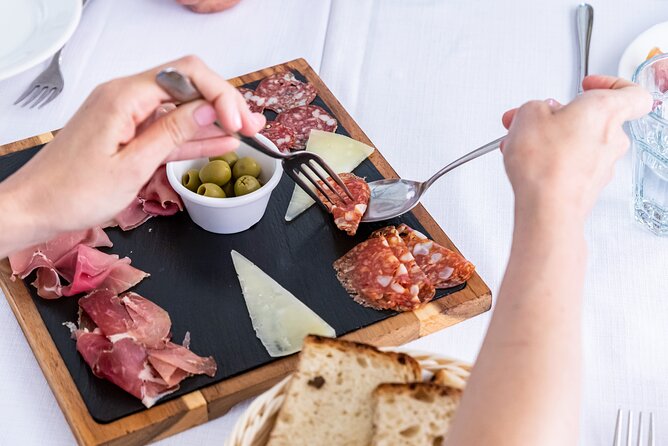
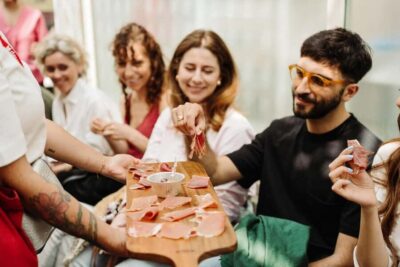
The food begins at Salumeria Volpetti, a respected Testaccio shop with an impressive selection of about 150 cheeses. You receive cured meats, artisanal cheeses, olive oil, and balsamic vinegar, along with a glass of prosecco for the anniversary edition.
This is a good opening because it introduces you to the quality of Italian ingredients before the heavier dishes arrive. You can compare textures and flavors rather than simply eating a pile of samples. The DOCG wine listed with the opening course also gives the stop a celebratory feel.
The drawback is that this is an indoor shop stop, not a full meal. If you arrive hungry, that is useful. If you are expecting a long sit-down tasting right away, you may find the pace more social and introductory.
The Pyramid of Cestius and Rome’s quieter corners
After Volpetti, the walk heads toward the Pyramid of Cestius. This authentic Egyptian-style pyramid is roughly 2,000 years old and is one of Rome’s oddest landmarks. It was built as a tomb, but the tour presents it as part of the neighborhood rather than as an isolated monument requiring a separate admission ticket.
The pyramid works well in a food walk because it breaks up the eating with a strong visual surprise. You might pass it on another day while rushing between larger attractions, but here your guide can explain why it is there and point out the nearby Protestant Cemetery.
The cemetery is associated with John Keats, who is buried there. It adds a quieter, more reflective pause to the route. You should not expect a full cemetery tour or an extended visit inside every sight. The value is in seeing these places as part of Testaccio’s streetscape.
Making bruschetta at Testaccio Market
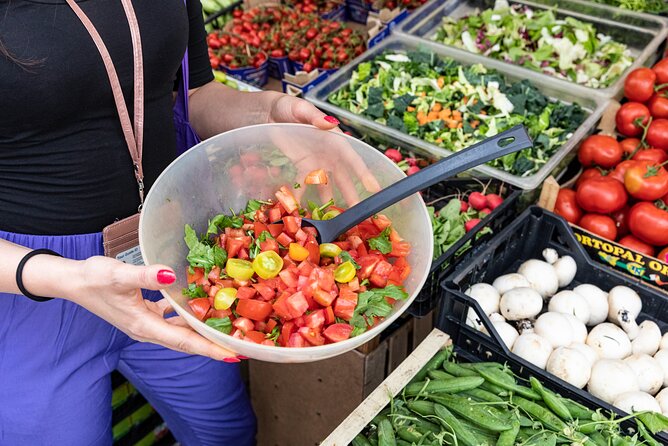
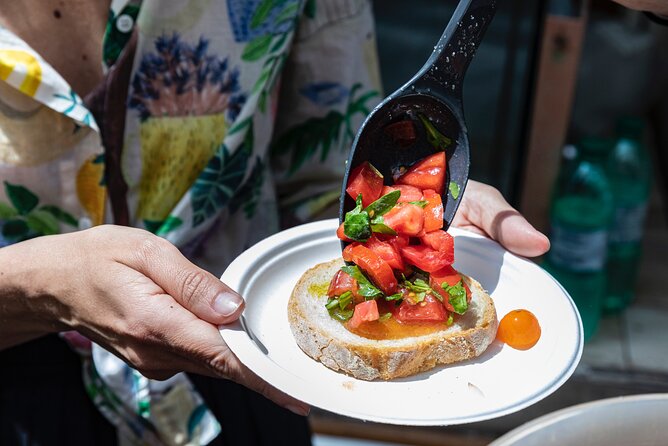
The market is one of the strongest parts of the experience. Rather than only walking past stalls, you get fresh tomatoes and other ingredients from local vendors and make your own bruschetta.
That small task changes the pace. You see where the food comes from, handle the ingredients, and get a better feel for the everyday market culture of the neighborhood. Fresh tomatoes are a simple food, but the quality matters. One especially useful detail from the experience is the repeated praise for the tomatoes and the way guides work with the vendors to assemble the bruschetta.
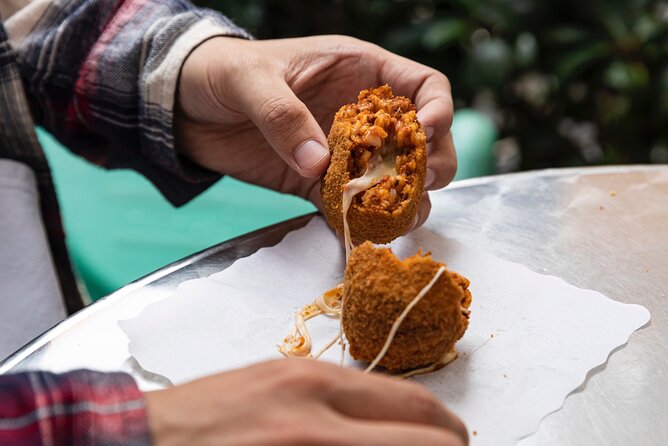
The market tasting also includes buffalo mozzarella, caprese salad, and fried Roman street food. The supplied menu lists supplì, a fried rice ball often compared to a Roman version of arancini. The crisp outside and soft center make it an easy favorite, especially alongside a local beer.
Market hours and available products can affect the exact tasting. The company notes that food and stops may change by day or season, so you should treat the listed menu as a guide rather than a promise of every single item.
Same city, another market:
- Trevi Fountain, Pantheon, and Campo Dei Fiori Market Food and Wine Tour
★ 5.0 · 320 reviews - Rome: Pasta Cooking Class with Market Visit and Wine
★ 4.9 · 277 reviews - Rome: Food Tour with Market Visit
★ 4.9 · 200 reviews - Rome: Trajan Markets Experience with Multimedia Video
★ 4.0 · 66 reviews
Trapizzino and the old slaughterhouse district
Another planned stop is Trappizino, where you try trapizzino, a pocket of bread filled with a Roman-style preparation such as hunter-style chicken. It is a useful example of how Rome’s street food can be filling, portable, and more substantial than a small snack.
The route also passes the former city slaughterhouse. This complex is central to Testaccio’s food identity, especially the quinto quarto tradition. Your guide connects the building and the neighborhood’s working past with the dishes you are eating.
This is where the tour gains depth. You learn that Roman food is shaped not only by recipes, but also by work, budgets, markets, and the need to use what was available. I would pay close attention here if you care about food culture rather than just collecting tastings.
Monte Testaccio and the story of Roman oil
Monte Testaccio is another unusual sight. It is a man-made hill built from fragments of millions of ancient Roman amphorae, the large pottery containers used to transport goods such as olive oil.
The hill is a reminder of Rome’s huge appetite and its far-reaching trade network. It also fits the neighborhood perfectly: Testaccio’s modern food culture sits beside evidence of an ancient supply system.
You will not spend hours at the site, but it gives your guide a chance to connect Roman history with the meal in front of you. The best part of this tour is often that connection. A plate of pasta becomes more interesting when you understand how food moved through the city and how Testaccio developed around it.
Three pastas at Flavio al Velavevodetto
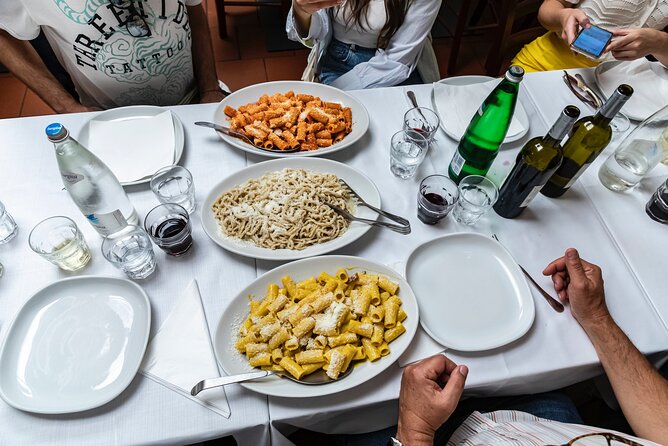
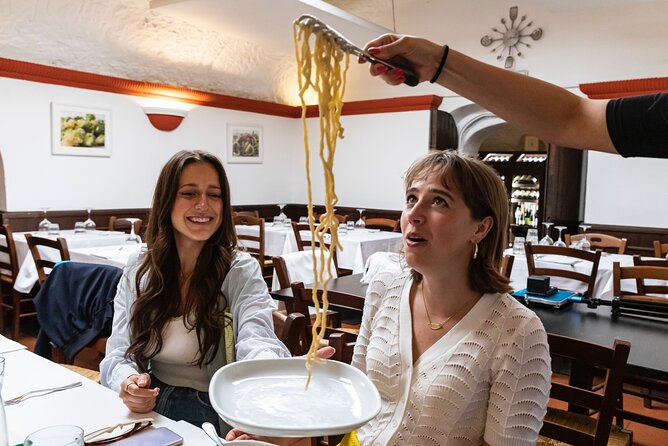
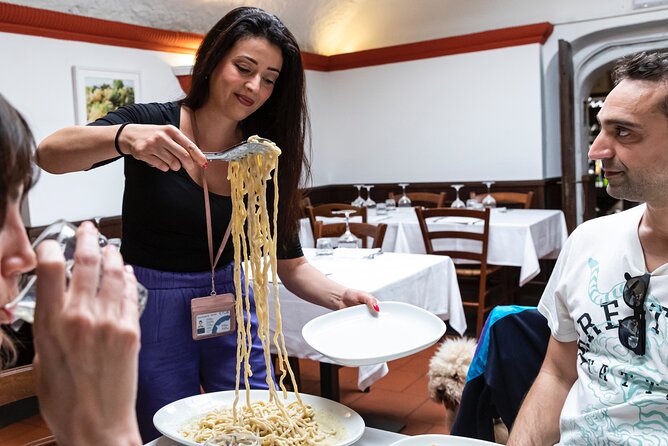
The sit-down restaurant stop is the heart of the meal. At Flavio al Velavevodetto, you try three famous Roman pastas:
- Carbonara, creamy and usually built around egg, cheese, and cured pork
- Amatriciana, with a tomato-based sauce and cured pork
- Cacio e pepe, a simple combination of cheese and pepper
The value here is comparison. Rome has several dishes that use only a few ingredients, but the balance depends on technique and timing. Eating the three together helps you notice the differences in sauce, texture, and seasoning.
The tasting comes with local wine. Extra drinks are not included, so do not assume you can order anything beyond the planned pairings without paying separately.
This stop also makes the tour fairly filling. You are not just receiving a forkful of each pasta. The full sequence, combined with the market food, cheese, charcuterie, street food, pastry, and gelato, can replace a meal. One practical tip is to arrive ready to eat but not stuffed from breakfast or lunch.
Finishing with gelato at Giolitti
The final stop is Giolitti Caffe and Gelateria, described as a 105-year-old gelateria. You finish with artisan gelato and a lesson in how to spot the real thing.
That advice is useful for the rest of your trip. Look for gelato that is stored in covered containers rather than piled into towering, brightly colored mounds. The guide can explain the difference between traditional gelato and displays designed mainly to attract passing customers.
You also get espresso and a typical Italian pastry as part of the planned food. The gelato is a good finish because it gives you something cool and sweet after the pasta course, though anyone sensitive to large meals should pace themselves earlier.
The stop has earned special praise from people who wanted to return to the neighborhood afterward. Save room for it. This is not a token spoonful at the end.
The guides make a real difference
The food is important, but the guide shapes the experience. The strongest guide comments point to people who are friendly, relaxed, and well informed without turning the tour into a classroom.
Luca is repeatedly praised for his food and neighborhood explanations. Katherine is described as warm and engaging, with a strong command of both the market and Roman cooking. Francesca is valued for her connection with local vendors and for making a group feel like family.
Other named guides include Valter, Gianluca, Valeria, Giuseppe, Fabio, Giorgia, Gabriele, Amin, Edma, Rishad, and Fabio. The company uses several guides, so you cannot choose one unless the booking system specifically allows it.
One particularly useful feature is the way the tour can adjust to the group. With only two people, Giuseppe reportedly created a relaxed, conversational outing. With a group of six, Francesca’s tour felt almost private. With a maximum of 12, you have a reasonable chance to ask questions and interact with the guide.
Is $131.81 a fair price?
At $131.81 per person, this is not a cheap snack walk. It is closer to paying for a guided neighborhood meal, with food, drinks, history, and access to places you might not choose on your own.
The value is strongest if you plan to use the tour as lunch or dinner. You receive charcuterie, cheese, wine, bruschetta, caprese, supplì, trapizzino, three pastas, pastry, espresso, and gelato in the planned format. You also get a local English-speaking guide and insider advice for the rest of your time in Rome.
The price is harder to justify if you mainly want a market visit or a short street-food sample. You could spend less by eating independently, but you would miss the explanations, vendor relationships, and structured route.
Group discounts may be available. Gratuities and extra drinks are not included, so allow for those costs. The tour is often booked about 62 days ahead, which suggests you should reserve early if your Rome dates are fixed.
Who should book this Testaccio food walk?
I would choose this for a first visit to Rome if you want one afternoon that combines eating with local history. It also suits repeat visitors who have already seen the Colosseum, Trevi Fountain, and Pantheon and want a different part of the city.
It is a good choice for people who enjoy trying several foods rather than sitting through one long restaurant meal. Families can bring children, and children under four do not need a ticket, although food is not included for children three and under. Paid food tickets begin at age four.
Vegetarians and people avoiding gluten should contact the company or add a note at booking. The company will try to accommodate these needs where possible, but the experience is not suitable for severe or life-threatening allergies, and no responsibility is accepted for food allergies or intolerances.
The main practical concern is weather. The route includes outdoor walking, and a very hot day can make the walk less comfortable. One person had difficulty after a 100-degree day and a meeting-point problem, so arrive early, carry water, and confirm the start point at Piazza Testaccio, 39.
Should you book it?
Book this tour if you want a generous, food-focused introduction to Testaccio and like the idea of eating your way through a neighborhood rather than checking off famous sights. The market, three pastas, pyramid, Monte Testaccio, and gelato lesson give you a well-rounded three and a half hours.
Skip it if you prefer to choose every dish yourself, dislike group schedules, or want a low-cost tasting walk. Also remember that the exact stops can vary.
For most food lovers, I think the strongest reason to book is the combination of a real meal and a real sense of place. You leave with Roman dishes in your memory, but also with practical ideas about where to eat and how to recognize good gelato.
FAQ
How long does the Taste of Testaccio tour last?
The tour lasts approximately 3 hours and 30 minutes.
Where does the tour begin?
It begins at Piazza Testaccio, 39, 00153 Rome, Italy.
Where does the tour end?
The tour ends at Via Amerigo Vespucci, 35, 00153 Rome, Italy, a couple of blocks from the starting area.
What foods are included?
Planned tastings include Italian charcuterie and cheese, bruschetta, buffalo mozzarella, caprese salad, supplì, trapizzino, three Roman pastas, gelato, espresso, and a typical Italian pastry. The exact selection can vary by day or season.
Are drinks included?
Some planned pairings include prosecco, local wine, and local beer. Extra drinks are not included.
Is the tour offered in English?
Yes. It is offered with a local English-speaking guide.
How many people can join the tour?
The maximum group size is 12 people. At least two guests are required for the tour to operate.
Can children join?
Children under four do not need a ticket and may join free, but children aged three and under do not receive food. Paid tickets with food are available for children aged four and up.
Can dietary requirements be accommodated?
You can email the company or add a note at booking for vegetarian, gluten-free, or other dietary needs. Accommodation depends on what is possible, and the tour is not suitable for severe or life-threatening food allergies.
Can I cancel for a refund?
You can cancel at least 24 hours before the local start time for a full refund. Cancellations or changes made less than 24 hours before the start time are not refunded or accepted. If the minimum number is not met and the tour is canceled, you will be offered another date or experience, or a full refund.
New market tours around Rome
- Rome: The Vatican Market Experience Tasting and Class★ 4.7 · 10 reviews
- Rome: Vatican Street Food and Wine Tour with Farmers Market★ 5.0 · 37 reviews
- Rome: Trajan’s Markets & Museum of The Imperial Fora Tour★ 4.8 · 4 reviews
- Rome: Taste of Testaccio Food & Market Tour★ 4.9 · 38 reviews
- Rome: Testaccio Food & Market Tour with Pasta & Wine★ 5.0 · 38 reviews
- Rome: Temples, Squares & Markets Guided Walking Tour★ 4.8 · 26 reviews
- Farmers Market Shopping and Roman Full Course Class – SHARED★ 5.0 · 12 reviews
- Rome: Prati Food & Wine Market Tour with St. Peter Square★ 5.0 · 7 reviews
Rome Market Tours, side by side.
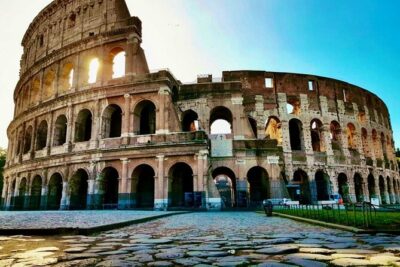
Rome: Colosseum, Roman Forum & Trajan’s Market Exterior Tour
Read our review →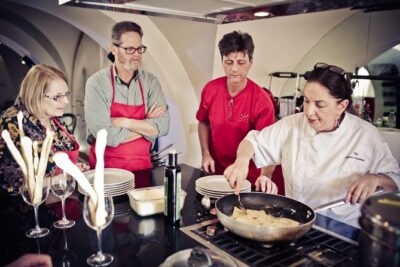
Authentic Roman Cooking Class & Market Experience
Read our review →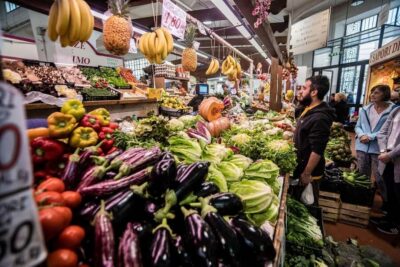
Rome: Pasta Cooking Class with Market Visit and Wine
Read our review →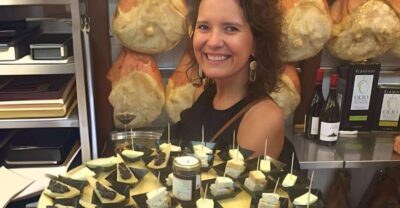
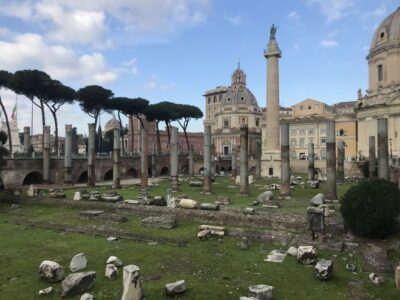
Rome: Trajan Markets Experience with Multimedia Video
Read our review →
Rome E-Bike Tour: Ultimate Street Food and Market Feast
Read our review →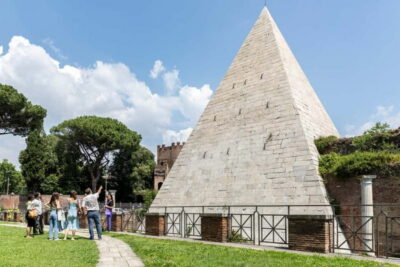
Rome: Testaccio Food & Market Tour with Pasta & Wine
Read our review →This tour also appears in