
Review · SIEM REAP
Siem Reap Cambodian Buddhist Water Blessing and Local Market
At Wat Arang, a countryside pagoda south of Siem Reap, you receive a Buddhist water blessing from resident monks rather than simply looking at another old building. I like the quiet ritual and the chance to learn what the ceremony means. I also like that the visit includes a local market, where you might see handmade souvenirs without the usual tourist crowd.
The main consideration is price. At $54 per person, this is not a cheap tuk-tuk ride, especially if you are traveling alone. You are paying for private transport, an English-speaking guide, the ceremony, a pagoda donation, and help with customs that can be hard to arrange on your own.
Key points at a glance
- Two blessing choices: Choose a shorter chant with light water sprinkling, or a longer ceremony with blessed water poured over your head.
- Wat Arang setting: Leave central Siem Reap for an ancient pagoda in the countryside south of town.
- Guides who add context: Guides named Borey, Lucky, and Seila have led this experience, with explanations about Buddhism and local customs.
- Practical ceremony support: A sarong is supplied for the full blessing, and your wrist is tied with red blessing cords afterward.
- Local market stop: Spend time at a market where you may find handmade souvenirs and see ordinary local trade.
- Private two-and-a-half-hour outing: Hotel pickup, tuk-tuk transport, the pagoda donation, and the market visit are included.
Leaving Siem Reap by tuk-tuk
Your guide and driver pick you up at your hotel about 30 minutes before departure. Give the operator a clear hotel address or a hotel contact, since that makes pickup much easier in Siem Reap’s spread-out streets.
The ride is part of the experience. You leave the city by tuk-tuk and head toward Wat Arang, south of Siem Reap. The transport time is broken into rides of about 20 minutes and 15 minutes, with the full activity lasting around two and a half hours.
I like tuk-tuk transport here because it keeps the trip open to the sounds and air of the countryside. It is also basic transport, not a sealed tourist vehicle, so you should expect a simple ride rather than a polished coach transfer. If you prefer a quiet, private outing, the private group format is useful.
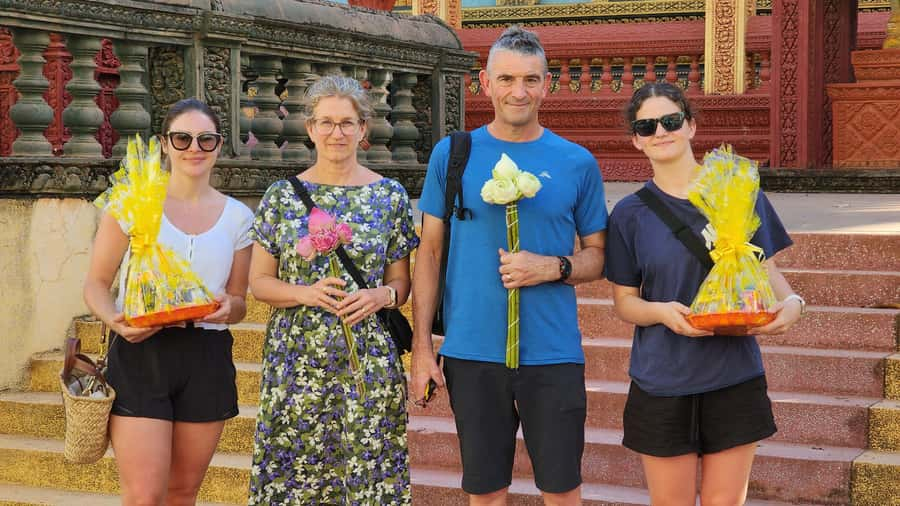
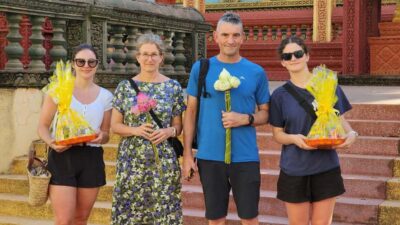
Your guide is important during this opening stretch. Borey has been singled out for clear explanations about Buddhism and for making a solo visitor feel at ease. Lucky has also prepared flowers, a basket of treats, and ceremony clothing before pickup. Seila has added a shrine visit and offering before the pagoda blessing. The exact guide and order of stops can vary, but these details show the kind of personal help the experience is designed to provide.
More Local and Farmers Market Tours in Cambodia:
- Siem Reap: Morning Bike Tours with Local Market & Lunch
★ 5.0 · 52 reviews - Siem Reap Cambodian Buddhist Water Blessing and Local Market
★ 5.0 · 13 reviews - Phnom Penh Local Market & Morning Food Tour Include Drinks
★ 5.0 · 9 reviews
What happens before the main blessing
The ceremony is not treated as a quick photo stop. You first get an introduction to the beliefs behind the ritual and to the life of monks living at the pagoda.
Seila’s version of the visit includes a stop at a shrine to make an offering before going to Wat Arang. Flowers and food offerings are also part of the preparation described for Lucky’s tour. These details matter because they help you see the blessing as a religious practice, not as a performance arranged only for visitors.
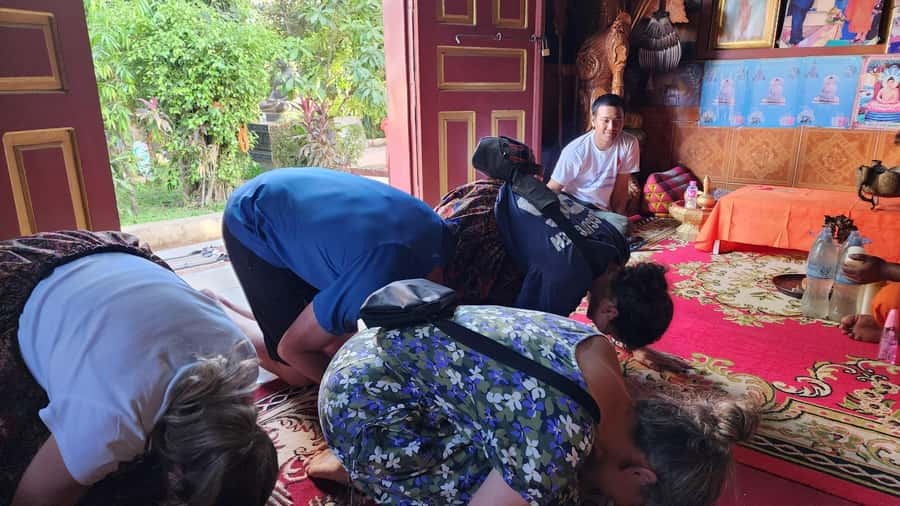
You should listen carefully to your guide at this point. Customs around shrines, monks, offerings, and clothing may not be obvious if you are visiting Cambodia for the first time. A guide can explain what to do, when to sit or stand, and how to take part without treating the ritual casually.
The pagoda is described as an ancient countryside site, with a tradition said to reach back as far as the temples of Angkor. That does not mean you should expect another Angkor temple tour. The value here is different: you are learning about a living religious practice in a functioning Buddhist setting.
Choosing between the two water blessings
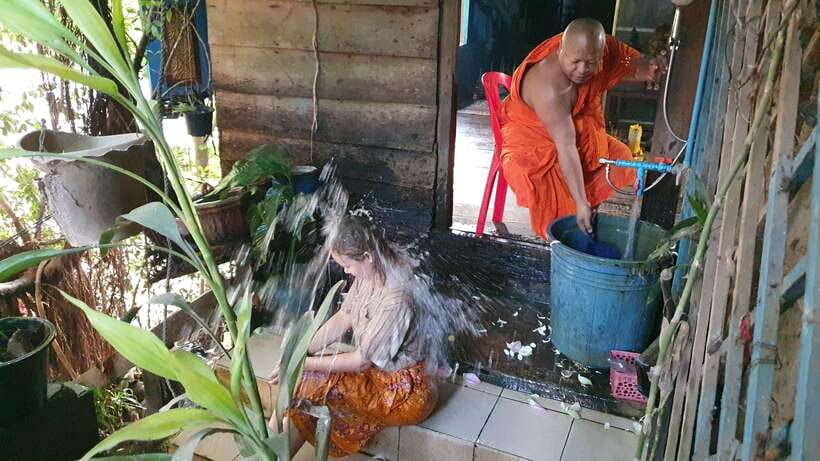
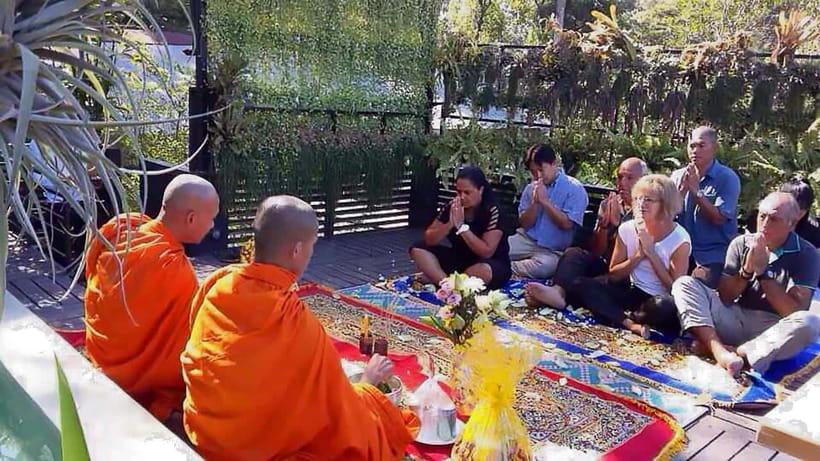
You have two forms of blessing to choose from. The first is shorter and gentler. Monks chant together as they wish you good luck, safe travel, and a long life, while lightly sprinkling you with water.
This option suits you if you want the meaning of the ritual without changing clothes or taking part in a longer ceremony. It also makes sense if you have limited time or want to keep your clothing dry.
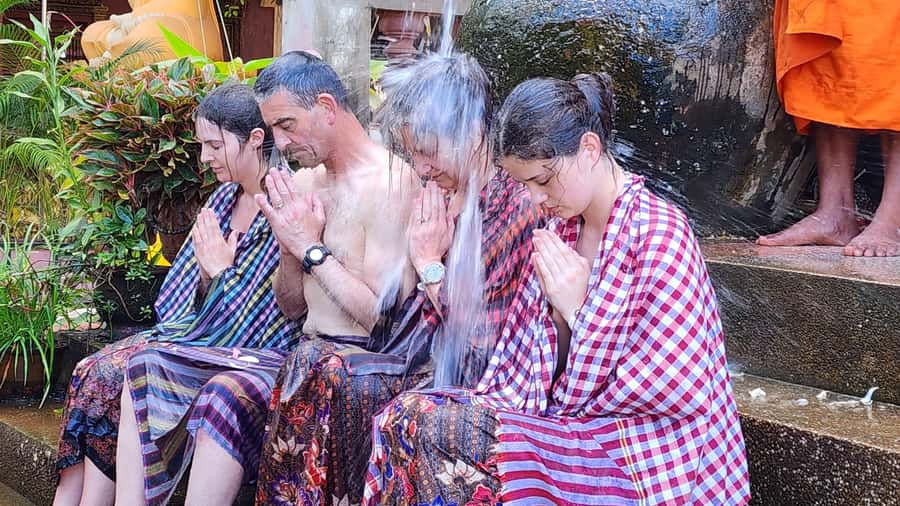
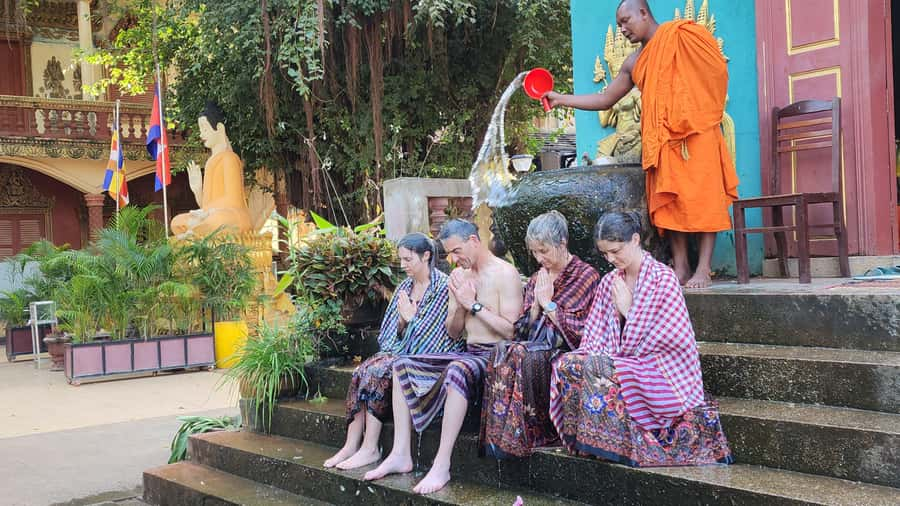
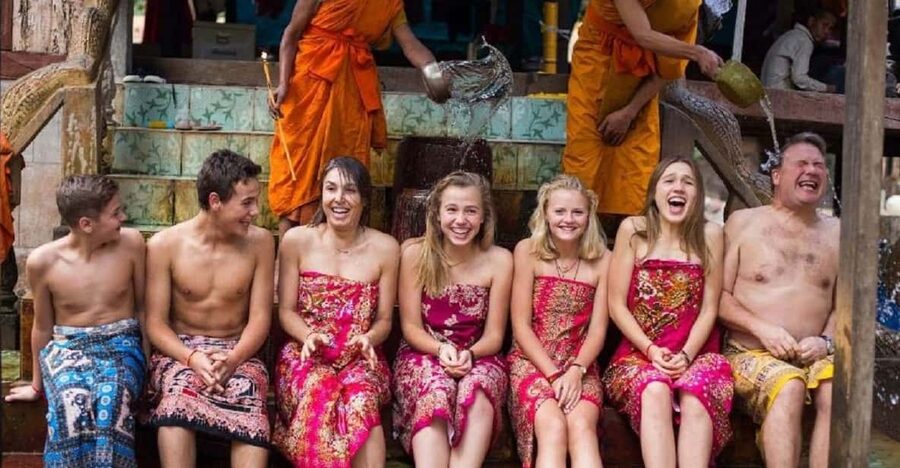
The second option is longer and more physical. Monks chant while vessels of blessed water are poured over your head. You receive a sarong so your clothing stays dry, and you change into it for the ritual.
The full blessing is likely to feel more memorable because you take part in a larger ceremony. It also requires more preparation. You should be ready to change clothes and follow instructions closely. The activity does not describe private changing facilities, so ask your guide where to change when you arrive.
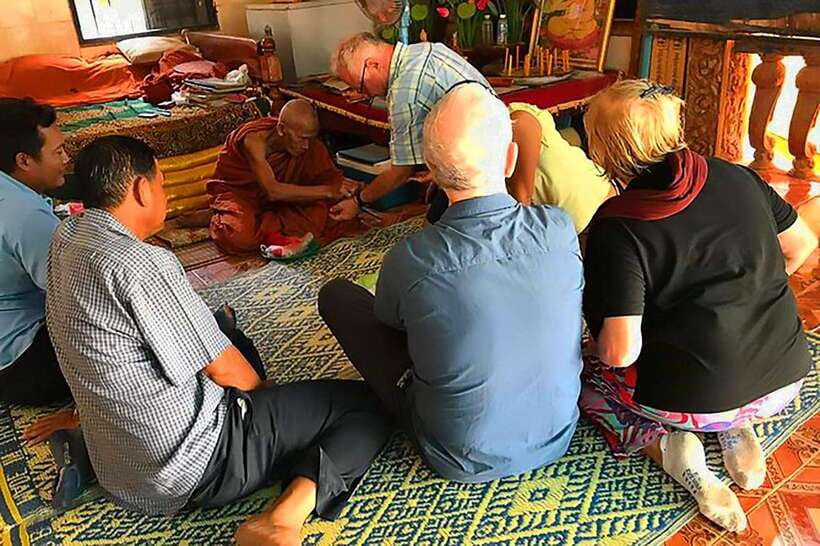
At the end, monks tie special red cords around your wrist. These cords signify the blessing. They are a small but lasting reminder of the visit, and they give the ceremony a clear closing moment.
Why the monk-led ritual matters
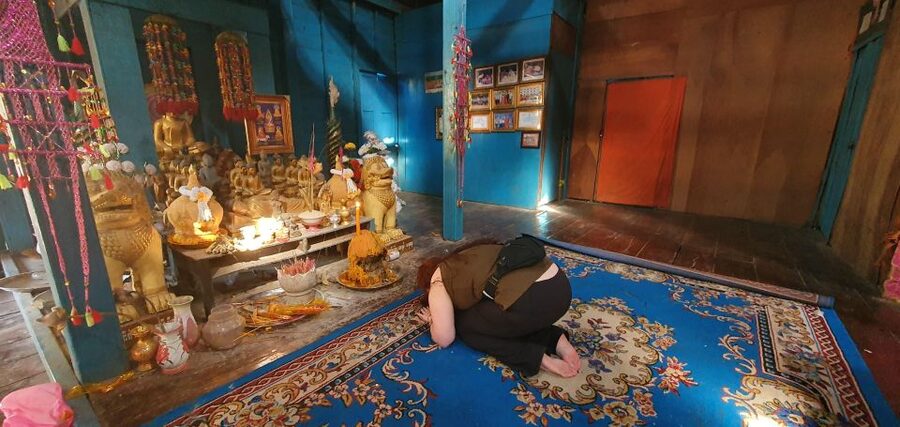
Cambodian Buddhism is not only something you see in statues and temple carvings. Water blessings connect religious belief with everyday hopes: safe journeys, good fortune, health, and long life.
That makes this outing a useful companion to an Angkor temple visit. At Angkor, you study monuments from earlier centuries. At Wat Arang, you see a religious tradition still practiced by monks and local people today. I like that contrast, especially if you want your time in Siem Reap to include more than famous ruins.
The guide’s role is to explain the setting rather than leave you guessing. Borey is described as especially helpful with Buddhist teaching, while Seila has taken time to explain the spiritual side of the visit. You should still remember that this is a short activity, not a formal religion course. The information will give you a working understanding of the ritual, not a full study of Cambodian Buddhism.
Respect is essential. Dress modestly, follow the guide’s instructions, and treat the pagoda as a place of worship. The supplied details do not set out a precise dress code, so ask before you leave if you are unsure about what to wear.
More market tours around Cambodia:
- Kampot: Tuk Tuk Trip to Pepper Farm, Kep, Crab Market & More
★ 4.9 · 143 reviews - Phnom Penh’s Morning Market and Street Art Tour by Tuk tuk
★ 5.0 · 128 reviews - Phnom Penh Morning Market & Food Tour by Tuktuk – Includes All Food & Drinks!
★ 5.0 · 99 reviews - KAMPOT TRAVEL-Pepper farm. Cave.Secret lake-Crab market & Salt…
★ 5.0 · 87 reviews
The local market stop
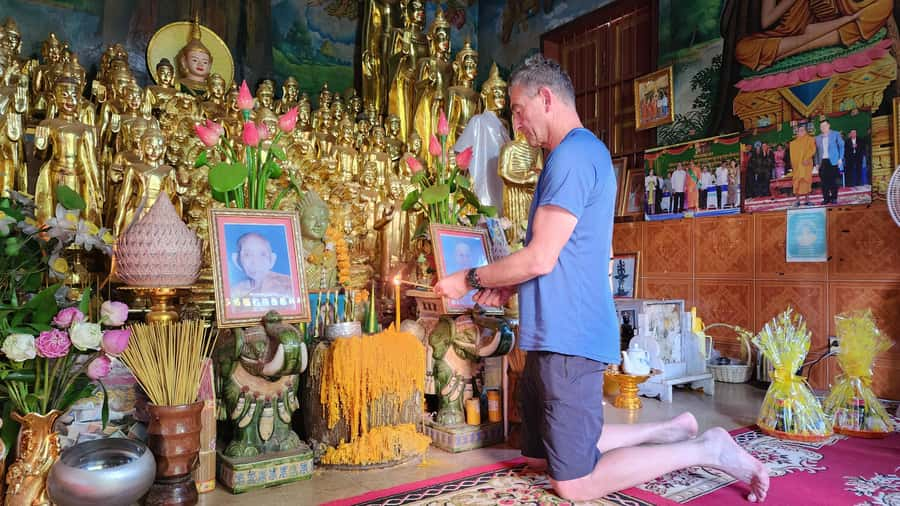
The market visit adds a practical, everyday side to the morning or afternoon. Rather than spending the whole outing inside a pagoda, you also see local buying and selling in Siem Reap Province.
The market stop is listed as about 20 minutes. That is enough time for a quick look and perhaps a purchase, but not enough for a long market tour. You may find food, household goods, and souvenirs, though the exact stalls depend on the day and market selected.
One useful detail is the chance to see handmade souvenirs. A guide has taken visitors to a special spot where they could watch beautiful items being made. That kind of stop is more useful than being dropped at a standard souvenir shop because you can connect the object with the person making it.
The market is also a good place to practice looking rather than rushing to buy. Ask your guide about prices and materials, and take your time before choosing something. Personal expenses are not included, so bring money if you want to shop.
I would not book this activity mainly for shopping. The market is a short part of the outing, and its real value is the local setting and the chance to see a side of Siem Reap that most temple-focused schedules miss.
What the $54 price includes
At $54 per person, the cost is easiest to understand as a package rather than as payment for a 60-minute blessing. You receive:
- Hotel pickup and return in a tuk-tuk
- An English-speaking guide
- Private group arrangements
- The pagoda donation
- A sarong for the longer blessing
- The water ceremony
- The local market stop
The pagoda donation is a worthwhile inclusion. It means you do not have to guess how to make an appropriate contribution at the monastery. Flowers, treats, and other offerings may be prepared by the guide, as happened for Lucky’s pickup, but confirm what is included if those details matter to you.
The value is strongest for a solo visitor, couple, or small private group that wants personal guidance. A solo booking may feel expensive compared with simply hiring a tuk-tuk, but arranging the pagoda visit, knowing the ceremony choices, providing a sarong, making a donation, and explaining Buddhist customs would take effort on your own.
For two or more people, the private format may feel more reasonable. You get a focused experience without being folded into a large bus group. The listed rating of 4.8 from 11 ratings also suggests a strong record, though a small sample should not replace your own judgment about price and interests.
Timing, comfort, and accessibility
The activity lasts two and a half hours, so it fits neatly into a morning or afternoon. Starting times depend on availability. The operator picks you up about 30 minutes before departure, and you should provide accurate hotel information in advance.
The tour is listed as wheelchair accessible. That is useful information, but the use of tuk-tuks and the pagoda setting can make access details important. If you use a wheelchair, contact the operator before booking and explain your equipment and mobility needs. Ask how the tuk-tuk transfer and pagoda entrance will be handled.
The water ritual itself also affects comfort. The shorter blessing involves a light sprinkling. The longer choice involves water poured over your head, with a sarong supplied to protect your clothes. You may want to bring a small bag for personal items and wear clothing that is easy to change, although the operator does not list extra clothing as an inclusion.
Because this is a private group, you can ask questions and take the ritual at a sensible pace. That is a better fit for you if you prefer a calm introduction to Buddhist practice rather than a fast-moving sightseeing schedule.
Who will enjoy this experience most?
I would recommend this for you if you want a personal cultural activity beyond Angkor Wat and the major temple circuit. It suits first-time visitors who would like a guide to explain Buddhist customs, as well as returning visitors who have already seen the main monuments.
It is also a good choice for solo visitors. Borey’s guidance has been especially useful for a one-person booking, and a private format avoids the awkwardness of joining a large group for a personal religious ritual.
Couples and small groups should also find the pace comfortable. The activity gives you transport, a guide, the ceremony, and the market without taking up a full day.
You may want to skip it if your main goal is a long market visit, extensive temple sightseeing, or a low-cost tuk-tuk transfer. The market is brief, and the pagoda visit is focused on the water blessing rather than on a large collection of monuments.
How to prepare for the pagoda
Ask your guide about clothing and behavior before the ceremony begins. The tour provides a sarong for the longer blessing, but modest clothing remains the sensible choice for visiting a Buddhist pagoda.
Bring small personal items only. The blessing may involve changing into a sarong, and the tuk-tuk ride gives you limited room for bulky bags.
Decide in advance which blessing you prefer. If you want a quick and simple ritual, choose the chant and light sprinkling. If you want the fuller ceremony and do not mind changing clothes, choose the water poured over your head.
You should also make room for questions. Ask about the monks, the meaning of the red wrist cords, the offering, and the beliefs behind the chants. This is where a guide such as Borey, Lucky, or Seila can make the short visit much more useful.
Should you book the Siem Reap water blessing?
Book it if you want a small, personal encounter with Cambodian Buddhist practice and a short look at local market life. The strongest parts are the monk-led blessing, the choice between two rituals, the red wrist cords, and the guide’s help with offerings and customs.
The $54 price is fair for a private experience with transport and a donation included, but it is not a bargain activity. You are paying for meaning, guidance, and convenience rather than for hours of sightseeing.
I would choose the full blessing if you want the most memorable ritual and are comfortable changing into a sarong. Choose the lighter option if you prefer something simple and dry. Either way, this is a good fit for a flexible Siem Reap schedule, especially after you have spent enough time among the temples and want to meet the living religious culture of Cambodia.
FAQ
How long does the Buddhist water blessing and market visit take?
The activity lasts about two and a half hours. The water blessing itself takes about one hour, while the market visit is listed as about 20 minutes.
Where does the water blessing take place?
The ceremony takes place at Wat Arang Pagoda in the countryside south of Siem Reap.
What types of water blessings are available?
You can choose a shorter blessing with monk chanting and light water sprinkling, or a longer ritual where blessed water is poured over your head while the monks chant.
Is a sarong provided?
Yes. A sarong is provided for the longer blessing so your regular clothing stays dry.
Is hotel pickup included?
Yes. The guide and driver pick you up from your hotel about 30 minutes before departure. You should provide the hotel address or a hotel contact clearly.
Can I cancel the booking?
You can cancel up to 24 hours in advance for a full refund. The activity also offers reserve now and pay later booking.
New market tours around Cambodia
- Phnom Penh: Morning Foodie, Market Walking & Street Art Tour★ 5.0 · 3 reviews
- Siem Reap Morning Market & Food Tour by Tuk Tuk★ 5.0 · 2 reviews
- Siem Reap: FREE Market & Local Temple Tour★ 4.8 · 3 reviews
- Siem Reap Khmer Cooking Class and Local Market Tour★ 4.1 · 4 reviews
- Siem Reap: Morning Cooking Class & Market Tour★ 5.0 · 7 reviews
- Siem Reap Cambodian Buddhist Water Blessing and Local Market★ 4.8 · 3 reviews
- Siem Reap: Angkor Wat Sunrise and Market Tour by Jeep★ 5.0 · 5 reviews
- Siem Reap Cambodian Buddhist Water Blessing and Local Market★ 5.0 · 13 reviews
Siem Reap Market Tours, side by side.
3-Hour Siem Reap Guided Cooking Class and Market with Pick up
Read our review →
Morning Cooking Class and Market Tour in Siem Reap
Read our review →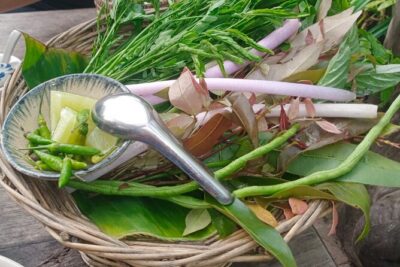
Siem Reap Cambodian Buddhist Water Blessing and Local Market
Read our review →
Siem Reap: Angkor Wat Sunrise and Market Tour by Jeep
Read our review →
This tour also appears in