Review · HANOI
Hanoi Maya Kitchen: Traditional Cooking Class & Market Tour
Hanoi Maya Kitchen puts you to work quickly: you visit a neighborhood market, choose ingredients, then head into the kitchen to make a full Vietnamese meal. I like the market stop because it gives you a clearer sense of local food than a classroom alone. I also like the generous menu, which includes four dishes, egg coffee, fruit, and a drink.
The main drawback is that the meeting details need care. The information names 38 Bat Su Street as the start point, 47 Hang Bong Street as the office in the pickup note, and both Yen Thai Market and Hang Da Market in the route details. Confirm the exact address before you set out.
Key points at a glance
- Five Vietnamese specialties: Make fried spring rolls, papaya salad, pho rolls, mixed pho, and egg coffee.
- A real market visit: Shop for fresh ingredients and learn about Vietnamese foods and possible substitutes.
- Hands-on spring-roll work: Rolling the nem evenly takes practice, making this more than a demonstration.
- A full meal at the end: Eat the dishes you prepare, with seasonal fruit and one drink included.
- Small enough to stay personal: The group limit is 15 people, with an English-speaking instructor.
- Strong value at $30: The price covers the market trip, ingredients, cooking lesson, meal, recipe, drink, and local wine tasting.
A market lesson before the cooking begins
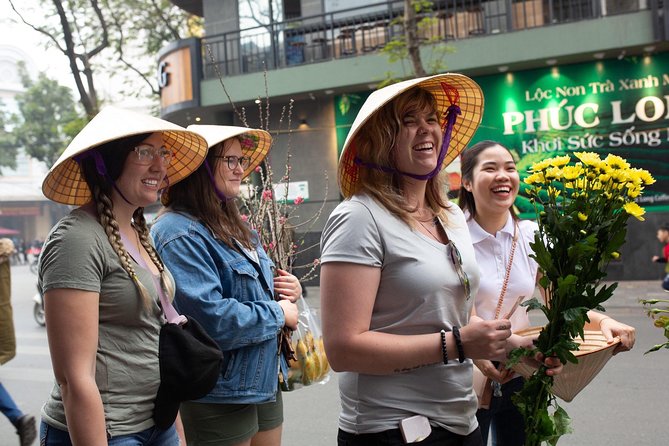
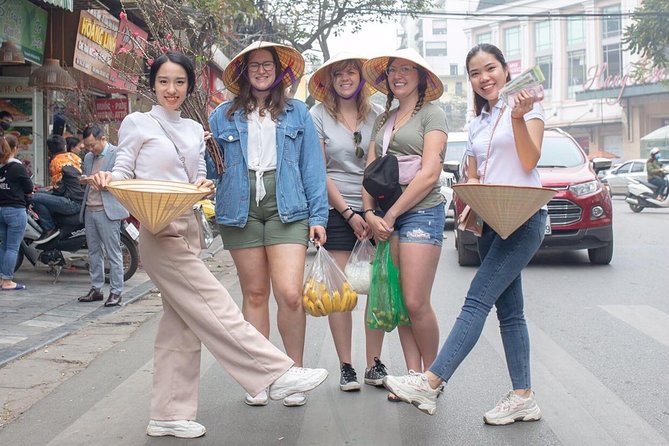
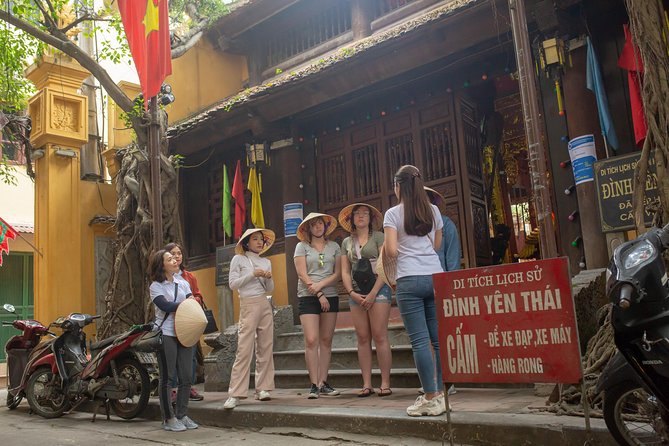
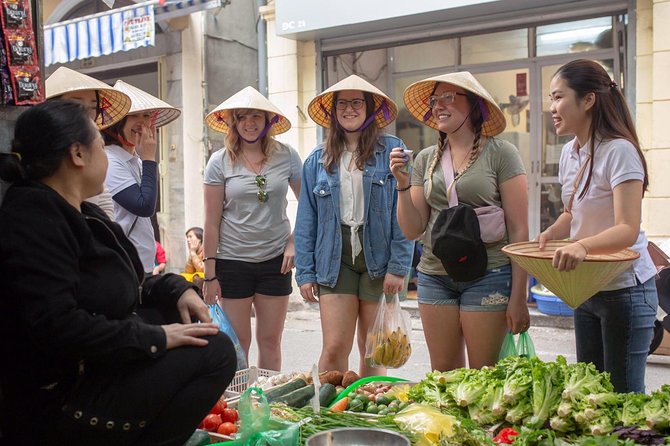
The class starts in Hanoi’s Old Quarter, with a welcome at the meeting point before walking to a nearby local market. The route is described as Yen Thai Market in the detailed schedule and Hang Da Market in the stop information, so you should check the day’s exact plan when booking or on arrival.
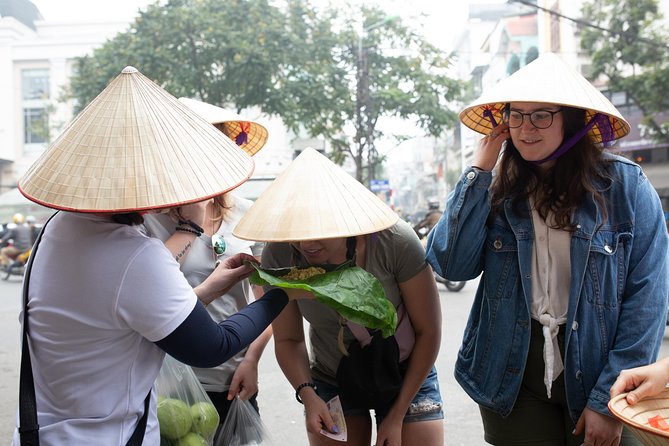
This market visit is one of the best reasons to choose this class. You are not simply handed a tray of premeasured ingredients. You see the food-buying stage first, learn what fresh Vietnamese ingredients look like, and get an explanation of substitutes you may use at home.
That matters because Vietnamese cooking depends on balance and texture as much as on a fixed recipe. A papaya salad, for example, is not just shredded fruit with sauce. The sweet and sour flavors need to work together, and the market helps you see the ingredients in their everyday setting.
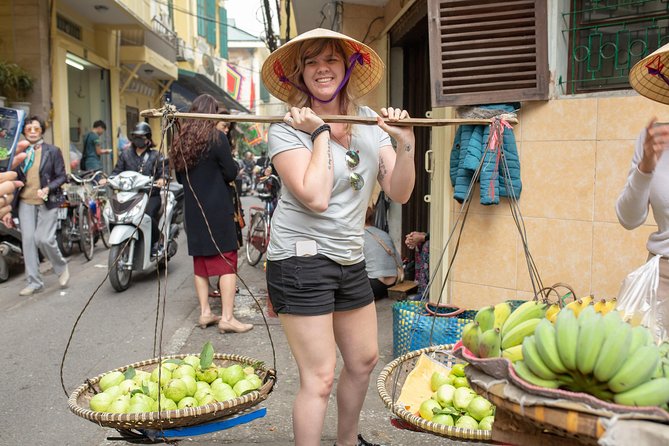
The market is local rather than a grand sightseeing stop. Expect a working food market, not a polished food hall designed for photographs. That makes the visit useful, but it also means the surroundings may feel busy and informal. Wear comfortable shoes and keep your belongings secure as you move through the streets and stalls.
The food-buying portion also gives your instructor a natural chance to explain Vietnamese ingredients. If you cook Asian food at home, the discussion of substitutes may be especially useful. You can leave with a better idea of which ingredients are essential and which can be replaced when you are far from Hanoi.
More Market and Cooking Class Tours in Vietnam
- Hanoi Cooking Class: Culture, Local Market & Meaning CSR Impact
★ 5.0 · 5,147 reviews - 5 Traditional Dishes Hanoi Cooking Class with Market Trip
★ 5.0 · 4,890 reviews - Vietnamese Food Cooking Class in Hanoi with Market Experience
★ 5.0 · 778 reviews
Rolling nem at the Hanoi Maya Kitchen
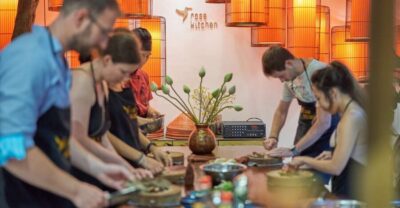
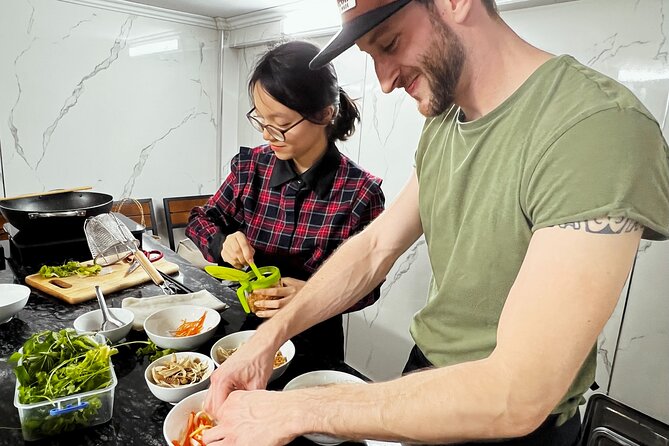
After the market, you go to the kitchen for the main lesson. The instructor leads you through the dishes step by step rather than simply cooking in front of you. English instruction is included, and the group can have up to 15 people.
The first dish is nem ran, or fried spring rolls. This is a smart choice for a hands-on class because the technique is simple to understand but not always easy to perform neatly. You need to handle the wrapper with care and roll the filling evenly. The class specifically focuses on making the rolls even and attractive, so your hands do most of the work.
I like this part because it gives you a skill you can repeat at home. You are not just tasting a famous dish. You are learning how the shape and tightness of the roll affect the finished result. The class presents fried spring rolls as a familiar dish for holidays and family feasts, which gives the recipe some useful cultural context.
The group setting can make the activity social, especially when everyone is working on the same task. At the same time, a group of 15 is not the same as a private lesson. If you want constant individual attention, you may need to ask questions and keep your work area visible to the instructor.
Once the rolls are prepared, they are fried for the meal. The available feedback points to the food being a major strength, and one session ended with enough food for a family of four to have leftovers packed in special containers. That is not guaranteed for every group, but it does suggest the portions are substantial.
Papaya salad and the sweet-sour balance
Next comes nom du du, or Vietnamese papaya salad. The lesson emphasizes its main flavor contrast: sour and sweet. That makes this dish a good introduction to the way Vietnamese cooking often builds interest through balance rather than heavy seasoning.
Papaya salad also provides a change of pace after the fiddly spring rolls. The ingredients are fresh and crisp, while the dressing brings the sharper flavors. You get to see how the components come together instead of receiving a finished bowl without explanation.
This is a useful dish for home cooks because it does not require the same frying work as the nem. The market visit helps here, too. You can look at the produce before cooking and hear about possible substitutes, which is helpful if green papaya is hard to find where you live.
Do not expect a quiet tasting menu. This is a working cooking class followed by a generous meal. You will be handling food, watching demonstrations, and eating several dishes in one sitting. The advice to skip breakfast is practical, since the menu can be more filling than the $30 price might suggest.
Pho rolls and mixed pho bring variety
The remaining savory dishes are pho cuon, or pho rolls, and pho tron, or mixed pho. They broaden the lesson beyond one style of Vietnamese food.
Pho rolls give you another chance to work with rice noodles in a different form from the better-known soup. Mixed pho shows how pho ingredients can be presented without a bowl of broth. Together, these dishes help you see that Vietnamese food is not limited to the steaming soup most visitors first associate with Hanoi.
The supplied menu does not give a full ingredient list or cooking time for each dish, so you should not expect a detailed technical breakdown of every preparation before booking. What is clear is that the instructor guides you through four classic dishes and that you eat the finished food afterward.
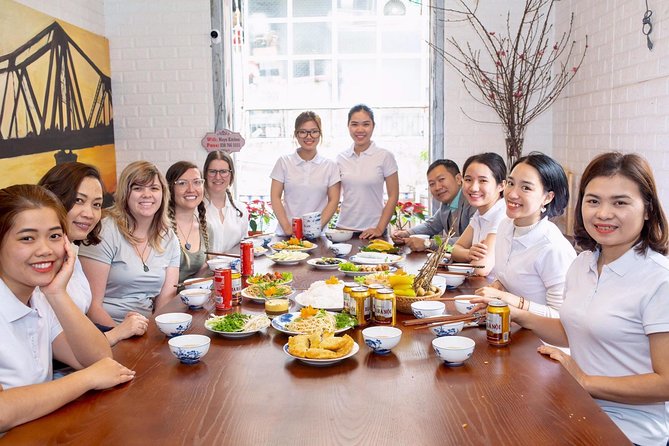
That meal is an important part of the value. You are not paying only for a short lesson and a taste. The food you make becomes lunch or dinner, joined by seasonal fruit for dessert and one included drink, such as water, tea, or coffee.
More Market and Cooking Class Tours in Hanoi:
- Hanoi: 5 Local Dishes Cooking Class with Meal & Market Visit
★ 5.0 · 420 reviews - Hanoi Cooking Class and Market Tour in Ancient House
★ 5.0 · 379 reviews - Rose Kitchen Hanoi: Market, Cooking & Culture Tour + Free PickUp
★ 5.0 · 342 reviews - Hanoi: Cooking Class in a Local Villa with Market Tour
★ 4.9 · 320 reviews
Making Vietnamese egg coffee
Ca phe trung, or egg coffee, is the sweet finish to the cooking session. It is a Vietnamese specialty and one of the more distinctive items on the menu.
The class includes the chance to make it yourself, not simply order it after the savory food. That gives the final part of the lesson a different feel from the spring rolls and salads. You have already worked with wrappers, vegetables, and noodles, then finish by preparing a drink that many people may not try in an ordinary coffee stop.
The class also includes local wine tasting. The supplied details do not specify the wine or the amount served, so treat it as a small included tasting rather than the main event. Seasonal fruit rounds out the meal and keeps the ending simple.
What the instructors add to the experience
The English-speaking instructors named in the feedback include Iris, Aurora, and Ruby. The reported sessions with them include clear step-by-step teaching, stories about Vietnam, singing with Aurora, and local food suggestions from Ruby.
Those details matter because the instructor shapes the class more than the menu does. A good cooking teacher keeps the pace moving, explains unfamiliar ingredients, and helps you recover when a spring roll does not come out evenly. The experiences associated with Iris, Aurora, and Ruby suggest a friendly, personal tone, but instructor assignment may vary on your date.
The local recommendations are also useful. Ruby shared places to try after the class, while Aurora added stories and even singing to the session. These extras are not listed as guaranteed parts of every booking, so think of them as possible touches rather than promised entertainment.
The class has a maximum of 15 people. That is large enough to create a social atmosphere but small enough to avoid the scale of a major food demonstration. If you prefer a private lesson, this may not be the right format. If you like meeting people while doing something practical, the size should work well.
What $30 includes, and where the value lies
At $30 per person, this is a strong package for a four-hour activity in central Hanoi. The cost includes the local market tour, food buying, an English-speaking instructor, all menu ingredients, the meal, seasonal fruit, one drink, local wine tasting, and a cooking recipe.
The market stop adds value because it turns the class into a cultural activity as well as a meal. The recipe adds value after you leave. You can try the dishes again at home, especially the spring rolls and papaya salad, which are likely to be more practical for many home kitchens than a complex restaurant dish.
The food itself also makes the price easier to justify. You prepare four savory dishes and egg coffee, then sit down to eat. The portions may be generous enough that you need to pace yourself, and one reported session had extra food taken away in containers.
There are limits. Hotel pickup and drop-off are not included. You must reach the meeting point yourself, and the conflicting address details mean you should confirm the correct location in advance. The activity ends back at the meeting point, so plan your next stop from there rather than expecting transport elsewhere.
Mobile ticketing is included, and booking confirmation is provided at the time of booking. Service animals are allowed, and the meeting area is near public transportation. These are useful practical points, but the tour does not include private transfers.
Who should book this cooking class
I would choose this class if you want more than a meal and prefer to take part in the preparation. It suits first-time visitors who want an introduction to Vietnamese ingredients, as well as home cooks who want recipes they can repeat.
Families can also find good value here. The menu is broad, the meal is substantial, and the rolling work gives children or teenagers a clear task, though the suitability of the kitchen activity will depend on each child.
The class is less suited to someone who wants a quiet, high-end dining experience or a tightly timed private lesson. The market is informal, the group may reach 15 people, and the cooking involves active work. You should also avoid eating a large meal beforehand.
The four-hour duration gives the day enough room for both market and kitchen time. It is not a quick stop between major sights, so schedule it as one of your main activities in Hanoi rather than trying to squeeze it into a narrow gap.
Booking details worth checking first
The published meeting information needs clarification. One section gives the start point as 38 P. Bat Su, Hang Bo, Hoan Kiem, Hanoi. The pickup note refers to the Crossing Vietnam Tour office at 47 Hang Bong Street, while the route information names Yen Thai Market and Hang Da Market.
Because the tour does not include pickup, this is the one detail I would confirm before leaving your hotel. Keep the mobile ticket available and allow time to reach the meeting point. Public transportation is nearby, but the activity itself begins on foot from the stated meeting location.
Free cancellation is available if you cancel at least 24 hours before the local start time. Cancellations made within 24 hours are not refunded, and changes inside that window are not accepted.
Should you book Hanoi Maya Kitchen?
Book it if you want a practical introduction to Vietnamese food with a local market visit, a full meal, and several recipes in one four-hour session. The strongest reasons are the hands-on spring-roll work, the range of dishes, the egg coffee, and the chance to learn from instructors such as Iris, Aurora, or Ruby.
I would be more cautious if you need a private class, dislike group cooking, or want every meeting detail to be perfectly clear at the time of booking. Confirm the address first, then expect a friendly, food-heavy activity with good value for $30.
FAQ
How long does the Hanoi Maya Kitchen experience last?
The activity lasts approximately four hours.
What dishes will I make?
You will make fried spring rolls, papaya salad, pho rolls, and mixed pho. The menu also includes Vietnamese egg coffee.
Is dessert included?
Yes. Seasonal fruit is included for dessert.
Is a drink included?
Yes. One drink is included, such as water, tea, or coffee.
Does the experience include a market visit?
Yes. You visit a local market to buy fresh ingredients and learn about Vietnamese foods and possible substitutes.
Is hotel pickup included?
No. Pickup and drop-off are not included. You must reach the meeting point yourself.
Where does the activity start?
The stated start point is 38 P. Bat Su, Hang Bo, Hoan Kiem, Hanoi. Another note refers to the Crossing Vietnam Tour office at 47 Hang Bong Street, so confirm the exact meeting address before the day of the class.
Can I cancel for a full refund?
Yes, if you cancel at least 24 hours before the experience starts. Cancellations within 24 hours are not refunded, and changes during that period are not accepted.
New market tours around Hanoi
- Hanoi: Vietnamese Cooking Class- Market Tour with Local Chef★ 5.0 · 2 reviews
- Hanoi’s Culinary: Authentic Cooking Class and Local Market★ 4.8 · 5 reviews
- Hanoi: Old Quarter Market Tour and Cooking Class with Meal★ 4.8 · 192 reviews
- Hanoi Food Adventure: Vietnamese Market Tour & Cooking Class★ 4.8 · 5 reviews
- Hanoi Cooking Class: Market Tour, Free Recipe & Beverages★ 5.0 · 10 reviews
- 2 Day Sapa-Bac Ha Market: Night Train& Homestay-Bus Ha Giang★ 5.0 · 2 reviews
- Weekend Hanoi Night Market & Street Food Tour★ 4.5 · 47 reviews
- Hanoi: Maya Traditional Cooking Class & Market Tour★ 4.9 · 243 reviews
Hanoi Market Tours, side by side.
Hanoi Cooking Class: Culture, Local Market & Meaning CSR Impact
Read our review →
5 Traditional Dishes Hanoi Cooking Class with Market Trip
Read our review →
Vietnamese Food Cooking Class in Hanoi with Market Experience
Read our review →
Hanoi: Handcrafted Wood Carving Workshop with Local Artisan
Read our review →
Hanoi: 5 Local Dishes Cooking Class with Meal & Market Visit
Read our review →
Hanoi Cooking Class and Market Tour in Ancient House
Read our review →
Rose Kitchen Hanoi: Market, Cooking & Culture Tour + Free PickUp
Read our review →