
Review · MOROCCO
Essaouira: Sqala du Port, Medina Ramparts & Fish Market Tour
Essaouira’s best sights are packed into a walkable old town, but its real character hides in the details: a carved wooden door, a former synagogue, a cannon facing the Atlantic, or a fish auction at the port. This tour brings those details together with the Skala du Port, the Medina, the Mellah, and the fish market.
I like the mix of sea views and everyday life. I also like that guides such as Aziz, Zaid, and Rachid adjust the pace, answer plenty of questions, and usually show artisan workshops without forcing you to buy. The main drawback is that three hours can feel short, especially if you want a full look at the market or time to shop.
Key points
- Atlantic fortifications: Walk the Skala du Port, an 18th-century bastion lined with cannons and open to wide ocean views.
- A useful first-day walk: Learn the Medina’s layout and return later to shops, cafés, restaurants, and streets that caught your eye.
- Crafts with a local connection: See thuya wood carving, marquetry, silver work, textiles, and other handmade goods.
- The Mellah adds depth: Hear about Essaouira’s Jewish quarter and the long contact between Jewish and Muslim communities.
- A working port, not just a postcard: Finish around the fish market, where the day’s catch arrives from the sea.
- Good value at $22: The price works well for couples or small groups, though solo visitors may find the cost less attractive if charged at a higher single-person rate.
Why Essaouira makes a good guided walk
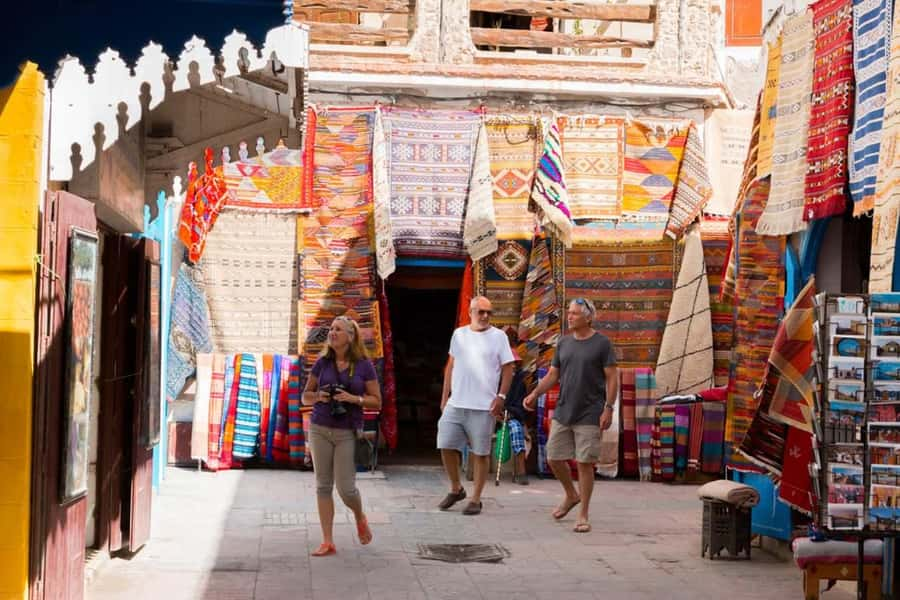
Essaouira is easy to enjoy on your own, but it is not always easy to understand on your own. The white façades, blue shutters, narrow lanes, market stalls, ramparts, and port can blur into a pleasant walk unless someone explains what you are seeing.
A local guide gives the town a clearer shape. You learn how its coastal position brought Arab, Berber, Jewish, Portuguese, and other European influences together. You also get practical orientation: where the main gates are, how the souks connect, which streets lead toward the harbor, and where you may want to return after the tour.
The guide is the heart of the experience. Aziz is often described as warm and proud of his home city. Zaid is calm, patient, and happy to handle detailed questions about culture, food, prices, and local customs. Rachid, Ahmed, Roshida, Ian, and Abdelaziz have also led this walk, depending on the date and language requested.
The style is personal rather than formal. You can ask about architecture, family life, religion, shopping, cooking, or films made in town. Guides have also shared suggestions for restaurants and places to visit later, which makes the walk useful beyond its scheduled three hours.
More Fish Market Tours around Morocco:
- Essaouira: Sqala du Port, Citadel, Fish Market & Medina Tour
★ 4.6 · 73 reviews - Tokyo Tsukiji Fish Market Food and Culture Walking Tour
★ 5.0 · 3,184 reviews - Tokyo: Tsukiji Fish Market Food and Walking tour
★ 5.0 · 1,724 reviews
Starting at Bab Sbaa and entering the Medina
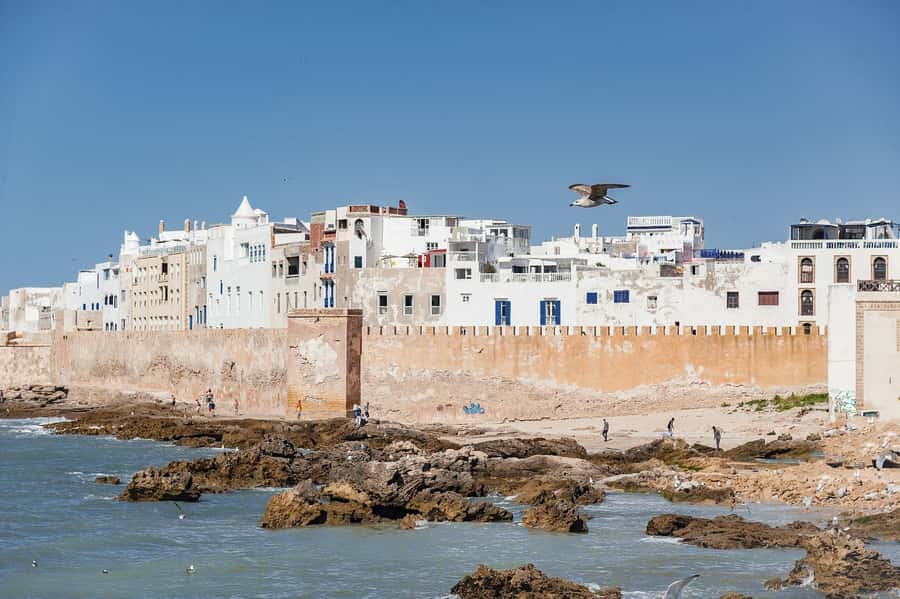
The usual meeting point is in front of Bab Sbaa Gate, one of Essaouira’s main entrances. If you stay in the Medina, pickup at your riad reception may be available, but confirm this when arranging the tour. The provider sends the guide’s name, meeting details, and practical tips by WhatsApp a day or two before the walk.
Starting at Bab Sbaa is convenient because you are already near the old town, port, and main streets. It also gives the guide a clear place to find you. Wear comfortable shoes. The route is on foot, and the old streets can be uneven in places. Bring water and sunglasses, since the Atlantic light can be strong even when the air feels cool.
The Medina portion lasts about 75 minutes. Expect a steady walk through lanes lined with whitewashed buildings, blue doors, small shops, food stalls, workshops, and homes. The guide points out architectural details that are easy to pass without a second glance.
This is where the tour earns its keep. Instead of merely following the busiest shopping streets, you may be taken through quieter corners and less obvious passages. The walk also gives you a sense of how the old town functions as a neighborhood, not simply as a place built for sightseeing.
Allow time for photographs, but do not expect a long shopping session during every stop. The point is to understand the area first. You can come back later with a better idea of where you want to spend your money.
Thuya wood, silver, and the craft tradition
Essaouira is especially known for thuya wood furniture, carving, and marquetry. The wood is used in boxes, tables, decorative panels, and smaller objects, often with careful inlay work. A workshop visit can show you the making process and help you tell hand-finished work from mass-produced souvenirs.
Silver work is another important part of the town’s craft identity. You may see artisans working with tools and materials, then browse finished pieces. Textiles and other local goods also appear along the route.
The useful part is not simply seeing attractive objects. A guide can explain what is made locally, how an item is produced, and where quality varies. Several guides have been praised for showing shops without applying pressure to purchase. That matters in a Medina, where a friendly invitation can quickly turn into a sales conversation.
Still, keep your expectations sensible. This is not a dedicated shopping tour, and the three-hour schedule leaves limited time for comparing prices. If you plan to buy thuya wood or silver, note the workshop you prefer and return after the tour. You will have more time to inspect the work and decide without holding up the group.
The Mellah and Essaouira’s Jewish past
The walk through the Mellah, Essaouira’s old Jewish quarter, lasts about 30 minutes. This is one of the most worthwhile parts of the route because it adds a less obvious layer to the town.
Your guide explains how Jewish and Muslim communities lived alongside one another for centuries and how trade helped shape Essaouira. The quarter’s buildings, lanes, and religious sites preserve traces of that past, though not every detail is immediately clear to someone passing through alone.
Some tours include a synagogue or a look at Jewish architecture. The exact access can depend on timing and local conditions, so treat it as part of the historical walk rather than a guaranteed interior visit.
This section is also a good test of the guide’s skill. The subject deserves more than a quick label on a map. Guides such as Roshida have brought in personal observations about Moroccan customs, daily life, and the town’s mixed cultural background. You can ask questions here, and the conversation often becomes more interesting than a prepared speech.
More market tours around Morocco:
- Marrakech: Bahia Palace, Saadian Tombs, Souk and Medina Tour
★ 4.7 · 4,974 reviews - Marrakech: Ben Youssef, Secret Garden, & Souks Walking Tour
★ 4.6 · 2,802 reviews - Marrakech: Colorful Medina Souks Guided Walking Tour
★ 4.7 · 2,470 reviews - Marrakech: Traditional Moroccan Cooking Class & Market Visit
★ 4.8 · 1,861 reviews
Bab Doukkala market and the ordinary town
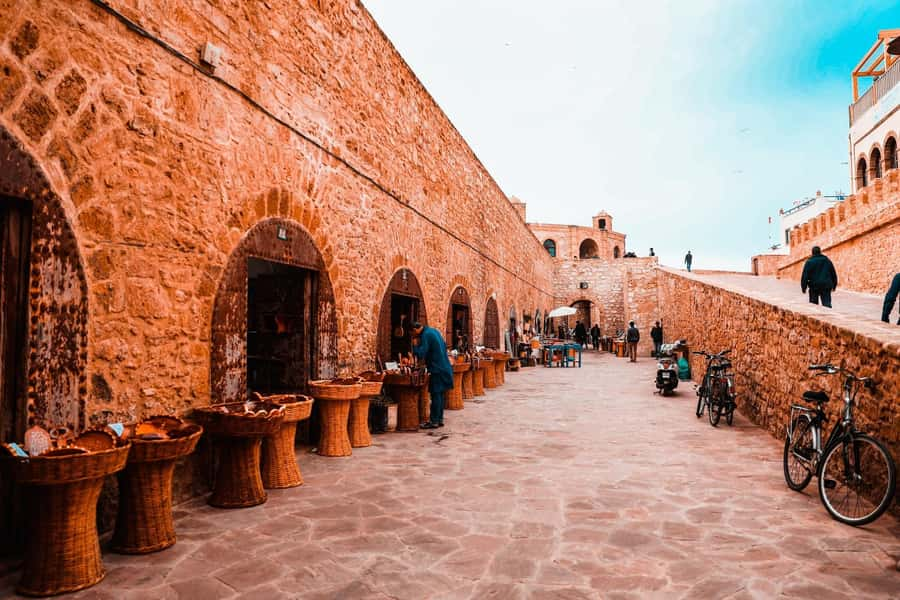
The stop at Marketplace Bab Doukkala takes around 30 minutes. This is a chance to see the Medina as a place where people shop, work, and meet, rather than as a collection of historic sights.
Expect market sounds, changing smells, food displays, and small-scale commerce. The guide can help you read the scene and explain what you are seeing. If you are curious about local food or prices, this is a natural point to ask.
The market may feel less polished than the main tourist streets, which is part of its value. It also means the experience can depend on the time of day and the day’s activity. You should not expect a staged performance or a carefully arranged food tasting. This is a short look at local trade within a walking tour.
The Skala du Port and Atlantic views
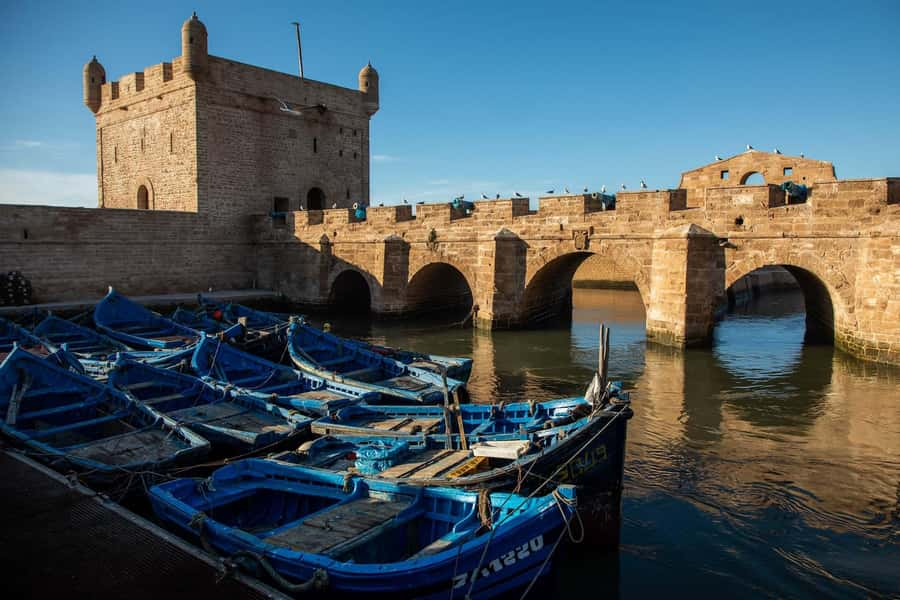
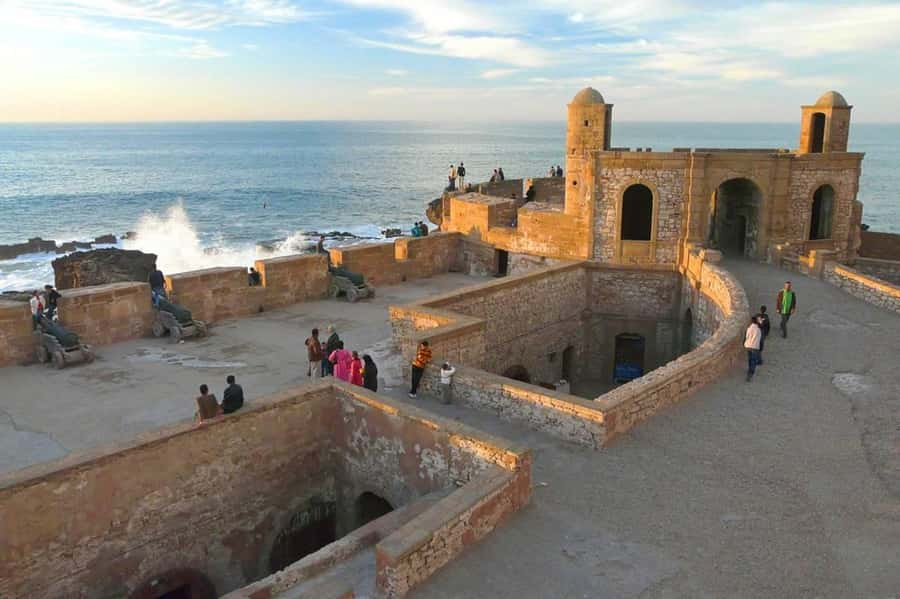
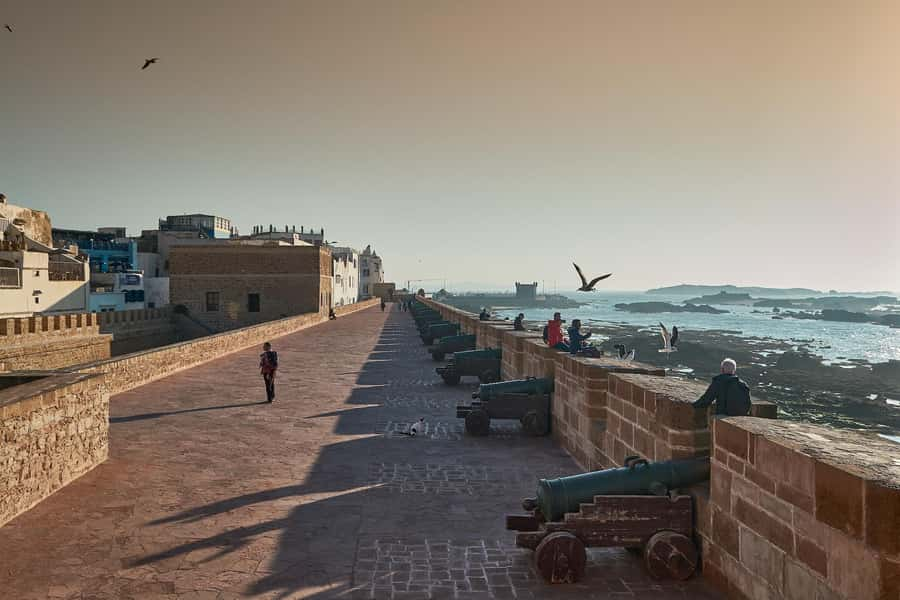
The Skala du Port is the most instantly dramatic stop. This 18th-century seafront bastion is lined with cannons and faces the Atlantic. Give yourself time to look beyond the stonework. The water, harbor activity, walls, and open horizon explain why Essaouira became such an important port.
The fortifications also help you understand the town’s position in Moroccan and colonial history. The guide connects the ramparts to the city’s maritime past and explains how the port needed protection.
The route includes about 40 minutes around the Skala du Port and historic ramparts. That is enough for photographs, a walk along the walls, and a good explanation, though wind or rain can change the experience. Essaouira’s coast is exposed, so bring a light layer even on a sunny day.
The fort is also linked to the city’s screen history. Your guide may point out places associated with Game of Thrones and Othello. These references add a bit of fun, but they should remain a side note. The stone walls and harbor are interesting enough without pretending the town is only a film set.
The port and fish market
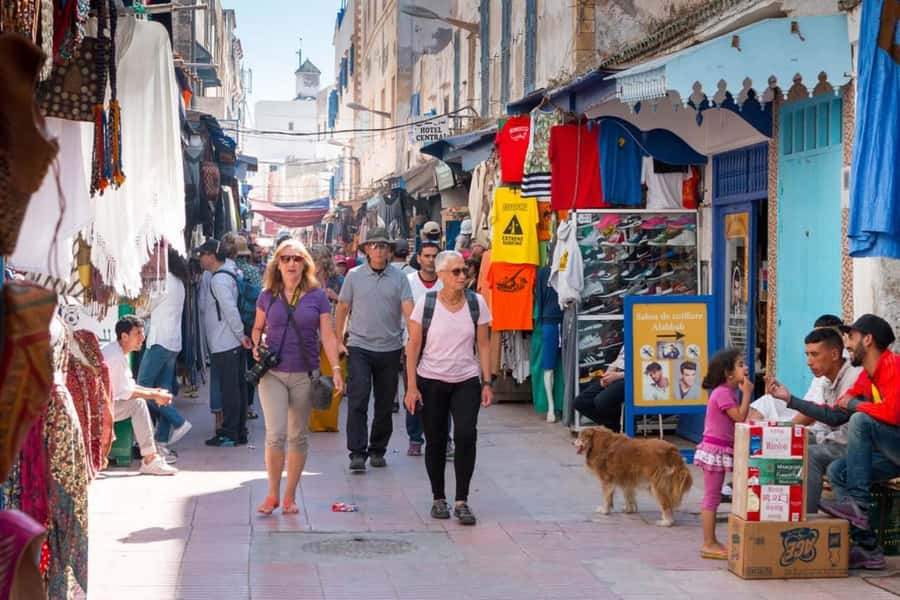
The final major stop is the port and fish market, scheduled for about 30 minutes. This is where the tour moves from old walls and craft shops to working coastal life.
Fish arrives fresh from the sea, and the port has a different rhythm from the Medina. You may see boats, nets, stalls, restaurant activity, and the day’s catch being sold. The guide helps you understand how the port still shapes Essaouira’s food and local identity.
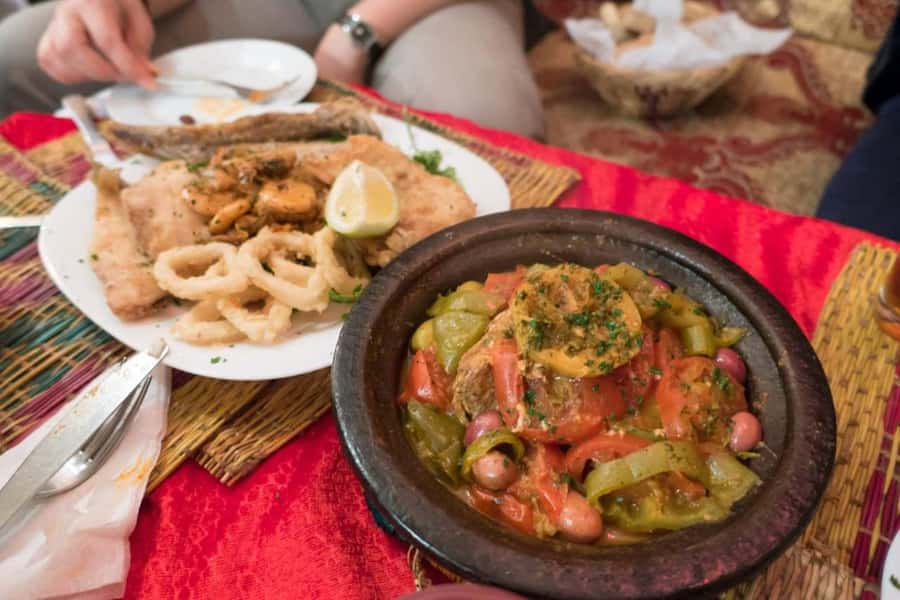
If you want seafood afterward, this is the place to ask for advice. The tour itself does not include a meal, but the guide can point out local restaurants. Fresh fish is a natural choice, though you should check prices before ordering.
Weather can affect this part of the walk. One tour ended without the fish market because of poor conditions, and the change was not made clear to the group. If the market matters most to you, confirm the plan with the guide at the start. The harbor and Medina still offer plenty to see, but the fish market is not something to assume will happen in every condition.
What the three-hour timing really means
The advertised duration is three hours, with roughly 75 minutes in the Medina, 30 minutes in the Mellah, 30 minutes at Bab Doukkala, 40 minutes at the Skala du Port, and 30 minutes at the fish market. In real use, the pace can change with questions, photographs, weather, and the size of the group.
Some walks have effectively become private when other people did not attend. That can give you more freedom and a slower pace. A private group is also available if you want more control over the route.
The schedule is broad rather than rigid. Guides have adjusted walks for children, older family members, slower walkers, and particular interests. Some people spend more time on history, others on craft work, food, shopping, or local customs.
The tour is not suitable for people with mobility impairments. Even for able walkers, expect to be on your feet for most of the time. If you need a slower pace, say so at the start. Guides have shown patience with people who needed extra time, but it is better to make your needs clear.
Is $22 a fair price?
At $22 per person, this is good value if you want a proper introduction to Essaouira rather than a simple escort through the old town. You are paying for a licensed local guide, access to local knowledge, time for questions, and a route that joins the Medina, Mellah, market, ramparts, port, and fish market.
The value is strongest for a first visit. Once you understand the layout and hear the background, you can spend the rest of your stay exploring independently. The guide may also save you time by helping you find artisan areas and restaurants that you might otherwise pass.
The price is less attractive for a solo visitor if the booking structure results in paying twice the normal per-person amount. One solo participant specifically found that arrangement expensive. Couples and small groups get the clearest value, while solo visitors should check the exact price before confirming.
Transportation is not included. Pickup from a riad in the Medina may be arranged, but this does not mean a car transfer is included. If you are staying outside the old town, plan your own way to Bab Sbaa unless the provider confirms another arrangement.
Who will enjoy this Essaouira walk?
I would choose this tour for a first morning or afternoon in town. It gives you a framework for the streets and leaves you free to return to the places that interest you most.
It suits you especially well if you:
- Want history explained in plain language rather than read from a plaque
- Enjoy meeting a local guide and asking spontaneous questions
- Care about crafts, food, Jewish heritage, and daily life
- Prefer walking to riding in a vehicle
- Want suggestions for shopping and restaurants without a forced buying stop
- Are traveling with family and need a guide who can adjust the pace
It may not suit you if you want a long shopping session, a food tasting, or a completely private route with no fixed stops. It is also a poor fit if walking for three hours is difficult.
The tour is offered in English and French. The guide names vary, but Aziz and Zaid appear often in the scheduling, with Rachid, Ahmed, Roshida, Ian, and Abdelaziz also possible. If a particular guide matters to you, ask before booking rather than assuming.
Should you book it?
Book this walk if you want Essaouira explained through its port, streets, crafts, and people. The strongest features are the local guides, the mix of major sights and smaller details, and the chance to see artisan work without being pushed to buy.
I would book it early in your stay, then return on your own to the shops, restaurants, and port areas you want to explore further. Keep your schedule flexible if weather is poor, and confirm whether the fish market and riad pickup are operating as planned.
At $22, it is a sensible choice for couples and small groups. Solo visitors should check the final price carefully. For most people who want more than a pleasant wander through the Medina, this is a useful and good-value introduction to Essaouira.
FAQ
Where does the tour meet?
The usual meeting point is in front of Bab Sbaa Gate in Essaouira. If you are staying in the Medina, the guide may meet you at your riad reception.
How long does the tour last?
The scheduled duration is three hours. The walk covers the Medina, Mellah, Bab Doukkala market, Skala du Port, and fish market.
Which languages are available?
Live guiding is available in English and French.
Is transportation included?
Transportation is not included. Optional pickup may be arranged for people staying in the Medina, while other participants generally meet the guide at Bab Sbaa Gate.
Is the tour private?
A private group option is available. Depending on bookings, a scheduled group may also become a much smaller walk.
What should I bring?
Bring comfortable shoes, water, and sunglasses. The activity is not suitable for people with mobility impairments.
New market tours around Morocco
- tangier: guided tour of the medina souks★ 3.7 · 11 reviews
- Souks tour of Marrakech ( 3 hours )★ 5.0 · 5 reviews
- Marrakech: Hidden Souks Shopping Tour with Private Guide★ 4.1 · 53 reviews
- Marrakech: Half-Day Medina Markets Tour★ 4.5 · 11 reviews
- Edgy 8 Dish Private, Fusion Cooking Class, Menu Plan, Market★ 4.9 · 31 reviews
- Marrakech: Bahia Palace, Madrassa & Souks Guided Tour★ 4.8 · 47 reviews
- Marrakech: Vibrant Souks, Local Artisans & Medina Experience★ 4.5 · 66 reviews
- Marrakesh: Private Cooking Class & Local Market Shopping★ 4.7 · 15 reviews
Morocco Market Tours, side by side.
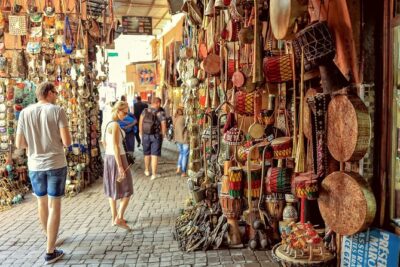
Marrakech: Bahia Palace, Saadian Tombs, Souk and Medina Tour
Read our review →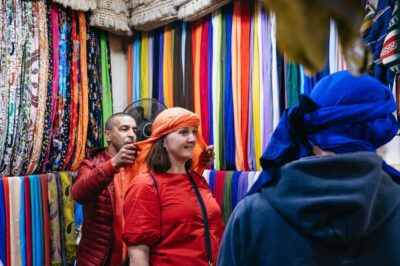
Marrakech: Colorful Medina Souks Guided Walking Tour
Read our review →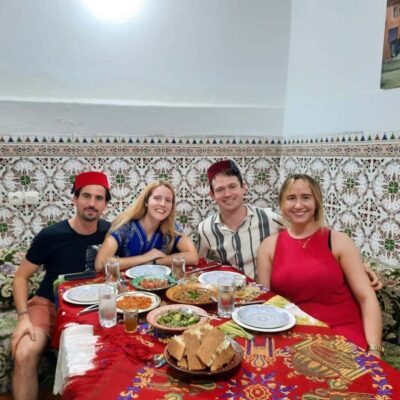
Marrakech: Traditional Moroccan Cooking Class & Market Visit
Read our review →
Moroccan Cooking Class & Marrakech Market Visit with Chef Khmisa
Read our review →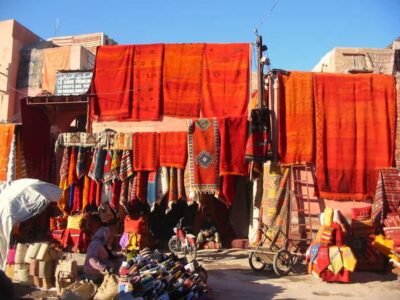
Marrakesh: Guided Souk Shopping Tour with a Local Guide
Read our review →
Shopping in the Souks of Marrakech Private Tour
Read our review →
Marrakech: Bahia Palace, Ben Youssef Medersa, & Souks Tour
Read our review →
Fes: Royal Palace, Madrasa, Tannery & Souks and Medina Tour
Read our review →This tour also appears in