
Review · ATHENS
Athens: Market Tour with Food Tastings
Athens reveals itself especially well through food. This three-hour walk links Varvakeios Agora Market with Plaka and the Ancient Agora, so you move from meat stalls and sesame bread to the places where Athenians once debated public life. I like the clear mix of old and new, and I like that the tastings are tied to everyday Greek food rather than treated as fancy extras.
I also appreciate the stop for traditional pie and the choice of a final sweet, such as koulourakia or loukoumades. One point to consider: the walk is not suitable for wheelchair users or people with mobility impairments, and Athens streets can be tiring in warm weather.
Key points to know
- Start at Syntagma Square: Meet in front of the fountain, with time to get a coffee before walking.
- Taste local staples: Sample koulouri, traditional Greek pie, and a Greek dessert.
- See Varvakeios Agora: Walk through Athens’ Central Food Market, with stalls selling meat, fish, cheese, herbs, and spices.
- Connect food with history: Visit the Ancient Agora and Roman Agora while moving through Plaka.
- Guide-led in English: The tour lasts three hours, and guide Nellie has tailored the route to individual interests.
- Plan for the pavement: Bring comfortable shoes, water, a sun hat, and a camera.
From Syntagma Square to the food stalls of central Athens
The tour begins at Syntagma Square, in front of the fountain. This is a useful meeting point in the middle of Athens, and you can grab a coffee before the walk gets going. Coffee is not listed as part of the tour, so think of it as a chance to arrive early and get settled, not as one of the included tastings.
From Syntagma, you head along Ermou Street. This is one of the city’s main shopping avenues, lined with modern stores and full of daily city life. I like this opening because it gives you a quick look at present-day Athens before the route turns toward older neighborhoods and the market.
The transition matters. Athens is not a city where ancient ruins sit apart from ordinary life. Modern shops, food vendors, old churches, market stalls, and archaeological sites often appear within a short walk of one another. This route lets you see that change on foot instead of viewing the city through a vehicle window.
You should wear shoes that can handle several hours of walking. The tour does not provide transport, and its short duration means the route moves at a steady pace rather than stopping for long breaks at every point.
More Market Food Tours in Athens:
- Athens: Food Market Visit and Cooking Class with Wine
★ 4.9 · 1,087 reviews - Athens, Greek food tour including market visit
★ 5.0 · 618 reviews - Classic Athens Food Tour with Local Drink & Market Visit
★ 4.9 · 99 reviews
Reading Athens through Varvakeios Agora Market
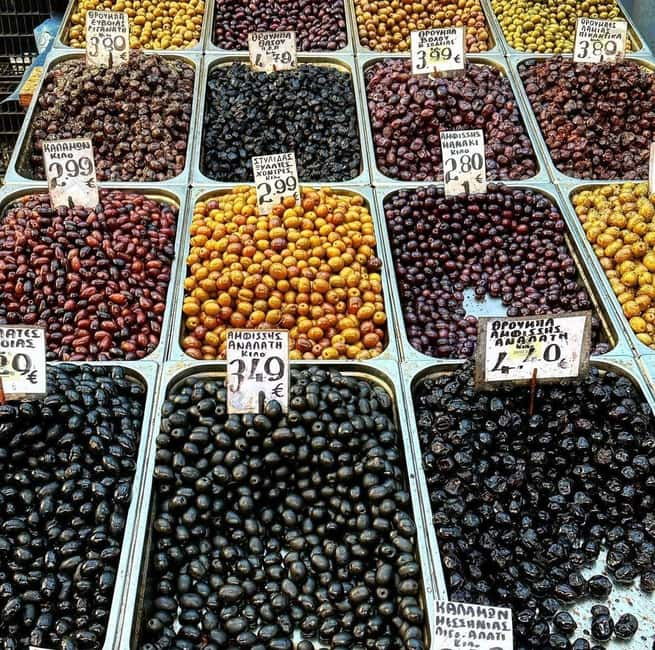
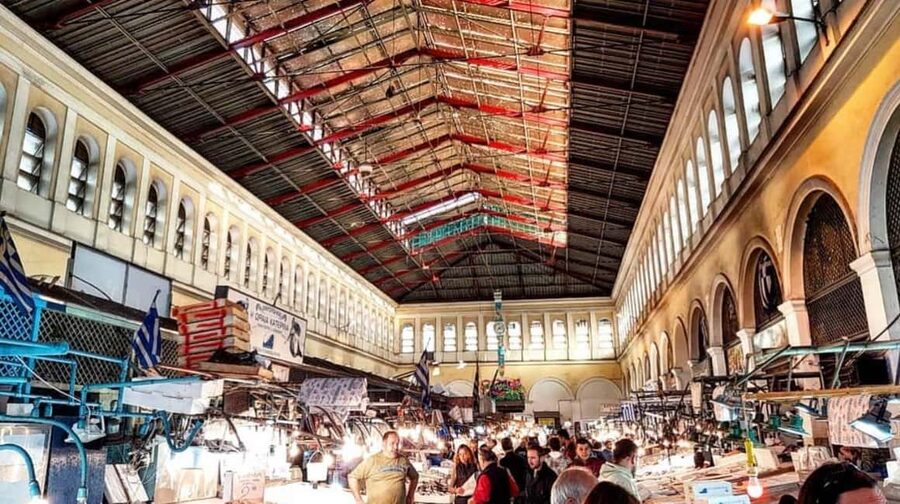
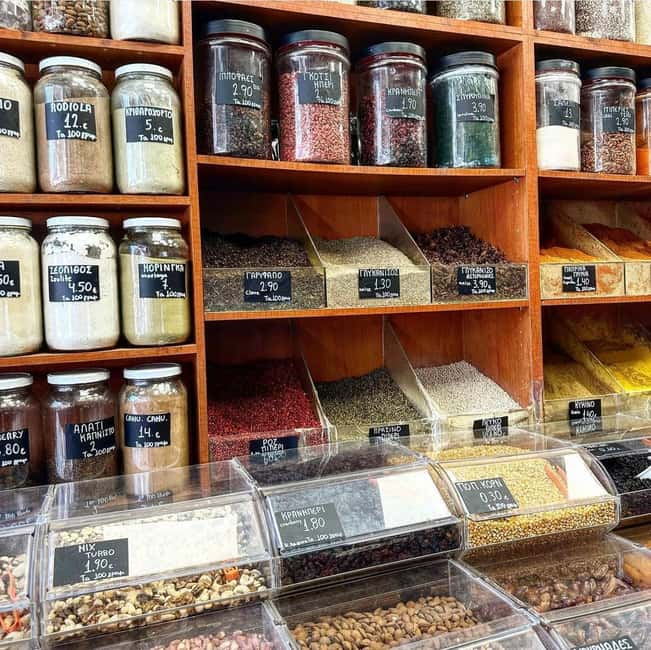
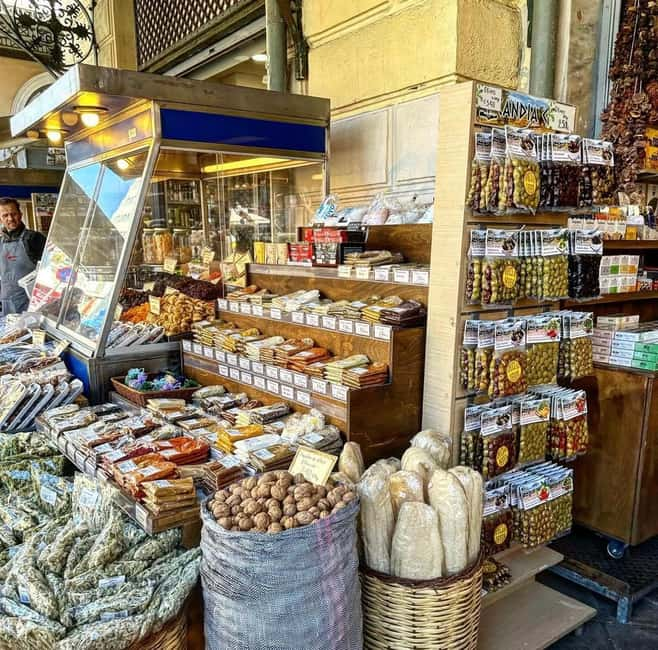
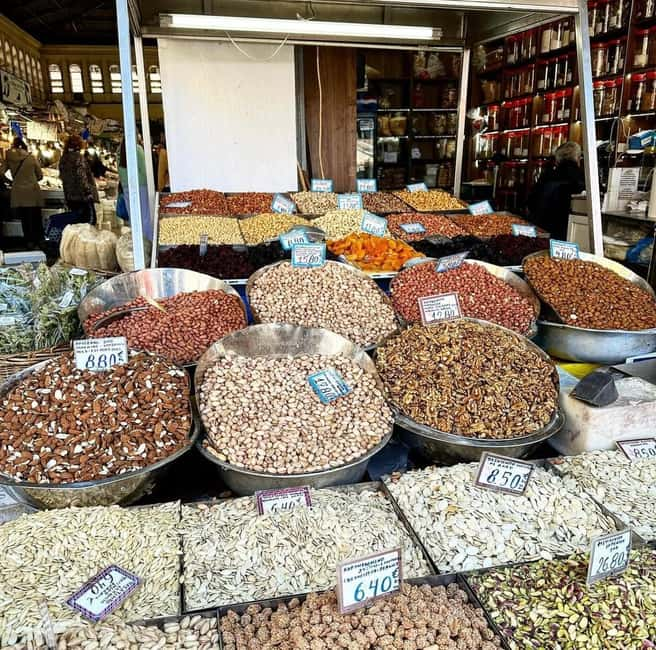
The main food stop is Varvakeios Agora, also called Athens’ Central Food Market. It is a working market, not a polished food hall designed only for sightseeing. You can expect stalls with fresh meat, fish, cheeses, herbs, spices, and other ingredients used in Greek cooking.
For me, this is the strongest part of the tour for anyone who wants to understand how food fits into Athens life. A market tells you what people buy, cook, and eat. It also gives you a sharper sense of place than a standard restaurant meal, since the products are shown in their everyday setting.
The market can feel lively and crowded, so stay close to your guide and keep your belongings secure. The supplied details do not state the exact group size, and the market is a public food market rather than a quiet museum. If you prefer calm spaces and slow, private tastings, this part may feel busy.
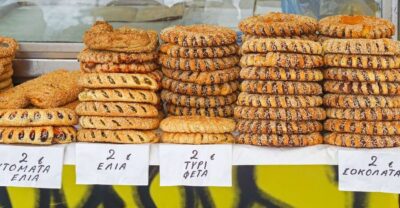
You will taste a koulouri from a local vendor. This is a sesame-covered bread ring, simple and filling, and a good example of Greek street food. It is not a complicated dish, but that is part of its value. You are trying something people can eat as an ordinary snack, not just a dish prepared for tourists.
The market stop also gives the guide a natural place to explain Greek ingredients. You may come away with a better sense of how cheese, herbs, spices, meat, and fish fit into the country’s cooking. The exact market tastings beyond the listed koulouri are not specified, so do not book this expecting a long series of samples from every stall.
Plaka’s narrow lanes and the route to ancient Athens
After the market, the walk heads into Plaka. Its narrow, winding streets feel very different from Ermou Street and the open market aisles. This is the part of the route where you can slow down, look up, and enjoy Athens as a neighborhood rather than only as a collection of monuments.
Plaka leads toward the Ancient Agora. The Agora was once the center of Athenian public life, where citizens met to discuss politics, philosophy, and civic matters. That context adds weight to the food stops. You are not simply eating your way through a shopping district. You are following a route through places tied to both ordinary life and the public life of the ancient city.
I like that the tour puts the Agora after the market. First you see food as something bought and prepared today. Then you reach the place where Athenians gathered for civic life in antiquity. The contrast helps you understand that Athens has always been a city shaped by public spaces.
The tour description says you will wander through Plaka to the Ancient Agora and also visit the Roman Agora. It does not state how much time is spent inside each archaeological site or whether entrance fees are included in the price. If entering the ruins is important to you, check that point before booking. The tour clearly provides a guided walking route around these historic areas, but the supplied information does not promise a full archaeological-site visit or a specific monument interior.
The Roman Agora and Athens under Roman rule
The Roman Agora offers another layer to the walk. It was built during the Roman period as a new marketplace after Athens became part of the Roman Empire. Seeing it after the Ancient Agora gives you a simple way to compare two periods of the city’s development.
This is useful context for visitors who want more than isolated ruins. The Ancient Agora represents the civic center of earlier Athens, while the Roman Agora shows how the city changed under Roman rule. You do not need to be an ancient-history specialist to follow the basic story, and the guide can connect the sites as you walk.
The tour’s historical value depends in part on the guide. One verified booking specifically praised Nellie for explaining Athens’ past and for adjusting the walk to personal interests. That is a helpful sign for anyone who likes to ask questions instead of listening to a fixed speech. Still, Nellie’s name is tied to that particular experience, so I would not assume she leads every departure.
The route does not promise a long lecture at either Agora. That is probably a good fit if you want history in manageable portions, especially alongside food. If your main goal is detailed archaeology, a dedicated Ancient Agora tour would likely give you more time at the ruins.
More market tours around Athens:
- Athens: Classic Cooking Class with Market Visit and Wine
★ 5.0 · 1,101 reviews - Athens Market Tour and Cooking Class in a Beautiful Garden
★ 5.0 · 122 reviews - Athens: Cooking Class, Market Visit & Lunch at Local Tavern
★ 4.9 · 27 reviews - Athens Market Tour and Cooking Class in a Beautiful Garden
★ 5.0 · 8 reviews
Traditional Greek pie and the story behind it
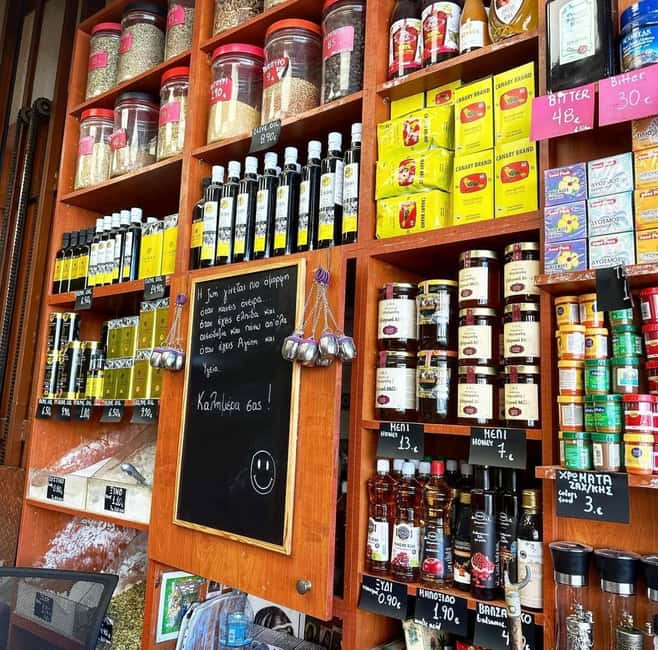
A stop at a local shop adds another food lesson. You taste a traditional Greek pie and hear about its history. Greek pies can take many forms, but the specific type served on this tour is not named, so you should treat the tasting as a sample rather than expect a particular filling or pastry.
This stop works because it links technique and tradition. A pie is more than a quick snack. It reflects the way Greek cooking turns simple ingredients into something portable, satisfying, and suited to family kitchens or local shops. The guide’s explanation gives the tasting a reason to remember it.
I find this kind of stop more useful than a menu of unrelated bites. You taste one item, learn why it matters, and then continue walking. The tour does not claim to provide a full meal, and three hours with several samples should not replace lunch if you arrive hungry.
The exact portion size is not provided. Plan for tasting portions, not a sit-down feast. That makes the tour a good choice before dinner or as a way to add local food context to a sightseeing day.
Finishing with koulourakia or loukoumades
The final tasting is a Greek dessert. You can choose from options such as koulourakia or loukoumades. Koulourakia are traditional Greek cookies, while loukoumades are small sweet dough treats. The choice gives you a lighter, more relaxed finish after the savory market and pie stops.
I like ending with something sweet because it leaves room for a personal choice. You can pick the kind of treat that appeals to you instead of receiving one fixed dessert. The available selection may vary, so the tour does not guarantee that every named dessert will be offered at every departure.
This is also a useful point to remember about the tour’s overall scale. The experience is about sampling and learning, not about sitting down for a full Greek meal. You will get a taste of several food traditions while walking through central Athens, then you can decide which dishes you want to seek out later.
What $82 means for the value
The price is $82 per person for three hours. That is more than the cost of wandering through the market on your own, but you are paying for a guide, a planned route, historical explanation, and several tastings in one experience.
The value is strongest if you want help making connections. On your own, you can visit Varvakeios Agora, stroll through Plaka, and find a dessert shop. You may not know which market snack to try, how the Ancient Agora fits beside the Roman Agora, or what makes a traditional pie worth your attention. The tour puts those pieces into one route.
The value is weaker if you mainly want a full meal, a private guide, or a long visit inside the archaeological sites. The available information does not state a private format, group size, tasting quantities, or included entry tickets. I would choose this for orientation and food context, not as a replacement for a dedicated archaeology tour or a restaurant meal.
A five-star verified booking praised the historical content, the range from the Ancient Agora to modern markets, and Nellie’s ability to adjust the tour to personal interests. That points to the human side of the experience as its greatest strength. A flexible guide can make the same route feel more useful to someone focused on food, history, or daily life.
Practical planning for the three-hour walk
Meet at the fountain in Syntagma Square. The starting time is not fixed in the supplied details, so check availability for the date you want. The guide leads the tour in English.
Bring water, a sun hat, comfortable shoes, and a camera. Athens can be sunny, and the route includes streets, market areas, and archaeological surroundings. Comfortable footwear matters more than dressing up.
Pets and smoking are not allowed. The experience is not suitable for wheelchair users or people with mobility impairments. That restriction is important because the route includes narrow Plaka streets and a market setting, though the precise surface conditions are not described.
The tour offers free cancellation up to 24 hours before the start for a full refund. You can also reserve now and pay later, which helps if you are still arranging your Athens schedule. These terms make the tour easier to fit into a changing itinerary, but check the final booking conditions for your selected departure.
Who should book this Athens food walk?
I would recommend it to a first-time Athens visitor who wants an introduction to the city through both food and history. It also suits you if you like walking tours that mix ordinary local places with major landmarks instead of spending the whole morning inside one museum.
Food-minded visitors will appreciate the koulouri, pie, and dessert tastings. History fans will like the connection between the Ancient Agora and Roman Agora, even though the tour is not presented as a detailed archaeological lecture. If you enjoy asking questions, the reported flexibility of guide Nellie is a useful reason to favor this format.
I would be more cautious if you have limited mobility, dislike crowded markets, or need a substantial meal. I would also compare it with a dedicated ruins tour if your main aim is extended time at the Agora sites.
Should you book it?
Book this tour if you want three hours of guided context with a handful of Greek tastings, especially early in an Athens visit. The route gives you a practical introduction to Syntagma, Ermou Street, Varvakeios Agora, Plaka, the Ancient Agora, and Roman Agora without requiring you to plan each stop yourself.
Skip it if you want a private food feast, a guaranteed full meal, or detailed archaeological study. For most able-bodied visitors who enjoy moderate walking and simple local snacks, the $82 price is reasonable when you value the guide’s explanations and the route’s mix of old Athens and present-day food culture.
FAQ
How long does the Athens market and food tour last?
The tour lasts three hours.
Where does the tour meet?
Meet at Syntagma Square, in front of the fountain.
What language is the tour conducted in?
The live guided tour is conducted in English.
What food is included in the tastings?
The tastings include a koulouri, traditional Greek pie, and Greek desserts such as koulourakia or loukoumades.
Which market does the tour visit?
The tour visits Varvakeios Agora, also known as Athens’ Central Food Market.
Does the tour visit ancient sites?
Yes. The route includes the Ancient Agora and the Roman Agora, as well as the Plaka neighborhood.
Is the tour suitable for wheelchair users?
No. The activity is not suitable for wheelchair users or people with mobility impairments.
What should I bring?
Bring comfortable shoes, a sun hat, water, and a camera.
Can I cancel the booking?
Yes. You can cancel up to 24 hours in advance for a full refund. You can also reserve now and pay later.
New market tours around Athens
- Athens: Greek Food Tasting and Market Walking Tour★ 4.1 · 7 reviews
- Athens: Cooking Class, Market Visit & Lunch at Local Tavern★ 4.9 · 27 reviews
- Athens: Food Tasting Tour in Plaka with Central Market Visit★ 3.6 · 3 reviews
- Athens: Street Food Tour Market & City Centre★ 4.8 · 4 reviews
- Athens: Local Markets with Artisanal Crafts Walking Tour★ 5.0 · 3 reviews
- Athens: Tasting workshop and Food Market tour★ 5.0 · 3 reviews
- Athens Market Tour and Cooking Class in a Beautiful Garden★ 5.0 · 8 reviews
- Classic Athens Food Tour with Local Drink & Market Visit★ 4.9 · 99 reviews
Athens Market Tours, side by side.
Athens: Classic Cooking Class with Market Visit and Wine
Read our review →

Athens Market Tour and Cooking Class in a Beautiful Garden
Read our review →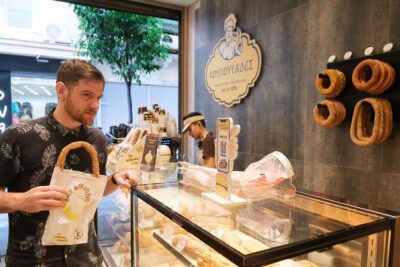
Classic Athens Food Tour with Local Drink & Market Visit
Read our review →
Athens: Cooking Class, Market Visit & Lunch at Local Tavern
Read our review →
Athens: Greek Food Tasting and Market Walking Tour
Read our review →
Athens: Local Markets with Artisanal Crafts Walking Tour
Read our review →This tour also appears in