Review · SEOUL
Mangwon Market Food tour By Locals;Cheap Eats to Fancy Feast
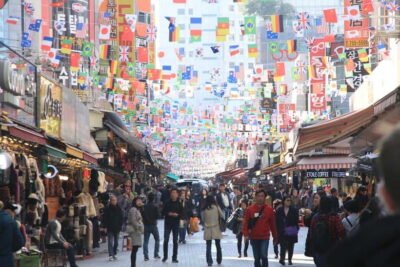
Mangwon Market is at its best when you stop treating it as a place to browse and start treating it as lunch. This two-hour food walk moves from kimchi dumplings and pancakes to premium Hanwoo beef, homemade tofu, and a Korean fried chicken meal with beer. It is a big range of Korean food in a small amount of time.
I like two things here: Jay and Sam are food professionals who live in the area, and the route shows how a traditional market can offer both humble snacks and expensive ingredients. I also like the compact plan, with 80 minutes in the market and 40 minutes at a local restaurant.
The main caution is value. At $58 per person, this is not a cheap market crawl, and one food stop may not appear every day. The tour is also not suitable for vegetarians or vegans, so check your food needs before booking.
Key points at a glance
- Mangwon Station meeting point: Meet outside Exit 2, with Hongdae and Hongik University close by.
- Jay and Sam’s local food focus: The guides work in food and beverage and know the area through years of eating there.
- A wide food range: Expect freshly cooked street food, kimchi dumplings, pancakes, Hanwoo beef, tofu, and fried chicken.
- Two-part tasting plan: Spend about 80 minutes in Mangwon Market, then 40 minutes at a local restaurant.
- A proper Korean finish: The final meal is Korean fried chicken, with beer included in the food experience.
- Important food restriction: The tour does not accommodate vegan or vegetarian diets.
Why this Mangwon food tour feels different
Many food walks stay within one price range. They may focus on market snacks, or they may take you to polished restaurants. This one tries to show both ends of Korean eating in one outing.
You might begin with food that feels plain and familiar to local shoppers, such as dumplings or pancakes. Later, you can taste Hanwoo beef, one of Korea’s prized ingredients, along with tofu made in a more refined style than the everyday supermarket block. The contrast is the point.
I find that approach useful because it gives you more than a list of snacks. You get a sense of how Korean food changes with the ingredient, the vendor, and the setting. A market is not only a place for quick, inexpensive bites. It can also be where you find carefully made foods that cost much more.
Jay and Sam are the people guiding that comparison. They both work in the food and beverage business, and their tour grows from years of eating around Mangwon. That matters here. A market can be confusing when you do not read Korean or know which stall deserves your limited appetite. The guides narrow the choices and explain why each stop is worth your time.
The tour is delivered in English. Jay has been described as warm, easy to talk with, and good at answering questions. That conversational side is important because food tasting works best when you can ask what an ingredient is, how it is made, and why locals return for it.
More Market Food Tours in Seoul
- Seoul Street Food Market Tour
★ 5.0 · 1,226 reviews - Seoul: Night Market Food Tour with Local Guide
★ 4.9 · 943 reviews - Seoul: Palace, Temple and Market Guided Foodie Tour at Night
★ 4.9 · 750 reviews
Starting outside Mangwon Station Exit 2
The tour starts outside Exit 2 of Mangwon Station. This is practical if you are staying near Hongdae or Hongik University, since Mangwon is close to those areas.
Give yourself enough time to find the exit and get settled. The group waits for late arrivals for no more than 15 minutes. After that, you may not be able to join, so this is not a good activity to squeeze between uncertain connections.
The end point is the same meeting place. That makes planning easier. You do not need to figure out how to get back from an unfamiliar restaurant, and you can continue elsewhere in the neighborhood after the tasting.
The advertised duration is two hours. Starting times vary, so you need to check availability when choosing a date. Since the route includes several tastings rather than one long meal, I would treat it as a substantial snack period or an early lunch, not as a quick appetizer before a full meal.
Eighty minutes inside Mangwon Market
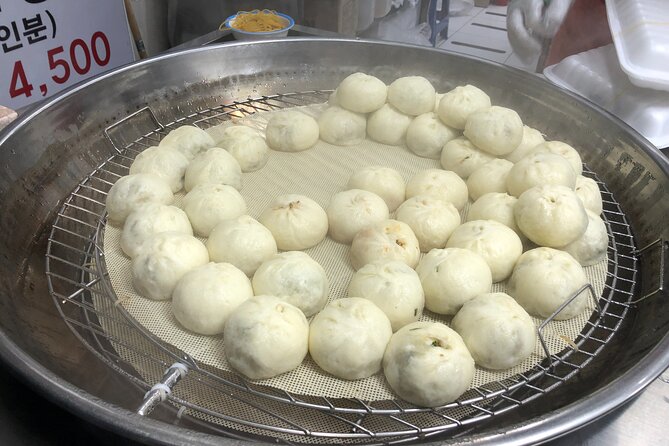
The main portion lasts about 80 minutes and takes place inside Mangwon Market. This is where the tour earns its price by guiding you through several kinds of food rather than sending you to one shop.
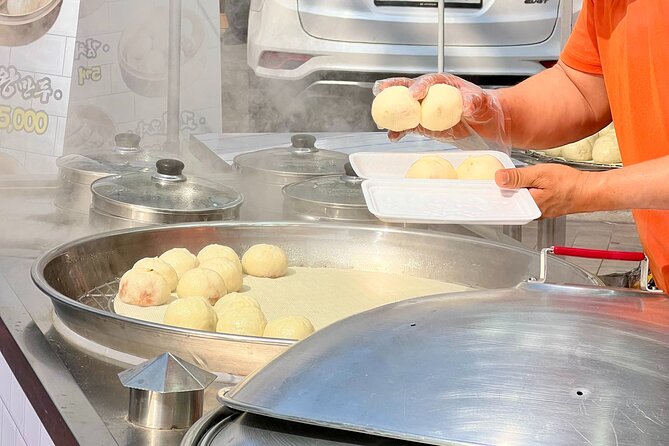
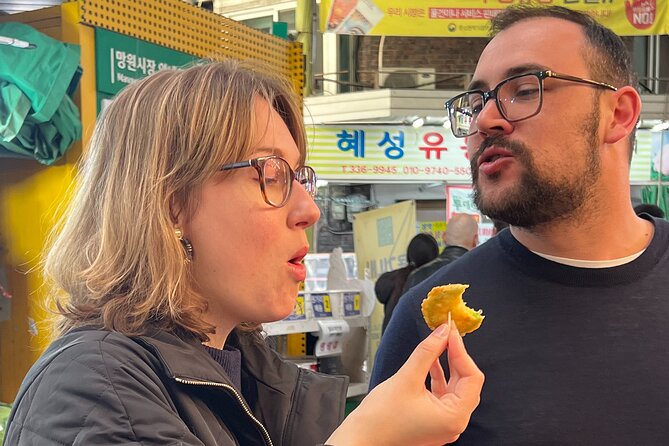
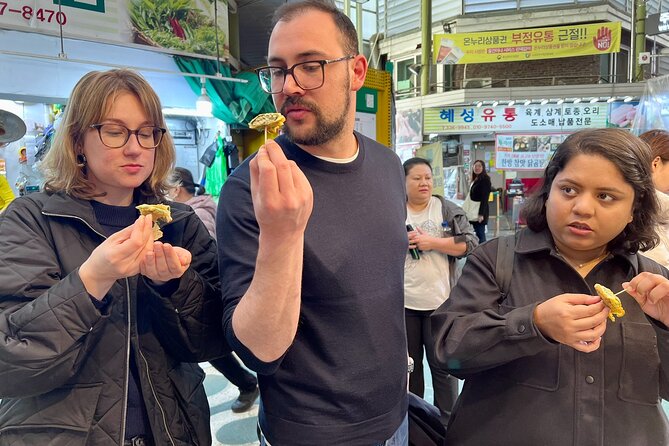
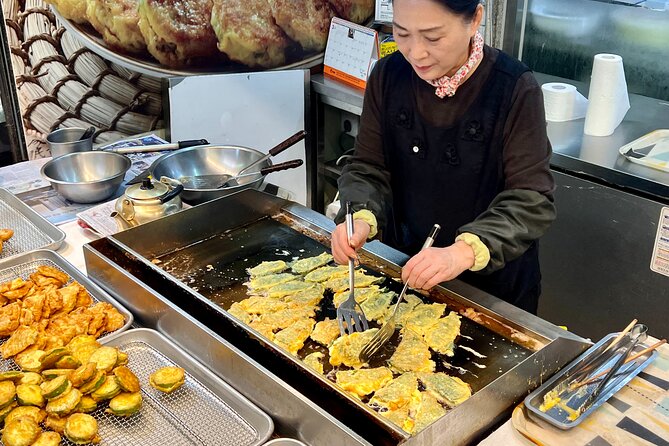
The exact order can change with the day’s supply. The description promises freshly cooked street food, and the featured examples include kimchi dumplings and pancakes. These are the kind of foods that are most enjoyable when eaten soon after cooking, while the texture is still right.
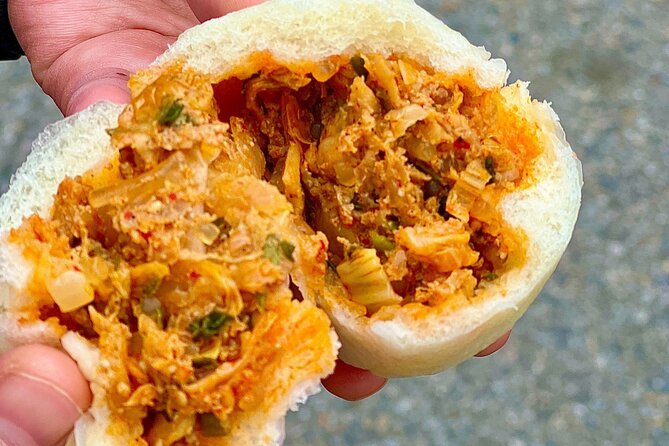
Kimchi dumplings offer a direct introduction to a familiar Korean flavor: spicy, fermented vegetables folded into a soft wrapper. Pancakes provide a different texture and may show you how a simple market food can become filling. The value of a guide is not just handing you a bite. It is helping you understand what you are tasting and how it fits into everyday Korean food.
The route then moves toward more luxurious ingredients. Hanwoo beef is the clearest example. This is not an ordinary low-cost market snack, and the tour includes a chance to taste premium Korean beef. One particularly unusual detail is that Jay has grilled the beef for the group in the middle of the market.
That kind of preparation makes the beef feel like more than a sample taken from a display counter. You see the ingredient become food, and you can compare the experience with the cheaper dishes eaten earlier. Still, keep your expectations measured. A market tasting is not the same as sitting down to a full Korean barbecue meal. The point is sampling and contrast, not a long restaurant service.
Homemade tofu is another featured item. Tofu can sound ordinary, especially if you have eaten it often at home, but the tour presents it as a carefully made local food. The plan is to show that an everyday ingredient can receive the same attention as a premium cut of beef.
One useful warning: tofu may not be available on every tour day. If that ingredient is the main reason you want to book, ask ahead rather than assuming it is guaranteed. Food markets work around what vendors have ready, and the experience appears to allow for those changes.
From simple market food to Hanwoo beef
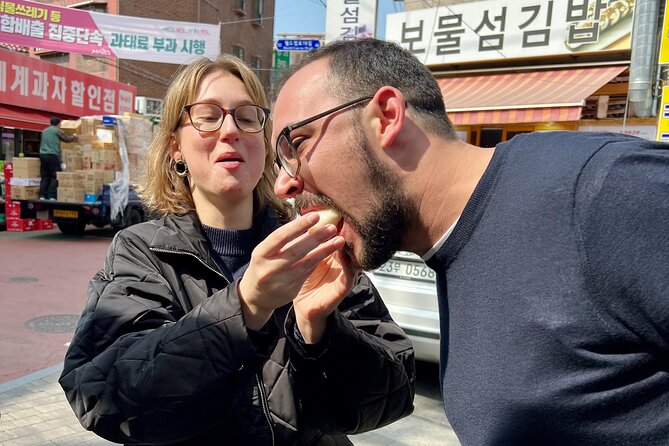
The strongest idea in this experience is the movement from cheap eats to a fancy feast. It gives you a better way to think about price in Korean food.
A dumpling or pancake can be inexpensive and satisfying. Hanwoo beef carries a very different cost because of the ingredient itself. Homemade tofu sits somewhere else again, with its value tied to preparation and freshness rather than luxury alone.
I like this because you can taste the difference instead of only hearing about it. The tour does not treat market food as one flat category. It asks you to notice texture, quality, cooking, and the setting where each item is served.
For you, this is most useful if you enjoy comparing foods. If you only want the biggest possible meal for the lowest price, $58 may feel high. One person found the tour expensive for the amount eaten, especially when tofu was not available. That is a fair concern.
The price includes a series of cooked tastings, the Hanwoo beef and tofu focus, and a Korean fried chicken meal. You are paying for the food, but also for selection, explanation, and the chance to taste several items without having to order them one by one. I would judge the cost as reasonable for a visitor who values guidance and variety, but not as a bargain.
More Market Food Tours in South Korea
- Seoul: Guided Food & Market Tour with 8+ Tastings
★ 4.9 · 342 reviews - Seoul Night Palace & Market Food Tour with Vehicle
★ 5.0 · 275 reviews - Seoul: Namdaemun Market Food Tour
★ 4.9 · 34 reviews - Seoul: Gwangjang Market Netflix Food Tour
★ 4.7 · 31 reviews
Forty minutes at the local restaurant
After the market, the tour moves to a local restaurant for about 40 minutes. The stated finale is Korean fried chicken, along with beer.
This gives the tour a proper sit-down finish after the market sampling. Korean fried chicken is a social food, and the beer pairing makes the last stop feel less like another isolated bite and more like a shared meal.
The restaurant portion also helps with pacing. Eighty minutes of market grazing can leave you with many small impressions. Forty minutes at a local spot gives the group time to eat together, ask more questions, and settle into one final dish.
You should not expect a long restaurant visit or a broad menu of choices. The focus is the selected fried chicken meal. If you dislike fried food, do not drink beer, or prefer to choose every dish yourself, this part may feel less flexible.
For most meat-eating visitors, though, it is a satisfying way to close the route. The food moves from market snacks to a familiar Korean favorite, and the drink makes the ending feel relaxed rather than rushed.
What the guides add to the experience
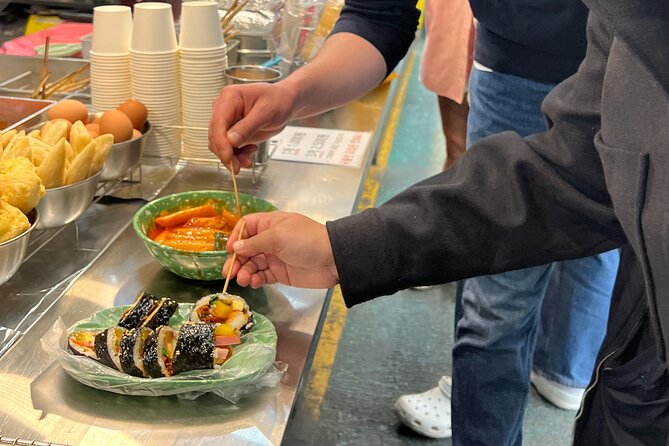
Jay and Sam are not presented as formal historians or cooking instructors. Their strength is food knowledge built through work in the food and beverage business and years of living near Mangwon.
That is the right fit for this tour. You are not paying for a lecture. You are paying for people who can point out foods they have personally chosen over time and explain the stories behind ingredients and cooking.
Jay’s guiding style appears especially social. She has made the experience welcoming, answered questions throughout, and handled the group in a friendly way. That helps if you are nervous about trying unfamiliar foods or unsure how to behave at a Korean market.
The route also seems carefully planned. The food is not selected at random. It is meant to cover several levels of Korean eating, from inexpensive market fare to Hanwoo beef and fried chicken. If you like to understand why one stall or ingredient matters, that planning is useful.
The group size is not specified, so do not book expecting a private tour. Private tours can be arranged by contacting the provider, but the standard experience is a shared outing unless you make a separate request.
Who should book, and who should skip it
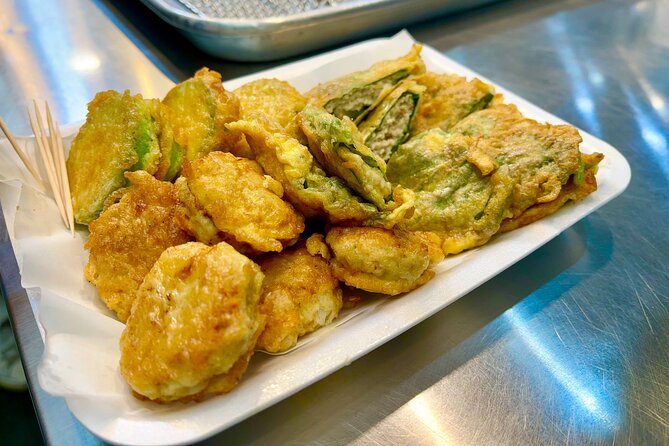
I would recommend this for an English-speaking food lover who wants a guided introduction to Mangwon Market near Hongdae. It is especially suited to people who enjoy tasting several small portions, asking questions, and comparing everyday food with premium ingredients.
It also works well for a first visit to Seoul. You do not need to spend time researching every vendor before you arrive, and the return to Mangwon Station keeps the logistics simple.
The tour is less suitable if you want a low-cost market lunch. At $58, it is a planned food experience rather than casual grazing. You may spend less by visiting the market alone, but you will also need to choose the food, manage portions, and explain the unfamiliar items to yourself.
The food restrictions are firm. Vegan and vegetarian diets are not supported. Since the menu includes beef, chicken, and other meat-centered foods, this is not a tour where plant-based substitutions should be expected.
I would also avoid booking it if you need a guaranteed list of every featured dish. The tofu may not be available on a particular day, and market food can change with supply. That flexibility is normal for a market tour, but it is worth knowing in advance.
Timing, cancellations, and practical planning
The tour lasts two hours, and you should plan to arrive before the scheduled start. The group waits only up to 15 minutes for late arrivals, so do not rely on a subway connection that leaves no margin.
You meet outside Exit 2 of Mangwon Station and finish at the same point. The activity is conducted in English by a live guide.
You can reserve now and pay later, which helps if your Seoul plans are still shifting. Cancellation is free up to 24 hours before the activity for a full refund. Keep in mind that those terms do not remove the need to arrive on time or confirm that the food suits you.
Mangwon is close to Hongdae and Hongik University, so this can fit neatly into an afternoon in that part of Seoul. Since the start time varies, check the available options before arranging other reservations.
My verdict on the $58 price
The price makes sense if you think of this as a guided tasting meal, not a walk through a cheap market. You receive multiple food samples, premium Hanwoo beef, the planned tofu tasting when available, and Korean fried chicken with beer.
The most valuable part is the selection. Jay and Sam have already made the decisions about where to eat, and their food background gives those choices some purpose. You are not simply buying calories. You are buying a short lesson in the range of Korean market food.
Still, the cost will feel high to anyone focused on quantity. Two hours is not long, and the individual portions are tastings rather than large plates. The absence of tofu on a particular day can also affect how complete the experience feels.
My advice is simple: book it if you want context, variety, and a friendly food guide. Skip it if you would rather explore on your own, eat cheaply, or need a vegetarian or vegan menu.
Should you book the Mangwon Market food tour?
I would book this tour for a first or second visit to Seoul when you want a clear introduction to Mangwon’s food culture without spending half a day planning each bite. The strongest reasons are the local focus, Jay and Sam’s food background, the unusual Hanwoo beef tasting, and the final fried chicken meal.
I would not book it just because the word market sounds inexpensive. This is a paid tasting route with a premium ingredient and a guided format. Go in expecting small portions, changing market availability, and a mix of simple and costly foods.
If that balance sounds appealing, the tour offers a compact and sociable way to eat around Mangwon. If your diet is flexible and your priority is learning what to order, it is a good fit. If your priority is the lowest possible food bill, explore Mangwon Market independently instead.
FAQ
Where does the Mangwon Market food tour start?
Meet the guide outside Exit 2 of Mangwon Station.
Where does the tour finish?
The activity ends back at the Mangwon Station meeting point.
How long does the food tour last?
The tour lasts two hours.
How much time is spent inside Mangwon Market?
The market portion lasts about 80 minutes.
How long is the restaurant tasting?
The local restaurant portion lasts about 40 minutes.
What language is the tour conducted in?
The live tour guide speaks English.
Is the tour suitable for vegetarians or vegans?
No. The tour is not suitable for vegetarians or vegans, and a vegan option is not possible.
What foods are included?
The experience includes freshly cooked street food, local delicacies such as Hanwoo beef and homemade tofu, and a Korean fried chicken meal. Beer is also part of the final food experience.
Can I cancel for a full refund?
Yes. You can cancel up to 24 hours in advance for a full refund.
New market tours around Seoul
- Seoul: The Biggest Sea-food Noryangjin Market Tour★ 4.3 · 30 reviews
- Seoul: Sokcho beach, market, hot spring and Seorak Cable Car★ 4.8 · 5 reviews
- Seoul: Gyeongbokgung Palace Tour & Lunch at Authentic Market★ 4.5 · 2 reviews
- Seoul: Mt.Seorak(+CableCar Option)+Sokcho Fish Market&Beach★ 4.5 · 9 reviews
- Seoul: Namdaemun Market Food Tour★ 4.9 · 34 reviews
- Seoul: Guided Street Food Tour at Namdaemun Market★ 5.0 · 10 reviews
- Seoul: Gwangjang Market Vegan & Vegetarian Food Tour★ 5.0 · 16 reviews
- Seoul Gwangjang Market Foody Walking Tour★ 4.1 · 7 reviews
Seoul Market Tours, side by side.
Local Home Korean Cooking Class & Market Adventure in Seoul
Read our review →
Seoul: Palace, Temple and Market Guided Foodie Tour at Night
Read our review →
Seoul: Guided Food & Market Tour with 8+ Tastings
Read our review →
Seoul: Nighttime Tour of Palace, Market, Naksan Park & More
Read our review →
Seoul: Gyeongbok Palace, N Tower, & Local Market City Tour
Read our review →