
Review · SICILY
Palermo in 2 hours Main monuments and historic markets
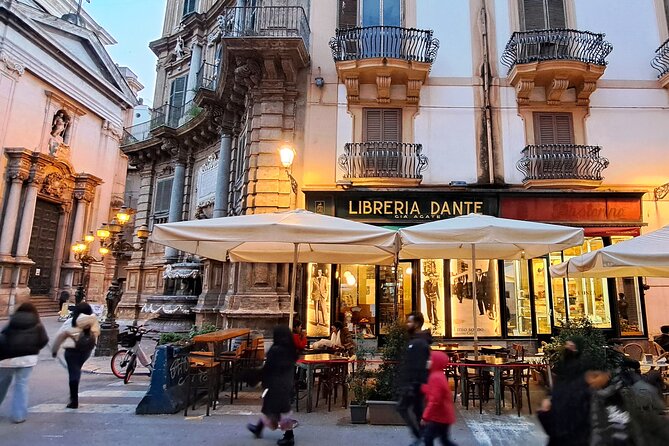
Palermo reveals itself quickly on foot, especially when a local guide links the Teatro Massimo, old markets, and Cathedral into one short route. You’ll hear about Arab-Norman architecture, Santa Rosalia, the Beati Paoli, Sicilian sweets, and the city’s complicated past while walking through streets where daily life still carries on around the monuments.
I like the market crossing and brief street-food tasting, since they bring Palermo down from the grand scale of churches and opera houses to the smells, bargaining, and everyday energy of the city. I also like the strong guide-led storytelling, with Maurizio and Fabrizio singled out for lively explanations, useful tips, and personal knowledge of Palermo.
The main limitation is time. Two hours is enough for a well-chosen introduction, not a complete visit to Palermo. The tour may run closer to three hours on some days, and the pace can feel brisk if you want long interior visits or plenty of time at market stalls.
Key points to know before you book
- You begin at Teatro Massimo: The route starts near Italy’s largest opera house and moves through Palermo’s historic center.
- Cape Market adds local flavor: You cross a traditional market and pause for a complimentary taste of street food, while extra food and drinks cost more.
- Palermo Cathedral entry is included: The tour ends inside this UNESCO-listed Arab-Norman monument.
- The guide is the main attraction: Maurizio and Fabrizio are known for clear explanations, anecdotes, humor, and practical advice for the rest of your stay.
- The route is compact but full: Expect monuments, markets, churches, legends, and old streets in roughly two hours.
- The group is limited to 20 people: That is manageable for a city walk, though it is not a private tour.
Why this short Palermo walk works
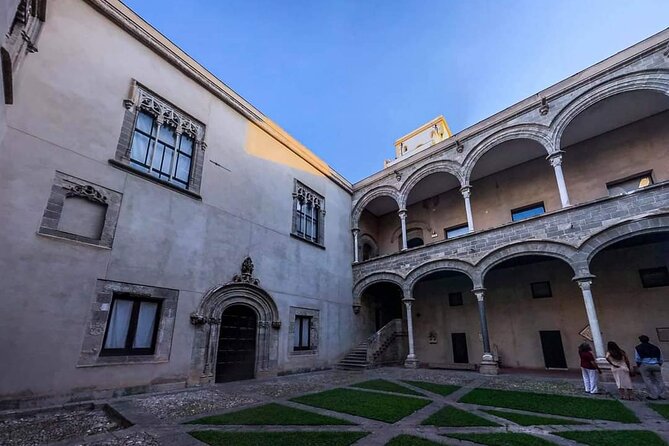
Palermo can be disorienting at first. Its grand avenues, narrow lanes, markets, churches, palaces, and layers of Arab, Norman, Spanish, and Italian influence do not always explain themselves. A good first walk gives you a framework, and this one is designed to do exactly that.
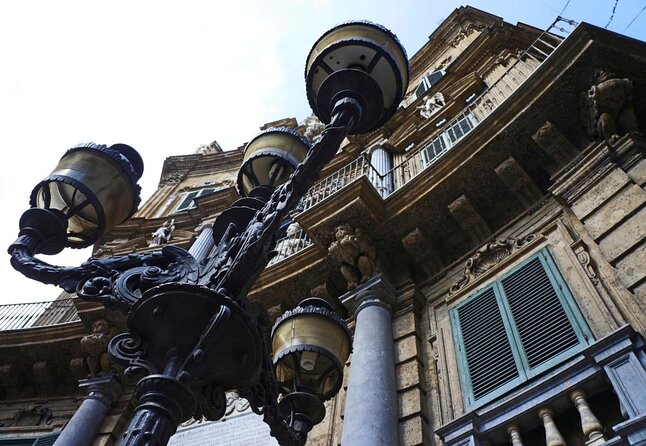
I like the way the route combines famous sights with places that feel less polished. Teatro Massimo gives you the monumental opening. Cape Market brings in food, noise, and ordinary commerce. The Cathedral supplies a powerful final interior, with the walk between these points filled by stories about Palermo’s saints, secret societies, local customs, and old neighborhoods.
The price is about $23.26 per person. That is a fair deal if you want a guide to orient you quickly, especially because Cathedral entry and a short food tasting are included. You are not paying for a long museum tour or a private experience, so the value depends on how much you want context and local direction rather than independent sightseeing.
This is best used near the beginning of your stay. A guide can point out places to return to, suggest what deserves more time, and explain how to approach the markets. Maurizio, in particular, is described as offering advice for later days and even tips on bargaining with stallholders. That kind of practical help can be worth as much as the formal sightseeing.
More market history around Italy:
- Palermo: Walking Tour of Historic Markets and Monuments
★ 4.9 · 478 reviews - Discover Palermo in 3 hours. Art, history, markets and street food
★ 5.0 · 352 reviews - Palermo : Historic Markets & monuments Walking Tour
★ 4.7 · 129 reviews
Teatro Massimo starts the route with grand scale
The meeting point is on Via Cavour, near Teatro Massimo, with the tour beginning at 10:30 a.m. Teatro Massimo is Italy’s largest opera house, and even a ten-minute stop gives you an immediate sense of Palermo’s ambition.
The visit here is mainly an exterior introduction. Admission to the opera house is not included, so you should not expect an inside tour as part of this experience. Still, the building makes a strong starting point because it gives your guide a natural way to discuss Palermo’s public life, architecture, and place in Sicily.
The short stop also sets the pace. You will not linger at every monument for half an hour. Instead, the guide uses major landmarks as anchors, then fills the walking sections with stories and observations.
That format suits me when I want a first orientation. If you are mainly interested in opera interiors, plan a separate visit, since this tour does not cover the admission.
Teatro dell’Opera dei Pupi connects Palermo with Sicilian tradition
The next stop is Teatro dell’Opera dei Pupi, associated with Mimmo Cuticchio and the traditional Sicilian puppet theatre. This art form dates back to the 1800s and is recognized by UNESCO as part of Sicily’s cultural heritage.
The stop lasts around ten minutes, and admission is not included. You should think of it as a cultural introduction rather than a full puppet performance. The guide can explain why the tradition matters and how it fits into Palermo’s identity, but the tour does not promise a show.
This is one of the more distinctive parts of the route. Many quick city walks run from one church to another. Adding puppet theatre gives you a glimpse of popular culture, storytelling, and performance beyond the formal monuments.
If you are curious about seeing a full production, ask the guide for current advice during the walk. The experience itself does not include a performance ticket, so you would need to arrange that separately.
Piazza Pretoria puts Palermo’s civic history on display
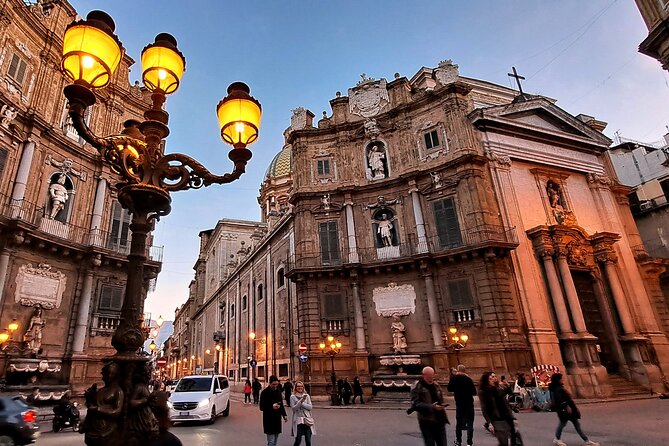
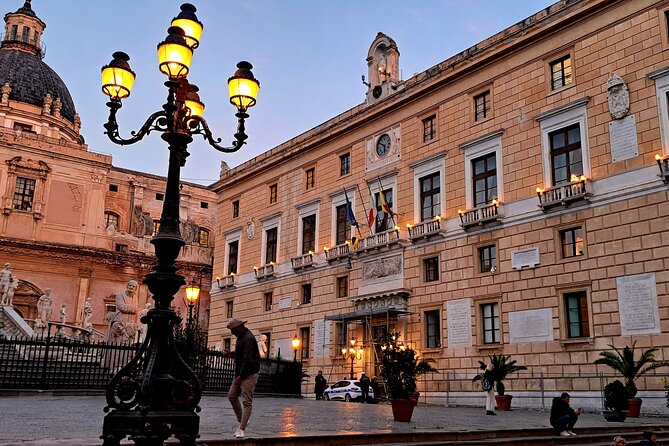
Piazza Pretoria is a handsome Renaissance square centered on a monumental fountain. The fountain sits in front of Palazzo delle Aquile, the historic home of Palermo’s civic administration.
The stop is scheduled for about ten minutes, enough to look at the fountain, take in the surrounding buildings, and hear why the square matters. Your guide can help you read the space as more than a photogenic stop. It links public art, government, and the city’s long civic story.
Admission to the square is included, of course, and there is no separate ticket listed for this stop. The practical point is that you get several important sights from the street without spending time in ticket lines.
Piazza Pretoria also helps break up the route. After the theater and puppet tradition, you shift to the formal center of public Palermo. I find that contrast useful because it shows how the city moves between spectacle, religion, administration, and ordinary street life within a short walk.
More two-hour market walks around Italy:
- 2 Hour Historic Market Food Tour and Hands-On Biscuit Class
★ 5.0 · 251 reviews - Taipei: 2-Hour Raohe Night Market Walking Tour
★ 4.6 · 69 reviews - Memorable Daily KIBERA Slums/Toi Market Tour with Locals (2 hours)
★ 5.0 · 29 reviews - Tel Aviv: 2-Hour Carmel Market Tour in English with Lunch
★ 4.8 · 23 reviews
Piazza Olivella adds archaeology, Baroque interiors, and Santa Rosalia
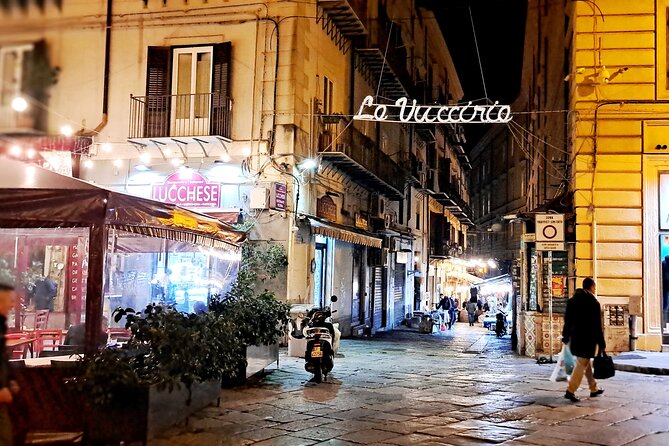
Piazza Olivella is scheduled for fifteen minutes. Here you find the Regional Archaeological Museum and the Church of Sant’Ignazio, one of Palermo’s most elaborate Baroque churches.
The museum and church are mentioned as points of interest, but entrance tickets for palaces, churches, and museums are not generally included. The included Cathedral entry is specifically identified, so you should not assume the tour goes inside every building named along the route.
Near the square is the reported birthplace of Santa Rosalia, Palermo’s patron saint. Her story is central to the city, and the guide uses it to explain local devotion and the strong bond between Palermo and its patroness. You will also hear about the plague and the popular belief that Santa Rosalia helped free the city from it.
This is where the tour’s storytelling becomes especially useful. A bare list of buildings can blur together. A story about a patron saint, a city in crisis, and the traditions that grew around her gives the streets a human scale.
Cape Market brings the city down to street level
The market section is the liveliest part of the route. You cross Cape Market, walking among stalls filled with local products and the ingredients used in Palermo’s traditional street food.
A short complimentary tasting is included. Food and drinks beyond that are not included, so bring some extra money if you want to try more than the offered sample. The guide can also explain how to approach the stalls and, according to the experience details, how to bargain properly with local merchants.
I like this part because it is practical as well as entertaining. Palermo’s markets are not just displays for sightseeing. They are working places where food, conversation, and commerce overlap. A guide helps you understand what you are seeing and can point out details you might otherwise pass without noticing.
The market can also be the least controlled portion of the walk. Stalls may be crowded, the ground uneven, and the route active with local business. Stay close to the guide, keep your belongings secure, and do not expect a quiet museum atmosphere.
The food tasting is a pleasant bonus, but it is not a full food tour. If your main aim is to eat your way through Palermo, book a longer food-focused experience instead. Here, the market supports the city walk rather than replacing it.
The ancient Cassaro ties the route together
The walk follows the ancient Cassaro, described as Palermo’s oldest street. Along it, you pass palaces, churches, and convents while moving toward the Cathedral.
This part gives the guide room to connect the stops. You may hear about the old neighborhoods, Palermo’s changing rulers, local legends, and the mysterious Beati Paoli, a secretive group that has become part of the city’s folklore.
The Cassaro is valuable because it is not a single ticketed attraction. It is the route itself. You are walking through a historic spine of Palermo, with the city continuing around you rather than being sealed behind an entrance gate.
The guide’s style matters here. Maurizio is described as avoiding information that you could simply read on a plaque, choosing instead to explain details, opinions, and stories that make the street easier to understand. Fabrizio is also described as mixing anecdotes with historical explanations and keeping the tone friendly.
That approach will suit you if you prefer stories and local interpretation to a lecture packed with dates. If you want exhaustive architectural detail at every doorway, the short format may feel too light.
Palermo Cathedral provides the strong finish
The tour ends at Palermo Cathedral on Via Vittorio Emanuele, 490. Entry to the Cathedral is included, which is one of the strongest parts of the price because the walk does not simply leave you outside the city’s most important religious monument.
The Cathedral is an Arab-Norman site and part of Palermo’s UNESCO-recognized heritage. Its design reflects the many cultures that shaped Sicily, and the guide can help you notice the mixture rather than treating the building as a single-style church.
The visit ends after the Cathedral, not back at the starting point. That is useful if you plan to continue sightseeing in the historic center. It also means you should arrange your next stop from the Cathedral area rather than assuming you will return to Via Cavour.
The Cathedral is likely to feel more satisfying after the preceding walk. You have already heard about Palermo’s rulers, saints, neighborhoods, and architectural layers. By the time you enter, the building has a story attached to it.
Keep in mind that the tour specifically includes Cathedral entry, while other church and museum admissions are not included. If you want to visit additional interiors, allow extra time and budget for separate tickets.
Guide style can make or break the experience
The strongest part of this activity is the guide. The format is simple: walk, listen, stop, and look. What you take from it depends heavily on how well the guide turns Palermo’s complicated past into something clear and memorable.
Maurizio is repeatedly praised for enthusiasm, humor, and the ability to hold attention for longer than the advertised two hours. He is also described as sharing useful ideas for the rest of a Palermo stay, including places to visit and ways to handle market bargaining.
Fabrizio is described as prepared, friendly, and good at balancing anecdotes with explanations of iconic places. The exact guide may vary, so you should not book on the assumption that one specific person is guaranteed unless the provider confirms it.
Some outings have reportedly lasted three hours, despite the approximate two-hour description. That may be welcome if you enjoy a relaxed conversation and extra stories, but it can affect later plans. Avoid scheduling a tight lunch, museum booking, or train immediately after the walk.
The group maximum is 20 people. That is small enough for a city walk to remain personal, though you should not expect the flexibility of a private guide. Most people can participate, and service animals are allowed.
Timing, price, and practical planning
The tour starts at 10:30 a.m. and takes place on foot. It is near public transportation, but the supplied details do not specify a particular bus stop, train connection, or parking arrangement. Use the stated Via Cavour meeting point and arrive early enough to locate the guide without rushing.
The mobile ticket makes access simple. Confirmation is provided at booking, and cancellation is free up to 24 hours before the start time. Changes or cancellations inside that window are not accepted for a refund, and poor weather can lead to a different date or a full refund.
At $23.26, I see this as a strong orientation walk rather than a bargain-priced full-day tour. You receive a licensed professional guide, the market crossing, a short free tasting, and Cathedral entry. The main thing you are buying is a clear route through Palermo’s center, with someone to explain what you are seeing.
You should budget separately for extra food and any palace, church, or museum tickets. The tour’s own admission coverage is limited, so check your plans if you want to enter places such as the Regional Archaeological Museum or other churches along the way.
Wear comfortable shoes and bring water. The route is short, but Palermo’s streets and markets reward steady footing more than fashionable footwear. A small bag is easier to manage in a market than a large backpack.
Who will get the most from this walk
I would choose this tour if you are visiting Palermo for the first time and want help getting your bearings fast. It is especially useful if you have only a morning, are arriving without a clear plan, or want a guide to suggest what deserves a longer visit later.
It also suits you if you like local stories. The Beati Paoli, Santa Rosalia, Sicilian puppet theatre, market customs, and dessert recipes give the walk a more personal feel than a simple monument checklist.
Families and mixed-age groups may appreciate the variety. A theater, a market, a fountain, a traditional performance venue, and a cathedral offer different subjects within a short time. Most people can participate, though anyone who needs frequent rests should confirm that the walking pace is suitable.
I would choose something else if you want a slow architectural study, a dedicated food tour, a private experience, or extensive interior visits. The route is designed to introduce Palermo, not to examine every stop in detail.
Should you book Palermo in 2 hours?
Book it if you want an energetic first look at Palermo with a licensed local guide, a taste of Cape Market, and included entry to the Cathedral. The combination of monuments and everyday street life is the real strength, and the price is reasonable for that mix.
The best timing is early in your stay, when guide advice can shape the rest of your visit. Just leave room in your schedule in case the walk runs longer than two hours, and remember that most extra admissions and food purchases are separate.
Skip it if you already know central Palermo well or want to spend the whole morning inside museums and churches. For a first visit, though, this is a useful way to meet the city quickly, with enough history, food, and local character to point you toward what to explore next.
FAQ
Where does the tour begin?
The meeting point is Via Cavour, 131, 90133 Palermo. The start time is 10:30 a.m.
Where does the tour end?
The tour ends at Palermo Cathedral on Via Vittorio Emanuele, 490, after the Cathedral visit.
How long does the experience last?
The advertised duration is approximately two hours. Some outings have lasted closer to three hours, so avoid scheduling an immediate appointment afterward.
Is Palermo Cathedral admission included?
Yes. Cathedral entrance is included in the tour.
Is food included?
A short stop for a free street-food tasting is included. Additional food and beverages are not included.
Are tickets for the other museums and churches included?
No. Tickets for palaces, churches, museums, and other additional entrances are not included unless specifically stated. The Cathedral is the included entrance.
How large is the group?
The maximum group size is 20 people. The tour is near public transportation, and service animals are allowed.
New market tours around Italy
- Florence: Markets and Food Tasting Tour★ 5.0 · 2 reviews
- Taormina: Sicilian Cooking Class & Market Tour★ 4.9 · 212 reviews
- Taormina: Sicilian Cooking Class w/ a Visit to Local Market★ 4.9 · 76 reviews
- From Taormina: Syracuse Tour with lunch in Food Market★ 4.9 · 12 reviews
- Syracuse: Traditional Cooking Class & Ancient Market Visit★ 4.9 · 72 reviews
- Spoleto: Market Tour and Meal at a Local’s Home★ 5.0 · 2 reviews
- Sorrento: Markets and Cooking Class at a Cesarina’s Home★ 3.7 · 3 reviews
- Taormina Half-Day Sicilian Cooking Class & Market Tour★ 5.0 · 82 reviews
Sicily Market Tours, side by side.
Markets and monuments: walking tour and street food in Palermo
Read our review →
Palermo, a tour of unique monuments and colorful markets
Read our review →This tour also appears in