
Review · SEOUL
Seoul: Full-Day Guided Tour to Gyeongbokgung, Bukchon & More
Seoul makes more sense when you see its old and new sides in one day. This private tour moves from Gyeongbokgung’s Confucian design to Bukchon’s traditional homes, Gwangjang Market’s food stalls, N Seoul Tower’s city view, and Hongdae’s young street culture. Guide Paul Koo explains the ideas behind the buildings, not just their dates.
I like the flexible hotel meeting point and the private format for up to two people. I also like the range: palace architecture, family customs at the folk museum, Korean food, a mountain-top view, and modern Seoul all fit into one organized day. The trade-off is cost and pace. At $242 per group, before admissions, transport, and food, this is best for two people who want a guide rather than a low-cost sightseeing day.
Key points to know before booking
- Paul Koo focuses on Confucian culture, Korean architecture, symbols, and the history of the Joseon Dynasty.
- Gyeongbokgung receives the most time, with a 2.5-hour guided visit to Seoul’s grandest royal palace.
- Six major stops cover both eras of Seoul, from the National Folk Museum and Bukchon to Hongdae.
- Gwangjang Market adds a food break, but your food and drinks are not included.
- N Seoul Tower gives you a broad city view, with 1.5 hours set aside for Namsan Mountain and the tower.
- The private price covers the guide only, so calculate entry fees and moving around the city before you book.
One long day, from royal Seoul to Hongdae
This is an eight-hour private tour built around contrasts. You begin at Gwanghwamun Square, then move through the royal center of the Joseon period, traditional residential Seoul, an old market, Namsan Mountain, and the modern Hongdae district.
That range is the main reason to consider it. Many city tours give you either historic Seoul or contemporary Seoul. This one tries to connect the two. You see how Confucian values shaped palaces and family customs, then finish among the shops, cafes, and restaurants associated with younger Seoul.
The day is full, and the schedule leaves little room for wandering on your own. You should think of it as a guided overview with explanation at each stop, not a relaxed day built around long meals or independent shopping.
Paul Koo is the named guide, and the tour is conducted in English. His approach centers on Korean traditional culture and Confucianism. That focus can give the palace visits more meaning, especially if you want to understand why the buildings are arranged as they are rather than simply photograph gates and courtyards.
More full days at the markets around Seoul:
- Phuket: Full Day City Tour with Night Market
★ 4.5 · 2,888 reviews - Bangkok: Ayutthaya, Railway & Floating Markets Full-Day Tour
★ 4.7 · 1,200 reviews - Versailles Full-Day Electric Bike Tour : Market, Picnic & Palace
★ 5.0 · 239 reviews
Gwanghwamun Square and Gyeongbokgung’s royal geometry
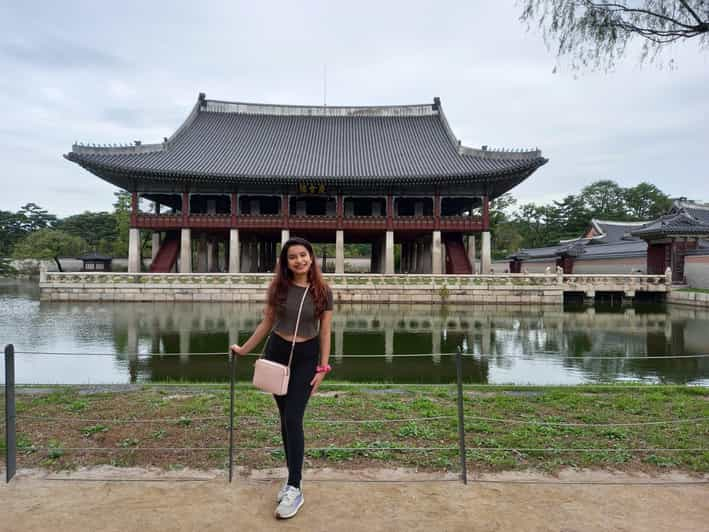
The meeting point is Gwanghwamun Square, the natural opening for a day focused on Seoul’s political and cultural center. From there, the tour gives Gyeongbokgung 2.5 hours, the longest portion of the day.
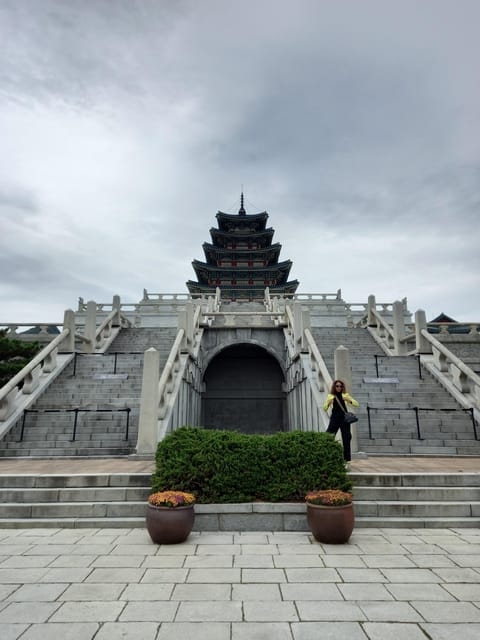
Gyeongbokgung was built in 1395 as the main palace of the Joseon Dynasty. Its importance here is not only age. The palace represents Confucianism, the state ideology that shaped Joseon government, ceremony, and social order.
Paul Koo’s specialty should be useful at this stop. Gyeongbokgung was built on a north-south linear plan, described as the standard palace structure of Confucian design. That means the arrangement of the palace can be read as an expression of order and rank. A guide who explains those ideas can turn a sequence of courtyards into a clearer picture of how Joseon society worked.
The palace is also described as the most beautiful and important example of traditional Korean architecture in the program. You can expect the visit to focus on architecture, mythological symbols, and court culture. The palace is large, so two and a half hours gives you time for a serious guided look rather than a quick stop for photographs.
The practical catch is that admission is not included. You also need to pay for transportation between stops. Since the tour price covers the guide fee, your final cost depends on how you move around Seoul and which entry tickets apply on the day.
National Folk Museum and everyday Korean customs
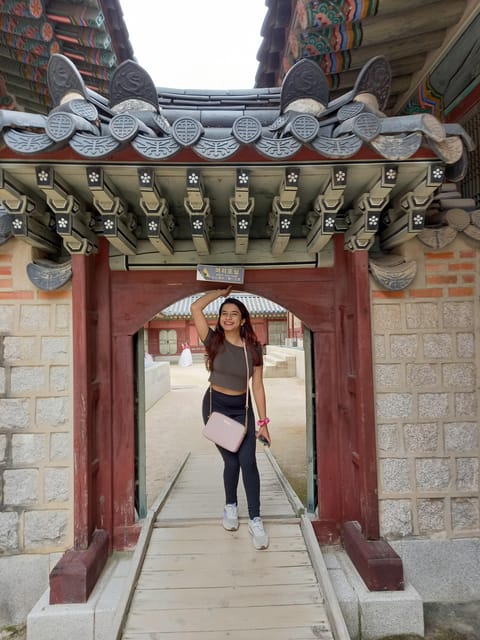
The National Folk Museum of Korea follows Gyeongbokgung, with 30 minutes set aside for a guided visit. This is a short museum stop, so you should expect a focused introduction rather than a complete visit to every display.
The museum presents the life, customs, and culture of earlier Korean people. Its exhibitions center on major rituals such as weddings, funerals, and ancestral ceremonies. It also includes Korean mask dance drama.
This adds something the palace cannot provide. Gyeongbokgung shows the world of the court and state. The folk museum turns toward family life and community customs. Together, the two stops help you see Confucianism as more than a palace planning principle. It also shaped ceremonies, family obligations, and daily behavior.
Thirty minutes is enough to understand the museum’s role in the day, but it may feel brief if you enjoy museum displays. I would treat this as guided context for the palace visit, not as the main museum experience.
Bukchon Hanok Village between old homes and city streets
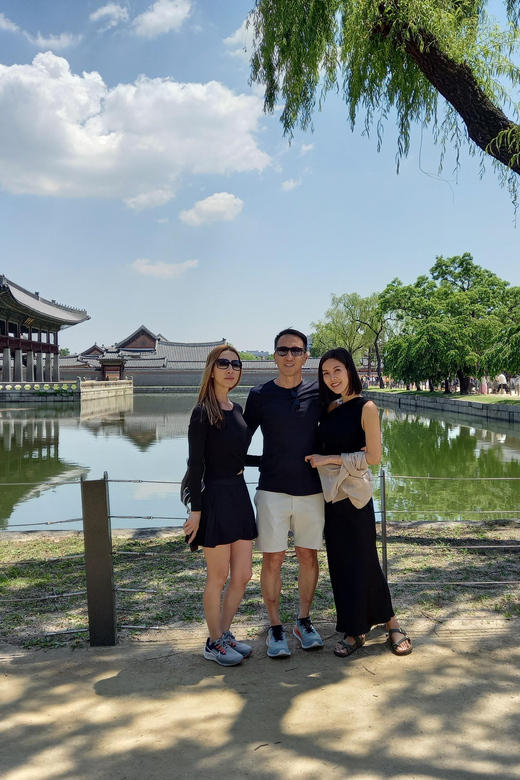
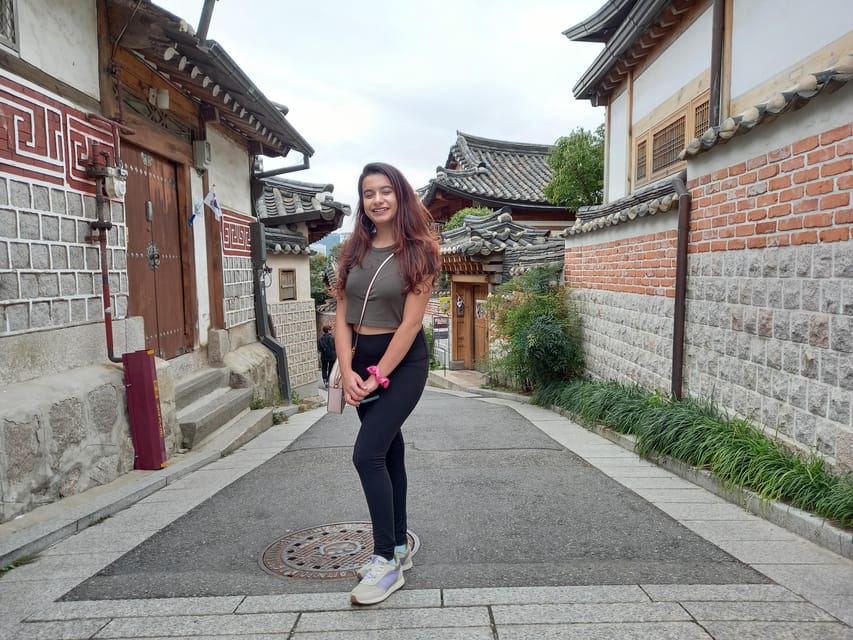
The next hour goes to Bukchon Hanok Village, a traditional residential area known for its hanok houses. Hanok refers to Korea’s traditional homes, and Bukchon is valued for the way these older structures remain within central Seoul’s modern urban setting.
This is one of the tour’s best changes of pace. At Gyeongbokgung, you see official architecture built for the royal court. In Bukchon, you see the traditional home as part of an ordinary neighborhood. The combination gives you a better sense of how Korean design worked at different levels of society.
The village is also a strong photo stop. The program specifically highlights views that blend older houses with the modern city. You can expect narrow streets, traditional rooflines, and city scenery rather than a museum arranged behind glass.
Keep the one-hour limit in mind. Bukchon is a place to look closely as you walk, but the tour is not designed for extended browsing in shops or cafes. You should also be ready for walking on sloped streets and moving at the guide’s pace, although the supplied information does not give a detailed accessibility assessment.
More guided market mornings around Seoul:
- Seoul: Night Market Food Tour with Local Guide
★ 4.9 · 943 reviews - Seoul: Palace, Temple and Market Guided Foodie Tour at Night
★ 4.9 · 750 reviews - Seoul: Guided Food & Market Tour with 8+ Tastings
★ 4.9 · 342 reviews - Seoul: Guided Street Food Tour at Namdaemun Market
★ 5.0 · 10 reviews
Gwangjang Market and the taste of traditional Seoul
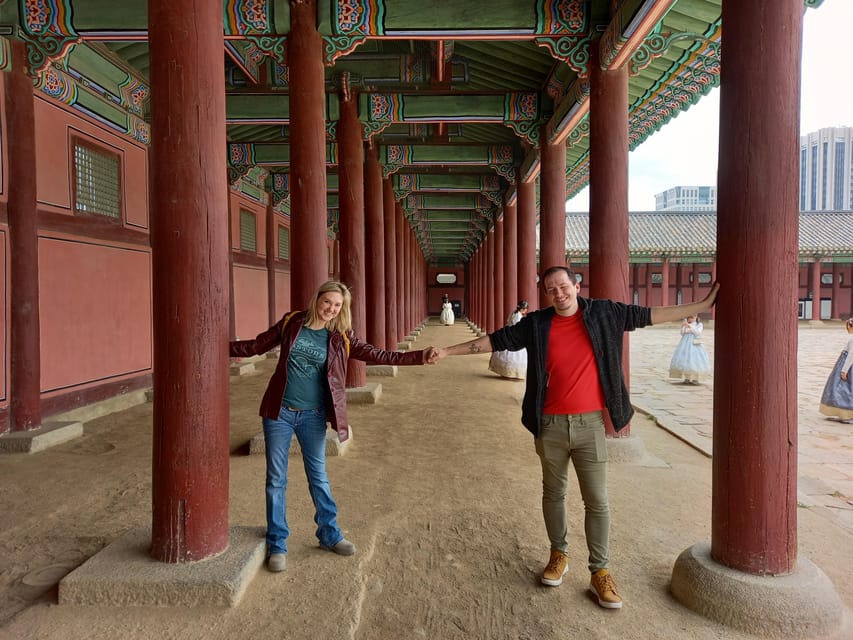
Gwangjang Market brings food and ordinary city life into the middle of the day. It is described as Seoul’s oldest traditional Korean market, with food stands where you can try familiar Korean market fare.
The guided hour is useful because a market can be confusing when you do not know what to look for or how to order. Paul Koo can connect the food to the wider idea of traditional Korean culture, while you enjoy the sound and movement of a working market.
Food and drinks are extra. That is important for budgeting, but it also gives you freedom to decide how much you want to eat. You can make this a proper meal or keep it light before the second half of the day.
I like this stop because it keeps the tour from becoming a parade of monuments. A market shows a more immediate side of Seoul. The drawback is that food preferences and comfort levels vary, and the tour description does not specify which dishes are included or recommended. You should ask Paul Koo for guidance on the day rather than assume a fixed tasting menu.
Namsan Mountain and the view from N Seoul Tower
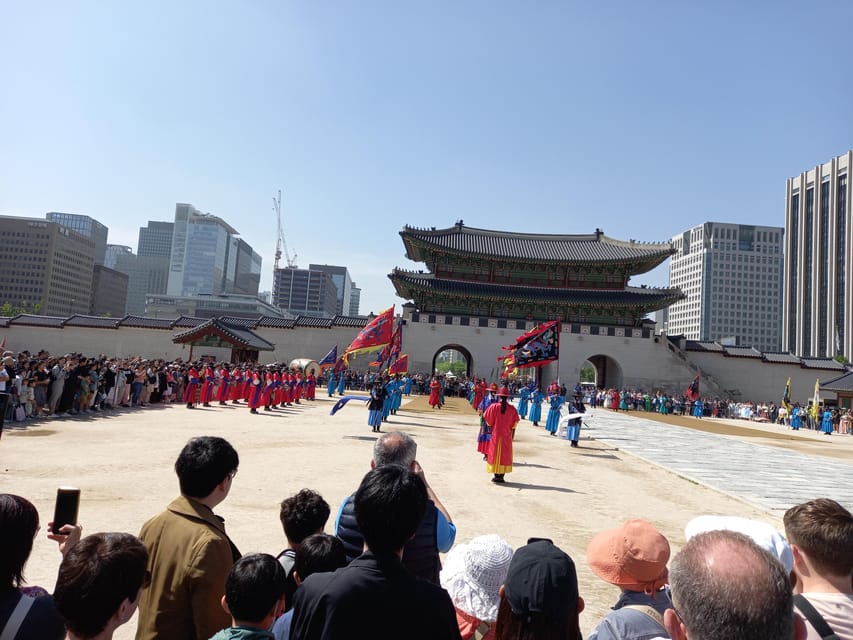
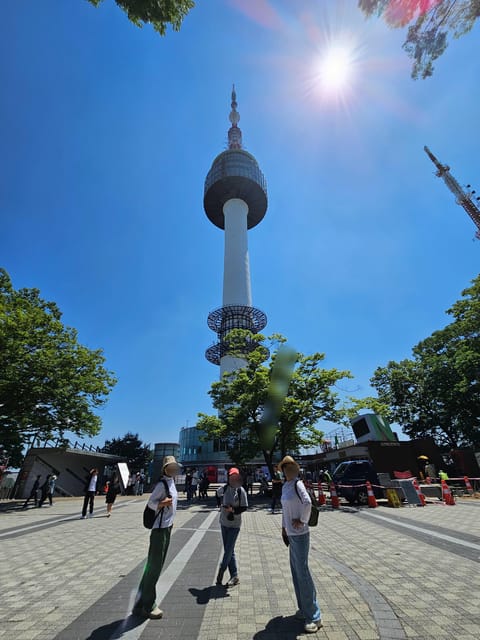
The tour then heads to Namsan Mountain and N Seoul Tower for 1.5 hours. Since Namsan is in central Seoul, the tower offers a useful visual break from street level. From above, you can see the scale of the capital and the way old districts and newer urban areas occupy the same city.
The view is the main reason to include this stop. After seeing palaces and traditional homes up close, you get a wider picture of Seoul. It also helps explain why the city can feel both densely modern and strongly tied to older districts.
The admission fee for N Seoul Tower is not included. Transportation is also separate, so confirm how the group will move between stops and what costs you should expect. The schedule gives you enough time for the tower visit and scenery, but not necessarily for a long, unplanned stay around Namsan.
Weather matters here. A clear day will make the panoramic view more rewarding, while haze or cloud can reduce what you see. The tour does not promise a weather alternative, so this is one part of the day where conditions can affect the payoff.
Hongdae as the modern finish
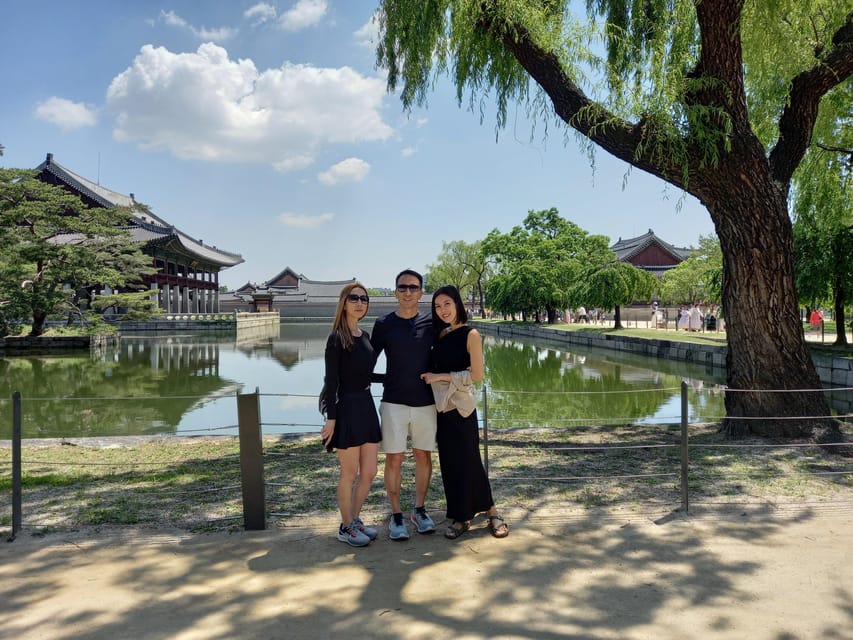
The final scheduled stop is Hongdae Street, with 1.5 hours devoted to Seoul’s young and modern culture. Hongdae is presented as an alternative to visiting the National Museum of Korea. This is a key detail because the broader tour description discusses the National Museum’s Korean art collection, including Silla gold crowns and ornaments, Goryeo celadon, and Joseon white porcelain. Those museum highlights are not part of the listed route as provided.
Instead, this version ends in Hongdae. You can expect a district associated with boutique shops, cafes, restaurants, and contemporary street culture. After the formal setting of the palace and the traditional atmosphere of Bukchon and Gwangjang Market, Hongdae gives the day a more current feel.
The 1.5-hour visit lets you walk and look around without treating the area as a rushed photo stop. Still, the tour does not specify particular shops, performances, or meals. Think of Hongdae as a guided introduction to the district rather than a package of included activities.
I see the choice between Hongdae and the National Museum as a matter of interest. Choose this route if you want to understand Seoul today and prefer cafes, shops, and street life. If Korean art is your priority, ask before booking if a museum-focused route can replace Hongdae. The supplied information identifies Hongdae as the alternative, but it does not promise a customized substitution.
What the $242 group price really covers
The price is $242 for a private group of up to two people. It covers eight hours of guide service and guide information. For two people, that works out to $121 per person before other costs, which is a reasonable way to view the value.
You are paying for explanation and flexibility rather than a bundled attraction pass. The guide can meet you at your hotel, and the group does not have to share the day with strangers. That matters if you want to ask questions, set a comfortable pace, or focus more heavily on architecture, food, or modern Seoul.
The price does not include:
- Palace admission
- N Seoul Tower admission
- Transportation between stops
- Food and drinks
- Insurance
Those extras can change the final budget. You should compare the total with a larger group tour, but do not compare only the headline price. A shared tour may cost less, while this one gives you a private guide for two people and a meeting place chosen after booking.
The value is strongest for a pair who wants a cultural explanation across several districts. It is weaker if you mainly want transport, entry tickets, or lots of free time. You will be handling some logistics yourself, since moving around the city is not included.
Pace, comfort, and who should book
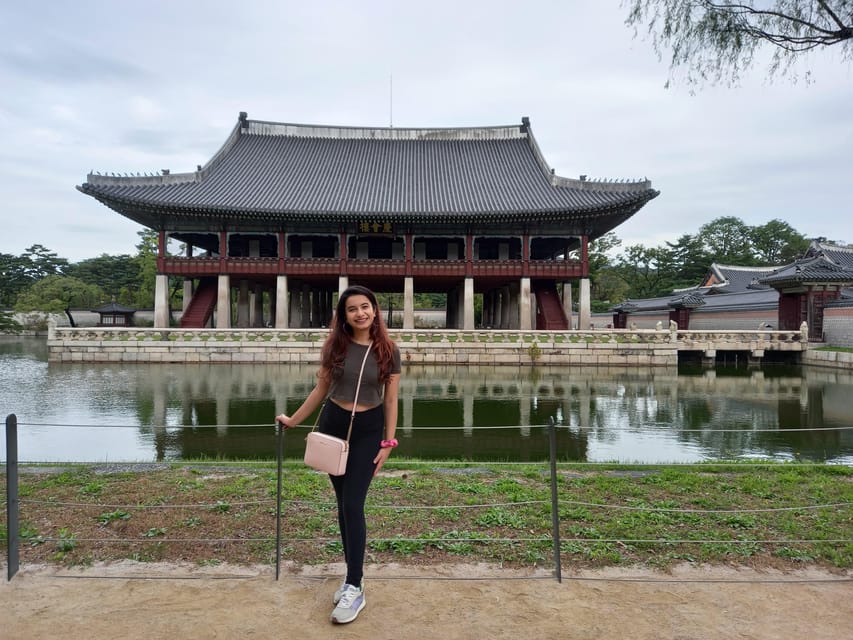
The schedule is active. Gyeongbokgung takes 2.5 hours, followed by a museum, village, market, tower, and Hongdae. You should expect a full day of walking and changing locations, though the exact transportation method is not specified.
This tour suits first-time visitors who want to cover major sights without building a Seoul route from scratch. It also suits anyone curious about the ideas behind Korean architecture and customs. Paul Koo’s emphasis on Confucian culture is more specialized than a standard sightseeing commentary, which can be a real benefit if you want historical structure rather than a list of dates.
It may not suit you if you dislike a fixed schedule or want to spend half a day in one museum. The National Folk Museum stop is only 30 minutes, and Hongdae replaces the National Museum on the stated route. People with a cold should not book, as the activity is specifically listed as unsuitable for them.
Cancellation is flexible up to 24 hours before the tour for a full refund, and you can reserve now and pay later. You must request the reservation in advance and receive confirmation from the guide.
Should you book this Seoul private tour?
Book it if you want one English-speaking guide to connect royal Seoul, traditional homes, market food, city views, and modern neighborhoods in a single day. The strongest reasons are the private format, the flexible hotel meeting point, and Paul Koo’s clear focus on Confucian culture and Korean architecture.
Skip it if you want an inexpensive tour with transport and entry tickets included, or if the National Museum of Korea is your main goal. Before paying, confirm the meeting time, transportation plan, extra admission costs, and whether you prefer Hongdae or a museum visit.
For two people who value context and convenience, the $242 group price can make sense. You get a broad introduction to Seoul, with enough time at Gyeongbokgung to give the day a solid historical center.
FAQ
How long does the Seoul tour last?
The tour lasts eight hours.
What language is the tour conducted in?
The tour is conducted in English.
Is this a private tour?
Yes. It is a private group experience for up to two people.
Where does the tour begin?
The stated starting location is Gwanghwamun Square. After booking, the meeting place and time can be chosen, and you may meet the guide at your hotel.
Is transportation included?
No. Transportation between stops is not included in the tour price.
Are admission fees included?
No. Admission to the palace and N Seoul Tower is not included.
Is food included at Gwangjang Market?
No. Food and drinks are not included.
What is the cancellation policy?
You can cancel up to 24 hours in advance for a full refund. You can also reserve now and pay later.
New market tours around Seoul
- Seoul: The Biggest Sea-food Noryangjin Market Tour★ 4.3 · 30 reviews
- Seoul: Sokcho beach, market, hot spring and Seorak Cable Car★ 4.8 · 5 reviews
- Seoul: Gyeongbokgung Palace Tour & Lunch at Authentic Market★ 4.5 · 2 reviews
- Seoul: Mt.Seorak(+CableCar Option)+Sokcho Fish Market&Beach★ 4.5 · 9 reviews
- Seoul: Namdaemun Market Food Tour★ 4.9 · 34 reviews
- Seoul: Guided Street Food Tour at Namdaemun Market★ 5.0 · 10 reviews
- Seoul: Gwangjang Market Vegan & Vegetarian Food Tour★ 5.0 · 16 reviews
- Seoul Gwangjang Market Foody Walking Tour★ 4.1 · 7 reviews
Seoul Market Tours, side by side.
Local Home Korean Cooking Class & Market Adventure in Seoul
Read our review →
Seoul: Palace, Temple and Market Guided Foodie Tour at Night
Read our review →
Seoul: Guided Food & Market Tour with 8+ Tastings
Read our review →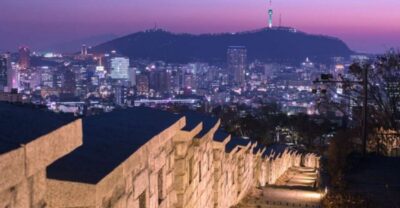
Seoul: Nighttime Tour of Palace, Market, Naksan Park & More
Read our review →
Seoul: Gyeongbok Palace, N Tower, & Local Market City Tour
Read our review →
This tour also appears in