
Review · KYOTO
Kyoto: Enjoy Sushi & Market Tour! Best for Family & Couple!
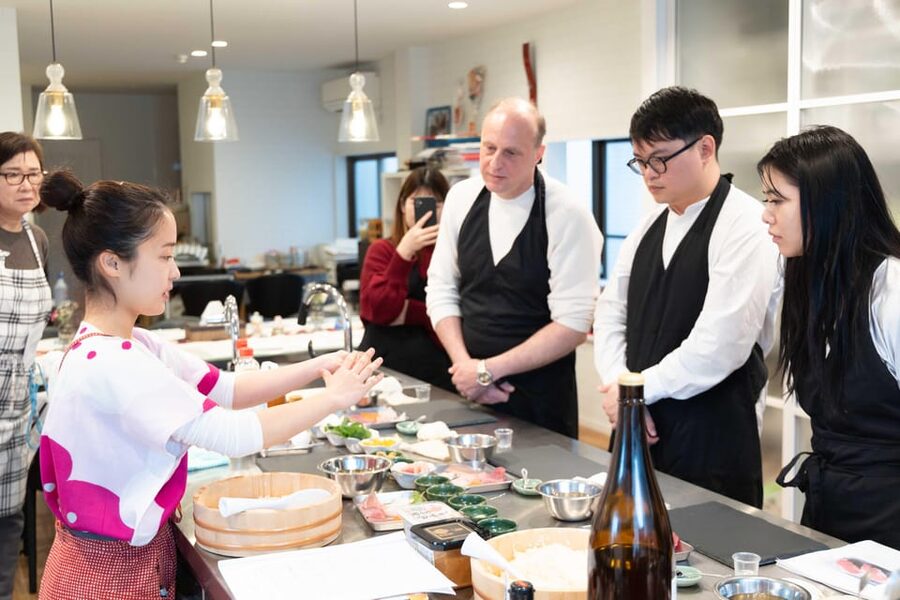
Kyoto’s best food lesson may begin at the fish counter. This two-hour class takes you to Nishiki Market to watch a vendor cut fish, then brings you back to the kitchen for nigiri, temari, and temaki sushi. You also make vinegar rice, compare dashi, and prepare miso soup before sitting down to eat.
I like the compact location, just 10 minutes from Kyoto Station and five minutes from Shijo Station. I also like the practical focus: you are not only eating sushi, you are learning forms you can repeat at home. The main caution is value. At $77 per person, the class feels worthwhile if you want instruction and market access, but less so if you mainly want a cheap meal or a long market visit.
Key points at a glance
- Watch fish being cut at Nishiki Market: The market visit adds a real food-world setting before the cooking begins.
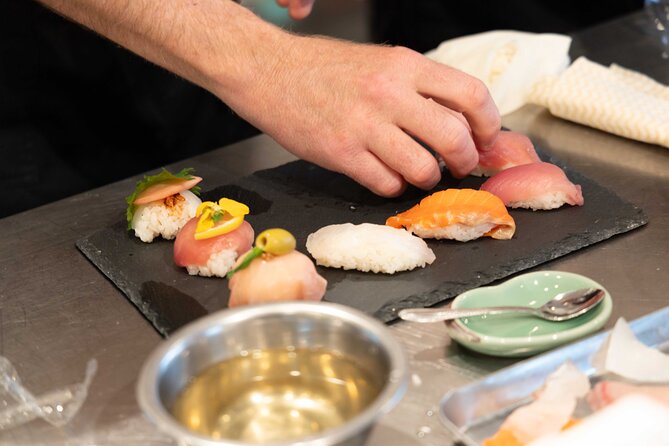
- Make three kinds of sushi: You prepare nigiri, temari, and temaki, each with a different shape and technique.
- Learn the foundations: Vinegar rice, dashi, and miso soup give the class more depth than a simple roll-making lesson.
- Finish with dessert and coffee: The meal includes sushi, soup, dessert, and coffee, with sake and beer available for an extra charge.
- Get seasonal Kyoto advice: A local tourism expert can suggest what to see during your visit.
- Small, central, and accessible: The group is limited to 10, the meeting area is near major sights, and the activity is wheelchair accessible.
From Nishiki Market to your own sushi plate
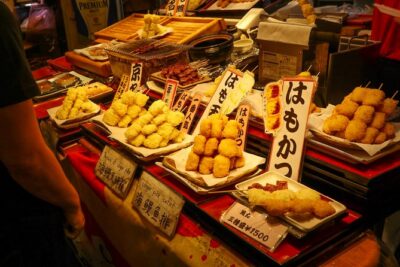
The appeal here is the change of scene. You do not begin with a tray of ingredients and a rushed demonstration. You first visit Nishiki Market with your guide, where you can watch skilled vendors prepare fish.
Nishiki Market is one of Kyoto’s most useful food stops because it gives you a close look at ingredients that can otherwise appear on a restaurant plate without explanation. The fish-cutting demonstration helps connect the finished sushi to the work behind it. For many people, especially children, this may be the most memorable part of the outing.
The market visit is not a full market tour. The activity lasts only two hours, and the cooking lesson takes up much of that time. Think of Nishiki as a focused introduction rather than a chance to browse every stall or shop at length.
After the market, you return to the cooking space. The class covers Japanese food culture, then moves into the basic building blocks of the meal. You learn how to make vinegar rice, the slightly seasoned rice that gives sushi its familiar balance.
That lesson matters. Sushi-making can look simple, but the rice is the part you will use again and again at home. If the rice is too wet, too dry, too warm, or poorly seasoned, even good fish will not save it. The class gives you a practical starting point instead of treating sushi as a collection of decorative shapes.
More market tours around Kyoto:
- Nishiki Market Brunch Walking Tour (7 Tastings + Brunch)
★ 5.0 · 1,355 reviews - Kyoto Nishiki Market Food and Culture Walking Tour
★ 5.0 · 412 reviews - Kyoto: Nishiki Market Tea Ceremony with Koto Performance
★ 4.8 · 294 reviews
Three sushi styles, three different skills
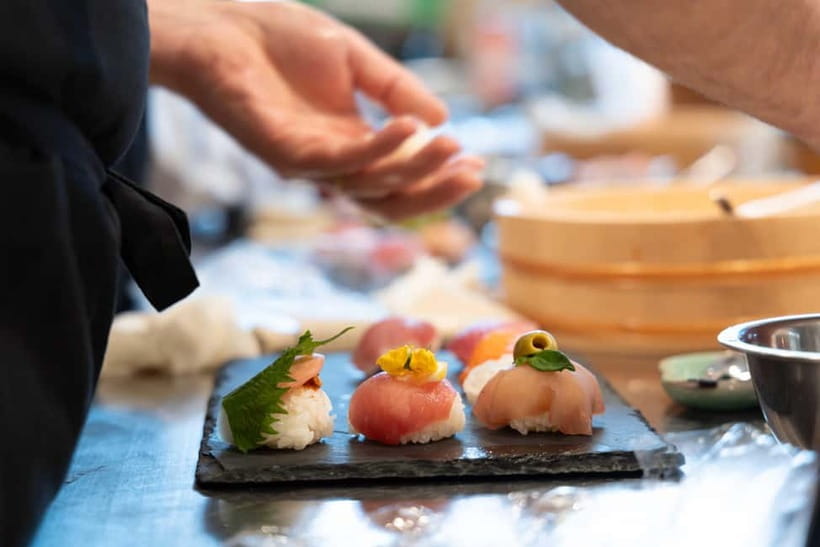
The sushi portion covers nigiri, temari, and temaki, which makes the class more useful than a lesson focused on only one roll.
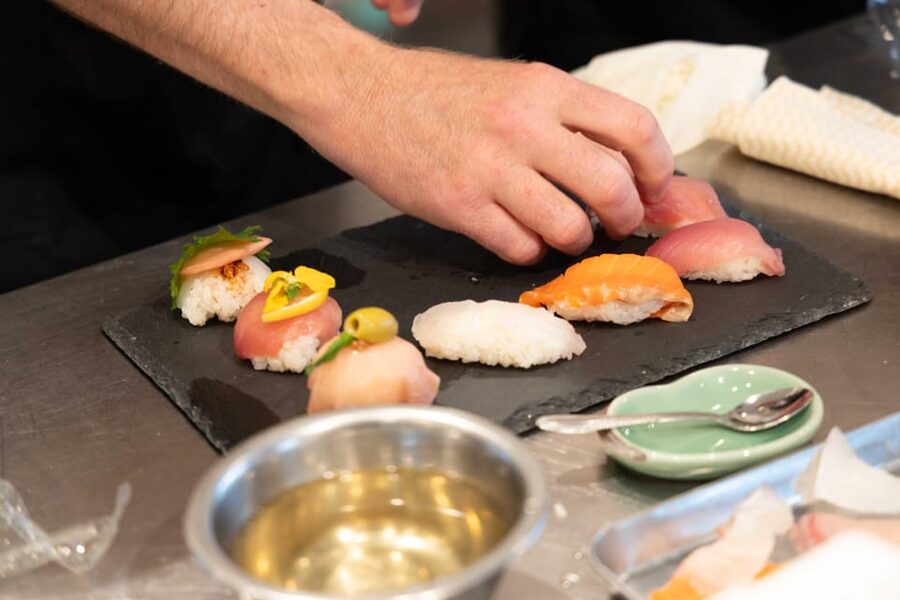
Nigiri is the familiar hand-shaped sushi with fish or another topping placed over rice. It calls for careful shaping and a light touch. You learn how to form the rice without crushing it, then pair it with the prepared fish.
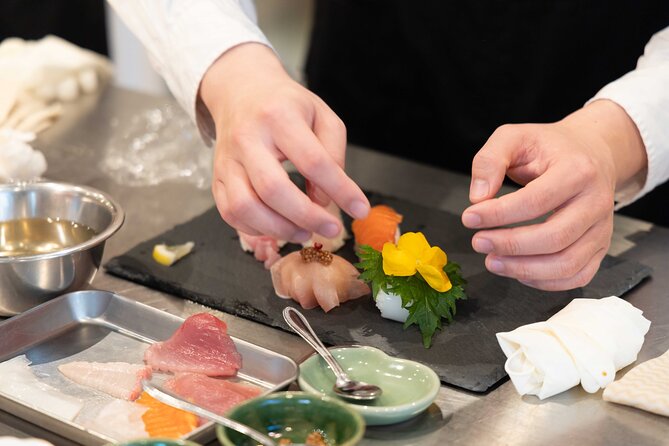
Temari sushi is round and decorative. This is where the artistic side of the class becomes more visible. You can arrange ingredients to create small, colorful pieces that work well for a home gathering or a family meal.
Temaki is hand-rolled sushi, often shaped into a cone. It is less formal and easy to understand once you see how the seaweed, rice, and fillings come together. The three styles give you different options: neat and classic, decorative and playful, or casual and easy to assemble.
I like that the lesson leaves room for personal choices. One account describes the guide as careful about teaching proper technique while still allowing participants to explore their own flavors. That is the right balance for a class like this. You want enough direction to avoid confusion, but not so much control that every plate looks identical.
The class is also suitable for a home party. Temari and temaki, in particular, can turn sushi-making into a shared activity instead of a one-person kitchen job. The description promises artistic sushi, but you should still expect instruction rather than a professional chef qualification.
Miso soup, dashi, and the taste behind the meal
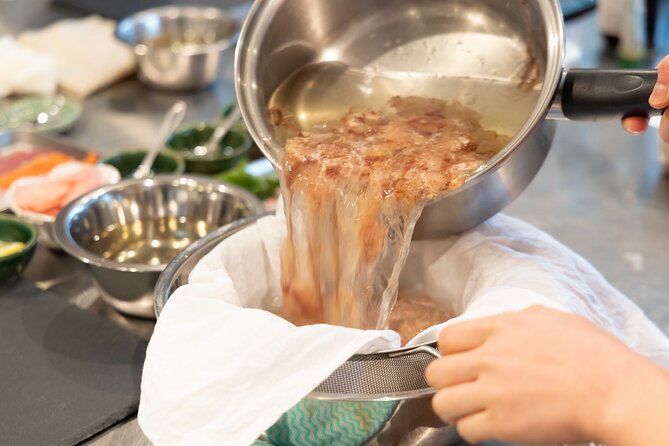
The soup lesson adds an important piece of Japanese cooking. You learn how to make dashi, taste and compare it, and use it in miso soup.
Dashi is easy to overlook because it often works in the background. Here, tasting and comparison make it easier to understand how a soup gets its savory base. That is useful knowledge if you want to cook Japanese food after returning home.
The miso soup also breaks up the sushi lesson. Instead of spending two straight hours shaping rice, you move between preparation, tasting, and conversation. A family group can split attention between the fish, the rice, and the soup without the pace feeling too narrow.
The practical benefit is strong, but the class will not suit everyone equally. If you already make sushi and Japanese soup regularly, some of the basic instruction may feel familiar. If you are starting from zero, the sequence should be easier to follow because you learn both the rice and the soup rather than only assembling ready-made ingredients.
A meal with dessert, coffee, and optional drinks
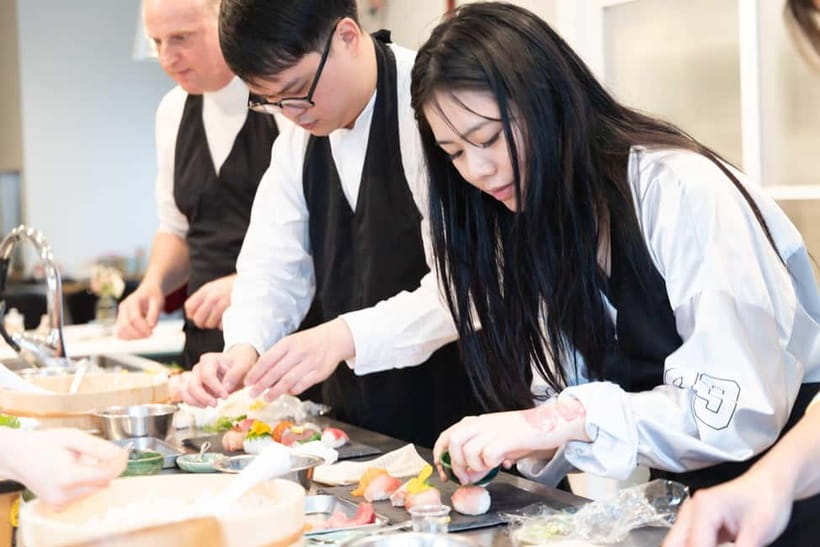
Once the preparation is complete, you eat the sushi and miso soup you have made. Dessert and coffee are included, giving the class a clear finish instead of sending you away as soon as the last piece is shaped.
A homemade matcha dessert was part of one family’s experience, along with green tea and sake. Since the exact dessert may vary, you should expect dessert but not rely on one specific sweet. The same applies to the fish selection, which can change with the market and season.
Sake and beer are available for an extra charge. That is a useful option for couples or adults who want to extend the meal, but the core price does not include those drinks. Green tea and coffee are part of the reported meal experience, while the stated inclusions specifically confirm dessert. If drink details matter to you, check at booking.
The meal is not just a tasting stop. You have spent the earlier part of the class preparing the food, so the final sitting gives you a chance to see how the techniques work together. It also creates time for conversation among the participants.
Same city, another market:
- Kyoto: Local Food Tasting Tour at the Nishiki Market
★ 4.7 · 135 reviews - Kyoto: Nishiki Market and Depachika Food Tour with a Local
★ 4.7 · 76 reviews - Kyoto: Nishiki Market Tour with a Local Foodie & Tastings
★ 4.5 · 67 reviews - Nishiki Market Food Tour with Cooking Class
★ 4.9 · 42 reviews
The Kyoto advice is a valuable extra
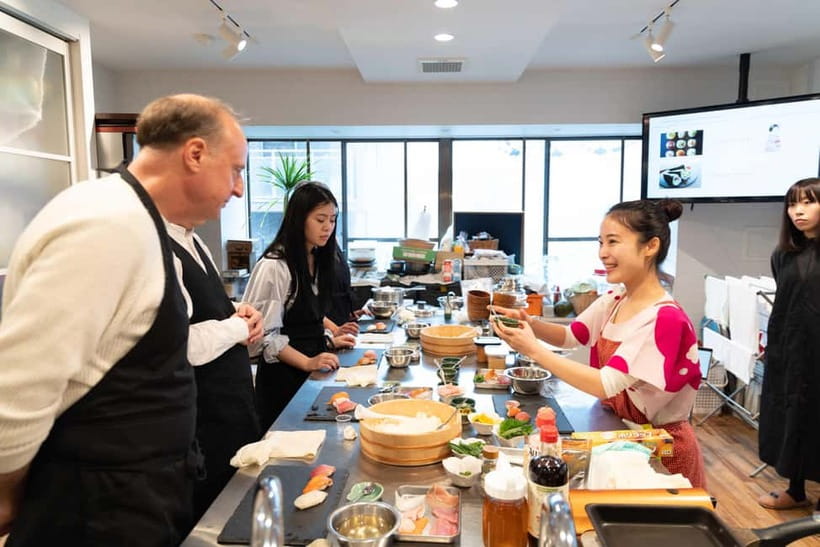
The guide is not limited to recipes. A Kyoto tourism expert shares seasonal sightseeing information during the activity.
This can be especially useful if your visit is short or your plans are still loose. Seasonal advice may help you decide how to arrange the rest of your day, though the available information does not promise a private itinerary or a detailed tour of Kyoto.
The timing and location make the advice practical. The meeting point is in the city center, close to Shijo and within easy reach of Gion and Kiyomizu-dera. You could use the class as a morning or afternoon stop while building a day around central Kyoto.
Do not expect the activity itself to include entry to Kiyomizu-dera or a guided walk through Gion. Those places are mentioned as nearby sightseeing options, not as stops within the class.
What the small group changes
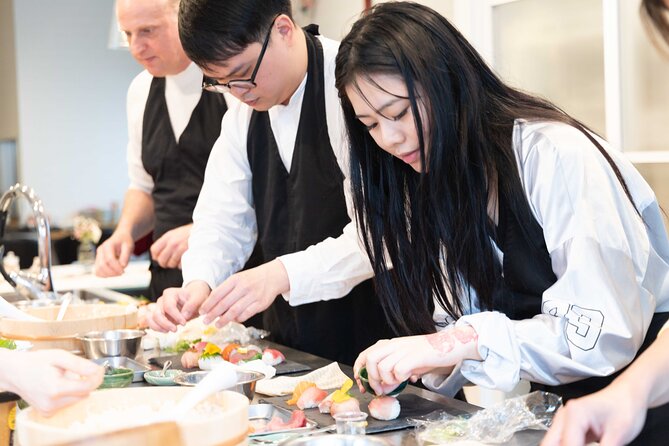
The group is limited to 10 participants. That is a sensible size for a cooking class because the guide can watch how you shape the rice, handle the ingredients, and prepare the soup.
A small group also helps the social side of the outing. After the cooking, you can compare results and talk with the other participants over the meal. For a couple, this creates a relaxed shared activity. For a family, it gives children something active to do rather than asking them to sit through another standard restaurant meal.
Still, small group does not guarantee constant personal attention. One account found the instructor less engaged than expected and wanted more hands-on help. That is the main warning to keep in mind. The class is designed to teach and guide, but the amount of one-to-one interaction may depend on the group and the guide on your date.
The teaching languages are English and Japanese. If you need detailed explanations in English, it is sensible to confirm how instruction is handled when you book. The supplied information confirms English-speaking instruction, but it does not describe translation equipment or printed recipe materials.
Is $77 a fair price?
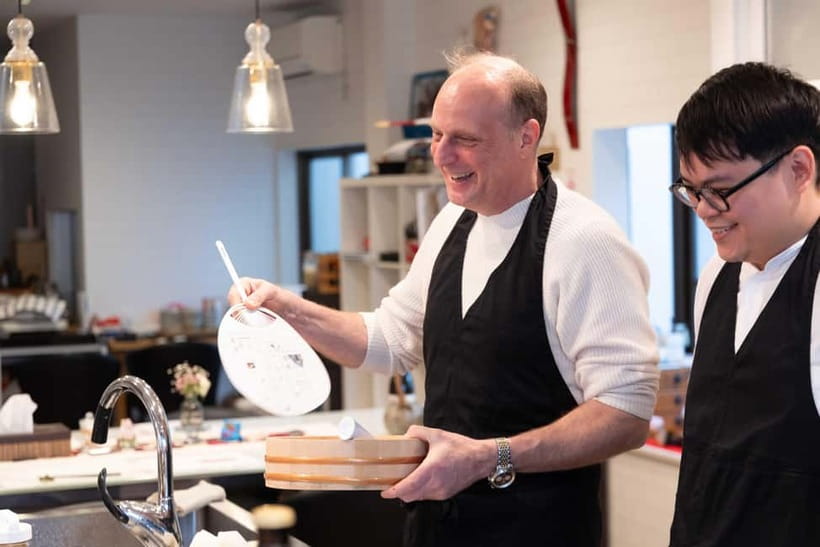
At $77, you are paying for more than a meal. The price covers a two-hour activity, a market visit, fish preparation viewing, a cooking class, sushi and miso soup, dessert, and seasonal Kyoto information.
I see the strongest value in the combination of market and kitchen. A basic restaurant meal would cost less or more depending on the venue, but it would not teach you how to make vinegar rice or shape three sushi styles. A market visit alone might also cost less, but it would not include the sit-down meal and instruction.
The price is less attractive if you are comparing it with a quick sushi lunch. It is also less convincing if you expect a long Nishiki Market walk, a private lesson, or a large amount of fish preparation. The experience is compact, not a full-day food tour.
For a family, the value comes from having a planned, hands-on activity that works for different ages. For a couple, it offers a shared meal with a skill you can take home. Solo participants can join the conversation, but the social setting may feel more natural for people who enjoy group classes.
Location, timing, and meeting details
The activity meets in front of a building with a hair salon called Salon Roll on the first floor. Take this detail seriously. It is more useful than relying only on a broad map pin, especially in Kyoto, where small streets and building entrances can cause confusion.
The location is about 10 minutes from Kyoto Station and five minutes from Shijo Station. It is also close to Gion and Kiyomizu-dera, making it easy to add to a central Kyoto day.
The class lasts two hours, with starting times depending on availability. That short length is convenient, but it also means the schedule likely moves at a steady pace. Arrive ready to begin rather than expecting a slow, open-ended workshop.
The activity is wheelchair accessible. Smoking is not allowed indoors. The group size is limited to 10, and cancellation is free up to 24 hours in advance for a full refund. You can also reserve now and pay later, which helps if you are still arranging a Kyoto schedule.
Who should book this Kyoto food class?
I would recommend it most strongly to families, couples, and first-time sushi makers. Children and adults can take part in shaping the food, and the three styles give the class enough variety to hold attention.
It is also a good match if you want a food activity with local context. The market visit, dashi comparison, and seasonal sightseeing advice make it more than a standard kitchen lesson.
You may want to skip it if your main goal is a long Nishiki Market exploration, a private chef session, or a very advanced sushi course. You should also consider the price carefully if you only want to eat sushi and do not care about learning the method.
Final decision: book it for the lesson, not just the lunch
I would book this experience if I wanted a compact, hands-on introduction to Kyoto food culture. The fish-cutting stop, three sushi styles, miso soup, dessert, and sightseeing advice fit a lot into two hours.
The strongest reason to choose it is the combination of watching food being prepared and then making your own meal. The main reason to hesitate is the cost relative to the short duration and the possibility of uneven personal attention.
Book it when you want to return home able to make vinegar rice, simple sushi, and miso soup. Pass on it when you want a full market tour or a cheap meal. For families and couples, it is a particularly easy way to add a practical food experience between Kyoto’s major sights.
FAQ
How long does the sushi and market activity last?
The activity lasts two hours.
How much does the experience cost?
The listed price is $77 per person.
Where does the activity meet?
You meet in front of a building with a hair salon called Salon Roll on the first floor.
How close is the meeting point to Kyoto Station?
The meeting point is about 10 minutes from Kyoto Station.
How close is it to Shijo Station?
The meeting point is about five minutes from Shijo Station.
Which languages are available?
Instruction is available in English and Japanese.
What types of sushi will I make?
You will learn to prepare nigiri, temari, and temaki sushi.
Is miso soup included?
Yes. You learn how to make dashi, taste and compare it, and prepare miso soup.
Are drinks included?
Dessert is included, and coffee is provided. Sake and beer are available for an extra charge. The activity information also describes green tea as part of the meal experience.
Is the activity wheelchair accessible?
Yes, the activity is wheelchair accessible. Smoking is not allowed indoors.
New market tours around Kyoto
- Taste of Nishiki Market Walking Food Tour with Local guide★ 5.0 · 17 reviews
- Nishiki Market Food Tour with Cooking Class★ 4.9 · 42 reviews
- Kyoto: Wholesale Fish Market Walking Tour★ 5.0 · 2 reviews
- Golden Pavilion, Nijo Castle, & Nishiki Market Half day tour★ 5.0 · 29 reviews
- Kyoto: Nishiki Market Tour with a Local Foodie & Tastings★ 4.5 · 67 reviews
- Kyoto: Nishiki Market Food Tour with Local Guide★ 4.6 · 5 reviews
- Kyoto: Nishiki Market and Depachika Food Tour with a Local★ 4.7 · 76 reviews
- Kyoto: Arashiyama Unveiled Bamboo, Temple, Matcha, & Monkeys★ 5.0 · 6 reviews
Kyoto Market Tours, side by side.
Nishiki Market Brunch Walking Tour (7 Tastings + Brunch)
Read our review →
Kyoto Nishiki Market Food and Culture Walking Tour
Read our review →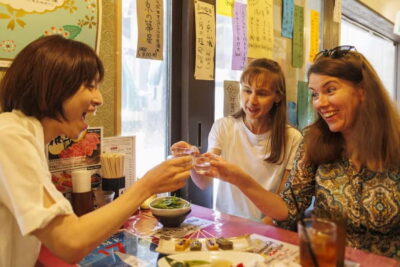
Kyoto: Local Food Tasting Tour at the Nishiki Market
Read our review →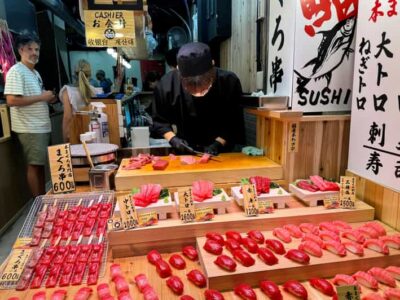
Kyoto: Nishiki Market Tour with a Local Foodie & Tastings
Read our review →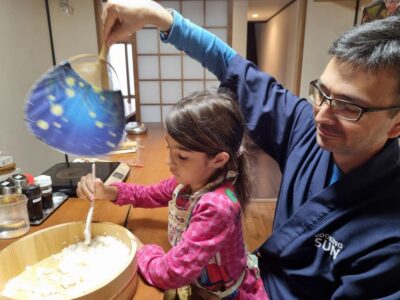
Golden Pavilion, Nijo Castle, & Nishiki Market Half day tour
Read our review →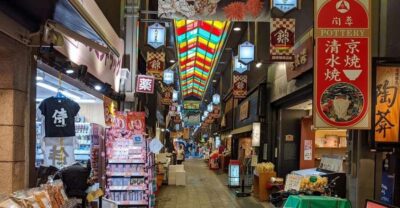
Taste of Nishiki Market Walking Food Tour with Local guide
Read our review →This tour also appears in