
Review · KATHMANDU
Oldest Local Market Walking Tour With Living Goddess Kumari
The striking feature here is the chance to see Kathmandu’s Living Goddess Kumari, a prepubescent girl regarded as the living form of the goddess Taleju. The visit also takes you through Ason, the city’s oldest local market, then into Kathmandu Durbar Square, where palaces, temples, and courtyards bring Nepal’s religious traditions into one compact walk.
I like the local-market setting, where spices, textiles, and everyday goods offer a better look at Kathmandu life than a quick temple stop. I also like the focused two-hour format and the clear cultural thread linking Hinduism, Buddhism, and the Kumari tradition. The main consideration is cost: the $39 tour does not include the 1,000 Nepali rupee entry fee for Kathmandu Durbar Square, meals, or drinks.
Key points to know before you book
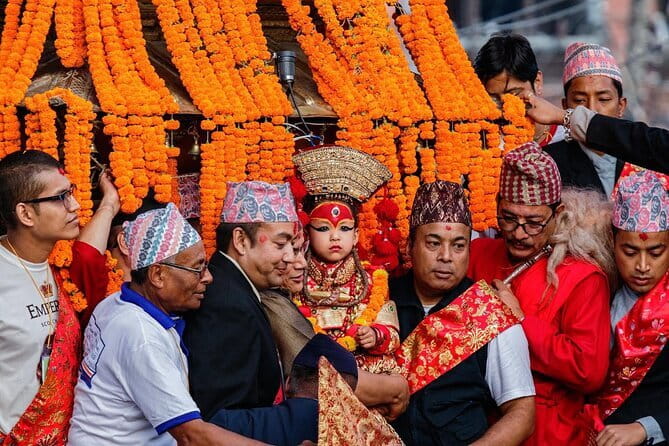
- Kumari visit: The main purpose is seeing Kathmandu’s Living Goddess at the Kumari Ghar.
- Ason Market: You walk through Kathmandu’s oldest market area, known for spices, textiles, shops, and traditional buildings.
- Kathmandu Durbar Square: The tour includes a guided visit to one of the city’s key historic areas.
- Cultural focus: Your guide explains Hindu and Buddhist beliefs rather than simply pointing out monuments.
- Two-hour format: The short schedule works well for a first day in Kathmandu or a free morning.
- Extra fee: Bring money for the 1,000 NPR Durbar Square admission, since it is not part of the tour price.
Starting at Chhaya Devi Complex in Thamel
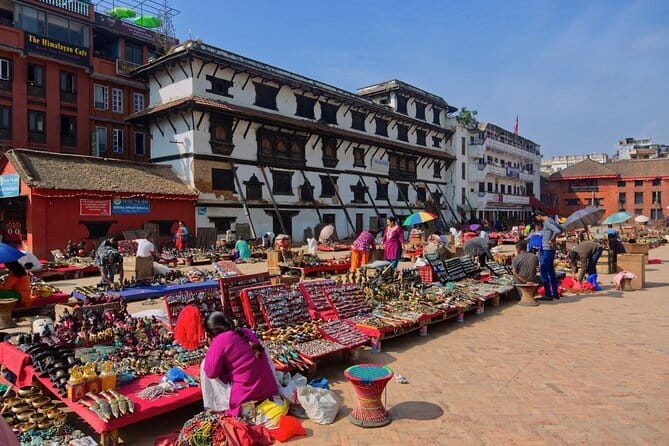
The tour begins at the main gate side of Chhaya Devi Complex in Thamel. This is a practical meeting point if you are staying in or around Kathmandu’s main tourist district, and it gives you a clear place to begin without arranging a separate hotel pickup.
From there, you set out on foot. The activity is built as a walking experience, not a sightseeing drive, so you get a closer look at the streets between Thamel, Ason, and the historic center. The supplied details do not state the group size, route distance, or exact starting time, so check availability when booking and ask if those details matter to you.
The guide speaks English and leads the walk for about two hours. That timing is useful if you want an introduction to Kathmandu without giving up a full day. It also means the tour is likely to keep moving, with the guide choosing the most useful stops rather than trying to cover every corner of the city.
More Local and Farmers Market Tours in the world:
- Hanoi Cooking Class: Culture, Local Market & Meaning CSR Impact
★ 5.0 · 5,147 reviews - Cooking Class and Lunch at a Tuscan Farmhouse with Local Market Tour from Florence
★ 5.0 · 4,831 reviews - Chef Guided Food Tour of Pike Place Market
★ 5.0 · 3,733 reviews
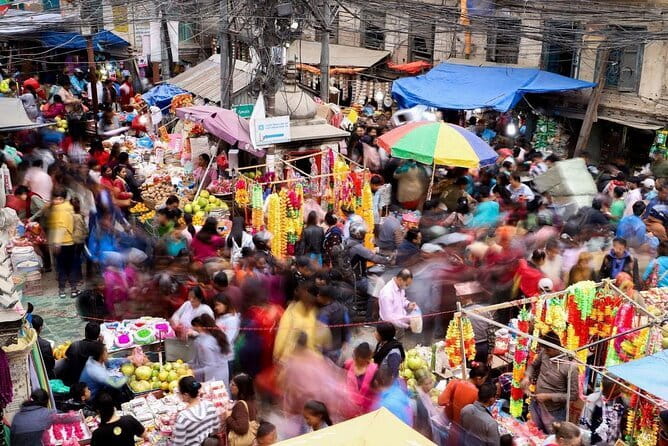
Ason Market, where daily Kathmandu comes first
Ason is the most everyday part of this outing. It is described as Kathmandu’s oldest local market area, with shops and stalls selling spices, textiles, souvenirs, and other goods. You are not simply looking at a preserved monument here. You are seeing a working commercial district where local trade remains part of the scene.
That difference matters. At a major monument, your attention naturally goes to carved wood, brickwork, and religious figures. In Ason, you can pay attention to the small details of city life: what is being sold, how narrow streets are used, and how old buildings sit beside active shops. You might find the market more interesting than a polished shopping street because it offers a less arranged view of Kathmandu.
The market can also be the least relaxed part of the walk. Shops and stalls fill the streets, and the area is described as bustling, so you should expect activity rather than quiet lanes. Keep your belongings secure, stay close enough to hear the guide, and wear shoes suited to walking on uneven city streets.
The guide’s explanations are especially useful here. Without context, a market can feel like a blur of color and movement. With an English-speaking guide, you can connect the goods and buildings to local customs and the wider religious life of the city.
Kathmandu Durbar Square and the Kumari Ghar

The route continues to Kathmandu Durbar Square, a historic center filled with palaces, temples, and courtyards. This is where the tour shifts from present-day commerce to royal and religious architecture.
The square reflects the history of the Kathmandu Valley through its buildings and sacred spaces. The tour is not limited to architecture, though. Its main cultural point is the Kumari, who resides in the Kumari Ghar.
The Kumari tradition is one of Nepal’s most distinctive religious practices. A prepubescent girl is selected and regarded as the living embodiment of Taleju, a goddess connected with Nepalese religious belief. Seeing the Kumari is not the same as visiting a museum exhibit. The experience involves a living religious tradition, so respectful behavior matters.
Your guide can help explain the difference between observing a sacred figure and treating the visit as a casual photo opportunity. Follow instructions at the Kumari Ghar, keep your voice low, and do not assume that photography is allowed. The information provided for this activity does not state the exact viewing rules, so ask the guide before taking any pictures.
The phrase living goddess may sound dramatic, but the tradition is taken seriously. That is what gives this stop its weight. You are not only looking at an old building. You are encountering a practice that still has a place in Kathmandu’s religious and cultural life.
The tour description centers on witnessing the Kumari, but it does not explain the viewing schedule or guarantee how long you will see her. If this is your main reason for booking, confirm the current arrangements with the operator before you go. That small check can help set realistic expectations.
Hinduism and Buddhism in one short walk
One of the best reasons to choose this tour is its focus on both Hinduism and Buddhism. Kathmandu’s religious life does not fit neatly into separate boxes, and a walk from the market to the square gives your guide a natural way to explain that connection.
Ason shows religion and commerce side by side. Kathmandu Durbar Square brings together temples, palaces, and courtyards. The Kumari tradition adds another layer, linking a young girl with the goddess Taleju and with the wider spiritual life of the city.
You do not need a detailed background in South Asian history to enjoy this. The tour is suited to someone who wants the basic story explained clearly while standing in the places where that story matters. One published rating specifically praised the guide’s informative approach, and another highlighted the detailed explanations and friendly manner. That emphasis is important because the sites can be hard to interpret on your own.
The guide may be Santos, who was singled out for clear communication and strong knowledge of the area, but the supplied details do not guarantee that he leads every departure. When you book, check the guide assignment if that matters to you.
More Market Walking Tours in the world:
- Bangkok: City Highlights Temple and Market Walking Tour
★ 4.5 · 3,990 reviews - Tokyo Tsukiji Fish Market Food and Culture Walking Tour
★ 5.0 · 3,184 reviews - Marrakech: Ben Youssef, Secret Garden, & Souks Walking Tour
★ 4.6 · 2,802 reviews - Marrakech: Colorful Medina Souks Guided Walking Tour
★ 4.7 · 2,470 reviews
What the $39 price covers
At $39 per person, this is not the cheapest way to walk around Kathmandu. The value depends on how much help you want with the cultural meaning of the places you see.
The price includes an English-speaking guide, government taxes and VAT, and a bottle of mineral water. It does not include food, beverages, personal expenses, or the Kathmandu Durbar Square entry fee of 1,000 Nepali rupees.
That extra admission charge is easy to overlook. Add it to the advertised price when comparing this activity with an independent visit. You are paying for the guide’s time and explanations, not an all-inclusive sightseeing package.
For me, the strongest value comes from the Kumari context and the religious interpretation. If you only want to wander through Ason and photograph the square, you could prefer exploring independently. If you want someone to explain what you are seeing and connect the market, square, and Kumari tradition, the cost is easier to justify.
The bottle of water is a small but useful inclusion. Since the tour lasts two hours, it is not a major benefit, but it saves you from buying one at the start.
Who will enjoy this two-hour experience
This tour suits you if you want a compact introduction to Kathmandu’s culture and prefer walking to sitting in a vehicle. It is also a good fit if the Kumari is high on your list and you want the visit placed within a wider historical route.
First-time visitors can use it to get their bearings around Ason and Kathmandu Durbar Square. The route also works well for someone with limited time, since the activity lasts about two hours and returns to Chhaya Devi Complex in Thamel.
I would also recommend it to you if you enjoy learning how religious traditions shape ordinary city life. The market is not just a shopping stop, and the square is not just a collection of old buildings. The guide’s role is to connect those parts.
You may want another activity if you prefer a slow, unstructured walk or want to spend several hours studying the architecture. The tour has a set duration and several important themes to cover. It gives you an introduction, not an exhaustive study of Kathmandu Durbar Square.
Families and older visitors should consider their comfort with walking in a busy historic district. The data does not state the route’s accessibility, surface conditions, or distance, so ask the operator if those points are important for your group.
Practical details that affect the day
Plan to meet at the main gate side of Chhaya Devi Complex in Thamel. Arriving a little early gives you time to identify the correct entrance and meet the guide without rushing.
The listed duration is two hours, and the tour returns to Chhaya Devi Complex. The exact departure times are not fixed in the supplied information, so you need to check availability for your chosen date.
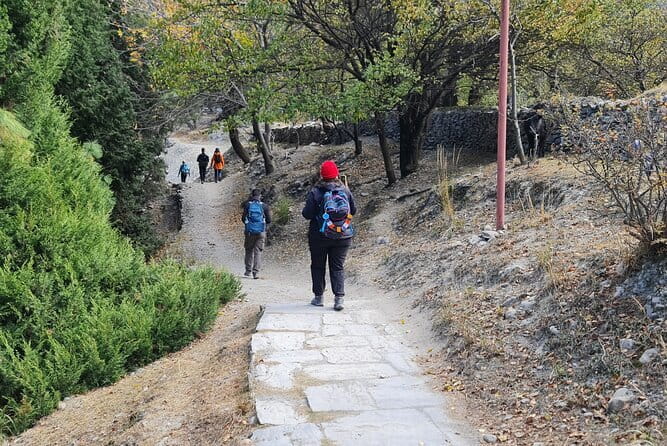
Wear practical walking shoes. You will be moving through a market and a historic square rather than following a smooth indoor route. A small bag is easier to manage than bulky luggage, especially in crowded streets.
Bring Nepali rupees for the 1,000 NPR Durbar Square entry fee and for any personal purchases. Food and drinks are not included, so eat beforehand or plan to buy something separately. The tour includes bottled water, but no meal stop is promised.
The operator offers free cancellation up to 24 hours before the activity for a full refund. You can also reserve now and pay later, which helps if your Kathmandu schedule is still changing.
What the ratings suggest about the guiding
The six supplied ratings are all five out of five, with praise focused on clear explanations, communication, friendliness, and the emotional impact of seeing the Kumari. One person described the gaze of the Kumari as especially impressive, while another simply found the tour very informative.
That pattern tells you where this experience earns its place. It is not built around a long list of attractions. Its strength is the guide’s ability to explain a small number of important places well.
The strongest praise goes to Santos, described as an excellent communicator with strong knowledge and a friendly manner. Other comments in English, Spanish, Japanese, and French show that the activity has appealed to an international audience, though the stated tour language is English.
The perfect rating comes from only eight reviews, so I would treat it as encouraging rather than final proof that every departure will be identical. Guide quality, crowd levels, and the Kumari viewing conditions can affect the day. Still, the consistent praise for explanation and communication is a useful sign.
Is the Kumari visit right for you?
You should book this tour if you want a respectful introduction to a living Nepalese tradition and are comfortable visiting a religious site. The Kumari is the central draw, but the experience makes more sense when you also care about Ason and Kathmandu Durbar Square.
Do not book it solely for a guaranteed long viewing or a private encounter. The available details do not promise either. Instead, think of the tour as a short guided walk that includes the chance to witness the Kumari and learn why she matters.
Should you book the Ason and Kumari walk?
I would choose this experience if I had two hours in Kathmandu and wanted a guide-led introduction rather than a self-guided stroll. The combination of Ason Market, Kathmandu Durbar Square, and the Kumari gives you three different views of the city: daily trade, historic architecture, and living religion.
The main drawbacks are clear. You pay $39, then add the 1,000 NPR square admission fee. The tour does not include food or drinks, group size is not stated, and the exact Kumari viewing arrangements should be confirmed before booking.
For a first visit, the short format and strong emphasis on explanation make it a sensible choice. Arrive ready to walk, carry Nepali rupees, and approach the Kumari with respect. If those terms suit you, this is a useful way to meet Kathmandu through its streets, sacred places, and people rather than through monuments alone.
FAQ
Where does the tour begin?
The meeting point is at the main gate side of Chhaya Devi Complex in Thamel, Kathmandu.
How long does the activity last?
The tour lasts two hours and returns to Chhaya Devi Complex.
What language is the tour conducted in?
The live tour guide speaks English.
Is Kathmandu Durbar Square admission included?
No. The Kathmandu Durbar Square entry fee is listed separately at 1,000 Nepali rupees.
What is included in the $39 price?
The price includes an English-speaking guide, government taxes and VAT, and a bottle of mineral water.
Can I cancel the booking?
You can cancel up to 24 hours in advance for a full refund. The activity also allows you to reserve now and pay later.
New market tours around the world
- Tel Aviv: 2-Hour Carmel Market Tour in English with Lunch★ 4.8 · 23 reviews
- Tel Aviv: Carmel Market & Neighborhood Guided Walking Tour★ 4.7 · 3 reviews
- Tel Aviv: 2-Hour Jaffa Flea Market Tour with Tastings★ 4.9 · 8 reviews
- Tel Aviv: Carmel Market Food Tasting Tour “Shuk Hacarmel”★ 4.0 · 8 reviews
- Tel Aviv: 2-Hour Levinsky Market Tour with Full Lunch★ 4.7 · 10 reviews
- Tbilisi 2 Parks: Turtle Lake & Dedaena Park with Flea Market★ 5.0 · 3 reviews
- Tbilisi: Street Food & Sightseeing Tour with Local Markets★ 5.0 · 8 reviews
- Teguise: Market and César Manrique Foundation Tour★ 4.3 · 39 reviews
Kathmandu Market Tours, side by side.

Best Nepali Cooking Class in Thamel with Local Market Trip
Read our review →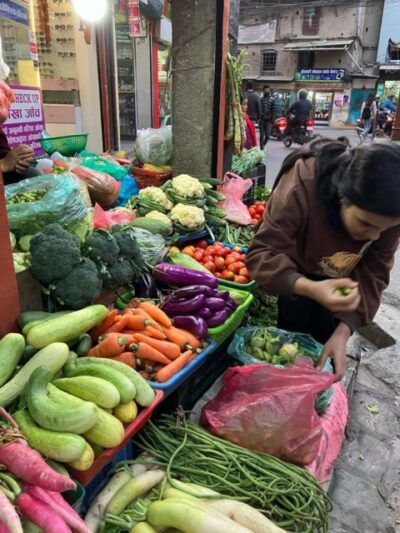
Half Day Cooking Class in Thamel with Local Market Visit
Read our review →
From Bazaar to Hippie Hub: Ason & Freak Street in Kathmandu
Read our review →This tour also appears in