Review · RIYADH
Riyadh: Masmak Fort, Souq AlZal, and Murabba Palace Tour
Riyadh’s past comes into focus on this six-hour route, which moves from a mudbrick fort and a century-old market to a royal palace, national museum, and traditional restaurant. The most memorable contrast is between Masmak Fort, tied to the unification of Saudi Arabia, and the old objects still traded at Souq AlZal.
I like the way the tour joins major sights that are spread across the city, and I like that it ends with Najdi food rather than another quick photo stop. Guides named Sultan and Thamer have earned especially warm praise for making the history easy to follow. The main drawback is pace: six hours covers a lot, and the museum, palace, souq, park, and meal may leave you wishing for more time at a few stops.
Key points at a glance
- Masmak Fort sets the historical stage: See the clay and mudbrick stronghold linked to the struggle that helped create modern Saudi Arabia.
- Souq AlZal feels unlike a standard shopping stop: Look for rare coins, antiques, old utensils, musical instruments, and vintage record players.
- Murabba Palace shows royal life through architecture: Its central foyer is surrounded by rooms in a traditional design.
- The National Museum gives the tour its broadest context: Its displays include statues, scripts, sculptures, and about 3,700 artifacts.
- Darah adds a research and archive angle: The foundation covers Saudi geography, literature, history, and heritage.
- Najdi Village closes the day with local flavor: Expect a heritage-style setting and popular Saudi food, especially dishes from the Najd region.
Why this six-hour Riyadh tour works
Riyadh can feel scattered to first-time visitors. Its historic quarters, royal sites, museums, and newer commercial districts are not all gathered around one compact old town. This tour solves that problem with hotel pickup and drop-off, using the Kingdom Centre or King Khalid International Airport as the stated pickup and return points.
You get a guide in English or Arabic, entrance to the main cultural sites, and transport between them. That matters in Riyadh, where a self-guided day can quickly become a string of separate taxi rides and admission arrangements.
The route also offers a useful progression. Masmak introduces the political story of the city. Souq AlZal shows older everyday objects and trading traditions. Murabba Palace shifts the focus to the royal family and traditional building design. The National Museum then places those local stories within the larger history of the Kingdom.
At $149 per person, this is not a bargain-priced walking tour. Its value depends on how much you want handled for you. If you would otherwise pay for transport, several admissions, a guide, and a meal, the price becomes easier to justify. If you prefer lingering at one museum or wandering without a schedule, the six-hour format may feel too packed.
More market tours around the world:
- Bangkok: Damnoen Saduak Market and Maeklong Railway Market
★ 4.5 · 26,723 reviews - The Old Siam: Damnoen Saduak and Maeklong Railway Market
★ 4.5 · 10,992 reviews - Dubai: Old Town, Creek, Museums, Souks, & Street Food Tour
★ 4.8 · 10,816 reviews
Masmak Fort and the story of unification
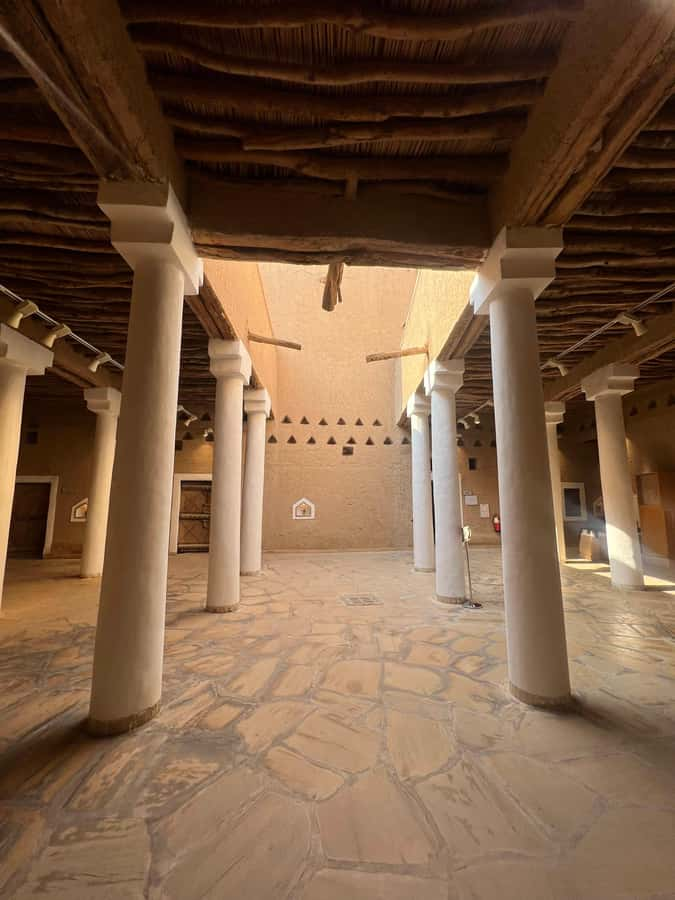
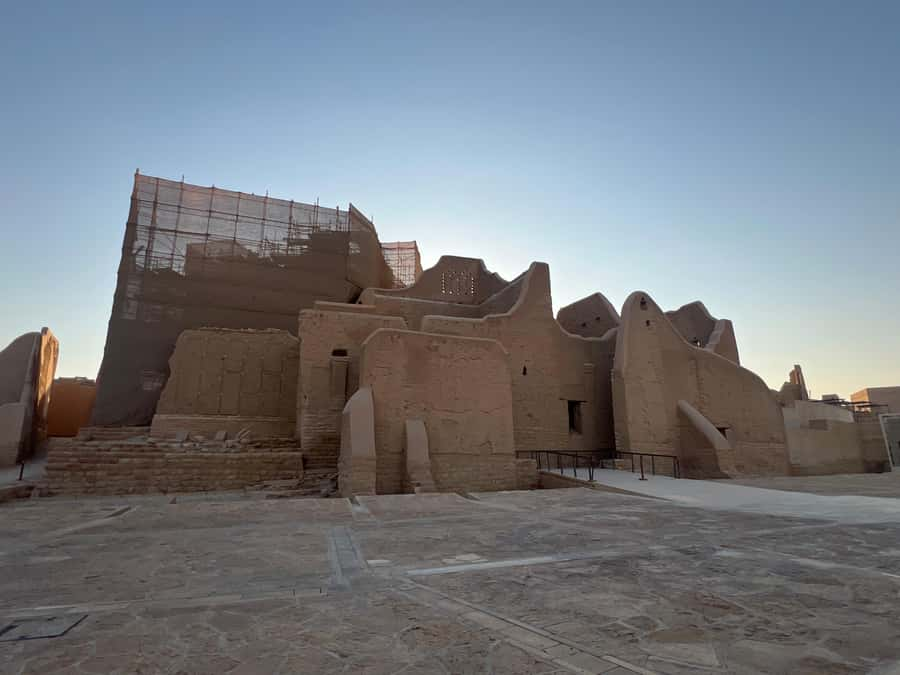
Masmak Fort is the strongest opening stop because it gives the rest of the day a clear purpose. The fort is made from clay and mudbrick, materials that give it a plain, sturdy look rather than the polished appearance of a modern palace or museum.
Its importance comes from a battle connected with the House of Saud’s struggle for control of Riyadh. That event helped turn the political tide and contributed to the formation of modern Saudi Arabia. You are not simply looking at old walls. You are standing in a place linked to the early stages of the Kingdom’s creation.
The fort is also useful for visitors who want history in a physical setting. A museum label can explain a date or a ruler, but the heavy walls and traditional construction help you picture the kind of defensive building that once guarded the city.
Plan on walking and listening closely here. The tour material does not give a detailed breakdown of every room or exhibit, so your guide will be important in explaining what matters most. Sultan and Thamer are two guide names associated with particularly positive feedback, though your assigned guide may be someone else.
Souq AlZal, where old objects still tell stories
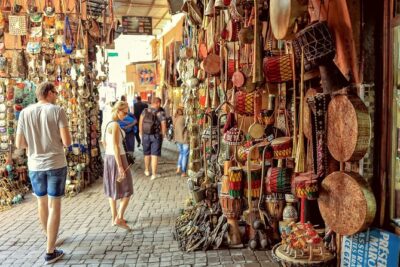
Souq AlZal is one of Riyadh’s oldest traditional markets, with around a century of history in its lanes. It is a different kind of stop from Masmak. The fort tells a national story through architecture, while the souq reveals older habits of buying, collecting, repairing, and trading.
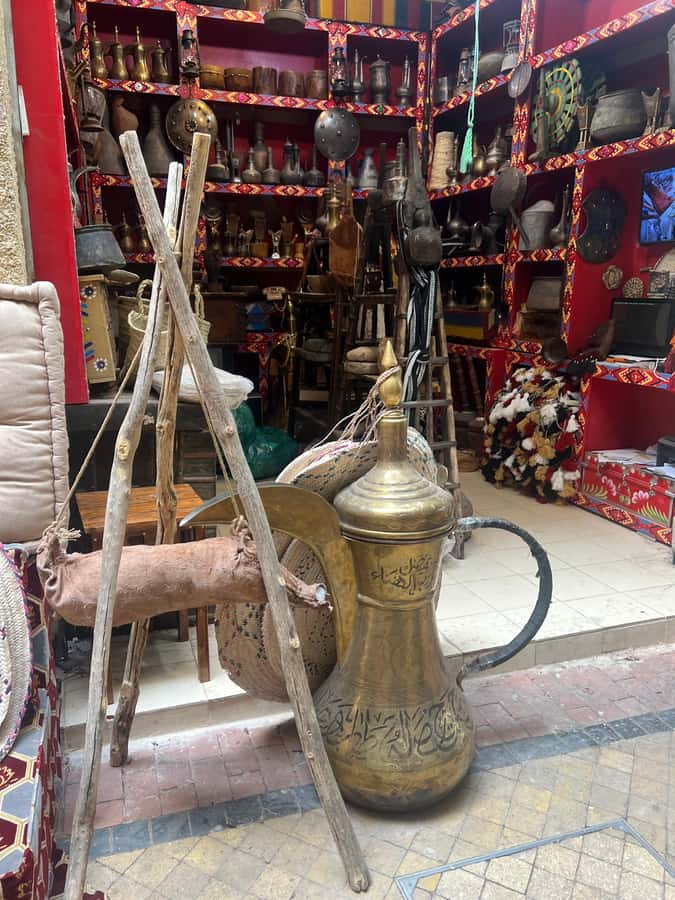
The market is known for antiques, rare coins, and old utensils. You might also find musical instruments, old record players, and many small objects that resemble pieces from a folk museum. The appeal is not only in buying something. It is in examining the objects and guessing at the lives they once belonged to.
The sound of sellers calling during auctions is part of the atmosphere described for the market. That gives Souq AlZal a more active feel than a quiet display hall. I would keep your eyes open and your schedule flexible here, since a market rewards curiosity more than a rushed checklist.
Personal expenses are not included, so purchases are your responsibility. Bring a camera if you enjoy details, but ask before photographing people or sensitive items. Photography is allowed, yet local customs still matter.
Murabba Palace and its central foyer
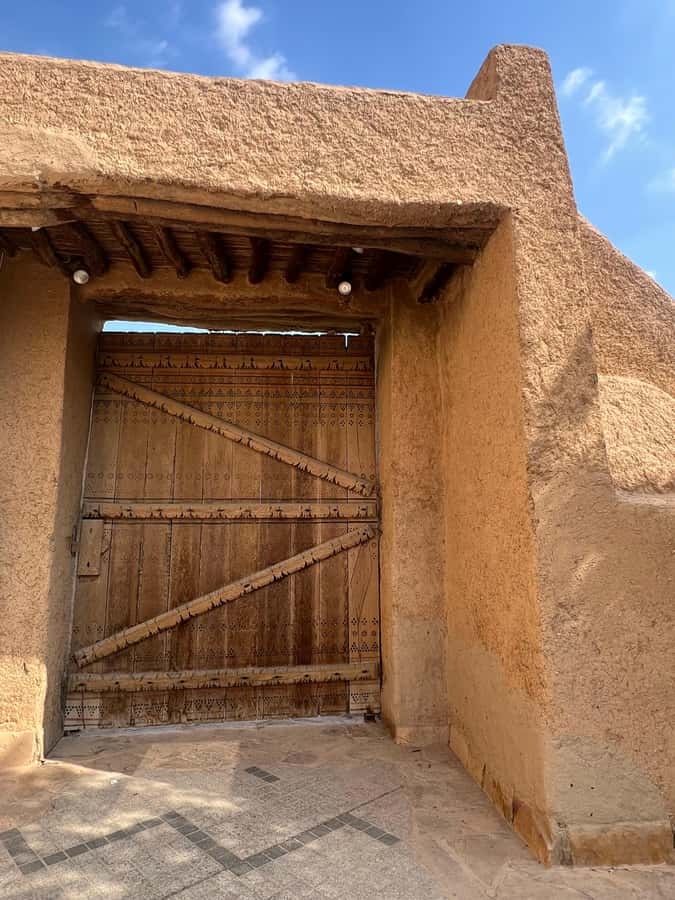
Murabba Palace was established by order of King Abdulaziz, the founder of the Kingdom. Its main interest is not just royal association. The building also shows how traditional local design was used in a formal palace.
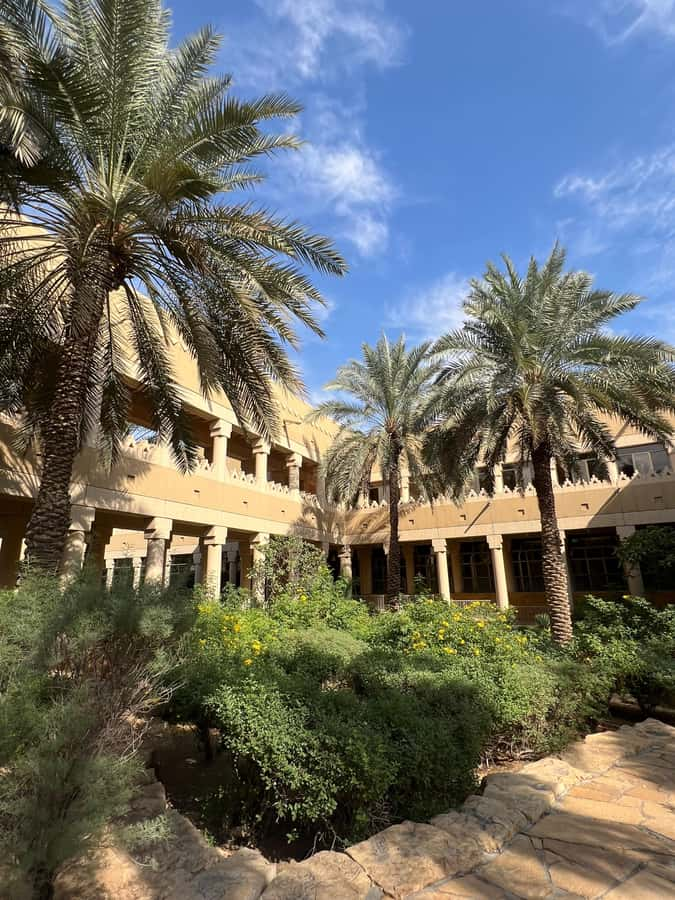
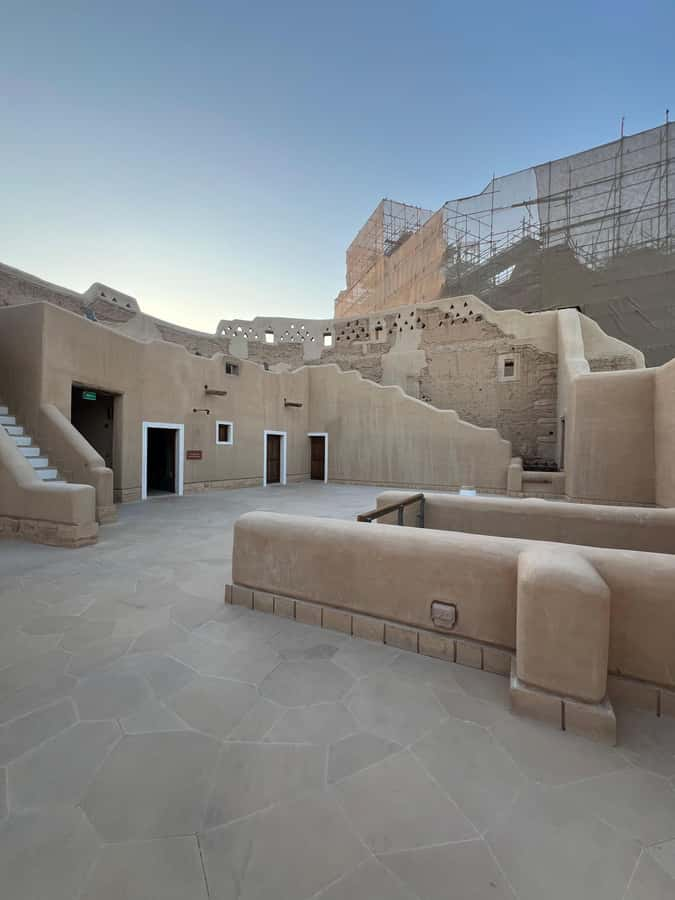
The feature to watch for is the foyer at the center of the palace. Rooms surround this central space, creating a plan shaped by the architectural ideas common at the time. Your guide can help you notice how the design organizes movement and gives the palace its distinctive character.
This is a good stop for visitors who want more than political dates. Architecture here becomes a record of values, customs, and practical needs. The palace helps bridge the gap between Masmak’s defensive mudbrick structure and the more formal institutions that followed.
The stated itinerary allows about an hour of walking at Murabba Palace. Wear shoes you can manage comfortably, since the day includes several walking stops. The palace is one place where a slower pace would help, but the full route means you may not be able to linger over every detail.
Same city, another market:
- Bangkok: Train Market & Floating Market with Boat Ride
★ 4.7 · 9,547 reviews - Dubai: Old Town, Souks, Street Food, Guided Tour & Abra Ride
★ 4.9 · 7,170 reviews - From Bangkok: Ayutthaya & Ayothaya Floating Market Day Trip
★ 4.7 · 6,084 reviews - Dubai: Frame Tickets, Creek, Souks & Blue Mosque Guided Tour
★ 4.8 · 5,980 reviews
Darah, an extra window into Saudi heritage
On the way to the palace, the tour visits the King Abdulaziz Foundation for Research and Archives, known as Darah. Its work covers the history, geography, literature, and heritage of Saudi Arabia.
Darah adds an important research angle to a day otherwise built around visible sites. At Masmak, you see a fort. At Murabba, you see a palace. At Darah, the focus turns to the records and study that help preserve the country’s past.
The available details do not specify how much time is spent inside or which particular archive displays are open during your visit. Treat it as a supporting stop rather than the main event. Its value is in connecting the buildings you see with the documents, writing, and scholarship behind their interpretation.
The National Museum and 3,700 artifacts
The National Museum is the broadest stop on the tour. Located in the Al-Murabba neighborhood near King Abdulaziz Palace, it presents artistic and historical material from across Saudi Arabia.
The collection includes about 3,700 artifacts, including statues, scripts, and distinctive sculptures. That range gives you a wider frame than the earlier stops. Instead of concentrating only on Riyadh’s unification, the museum helps place the capital within the larger story of the Kingdom.
I like having the museum after the fort and palace. By then, you have already seen two important sites, so the displays have something concrete to attach to. Dates and names are easier to remember when you have just walked through related buildings.
The museum is also the stop most likely to reward an attentive guide. Ask for help identifying which galleries best connect to the sites visited earlier. With a large collection and a busy schedule, you may not have time to inspect every object.
One point needs careful wording: the supplied information describes the museum as spanning 17,000 square kilometers. That figure appears unusually large for a museum building, so I would focus on the stated collection of roughly 3,700 artifacts rather than plan your visit around the published area figure.
Al Bujairi Heritage Park and the Diriyah view
The tour continues to Al Bujairi Heritage Park, which overlooks At Turaif, a UNESCO World Heritage Site, and Wadi Hanifah. This brings a change of scenery after the indoor museum and palace visits.
The park sits in the historic Diriyah district and looks across a desert oasis in the Wadi Hanifah valley. The view gives you a sense of how settlement, water, and the surrounding dry land shaped the area.
This stop is well suited to photographs, especially if you want a pause between museums. Bring a hat, sunscreen, and water. Riyadh’s sun can make even a short outdoor visit tiring, and the tour already includes walking at several earlier stops.
The description does not promise a long visit at At Turaif itself. You should think of Al Bujairi as a viewpoint and heritage setting, not as a full exploration of the UNESCO site. If At Turaif is your main reason for visiting Diriyah, you may want a separate outing with more time.
Najdi Village and the final meal
Najdi Village finishes the day with food and atmosphere. It is a heritage-style restaurant serving popular Saudi dishes, with special attention to cuisine from the Najd region.
This is a useful ending because food makes the cultural material of the day more personal. After seeing forts, archives, and museum objects, you get a chance to experience a living part of local tradition through a meal.
The supplied details do not specify the exact menu, serving style, or whether drinks are included. Personal expenses are not covered, so budget for anything outside the tour’s included arrangements. You can ask the guide about the dishes before ordering if you want to understand what is especially associated with Najdi cooking.
I would not book this tour solely for a food experience. Najdi Village is one part of a broad cultural route. But if you already want the historic sites, the meal adds a pleasant and fitting close.
Timing, walking, and practical comfort
The full experience lasts six hours. That is long enough to see a broad selection of Riyadh’s cultural sites, but not long enough to study every museum room or browse every souq lane without watching the clock.
The itinerary includes roughly one hour of walking at Murabba Palace and another visit listed at about one and a half hours. Other stops add more time on foot, especially Souq AlZal, Al Bujairi Heritage Park, and the National Museum.
Wear comfortable shoes, carry water, and use sunscreen. A hat is also recommended. Dress modestly to respect local customs, and avoid smoking, which is not allowed during the activity.
There is a small accessibility inconsistency in the supplied information. The tour is described as wheelchair accessible, but it is also marked as not suitable for people with mobility impairments. If you use a wheelchair or have limited mobility, confirm the exact vehicle, surfaces, entrances, and amount of walking before paying. The route includes historic buildings and outdoor market areas, so access may vary from stop to stop.
Pickup and drop-off are available at the Kingdom Centre and King Khalid International Airport. Airport pickup can make this useful during a long layover, but only if your flight schedule leaves a comfortable margin beyond the six-hour tour. The duration does not include any extra buffer for airport procedures.
What the guide adds
This route depends heavily on explanation. Masmak’s walls, Murabba’s foyer, Darah’s purpose, and the museum’s collection all become more meaningful when someone connects them.
English and Arabic guiding is available. The strongest praise in the supplied feedback focuses on the guides, with Sultan and Thamer named for being kind, helpful, and effective at explaining the city. That suggests the human side of the tour matters as much as the admission tickets.
You should ask questions early, especially at Masmak and the National Museum. A guide can help you separate key events from smaller details and point out features you might walk past on your own.
The tour has an overall rating of 4.8 from seven reviews, with the available comments consistently praising the experience and its guides. That is encouraging, but the sample is small. I would treat it as a good sign rather than a guarantee that every group will have the same guide or pace.
Who should book it
I would choose this tour if you have one day in Riyadh and want a structured introduction to the city’s historic core. It suits first-time visitors, cultural travelers, and anyone who would rather have transport and admissions arranged than build a multi-stop route alone.
It is also a sensible option for visitors who want both history and food. The mix of fort, souq, palace, archive, museum, park, and restaurant keeps the day from feeling like six hours in one exhibition hall.
I would hesitate if your main goal is shopping, photography, or a long visit to Diriyah. Souq AlZal is included, but it is not presented as an extended shopping session. Al Bujairi offers views toward At Turaif, but the tour does not promise a full exploration of the UNESCO site. Museum lovers may also prefer a slower, single-museum visit.
The price makes the most sense when you value convenience and a guide’s context. At $149, you are paying for a full cultural circuit rather than a simple fort visit. Free cancellation up to 24 hours before the activity and reserve-now, pay-later booking add flexibility, but the real decision is whether you want breadth or depth.
Should you book this Riyadh tour?
Book it if you want a clear introduction to Riyadh’s past, prefer having transport and a guide organized, and like ending a sightseeing day with local food. Masmak Fort, Souq AlZal, Murabba Palace, and the National Museum give you four distinct ways to understand the city.
Skip it if you need a slow pace, have significant mobility limits without first confirming access, or want to spend most of your day at At Turaif or in the souq. For the right visitor, though, this is a useful first look at Riyadh, with enough variety to make the six hours feel purposeful.
FAQ
How long does the Riyadh tour last?
The tour lasts six hours, including visits to the historic and cultural sites, Al Bujairi Heritage Park, and Najdi Village.
Where can I be picked up and dropped off?
Pickup and drop-off are available at the Kingdom Centre and King Khalid International Airport.
Which languages are available for the guided tour?
The live guide is available in English and Arabic.
Is food at Najdi Village included?
The tour ends at Najdi Village, a heritage-style restaurant serving popular Saudi and Najdi cuisine. Personal expenses are not included, so you should confirm and budget for any meal costs not covered by your booking.
What should I bring?
Bring comfortable shoes, a hat, a camera, sunscreen, and water. Modest clothing is recommended.
Can I cancel the booking?
You can cancel up to 24 hours in advance for a full refund. Reserve-now, pay-later booking is also available.
New market tours around the world
- Tel Aviv: 2-Hour Carmel Market Tour in English with Lunch★ 4.8 · 23 reviews
- Tel Aviv: Carmel Market & Neighborhood Guided Walking Tour★ 4.7 · 3 reviews
- Tel Aviv: 2-Hour Jaffa Flea Market Tour with Tastings★ 4.9 · 8 reviews
- Tel Aviv: Carmel Market Food Tasting Tour “Shuk Hacarmel”★ 4.0 · 8 reviews
- Tel Aviv: 2-Hour Levinsky Market Tour with Full Lunch★ 4.7 · 10 reviews
- Tbilisi 2 Parks: Turtle Lake & Dedaena Park with Flea Market★ 5.0 · 3 reviews
- Tbilisi: Street Food & Sightseeing Tour with Local Markets★ 5.0 · 8 reviews
- Teguise: Market and César Manrique Foundation Tour★ 4.3 · 39 reviews
Market Tours, side by side.
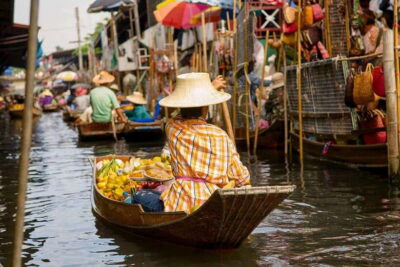
Bangkok: Damnoen Saduak Market and Maeklong Railway Market
Read our review →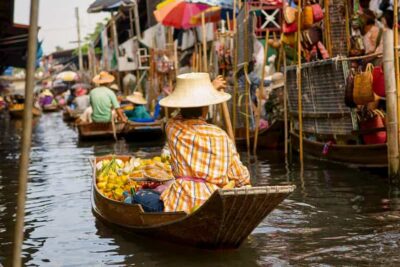
The Old Siam: Damnoen Saduak and Maeklong Railway Market
Read our review →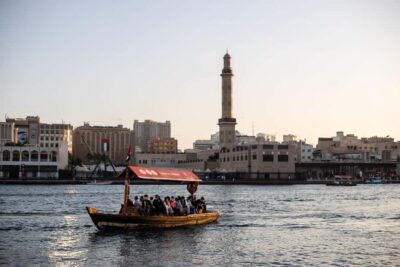
Dubai: Old Town, Creek, Museums, Souks, & Street Food Tour
Read our review →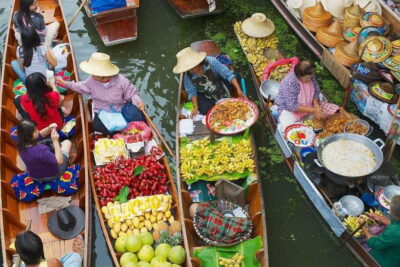
Bangkok: Train Market & Floating Market with Boat Ride
Read our review →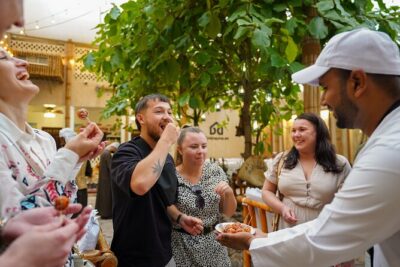
Dubai: Old Town, Souks, Street Food, Guided Tour & Abra Ride
Read our review →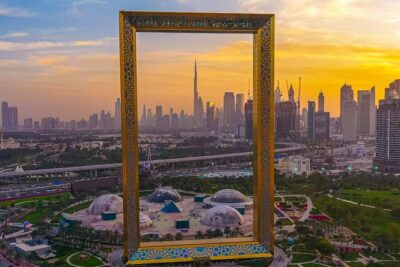
Dubai: Frame Tickets, Creek, Souks & Blue Mosque Guided Tour
Read our review →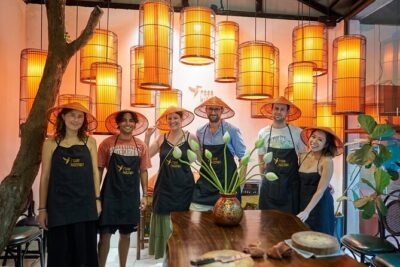
Hanoi Cooking Class: Culture, Local Market & Meaning CSR Impact
Read our review →