
Review · SPLIT
Split: Private Roman History & Market Tour
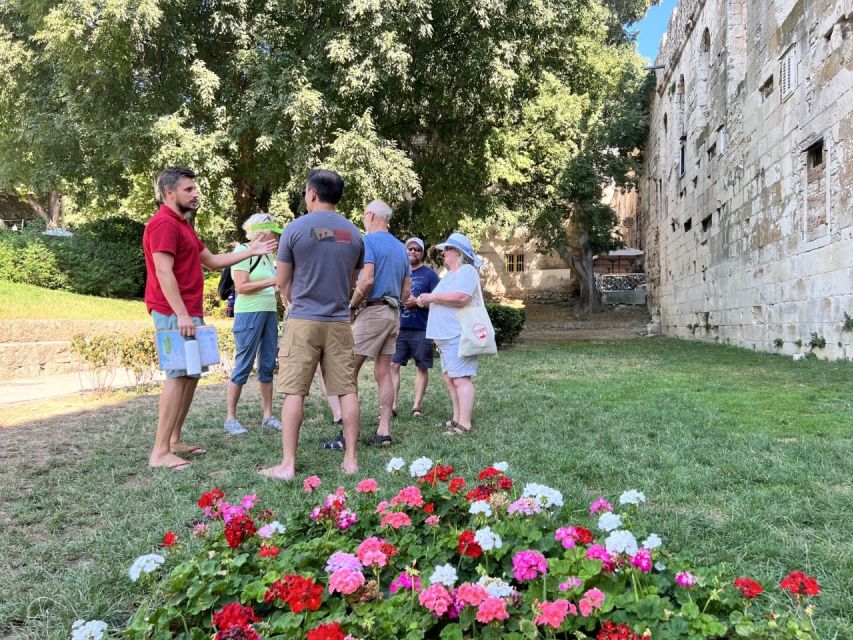
Split’s Roman heart is still a living neighborhood, and this private two-hour tour makes that clear. You walk through Diocletian’s Palace, then stop at the Green Market to taste local produce and hear how people in Split shop, eat, and keep old customs alive. I like the direct link between ancient stones and everyday life, and I like that guides such as Ted and Ivan have been praised for clear, well-paced storytelling. The main drawback is price: at $280 per person, it costs a lot for two hours and includes tastings rather than a full meal.
I also like the small-group format, which suits narrow palace lanes and residential spaces far better than a large crowd. The carbon-neutral operation is another plus for travelers who want their sightseeing to put less pressure on the place they visit. Still, you should know that entrances to the cathedral, palace underground, Bell Tower, museums, and Temple of Jupiter are not included.
Key points to know before booking
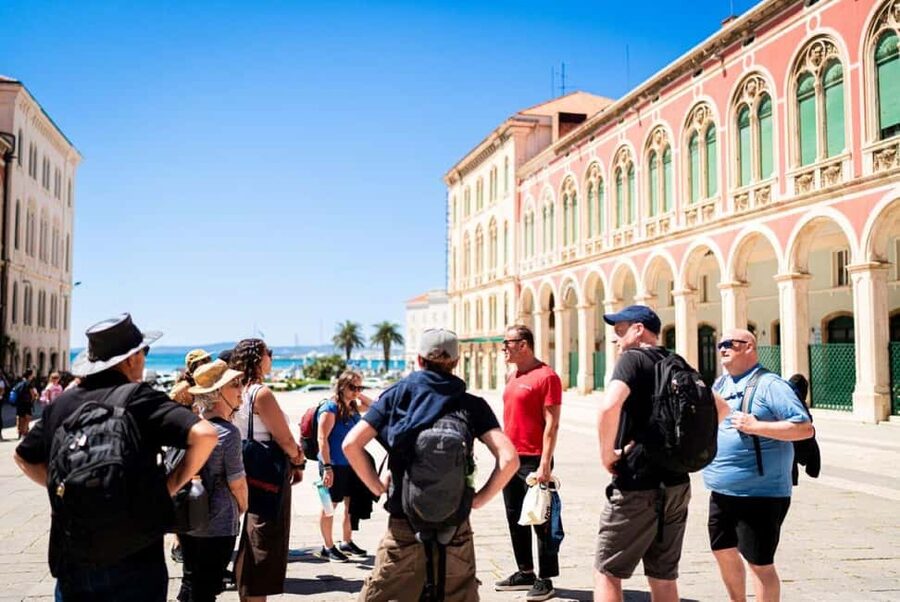
- Roman palace, living city: Diocletian’s Palace is not a separate ruin. People still live and gather within its walls.
- Green Market tastings: Expect small samples such as fruit, vegetables, olive oil, rakija, cheese, or dry figs, not a guaranteed sit-down lunch.
- Local customs: Your guide connects Roman rituals with traditions Dalmatians still respect today.
- Useful Split orientation: The walk includes the Riva, Golden Gate, Peristil, Gregory of Nin, and local suggestions for coffee and evening food.
- Private English tour: You get a live English-speaking guide for your own group, with time for questions and a more flexible pace.
- Eco-conscious operation: The tour is carbon neutral and run by a B Corp certified company.
Why Split’s Roman core works so well on foot
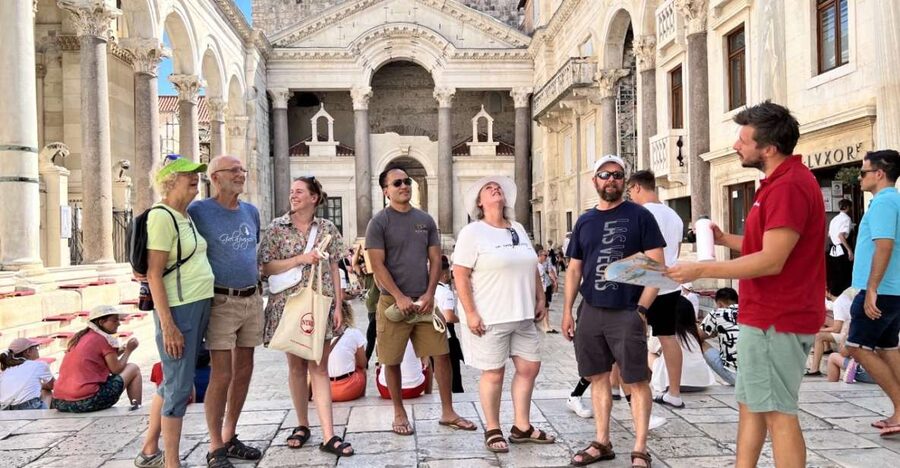
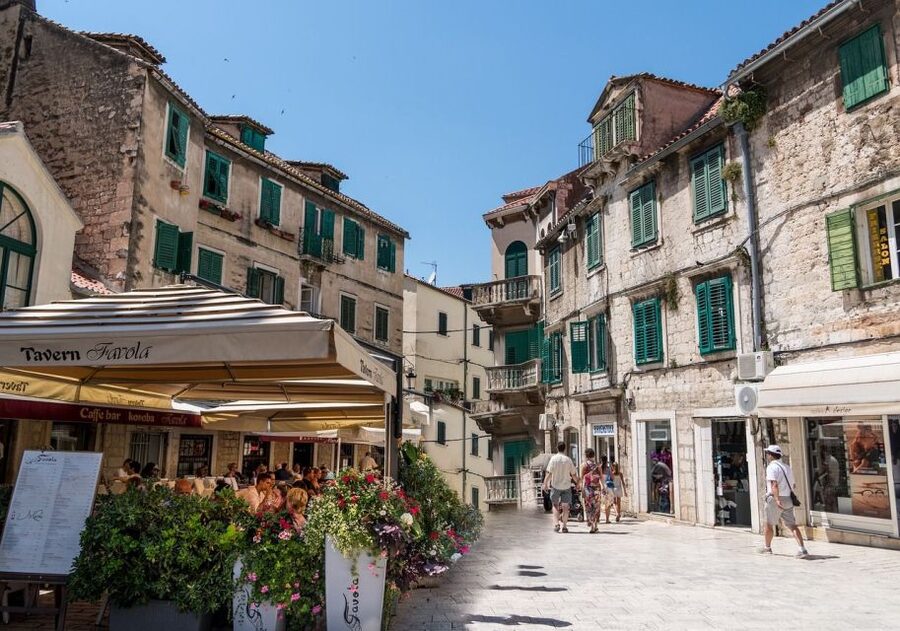
Split grew inside and around the palace built for Emperor Diocletian. That gives the center an unusual shape: Roman columns and gates sit beside medieval homes, modern cafés, laundry, shops, and ordinary apartment doors. You are not simply looking at an archaeological site. You are walking through the center of local life.
I find that setting more rewarding when a guide explains how to behave around it. A small private group can keep moving through narrow lanes without adding to the congestion. It also gives you a better chance to ask why a particular wall, courtyard, or street matters instead of hearing only a long speech about dates and emperors.
The meeting point is at the beginning of the Riva promenade, beside the iron city map. That is a practical place to begin because the Riva is easy to recognize and leads directly toward the old center. Arrive with a little time to locate the map, especially if you are coming from the ferry port or a hotel outside the palace area.
The tour is conducted in English. Past guides have included Ted and Ivan, and the guide assigned to you may be someone else. The important point is that the experience depends heavily on this person. A strong local guide can turn a Roman wall into a story about food, family, and modern Split. A weaker one could make the same walk feel like a list of names and dates.
More Private Market Tours around the world:
- Cairo 8 Hour Private Tour of Pyramids, Egyptian Museum and Bazaar
★ 5.0 · 2,931 reviews - Private Excursion to Maeklong Railway and Floating Markets
★ 5.0 · 850 reviews - Floating and Railway Market (Optional Waterfall): Private Tour
★ 5.0 · 827 reviews
Green Market first, with food that explains Split
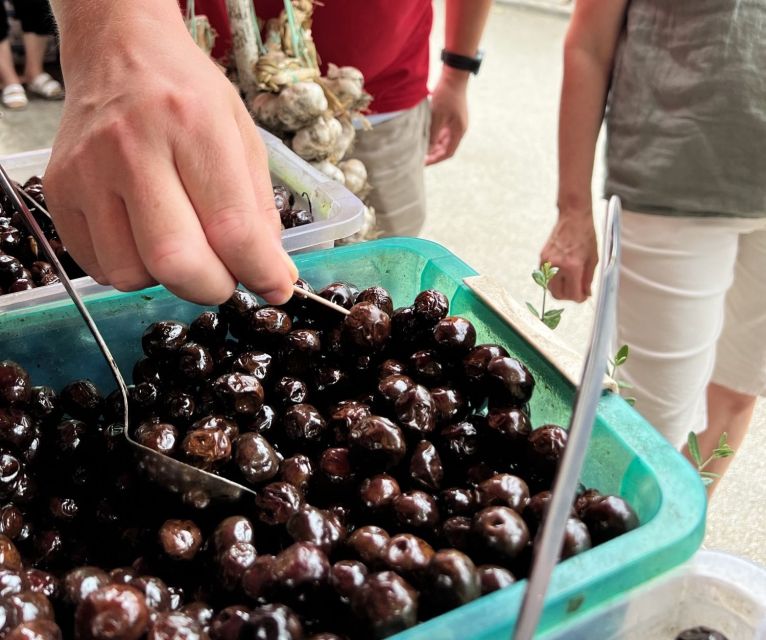
The Green Market is one of the most useful stops because it gives you a quick lesson in how food fits into Dalmatian life. You meet local vendors, see the produce available in season, and learn how people in Split choose ingredients. The guide may offer tastes of fruit, vegetables, olive oil, rakija, cheese, or dry figs.
These are small tastings, so set your expectations correctly. This is not a full lunch, and extra food and drinks are not included. If you want a substantial meal afterward, ask your guide for a recommendation on the Riva or in the old town. The tasting is meant to open your eyes and appetite, not replace lunch.
I especially like the chance to connect a product with a custom. Olive oil is not just something to sample from a little cup. Cheese, dried figs, seasonal fruit, and rakija each point toward the way Dalmatian households welcome people and mark occasions. The guide also explains why locals say a person’s heart is reached through the stomach. It is a simple idea, but it helps explain the warmth of food culture here.
The market can be lively, and the available produce changes with the season. That means your experience will not be identical from one departure to the next. The tradeoff is that you cannot count on a specific food being available, but the changing selection is part of the point. You are seeing what Split is buying and eating at that time of year.
If you have food allergies or avoid alcohol, tell the guide before accepting samples. Rakija is included among the possible tastings, but you are not required to drink it. The available information does not promise vegetarian, vegan, or allergy-specific arrangements, so raise those needs when you book or at the start.
Diocletian’s Palace, from the Golden Gate to Peristil
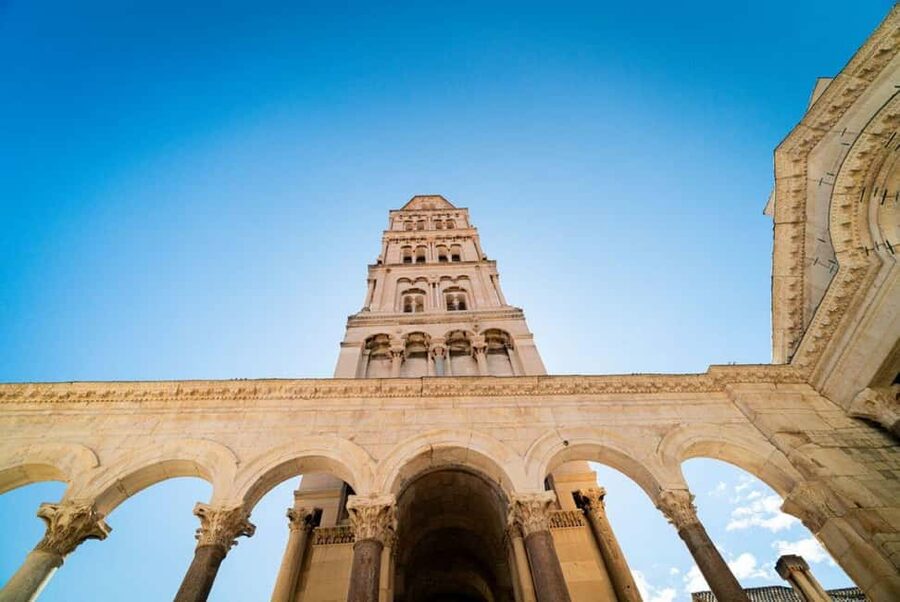
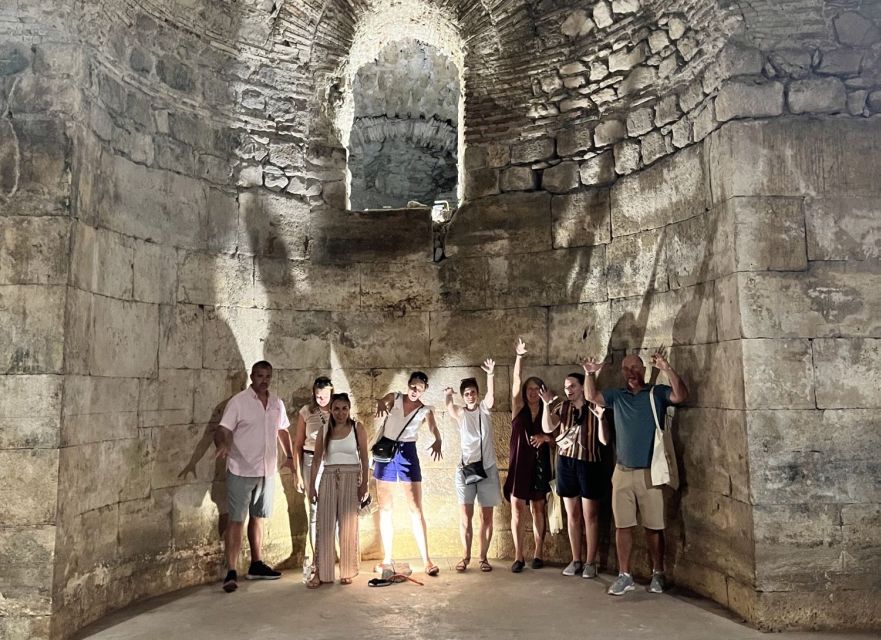
After the market, the walk turns toward the palace. The included palace visit covers the main square within the walls, a private section of the palace, the Vestibule, and the Golden Gates. These stops give you a good structure for understanding how the emperor’s residence worked.
The Golden Gate is one of the palace’s major entrances and a natural place to think about movement, security, and ceremony. The Vestibule leads you toward the central ceremonial area. At Peristil, the palace opens into one of Split’s most memorable public spaces, where the remains of imperial design meet the sounds of present-day city life.
The tour focuses on stories hidden in the palace walls. You may hear why Diocletian liked salad, how a piece of the mythical White Stone is linked with happiness, and how the palace changed as later generations made it their home. These details help keep the history human. They also give you small things to remember after the larger Roman names have faded.
The palace is often described as one of the world’s best-preserved Roman palaces, but it is not preserved in a frozen state. Its buildings have been adapted, rebuilt, and used over many centuries. That mixture of antique, medieval, and modern architecture is one of the best reasons to take a guided walk instead of simply following a map.
You should also expect the palace to feel active rather than quiet. Locals live there, businesses operate there, and the main areas can draw plenty of people. The private format helps with questions and pacing, but it cannot remove the city from the experience. If you want an empty archaeological site, this is not that. If you want to see how an ancient site can remain part of a city, it is a strong match.
Gregory of Nin, Hajduk, and the local details between monuments
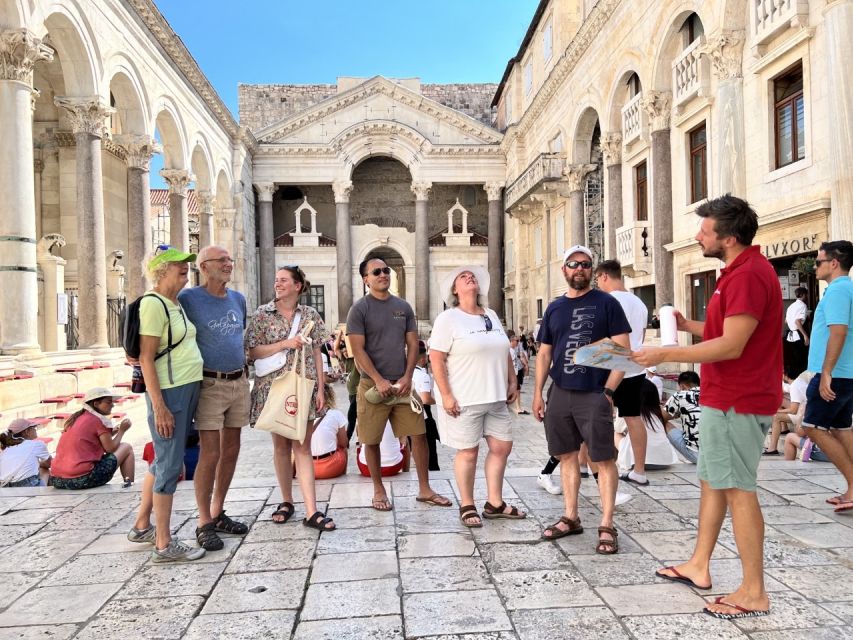
The tour adds several stops that are not simply Roman. You can make a wish by touching the golden toe of Gregory of Nin, known locally as Grgur Ninski. The gesture is a quick, light moment, but it gives you a local ritual to take part in rather than another monument to photograph.
You also hear about Hajduk, the Split football club whose name appears across the city. This matters because Split identity is not confined to emperors, churches, and stone gates. Sport, local pride, food, and family customs all shape the way people talk about their home.
The guides also discuss rituals that Dalmatians respect from Illyrian times. The information provided does not give a full list of those customs, so you should treat this as a conversation with your guide rather than a fixed lecture with a guaranteed set of examples. That flexibility can work in your favor because a private guide can focus on the subjects that interest you most.
I would ask questions here. Ask what locals still do today, what is mainly historical, and which customs vary between Split and other parts of Dalmatia. The tour is short, so you will get more from it if you use the guide as a local interpreter rather than waiting for every detail to arrive in a prepared speech.
More market history around the world:
- Private Excursion to Floating Market and Ayutthaya World Heritage
★ 5.0 · 515 reviews - Palermo: Walking Tour of Historic Markets and Monuments
★ 4.9 · 478 reviews - Discover Palermo in 3 hours. Art, history, markets and street food
★ 5.0 · 352 reviews - Private Heritage Walking Tour in Jaisalmer Fort and Old Bazaar
★ 5.0 · 306 reviews
The Riva finish and practical help for the rest of your stay
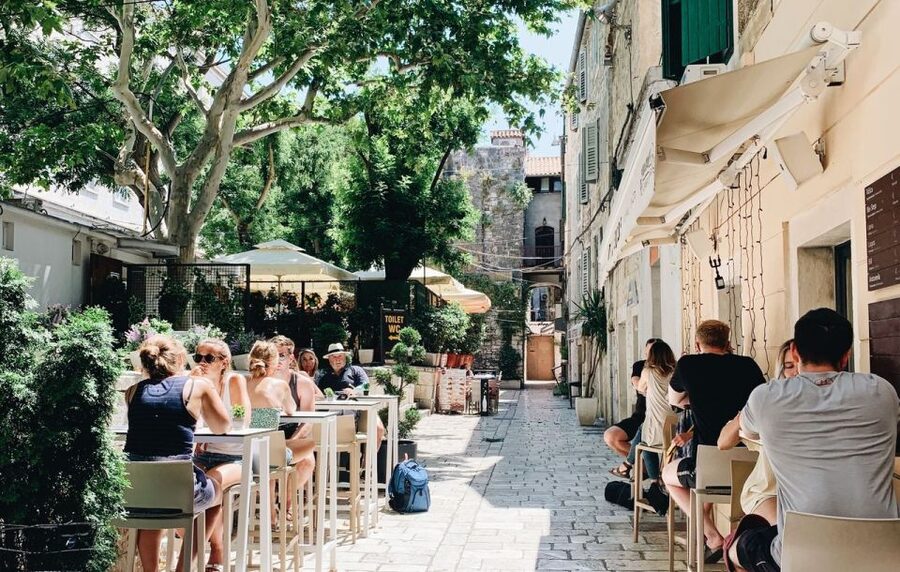
The walk ends on the Riva promenade, close to where it begins. That makes the route easy to fit into a first day in Split. You get an introduction to the old center, then finish in a place where you can continue walking, sit with a coffee, or arrange your next meal.
Your guide points out favorite coffee shops and places for Dalmatian food and evening entertainment. This is one of the most useful features for a short tour. You are not left with only a historical overview. You also receive ideas for what to do after the two hours are over.
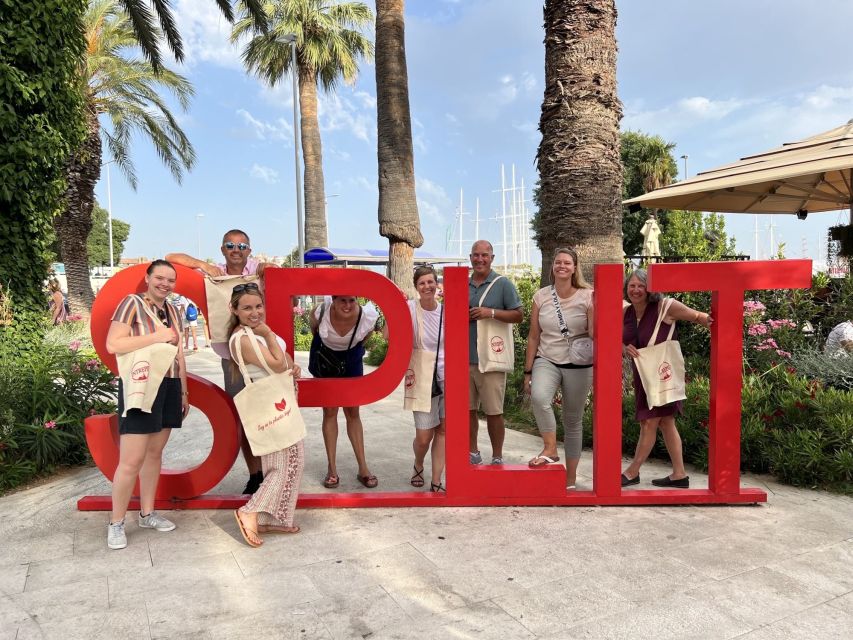
The Riva is a good ending because it shifts the focus from the emperor’s palace to modern Split. You have moved from food stalls and palace lanes to the waterfront, with enough orientation to return later on your own. I would schedule this tour early in your stay if you can. The market advice and restaurant suggestions will have time to pay off.
At the same time, do not expect a long waterfront visit. The Riva is the finishing point, not a separate sightseeing program. If you want to explore the promenade in detail, keep time afterward.
What the $280 price buys you
At $280 per person, this is a premium purchase for a two-hour activity. The price makes the most sense for people who value a private guide, personal questions, a compact introduction, and food tastings tied to local customs. It makes less sense if you are mainly looking for a cheap walk through the palace.
The included value comes from the guide and the private format. You are not paying for a long list of admissions. The tour does not include the cathedral and former imperial mausoleum, palace underground, Bell Tower, museums, or Temple of Jupiter. If any of those are priorities, budget separately and check their opening details for your date.
The food stop is also limited. You receive samples, but additional food and drinks cost extra. One older description of the experience refers to a good lunch, but the current inclusions specify market tastings rather than a full meal. I would rely on the current arrangement and plan lunch separately.
For a couple, family, or small group that wants a guide to itself, the price may feel reasonable because you can shape the conversation. For a solo visitor, it is harder to justify unless private guiding is a high priority. Compare it with a shared walking tour if your main goal is basic orientation at the lowest cost.
Who will get the most from this walk
This experience suits first-time visitors who want Split explained through both history and daily life. You get Roman architecture, local food, modern football culture, old rituals, and practical advice in a short period.
It also works well for families. Children under six can join free of charge, and the mix of market samples, palace stories, a giant toe, and a wish-making ritual gives younger visitors more variety than a museum-heavy walk. Tell the operator in advance if you are bringing a child under six.
Food-focused visitors will appreciate the Green Market, especially if you want to learn how local people shop rather than only eat in restaurants. History fans should enjoy the palace, but anyone seeking detailed entry into every monument should know that the tour does not include those extra admissions.
This is less suitable if you prefer a long, slow archaeological lecture. Two hours passes quickly, and the route covers several themes. It is also not the right choice if you want a full meal, a comprehensive palace ticket, or a full-day tour of Split.
The carbon-neutral format may matter to you as well. The operator is B Corp certified and presents travel as a force for good. That does not change the route itself, but it gives environmentally minded visitors a useful reason to choose this company over an otherwise similar private walk.
Booking advice and final call
Free cancellation is available up to 24 hours before the tour for a full refund, and you can reserve now and pay later. Starting times depend on availability, so check the schedule before building your day around it.
I would book this tour if you want a short, private introduction to Split and care as much about local customs and food as Roman architecture. It is particularly useful on your first day, when a guide can help you understand the palace and point you toward later meals and cafés.
I would skip it if $280 per person feels high for two hours, or if your main goal is access to the cathedral, underground, Bell Tower, museums, and Temple of Jupiter. In that case, put the money toward individual admissions and a less costly shared walk.
For the right visitor, the strongest feature is the connection between the market and the palace. You taste what people eat, hear how they shop, then walk through the home of an emperor. That is a compact and memorable way to meet Split.
FAQ
Where does the Split Roman History and Market Tour begin?
It begins at the start of the Riva promenade, near the iron map and model of the city.
How long does the tour last?
The tour lasts two hours.
Is the tour private?
Yes. It is organized for a private group with a live English-speaking guide.
What language is the tour offered in?
The tour is offered in English.
What food is included?
The Green Market stop includes tastings that may include fruits, vegetables, olive oil, rakija, cheese, or dry figs.
Is a full lunch included?
No. The included food is market tasting. Additional food and drinks are not included.
Which parts of Diocletian’s Palace are included?
The visit includes the main square within the palace walls, a private section of the palace, the Vestibule, and the Golden Gates.
Are the cathedral, Bell Tower, and palace underground included?
No. Entrance fees for the cathedral and former imperial mausoleum, palace underground, Bell Tower, museums, and Temple of Jupiter are not included.
Can children join the tour?
Yes. Children under six may join free of charge, but you should inform the operator if you are bringing one.
Is the tour carbon neutral?
Yes. It is carbon neutral and operated by a B Corp certified company.
Can I cancel the booking?
Yes. You can cancel up to 24 hours in advance for a full refund. You can also reserve now and pay later.
New market tours around the world
- Tel Aviv: 2-Hour Carmel Market Tour in English with Lunch★ 4.8 · 23 reviews
- Tel Aviv: Carmel Market & Neighborhood Guided Walking Tour★ 4.7 · 3 reviews
- Tel Aviv: 2-Hour Jaffa Flea Market Tour with Tastings★ 4.9 · 8 reviews
- Tel Aviv: Carmel Market Food Tasting Tour “Shuk Hacarmel”★ 4.0 · 8 reviews
- Tel Aviv: 2-Hour Levinsky Market Tour with Full Lunch★ 4.7 · 10 reviews
- Tbilisi 2 Parks: Turtle Lake & Dedaena Park with Flea Market★ 5.0 · 3 reviews
- Tbilisi: Street Food & Sightseeing Tour with Local Markets★ 5.0 · 8 reviews
- Teguise: Market and César Manrique Foundation Tour★ 4.3 · 39 reviews
Market Tours, side by side.

Bangkok: Damnoen Saduak Market and Maeklong Railway Market
Read our review →
The Old Siam: Damnoen Saduak and Maeklong Railway Market
Read our review →
Dubai: Old Town, Creek, Museums, Souks, & Street Food Tour
Read our review →
Bangkok: Train Market & Floating Market with Boat Ride
Read our review →
Dubai: Old Town, Souks, Street Food, Guided Tour & Abra Ride
Read our review →
Dubai: Frame Tickets, Creek, Souks & Blue Mosque Guided Tour
Read our review →
Hanoi Cooking Class: Culture, Local Market & Meaning CSR Impact
Read our review →
Marrakech: Bahia Palace, Saadian Tombs, Souk and Medina Tour
Read our review →This tour also appears in