Review · SPLIT
Split: Historical & Gastro Treasures Tour with Green Market
The best part of this Split tour is the way food and old stones explain each other. You start with a Mediterranean brunch at the Green Market, then walk through Diocletian’s Palace before sitting down to a proper Croatian meal. It is less a quick tasting crawl than a small lesson in how Split eats and lives.
I like the generous portions, and I like the local focus. You get prosciutto, cheese, peka bread, soparnik, seafood, pasta, black risotto, wine, and a sweet finish, not just a few token bites. The main thing to consider is the price: at $135 per person, it is a substantial outlay, especially for anyone who does not drink wine. The three-hour meal and guided history walk make the cost easier to justify, but this is not a budget snack tour.
Key points to know before booking
- Green Market first: Morning tours visit Split’s produce market and include prosciutto, cheese, peka bread, soparnik, and grappa.
- Diocletian’s Palace with context: You see Peristil Square, the Golden Gate, and Pjaca while learning how the ancient palace became part of modern Split.
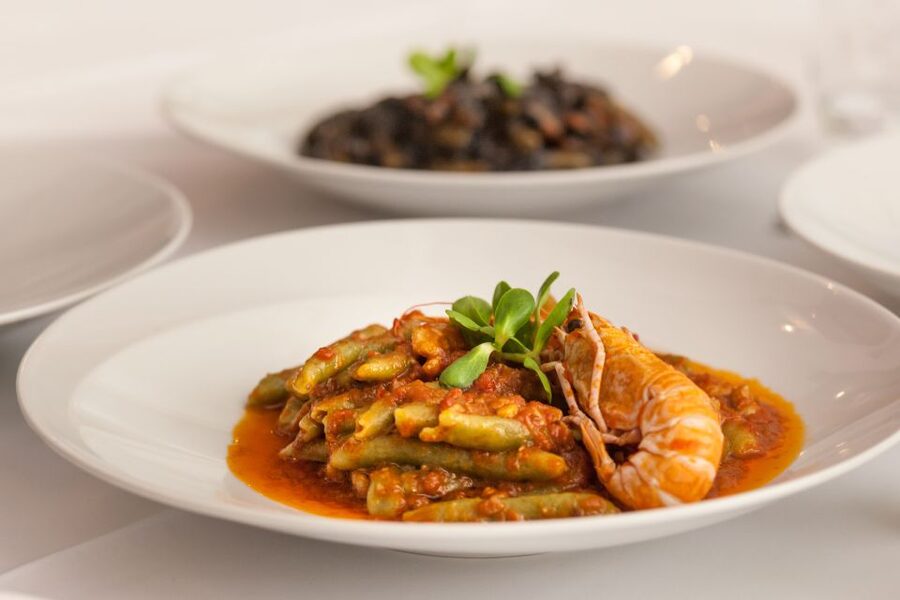
- A full Croatian meal: Expect seafood, two traditional pasta dishes, black risotto, local wines, and dessert.
- Guides vary: Hani, Olga, Christina, Lucija, Vicky, and other local guides have led departures, so the guide assigned to your date may differ.
- Three hours, no transport: You meet at the assigned point on Hrvojeva Street and return there. Hotel pickup and drop-off are not included.
- Morning is best for the market: The afternoon version cannot visit the Green Market, so it offers similar food in a local tavern instead.
Starting with Split’s Green Market
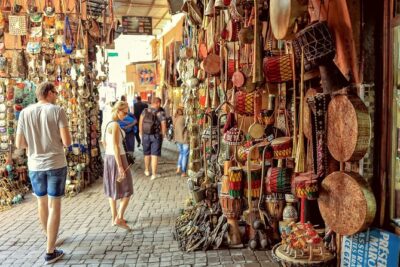
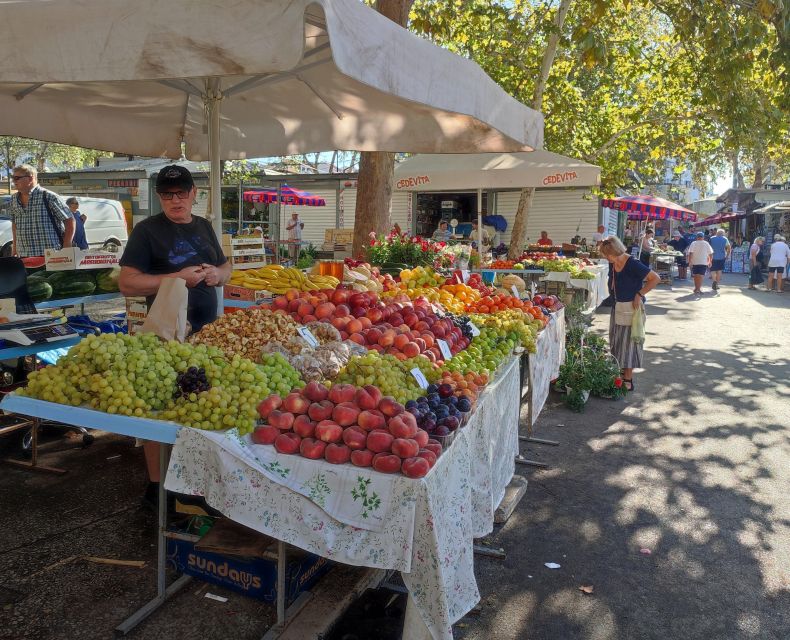
Meet your guide at Hrvojeva 1, or at the meeting point given for your selected option. From there, the morning tour heads into the Green Market, one of the most useful places in Split for seeing food as part of daily life rather than as a restaurant performance.
I like this opening because it gives the meal a sense of place. Instead of hearing a list of Croatian dishes in a dining room, you see the ingredients and the market setting first. Your guide can explain what you are tasting and how local food fits into Dalmatian life.
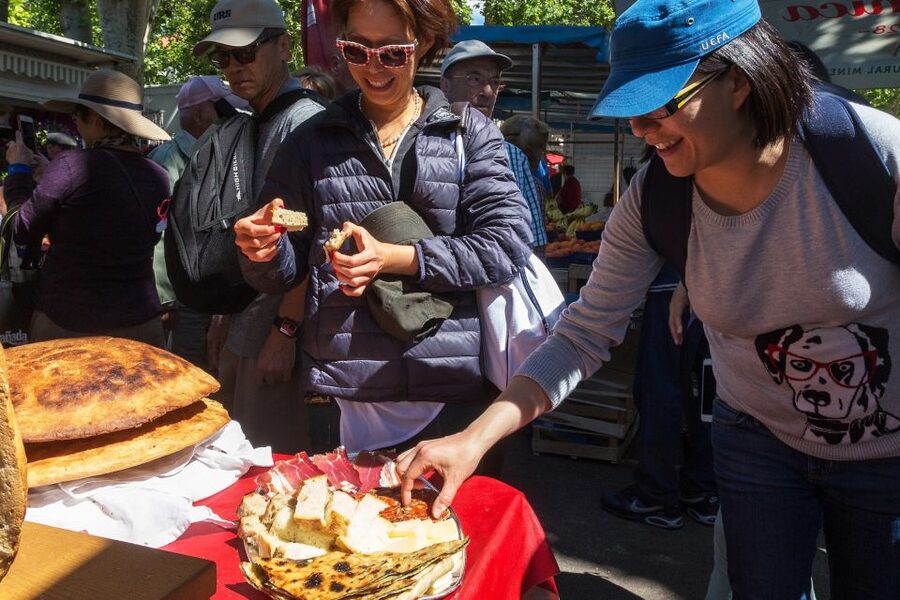
The first spread is generous: prosciutto, cheese, traditional peka bread, soparnik pie, and grappa. Soparnik is a savory pie associated with the Dalmatian coast, while peka refers to a traditional covered cooking method. The point is not simply to fill you up. It is to introduce salty cured meat, local dairy, bread, pastry, and a small taste of strong fruit brandy before the main meal.
Several guides have made the market a memorable part of the morning. Olga has been praised for explaining the differences between Croatian foods and what to look for while tasting them. Hani has also been singled out for connecting the food to local customs with humor and enthusiasm. Your guide may be someone else, but the format is designed around personal explanation rather than a silent walk from stop to stop.
Bring an appetite. The portions are repeatedly described as generous, and the market tasting is only the beginning. If you have food allergies or dietary restrictions, tell the operator when booking. The tour can make adjustments in some cases, but you should not wait until the first plate arrives.
More market history around the world:
- Private Excursion to Floating Market and Ayutthaya World Heritage
★ 5.0 · 515 reviews - Palermo: Walking Tour of Historic Markets and Monuments
★ 4.9 · 478 reviews - Discover Palermo in 3 hours. Art, history, markets and street food
★ 5.0 · 352 reviews
Walking through Diocletian’s Palace
After the market, the tour turns to Split’s central historic area and the UNESCO-listed Diocletian’s Palace. The palace is not an isolated archaeological site behind a gate. It forms the core of the modern city, with streets, shops, homes, restaurants, and daily life woven into the old structure.
That makes a guided walk useful. On your own, you can admire the stones and columns, but it is harder to understand how an imperial complex became a living neighborhood. Guides such as Ana, Olga, Christina, and Hani have been praised for explaining the palace’s origins, later changes, architecture, and present-day use in an easygoing way.
The route includes Peristil Square, the Golden Gate, and Pjaca, a medieval Venetian square. Each gives you a different view of Split. Peristil is the grand ceremonial space, while the Golden Gate shows the defensive side of the palace. Pjaca adds a later Venetian layer, reminding you that Split was shaped by many periods rather than one tidy historical chapter.
I appreciate that the food stops break up the history. Three hours of standing among ancient walls can become tiring, especially in warm weather. Here, you move from a market bite to a historic square, then on to a sit-down meal. The pace is relaxed enough for questions and conversation, according to the detailed accounts of the tour.
This is not a specialist archaeology tour. If you want exact dates, extensive excavation details, or access to every major monument, you may want a separate palace tour. If you want a clear introduction to the center of Split combined with lunch, the balance works well.
Sitting down in a Dalmatian konoba
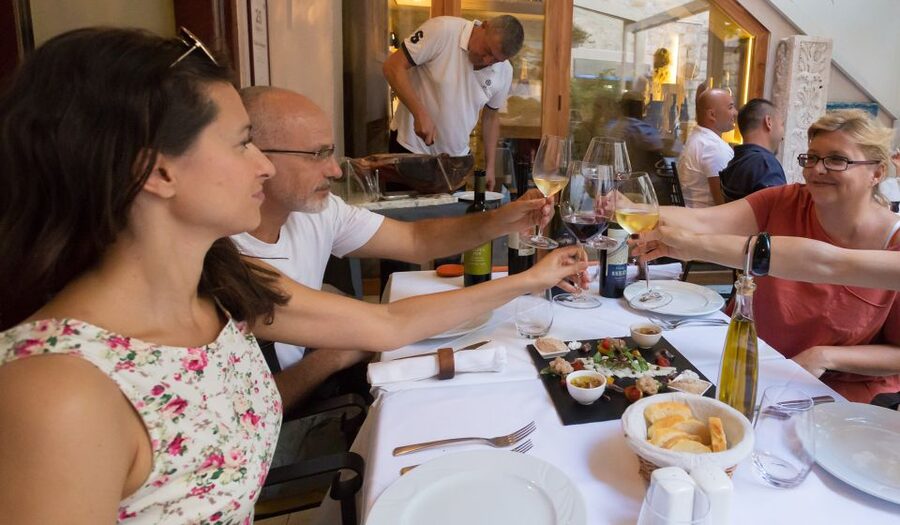
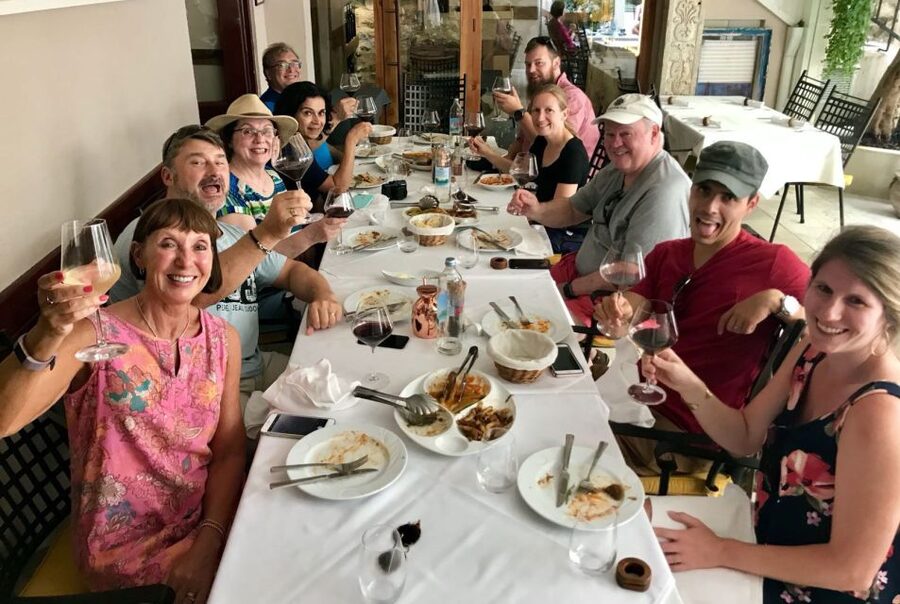
The meal continues in a konoba, a tavern-style restaurant associated with traditional coastal cooking. The setting matters. You are not simply being handed a plate of generic Croatian food in a formal dining room. The meal is meant to feel like a local lunch or dinner, with the guide explaining the dishes and pairing them with wine.
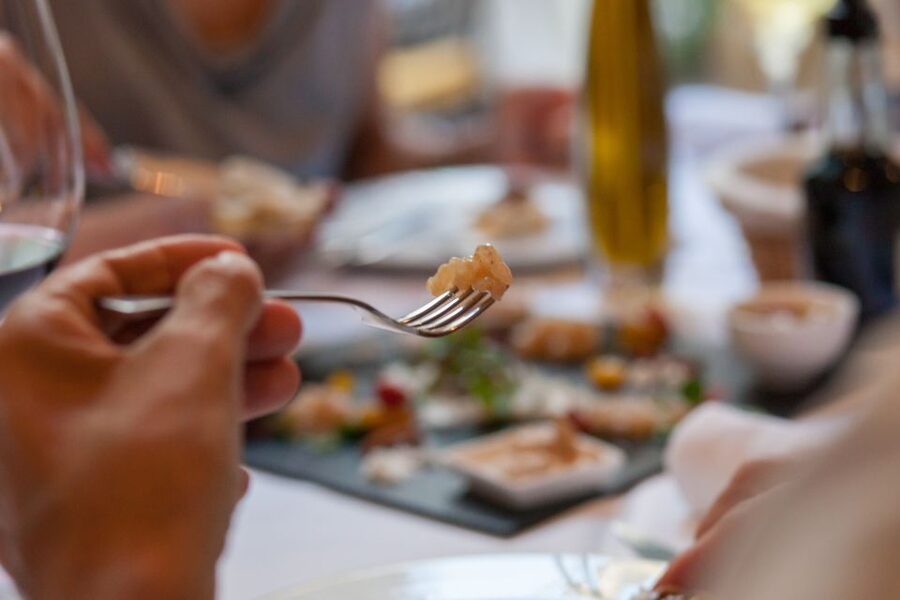
The seafood starter comes with white wine. The second course includes two types of traditional pasta and the famous black risotto, paired with local red wine from Brač Island. Cuttlefish ink gives black risotto its dark color and distinctive sea flavor. It is the sort of dish many diners might not order without a guide, which is one reason this tour is useful for cautious eaters who still want to try something beyond familiar pasta and grilled fish.
The menu can vary with season and restaurant arrangements, so I would not treat the listed dishes as a guaranteed restaurant menu for every departure. Still, the structure is clear: several substantial tastings, seafood, pasta, wine, and a sweet finish.
The food is one of the tour’s strongest points. People have praised the fresh ingredients, seafood courses, wine pairings, and careful explanations of how dishes are prepared. One guide was especially appreciated for taking time around each table to describe both the food and the wines. That detail matters if you want to remember what you ate and find similar dishes later.
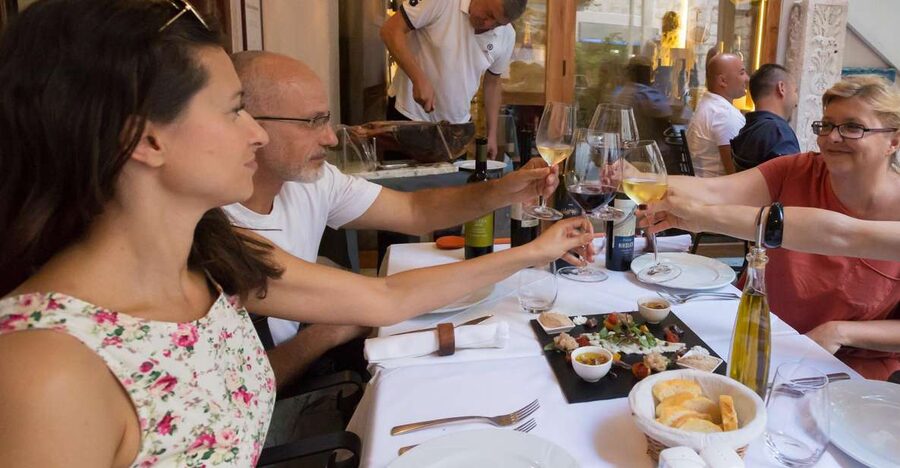
The social side is also part of the appeal. You share a table and a meal rather than rushing between tiny samples. Guides such as Christina, Vicky, Lucija, and Olga have been praised for making different members of a group feel included. If you enjoy conversation with a guide and fellow diners, this format gives you more of it than a quick market walk.
Finishing with dessert, gelato, or a local sweet
The tour ends with a light dessert. Depending on the season, this may be gelato or a traditional dessert. Spring, summer, and autumn can bring different choices, so you should not book expecting one exact sweet.
I would personally prefer the traditional dessert if given the choice. Gelato is pleasant, but you can find it all over Split. A local sweet gives the tour a more distinctive finish. One diner specifically wished the traditional cake had been selected instead of gelato, which is a useful reminder that the final choice may depend on the group and the season.
By this point, you will probably be full. The tour is not built around dainty portions. Several stops offer enough food to function as brunch and lunch, or as a substantial evening meal if you choose the later option. Plan your other meals accordingly.
More market tours around the world:
- Bangkok: Damnoen Saduak Market and Maeklong Railway Market
★ 4.5 · 26,723 reviews - The Old Siam: Damnoen Saduak and Maeklong Railway Market
★ 4.5 · 10,992 reviews - Dubai: Old Town, Creek, Museums, Souks, & Street Food Tour
★ 4.8 · 10,816 reviews - Bangkok: Train Market & Floating Market with Boat Ride
★ 4.7 · 9,547 reviews
What makes the guide important

The guide can make or break a food tour, and this experience relies heavily on that person. The named guides praised most often include Hani, Olga, Christina, Lucija, Vicky, Kristina, and Darko, along with several others. The guide assigned to you may differ, but the strongest pattern is clear: the best departures combine food knowledge with local stories and a relaxed manner.
Hani has been appreciated for her humor, passion, and ability to explain both Split and Dalmatian cuisine. Olga has received praise for her command of history, market food, and restaurant choices. Christina has been described as warm, lively, and able to tailor information to the group. Lucija has been especially valued for helping everyone feel comfortable.
I would not book this as a purely self-guided eating route. The point is the interpretation. You learn why a dish matters, how it is prepared, and where it fits in local life. You also get practical advice about what to order during the rest of your stay.
The guide language is English. Food allergies and dietary restrictions should be stated in advance. Vegetarian adjustments have been made on some departures, but the published food plan is strongly centered on prosciutto, seafood, wine, and traditional meat or fish dishes, so clear communication is essential.
Morning or afternoon: choose carefully

The morning option is the stronger choice if the Green Market is important to you. The market does not operate for the afternoon version, so that departure replaces the market visit with similar foods in a local tavern.
A morning start also sets you up well for the rest of your visit. You see the market before exploring the palace and learn what local ingredients look like before encountering them at lunch. If you are staying in Split for several days, this can help you decide what to seek out later.
The afternoon option still includes the palace, food, wine, tavern experience, and dessert. It may suit your schedule better, especially if you arrive late or prefer a later meal. Just understand that you are choosing a different opening, not the exact same tour shifted to another hour.
The three-hour length is practical. You get enough time for a proper meal and a meaningful walk without giving up an entire day. There is no hotel pickup or drop-off, so allow time to reach the meeting point on foot. The activity ends back at the meeting point.
Is $135 a fair price?
At $135 per person, this is expensive compared with a simple walking tour or an ordinary Croatian lunch. It becomes better value when you count the licensed guide, multiple food stops, wine, grappa, a full tavern meal, dessert, and the palace walk.
The included food is not an optional extra. All listed tastings and wines are covered, so you do not have to keep calculating the cost of each plate as the tour goes along. For someone who enjoys wine and wants a full introduction to Split’s food traditions, the price can make sense.
The value is weaker if you do not drink alcohol, eat very little, or prefer to order your own meal. One person specifically found the price a little high for a partner who did not drink. You should also consider that the tour ends with you quite full, so you may not save money on dinner that evening unless you choose the afternoon version as your main meal.
I see the price as payment for three things at once: a local guide, a meal plan that removes guesswork, and an introduction to Split’s historic center. It is worthwhile for first-time visitors who want context and variety. It is less compelling for repeat visitors already comfortable ordering Dalmatian food on their own.
Who will enjoy this Split food tour?
I would recommend it to first-time visitors who want to get their bearings quickly. You learn the main historic sights, see a working market, taste several local dishes, and receive food advice before spending more meals in the city.
It also suits curious eaters. Black risotto, soparnik, octopus or seafood preparations, local pasta, grappa, and regional wines may not be dishes you would choose without encouragement. The guide gives you a safe way to try them and explains what you are eating.
This is a good match for couples, friends, and small groups who enjoy sitting down together and talking. It is less ideal for anyone seeking a fast, tightly scheduled sightseeing tour, a quiet private meal, or a low-cost activity.
Families and people with dietary restrictions should ask questions before booking. The operator requests allergy and diet information, but the standard menu is broad and includes alcohol, seafood, and cured meat. The more specific your needs, the more important it is to confirm what can be changed.
Small practical details that matter
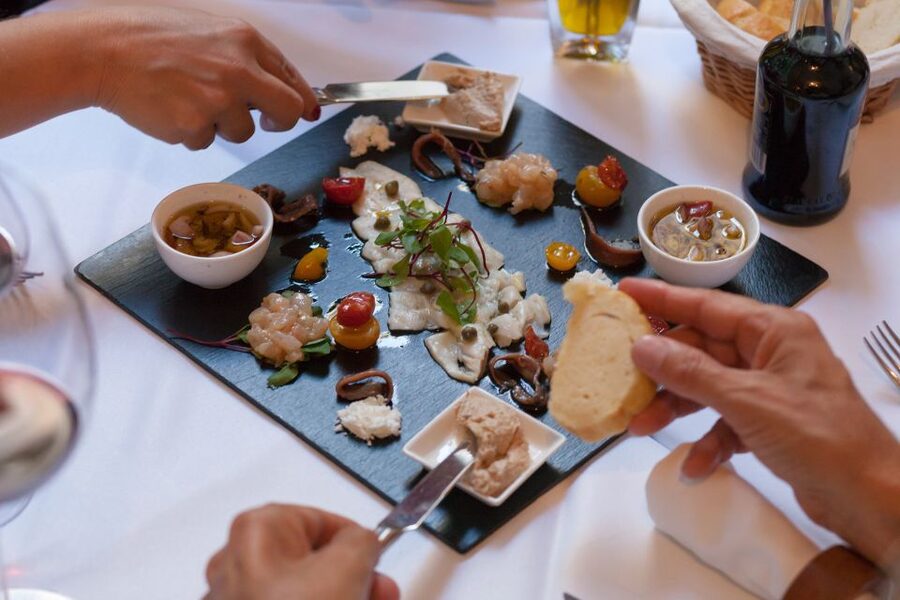
Book the morning departure if you want the Green Market. Tell the operator about allergies or diet restrictions before the tour begins, and arrive ready to eat.
Wear shoes suitable for walking on old city streets. The activity combines market paths, palace squares, and a restaurant meal, so you will be on your feet between courses even though the pace is relaxed.
Do not plan a large breakfast beforehand. The opening tasting is substantial, and the meal continues with seafood, pasta, risotto, wine, and dessert. A light start will make the experience more comfortable.
The tour includes food, wine, grappa, and a licensed English-speaking guide. It does not include hotel transport. You can reserve now and pay later, and cancellation is allowed up to 24 hours before departure for a full refund.
Should you book it?
I would book this tour early in a Split visit, especially if you want one activity to combine food, history, and local orientation. The Green Market, Peristil, Golden Gate, Pjaca, and konoba meal create a useful picture of the city in only three hours.
Book it if you enjoy generous portions, wine pairings, and trying dishes you might otherwise skip. Think twice if $135 feels high, if you do not drink, or if you want a very specific menu and a purely historical tour.
For most first-time visitors who want more than a list of monuments, this is a strong introduction to Split. Come hungry, choose the morning option for the market, and tell the operator about dietary needs before you arrive.
FAQ
How long does the Split food and history tour last?
The tour lasts three hours. It combines food tastings, a guided walk through central Split, and a meal in a konoba-style restaurant.
What food is included?
The morning itinerary includes prosciutto, cheese, peka bread, soparnik pie, grappa, seafood, two types of traditional pasta, black risotto, wine, and a seasonal dessert or gelato.
Is wine included in the price?
Yes. The cost includes the wines served during the tour, along with the food and other listed tastings.
Does the tour visit the Green Market?
The morning option visits the Green Market. The afternoon option does not, because the market is not open then. Similar foods are tasted in a local tavern instead.
Where does the tour start and finish?
The start point depends on the option booked, with Hrvojeva 1 listed as a meeting point. The activity ends back at the meeting point. Hotel pickup and drop-off are not included.
Can I report food allergies or dietary restrictions?
Yes. You should provide details about allergies or dietary restrictions when booking. The operator needs this information in advance to assess possible adjustments.
New market tours around the world
- Tel Aviv: 2-Hour Carmel Market Tour in English with Lunch★ 4.8 · 23 reviews
- Tel Aviv: Carmel Market & Neighborhood Guided Walking Tour★ 4.7 · 3 reviews
- Tel Aviv: 2-Hour Jaffa Flea Market Tour with Tastings★ 4.9 · 8 reviews
- Tel Aviv: Carmel Market Food Tasting Tour “Shuk Hacarmel”★ 4.0 · 8 reviews
- Tel Aviv: 2-Hour Levinsky Market Tour with Full Lunch★ 4.7 · 10 reviews
- Tbilisi 2 Parks: Turtle Lake & Dedaena Park with Flea Market★ 5.0 · 3 reviews
- Tbilisi: Street Food & Sightseeing Tour with Local Markets★ 5.0 · 8 reviews
- Teguise: Market and César Manrique Foundation Tour★ 4.3 · 39 reviews
Market Tours, side by side.

Bangkok: Damnoen Saduak Market and Maeklong Railway Market
Read our review →
The Old Siam: Damnoen Saduak and Maeklong Railway Market
Read our review →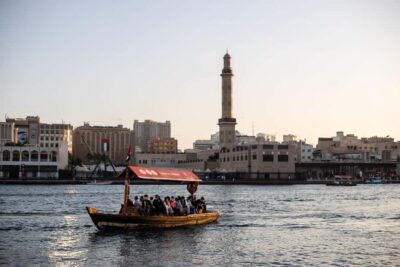
Dubai: Old Town, Creek, Museums, Souks, & Street Food Tour
Read our review →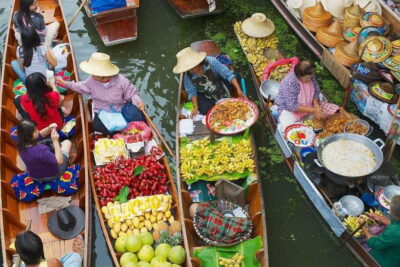
Bangkok: Train Market & Floating Market with Boat Ride
Read our review →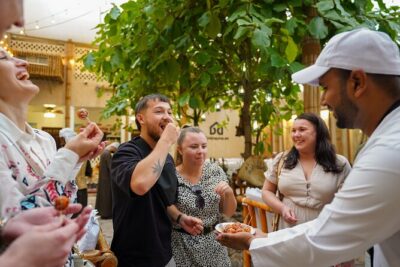
Dubai: Old Town, Souks, Street Food, Guided Tour & Abra Ride
Read our review →
Dubai: Frame Tickets, Creek, Souks & Blue Mosque Guided Tour
Read our review →
Hanoi Cooking Class: Culture, Local Market & Meaning CSR Impact
Read our review →