
Review · AUSTRALIA
Sydney Fish Market Behind the Scenes Tour
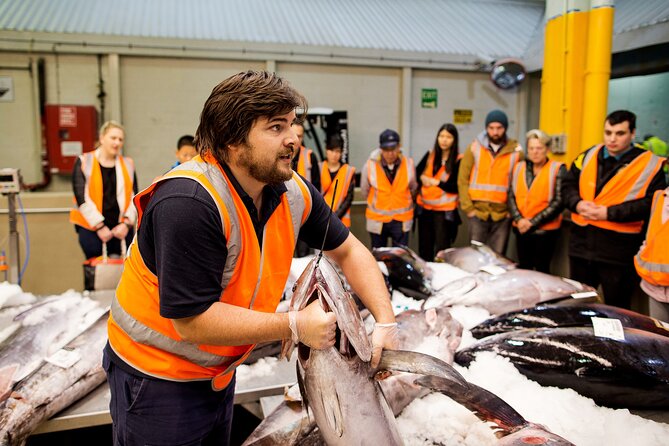
Sydney Fish Market gets most interesting before breakfast, when the public areas give way to the working auction floor. On this two-hour tour, you can watch more than 50 tonnes of seafood move through a Dutch auction and see the blue crates that hold over 100 species.
I like the close look at seafood preparation, especially tuna filleting, oyster shucking, and sushi work. I also like the small group size, capped at 10, which gives you a better chance to hear the guide. The catch is the start time: you need to arrive by 5:50am, and the tour is not suitable for children under 10 or wheelchair users.
Key points to know before booking
- See the auction floor before the public: Enter a working area that is normally closed to visitors.
- Watch the Dutch auction in action: Learn how more than 50 tonnes of seafood are sold to over 150 buyers.
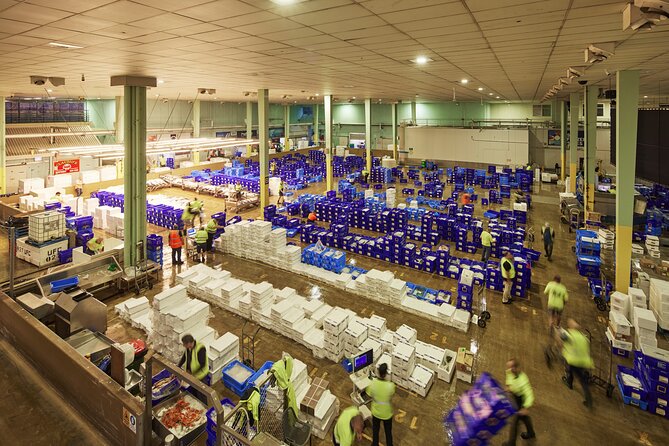
- Inspect more than 100 species: The blue crates hold familiar seafood alongside unusual Australian varieties.
- See real preparation work: Tuna filleting, oyster shucking, sushi preparation, and live lobsters are part of the route.
- Keep the early start in mind: Check-in is by 5:50am, so plan your transport the night before.
- Small groups help: A maximum of 10 people makes it easier to ask questions and follow the guide.
Why this early-morning market tour is different
Many food tours focus on eating. This one focuses on the supply chain before seafood reaches a restaurant or fish counter. You see the people, checks, equipment, and sales process that turn a catch into a product ready for the public.
That difference matters. If you already enjoy seafood, the tour gives you a better sense of what you are looking at when you buy or order it. If you know little about the industry, it offers a practical introduction without requiring specialist knowledge.
The market is described as the largest fish market in the Southern Hemisphere. Its scale is easiest to understand on the auction floor, where 50 tonnes of seafood can be sold to more than 150 buyers. You are not simply looking at displays. You are watching a working commercial system.
The timing is part of the experience. Arriving by 5:50am means you see the market during its most active trading period, but it also means this is not a casual late-morning outing. I would treat the early alarm as part of the price of admission.
More Fish Market Tours around Australia:
- Sydney Fish Market Discovery Tour
★ 4.2 · 10 reviews - Sydney Harbour & Fish Market Sightseeing Cruise
★ 4.5 · 4 reviews - Sydney Fish Market: Tide to Table Seafood Tour with Drink
★ 5.0 · 2 reviews
Finding the meeting point at 1 Bridge Road
The meeting point is the LG Information Hub at Sydney Fish Market, 1 Bridge Road, Glebe. It is on the ground level of the building on the side closest to the city.
The directions are worth reading carefully. The tour information also refers to the SFM foyer on Level 1 of the main arcade, with access through glass doors to the left of the arcade entrance and stairs or a lift. Once inside, look for the information area and black couches where you can wait.
Because the tour begins early, give yourself extra time to find the correct entrance. A large market building can feel confusing before sunrise, especially if you are watching the clock. Arrive ready for check-in by 5:50am rather than trying to arrive at that exact minute.
You need to arrange your own transport to and from the market. There is no transportation included, and the tour begins and ends at 1 Bridge Road. This makes the location easy to understand, but your morning plan needs to account for the early hour.
Stepping onto the auction floor
The auction floor is the main reason to book. It is normally closed to the public, so you see a side of Sydney Fish Market that a standard visit does not provide.
You will be given safety footwear for the floor, along with the required clothing for the working area. A jacket is sensible, and you should bring socks to wear with the safety footwear. Comfortable shoes are also recommended.
High heels and open-toed shoes are not allowed. Hats are not allowed either, and smoking and littering are prohibited. These rules are practical rather than fussy. You are entering a functioning food-handling and trading space, not a museum arranged for sightseeing.
The floor may feel more industrial than polished. That is part of its appeal, but it also means you should expect a working environment rather than a carefully staged attraction. Keep close to the guide, listen to safety instructions, and be ready to move at the pace of the group.
The tour is limited to 10 participants. I prefer this size for an experience built around explanations and demonstrations. You should be able to stay near the guide and ask about the products in front of you without competing with a large crowd.
How the Dutch auction works
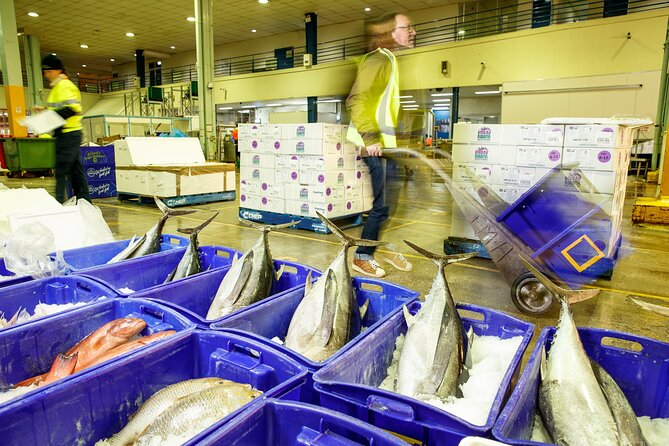
The Dutch auction is one of the most useful parts of the visit because it shows how the market actually sets prices. Rather than simply seeing seafood arranged in crates, you watch the sales process in action.
The system handles more than 50 tonnes of fresh seafood and serves over 150 buyers. That scale gives you a sense of the market’s role in Sydney’s food economy. The seafood is not there only for individual shoppers. It is being sold to professional buyers who will move it onward.
Your guide explains how the system works as you watch it operate. The tour information also points to quality checks, and Mark, an experienced fisherman who has guided the tour, has explained those checks along with the auction process.
That practical context is important. A quick look at an auction can be hard to follow without help. The guide connects the movement on the floor with the seafood in the crates, so you can understand what is happening rather than simply watch a fast series of sales.
You should not expect to take part in the bidding. The value comes from observing a working sale and learning how the market handles such a large volume of product.
More market tours around Australia:
- Queen Victoria Market Ultimate Foodie Tour
★ 5.0 · 295 reviews - Adelaide Central Market Discovery Tour
★ 5.0 · 203 reviews - Sunshine Coast Hinterland and Noosa Day Trip from Brisbane Incl Eumundi Markets
★ 4.5 · 189 reviews - Eumundi Markets Bus Transfer: Mooloolaba Sunshine Coast & Noosa
★ 5.0 · 84 reviews
More than 100 species in the blue crates
The blue crates are where the market becomes a lesson in Australian seafood. More than 100 species may be on view, including familiar choices and less familiar fish and shellfish.
This is a good chance to move beyond the short list of seafood most people recognize. You might see species you have never encountered at home, along with products that look unusual or unexpected. The guide helps identify what you are seeing and explains how the market handles it.
I like this part because it connects the market to the wider idea of regional food. Australia’s seafood selection is not limited to the items most commonly found on a restaurant menu. The crates show a broader range, including the weird and wonderful.
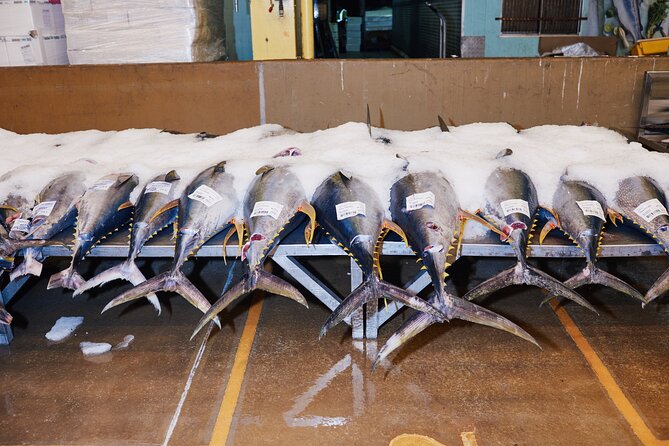
The displays are working stock, not decorative exhibits. That means the experience may feel less tidy than a food museum, but it also gives you a more honest picture of the trade. You are seeing seafood as it arrives, is checked, sold, and prepared.
For anyone who enjoys food photography, bring your interest but follow the guide’s instructions about where you can stand and what you can photograph. The supplied information does not promise photography access, so do not assume every area or moment is available for pictures.
Tuna filleting, oysters, sushi, and live lobsters
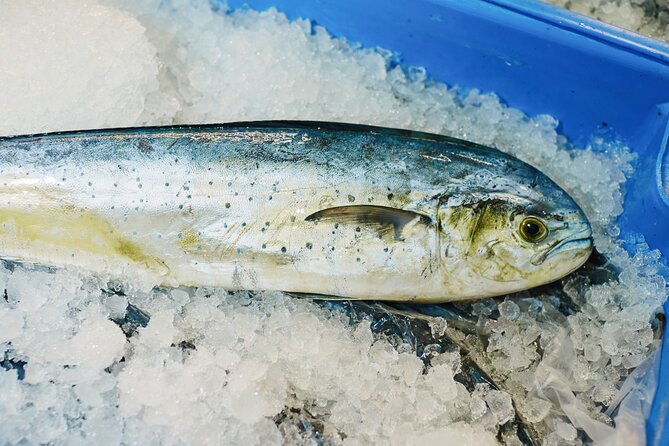
The demonstrations add variety to the walking tour. You can watch tuna filleting, oyster shucking, sushi preparation, and other seafood work.
Tuna filleting is likely to be the most striking demonstration because it shows the skill and precision needed to break down a large fish. It also helps explain how a whole product becomes the portions you later see in shops and restaurants.
Oyster shucking offers a different lesson. The work is smaller and more detailed, and it shows the care needed to open and present shellfish. Sushi preparation gives you another view of how seafood is handled before it reaches a plate.
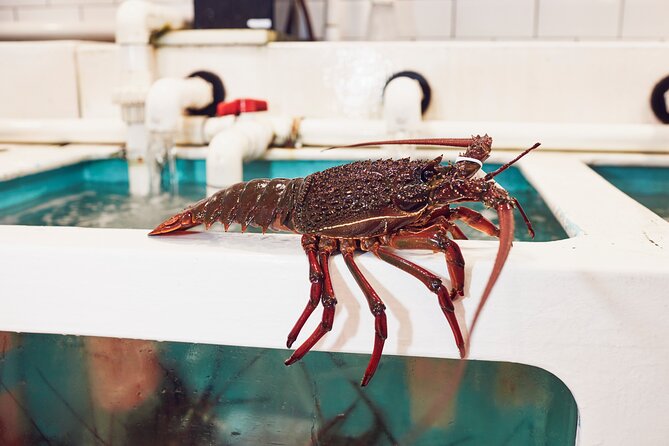
Live lobsters provide a reminder that not everything at the market arrives as a ready-to-cook fillet. The market deals with seafood in different forms, and the tour lets you compare those stages in one visit.
These are live demonstrations, not a tasting menu. Food and drinks are not included, so book this for access and insight rather than a meal. You will need to make your own plans if you want to eat at the market afterward.
The guide can make the difference
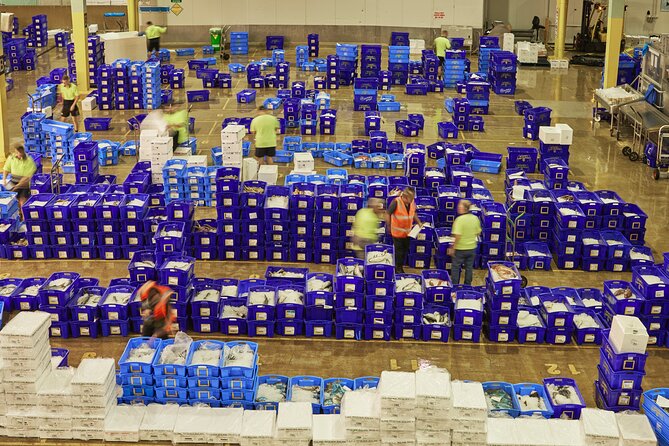
The tour is conducted in English with a live guide. The quality of the explanation matters here because the auction floor can be difficult to understand at first glance.
Mark has led the tour and brings experience as a fisherman. That background is useful when discussing seafood, quality checks, and the path from catch to sale. Mike has also been praised for giving clear facts and explaining the market in an engaging way.
Names and staff can change by departure, so do not book on the assumption that one particular guide will be present. Still, the small group format gives the guide room to explain details and answer questions.
The strongest part of the guiding is the connection between what you see and what happens later. You learn not only the names of species, but also how seafood is inspected, sold, filleted, shucked, and prepared.
Is the $56 price good value?
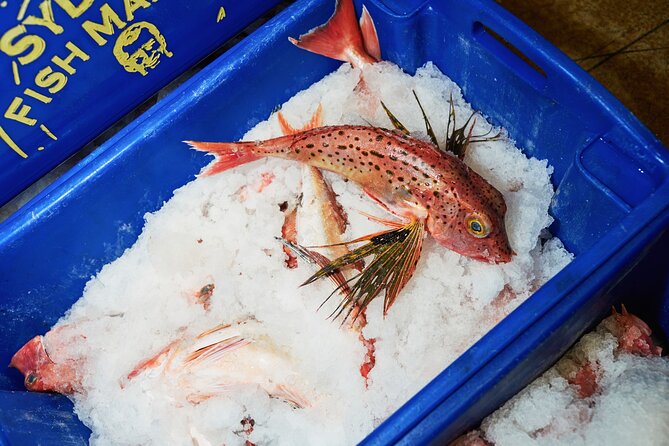
At $56 per person, this is not the cheapest way to visit Sydney Fish Market. You can visit the public areas without paying for a guided behind-the-scenes experience.
The price makes more sense if you value access to the auction floor, safety footwear, demonstrations, and expert explanation. You are paying for entry into a restricted working area and for the guide to interpret a complicated operation in two hours.
The small group limit also improves the value. Ten people is a manageable number for a floor tour, especially when the guide is explaining an auction or pointing out different species. A much larger group would make it harder to hear and see.
Food and drinks are not included, and neither is transportation. Add those costs when planning your morning. The best value comes if you are genuinely interested in seafood, markets, food production, or working ports. If you only want a quick meal, spend the $56 on food instead.
Free cancellation up to 24 hours before the tour and the option to reserve now and pay later make the booking less rigid. These terms are useful if your Sydney schedule is still changing, but the early start remains the main commitment.
Who should book this experience?
I would recommend it to seafood fans, cooks, food professionals, photographers who enjoy working markets, and curious visitors who like seeing how a city is supplied.
It also suits people who prefer active learning to a standard sightseeing stop. You get explanations, movement, demonstrations, and a look at a restricted part of the market rather than a simple walk through public stalls.
Families need to check the age rule. Children under 10 cannot join, and the auction floor is not suitable for wheelchair users or prams. Anyone who has difficulty standing or walking through a working market should consider this limitation before booking.
The tour is also a good fit for a morning when you are already staying near the city or have planned your transport. If you are not a morning person, the 5:50am check-in may outweigh the benefits.
Practical tips for a smoother visit
Wear warm layers and bring a jacket. The instructions specifically call for comfortable shoes, socks, and suitable footwear, so do not arrive in open sandals or high heels.
Plan your route before bedtime. The meeting point is 1 Bridge Road, Glebe, and transport is not included. Early-morning travel can take more thought than daytime travel, so allow time to find the correct entrance and check in.
Stay with the group once you reach the auction area. This is an active workplace, and the safety footwear and clothing are there for a reason.
Do not plan the tour around a sit-down breakfast beforehand. The check-in time is early, and food is not included. Instead, plan what you will do after the two-hour tour if you want to eat at the market.
Should you book the Sydney Fish Market tour?
Book it if you want to understand the work behind a seafood counter, not just browse one. The restricted auction floor, Dutch auction, large number of species, and preparation demonstrations give you access that a normal market visit does not.
The biggest drawbacks are clear: the early start, the lack of included food or transport, and the limits for young children, wheelchair users, and prams. For the right person, $56 is a fair price for two hours of guided access and useful context. For a casual visitor who simply wants lunch, the public market is likely enough.
FAQ
How long does the Sydney Fish Market Behind the Scenes Tour last?
The guided tour lasts two hours.
What time should I arrive?
You should arrive by 5:50am for check-in.
Where is the meeting point?
Meet at the LG Information Hub at Sydney Fish Market, 1 Bridge Road, Glebe. It is on the ground level on the side of the building closest to the city.
What does the tour include?
The price includes a guided Sydney Fish Market tour, safety footwear for the auction floor, and live seafood preparation demonstrations.
Is food included?
No. Food and drinks are not included.
What should I wear?
Wear comfortable shoes, bring a jacket, and bring socks for comfort with the safety footwear. High heels and open-toed shoes are not allowed.
Can children or wheelchair users join?
Children under 10 cannot join. Wheelchair users and prams are not permitted on the auction floor.
New market tours around Australia
- Sydney Harbour & Fish Market Sightseeing Cruise★ 4.5 · 4 reviews
- Sydney Fish Market: Tide to Table Seafood Tour with Drink★ 5.0 · 2 reviews
- Sydney Fish Market Discovery Tour★ 4.2 · 10 reviews
- Sydney: Fish Market Food Tour★ 5.0 · 2 reviews
- South Melbourne Market Foodie Tour★ 5.0 · 2 reviews
- Queen Victoria Market: ‘Flavours of Australia’ Food Tour★ 5.0 · 9 reviews
- Melbourne Flavors: Queen Victoria Market Food Tour★ 4.8 · 63 reviews
- Brisbane: Eumundi Markets, Noosa Gems & Afternoon Cruise★ 5.0 · 3 reviews
Australia Market Tours, side by side.
Sunshine Coast Hinterland and Noosa Day Trip from Brisbane Incl Eumundi Markets
Read our review →
Eumundi Markets Bus Transfer: Mooloolaba Sunshine Coast & Noosa
Read our review →
Melbourne Flavors: Queen Victoria Market Food Tour
Read our review →
Adelaide: Central Market Early Risers Breakfast Tour
Read our review →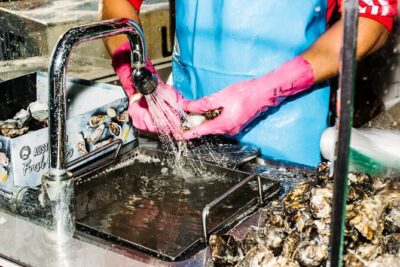
This tour also appears in