
Review · TBILISI
Tbilisi: Street Art & Dezerter Bazaar Tour w/ Tastings
Tbilisi’s alternative side comes into focus on this walk through street-art districts, railway streets, and Dezerter Bazaar. You move from Fabrika’s creative courtyard to less polished corners of the city, then finish among cheese sellers, dried fruit, homemade wine, and the noise of Georgia’s largest farmers market.
I like the way the tour connects art with daily life instead of treating graffiti as decoration. I also like the generous tasting stop, where Giorgi or George can explain what you are eating rather than simply handing you a sample. The main consideration is the walking: you cover about 2 to 3 miles, and the route operates in all weather.
Key points at a glance
- Fabrika to Dezerter Bazaar: See a former Soviet sewing factory turned creative meeting place, then walk toward Tbilisi’s main food market.
- Street art with local context: Learn about legal and illegal works, Georgian artists, and the city’s changing neighborhoods.
- A real market tasting: Try churchkhela, tklapi, dried fruit, Georgian cheese, wine, and chacha.
- A personal guide style: Giorgi, also called George, brings stories about growing up in Georgia and explains how the city has changed.
- Good first-day orientation: Get practical suggestions about where to eat, what to see, and which areas may not suit your plans.
- Small-group or private format: The experience is available as a private tour or in a small group, with hotel pickup and drop-off included.
Why this Tbilisi walk feels different
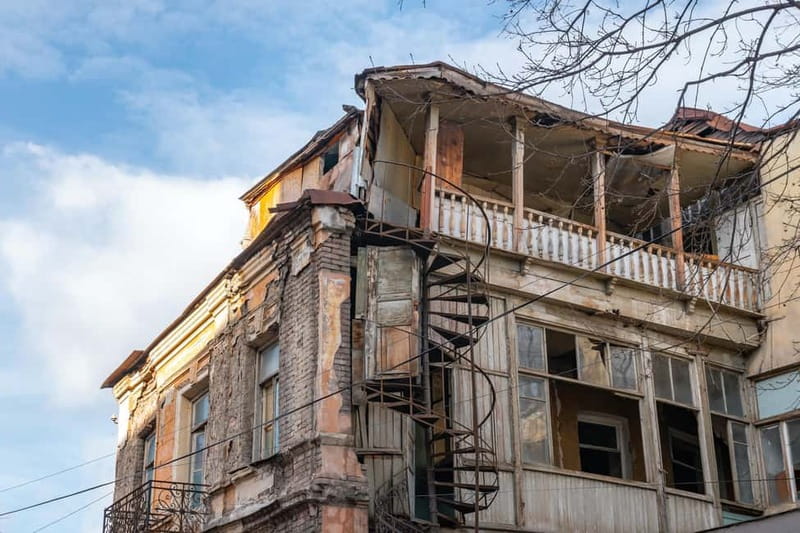
Many city walks stay in the old town, where balconies, churches, sulfur baths, and narrow lanes do most of the talking. This tour takes another route. It shows you how Tbilisi looks beyond its postcard center, where creative spaces, railway infrastructure, market stalls, and rough-edged streets sit close together.
That shift matters. You see a city that is not only historic, but also young, experimental, practical, and sometimes untidy. Street art appears on walls and side streets, with a mix of permitted pieces and illegal work. Your guide explains what can be learned from those images and points out how art fits into the city’s wider culture.
I especially like this approach for a first or second day in Tbilisi. You get a feel for how the city works, hear suggestions for later meals and visits, and gain a better sense of areas beyond the standard sightseeing circuit. It is less about checking off monuments and more about learning how local life fits around them.
The tour costs $30 per person. That is a fair price if you value a personal guide, hotel transport, several tastings, and a route that would be difficult to interpret on your own. You are not paying for major admission tickets, since the appeal comes from the walk, the explanations, and the food experience. If you only want a quick market visit, you could spend less by going independently. You would miss the context, the introductions to unfamiliar foods, and the stories that link each stop.
More Market Food Tours in the world:
- Dubai: Old Town, Creek, Museums, Souks, & Street Food Tour
★ 4.8 · 10,816 reviews - Dubai: Old Town, Souks, Street Food, Guided Tour & Abra Ride
★ 4.9 · 7,170 reviews - Dubai Aladdin Tour: Souks, Creek, Old Dubai and Tastings
★ 5.0 · 3,755 reviews
Fabrika: Tbilisi’s creative starting point
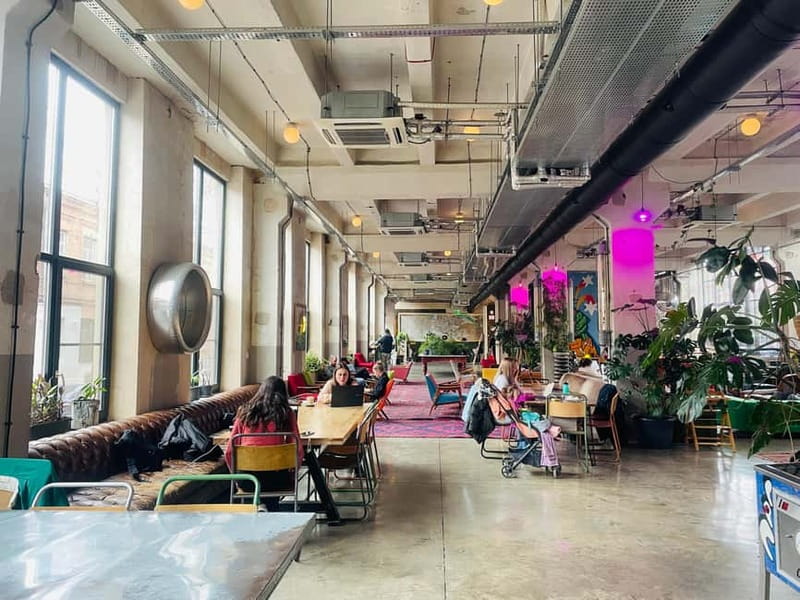
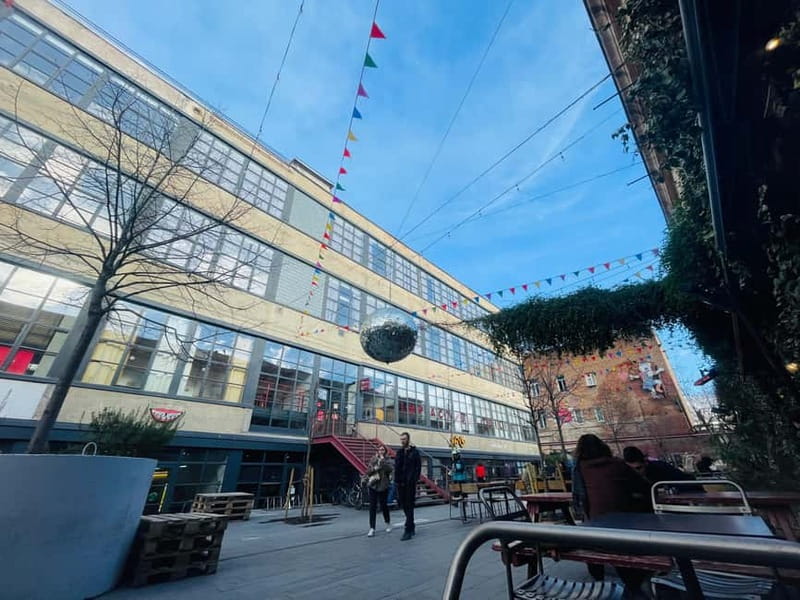
The walk begins at Fabrika Tbilisi, one of the city’s best-known creative spaces. The stop can include sightseeing, a photo break, coffee or tea, and a guided look around.
Fabrika occupies a former Soviet-era sewing factory. Its current role is very different: it is associated with design, cafés, social spaces, and a modern creative crowd. The contrast between the old industrial setting and its newer use gives your guide a useful way to explain Tbilisi’s changing identity.
Do not expect a long museum visit here. Fabrika works better as a starting point and visual reference. You can take in the courtyard, look at the surrounding architecture, and begin noticing how artists use walls, signs, and neglected spaces across the neighborhood.
Guides Giorgi and George are praised for making this part personal. They do not only point to a painting and name an artist. They also connect the area to Georgian culture and, in Giorgi’s case, to memories of growing up in the city. That kind of local background gives the tour a warmer feel than a standard art walk.
A coffee or tea stop may also help set the pace. The experience is not designed as a race through several locations, and the guide can pause for photos and general looking around. Still, timing can vary, especially when the route lasts closer to four hours rather than the shorter 1.5-hour estimate.
Street art in the side streets
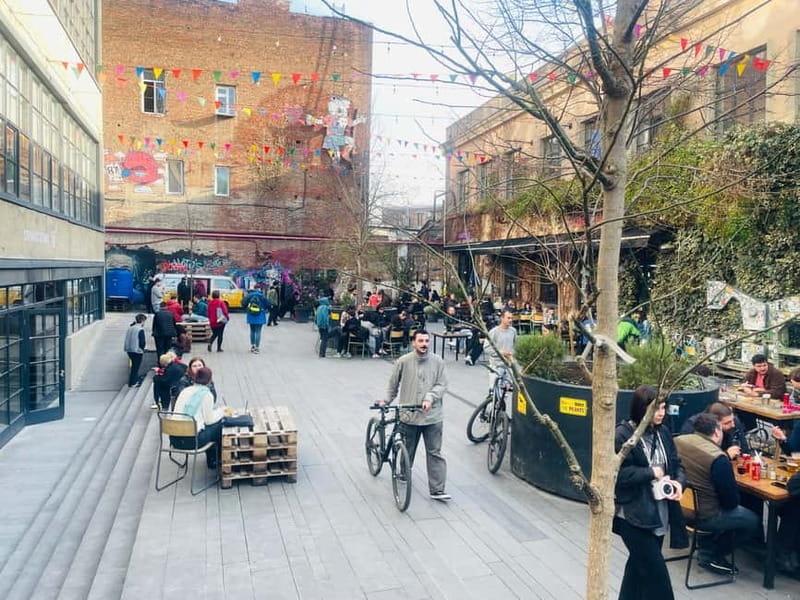
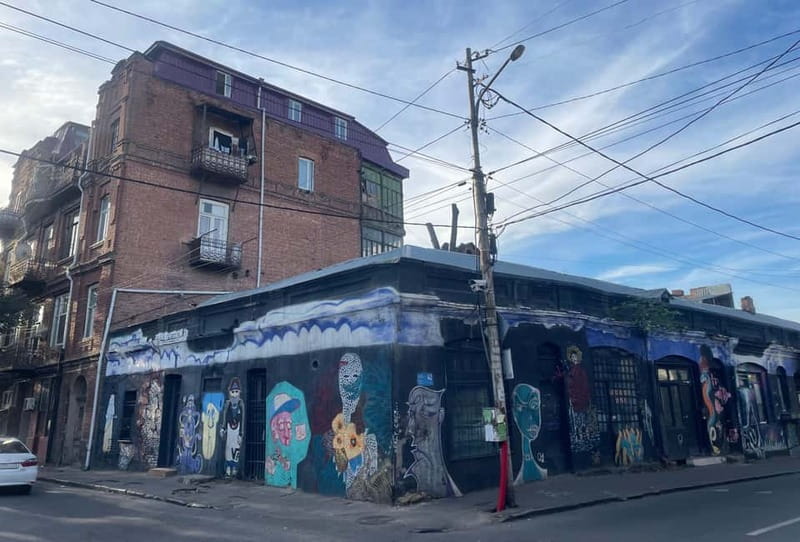
From Fabrika, you continue through streets and alleys with legal and illegal street art. Some pieces may be large and easy to spot. Others are tucked into less obvious corners, so the guide’s eye is useful.
The value here is interpretation. Street art changes, disappears, and gets painted over. A person walking alone may notice a wall but miss its connection to a local artist, a neighborhood change, or a wider argument about public space. Your guide helps you read the area rather than simply photograph it.
The route also passes the former residence of one of Georgia’s well-known painters. This adds an art-history thread without turning the walk into a formal gallery tour. You get a glimpse of the city’s older artistic world alongside its newer street culture.
You should keep your expectations realistic. This is not a dedicated street-art festival, and the exact works can change. Illegal pieces may vanish, weather can affect what you see, and the amount of art depends on the route and current conditions. That uncertainty is part of the point, but it means the experience is best for people who enjoy discovery rather than a fixed display.
The walking distance is around 2 to 3 miles. Comfortable shoes are important because the route includes ordinary city streets and alleys, not just smooth pedestrian paths. The tour runs in any weather, so bring clothing suitable for the forecast. Rain or cold may make the outdoor art portion less comfortable.
The railway station and the city in motion
Tbilisi Railway Station provides a useful transition between the creative neighborhood and the market. You stop for photos, hear more about the area, and continue on foot toward Dezerter Bazaar.
The station is not presented as a grand standalone attraction. Its importance is more practical. Railway spaces reveal how people move through a city, and they help show the difference between Tbilisi’s tourist center and its working districts.
This part also keeps the tour grounded. You are not moving from one polished sight to another. You are seeing streets used for transport, shopping, work, and everyday errands. For me, that makes the route more useful than a series of unrelated photo stops.
The guide can also point out architectural and cultural contrasts along the way. Tbilisi is known for its mix of old, Soviet, and newer construction, and this walk gives you a chance to see that variety in ordinary surroundings. The result is not a formal architectural survey, but it is a helpful introduction to the city’s uneven, layered character.
More street art walks around the world:
- Phnom Penh’s Morning Market and Street Art Tour by Tuk tuk
★ 5.0 · 128 reviews - Naples: The Spanish Quarters, Street Art and Local Market
★ 4.7 · 59 reviews - The Spanish Quarters, Street Art and Local Market Tour in Naples
★ 5.0 · 23 reviews - Cancun: 3-Hour Food Tour, Visit to the Market & Street Art
★ 4.8 · 8 reviews
Dezerter Bazaar: the tour’s best stop
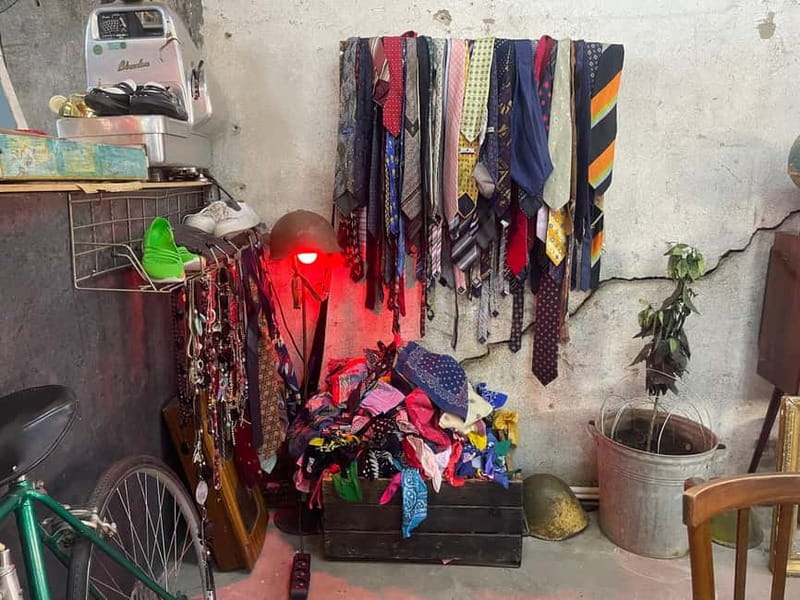
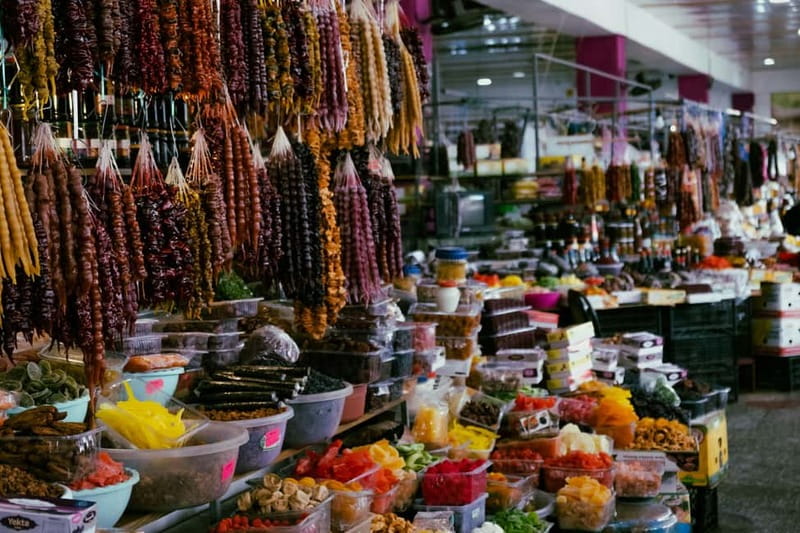
The final major stop is Dezerter Bazaar, Tbilisi’s oldest and largest farmers market. This is where the tour becomes a hands-on food experience.
You enter a market filled with regional produce and local specialties. The setting can feel crowded and noisy, but that is part of its appeal. It is a working market, not a staged tasting room. You see goods being sold in a setting that serves local shoppers as well as curious newcomers.
The tasting usually includes churchkhela, tklapi, dried fruits, Georgian cheese, traditional wine, and a shot of chacha. Churchkhela is a Georgian sweet made by coating nuts with thickened grape mixture. Tklapi is a fruit leather, often tart and chewy. Dried fruit and cheese help balance the sweetness, while wine and chacha introduce two very different sides of Georgian drinking culture.
Your guide’s role matters here. Some foods may look unfamiliar, and labels or explanations may not be easy to follow. Giorgi or George can help you understand what you are trying, how it fits into Georgian food culture, and which items are worth buying for later.
The tastings are included, but extra food and drinks are not. Plan to pay separately if you want a larger snack, more wine, or market goods to take home. The market is also a good place to continue exploring after the official tour ends, especially if you want to shop at your own pace.
One practical warning concerns customs. If you buy wine, chacha, sweets, or other food, check the rules for your destination before packing them. An Australian participant noted that customs regulations prevented taking some tasting items home. That does not affect the tasting itself, but it may affect your shopping plans.
What makes the guide important

The strongest part of this experience is the guide’s local voice. Giorgi and George are described as friendly, relaxed, and easy to talk with. They explain street art, local history, food, and culture, but they also leave room for conversation.
That matters because this route has few formal signs telling you what to think. A guide turns a former residence, a painted wall, a market stall, or a railway street into part of a larger story. You learn not just what something is, but why it matters in present-day Tbilisi.
The guide can also pause for photos, rest, or a closer look. That flexibility suits a walking tour with several informal stops. If you want a tightly timed march with a fixed script, this may feel loose. If you prefer questions and conversation, it is a strong match.
English and Russian guiding are available. Private and small-group options are offered, so the mood may vary depending on the format you choose. A private outing should give you more room to shape the pace and topics, while a small group can be a good way to keep the $30 price point while still getting personal attention.
Timing, pickup, and practical details
The advertised duration ranges from 1.5 to 4 hours. That is a wide span, so check the available start time and expected duration when booking. The longer version gives more room for conversation, photos, tastings, and market shopping. The shorter version may suit you if you want an introduction rather than a half-day outing.
Hotel pickup and drop-off are included. Listed pickup and return points include 10 Dodo Abashidze Street, 26 Ramaz Davitashvili Street, and Tbilisi. Wait in the lobby five minutes before the scheduled pickup time. The vehicle will wait no more than five minutes after the designated time, so do not treat pickup as flexible.
Large bags and oversize luggage are not allowed. That makes sense for a walking route and a crowded market, but it means you should leave suitcases at your accommodation. Bring comfortable shoes and weather-appropriate clothing.
The tour continues in poor weather, so rain or cold should not come as a surprise. The outdoor art portion will be more pleasant in dry conditions, but the market remains a useful stop in any season.
Cancellation is free up to 24 hours before the tour for a full refund. You can also reserve now and pay later, which helps if you are still adjusting your Tbilisi plans.
Who should book this tour?

I would choose this experience if you have already seen, or plan to see, Tbilisi’s old town and want something less conventional. It suits curious first-time visitors who want local orientation, food lovers who enjoy trying unfamiliar specialties, and anyone interested in public art and urban change.
It is also a good option for a short stay. The tour gives you practical ideas about where to eat and what to explore next, while the included pickup reduces the hassle of reaching the starting point.
You may want another type of outing if you dislike walking, need a fully indoor activity, or want a formal museum-style examination of Georgian art. The route covers several miles and operates outdoors in all weather. Also, the market can feel chaotic rather than calm, and the exact street-art selection is not fixed.
Should you book the Tbilisi Street Art and Dezerter Bazaar Tour?
Book it if you want to see Tbilisi as a lived-in city, not only as a collection of historic sights. The combination of Fabrika, street art, railway streets, and Dezerter Bazaar gives you a clear sense of how creative culture and everyday commerce share the same city.
The $30 price is good value when you use the included pickup, tastings, and local guidance. I would especially recommend booking early in your stay, since the food and neighborhood tips can help shape the rest of your visit. Just wear good shoes, bring a light bag, and leave space in your schedule for the market to take longer than expected.
FAQ
How much does the tour cost?
The tour costs $30 per person.
How long does the experience last?
The duration ranges from 1.5 to 4 hours. Available start times and the exact duration can vary, so check when booking.
What places are included in the route?
The route includes Fabrika Tbilisi, a secret stop, Tbilisi Railway Station, and Dezerter Bazaar. Pickup and drop-off are also included.
What food and drinks are included?
The tour includes traditional Georgian wine, one shot of chacha, and tastings of local sweets. At Dezerter Bazaar, the tasting can include churchkhela, tklapi, dried fruit, and Georgian cheese.
Is hotel pickup available?
Yes. Hotel pickup and drop-off are included. Listed pickup and return locations include 10 Dodo Abashidze Street, 26 Ramaz Davitashvili Street, and Tbilisi.
What languages does the guide speak?
Live guiding is available in English and Russian.
How far do you walk?
You cover about 2 to 3 miles during the activity.
What should I bring?
Bring comfortable shoes and clothing suitable for the weather. Oversize luggage and large bags are not allowed.
Can I cancel the booking?
Yes. You can cancel up to 24 hours in advance for a full refund. You can also reserve now and pay later.
New market tours around the world
- Tel Aviv: 2-Hour Carmel Market Tour in English with Lunch★ 4.8 · 23 reviews
- Tel Aviv: Carmel Market & Neighborhood Guided Walking Tour★ 4.7 · 3 reviews
- Tel Aviv: 2-Hour Jaffa Flea Market Tour with Tastings★ 4.9 · 8 reviews
- Tel Aviv: Carmel Market Food Tasting Tour “Shuk Hacarmel”★ 4.0 · 8 reviews
- Tel Aviv: 2-Hour Levinsky Market Tour with Full Lunch★ 4.7 · 10 reviews
- Tbilisi 2 Parks: Turtle Lake & Dedaena Park with Flea Market★ 5.0 · 3 reviews
- Tbilisi: Street Food & Sightseeing Tour with Local Markets★ 5.0 · 8 reviews
- Teguise: Market and César Manrique Foundation Tour★ 4.3 · 39 reviews
Tbilisi Market Tours, side by side.

Join a Local for a Market Tour, Cooking Class and Meal in her Tbilisi Home
Read our review →
Tbilisi: Street Food & Sightseeing Tour with Local Markets
Read our review →
Tbilisi 2 Parks: Turtle Lake & Dedaena Park with Flea Market
Read our review →This tour also appears in