
Review · BUSAN
Busan Tailored Korean cooking class (Vegan OK)with market tour
Busan’s best food lesson may begin before you reach the kitchen. You walk through Bujeon Market with local host Suyang, learn what the fish, vegetables, and pantry goods are, and help choose the ingredients for lunch. Then you turn those purchases into Korean dishes, not just a plate of familiar barbecue or bibimbap.
I like two things here: the menu is adjusted to your tastes, and the cooking is done from scratch rather than reduced to assembling pre-prepared parts. The main consideration is that this is a five-hour commitment, and the exact menu can depend on your choices and, when several groups join, which group booked first.
Key points at a glance
- Shop before you cook: Visit local Bujeon Market with Suyang and choose ingredients for the meal.
- Pick three dishes: The standard format includes two banchan, or side dishes, plus one stew or soup.
- Vegan-friendly planning: Vegetarian menus are available, and past classes have adapted dishes with vegan and gluten-free ingredients.
- Learn less familiar recipes: Options include braised tofu, seasoned dried pollack, black beans, japchae, soups, and more.
- Eat what you make: Lunch, bottled water, and barley tea, corn tea, or instant coffee are included.
- Small enough for personal help: The maximum group size is 15, with group discounts available.
Starting at Bujeon Market in Seomyeon
The meeting point is at KB Kookmin Bank Seomyeon Joongang2 on Saessak-ro in Busan’s Busanjin District. It is near public transportation, which makes this a practical choice if you are already exploring Seomyeon.
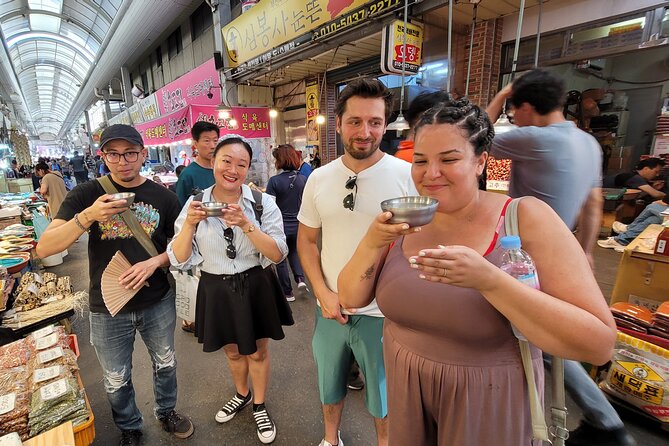
From there, you go to Bujeon Market with your host. This is not simply a quick walk past food stalls. The useful part is having someone explain what you are seeing and help select ingredients for the recipes you will prepare later.
Bujeon is a working local market, so expect food shopping rather than a polished attraction. You may see vegetables, dried seafood, fish, sauces, and other staples used in Korean home kitchens. Suyang’s role is especially helpful here because an unfamiliar market can be hard to read on your own. He can connect the ingredients on the stall to the dish on your plate.
The market visit also gives the cooking class a clear purpose. You are not buying random items for a demonstration. You are gathering food for your own meal, then learning how those ingredients are handled and combined.
A useful bonus is the local food advice that can come with the walk. Suyang has helped participants with restaurant suggestions and Busan food recommendations, and the market itself may include a short snack stop. One class included tteokbokki and fried fish cakes, a Busan favorite, while another family received breakfast at the market before cooking. These extras are not listed as fixed parts of every class, so do not book it expecting a guaranteed snack, but they show how flexible the host can be.
More Market and Cooking Class Tours in South Korea:
- Local Home Korean Cooking Class & Market Adventure in Seoul
★ 5.0 · 1,024 reviews - Seoul: Korean Cooking Class at a Local Home and Market Tour
★ 5.0 · 348 reviews - Seoul: Authentic Korean Cooking Class and Market Tour
★ 5.0 · 6 reviews
Choosing three Korean dishes
The standard plan lets you choose three dishes: two banchan and one stew or soup. This is a smart format for a half-day lesson. You get a few different techniques without trying to cook an entire Korean banquet.
Banchan are small side dishes, but they are not an afterthought. Korean meals often rely on several side dishes to add contrast, storage value, and variety. In this class, you might work with stir-fried anchovies, seasoned black beans, cucumber kimchi, braised radish, seasoned eggplant, bracken salad, bean sprouts, braised tofu, or pickled radish and perilla leaves.
The choices also go beyond the most familiar Korean dishes. Depending on the available menu, you might prepare seasoned dried pollack with spicy sauce, pan-fried shrimp and seaweed, kimchi pancake, seafood pancake, beef pancake, or steamed tofu and egg.
For the main dish, options include kimchi stew with pork, soybean paste stew, seaweed soup with clam or dried pollack, Alaska pollack soup, spicy or soy sauce chicken, braised pollack, and braised flat fish. These recipes give you a broader look at Korean home cooking than a class focused only on bulgogi and bibimbap.
The menu is a real strength, but pay attention to how your booking is organized. If several groups take part in the same class, the first group to reserve has the right to choose the menu. If a particular dish matters to you, ask about it before arrival and reserve early. The experience is booked, on average, 45 days ahead, which also suggests that advance planning is sensible.
There are occasional special menu arrangements. One class centered on marinated abalone, while another used braised beef short rib instead of the usual three-dish format. That can be appealing if you want a more unusual centerpiece, but clarify what is included. In the short rib case, side dishes were not provided with that option.
Cooking in a home kitchen
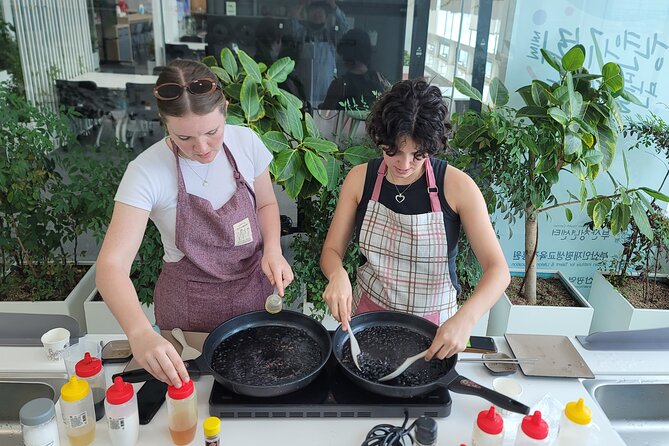
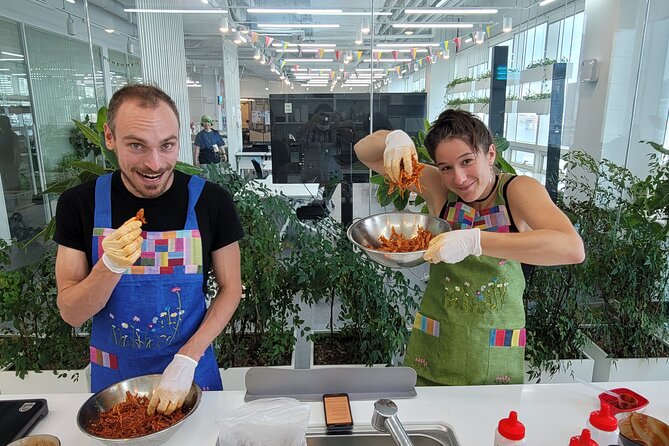
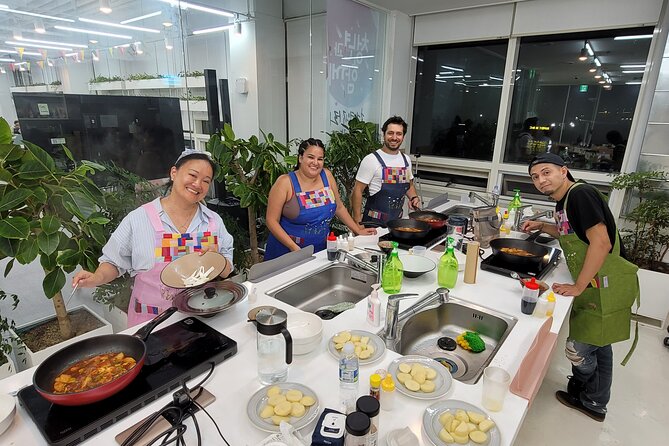
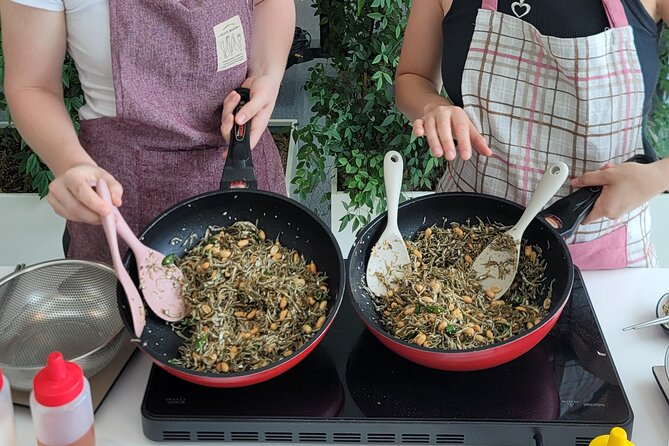
After shopping, you move to the host’s kitchen and begin preparing lunch. The class is hands-on, so you can expect to chop, season, stir, fry, and assemble the dishes rather than simply watch Suyang work.
That distinction matters. Some cooking classes prepare nearly everything in advance and leave you to put the final pieces together. This one is designed to teach repeatable methods. The recipes are intended to be manageable at home, and recipe instructions are provided afterward so you can make the food again.
The teaching also links the dishes together. You may notice how Korean sauces, seasoning mixtures, and cooking techniques appear in more than one recipe. That makes the class useful beyond the meal itself. You are learning a small set of habits that can help you approach other Korean recipes later.
The host’s personal attention is another important part of the format. A maximum of 15 people is not the same as a private lesson, but the class is built around direct guidance. Smaller bookings can feel especially personal. One pair received help with seafood pancake, soy sauce chicken, and fried seaweed with shrimp, while another group made japchae, braised tofu, and mini kimbap.
The tone is informal and social. Suyang also shares Korean culture and language, and the class can turn into a wider conversation about Busan and daily life in Korea. If you like asking questions while you cook, this is a good fit. If you prefer a silent, highly structured culinary school, the friendly home setting may feel less formal than expected.
Vegan and vegetarian options
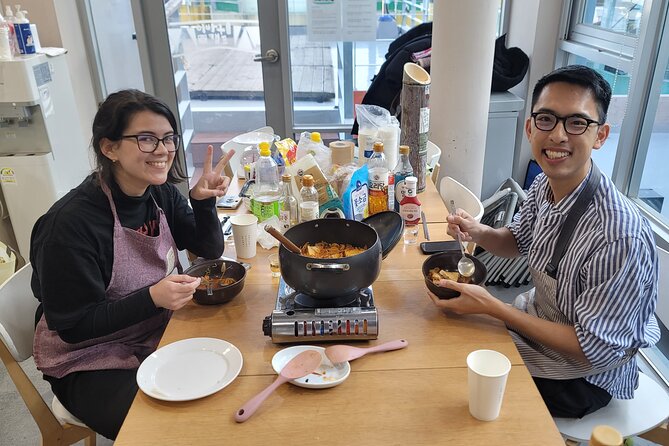
The title makes clear that vegan participation is welcome, but you should still explain your diet when booking. The proposed menu can be tailored, and vegetarian recipes are available.
Past adaptations have included braised tofu with spicy sauce, braised black beans, and spinach soybean paste soup. A gluten-free soybean paste was also used for one participant who requested it. This is encouraging for plant-based diners, but it does not mean every Korean ingredient is automatically vegan or gluten-free. Kimchi, sauces, broths, seafood products, and fermented pastes can contain animal ingredients or wheat.
The safest approach is to state exactly what you avoid. Say vegan, vegetarian, gluten-free, or any other restriction clearly before the menu is finalized. The host has shown flexibility, but careful communication remains your responsibility.
For a vegan visitor, this class can offer something that ordinary restaurant meals do not: a chance to see how Korean plant-based side dishes are seasoned and cooked. Tofu, beans, vegetables, sprouts, eggplant, radish, and soybean paste can form a satisfying meal without treating vegetables as a substitute for meat.
More plant-based stalls around South Korea:
- Seoul: Gwangjang Market Vegan & Vegetarian Food Tour
★ 5.0 · 16 reviews - Jaipur Market Tour & Vegetarian Rajasthani Home Cooking Class
★ 5.0 · 113 reviews - Seville Vegan Tapas Food and Market Walking Tour
★ 5.0 · 40 reviews - Hoi An : Vegan Cooking Class – Market & Coconut Basket Boat
★ 5.0 · 4 reviews
What the meal adds to the experience
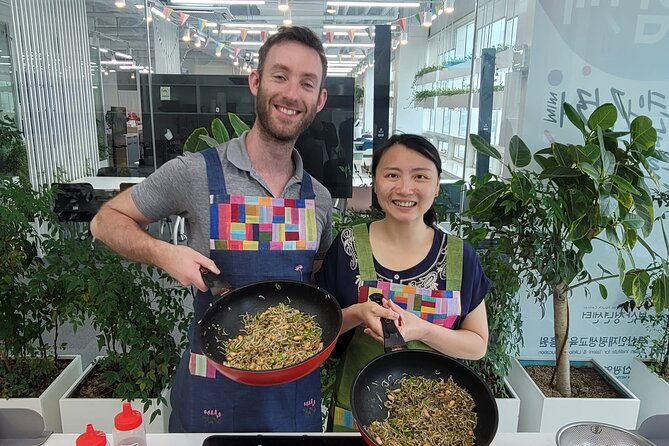
Lunch is made from the dishes you prepare, so the reward comes at the end of the work. You sit down with food that carries the memory of the market, the shopping decisions, and the techniques you practiced.
Portions can be generous. One pair found they had enough food for six people, despite having only two participants in the class. That will vary with the menu and group, but you should not expect a tiny tasting portion.
The included drinks are simple: bottled water, barley tea or corn tea, and instant coffee. Alcohol is not included. The focus is on food and conversation, not on a restaurant-style beverage service.
This format is also useful for families and mixed-age groups. An eight-person family joined a class during a Busan cruise stop, and the host worked to make the lesson enjoyable for different ages. If your group includes people with different food preferences, discuss the menu in advance so everyone has a useful role.
Is $95 a fair price?
At $95 per person, this is not the cheapest meal in Busan. You can eat well in the city for far less, especially at a market stall or neighborhood restaurant.
The price makes more sense when you count what is bundled into the five hours: a guided market visit, ingredient shopping, instruction, the meal itself, drinks, recipes, and direct help from a local host. You are paying for access to a kitchen and for the time needed to explain unfamiliar ingredients and techniques.
The value is strongest if you plan to cook Korean food again. A restaurant meal gives you flavor; this class gives you a method and recipes you can take home. It is also a good use of time for first-time visitors who want food knowledge tied to a real neighborhood market.
The value is weaker if you only want a quick meal or a polished chef demonstration. Five hours is long for people who are not interested in cooking, and the menu may not be fully under your control if multiple groups are sharing the class.
Group discounts are available, which can help families or friends. The experience is also offered with a mobile ticket, and confirmation is sent within 48 hours, subject to availability.
Timing, transport, and practical concerns
The activity lasts about five hours and ends back at the meeting point. That makes it easier to fit into a day in Busan, but you should not schedule another fixed appointment too close afterward.
The starting point near Seomyeon is convenient for public transportation. The exact meeting point is KB Kookmin Bank Seomyeon Joongang2, Saessak-ro, Busanjin District. Read the location carefully and allow time to find the bank before the start.
Cruise passengers have used this type of arrangement successfully, but port timing needs care. In some cases, the host has met participants at the cruise terminal, taken them to a market and kitchen, and helped them return toward the terminal or shuttle stop. That is not the standard meeting arrangement stated for every booking, so ask about port pickup and return before reserving.
Wear clothes and shoes that are comfortable for walking through a market and cooking. The market portion comes first, and the class is long enough that comfort matters. You should also expect the kitchen experience to be practical rather than luxurious.
The cancellation rule is strict: the booking is non-refundable and cannot be changed for any reason. Only reserve once your Busan schedule is firm.
Who should book this Busan cooking class?
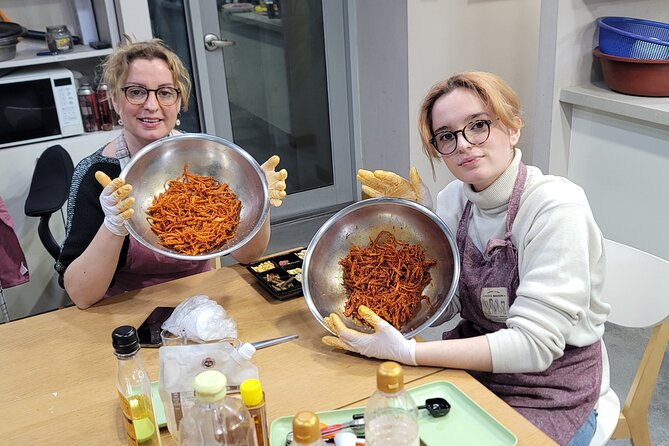
I would choose this for a food-curious visitor who wants to understand Korean meals beyond restaurant favorites. It is especially well suited to people who enjoy market visits, ask questions, and like bringing recipes home.
It is a strong match for vegetarians and vegans who communicate their needs early. It also suits families, couples, and small groups who want a shared activity with a meal at the end.
I would hesitate if you have only a few free hours, dislike hands-on cooking, or need a guaranteed specific dish without confirming the menu. The group format and menu-selection rule also mean that the experience may feel less private than the phrase tailored Korean cooking class suggests.
Should you book it?
Book it if you want a five-hour food experience with a real market visit, flexible Korean recipes, and a host who can talk about local food and culture. The strongest reasons are the fresh ingredient shopping, the from-scratch cooking, and the range of less familiar dishes such as seasoned pollack, braised tofu, japchae, and Korean soups.
Before paying, send your dietary needs and preferred dishes to Suyang, ask whether your chosen menu is available, and confirm any special arrangement for a cruise arrival. If the schedule works, $95 buys far more than lunch. It gives you a practical look at how Korean home food is chosen, cooked, and shared.
FAQ
Where does the cooking class meet?
It begins at KB Kookmin Bank Seomyeon Joongang2 on Saessak-ro in Busanjin District, Busan. The activity ends back at the meeting point.
How long does the experience last?
The activity lasts about five hours, including the Bujeon Market visit, ingredient shopping, cooking, and the meal.
How many dishes can I choose?
The standard format allows you to choose three dishes: two banchan, or side dishes, and one stew or soup.
Can I join as a vegan or vegetarian?
Yes. Vegetarian menus are available, and the class can be tailored to vegan needs. Tell the host about your diet when arranging the menu.
What food and drinks are included?
Lunch made by the participants is included, along with bottled water and barley tea, corn tea, or instant coffee. Alcoholic beverages are not included.
Is the class suitable for cruise passengers?
It can work for cruise passengers, and special meeting arrangements have been used for port visitors. Confirm the pickup point, timing, and return plan before booking.
What happens if I cancel?
The experience is non-refundable and cannot be changed for any reason. The amount paid is not returned after cancellation or an amendment request.
New market tours around South Korea
- Seoul: The Biggest Sea-food Noryangjin Market Tour★ 4.3 · 30 reviews
- Seoul: Noryangjin Fish Market Dinner★ 5.0 · 6 reviews
- Seoul: Sokcho beach, market, hot spring and Seorak Cable Car★ 4.8 · 5 reviews
- Seoul: Gyeongbokgung Palace Tour & Lunch at Authentic Market★ 4.5 · 2 reviews
- Seoul: Mt.Seorak(+CableCar Option)+Sokcho Fish Market&Beach★ 4.5 · 9 reviews
- Seoul: Namdaemun Market Food Tour★ 4.9 · 34 reviews
- Seoul: Guided Street Food Tour at Namdaemun Market★ 5.0 · 10 reviews
- Seoul: Gwangjang Market Vegan & Vegetarian Food Tour★ 5.0 · 16 reviews
Busan Market Tours, side by side.
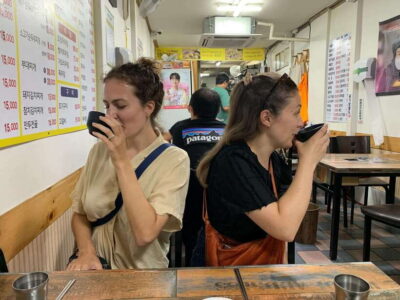
Busan: Food Market Tour, Smash Seafoods and Street Foods
Read our review →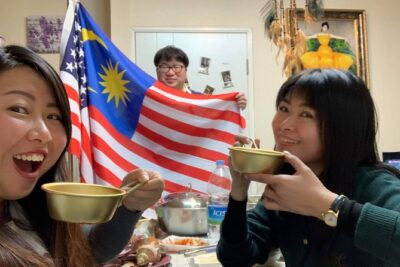
Busan Seafood Tour : Jagalchi market Seafood Tour & Dinner
Read our review →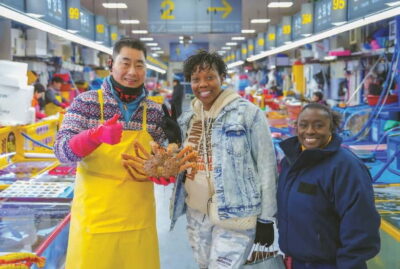
Busan: Gukje and Jagalchi Market Food Tour with Tastings
Read our review →
Busan: Night Tour with Jagalchi Market and Skywalk
Read our review →
Busan: Jagalchi Market & Gamcheon village Walking Tour
Read our review →
Busan Night Tour: Market, Skywalk & Optional SnapShot
Read our review →This tour also appears in