
Review · SEOUL
Seoul: Authentic Korean Cooking Class and Market Tour
The most appealing part of this Seoul experience is the change of setting: you begin at Sillim’s local market, then carry your ingredients into a Korean home for lunch. Ann guides the English-language class, and her mother welcomes you into a room decorated with hand-embroidered work. It feels less like a standard cooking lesson and more like being invited into family life.
I like the freedom to help choose the dishes, and I like the gentle pace. You get market advice, three dishes in some sessions, a homemade meal, dessert, and tea in 210 minutes. The main consideration is the meeting point: Sillim Station is south of Seoul’s best-known sights, so you need to allow time for the subway ride and find Cafe Mignon before leaving the station.
Key points
- Sillim market first: Pick up fresh produce and Korean seasonings while learning how local ingredients are used.
- Small group of four: The limited size allows Ann to give hands-on help and respond to your food interests.
- Your choice of dishes: Possible options include bulgogi, bibimbap, kimchi pancakes, and other Korean favorites.
- A real family setting: Cooking takes place in a Korean home where Ann’s mother also offers cultural insight.
- Dessert and tea to finish: Make a traditional sweet, then sit down in an embroidery-filled room.
- Good flexibility: You can cancel up to 24 hours before the start for a full refund, and reserve without paying immediately.
Starting at Sillim Station at 10:30am
The experience starts inside Sillim Station, subway station 230 on Line 2, at 10:30am. After passing through the ticket gates, stay inside the station and look for Cafe Mignon, a small take-out cafe. You meet in front of it, with Ann identifiable by a Sobaan Cooking sign.
That meeting detail matters. Sillim is a large working neighborhood, and the instructions do not ask you to meet outside at a street address. Do not rush through the station toward an exit. Find the cafe after the turnstiles first, then look for the sign.
The timing gives you a useful morning-to-afternoon shape. You start with shopping, cook and eat lunch, and finish with sweets and tea. At 210 minutes, this is not a quick demonstration squeezed between sightseeing stops. You should keep the rest of the afternoon fairly open.
The group is limited to four people, which suits anyone who wants to ask questions or take part rather than watch from the back. English is the stated language, and Ann serves as the host or greeter. The experience is also listed as wheelchair accessible, though you should still confirm any personal access needs when booking.
More Market and Cooking Class Tours in Seoul:
- Local Home Korean Cooking Class & Market Adventure in Seoul
★ 5.0 · 1,024 reviews - Seoul: Korean Cooking Class at a Local Home and Market Tour
★ 5.0 · 348 reviews - Hanoi Cooking Class: Culture, Local Market & Meaning CSR Impact
★ 5.0 · 5,147 reviews
Reading Korean food through Sillim Market
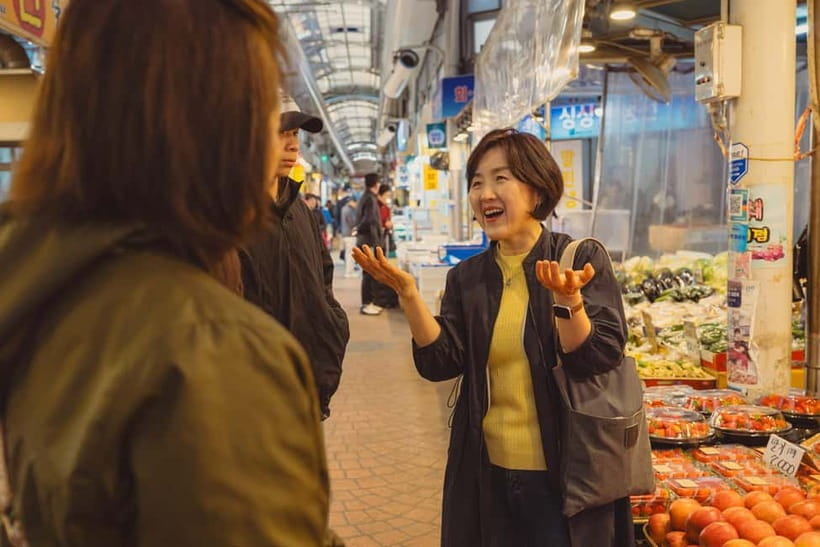
The market walk gives the class a useful foundation. Instead of meeting at a kitchen with ingredients already measured, you see the produce and seasonings before they reach the cooking table. Ann explains cultural stories connected with the food and shows you how to think about ingredients when shopping.
You will pick up seasonal produce and authentic Korean seasonings with the group. That makes the market more than a place to pass through. It shows you the raw materials behind familiar dishes and gives you practical clues for finding similar items later.
The exact market route and vendor stops are not fixed in the information provided, so you should not expect a formal food tour with a long list of tastings. The focus is shopping for the cooking class. Still, the stops can be useful because Ann points out typical foods and explains their background.
I especially like this part for first-time visitors who know Korean food mainly from restaurant menus. Seeing the ingredients before cooking helps connect names such as bulgogi, bibimbap, and kimchi pancakes with the products used to make them. It also gives you a chance to ask about seasonality and seasoning while standing in the place where those choices begin.
The market may be less comfortable for people who prefer a quiet, highly scripted lesson. You are moving through a working local food market, and the pace depends on shopping and conversation. That is part of its value, but it is not a polished museum-style presentation.
Choosing dishes instead of following a fixed menu
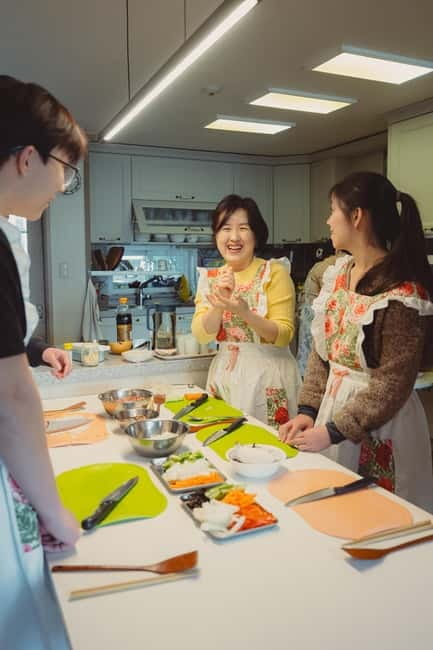
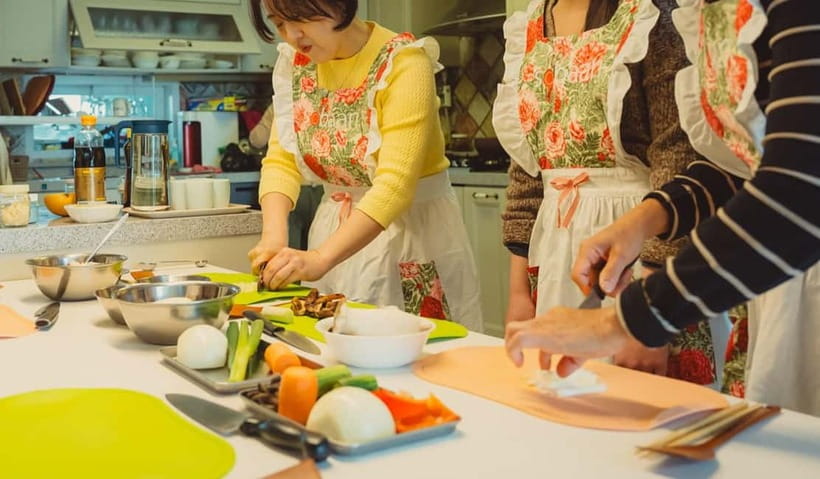
After the market, you go to a Korean house and begin preparing lunch. The format allows you to choose dishes based on what you are curious about. Bulgogi, bibimbap, and kimchi pancakes are named possibilities, but the description also leaves room for other dishes.
That choice is a strong feature. If you already know you want to learn bibimbap, you can guide the lesson in that direction. If you have tried bulgogi in restaurants and want to understand how it comes together at home, you can ask for that instead. The class is built around your interests rather than a fixed menu that may not suit everyone.
The cooking is described as unhurried, with Ann helping you prepare the dishes in a comfortable setting. Some sessions include three dishes, giving you a broad introduction to Korean home cooking without turning the class into a race.
You should keep your expectations practical. This is not presented as professional chef training or a technical cooking school. The value is in learning familiar Korean food in a home setting, asking questions as you work, and then eating what you helped prepare.
A Korean home filled with embroidery
The cooking location adds much of the character. Rather than using a generic studio, you visit a beautiful Korean house where the rooms contain traditional hand-embroidered works. Ann’s mother welcomes you there, and the setting opens a door to Korean domestic culture that a restaurant meal cannot provide.
The embroidery is not just decoration in the background. It gives the home its own sense of place and makes the meal feel connected to craft and family life. You can look around while learning, and the house gives the class a calmer feel after the market.
Ann’s mother also offers additional insight into Korean culture. The available details do not specify a formal talk or a set presentation, so the cultural exchange seems to grow naturally from the home, the food, and the conversation. That suits you if you prefer personal contact over a long lecture.
There is a small tradeoff here. A local home is more personal than a purpose-built classroom, but it may feel less structured to someone who wants every step timed and labeled. The small group helps keep things manageable, and the host’s unhurried approach should appeal to most people who book this kind of activity.
More market tours around Seoul:
- Seoul Street Food Market Tour
★ 5.0 · 1,226 reviews - Seoul: Night Market Food Tour with Local Guide
★ 4.9 · 943 reviews - Seoul: Palace, Temple and Market Guided Foodie Tour at Night
★ 4.9 · 750 reviews - Seoul: Guided Food & Market Tour with 8+ Tastings
★ 4.9 · 342 reviews
Homemade lunch in a room with character
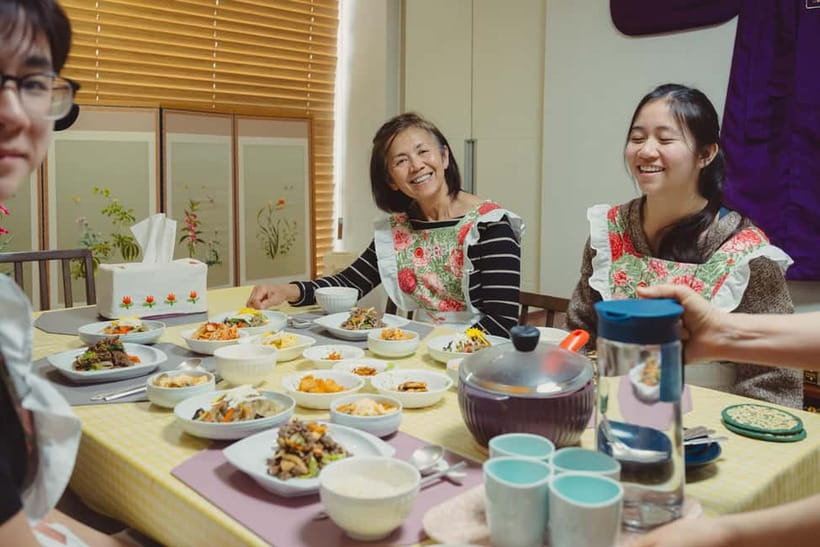
Once the cooking is done, you sit down to eat the lunch you prepared. This is an important part of the experience because you do not simply watch a demonstration and leave with a recipe. The meal gives you time to notice how the dishes work together and to enjoy the results at a normal table.
The lunch menu depends on the dishes chosen during the class. Bulgogi, bibimbap, and kimchi pancakes offer different ways to experience Korean cooking, from seasoned meat to rice-based assembly and savory pancakes. If you have dietary restrictions or strong preferences, raise them before or during booking, since the provided information does not spell out substitution rules.
I like the balance between practical cooking and shared eating. You get instruction, but you also get the social part of food. Sitting down in the decorated room makes the meal feel like a visit rather than a task completed for a certificate.
The experience is best for people who enjoy a full meal after cooking. If you only want to learn one quick recipe, three and a half hours may be more time than you need. If you want food, conversation, and a glimpse of a Korean home in one outing, the length makes sense.
Making a traditional dessert and slowing down with tea
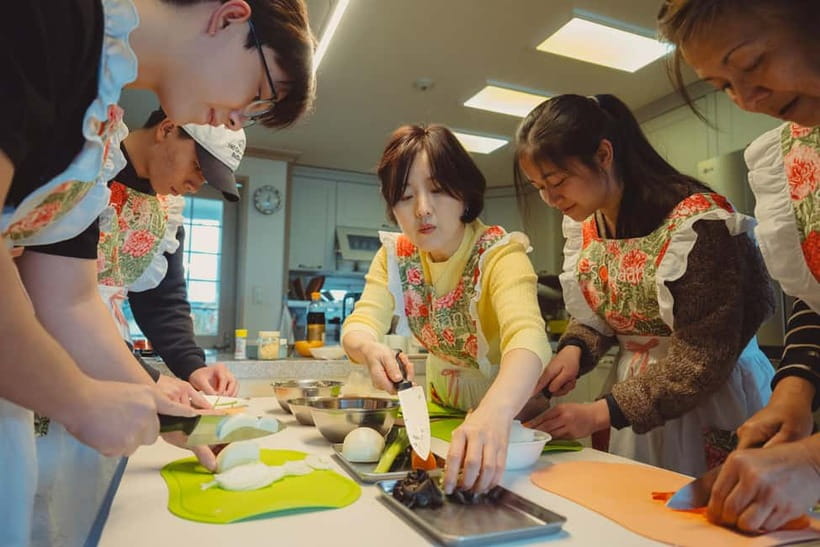
After lunch, you prepare a traditional Korean dessert together. The exact dessert is not specified, so you should treat this as a hands-on sweet-making session rather than book it expecting one particular item.
Tea-time follows in the embroidery-filled room. This quieter ending gives the day a clear second half. The market and cooking involve movement and work, while dessert and tea let you sit, talk, and take in the home.
That closing ritual is one of the most distinctive elements. Many food classes end as soon as the meal is served. Here, the dessert and tea create time for conversation and cultural exchange after the practical lesson has finished.
It also makes the class a good choice for couples, friends, and solo visitors who want a personal experience rather than a crowded group activity. With only four participants, tea-time should feel more like a shared visit than a large organized event.
What $69 buys you
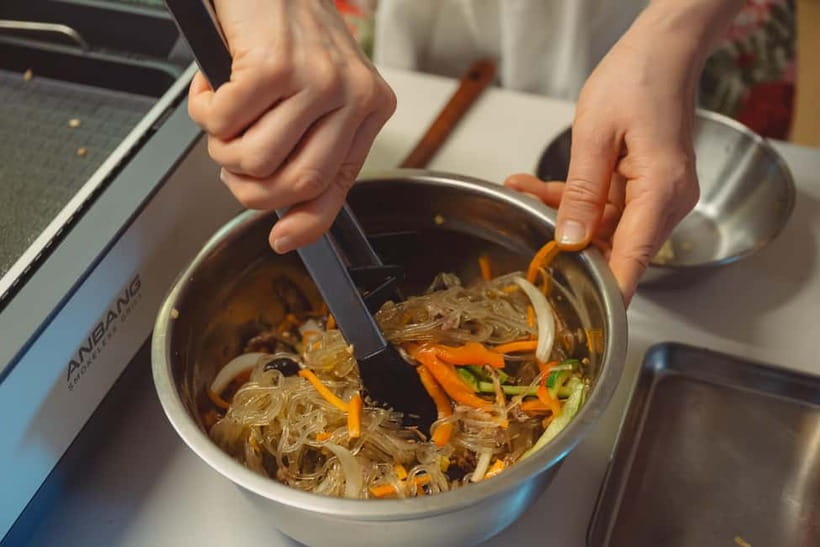
At $69 per person, the price covers a guided market visit, ingredient shopping, cooking instruction, homemade lunch, dessert-making, and tea-time. It also includes the use of the Korean home setting and the host’s cultural guidance.
The value is strongest if you would otherwise pay separately for a market walk and a cooking class. You are getting one connected experience, with the market ingredients carried directly into the kitchen. The meal and dessert add food value, while the home visit gives you something a restaurant-based class cannot easily provide.
The price is less compelling if you only measure cooking instruction by the number of recipes. You are paying for time, conversation, shopping guidance, lunch, and access to a personal setting. Someone looking for a fast, technical lesson might prefer a shorter class, but that is not what this experience offers.
The small group also matters. A four-person limit gives you a better chance to help with the food and ask Ann questions. It is a meaningful difference from a large class where the instructor must repeat the same steps for a room full of people.
You can reserve now and pay later, which helps if your Seoul plans are still shifting. Free cancellation is available up to 24 hours before the start for a full refund. Those terms reduce the risk, but remember that the experience begins at a specific station meeting point at a fixed morning time.
Who will enjoy this best
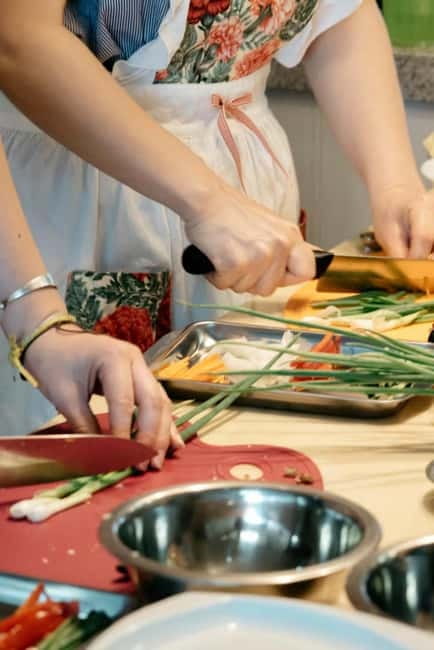
I would point this class toward you if you want to understand Korean food through daily life rather than only through restaurants. It suits first-time visitors who want an introduction to ingredients, home cooking, and food customs in one morning.
It is also a good match if you enjoy choosing what you cook. The flexible menu lets you focus on dishes that interest you, and the small group should make it easier to take part.
Food-focused couples and small families may like the family-home setting, while solo visitors can benefit from the social format. You do not need to know Korean cooking in advance. The class is built around learning through shopping and preparation.
You may want to skip it if you prefer a central tourist district, a fixed menu, or a quick activity. Sillim is not presented as a sightseeing stop in itself, and the class takes 210 minutes. The experience rewards curiosity and patience more than a packed schedule.
Practical details before you book
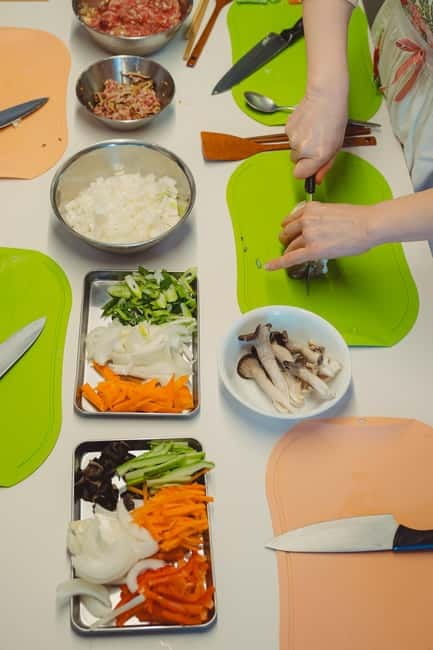
Plan to meet at 10:30am inside Sillim Station, after the ticket turnstiles and before any exit. Look for Cafe Mignon and the Sobaan Cooking sign. This is the most important arrival instruction.
The activity is conducted in English and has a maximum of four participants. The listed price is $69 per person, and wheelchair accessibility is provided in the activity details.
The provider offers reserve-now, pay-later booking and full refunds for cancellations made at least 24 hours in advance. Starting times should be checked when you book, although the supplied schedule gives 10:30am as the meeting time.
Should you book this Seoul cooking class?
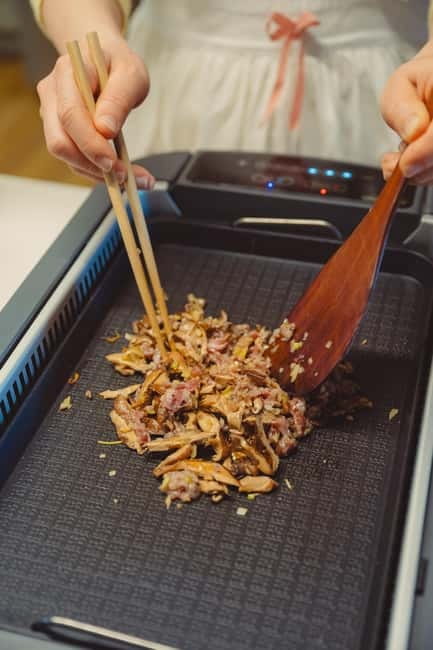
Book it if you want Korean food linked to a real neighborhood market, a family home, and a relaxed meal. The strongest features are the small group, the ability to help choose the dishes, Ann’s personal guidance, and the chance to meet her mother in a home decorated with embroidery.
Do not book it expecting a quick central-city activity or a strictly fixed professional lesson. You need to travel to Sillim, allow three and a half hours, and accept that the menu and dessert are not fully specified in advance.
For $69, I find the mix convincing. You get far more than a recipe: market context, hands-on cooking, lunch, dessert, tea, and a personal setting. If that sounds like the side of Seoul you want to see, this is a worthwhile use of a morning.
FAQ
Where does the Seoul cooking experience begin?
You meet inside Sillim Station, station number 230 on subway Line 2.
What time is the meeting?
The meeting time is 10:30am.
Where inside Sillim Station should you meet?
After passing through the ticket turnstile, stay inside the station and find Cafe Mignon, a take-out cafe. Meet in front of it before going through an exit.
How do I identify the host?
Look for someone holding a Sobaan Cooking sign. Ann is the host named in the experience details.
How long does the activity last?
The experience lasts 210 minutes.
What language is the class conducted in?
The listed language is English.
How many people can join the group?
The group is limited to four participants.
What food can you cook?
Possible dishes include bulgogi, bibimbap, kimchi pancakes, and other Korean dishes chosen with the group.
Is lunch included?
Yes. A homemade Korean lunch is included after the cooking session.
Can I cancel for a full refund?
Yes. You can cancel up to 24 hours in advance for a full refund.
New market tours around Seoul
- Seoul: The Biggest Sea-food Noryangjin Market Tour★ 4.3 · 30 reviews
- Seoul: Sokcho beach, market, hot spring and Seorak Cable Car★ 4.8 · 5 reviews
- Seoul: Gyeongbokgung Palace Tour & Lunch at Authentic Market★ 4.5 · 2 reviews
- Seoul: Mt.Seorak(+CableCar Option)+Sokcho Fish Market&Beach★ 4.5 · 9 reviews
- Seoul: Namdaemun Market Food Tour★ 4.9 · 34 reviews
- Seoul: Guided Street Food Tour at Namdaemun Market★ 5.0 · 10 reviews
- Seoul: Gwangjang Market Vegan & Vegetarian Food Tour★ 5.0 · 16 reviews
- Seoul Gwangjang Market Foody Walking Tour★ 4.1 · 7 reviews
Seoul Market Tours, side by side.
Local Home Korean Cooking Class & Market Adventure in Seoul
Read our review →

Seoul: Palace, Temple and Market Guided Foodie Tour at Night
Read our review →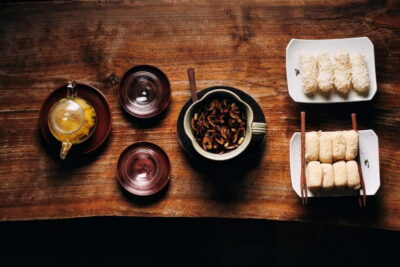
Seoul: Guided Food & Market Tour with 8+ Tastings
Read our review →
Seoul: Nighttime Tour of Palace, Market, Naksan Park & More
Read our review →
Seoul: Gyeongbok Palace, N Tower, & Local Market City Tour
Read our review →
This tour also appears in