
Review · FIJI
Walk Nadi with a Local: Culture, Stories & Everyday Fiji.
Nadi’s best stories are not found behind a resort gate. They are in the produce stalls, the temple, the shop conversations, and the ordinary streets where Fijian and Indo-Fijian life meet. This two-hour walk puts you there with a local guide, often Maya or John, who explains what you are seeing and invites questions along the way.
I like the small group size, capped at eight, because it leaves room for real conversation. I also like the easy pace and market tastings, especially when your guide helps you identify local fruit or introduces you to a stallholder. The main drawback is simple: you can visit every stop on your own, and some people may not feel the $39 price is worth it if they only want to look around.
Key points
- Local guides Maya and John: Expect personal stories, practical explanations, and an open invitation to ask questions.
- Four central Nadi stops: The walk links the produce market, handicraft market, Sri Siva Subramaniya Swami Temple, and Jack’s of Fiji art gallery.
- Useful first-day orientation: You learn how Nadi’s food, faith, migration, and daily life fit together before exploring farther afield.
- Small and relaxed: Groups are limited to eight, with a minimum of two people required for departure.
- Food depends on timing: Market tastings and food-focused experiences are stronger on Saturdays than on some weekday departures.
- Simple logistics: You meet outside Tappoo Nadi Department Store and finish at Jack’s of Fiji on Queens Road.
Why this Nadi walk is worth considering
I would use this tour to get my bearings early in a Fiji visit. It does not try to cover the whole island or pack in grand scenery. Instead, it explains the town you may otherwise pass through on the way to a resort, airport, or day trip.
That focus matters. Nadi is more than a transport hub. Its markets, temples, shops, and streets reflect Indigenous Fijian culture, Indo-Fijian communities, migration, religion, trade, and modern life. A guide can point out connections that are easy to miss when you are walking alone.
Maya has led tours in Fiji for many years, and John is also praised for his clear explanations and friendly manner. The experience depends partly on which guide leads your departure, but the format allows both guides to do what this walk needs most: explain context, answer questions, and help you feel at ease in town.
The price is $39 per person. That is not a bargain if you only want directions to the market and temple. Both are accessible without a guide, and temple entry is only a small extra cost when visiting independently. The value comes from the interpretation, local introductions, fruit samples, cultural background, and confidence you gain while walking through places on your own afterward.
More stalls, halls and bazaars to walk around the world:
- Bangkok: Damnoen Saduak Market and Maeklong Railway Market
★ 4.5 · 26,723 reviews - The Old Siam: Damnoen Saduak and Maeklong Railway Market
★ 4.5 · 10,992 reviews - Dubai: Old Town, Creek, Museums, Souks, & Street Food Tour
★ 4.8 · 10,816 reviews
Start outside Tappoo on Nadi’s main street
The meeting point is outside Tappoo Nadi Department Store on Main Street. You make your own way there, so this is easiest if you are already in Nadi town or can reach it by local transport.
There is no hotel pickup or drop-off. That keeps the cost down, but you should allow time to find the store and arrive ready to walk. Departure times are 10am and 1pm. The morning start is likely the better choice if you want cooler conditions and a full afternoon afterward, while the afternoon walk may suit your schedule if you arrive late or prefer a slower first morning.
Wear comfortable shoes and light clothing. Bring a hat, and carry water. This is an easy urban walk, but Fiji’s sun can make even a gentle route feel tiring. You may also spend time standing at market stalls or outside the temple, so practical clothing matters more than dressing up.
The pace is suited to most people, including families. One especially useful feature is the guide’s willingness to adjust to the group. John has handled groups with children and helped nervous families feel comfortable in a busy town setting. Still, this is a walking experience, not a vehicle tour, so anyone who has trouble walking for two hours should consider that before booking.
See Nadi through its produce market
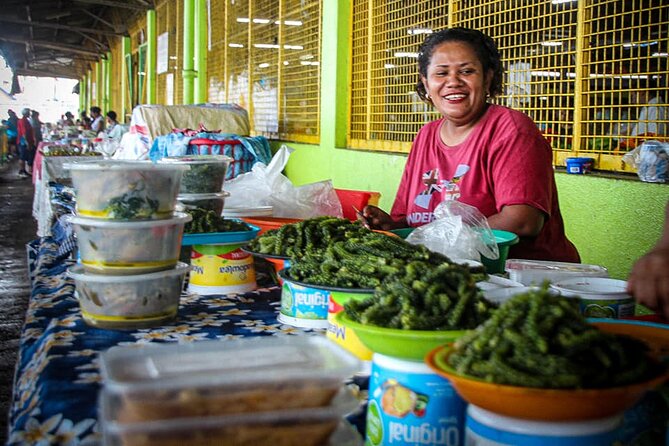
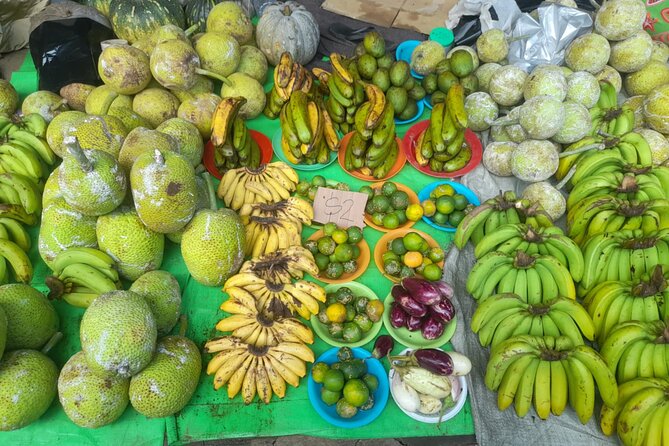
The Nadi Produce Market is the first major stop, with about 30 minutes set aside for the visit. This is where the tour gets close to ordinary food shopping in Fiji.
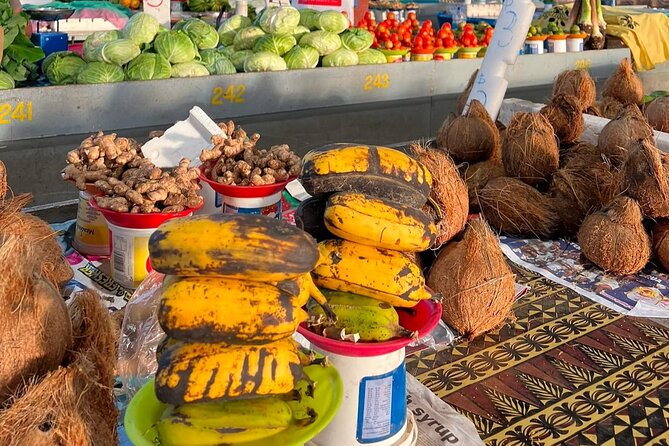
You will see fresh produce, seafood, spices, and ingredients used in daily cooking. The exact selection depends on the season and the day, so do not expect a fixed tasting menu. Instead, your guide may identify unfamiliar fruit, explain how it is used, and help you decide what to try.
This is one of the strongest parts of the walk because the market gives you a quick lesson in local life. A resort breakfast tells you what hotels serve. The produce market shows you what people buy, handle, cook, and share at home.
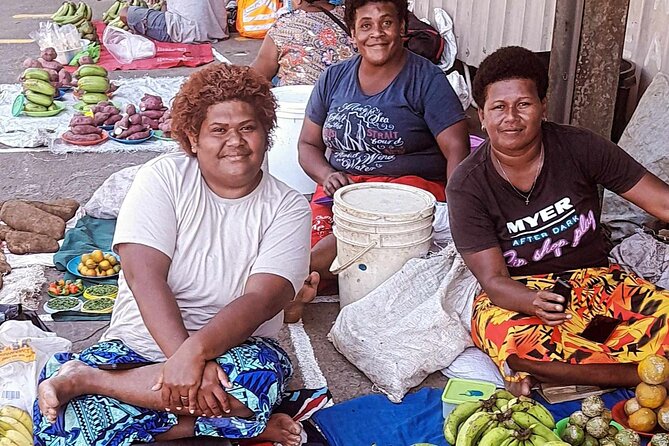
Maya is especially noted for her friendly relationships with sellers and for helping people sample fruit. John has also bought fruit and water for people in his group when needed. Those small acts are useful, but they are not guaranteed inclusions, so bring money if you want to buy something yourself.
Do not expect a huge market with endless rows of food. Some sections may feel modest, and the appeal is more social and cultural than spectacular. If you already know local produce well, you may find the stop less informative. The guide is what turns a basic market visit into a lesson about Fiji’s food habits and seasonal ingredients.
Food lovers should pay close attention to the day of the week. The experience is more food-focused on Saturdays, while a weekday departure may feel more like a general introduction to Nadi. If tasting local food is your main reason for booking, confirm the timing before you pay.
Browse handicrafts with cultural context
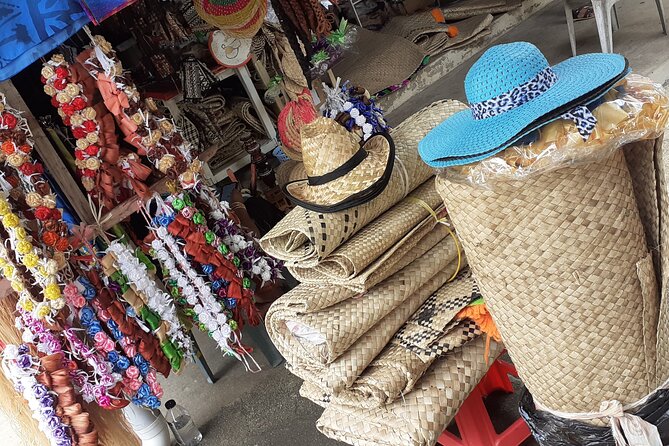
The handicraft market follows, with around 30 minutes devoted to local art and souvenirs. You may see Fijian carvings, tapa cloth, jewelry, and other handmade items.
This stop works best when you are curious about meaning, not simply shopping. Your guide can explain how craft connects with village traditions, storytelling, and cultural identity. That background helps you look at a carved object or piece of tapa with more care than you might in a shop aisle.
You should still treat this as a shopping stop. You may be approached by sellers, and the range of goods can feel familiar if you have already visited resort shops or airport stores. The advantage here is having someone beside you who can explain what you are seeing and help you browse without feeling lost.
The tour does not say that purchases are included, and food and drinks are not included either. Bring a payment method if you plan to buy something, but do not feel pressured to shop. The cultural explanation is part of the experience even if you leave without a souvenir.
I particularly like this stop for first-time visitors because it gives you a better sense of the difference between a mass-produced memento and an item connected to local craft traditions. Your guide can also help you ask sensible questions about materials and use.
Same city, another market:
- Bangkok: Train Market & Floating Market with Boat Ride
★ 4.7 · 9,547 reviews - Dubai: Old Town, Souks, Street Food, Guided Tour & Abra Ride
★ 4.9 · 7,170 reviews - From Bangkok: Ayutthaya & Ayothaya Floating Market Day Trip
★ 4.7 · 6,084 reviews - Dubai: Frame Tickets, Creek, Souks & Blue Mosque Guided Tour
★ 4.8 · 5,980 reviews
Enter Sri Siva Subramaniya Swami Temple
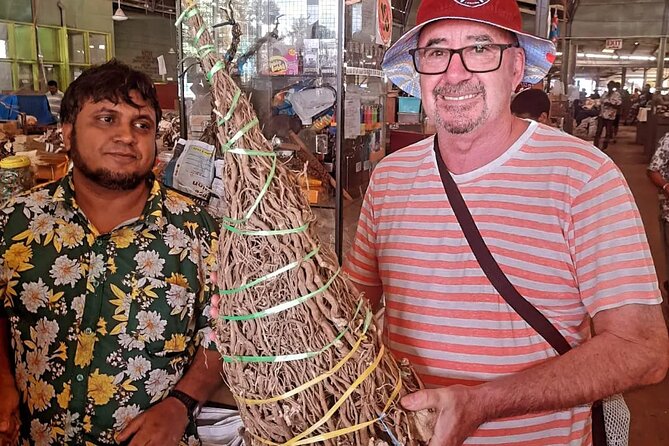
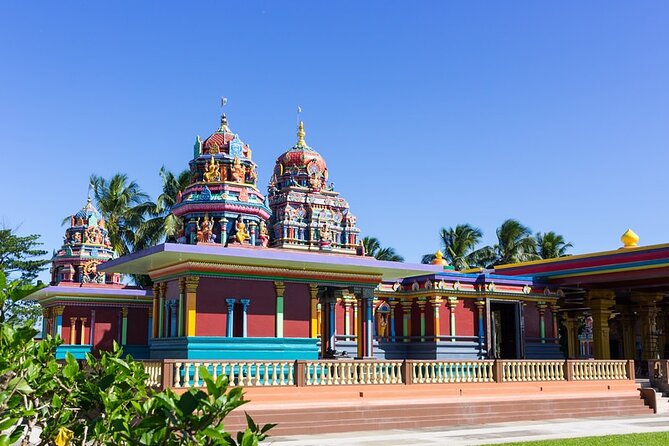
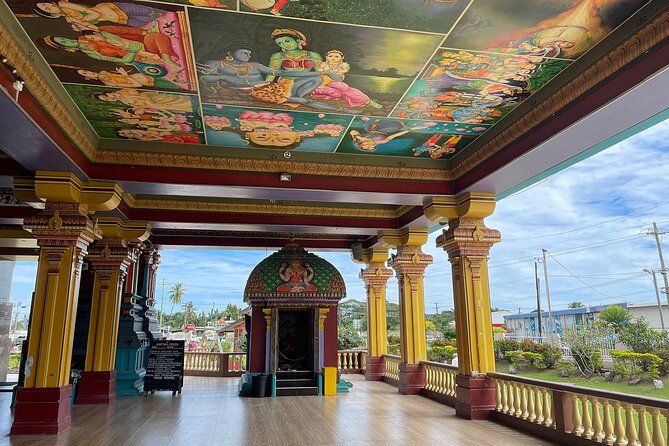
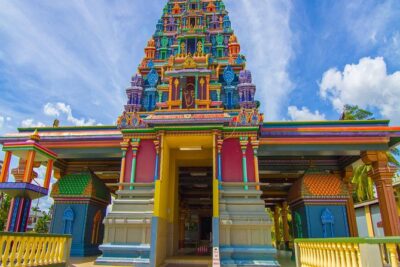
The temple is the most striking cultural landmark on the route. Sri Siva Subramaniya Swami Temple is described as the largest Hindu temple in the Southern Hemisphere and is one of Nadi’s key places of worship.
Allow about 30 minutes here. The guide explains Hindu beliefs, daily rituals, and the role of the Indo-Fijian community in Fiji. This is important context because Nadi’s identity is not one-dimensional. The town reflects the meeting of Indigenous Fijian traditions, Indian migration, Hindu faith, Christianity, commerce, and modern island life.
The temple is also a place where respectful behavior matters. Listen to your guide about what to do, where to stand, and how to respond to religious spaces. You are visiting a working place of worship, not simply a photo stop.
Entry is included in the tour price. If you visit independently, the entry fee is reported as about $5, so the ticket itself does not account for much of the $39 cost. The real benefit is the explanation around the building and the chance to ask questions about faith and community.
Photography rules and access can vary at religious sites, so follow instructions on the day. Dress comfortably but respectfully, and avoid treating the temple as a backdrop for rushed photographs. The visit is short, but it can be the point where the rest of the walk comes together.
Several people who have taken the tour found the temple beautiful and especially valued the guide’s stories about its meaning. I would agree that this stop gives the walk its strongest cultural focus. If you only want markets and shopping, it may feel like a pause from the main purpose. If you want to understand Nadi, it is essential.
Finish with contemporary art at Jack’s of Fiji
The final stop takes about 20 minutes at a small art gallery on the first floor of Jack’s of Fiji at 401 to 403 Queens Road. The tour ends here, only a short distance from the starting point.
This gallery shifts the conversation from traditional crafts to contemporary Fijian art. You can see how artists address identity, heritage, and social change in present-day Fiji. That makes the ending more thoughtful than simply finishing at a shop or restaurant.
The gallery is modest in size, so do not expect a full museum visit. Its value is the conversation it creates. After seeing market goods, handicrafts, and a Hindu temple, you get one more way to think about how Fiji presents itself and how local artists interpret the country.
The end point is convenient. You are back on Nadi’s main street, close to where you started, and can continue shopping, find a meal, or arrange your next ride. Because the tour does not include transportation, this central finish is helpful.
What the $39 price really buys
At $39 per person, this is best seen as a guide-led orientation rather than a sightseeing transfer. You are paying for two hours of access to a local person who can connect the stops, explain customs, and respond to your questions.
The group limit of eight is important. In a large group, a market conversation can become a speech. Here, you have a better chance to ask about food, religion, family life, language, and local customs. The tour also teaches a few simple words in the local language, which can make later interactions feel more natural.
The price is less convincing for independent-minded visitors who are happy to walk the same streets alone. The market, temple, handicraft area, and gallery are all easy to locate, and the temple admission is inexpensive. One candid assessment of the experience was that the stops could be done without paying for a guide.
I would make the decision this way:
- Book it if you want context, personal stories, and a gentle first introduction.
- Skip it if you prefer to explore without a schedule and do your own reading.
- Book early in your stay if you want practical confidence for later time in Fiji.
- Choose Saturday if market food and tastings are central to your plans.
- Ask questions as you go, since conversation is a major part of the value.
Free cancellation is available up to 24 hours before the start time. A departure needs at least two participants, and poor weather can lead to a new date or a full refund. The maximum group size is eight.
Who will get the most from this experience
This walk suits couples, small groups, first-time visitors, and anyone who wants to understand Fiji beyond a resort. It is also a good fit for people who enjoy food markets, religious sites, local art, and plain explanations rather than a long list of monuments.
Families can do it too. The walk is easy, and guides have been patient with children. Keep in mind that young children may find 30 minutes at a market or temple less exciting than a beach activity.
I would also recommend it to people who feel unsure about visiting Nadi independently. One family felt nervous walking through town on a busy day, but the guide’s presence made the experience much easier. That is a practical benefit, especially if you want to explore local streets but do not know where to begin.
It is less suited to anyone seeking a major food tour, a scenic drive, or a packed cultural show. There is no hotel pickup, no long-distance sightseeing, and no meal included. This is a close look at central Nadi, taken slowly.
Should you book Walk Nadi with a Local?
Book this tour if you want Nadi to make sense, not just appear on your route between the airport and the coast. The strongest parts are the local conversation, the market guidance, the temple visit, and the chance to ask questions in a group small enough to hear the answers.
I would choose it near the start of my stay, preferably on a Saturday if food tasting matters to me. If I had already explored Nadi several times and felt comfortable finding the stops alone, I would probably save the $39 for another activity.
For most first-time visitors, the walk offers a useful human introduction to Fiji. It will not show you every side of the country, but it can help you see the side that a resort holiday often misses.
FAQ
How long does the Nadi walking tour last?
The experience lasts about two hours.
How much does the tour cost?
The price is $39 per person.
Where does the tour start?
You meet outside Tappoo Nadi Department Store on Main Street in Nadi town.
Where does the tour finish?
The walk ends at Jack’s of Fiji, at 401 to 403 Queens Road, Nadi. The gallery is on the first floor of the store.
What time does the tour depart?
There are two departure times, 10am and 1pm.
Is temple entry included?
Yes. Entry to Sri Siva Subramaniya Swami Temple is included in the tour.
Is hotel pickup or drop-off provided?
No. You need to make your own way to the meeting point, and transport after the tour is not included.
How many people can join the tour?
The maximum group size is eight people. At least two participants are needed for a departure to operate.
Can I cancel for a full refund?
Yes, if you cancel at least 24 hours before the experience begins. Cancellations or changes made less than 24 hours before the start time are not refunded.
New market tours around the world
- Tel Aviv: 2-Hour Carmel Market Tour in English with Lunch★ 4.8 · 23 reviews
- Tel Aviv: Carmel Market & Neighborhood Guided Walking Tour★ 4.7 · 3 reviews
- Tel Aviv: 2-Hour Jaffa Flea Market Tour with Tastings★ 4.9 · 8 reviews
- Tel Aviv: Carmel Market Food Tasting Tour “Shuk Hacarmel”★ 4.0 · 8 reviews
- Tel Aviv: 2-Hour Levinsky Market Tour with Full Lunch★ 4.7 · 10 reviews
- Tbilisi 2 Parks: Turtle Lake & Dedaena Park with Flea Market★ 5.0 · 3 reviews
- Tbilisi: Street Food & Sightseeing Tour with Local Markets★ 5.0 · 8 reviews
- Teguise: Market and César Manrique Foundation Tour★ 4.3 · 39 reviews
Fiji Market Tours, side by side.
Vuda Lookout, Vesisei Village, Market, Temple & Garden of Sleeping Giant Tour
Read our review →
Mud Pools-Nadi Private Therapeutic Pools, Gardens, Temple, Market &Shopping Tour
Read our review →
Wonders of Nadi Tour – Hindu Temple, Sleeping Giant Gardens, Markets & Shopping
Read our review →
Nadi: Private Tour with Temple, Garden, Markets & Mud Pools
Read our review →This tour also appears in