
Review · DURBAN
Durban: Local Markets and Culture Guided Walking Tour
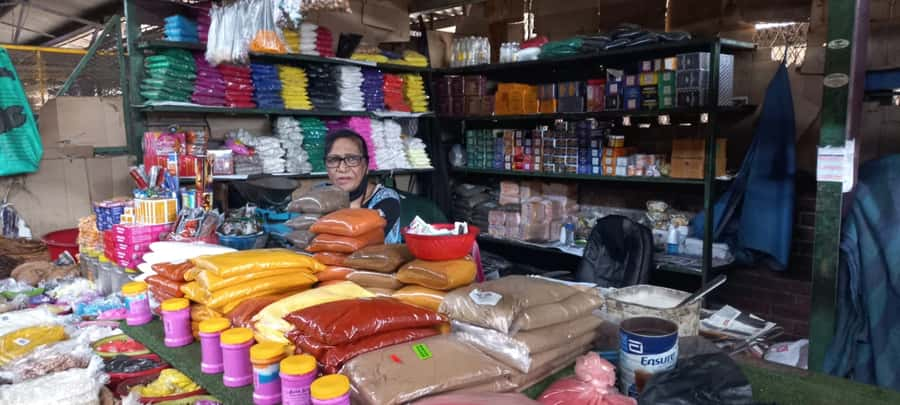
Durban’s most revealing sights are not behind museum glass. They are in the Warwick markets, where traders sell food, spices, clothing, crafts, and traditional medicines. This tour takes you into that everyday world, then adds a local minibus ride and a Bunny Chow lunch beside the Indian Ocean. It is a city tour with some grit, good food, and very little tourist polish.
I like two things here. Johnny’s local connections help you feel at ease in places that can be confusing on your own, and the route shows several sides of Durban rather than one tidy attraction. I also like the practical shopping angle: spices, souvenirs, and local goods can cost far less here than at tourist-focused shops.
The trade-off is comfort. You walk about 8,000 steps, use crowded local combi taxis, and pass through markets that can feel noisy, chaotic, and confronting. This is not the right pick if you want a private vehicle, a gentle stroll, or a carefully controlled sightseeing day.
Key points to know before booking
- Warwick’s many markets: See the Early Morning Market, Bridge Market, Indian markets, African market, Muti market, and Victoria Street Market.
- Johnny’s personal guidance: He explains Durban’s politics, food, traditions, and cultures, and is known by many people in the market area.
- Local transport included: Ride minibus taxis between the meeting point, markets, and beachfront.
- A real Durban lunch: Try Bunny Chow, a hollowed loaf filled with meat, at North Beach.
- Shopping with local help: Save spice and souvenir shopping for the market stops, where Johnny can help you understand what you are buying.
- A physically active half-day: Expect 330 minutes, a slow-paced walk of roughly 8,000 steps, sun, and some waiting for transport.
Why this tour shows more than Durban’s postcard side
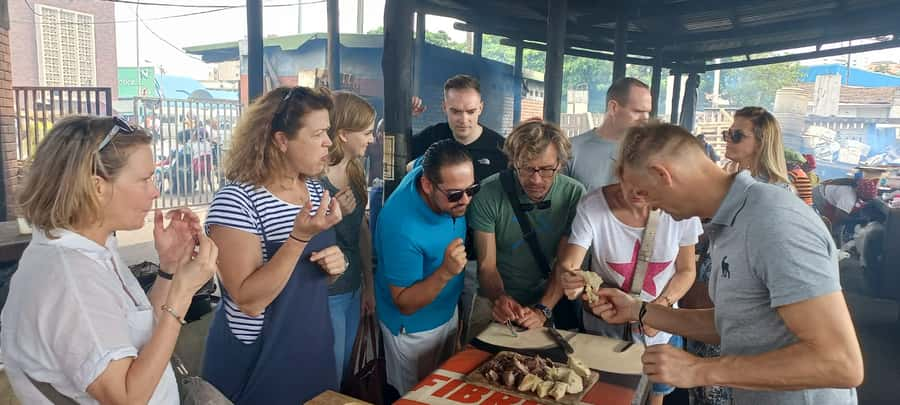
Durban is often reduced to its beachfront, warm weather, and Indian-influenced food. Those are real parts of the city, but they tell only a small piece of the story. This tour moves through the markets where African, Indian, and Zulu influences meet in daily life.
The experience begins at Tekweni Backpackers, 169 Ninth Avenue, just off Florida Road in Morningside. The meeting point has safe parking if you arrive by car, and the guide waits inside the premises. From there, the day starts with an introduction to Durban’s past before you set off by local transport.
That introduction matters. The markets make more sense when you understand how Durban developed, how communities shaped different parts of the city, and why trade remains so important. Johnny is especially praised for connecting food, politics, culture, and local customs rather than presenting isolated facts.
The setting is not arranged for visitors. You are entering working markets where people shop, trade, commute, and earn a living. That makes the outing more useful than a quick walk past a few stalls, but it also calls for curiosity and respect. Ask before taking close-up photos, listen when Johnny explains local customs, and expect the pace to follow the market rather than a strict timetable.
More Local and Farmers Market Tours in the world:
- Hanoi Cooking Class: Culture, Local Market & Meaning CSR Impact
★ 5.0 · 5,147 reviews - Cooking Class and Lunch at a Tuscan Farmhouse with Local Market Tour from Florence
★ 5.0 · 4,831 reviews - Chef Guided Food Tour of Pike Place Market
★ 5.0 · 3,733 reviews
The opening viewpoint gives you a useful city map
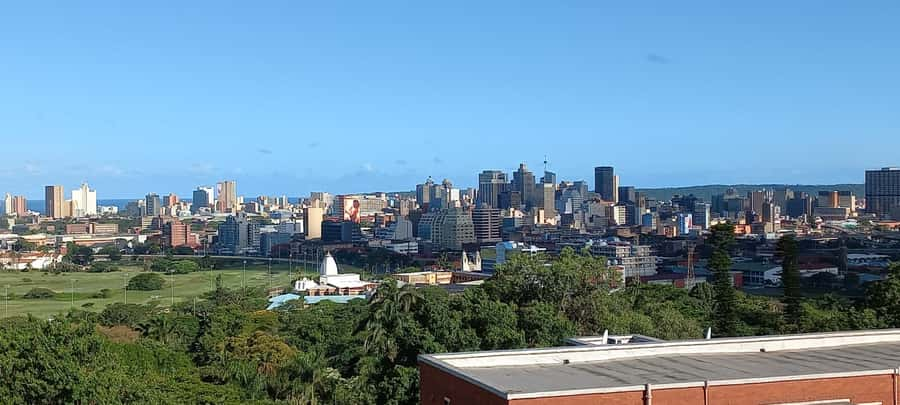
Before the market walk, the route includes a viewpoint and photo stop overlooking Durban. The exact viewpoint is not specified, so you should treat it as a short orientation stop rather than a major sightseeing attraction.
I like having this early in the day. After seeing the city from above, you can better understand the shift from broad urban views to narrow market lanes and crowded trading areas. It also gives you a chance to take photographs before the walking and shopping begin.
Do not expect a long pause here. The main event is the market route, and the viewpoint works best as a quick way to get your bearings.
Riding Durban’s local combi taxis
The tour includes two public transport rides of about 15 minutes each. These are local minibus taxis, often called combis, and they carry you from the meeting area to the markets and later from the markets toward the beachfront.
This is one of the tour’s most distinctive features. A private car would be easier, but it would remove an important part of the city experience. The combi ride shows you how residents get around and gives Johnny a chance to explain a system that can be difficult to understand on your own.
You should also know what you are accepting. Local minibus transport may involve waiting, limited personal space, and a less predictable rhythm than a hired vehicle. One departure had delays because of bad weather, and a customer specifically found waiting for local transport uncomfortable on a rainy day.
If you strongly prefer an Uber or private taxi, this tour may test your patience. If you want to understand ordinary city life and are comfortable with a little uncertainty, the ride adds real value.
Warwick Markets: the heart of the morning
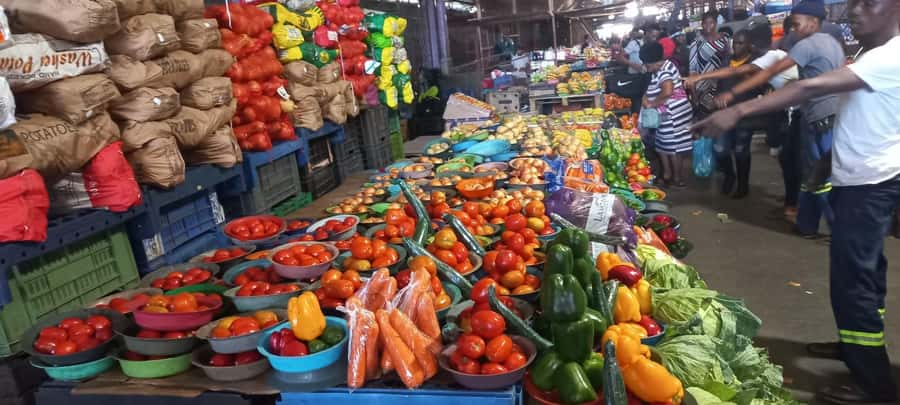
The main stop is the Markets of Warwick, a large market district made up of several distinct areas. The route includes the Early Morning Market, Bridge Market, Indian markets, African market, Muti market, and Victoria Street Market.
The names can sound like separate tourist attractions, but the value is in seeing them together. Each area gives you a different view of Durban’s trading culture, and Johnny helps explain how the stalls, goods, and communities fit into the wider city.
More Market Walking Tours in the world:
- Bangkok: City Highlights Temple and Market Walking Tour
★ 4.5 · 3,990 reviews - Tokyo Tsukiji Fish Market Food and Culture Walking Tour
★ 5.0 · 3,184 reviews - Marrakech: Ben Youssef, Secret Garden, & Souks Walking Tour
★ 4.6 · 2,802 reviews - Marrakech: Colorful Medina Souks Guided Walking Tour
★ 4.7 · 2,470 reviews
The Early Morning and Bridge markets
The Early Morning Market is a practical food market rather than a polished food hall. You might see produce and everyday goods moving through the area, with traders focused on business rather than performance for visitors.
The Bridge Market adds another layer to the route. The tour information does not specify exactly which products you will see on the day, and market stock changes, so go with an open mind. The pleasure is in seeing how the district works, not in checking off a fixed display.
These sections are best for observing ordinary commerce. They may feel crowded and visually intense, especially if you are used to quiet European or North American markets. Keep your belongings secure and stay close to the guide.
Indian markets and African stalls
Durban’s Indian heritage is a major part of its identity, and the Indian market stops connect food, spices, trade, and family traditions. You will have time to shop, so this is a sensible place to buy spices and other small local goods.
The African market brings a different character. You may find souvenirs, household products, and locally traded items, but the exact selection depends on the stalls operating that day. Johnny’s long experience in Durban helps you judge what is worth buying and how to approach a purchase.
Several people found this shopping time especially useful because prices were much lower than in tourist shops. My advice is simple: bring cash and leave room in your bag. You may regret doing all your spice and souvenir shopping before this stop.
The Muti market requires curiosity and sensitivity
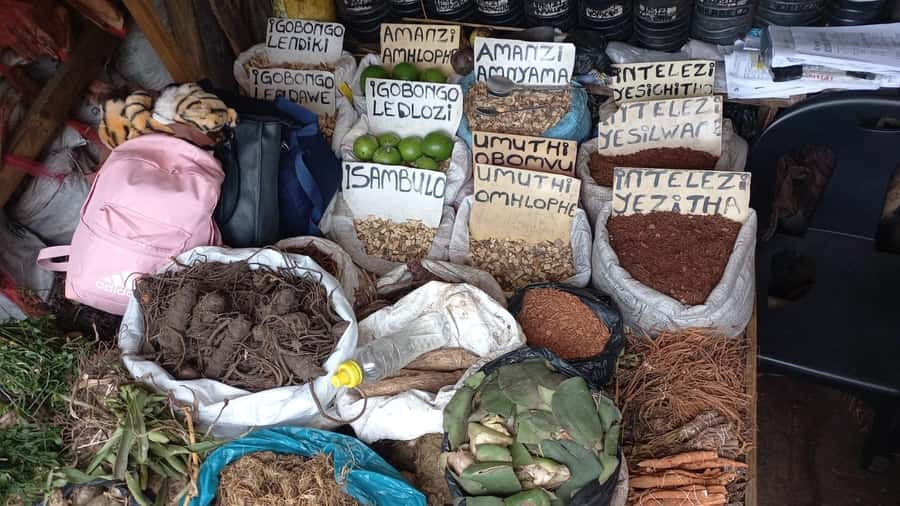
The African traditional medicine, or Muti, market is the most unusual part of the route. Stalls may sell powders, oils, herbs, and animal products associated with traditional healing practices.
This is not a display designed to make visitors comfortable. It is a working market tied to beliefs and practices that may be unfamiliar to you. Johnny’s role is important here because he can explain the cultural context and help you look without turning the people or products into a spectacle.
You do not need to buy anything. Listen carefully, ask respectful questions, and follow guidance about photography. If you are squeamish about animal products or uncomfortable with traditional medicine, this stop may be difficult.
For an open-minded visitor, it provides insight into a part of Durban that is rarely covered by standard city tours. It also raises serious questions about inequality, access to health care, tradition, and survival. The tour does not reduce the market to an amusing curiosity, which is a major strength.
Victoria Street Market brings the shopping focus
Victoria Street Market is likely to feel more familiar if you have visited an established market before, but it still works well within the larger route. Here you can focus on spices, gifts, and other items to take home.
The best approach is to browse first. Look at quality, compare prices, and ask Johnny for help when you are unsure. He has been taking people through Durban’s markets for more than 14 years, and his familiarity with stallholders gives the shopping a more personal feel.
That local trust also affects how you experience the market. You are not wandering in alone, trying to work out which areas are appropriate or how to start a conversation. Johnny knows people in the markets, and that can make you feel more welcome and secure.
Still, keep normal shopping sense. You are responsible for personal expenses, and drinks are not included with lunch. Carry cash, but avoid displaying large amounts.
Bunny Chow at North Beach

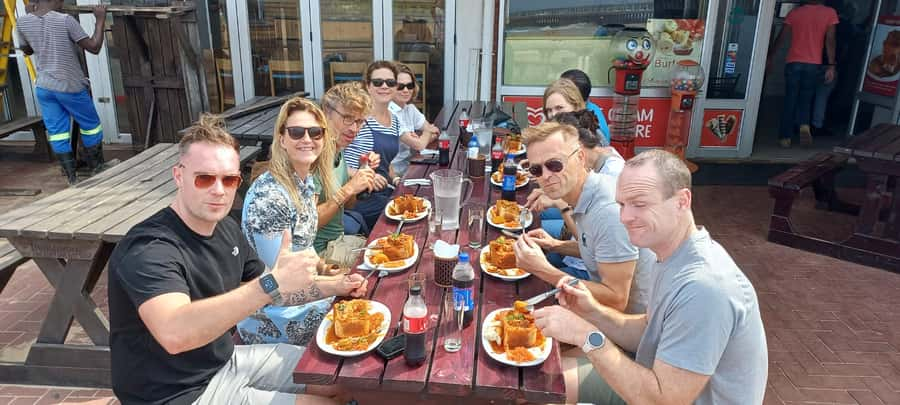
After the market route, the tour continues through central Durban on foot and by local transport. The day finishes at North Beach on the beachfront promenade with Bunny Chow, one of Durban’s signature meals.
Bunny Chow is a hollowed-out loaf of bread filled with meat. The bread acts as both container and part of the meal, making it filling, informal, and easy to understand as a street-food tradition. The tour includes lunch, but beverages are extra.
This final meal is more than a convenient finish. It links Durban’s Indian food traditions with the city’s seaside setting and gives you time to sit down after several hours on your feet. One important practical note: the listed itinerary allows about an hour for lunch, but the overall pace can stretch when weather, shopping, or extra questions slow things down.
If you have dietary restrictions, the supplied information does not say what alternatives are available. Ask the operator before booking rather than assuming the filling can be changed.
Johnny is a major part of the experience
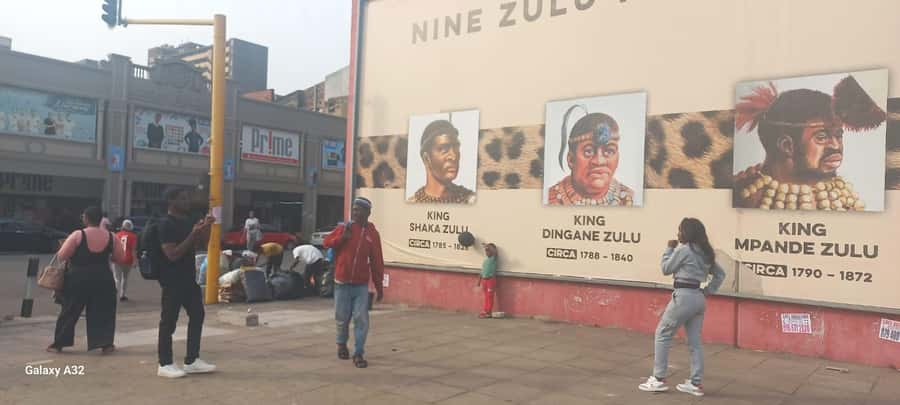
The tour’s strongest feature is its guide. Johnny, also spelled Jonny in some descriptions, is presented as a local guide with more than 14 years of experience showing people around Durban’s markets.
His value is not just factual. He explains how to use the combi taxis, introduces you to people in the markets, answers questions about politics and culture, and adjusts the route when guests have particular interests. His humor and passion are also central to the tone of the day.
That personal connection makes this outing different from a guide reading dates beside buildings. You are seeing places through someone who knows the city and is recognized in the communities you visit.
The experience is still dependent on his style. If you prefer to explore quietly or move at your own speed, a private day without a guide may suit you better. If you enjoy conversation and questions, you will get more from the tour by speaking up.
Is $68 a fair price?
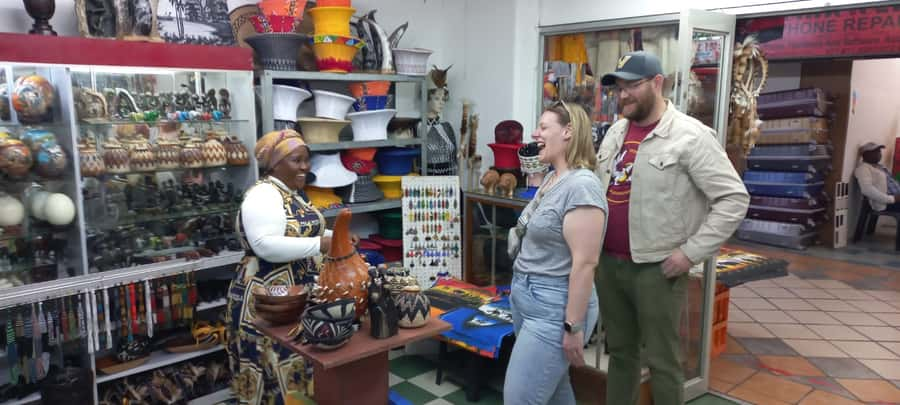
At $68 per person, the price includes the guide, walking tour, both local transport sections, and lunch. It does not include drinks or personal purchases.
I consider that fair value for a five-hour experience that combines several market areas, local transport, city interpretation, and a meal. You are not paying only for entry to one attraction. You are paying for access, explanation, navigation, and the confidence to enter places that may be hard to approach alone.
The value is strongest if you plan to shop. Spices and souvenirs can cost less in these markets than at tourist-oriented stores, so waiting for the tour may save money. Do not book it solely as a shopping trip, though. The cultural explanation and transport experience are what make the price worthwhile.
The advertised duration is 330 minutes. The practical guidance describes the tour as four to five hours, but allow extra flexibility. Weather, transport delays, market conversations, and shopping can change the pace.
Who should book this Durban tour?
I would choose this tour if you want:
- A city experience beyond the beachfront
- Direct contact with working markets
- An introduction to African, Indian, and Zulu cultural influences
- Help using local minibus taxis
- Time to shop for spices and souvenirs
- A guide who welcomes questions and adapts to your interests
- A traditional meal included at the end
You should think twice if you have limited mobility, dislike crowded public transport, or want a fixed schedule. The tour is not suitable for wheelchair users, and the walking distance is about 8,000 steps even at a slow pace.
Wear comfortable shoes and clothes. Bring water, sunscreen, sunglasses, a sun hat, and cash. The markets can be absorbing, but Durban’s sun and the amount of walking can catch you off guard.
Cancellation is free up to 24 hours before the start, and you can reserve without paying immediately. Those terms help if your Durban plans are still moving around.
Should you book it?
Book this tour if you want to see working Durban, not just its beach and major sights. Johnny’s local relationships, the unusual Muti market, the combi rides, and the Bunny Chow finish create a day that feels connected to daily life.
Skip it if you want private transport, a short walk, or a polished market designed for tourists. For most curious visitors who can handle heat, crowds, and some uncertainty, this is one of the better ways to understand why Durban feels like several cultures sharing one city.
FAQ
Where does the tour start?
It starts at Tekweni Backpackers, 169 Ninth Avenue, just off Florida Road in Morningside. The guide waits inside the premises, and safe parking is available if you arrive by car.
Where does the tour finish?
The tour finishes at North Beach on the beachfront promenade after lunch.
How long does the tour last?
The listed duration is 330 minutes. The practical guidance describes it as about four to five hours, although weather, transport, shopping, and the group’s pace may affect the total time.
Is local transport included?
Yes. The tour includes local minibus combi transport from the meeting point to the markets and from the markets to the beachfront. Each listed ride is about 15 minutes.
What markets will I visit?
The route includes the Early Morning Market, Bridge Market, Indian markets, African market, Muti traditional medicine market, and Victoria Street Market.
Is lunch included?
Yes. Lunch is Bunny Chow at North Beach. Beverages are not included.
What should I bring?
Bring comfortable shoes, sunglasses, a sun hat, sunscreen, water, comfortable clothes, and cash for personal purchases.
Is the tour suitable for wheelchair users?
No. The tour is listed as unsuitable for wheelchair users and includes about 8,000 steps of walking.
New market tours around the world
- Tel Aviv: 2-Hour Carmel Market Tour in English with Lunch★ 4.8 · 23 reviews
- Tel Aviv: Carmel Market & Neighborhood Guided Walking Tour★ 4.7 · 3 reviews
- Tel Aviv: 2-Hour Jaffa Flea Market Tour with Tastings★ 4.9 · 8 reviews
- Tel Aviv: Carmel Market Food Tasting Tour “Shuk Hacarmel”★ 4.0 · 8 reviews
- Tel Aviv: 2-Hour Levinsky Market Tour with Full Lunch★ 4.7 · 10 reviews
- Teguise: Market and César Manrique Foundation Tour★ 4.3 · 39 reviews
- Tbilisi 2 Parks: Turtle Lake & Dedaena Park with Flea Market★ 5.0 · 3 reviews
- Tbilisi: Street Food & Sightseeing Tour with Local Markets★ 5.0 · 8 reviews
Market Tours, side by side.
Bangkok: Damnoen Saduak Market and Maeklong Railway Market
Read our review →
The Old Siam: Damnoen Saduak and Maeklong Railway Market
Read our review →
Dubai: Old Town, Creek, Museums, Souks, & Street Food Tour
Read our review →
Bangkok: Train Market & Floating Market with Boat Ride
Read our review →
Dubai: Old Town, Souks, Street Food, Guided Tour & Abra Ride
Read our review →
Dubai: Frame Tickets, Creek, Souks & Blue Mosque Guided Tour
Read our review →
Hanoi Cooking Class: Culture, Local Market & Meaning CSR Impact
Read our review →
Marrakech: Bahia Palace, Saadian Tombs, Souk and Medina Tour
Read our review →This tour also appears in