
Review · KATHMANDU
From Bazaar to Hippie Hub: Ason & Freak Street in Kathmandu
Kathmandu’s story comes into focus when you walk from tourist-friendly Thamel into Asan Bazaar, Potey Bazaar, and Jhochhen, better known as Freak Street. You move from trekking shops and cafes to spice stalls, religious ritual, bead sellers, and the old Hippie Trail in about three hours.
I like the small group of five or fewer, which gives you a better chance to hear explanations in crowded lanes. I also like the route’s range: you get a market, a temple, a craft district, and a slice of counter-culture history in one outing.
The main drawback is simple: this is a walking tour through busy city streets, not a quiet sightseeing walk. You will need comfortable shoes, water, and patience around crowds, uneven lanes, traffic, and changing weather.
Key points at a glance
- A useful first-day walk: Start in Thamel and learn how Kathmandu’s tourist center connects with older market districts.
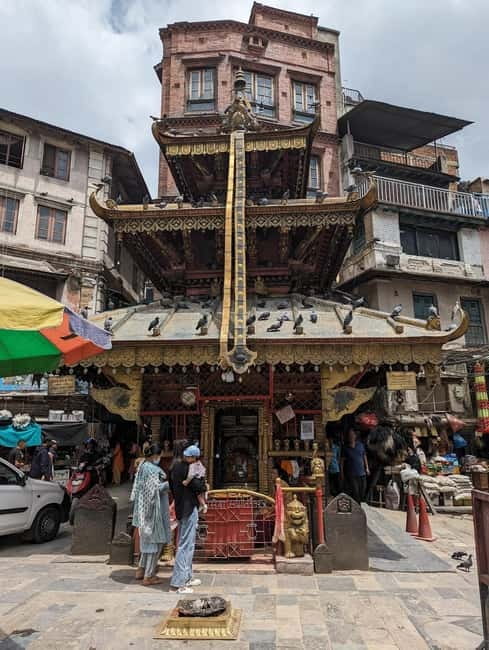
- Annapurna Temple in Asan: See a working place of worship linked with grain and prosperity.
- Potey Bazaar’s beadwork: Look for glass bead garlands made and sold by Newar Muslim artisans.
- Freak Street’s Hippie Trail past: Learn how Jhochhen drew counter-culture figures in the 1960s and 1970s.
- Only five people per group: A practical size for hearing the guide in narrow, crowded streets.
- $15 for three hours: Good value if you want context and local detail rather than a simple orientation walk.
From Thamel’s cafes to old Kathmandu
The tour begins at Pumpernickel Bakery, a handy meeting point in central Thamel. Your guide arrives 15 minutes before the scheduled meeting time with a sign reading Meeting Point, Amazing Kathmandu. The bakery itself serves coffee, all-day breakfasts, cakes, and gluten-free and vegan choices, so you can meet there before the walk or return afterward for something to eat.
Thamel is an easy place to begin because it is familiar to most visitors. Its lanes are lined with shops, cafes, travel businesses, and colorful displays. That modern tourist side of Kathmandu gives you a useful starting point, but the real interest comes as the route leaves it behind.
The first walking section lasts about 45 minutes. That is long enough for the city to change around you, but not so long that the walk becomes a test of endurance. Since the total route includes about two hours of walking, you should treat this as an active city tour rather than a hop-on, hop-off sightseeing stop.
I particularly like this beginning for a first day in Kathmandu. You get your bearings without sitting in a vehicle, and the guide can explain how the newer visitor districts connect with the older commercial and religious quarters.
More market tours around the world:
- Bangkok: Damnoen Saduak Market and Maeklong Railway Market
★ 4.5 · 26,723 reviews - The Old Siam: Damnoen Saduak and Maeklong Railway Market
★ 4.5 · 10,992 reviews - Dubai: Old Town, Creek, Museums, Souks, & Street Food Tour
★ 4.8 · 10,816 reviews
Asan Bazaar and the Annapurna Temple
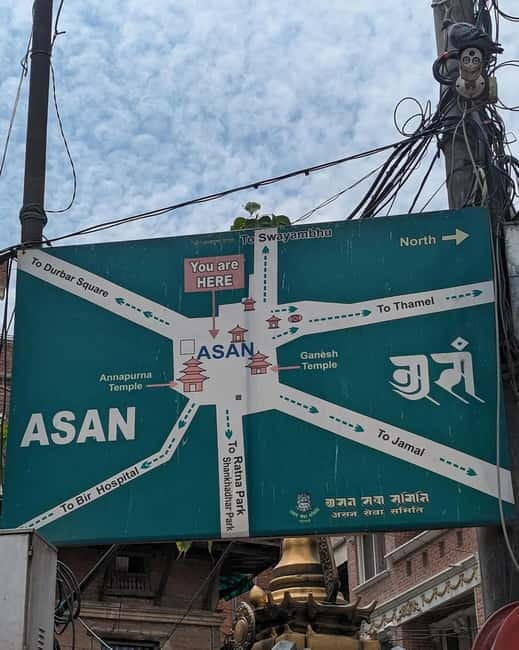
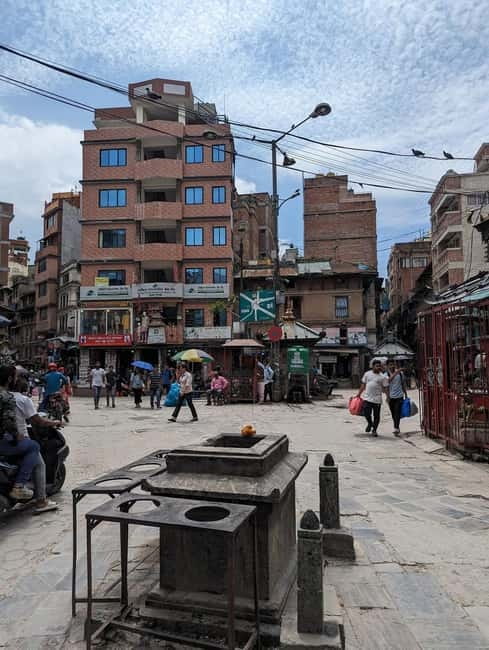
Asan Bazaar is the first major stop, and it is the heart of the tour. This is one of Kathmandu’s oldest and best-known market squares, where daily trade and religious life happen side by side.
You can expect stalls selling spices, textiles, kitchenware, and ordinary household supplies. The appeal is not a polished market display. It is the sight of a working neighborhood market, with people buying practical goods and moving through the square as part of daily life.
The smells matter here. Fragrant spices mix with the general scent of a busy city, while bright textiles and metal kitchenware add color and shine. Keep your camera ready, but also keep your attention on the people around you. Photography is allowed, yet you are asked to respect privacy and local customs.
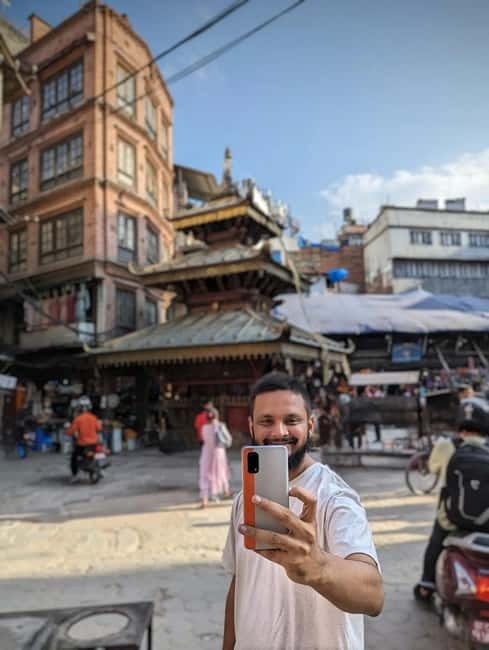
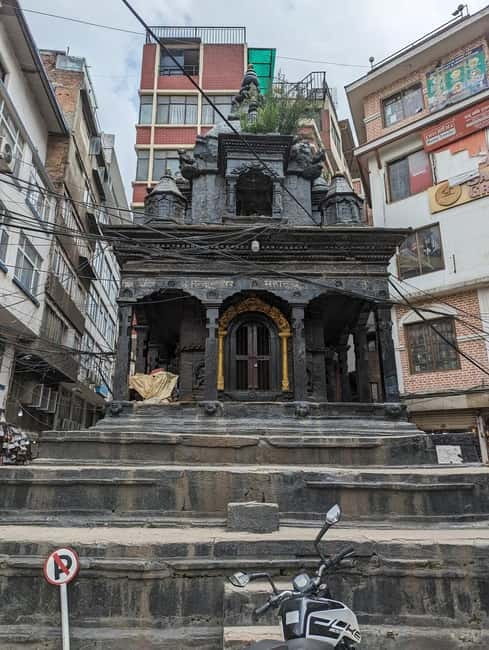
The Annapurna Temple gives the market a spiritual center. Annapurna is associated with grain and prosperity, and your guide explains why the deity matters to the local community. You may witness devotees taking part in spiritual rituals, but this is an active religious setting, not a staged performance for sightseeing.
That distinction is important. You should dress and behave with respect, avoid interrupting worship, and ask before photographing people closely. The guide’s role here is valuable because a small shrine can be easy to pass without understanding what you are seeing.
The route allows about 30 minutes for this part of the walk. That is enough time to take in the square, listen to the explanation, and notice the details without turning the stop into a long lecture.
Indra Chowk and the bead sellers of Potey Bazaar
From Asan, the walk continues to Indra Chowk, another market square with its own busy rhythm. The streets here lead you toward Potey Bazaar, one of the most distinctive parts of the route.
Potey refers to glass bead garlands traditionally worn by married women in Nepal. In this part of Kathmandu, Newar Muslim artisans make and sell the beadwork. The craft adds a strong multicultural element to the tour. You are not only seeing a market product, you are seeing how communities with different religious and cultural backgrounds contribute to the life of the same city.
Potey Bazaar also sells cosmetics and small household goods. The merchandise is modest and practical, which is part of its appeal. This is not a showroom built for tourists. You might find yourself looking at a small item with no obvious connection to a major monument, then realizing that it tells you more about ordinary life than another grand photo stop would.
A 15-minute walking section is listed around this part of the route. The time spent moving between market areas gives the tour a natural pace. You are not simply dropped at separate attractions. You see how the districts connect, how the crowds shift, and how one type of trade gives way to another.
The narrow lanes can be crowded, so stay close enough to hear the guide. A small group helps here. With no more than five participants, questions are easier to ask, and the guide has a better chance of pointing out small details without raising their voice over the whole street.
New Road and the return of modern Kathmandu
The route then passes through New Road, where older traditions meet a more modern commercial side of the capital. This section helps keep the tour balanced. Kathmandu is not only temples and old markets, and it is not only trekking shops and cafe culture.
You see an urban area shaped by modern shopping and city life while still remaining connected to the older districts nearby. The change can feel quick. One moment you are looking at traditional goods and religious activity, and soon the street feels more commercial and contemporary.
This is also where the tour’s theme becomes clear. Kathmandu is a city where different periods sit close together. You are not moving through neatly separated historic zones. Modern life, local trade, spiritual practice, and tourism overlap in the same few streets.
The walking time is manageable, but you should not expect a leisurely promenade. Wear shoes with good support and be ready for uneven surfaces. Carry water and a snack if you need one, since food and drinks are not included.
Same city, another market:
- Bangkok: Train Market & Floating Market with Boat Ride
★ 4.7 · 9,547 reviews - Dubai: Old Town, Souks, Street Food, Guided Tour & Abra Ride
★ 4.9 · 7,170 reviews - From Bangkok: Ayutthaya & Ayothaya Floating Market Day Trip
★ 4.7 · 6,084 reviews - Dubai: Frame Tickets, Creek, Souks & Blue Mosque Guided Tour
★ 4.8 · 5,980 reviews
Freak Street and the old Hippie Trail
The final major stop is Jhochhen, widely known as Freak Street. Its history gives the tour a very different mood from Asan and Potey Bazaar.
In the 1960s and 1970s, Freak Street became a stopping point on the Hippie Trail. Visitors drawn to alternative lifestyles, spirituality, art, and Kathmandu’s reputation for warm hospitality gathered here. The area became known for cafes, small shops, and a bohemian atmosphere.
The names linked with this period include Jimi Hendrix, George Harrison, Cat Stevens, Joni Mitchell, and Allen Ginsberg. Members of The Rolling Stones were also rumored to have visited. The stories help explain why this narrow street became famous far beyond Nepal.
You should keep the history in perspective. Freak Street is not a preserved theme park from the 1960s, and you should not expect every trace of that era to remain intact. Its importance lies partly in what it represents: a time when Kathmandu became a key stop for people searching for spirituality, art, and an alternative way of living.
The guide also covers the government crackdown on drug use in the mid-1970s, which brought the Hippie Trail era into decline. That context matters because it explains why Freak Street changed, rather than leaving you with a romantic but incomplete story.
Today, you can explore its cafes, shops, and local character. The atmosphere is quieter and more ordinary than the legends might suggest, and that is part of the charm. You get a sense of how a famous place continues as a real neighborhood after its moment in the international spotlight.
A 30-minute walking section completes the route before you return to Pumpernickel Bakery. The ending is convenient if you want coffee, breakfast, or cake afterward.
What the small group changes
The group limit is five people, and that is one of the strongest practical features of the tour. Kathmandu’s market lanes can swallow a large group quickly. In a group this small, you can stay near the guide and ask about things that catch your eye.
The experience is conducted in English. No guide name is provided in the booking information, so you should not book it expecting a particular named guide. What you can expect is a live guide who explains the landmarks, local deities, market goods, and the city’s multicultural background.
The small format also suits the kind of tour being offered. Much of the value comes from noticing things that are easy to miss: the meaning of Annapurna, the use of potey bead garlands, or the connection between New Road and the older districts. A guide who can pause for a question is more useful here than a guide rushing a large group from one stop to the next.
Is $15 a fair price?
At $15 per person, this is a strong-value introduction to central Kathmandu. You are paying for three hours with a live English-speaking guide, not for food, transport, or entrance tickets. Since the key stops are explored on foot and no paid attractions are listed, the main value comes from the explanations and route planning.
I would compare it with the cost of wandering alone and missing the meaning behind what you see. Asan Bazaar is easy to find, but the Annapurna Temple’s significance may not be clear. Potey Bazaar can look like a small shopping lane unless someone explains the beadwork and its cultural use. Freak Street’s cafes make more sense when you know why the area became famous.
The price works best if you want an introduction to Kathmandu’s central districts. It is less useful if you only want photographs or prefer to explore at your own pace without a guide.
Food and drinks are not included, and transportation to and from Pumpernickel Bakery is your responsibility. The meeting point is central Thamel, so plan your arrival with enough time to find the bakery and look for the guide’s sign.
You can cancel up to 24 hours ahead for a full refund, and the reserve-now, pay-later option lets you hold a place without paying immediately. Check the available start times before booking because the tour lasts three hours.
Who should book this walk?
I would recommend it for a first day in Kathmandu, especially if you want an orientation that feels more local than a standard monument circuit. It gives you a useful map of the city’s central districts and introduces several themes you will see again during your Nepal trip: religion, trade, craft, tourism, and cultural change.
It also suits solo visitors and couples who prefer a small group. The five-person limit keeps the walk personal without requiring a private tour price.
You should be comfortable walking for much of three hours. This is not the best pick if you have limited mobility, dislike crowded streets, or want long stretches of quiet. The route is also not a food tour, so you will need to arrange your own refreshments.
Bring water, a snack, comfortable walking shoes, and clothing suitable for changing weather. A camera is welcome, but use it with care around worshippers and local residents.
Should you book the Asan and Freak Street walk?
Book it if you want Kathmandu explained through its ordinary streets, not just its famous monuments. The route gives you a good mix of market life, religious practice, artisan work, modern commerce, and Hippie Trail history for $15.
The best reasons to choose it are the small group, the clear route through several different districts, and the out-of-the-way details that are easy to miss alone. The main caution is that the walk can be crowded and active, with no included meal or transport.
For a first day, I think it makes a lot of sense. You finish back in Thamel with a better feel for how Kathmandu fits together and a clearer idea of which neighborhoods you may want to revisit.
FAQ
Where does the tour start and finish?
It starts and finishes at Pumpernickel Bakery in Thamel, Kathmandu.
How long does the walking tour last?
The tour lasts three hours. The listed walking sections take about 45 minutes, 30 minutes, 15 minutes, and 30 minutes, with time at the main stops.
What is the group size?
The tour is limited to a maximum of five participants.
What language is the tour conducted in?
The live tour guide speaks English.
What does the $15 price include?
The price includes a guided walking tour of Kathmandu’s historical and cultural landmarks, including Asan Bazaar, Indra Chowk, Potey Bazaar, and Freak Street. Food, drinks, transportation to and from the meeting point, and personal expenses are not included.
What should I bring?
Wear comfortable walking shoes, prepare for changing weather, and carry water and snacks if you need them. Photography is allowed, but you should respect local customs and people’s privacy.
New market tours around the world
- Tel Aviv: 2-Hour Carmel Market Tour in English with Lunch★ 4.8 · 23 reviews
- Tel Aviv: Carmel Market & Neighborhood Guided Walking Tour★ 4.7 · 3 reviews
- Tel Aviv: 2-Hour Jaffa Flea Market Tour with Tastings★ 4.9 · 8 reviews
- Tel Aviv: Carmel Market Food Tasting Tour “Shuk Hacarmel”★ 4.0 · 8 reviews
- Tel Aviv: 2-Hour Levinsky Market Tour with Full Lunch★ 4.7 · 10 reviews
- Tbilisi 2 Parks: Turtle Lake & Dedaena Park with Flea Market★ 5.0 · 3 reviews
- Tbilisi: Street Food & Sightseeing Tour with Local Markets★ 5.0 · 8 reviews
- Teguise: Market and César Manrique Foundation Tour★ 4.3 · 39 reviews
Kathmandu Market Tours, side by side.

Best Nepali Cooking Class in Thamel with Local Market Trip
Read our review →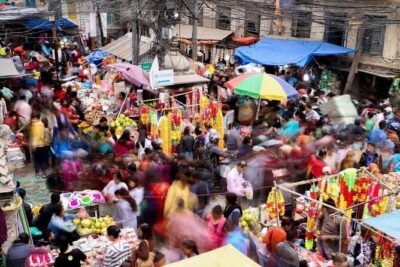
Oldest Local Market Walking Tour With Living Goddess Kumari
Read our review →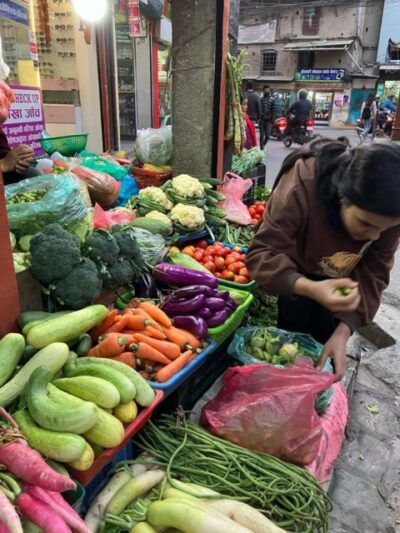
Half Day Cooking Class in Thamel with Local Market Visit
Read our review →This tour also appears in