
Review · BUCHAREST
Bucharest: Hidden Markets Walking Tour with Tastings
Bucharest reveals itself best away from the polished old center, and this tour takes you there by tram, on foot, and fork-first. You move from the National Theatre through old streets and the Armenian Quarter to Obor Market, where local food gives the city a more personal face.
I like the public-transit ride because it turns the city into a moving exhibit of Communist-era Bucharest and modern daily life. I also like the generous food plan: tuica, cheeses, meats, mici, beer, bread, seasonal produce, and a warm doughnut can easily replace lunch.
The one caution is simple: do not eat a large breakfast. The five-hour route includes plenty of food and drink, and the walking, standing, market visits, and tram rides make this a full half-day rather than a quick tasting stop.
Key points at a glance
- Ride a Bucharest tram: See ordinary city life while moving between historic neighborhoods and Obor Market.
- Explore the Armenian Quarter: European and Ottoman design meet around the Armenian church.
- Eat like a local: Sample tuica, Romanian cheeses, mici with mustard, sausages, vegetables, homemade bread, and a Wallachian doughnut.
- Spend time at Obor Market: Bucharest’s largest peasant market is the main food stop and one of the tour’s strongest cultural moments.
- Keep the group small: No more than 12 people, with private departures available.
- Plan for a filling half-day: Three beers are included, along with non-alcoholic choices, so come hungry but not overburdened.
Why this Bucharest food tour works so well
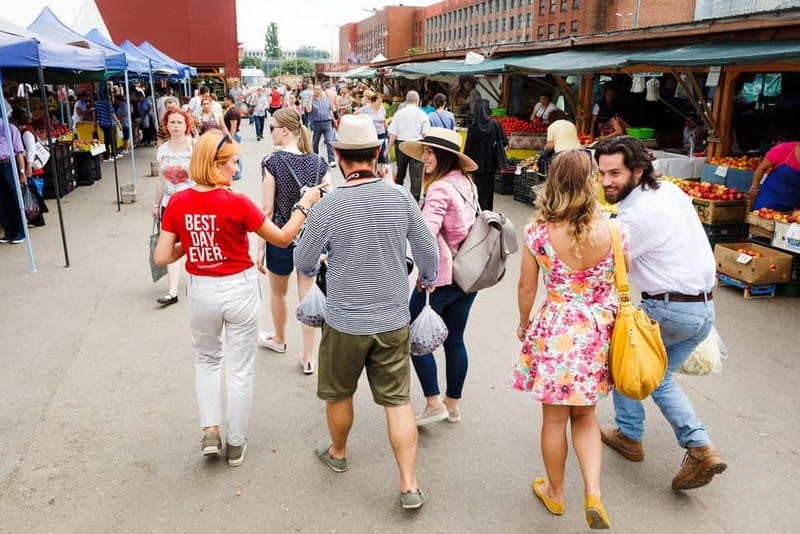
Many Bucharest tours stay near the Old Town and repeat the same grand buildings. This one takes a broader view. You begin in the center, then move through streets and districts that show how Bucharest grew, changed, and continues to function as a lived-in city.
The mix is the real strength. You get architecture, political and social history, public transport, neighborhood walking, and a proper meal made from Romanian staples. I like tours that give food a job beyond filling your stomach, and here each tasting helps explain local habits and produce.
The guide makes a major difference. The tour is offered in English, and guides named in the feedback include Angelica, Alex, Daniel, Michaela, Bogdan, Elena, Kitti, and Julian. Their styles vary, but the strongest pattern is clear: expect personal stories, answers to questions, and practical explanations rather than a speech delivered at every corner.
A small group of up to 12 helps. You can hear the guide in the street, ask about an unfamiliar food, and stay together on public transport without the clumsy feel of a large coach tour. Some departures have been much smaller, even only two customers, though group size depends on the date.
More Market Food Tours in the world:
- Dubai: Old Town, Creek, Museums, Souks, & Street Food Tour
★ 4.8 · 10,816 reviews - Dubai: Old Town, Souks, Street Food, Guided Tour & Abra Ride
★ 4.9 · 7,170 reviews - Dubai Aladdin Tour: Souks, Creek, Old Dubai and Tastings
★ 5.0 · 3,755 reviews
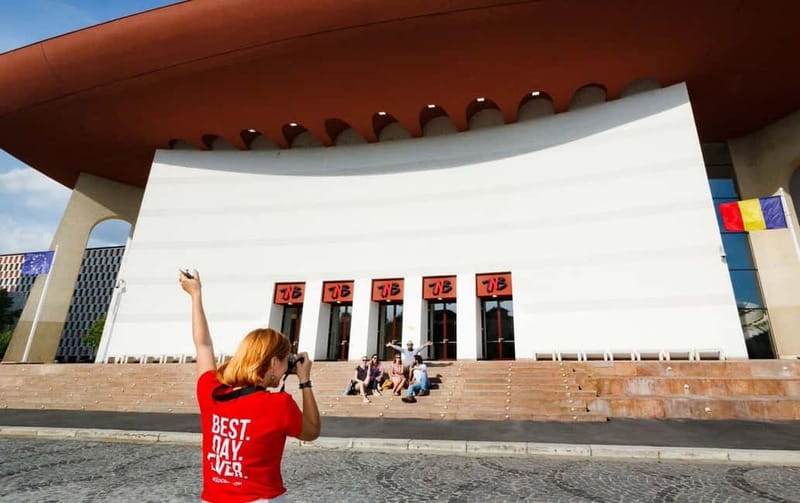
Starting at the National Theatre
Meet on the stairs in front of the main entrance to the National Theatre, at Nicolae Bălcescu 2. If you use Uber, enter Bd. Nicolae Bălcescu 2 rather than simply typing National Theatre, since the address should take you to the correct side of the building.
This is a useful starting point because the National Theatre sits in central Bucharest, close to the city’s main historical and political axis. Your guide begins with an introduction to Bucharest and Romania, giving you a framework for the neighborhoods ahead.
The opening talk is not just filler before the food. Bucharest can seem visually confusing at first, with grand nineteenth-century buildings, Communist blocks, restored churches, and rougher streets often sitting close together. A good introduction helps you read those layers instead of seeing them as unrelated sights.
The route is conducted at a comfortable pace, but this is still an active outing. Wear shoes suited to several hours of city walking, and leave room in your schedule for the full five to five and a half hours.
Strada Batistei and a forgotten embassy
From the National Theatre, you walk toward Biserica Batiștei and Strada Batiștei. The street was once compared with Paris’s St. Germain, a useful clue to its former cultural and social importance.
One of the stops is the old American embassy, now a forgotten landmark. It is not presented as a polished monument with a grand visitor entrance. Its interest comes from what it suggests about Bucharest’s international connections and how urban buildings can lose their original role while retaining a place in the city’s memory.
This part of the walk rewards attention. You are not simply ticking off a church and a street. You are looking at the uneven condition of Bucharest, where elegant architecture, traces of former prestige, and ordinary modern life share the same blocks.
The church stop also gives your guide a chance to discuss local religious and cultural life. The route is strongest when you ask questions, so do not hesitate to ask about the buildings that seem less obvious. Several guides are praised for welcoming questions about history, politics, architecture, and present-day Romania.
The Armenian Quarter’s mixed architecture
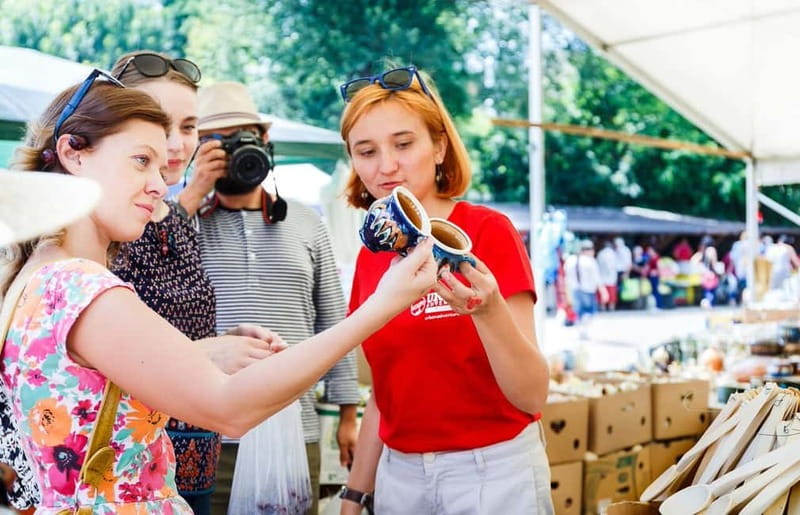
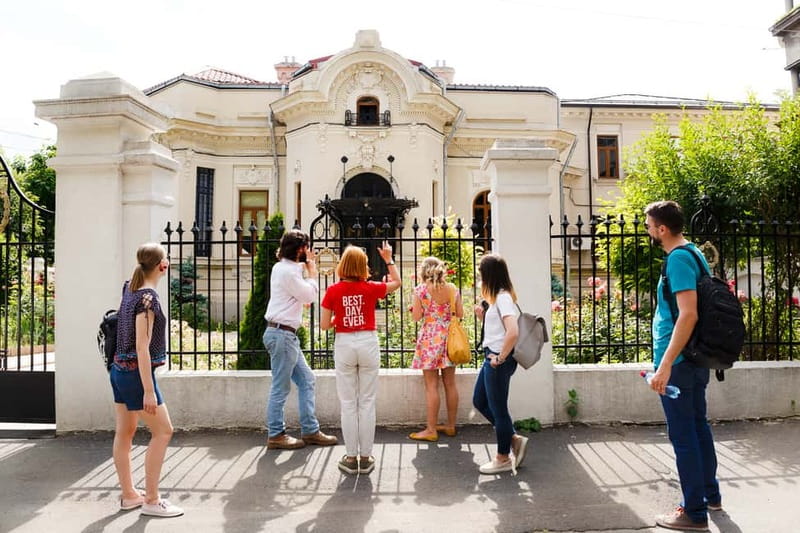
The Armenian Quarter is one of the most distinctive parts of the walk. Around the Armenian church, the architecture shifts between European and Ottoman influences, giving you a compact lesson in Bucharest’s position between cultural worlds.
You will hear about the area as you walk rather than spending a long period inside one formal museum. That makes the neighborhood feel connected to the city around it. Look up at facades, notice changes in scale and decoration, and pay attention to the way religious buildings fit into the surrounding streets.
This is a good section for anyone who likes context more than grand viewpoints. You will not get a panoramic sweep of Bucharest here. Instead, you get details that help explain why the city has such a varied architectural character.
The guide’s interpretation matters especially in this district. On a self-guided walk, you might notice the mix of styles but miss the reasons behind it. Guides such as Michaela, Alex, Angelica, and Daniel are repeatedly described as clear, friendly, and able to connect buildings with Romanian history.
More Market Walking Tours in the world:
- Bangkok: City Highlights Temple and Market Walking Tour
★ 4.5 · 3,990 reviews - Tokyo Tsukiji Fish Market Food and Culture Walking Tour
★ 5.0 · 3,184 reviews - Marrakech: Ben Youssef, Secret Garden, & Souks Walking Tour
★ 4.6 · 2,802 reviews - Marrakech: Colorful Medina Souks Guided Walking Tour
★ 4.7 · 2,470 reviews
Calea Moșilor and the tram ride
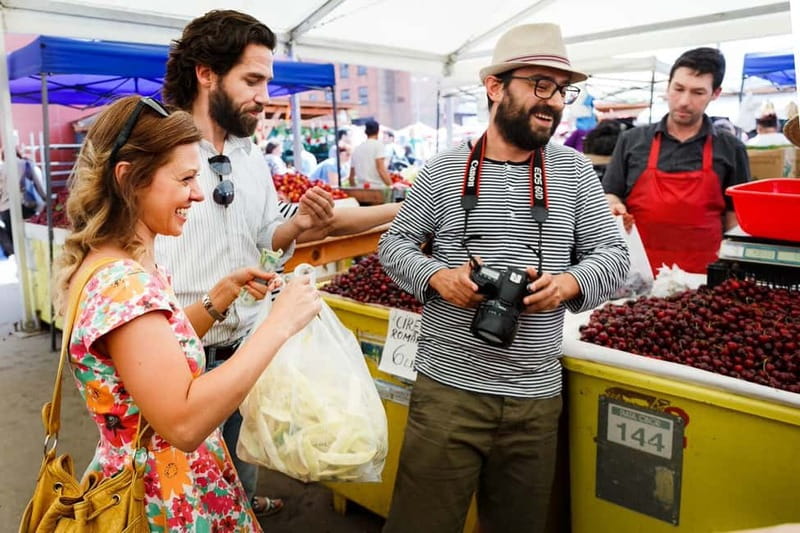
The route continues along Calea Moșilor before you board a tram toward Obor Market. This is one of the tour’s most useful features because public transport shows Bucharest as residents experience it, not as a string of isolated sights.
A tram ride also provides a break from walking. You can watch neighborhoods pass by and compare central Bucharest with the districts around the market. The ride is part of the experience, not merely a way to save time.
You should expect normal city transport rather than a private sightseeing vehicle. That means the tram may feel crowded or ordinary, but that is precisely its value. You see the city in motion, with its everyday rhythms and less polished edges.
Some outings have also included additional public transit, including subway travel, but the confirmed inclusion is tram tickets. The route and transport details may vary slightly with the day’s timing and operating conditions, so think of the tram as a core part of the outing rather than expecting a fixed sightseeing circuit.
Obor Market: the heart of the food experience
Obor Market is Bucharest’s largest peasant market and the main reason this tour feels different from a standard restaurant crawl. The market gives you a chance to see produce, cheeses, meats, and everyday shopping in the place where locals buy and eat them.
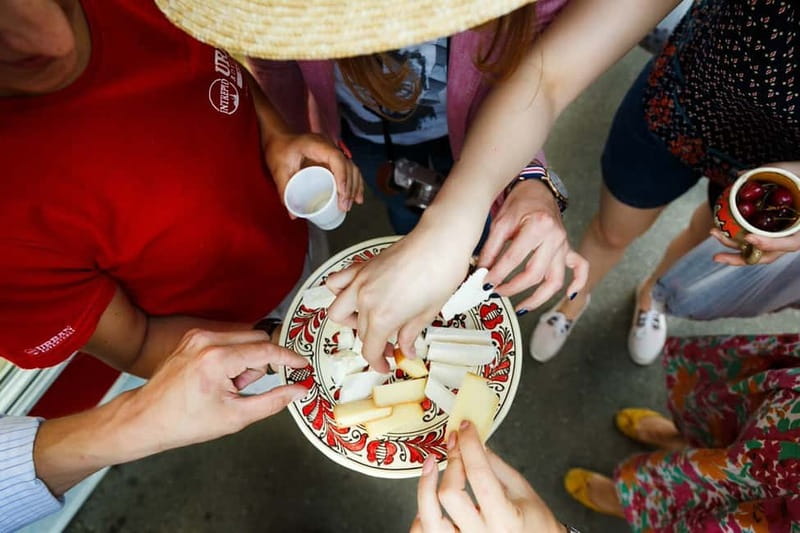
Your first substantial tasting includes a shot of tuica, the Romanian fruit brandy. It is strong, direct, and not a drink to gulp casually. If you do not drink alcohol, soft drinks, coffee, and tea are available, but tell the operator about your needs in advance when relevant.
The food platter includes local cheeses, meats, seasonal vegetables, dips, and homemade bread. This is more than a token bite. Portions are described as generous, and several people finish the tour feeling they have eaten a full meal.
Seasonality adds interest. The exact produce can change according to what looks best at the market that day, so do not expect an identical plate every time. That variation is a plus for a market-based tour, though anyone seeking a tightly fixed menu should know that the selection can shift.
Mici, beer, cheese, and Romanian drinking culture
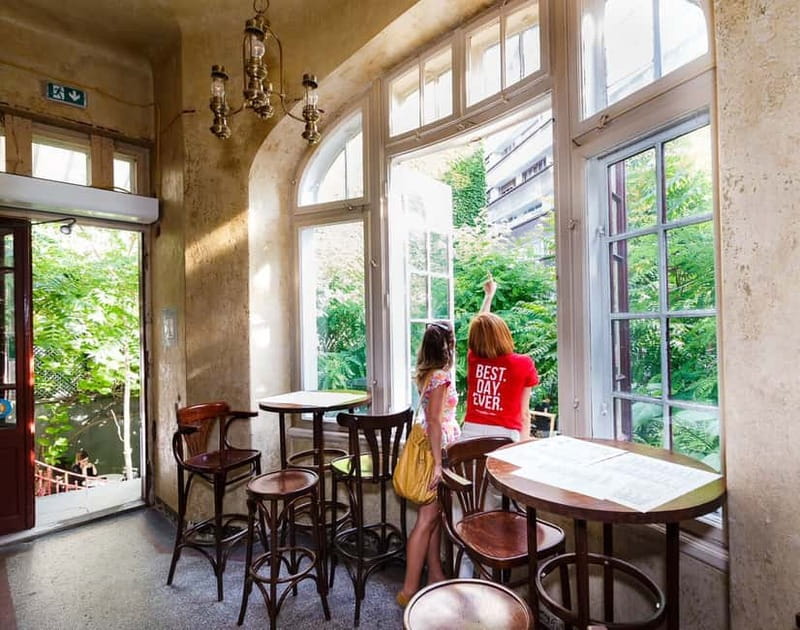
The next food stop focuses on mici, one of Romania’s signature street foods. You receive two mici with bread and mustard. These grilled sausage rolls are simple, savory, and particularly well suited to a cold beer.
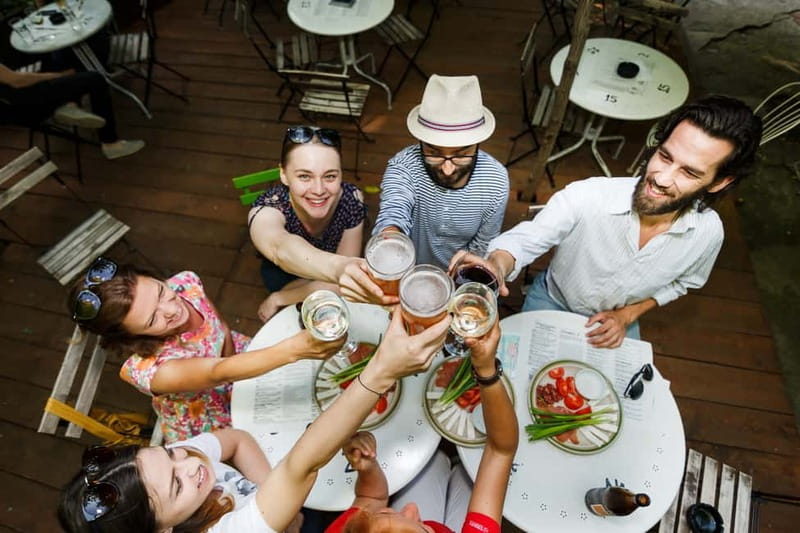
Three beers are included, with soft drinks and coffee or tea available instead. The drink plan makes the $100 price easier to assess, especially if you would otherwise pay separately for several tastings and a meal. Still, the value depends on what you want from a tour. If you do not drink, or if you prefer only small food samples, the package may feel larger than necessary.
You will also taste a selection of Romanian cheeses and local produce. This broadens the meal beyond the better-known sausage and brandy. I like that the food is not reduced to one famous dish. You get a sense of the table as a whole: bread, dairy, meat, vegetables, condiments, beer, and a sweet finish.
The tour can accommodate vegetarian, vegan, and gluten-intolerant diets when notified at least 24 hours ahead. Share allergies or sensitivities early. Do not assume that a request made on the morning of the tour can be handled easily at a busy market.
Finishing with a Wallachian doughnut
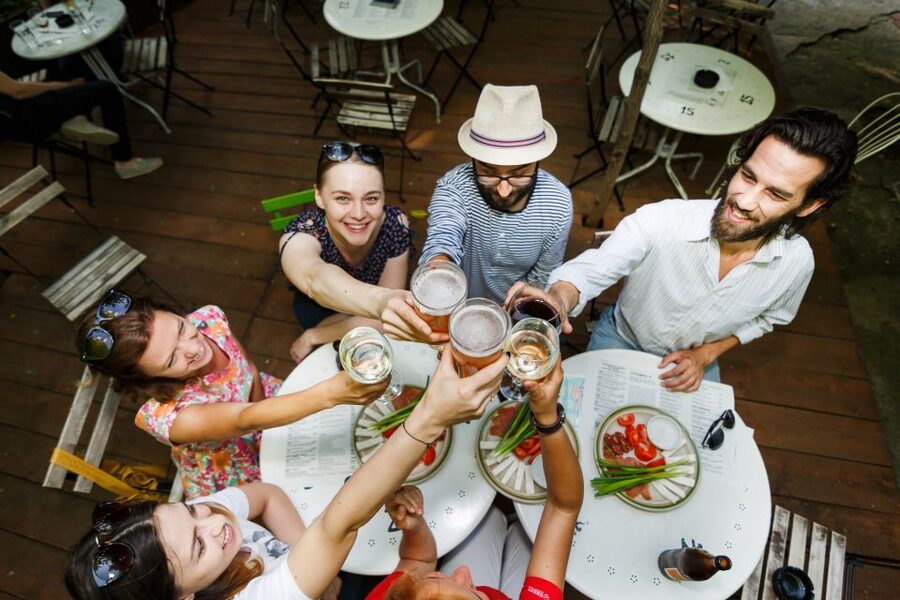
The final food stop is a warm Wallachian doughnut. After the savory platter, sausages, cheese, and drinks, it works as a proper dessert rather than a decorative sample.
The doughnut has become a favorite part of the experience for many people, and it gives the afternoon a pleasant finish. It also shows the tour’s sensible rhythm: start with a small drink and savory foods, continue through the market, then end with something warm and sweet.
You should not plan another large meal immediately afterward. The food is substantial, and the full route can leave you comfortably full for the rest of the day.
How much walking and time should you expect?
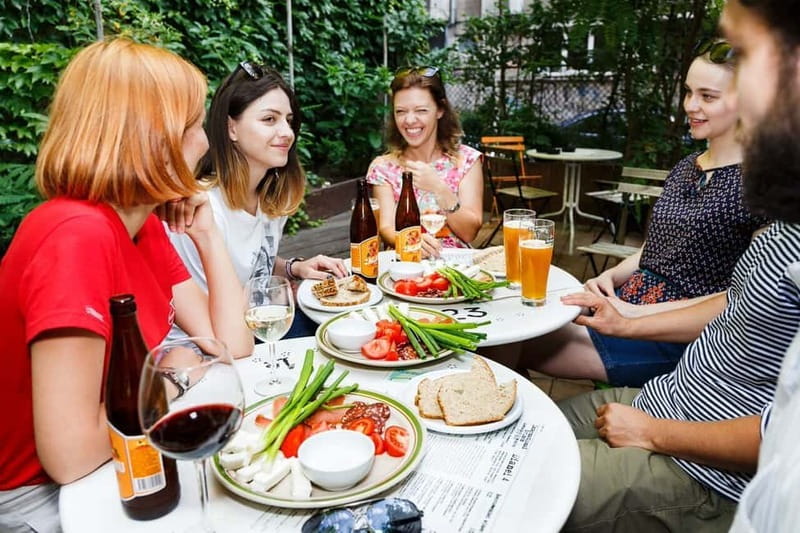
The tour lasts five to five and a half hours. It is not a hard hike, and the route is generally flat, but you will spend much of the day walking, standing, waiting briefly, and moving through public spaces.
The tram breaks up the route, which helps. Still, Bucharest streets and market areas can be uneven or crowded, and the pace is designed for sightseeing rather than speed. Comfortable shoes and weather-appropriate clothing matter more than dressing for a formal restaurant.
Weather can shape the experience. On a sunny day, the walking and market sections are easier to enjoy. In poor weather, the guide remains central to the day, but outdoor stops may feel less comfortable. Bring a rain layer when the forecast looks doubtful.
Children under six are not permitted. Older children may enjoy the tram and doughnut, but the historical walking and alcohol-based tastings are aimed more at adults and older teenagers.
Is $100 a fair price?
At $100 per person, this is not the cheapest way to grab Romanian food. It is a fair price if you value the combination of guiding, transport, history, and a filling set of tastings.
The fee includes the guide, walking tour, tram tickets, a substantial platter, local cheeses and produce, two mici, a street snack, a Wallachian doughnut, three beers or non-alcoholic drinks, and tuica. Add the cost of finding several of these stops on your own, plus the time needed to understand what you are eating, and the package makes sense.
The strongest value comes from the local orientation. You are not paying only for samples. You are paying for a route through areas you might otherwise skip, an explanation of their architecture and history, and help ordering or understanding food in a market setting.
A private group is available for people who want more control over the pace or conversation. The standard small group is likely the better value for solo visitors and couples, especially since the shared format can make the day social without becoming unwieldy.
Who should book this tour?
I would choose this tour early in a Bucharest visit. It gives you useful bearings, introduces neighborhoods beyond the Old Town, and provides food recommendations you can use later.
It suits you best if you:
- Like history presented through streets and buildings rather than only museums.
- Want to see how Bucharest looks outside the main center.
- Enjoy trying unfamiliar foods in a guided setting.
- Prefer a small group to a large bus tour.
- Are happy to use ordinary public transport.
- Want a substantial lunch with beer and local specialties included.
You may want another type of outing if you dislike alcohol, prefer a short tasting with tiny portions, or want a tightly scheduled list of major monuments. This tour is conversational and neighborhood-based, not a rapid survey of every famous Bucharest sight.
Practical details before you go
Reserve with enough notice to flag dietary needs, especially vegetarian, vegan, gluten-intolerant, or allergy-related requests. The operator asks for at least 24 hours’ notice.
The tour is carbon neutral and operated by a B Corp certified company. That does not change the route itself, but it may matter if you prefer booking with a company that puts formal environmental and social goals behind its operations.
Cancellation is free up to 24 hours before departure, and you can reserve now and pay later. Starting times depend on availability. English is the confirmed tour language, and private groups can be arranged.
Should you book it?
Book this if you want Bucharest to make sense through its everyday streets, public transport, architecture, and food. The combination is unusually practical: you see the Armenian Quarter, ride a tram, visit Obor Market, and eat enough Romanian food to understand more than a single dish.
The best timing is early in your stay, before you have settled into the Old Town bubble. Bring an appetite, ask questions, and let the guide set the pace. At $100, it is a full-priced half-day, but the amount of food, included drinks, transport, and personal attention make it good value for an active visitor who wants more than a quick city-center walk.
FAQ
Where does the Bucharest Hidden Markets Walking Tour begin?
It begins on the stairs in front of the main entrance to the National Theatre at Nicolae Bălcescu 2 in Bucharest. If you use Uber, enter Bd. Nicolae Bălcescu 2.
Where does the tour finish?
The tour finishes at Piața Unirii.
How long does the experience last?
The tour lasts approximately five to five and a half hours.
What food and drinks are included?
Included tastings include tuica, local cheeses, meats, seasonal vegetables, dips, homemade bread, two mici with bread and mustard, a street snack, a Wallachian doughnut, and three beers. Soft drinks, coffee, and tea are available as non-alcoholic alternatives.
Can dietary needs be accommodated?
The operator can accommodate vegetarian, vegan, and gluten-intolerant diets. You should provide details about allergies or sensitivities at least 24 hours before the tour.
How large is the group?
The standard group has a maximum of 12 people. A private group option is also available.
New market tours around the world
- Tel Aviv: 2-Hour Carmel Market Tour in English with Lunch★ 4.8 · 23 reviews
- Tel Aviv: Carmel Market & Neighborhood Guided Walking Tour★ 4.7 · 3 reviews
- Tel Aviv: 2-Hour Jaffa Flea Market Tour with Tastings★ 4.9 · 8 reviews
- Tel Aviv: Carmel Market Food Tasting Tour “Shuk Hacarmel”★ 4.0 · 8 reviews
- Tel Aviv: 2-Hour Levinsky Market Tour with Full Lunch★ 4.7 · 10 reviews
- Teguise: Market and César Manrique Foundation Tour★ 4.3 · 39 reviews
- Tbilisi 2 Parks: Turtle Lake & Dedaena Park with Flea Market★ 5.0 · 3 reviews
- Tbilisi: Street Food & Sightseeing Tour with Local Markets★ 5.0 · 8 reviews
Market Tours, side by side.

Bangkok: Damnoen Saduak Market and Maeklong Railway Market
Read our review →
The Old Siam: Damnoen Saduak and Maeklong Railway Market
Read our review →
Dubai: Old Town, Creek, Museums, Souks, & Street Food Tour
Read our review →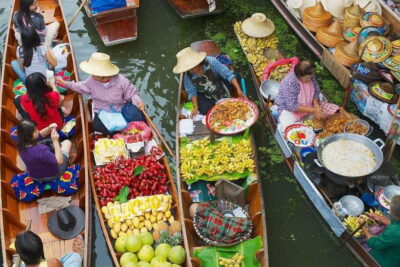
Bangkok: Train Market & Floating Market with Boat Ride
Read our review →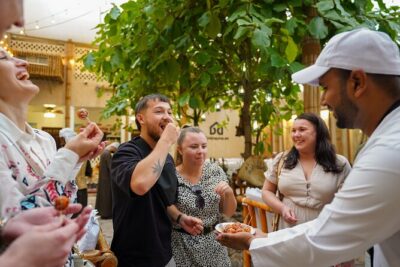
Dubai: Old Town, Souks, Street Food, Guided Tour & Abra Ride
Read our review →
Dubai: Frame Tickets, Creek, Souks & Blue Mosque Guided Tour
Read our review →
Hanoi Cooking Class: Culture, Local Market & Meaning CSR Impact
Read our review →
Marrakech: Bahia Palace, Saadian Tombs, Souk and Medina Tour
Read our review →This tour also appears in