
Review · BUDAPEST
Budapest: Small-Group Cooking Class & Market Tour with Local
Budapest’s best food lesson may begin not at a cooking school, but among the paprika, pickles, sausages, and produce of the Central Market Hall. You taste before you cook, then carry that local flavor into a Budapest apartment for a family-style meal led by hosts such as Kinga, George, Mesi, or Marcell.
I like the way the class combines two useful experiences: a guided look at Hungarian food shopping and a hands-on lesson you can repeat at home. I also like the social setup, where solo visitors, couples, and families cook together over wine, cold cuts, and conversation.
The main consideration is pace. Four hours can feel long if you want a quick demonstration rather than an active class, and one recent cooking session was found a little mild on seasoning. Tell the organizers your dietary needs and preferred main course in advance.
Key points at a glance
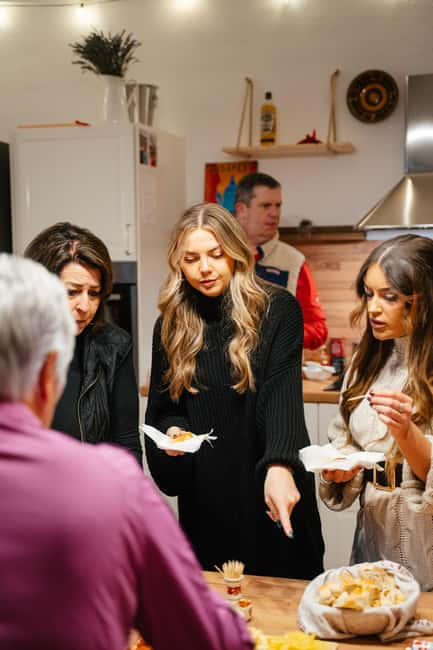
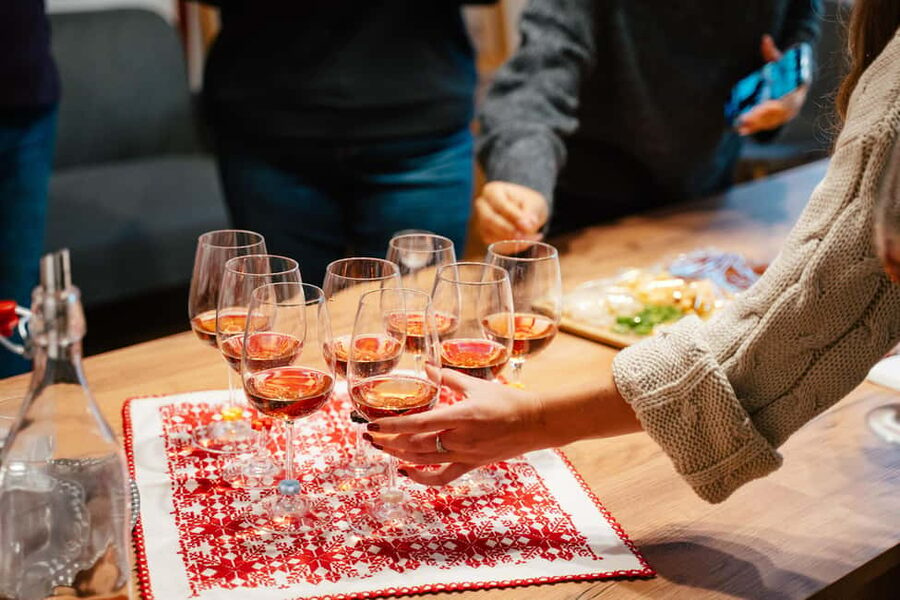
- Central Market Hall tastings: Sample Hungarian cold cuts, cheeses, pickles, produce, wine, and pálinka before cooking.
- Family recipes: Prepare chicken paprikash, goulash, or stuffed cabbage, with dumplings appearing in some classes.
- Air-conditioned cooking space: A useful refuge from Budapest’s summer heat.
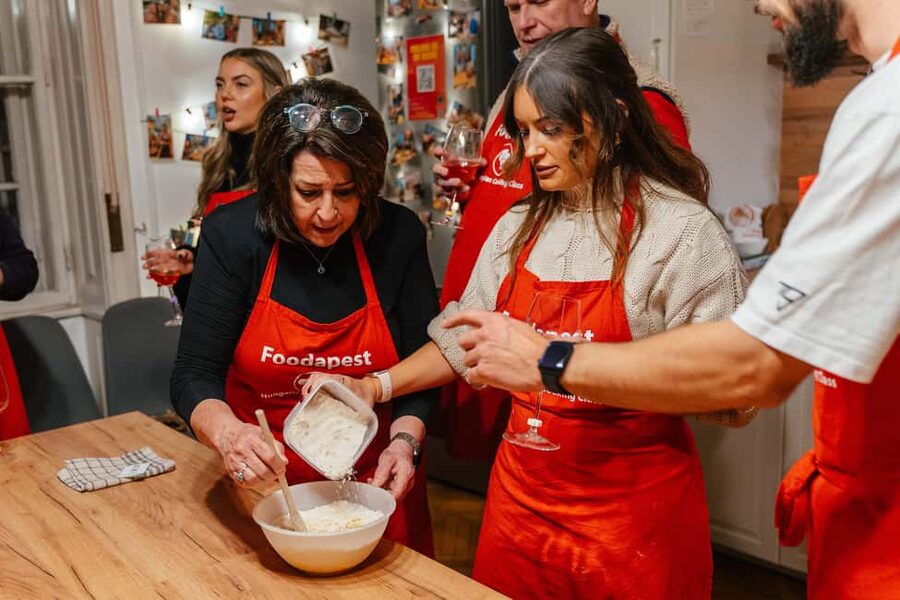
- Real social cooking: You chop, stir, talk, drink, and eat together instead of watching a chef from the sidelines.
- Flexible food choices: Gluten-free, vegetarian, and vegan arrangements are available when requested beforehand.
- A personal souvenir: Take home a recipe booklet and a handwritten vintage postcard from Hungarian citizens.
Why this Budapest food experience works
I see this as a cultural activity with a meal attached, not simply a cooking lesson. You learn what Hungarian food looks like at the market, how local ingredients are discussed, and how a dish fits into family life.
The strongest feature is the transition from market to kitchen. You first see the ingredients in their everyday setting, then use them in a meal. That connection gives paprika, pickles, cabbage, sour cream, and cured meats more meaning than they would have on a restaurant plate.
The class also has a welcome sense of informality. Hosts have included Kinga, George, Mesi, Marcell, Ben, Emese, Leila, and others from the Foodapest team. Their roles can vary, but the format stays personal: guide you through the market, explain Hungarian food and customs, teach basic kitchen skills, and keep the group involved.
You should not expect a polished culinary school with individual workstations and a silent focus on technique. You are taking part in a shared meal. That is the point.
More Market and Cooking Class Tours in the world:
- Hanoi Cooking Class: Culture, Local Market & Meaning CSR Impact
★ 5.0 · 5,147 reviews - 5 Traditional Dishes Hanoi Cooking Class with Market Trip
★ 5.0 · 4,890 reviews - Cooking Class and Lunch at a Tuscan Farmhouse with Local Market Tour from Florence
★ 5.0 · 4,831 reviews
Starting at the Central Market Hall
For the daytime version, the experience begins at Budapest’s Central Market Hall, the grand indoor market near the Danube. The meeting point is easy to reach, and the visit gives you a useful introduction to Hungarian ingredients before you cook.
The building is a major attraction in its own right, but the practical value comes from seeing how food is presented and sold. Your guide leads you through selected stalls and explains local products while offering tastings. Expect cold cuts, cheeses, pickles, and other Hungarian treats, along with chances to try wine and pálinka, the country’s traditional fruit spirit.
This is not meant to be a full shopping trip. You are not given hours to browse every aisle. Instead, you get a guided route with stops chosen to explain Hungarian tastes and customs. One especially useful part is learning about different types of paprika. Sweet, smoky, and spicy versions can change a dish far more than a tourist might expect.
The market can be busy, and a large indoor hall is not the place for a quiet lecture. Stay close to your guide and keep your attention on the group. The reward is a more useful understanding of what you will later put in the cooking pot.
Some hosts also add small details that make the visit memorable. George has shown people less obvious parts of the market, including a downstairs area with a relief map, and has offered advice on buying souvenirs. These touches help the market feel like a place locals use, not just a photogenic stop on a sightseeing route.
From market stalls to a Budapest apartment
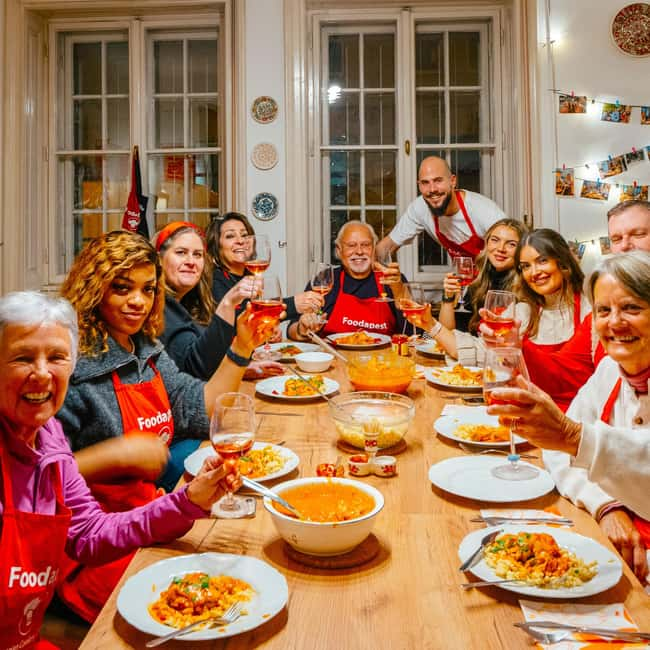
After the market, the class moves to a local apartment at Kinizsi u. 22-6/B in Budapest’s District IX. The apartment setting is central to the experience. You are cooking in a home-style kitchen rather than in a formal restaurant school.
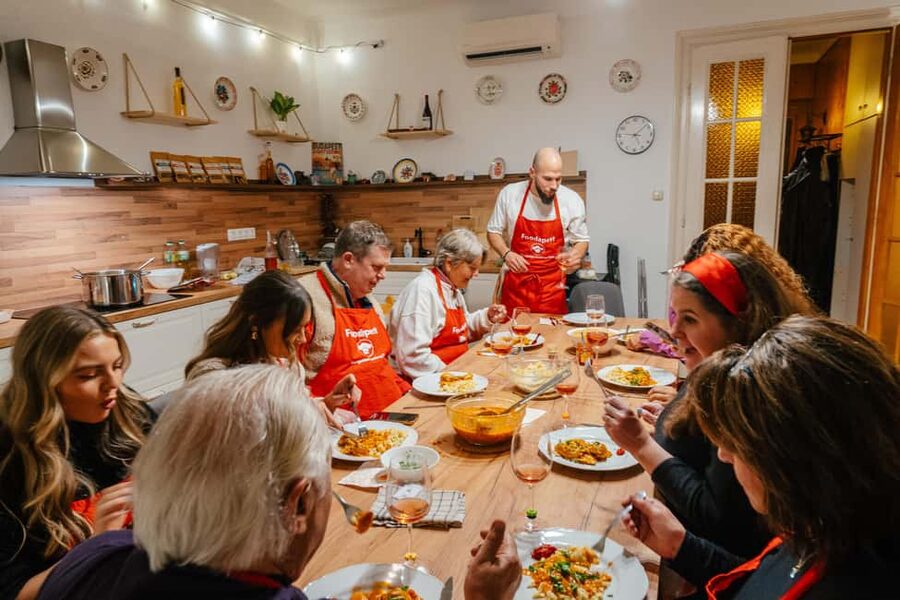
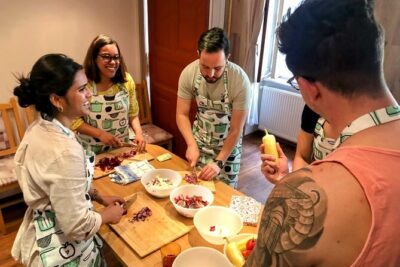
The room encourages conversation. You may be working beside people from several countries, sharing a cutting board, comparing cooking habits, and asking questions as the food comes together. Hosts have been praised for making sure everyone has a task, which matters in a communal class. Nobody wants to spend the afternoon watching two people chop while everyone else waits.
The group size can vary. A class of around nine has been reported, while another group described cooking with 13 companions. You should expect a social group rather than a private lesson. If you want one-to-one instruction, this may not be the right format. If you enjoy meeting people while eating and cooking, the setup is a major advantage.
The venue is fully air-conditioned, an important detail in July and August. Budapest can be hot, and an indoor cooking class can become uncomfortable quickly. Here, the cool room lets you focus on the meal without feeling trapped beside a warm stove.
For an evening cooking class, you meet at the apartment directly rather than beginning with the market tour. Check the selected starting time carefully, since the market portion and evening format do not follow exactly the same route.
Choosing your Hungarian main course
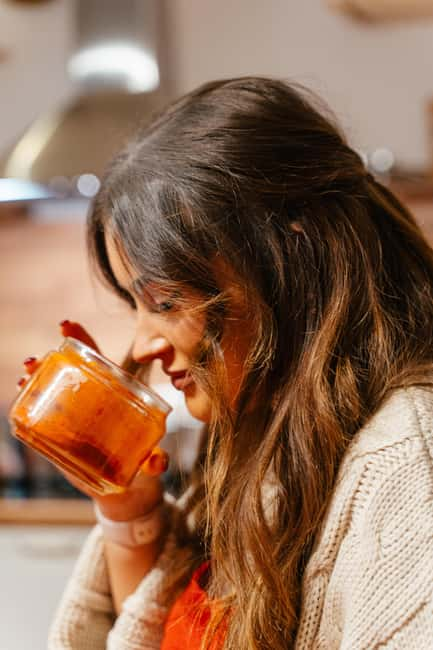
You need to tell Foodapest your meal preference in advance. The listed choices are chicken paprikash, goulash, or stuffed cabbage rolls.
Chicken paprikash is the dish most often described in the cooking sessions. It is a sensible introduction to Hungarian food because paprika, onions, sauce, and tender chicken show how a few familiar ingredients can create a distinctive national dish. Some classes also prepare small dumplings, which add a hands-on element and make the meal feel more substantial.
Goulash offers a different lesson in Hungarian cooking, with its long association with hearty stews and paprika-based seasoning. Stuffed cabbage rolls bring another side of the cuisine, one tied to careful preparation and family cooking.
The exact menu can vary, so do not assume every class will prepare all three dishes. One past class made both chicken paprikash with dumplings and cabbage rolls, but the standard choice is one main course. Ask ahead if you have your heart set on a particular dish.
The food has generally been well received, though you should keep your expectations sensible. Hungarian cooking is not always hot or aggressively seasoned. Paprika can be sweet and fragrant rather than fiery. One participant found the chicken paprikash bland, while another said it was better than paprikash served in many restaurants. That difference points to a useful tip: tell your host if you prefer stronger seasoning, and pay attention to how much paprika and salt you add at home.
The class teaches more than a single recipe. Basic cutting skills and kitchen techniques are part of the lesson, and these transfer to other dishes. You also learn how ingredient choices affect the final result, especially when using different paprika varieties.
More market tours around the world:
- Bangkok: Damnoen Saduak Market and Maeklong Railway Market
★ 4.5 · 26,723 reviews - The Old Siam: Damnoen Saduak and Maeklong Railway Market
★ 4.5 · 10,992 reviews - Dubai: Old Town, Creek, Museums, Souks, & Street Food Tour
★ 4.8 · 10,816 reviews - Bangkok: Train Market & Floating Market with Boat Ride
★ 4.7 · 9,547 reviews
Vegetarian, vegan, and gluten-free planning
Foodapest offers gluten-free, vegetarian, and vegan options. You must communicate dietary restrictions before the class, not after you arrive with an empty plate.
This advance notice is especially important in a communal kitchen. Hungarian cooking often uses meat, dairy, bread, noodles, or flour, so the host needs time to plan substitutions. A vegetarian participant described the arrangement as easy, but that should not be taken as a reason to skip the advance request.
If you are cooking with someone who eats meat and someone who does not, ask what the class can prepare for both of you. A past session included both a vegetarian and a meat dish, which worked well for a couple with different preferences. Still, menus can change, so confirm the plan when booking.
Dessert is listed as part of the experience, but one otherwise positive account suggested that dessert was not included on that particular day. If dessert matters to you, check the menu for your date. The core offering is clearly the market tasting, savory cooking, drinks, and shared meal, but the sweet course may need confirmation.
Wine, pálinka, and the social table
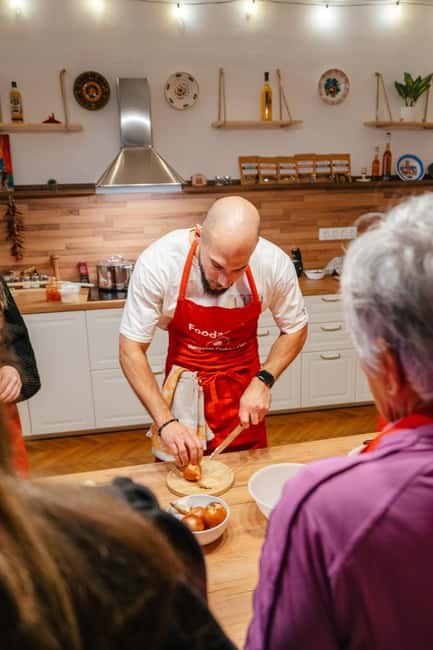
Foodapest includes Hungarian wine, a spirit tasting, soft drinks, and water. The drink service is part of the atmosphere rather than a separate tasting seminar.
At the market, you may sample pálinka and local products. In the apartment, wine accompanies the preparation and meal. This makes the afternoon feel like a long lunch with a cooking lesson woven through it.
You do not need to be an alcohol drinker to take part. Water and soft drinks are included, and you can choose your own pace. If you do sample pálinka, remember that it is a strong spirit, not a casual fruit juice. The friendly mood can make it easy to accept every pour, so keep an eye on your glass.
The social side is one of the class’s biggest strengths. People talk about their home countries, compare family recipes, and learn from one another while the food cooks. Solo visitors can fit in particularly well because the format gives you an immediate shared activity.
For families, the class can also work well. One family with daughters aged 12 and 13 enjoyed the market, kitchen, and informal teaching. Children should be comfortable with several hours of food preparation and conversation, but the format is more active than a museum visit.
What the four hours feel like
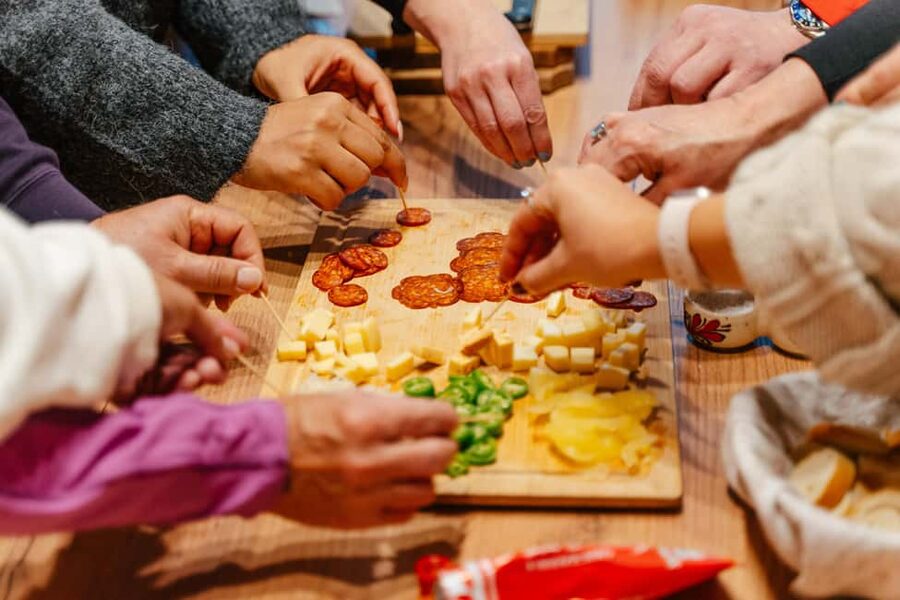
Four hours is enough time to make the experience feel unhurried, but it is not a quick stop between sightseeing appointments.
You begin with orientation and market tasting, then move to the apartment and prepare the chosen dishes. Along the way, your host explains Hungarian customs, food traditions, and practical cooking methods. The final meal gives you time to sit down and enjoy what you made.
The schedule may move between instruction, chopping, tasting, and conversation rather than following a strict minute-by-minute program. That suits the family-style idea, but it may frustrate anyone who wants a tightly timed professional demonstration.
Plan this as a major half-day activity. Do not book it just before a fixed theater ticket or a train departure. The class begins on time, and the market-to-kitchen transition takes part of the afternoon. You will also want enough room afterward to enjoy the meal rather than rush away.
For summer, the air conditioning is a real practical benefit. For cooler months, the apartment setting offers a comfortable indoor change from Budapest sightseeing. The experience is available throughout the year, with the exact start time shown when you check the date.
The teaching style and the human touch
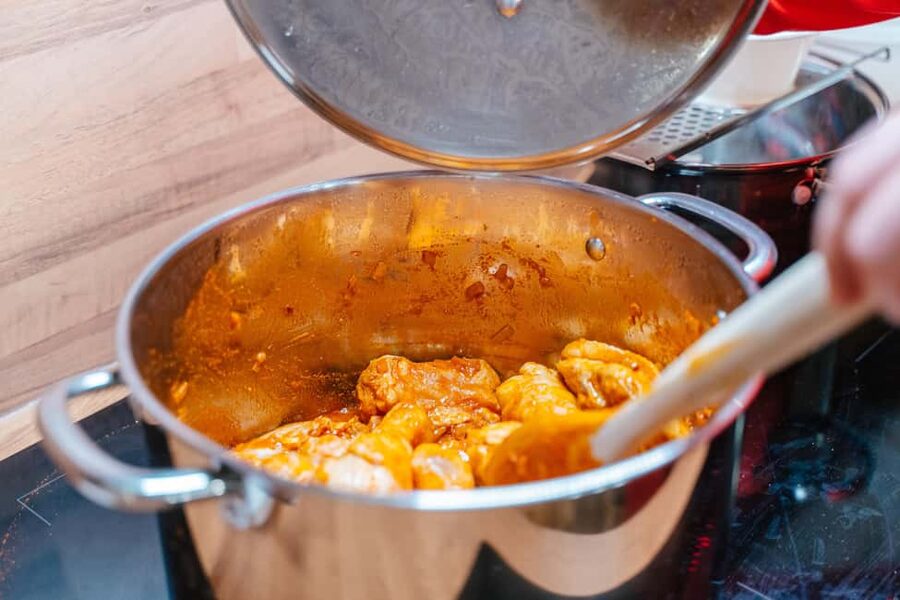
The instructors are the heart of the class. Kinga has led several sessions, and she is described as engaging, careful about group dynamics, and good at including people who may not know one another. Mesi and Emese have guided market tours and explained Hungarian food with clear instruction. George is associated with the home kitchen format and family recipes, while Marcell has led market walks and cooking sessions.
The appeal is not chef theatrics. It is the feeling of being welcomed into someone’s food culture. Family recipes, including a chicken paprikash recipe connected to George’s grandmother, give the cooking more weight than a generic dish downloaded from a website.
You will likely learn small things that never appear in a standard tour description: how to handle ingredients, how paprika types differ, why certain foods matter, and how Hungarian meals are shared. Those small details often become the part you remember and use at home.
The handwritten vintage postcard is another thoughtful touch. It is described as coming from real Hungarian citizens, giving you a small piece of local history rather than a mass-produced souvenir. The recipe booklet is more practical, since it gives you a way to recreate the dish after returning home.
Is $100 a fair price?
At $100 per person, this is not the cheapest way to eat in Budapest. You can find a filling Hungarian meal for much less, and a market visit on its own costs little or nothing.
The value comes from the combination. You receive a guided Central Market Hall visit, multiple tastings, an English-language host, fresh ingredients, kitchen equipment, wine and spirit tasting, a main course, dessert when included, a recipe booklet, and a postcard. You also get four hours of structured contact with local food culture.
I would compare the price with a guided food tour plus a separate cooking class, not with the price of lunch. Against those two activities combined, the cost is reasonable, particularly if you want to cook rather than simply watch.
The value is strongest for food-focused visitors, solo visitors looking for an easy social activity, couples with different food preferences, and families with older children. It is weaker for anyone who dislikes group activities, does not drink alcohol but feels pressured by wine-centered settings, or wants advanced chef training.
Free cancellation up to 24 hours before the activity and a reserve-now, pay-later option make planning easier. Still, dietary requests and the meal choice need to be supplied ahead of time.
Who should book this class?
I would choose this for your first or second day in Budapest if you want practical food context early in the trip. The market introduces ingredients you will notice in restaurants later, and the class gives you a better sense of what you are ordering.
It is also a good final-day activity. You leave with recipes, a postcard, and a meal that connects several parts of your Budapest visit.
Book it if you enjoy conversation, shared tables, and active participation. Pick it if you want more than a restaurant meal but less formality than a professional cooking school.
Think twice if you need a guaranteed dessert, a private class, a tightly timed schedule, or highly seasoned food. Confirm those details before paying, especially if your dietary needs are strict.
Final verdict: a strong choice for food and people
I recommend the Foodapest cooking class for most visitors who want an approachable introduction to Hungarian food. The Central Market Hall tour gives the day a real sense of place, while the apartment cooking keeps the experience personal and useful.
Its best qualities are simple: you taste local products, learn a family-style dish, meet people from different countries, and sit down to eat what you helped prepare. The class will not turn you into a Hungarian chef in four hours, but it can send you home with a recipe you will actually try.
For the smoothest experience, request your dietary arrangement and main course early, confirm whether dessert is included on your date, and reserve a full half-day. If that sounds like your kind of Budapest afternoon, $100 buys more than lunch. It buys a story, a skill, and a table shared with people you did not know that morning.
FAQ
Where does the cooking class meet?
For the evening class, meet directly at the apartment at Foodapest, Budapest, Kinizsi u. 22-6/B, 1092 Hungary. Daytime classes include a guided visit to Central Market Hall, so check the meeting instructions for your selected time.
How long does the experience last?
The experience lasts four hours. Starting times depend on availability.
What dishes can I choose?
You can request chicken paprikash, goulash, or stuffed cabbage rolls. Dumplings may also be prepared with some dishes, but the exact menu can vary.
Are vegetarian, vegan, and gluten-free options available?
Yes. Vegetarian, vegan, and gluten-free options are available, but you need to tell Foodapest about your dietary restrictions beforehand.
Is food and drink included?
Yes. The price includes market tastings, fresh ingredients, the prepared main course, dessert as listed, Hungarian cold cuts, cheeses, pickles, wine, a Hungarian spirit tasting, soft drinks, and water.
Is the class taught in English?
Yes. The local host and chef teach the experience in English.
Can I cancel or pay later?
You can cancel up to 24 hours before the activity for a full refund. A reserve-now, pay-later option is also available.
New market tours around the world
- Tel Aviv: 2-Hour Carmel Market Tour in English with Lunch★ 4.8 · 23 reviews
- Tel Aviv: Carmel Market & Neighborhood Guided Walking Tour★ 4.7 · 3 reviews
- Tel Aviv: 2-Hour Jaffa Flea Market Tour with Tastings★ 4.9 · 8 reviews
- Tel Aviv: Carmel Market Food Tasting Tour “Shuk Hacarmel”★ 4.0 · 8 reviews
- Tel Aviv: 2-Hour Levinsky Market Tour with Full Lunch★ 4.7 · 10 reviews
- Tbilisi 2 Parks: Turtle Lake & Dedaena Park with Flea Market★ 5.0 · 3 reviews
- Tbilisi: Street Food & Sightseeing Tour with Local Markets★ 5.0 · 8 reviews
- Teguise: Market and César Manrique Foundation Tour★ 4.3 · 39 reviews
Budapest Market Tours, side by side.
Budapest Cooking Class & Market Tour with Local Guide & Wines
Read our review →
Budapest Food Tour: Market to Tavern with 14+ Tasters & Wines
Read our review →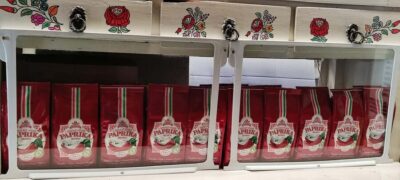
German tour: Central Market Hall of Budapest with tastings
Read our review →
Budapest: Kickstart the City – Local Market Tasting Tour
Read our review →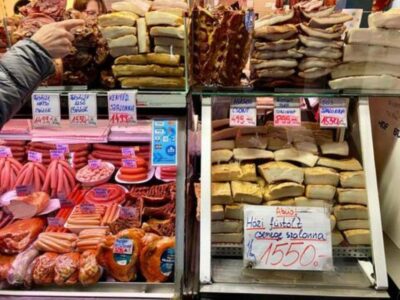
Budapest Streetfood Heaven: Tasting and Markets with a local
Read our review →
Budapest: Christmas Market Guided Walking Tour with Tastings
Read our review →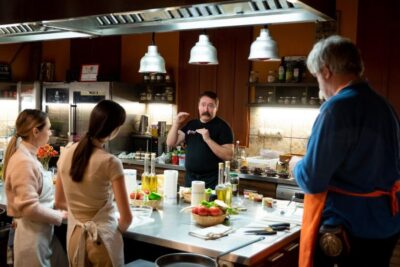
Budapest: Cooking School – Hungarian Menu & Local Market
Read our review →
Budapest Market and Food Tasting Tour with a Local Guide
Read our review →This tour also appears in