Review · ADDIS ABABA
Ethiopian Culinary Tour – Market, Coffee Ceremony and More
Ethiopian coffee is not just a drink here. It is a carefully prepared social ritual, and this tour lets you see the roasting, brewing, and serving up close. You will also bake injera, explore Merkato’s spice stalls, taste Tej honey wine, and sit down to a proper Ethiopian lunch.
I like the mix of hands-on food work and city sightseeing. You are not only watching someone cook: you get to try baking the spongy bread and, according to the schedule, roast coffee beans yourself. I also like that transport, lunch, drinks, and pickup anywhere in Addis Ababa are included.
The main thing to consider is pace. Six hours covers several very different stops, and Merkato can be crowded and intense. If you want a slow cooking class with plenty of time at one table, this is broader and more active than that.
Key points at a glance
- Start with Ethiopian arabica at Tomoca Coffee: Taste Italian-style coffee and macchiato made with local beans.
- Walk through Merkato’s spice trade: See coffee, spices, and everyday goods at Addis Ababa’s huge open-air market.
- Make your own injera: Follow the process and try your hand at baking the soft, spongy flatbread.
- Take part in a coffee ceremony: Watch the traditional preparation and sample freshly made coffee.
- Taste Tej at a local bar: Try Ethiopia’s honey wine, a fermented drink similar to mead.
- Finish with a buffet lunch: Sample familiar Ethiopian dishes at the country’s oldest hotel.
A food tour that also explains Addis Ababa
This is a culinary tour, but food is only half the story. The six-hour route links markets, cafes, cooking, drinks, and city sights, so you get a useful introduction to Addis Ababa while moving between meals.
That variety is the tour’s greatest strength. You can begin with a quick coffee in a polished local cafe, shift into the noise and trade of Merkato, then sit down to learn about injera and coffee traditions. The route ends with Tej and lunch, giving the day a clear food-first shape.
The guides add a cultural layer as well. Desale has been praised for explaining both Ethiopian food and the landmarks seen from the car. Seid, with driver Muse, was also noted for sharing city history and creating a relaxed, safe day. Zerefa led another booking and helped make the experience a friendly cultural exchange.
Guide assignments may vary, so you should not book expecting one particular person. Still, the repeated pattern is useful: an English-speaking guide is there to explain what you are seeing, answer questions, and connect the food to daily life in Ethiopia.
More market tours around the world:
- Bangkok: Damnoen Saduak Market and Maeklong Railway Market
★ 4.5 · 26,723 reviews - The Old Siam: Damnoen Saduak and Maeklong Railway Market
★ 4.5 · 10,992 reviews - Dubai: Old Town, Creek, Museums, Souks, & Street Food Tour
★ 4.8 · 10,816 reviews
Tomoca Coffee and the first taste of Addis
The day begins at Tomoca Coffee, where you taste Italian-style coffee and macchiato prepared with Ethiopian arabica beans. This is a short stop, but it gives you an immediate sense of how important coffee is to Ethiopia’s identity.
The Italian connection is part of the city’s story and explains the cafe’s style. You get something familiar, such as a macchiato, but the beans come from Ethiopia, one of the world’s best-known coffee-growing countries.
I like this as an opening because it starts with flavor rather than a long introduction. You can get your bearings over a small cup, then head into the larger market and cooking experiences.
Do not expect this first cafe visit to replace the later coffee ceremony. Tomoca presents coffee in a cafe setting. The ceremony is slower, more traditional, and more focused on the steps of preparation, roasting, and serving.
Merkato: spices, coffee, and careful bargaining
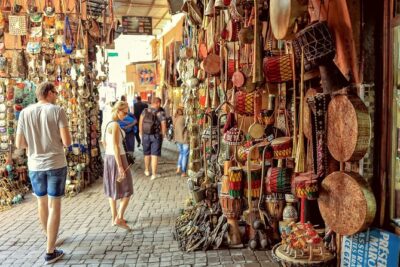
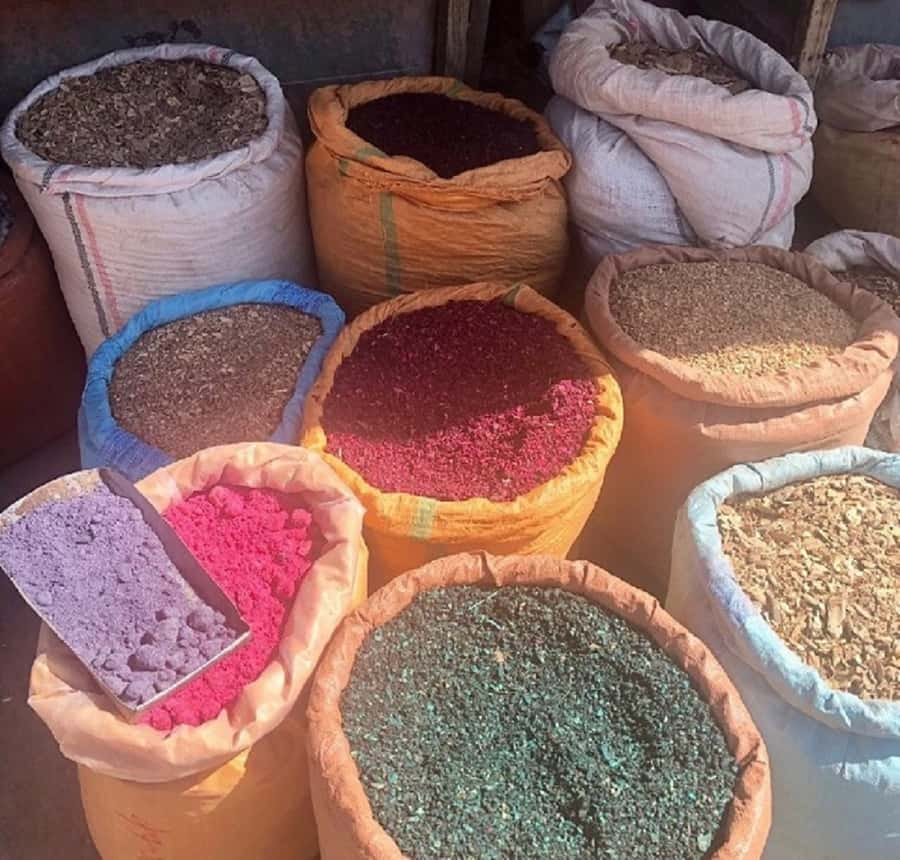
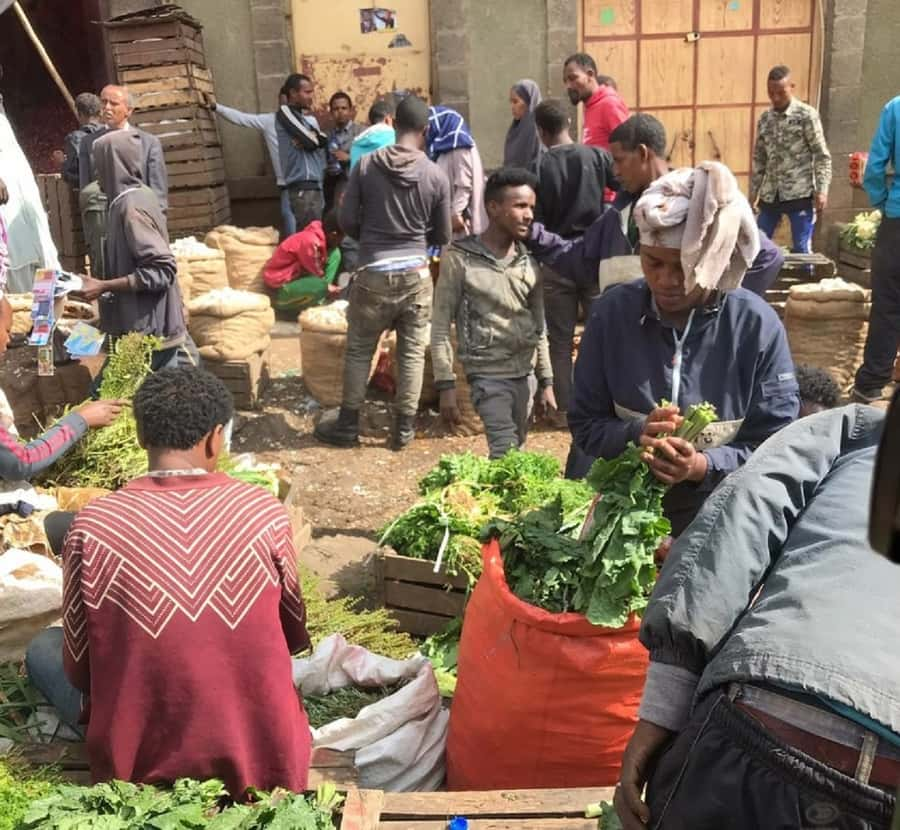
Merkato is one of the defining stops. It is described as the largest open-air market in Africa, and the tour takes you through its spice trade, where dealers sell local spices and coffee among a huge range of food and non-food goods.
The value here is not simply shopping. A market walk shows you how ingredients move through the city before they reach a kitchen or restaurant. You can look at the colors, textures, and aromas of the spice stalls while your guide explains what you are seeing.
This is also the place to use your bargaining skills. The tour specifically calls attention to bargaining with spice sellers, so you may have a chance to practice rather than just observe.
Merkato is not a quiet museum. Expect a busy public market, changing street conditions, and plenty of sensory noise. Keep your attention on your belongings and stay with your guide, particularly if you are more comfortable in calm, organized shopping areas.
You may also find this to be the most demanding part of the day. A market walk can be more tiring than a cafe or restaurant stop, but it is one of the places where the tour feels most connected to ordinary commerce in Addis Ababa.
Learning to bake Ethiopia’s soft injera
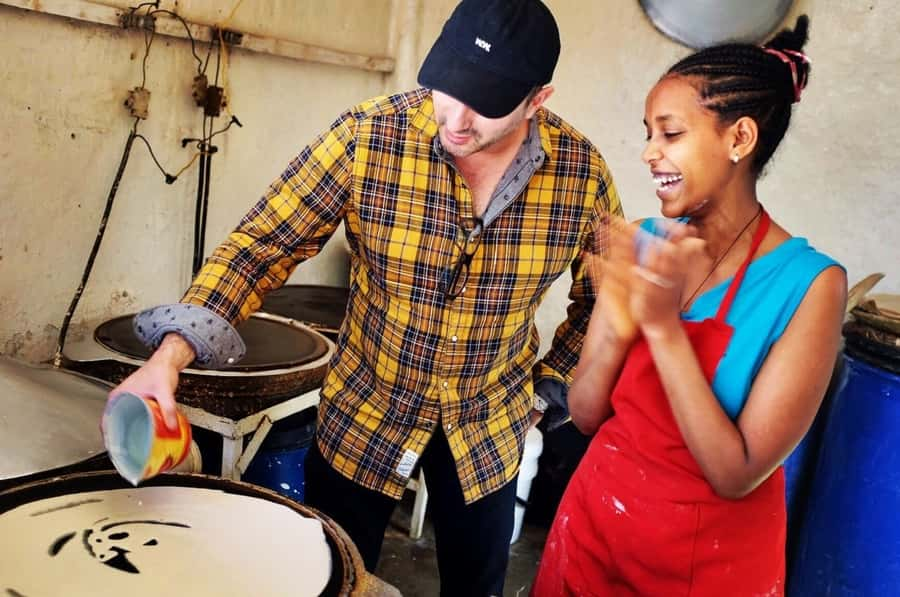
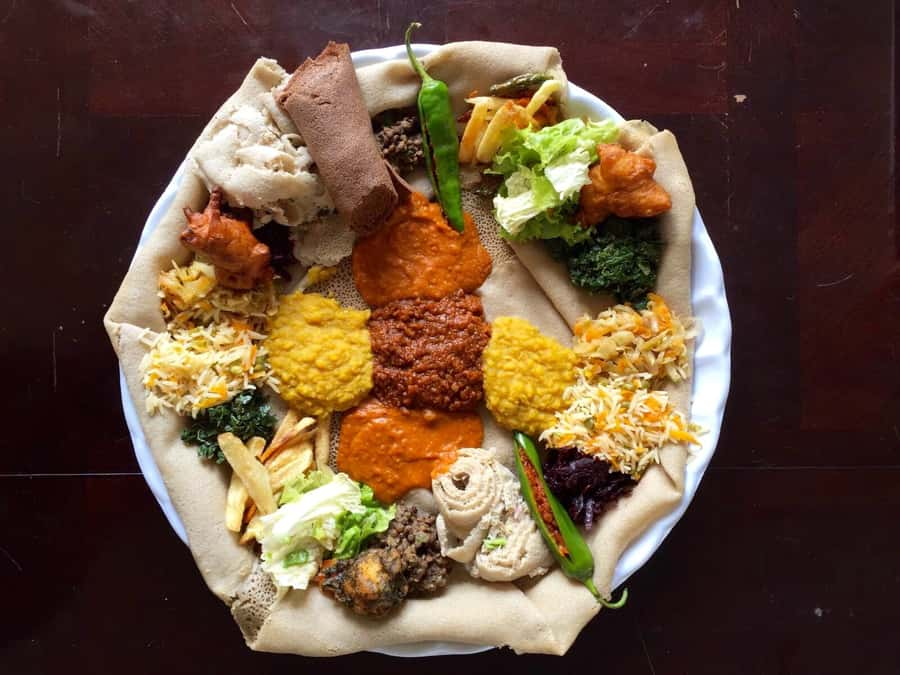
The injera lesson gives you a chance to do more than taste Ethiopian food. You are shown the process step by step and then challenged to bake the spongy flatbread yourself.
Injera is central to Ethiopian meals. It is both bread and utensil, usually used to scoop up food and sauces from a shared serving plate. That makes the lesson practical: the bread is not a decorative side dish but part of how the meal is eaten.
The reviews describe a chance to try the finished creations with a typical spice. That small detail matters. You are not simply watching a demonstration and moving on. You get to see how your own attempt turns out and taste it with a local accompaniment.
Do keep expectations sensible. The experience gives you a hands-on introduction, not a professional baking course. Injera takes practice, and a first attempt may not look perfect. That is part of the fun, especially if you enjoy activities where the result is edible but not guaranteed to be pretty.
The lesson also helps explain why Ethiopian meals feel different from many restaurant meals. You understand the bread’s texture and purpose before sitting down to sample more dishes later in the day.
Same city, another market:
- Bangkok: Train Market & Floating Market with Boat Ride
★ 4.7 · 9,547 reviews - Dubai: Old Town, Souks, Street Food, Guided Tour & Abra Ride
★ 4.9 · 7,170 reviews - From Bangkok: Ayutthaya & Ayothaya Floating Market Day Trip
★ 4.7 · 6,084 reviews - Dubai: Frame Tickets, Creek, Souks & Blue Mosque Guided Tour
★ 4.8 · 5,980 reviews
The traditional coffee ceremony

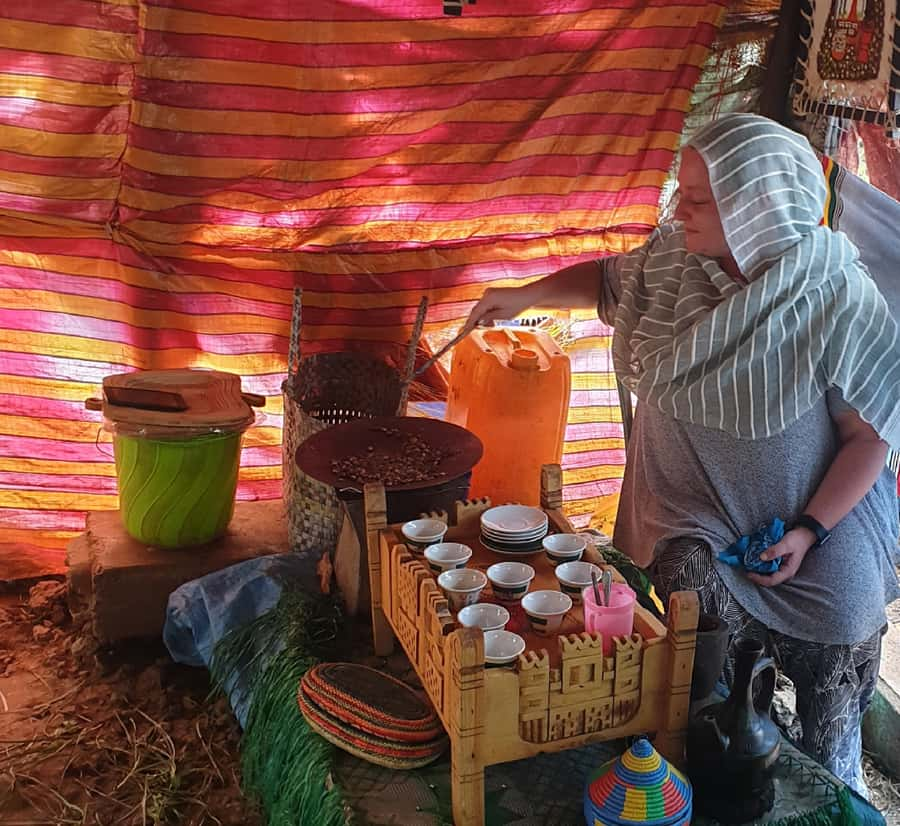
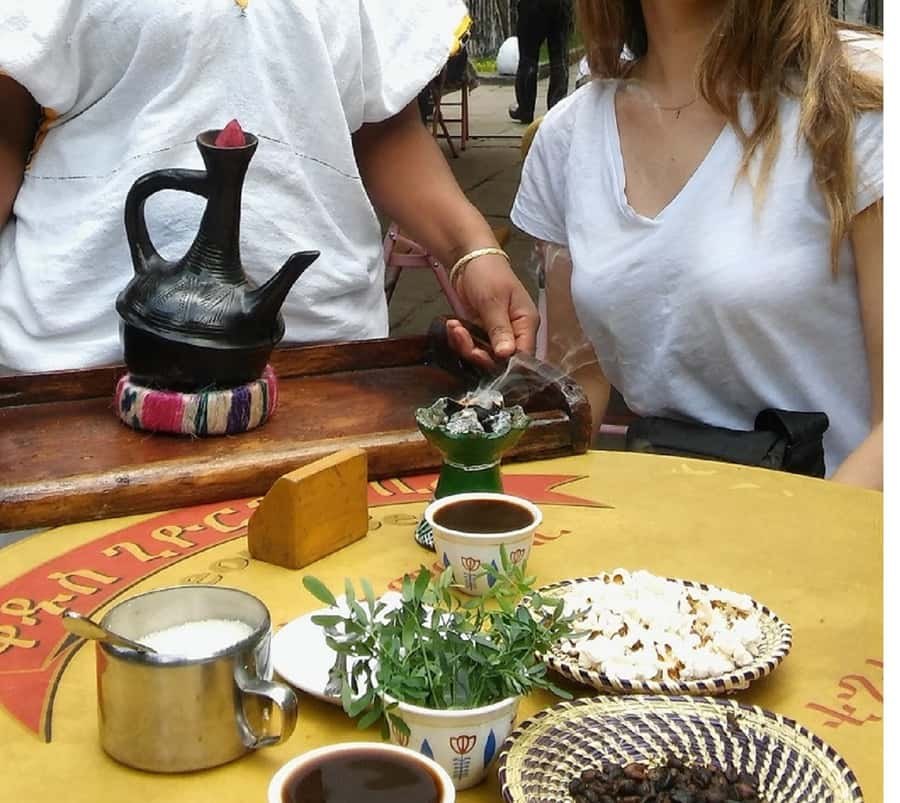
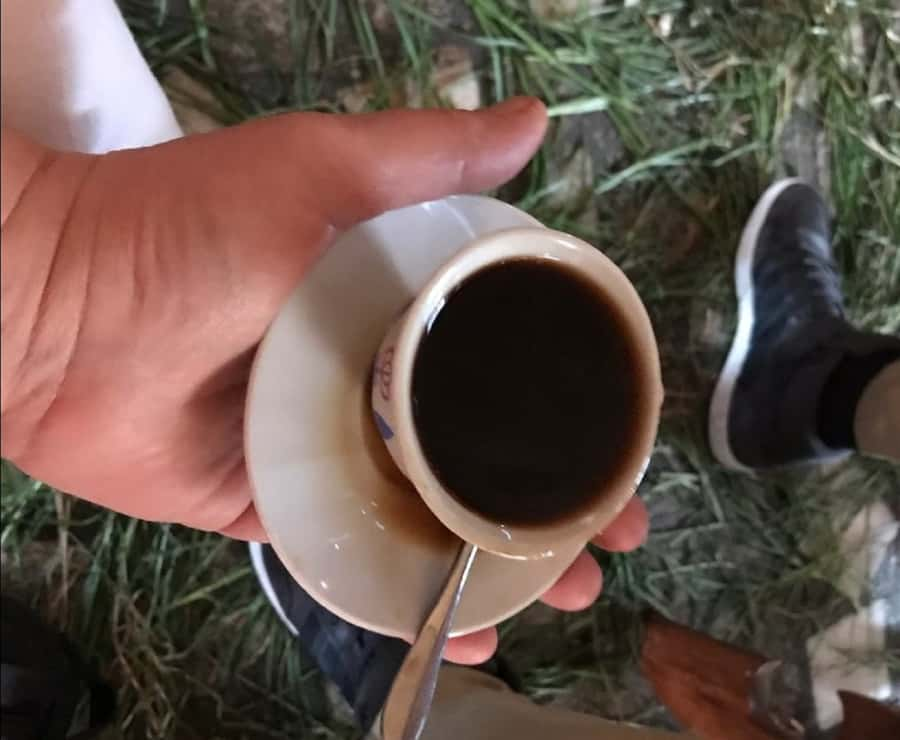
The coffee ceremony is the cultural center of the tour. You see Ethiopian coffee prepared in a traditional way, with the guide explaining the process and giving you a chance to taste the result.
One description of the experience includes roasting the beans yourself. That makes the ceremony more engaging than simply being handed a cup. You can follow the beans from roasting to brewing and see how much care goes into a drink that might otherwise seem simple.
The ceremony also gives the day a slower pause. Merkato is active and crowded, while the coffee ritual asks you to watch, wait, smell, and drink. I like that contrast because it shows coffee as a social custom rather than just a source of caffeine.
The tour includes hot drinks with lunch, and the coffee ceremony itself is included in the activity fees. You should still expect the guide to explain the process in English rather than provide a long formal class. The exact setting and order of the stops may vary with the day’s schedule.
If coffee is your main interest, this is likely the part that deserves your attention. Ask questions as the beans are roasted and prepared. The guide can also help connect the ceremony to the wider food culture you have seen at Merkato and during the injera lesson.
A taste of Tej at a local honey-wine bar
The final drink stop introduces you to Tej, Ethiopia’s traditional honey wine. It is similar to mead and is made mainly from fermented honey.
You tour a local Tej bar and sample the drink. This is a useful stop for anyone who wants to try something specific to Ethiopia rather than stick to familiar beer, wine, or soft drinks.
The tasting is included, but other alcoholic drinks are not. That distinction is worth noting if you are planning your spending. You receive the Tej experience as part of the tour, while any additional alcohol would be your responsibility.
Tej may be a new taste for you, and the chance to sample it in a local setting is more informative than ordering a bottle without context. The guide can explain what you are drinking and how it fits into Ethiopian food culture.
This is a tasting, not a full bar evening. The tour still has to reach lunch and complete its other stops within six hours, so expect a brief introduction rather than a long session.
Lunch at Ethiopia’s oldest hotel
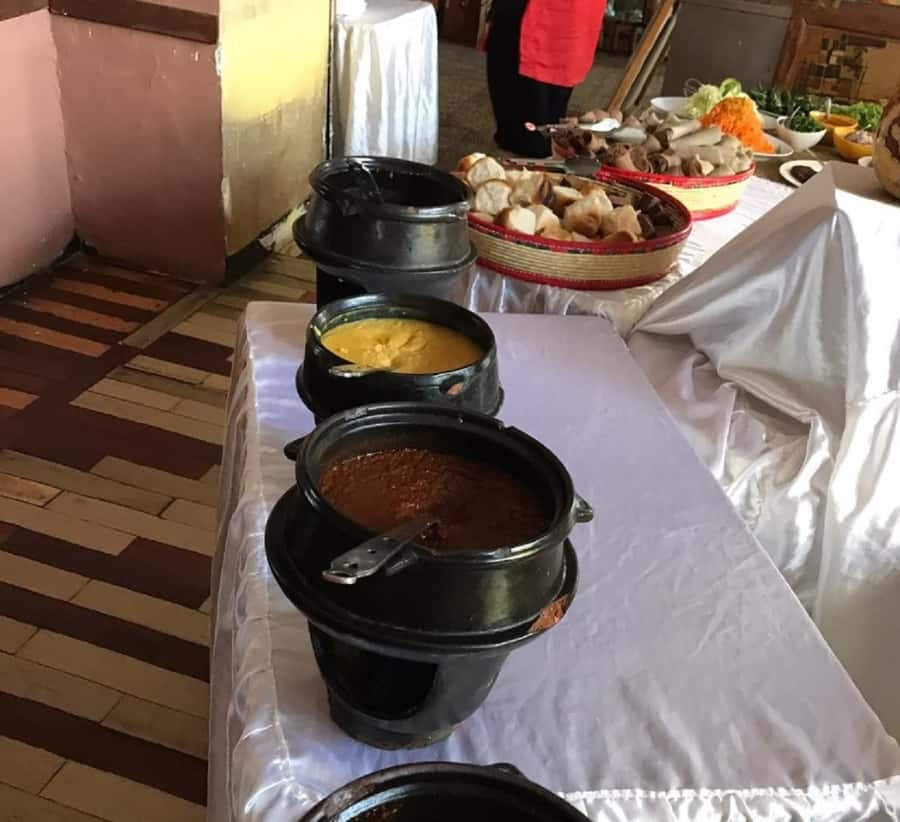
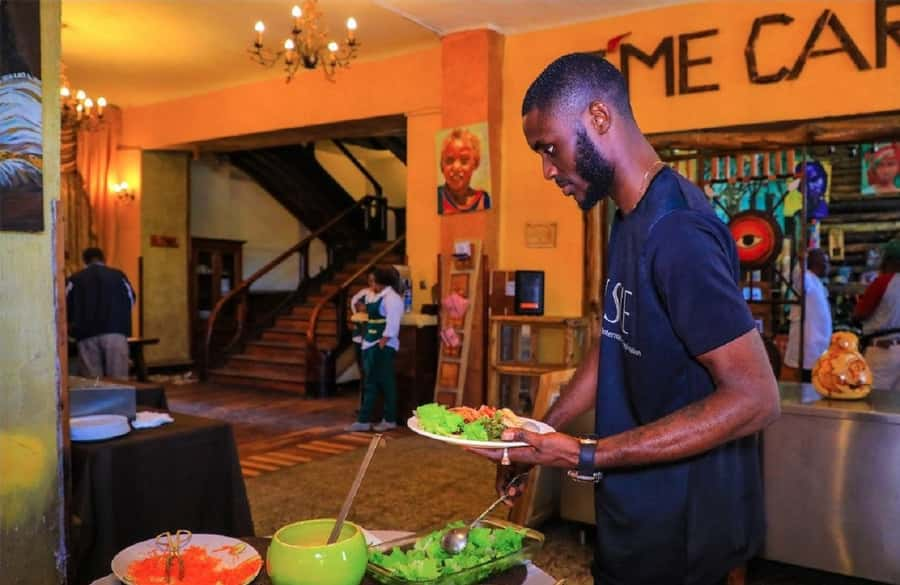
Lunch is buffet-style at what is described as Ethiopia’s first and oldest hotel. The meal includes popular dishes and a selection of vegetarian food, giving you a chance to try several flavors without ordering individual plates.
For a first visit, a buffet has a practical advantage. You can take small portions, see what appeals to you, and go back for more if you find a favorite. It also works well after the injera lesson because you can now use the bread with a wider range of dishes.
Lunch includes a bottle of water and hot drinks. That helps keep the advertised price clear, since one substantial meal and basic drinks are already covered.
Do not expect a private dining experience or a highly specialized cooking class at lunch. The purpose is sampling. You are there to try well-known Ethiopian dishes in a historic hotel setting and to make sense of the food you have encountered throughout the morning.
The hotel stop also gives the schedule a sense of place. You are not eating at an anonymous rest stop. The setting connects the meal to Addis Ababa’s older hospitality tradition.
What the $85 price includes
At $85 per person, this is not the cheapest way to eat in Addis Ababa, but it covers much more than lunch. The fee includes pickup and drop-off anywhere in the city, including hotels, private homes, and the airport, plus a car, driver, fuel, guide, activity fees, lunch, water, and hot drinks.
That bundled format can offer good value if you want a full day arranged for you. You avoid piecing together transport to Merkato, a coffee stop, a cooking activity, a Tej bar, and lunch. You also have an English-speaking guide to explain the city as you move between places.
The value is strongest for first-time visitors who want food and sightseeing in one outing. It is less compelling if you already know Addis Ababa, have your own transport, and only want a standalone cooking lesson.
Tips are not included, so plan to thank your guide and driver separately if you feel they have provided good service. Alcohol other than the included honey wine is also extra.
Six hours in Addis Ababa: who will enjoy it most
I would recommend this tour to you if you enjoy tasting, making, and asking questions. It suits first-time visitors, food enthusiasts, coffee drinkers, and anyone who wants a broad introduction rather than a single focused activity.
It also works well if you have limited time in Addis Ababa. Airport pickup and drop-off are available, although you should confirm the timing carefully before booking around a flight. Six hours is long enough to cover several major food experiences without requiring a full day away from the city.
Families and mixed-age groups may appreciate the range of stops, though the market section can be more tiring than the cafe and restaurant visits. People with a strong interest in coffee should pay special attention to the two different coffee experiences: Italian-style coffee at Tomoca and the traditional ceremony later.
You may want a different tour if your priority is quiet, slow cooking instruction. The route is broad, and traffic or market conditions can affect how much time you have at each stop. It is best viewed as a guided food day with hands-on moments, not as a formal culinary school.
Pickup is included, but you should wait in your hotel lobby for up to 15 minutes before or after the scheduled time. Bring a passport or ID card. The tour runs rain or shine, so dress for the day’s conditions and do not assume weather will cancel it.
Should you book the Ethiopian Culinary Tour?
Book it if you want to understand Addis Ababa through what people drink, bake, sell, and serve. The strongest parts are the combination of Merkato, injera baking, coffee preparation, Tej tasting, and a buffet that lets you sample several Ethiopian dishes.
The $85 price makes the most sense when you use the included transport and guide. It is a convenient package for a first visit, especially if you want city context along with food.
Skip it if you want a single, highly focused cooking class or a long, relaxed coffee tasting. For most curious first-time visitors, though, this is a lively and useful introduction to Ethiopian food culture, with enough hands-on work to make the day memorable.
FAQ
How long does the Ethiopian Culinary Tour last?
The tour lasts six hours.
Where does the tour take place?
The experience takes place in Addis Ababa, Ethiopia, with stops including Tomoca Coffee, Merkato, an injera baking activity, a traditional coffee ceremony, a local Tej bar, and a historic hotel for lunch.
Is pickup and drop-off included?
Yes. Pickup and drop-off are included at any location in Addis Ababa, including hotels, houses, and the airport.
Is transportation included?
Yes. Ground transportation includes a car, driver, and fuel.
Is lunch included?
Yes. Lunch is a buffet-style meal at the first Ethiopian Hotel. A bottle of water and hot drinks are included as well.
Is the tour conducted in English?
Yes. The tour includes a live English-speaking guide.
What is Tej?
Tej is a traditional Ethiopian honey wine. It is similar to mead and is made mainly from fermented honey.
What should I bring?
Bring a passport or ID card.
Can I cancel the tour for a refund?
Yes. You can cancel up to 24 hours in advance for a full refund.
New market tours around the world
- Tel Aviv: 2-Hour Carmel Market Tour in English with Lunch★ 4.8 · 23 reviews
- Tel Aviv: Carmel Market & Neighborhood Guided Walking Tour★ 4.7 · 3 reviews
- Tel Aviv: Carmel Market Food Tasting Tour “Shuk Hacarmel”★ 4.0 · 8 reviews
- Tel Aviv: 2-Hour Levinsky Market Tour with Full Lunch★ 4.7 · 10 reviews
- Tel Aviv: 2-Hour Jaffa Flea Market Tour with Tastings★ 4.9 · 8 reviews
- Tbilisi 2 Parks: Turtle Lake & Dedaena Park with Flea Market★ 5.0 · 3 reviews
- Tbilisi: Street Food & Sightseeing Tour with Local Markets★ 5.0 · 8 reviews
- Teguise: Market and César Manrique Foundation Tour★ 4.3 · 39 reviews
Market Tours, side by side.

Bangkok: Damnoen Saduak Market and Maeklong Railway Market
Read our review →
The Old Siam: Damnoen Saduak and Maeklong Railway Market
Read our review →
Dubai: Old Town, Creek, Museums, Souks, & Street Food Tour
Read our review →
Bangkok: Train Market & Floating Market with Boat Ride
Read our review →
Dubai: Old Town, Souks, Street Food, Guided Tour & Abra Ride
Read our review →
Dubai: Frame Tickets, Creek, Souks & Blue Mosque Guided Tour
Read our review →
Hanoi Cooking Class: Culture, Local Market & Meaning CSR Impact
Read our review →