
Review · GHENT
Ghent: Walking Tour from Friday Market to the Cathedral
Ghent’s best views arrive one after another on this private 150-minute tour, from the old harbor’s view of St. Michael’s Church to the famous line of three towers. The route also mixes coach sightseeing with a walk through canals, medieval lanes, markets, and cathedral art.
I like the useful contrast between old and new: you see the medieval core, but also Art Nouveau streets, Art Deco fronts, St. Peter’s Station, and Vooruit, a major socialist trade union building. I also like that the guide points you toward chocolate, waffles, beer, restaurants, bars, and museums for later.
The main drawback is cost. At $388 for a group of up to 20, this makes the most sense for a family, cruise group, or private party that can share the fee. Entrance fees, tastings, and lunch are extra, so plan for those separately.
Key points at a glance
- The three towers from the old harbor: See the towers of St. Nicholas’ Church, the Belfry, and St. Bavo’s Cathedral in one classic city view.
- A coach-and-walking format: Begin with wider city sights, then explore the historic center on foot.
- St. Bavo’s artistic highlight: See Jan Van Eyck’s Mystic Lamb and paintings by Peter Paul Rubens.
- Markets and medieval lanes: Walk past Friday Market, the old Fish Market, Patershol, and the fortress Gerard de Duivelsteen.
- A private group of up to 20: The fixed price becomes better value when shared among a larger party.
- Practical local suggestions: Get recommendations for Belgian chocolate, waffles, beer, food, bars, and museums.
Why this Ghent route works well
Ghent is easy to admire from a postcard, but the city makes more sense when you connect its canals, churches, markets, and civic buildings. This route does that in a short span. You begin with a coach ride through several districts, then leave the vehicle near Sint-Jacobskerk, also called Saint-Jacob’s Church, for the old-town walk.
That format matters. A walking tour alone gives you detail but not much sense of the wider city. A coach tour alone shows you more ground but can leave the medieval center feeling distant. Here, you get both views, though the change from coach sightseeing to walking means you should listen carefully to the meeting instructions.
The tour lasts 150 minutes. That is long enough for a useful first look at Ghent, but not long enough for a slow museum visit, a full meal, or an extended stop at every church. Think of it as a guided orientation with several important sights, not a day-long historical program.
The guide can lead in Dutch, English, French, or German. Since the experience is private, your group can focus on the details that interest you most, within the time available. The recorded comments describe the guide as a strong part of the experience, with one five-star assessment specifically praising the guide and the tour. No guide’s personal name is provided, so you will want to confirm who is assigned when booking if that matters to you.
More Market Walking Tours in the world:
- Bangkok: City Highlights Temple and Market Walking Tour
★ 4.5 · 3,990 reviews - Tokyo Tsukiji Fish Market Food and Culture Walking Tour
★ 5.0 · 3,184 reviews - Marrakech: Ben Youssef, Secret Garden, & Souks Walking Tour
★ 4.6 · 2,802 reviews
The coach ride through Ghent’s wider city
The first part takes you beyond the medieval center. You pass the Millionaires’ Quarter, St. Peter’s Station, and nearby avenues lined with Art Nouveau and Art Deco exteriors. These areas give you a different picture of Ghent, one shaped by later wealth, transport, architecture, and civic growth.
St. Peter’s Square brings two more landmarks into view: St. Peter’s Church and Vooruit. Vooruit is identified here as the building of the socialist trade union, an important reminder that Ghent’s story is not limited to counts, churches, and merchants.
This coach section is especially useful if you have only seen photographs of the historic core. It shows that Ghent is more than a compact medieval center. The city’s identity also comes from its rivers, canals, industrial and social history, and later urban rebuilding.
The 1913 universal exhibition is part of that story. In preparation, Ghent renovated many squares and buildings, including the approximately 1,000-year-old Count’s Castle. That detail helps explain why some parts of the city feel carefully restored while still retaining traces of different periods.
You will also hear about the buildings connected with the European Parliament, Commission, and Council. The supplied information does not specify the exact viewing point or length of this part, so treat it as a city orientation rather than a dedicated European institutions visit.
Starting near Sint-Jacobskerk and Gerard de Duivelsteen
The walking section begins around Woodrow Wilson Square, with the coach able to leave the group at Sint-Jacobskerk. The meeting information names Saint-Jacob’s Church as the place where visitors can leave the coach, so check the precise starting arrangement before setting out.
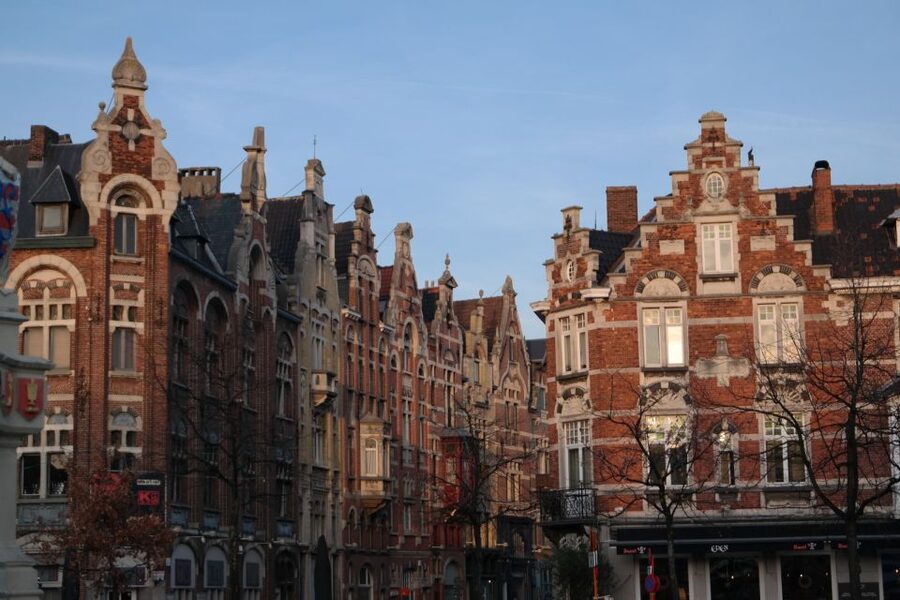
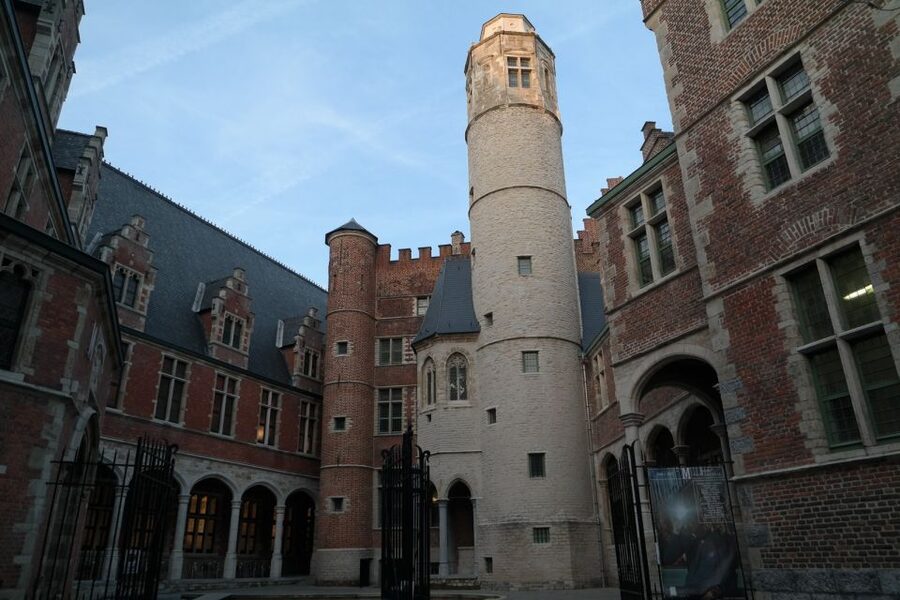
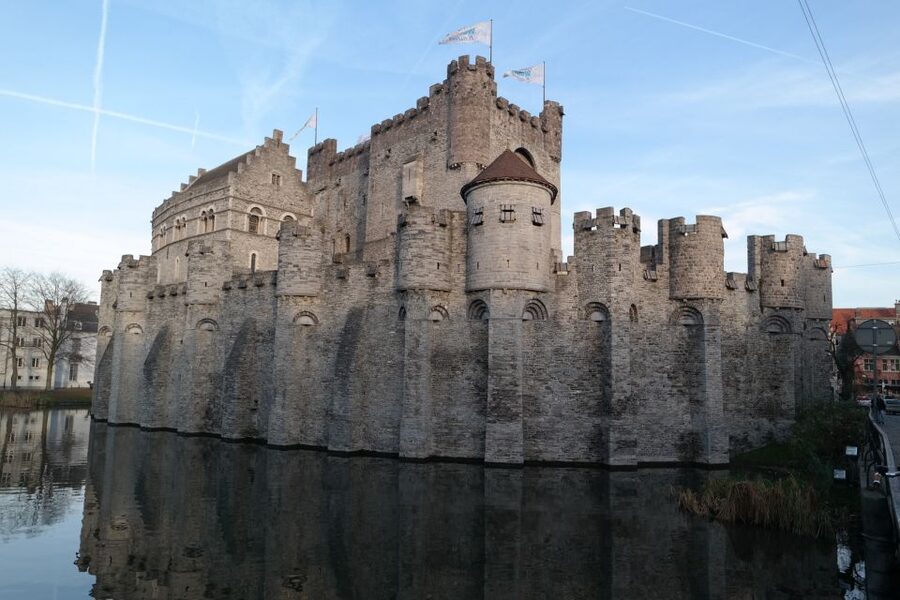
From here, the route moves into older Ghent. One early point of interest is Gerard de Duivelsteen, a fortress-like building that gives the walk a strong medieval opening. It is the sort of stop that makes the city’s past feel physical rather than abstract. You are not only hearing about old power and defense. You are looking at surviving stone in the middle of a modern city.
The route then threads through picturesque streets and along canals. Ghent is crossed by the Scheldt and Leie rivers, as well as smaller waterways, and those canals shape the way the old center feels. Water creates open views between buildings and gives the narrow streets a welcome change of pace.
You should expect regular walking on city streets and through historic areas. The information does not provide a detailed accessibility statement or a precise walking distance, so ask the provider if anyone in your group has mobility concerns.
Friday Market, the Fish Market, and Patershol
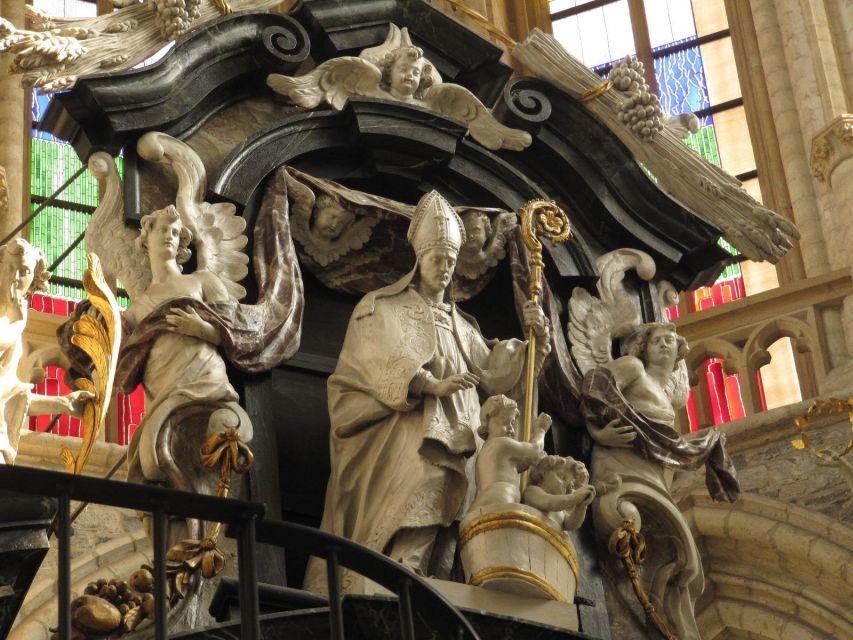
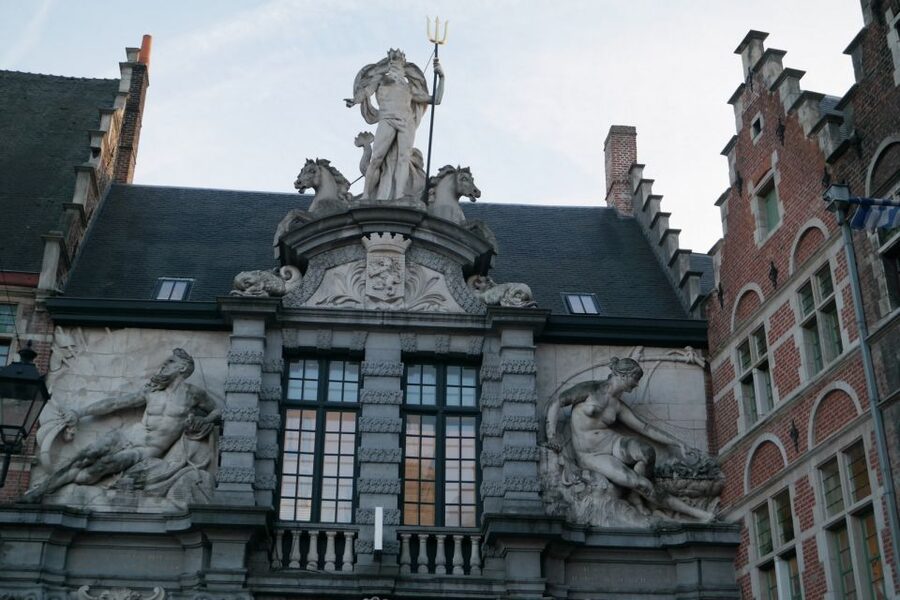
Friday Market is one of the route’s most useful stops because it connects daily city life with Ghent’s past as a place of trade and public gathering. The square gives you a larger setting after the tighter streets near the canals and old buildings.
The old Fish Market adds another layer. Markets are often where a city’s practical history is easiest to understand. Instead of seeing only grand churches and civic buildings, you get a sense of how food, commerce, and public life shaped the center.
Patershol is one of the more atmospheric parts of the walk. Its narrow streets and older buildings reward a slower pace, though the 150-minute schedule means you should not expect unlimited time for photographs or independent wandering. If you want to return for a meal or evening walk, ask your guide for suggestions. Restaurant and bar recommendations are included among the tour’s practical extras.
This is also where the tour can help you decide how to spend the rest of your day. You may want to return to the market area, seek out Belgian beer, or visit a museum. The guide provides recommendations for chocolate, waffles, beer, restaurants, bars, and museums, but tastings and meals are not part of the tour.
More market tours around the world:
- Bangkok: Damnoen Saduak Market and Maeklong Railway Market
★ 4.5 · 26,723 reviews - The Old Siam: Damnoen Saduak and Maeklong Railway Market
★ 4.5 · 10,992 reviews - Dubai: Old Town, Creek, Museums, Souks, & Street Food Tour
★ 4.8 · 10,816 reviews - Bangkok: Train Market & Floating Market with Boat Ride
★ 4.7 · 9,547 reviews
The old harbor and Ghent’s three towers
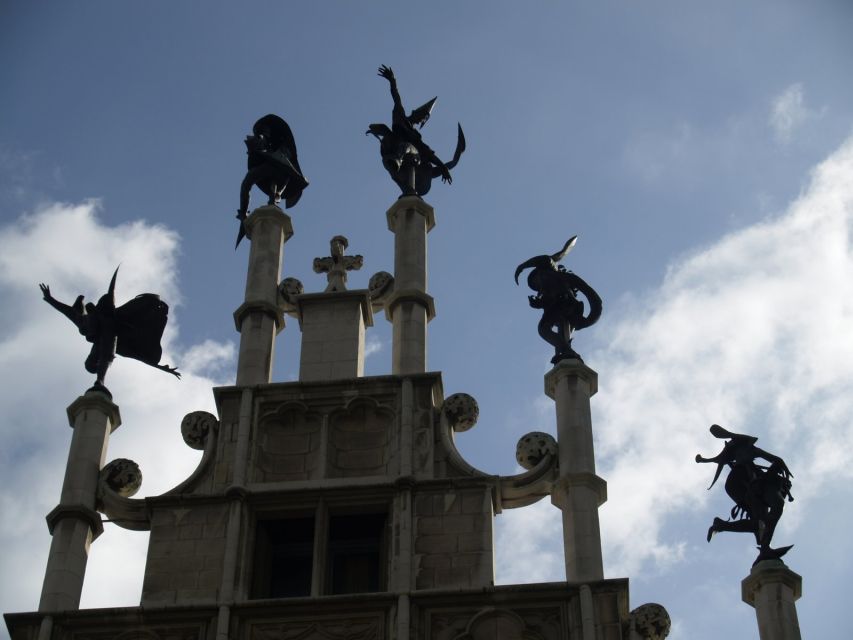
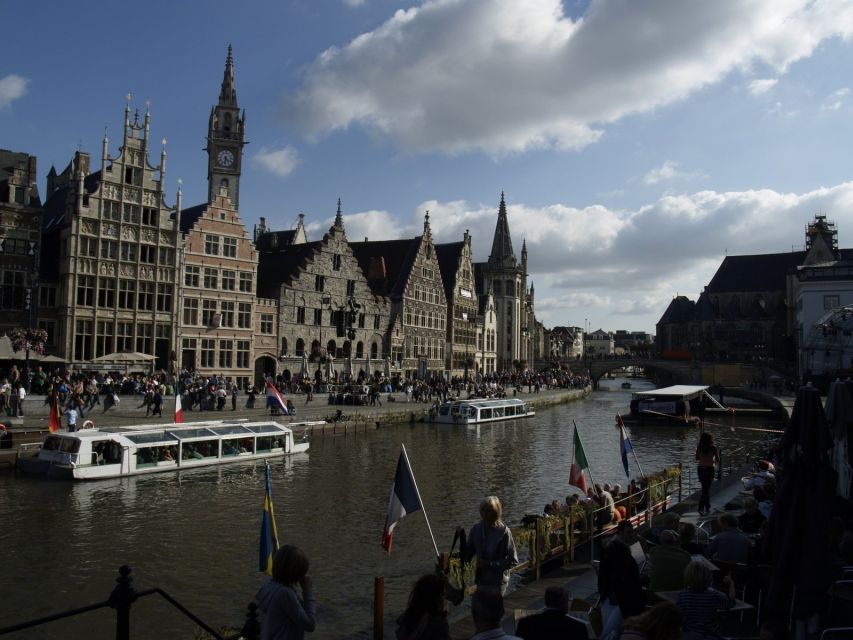
The old harbor provides the route’s clearest wide-angle view. From here, you can look toward St. Michael’s Church and see Ghent’s famous three towers: the tower of St. Nicholas’ Church, the Belfry, and the tower of St. Bavo’s Cathedral.
This view is one of the strongest reasons to choose a guided route instead of simply walking from one famous building to the next. The three towers are easy to recognize once someone points out the arrangement, but their relationship to the harbor, canals, and surrounding rooftops is more powerful when seen together.
The towers also help you understand Ghent’s center as a connected group rather than a list of separate sights. St. Nicholas’ Church, the Belfry, and St. Bavo’s Cathedral mark the city’s core from different points. The guide can add the stories and civic meaning that a photograph cannot provide.
The old harbor is likely to be a favorite stop for anyone interested in city views. It is also a good place to keep your camera ready. The supplied details call it the finest view of St. Michael’s Church, and that makes it one of the stops I would prioritize if time becomes tight.
The Belfry and Town Hall
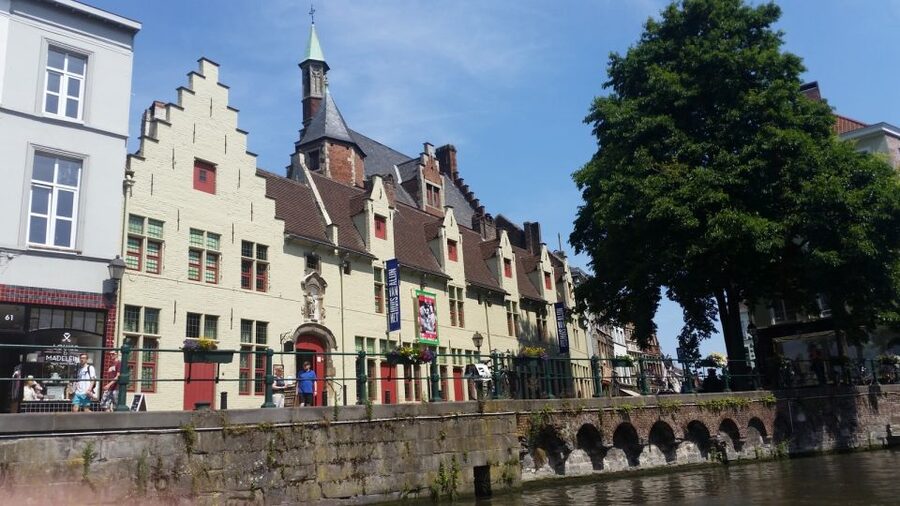
The Belfry is one of Ghent’s key civic landmarks. You will see it as part of the three-tower view and again in relation to the Town Hall and surrounding streets. The route does not include an entrance to the Belfry, so you should not expect a tower climb or interior visit as part of the package.
The Town Hall adds a different kind of interest. Churches show religious power and artistic ambition. Town halls show how the city governed itself and presented its public face. Seeing both in the same walk gives you a better sense of how medieval and later Ghent worked.
No entrance fees are included. That keeps the fixed tour price clear, but you should budget extra if you decide to visit interiors after the guided portion. The route is designed to show and explain the exteriors, with St. Bavo’s Cathedral providing the main interior and art focus named in the tour information.
St. Bavo’s Cathedral and the Mystic Lamb
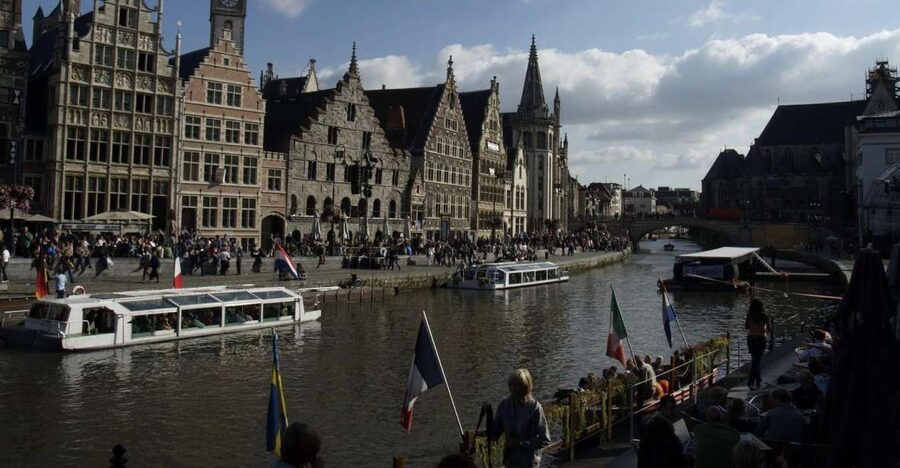
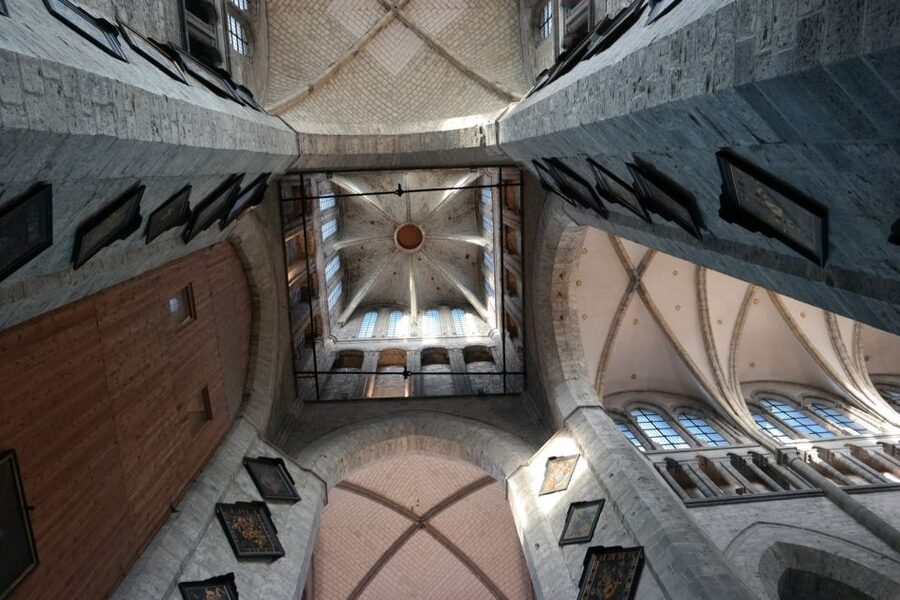
St. Bavo’s Cathedral is the artistic high point. Inside, you can admire work by Jan Van Eyck and Peter Paul Rubens, including Van Eyck’s famous Mystic Lamb.
This is more than a quick church stop. The Mystic Lamb is one of the major reasons art-focused visitors come to Ghent, and seeing it within the city’s cathedral links the painting to the religious and civic setting that surrounds it. The route gives you historical context before and after the cathedral, so the artwork does not feel like an isolated checklist item.
The exact entrance arrangements and any separate admission cost are not specified, and entrance fees are listed as excluded. Set aside money for admission if required. The tour does not include tastings or lunch, so you will need to plan food around the cathedral visit rather than assuming a meal break is built in.
Because the whole activity lasts 150 minutes, the cathedral portion may be focused rather than leisurely. If the Mystic Lamb is your main reason for booking, tell the guide at the start. A private group gives you a better chance of directing attention toward the art, though the overall schedule still has several major stops to cover.
What the private price means for your group
The listed price is $388 per group, with up to 20 people. That works out to about $19.40 per person if you fill every place. For a couple, the cost is much harder to justify. For a family, wedding party, coach group, or private gathering, the fixed price can be reasonable because you are not paying a separate rate for every person.
The value comes from the combination of transport, a live multilingual guide, a citywide introduction, and a focused old-town walk. You are also getting local suggestions for food, drinks, sweets, and museums, which can help shape the rest of your stay.
Still, compare the price with your plans. If you already know Ghent well, prefer to explore alone, or mainly want entry to the cathedral and the Mystic Lamb, you may not use the coach portion enough to make the cost worthwhile. If this is your first visit and you want a private overview in a short time, the package is easier to defend.
Remember the extra costs. Lunch, tastings, and entrance fees are not included. The activity is best treated as a guided introduction, followed by your own spending and exploring.
Who should book this Ghent experience
I would choose this tour for a group that wants a private introduction to Ghent without arranging separate transport and guiding. It suits first-time visitors, families with mixed interests, and groups that want both broad city views and a walk through the old center.
It is also a good match for people who appreciate architecture. The coach portion covers Art Nouveau and Art Deco exteriors, while the walk brings medieval fortifications, markets, canals, churches, and civic buildings.
Art lovers should pay close attention to the cathedral section. The chance to see Van Eyck’s Mystic Lamb and paintings by Rubens gives the tour a clear artistic anchor.
I would hesitate if you are traveling alone or as a couple on a tight budget. The fixed group price is not designed around one or two people. I would also hesitate if you want long, quiet visits inside museums or churches. The route covers a lot, so its strength is range and context rather than an unhurried look at one site.
Booking is flexible: you can cancel up to 24 hours before the activity for a full refund, and you can reserve now and pay later. Starting times depend on availability, so check the schedule before planning meals or other timed visits.
Should you book it?
Book this tour if you want to see many sides of Ghent in one compact outing: the Millionaires’ Quarter, St. Peter’s area, markets, Patershol, canals, the old harbor, the three towers, and St. Bavo’s Cathedral. The private format and strong guide feedback add real value for a larger group.
Skip it if the $388 price will be shared by only one or two people, or if you want a slow independent walk with plenty of time for meals and interior visits. For the right group, though, this is a practical way to get your bearings, see the city’s essential sights, and leave with a good list of places to explore next.
FAQ
How long does the Ghent tour last?
The tour lasts 150 minutes.
What languages are available?
The live guide can conduct the tour in Dutch, English, French, or German.
Is this a private tour?
Yes. The experience is offered as a private group tour for up to 20 people.
Where does the tour meet?
The meeting point is Saint-Jacob’s Church, called Sint-Jakobskerk in Dutch. This is also where the group can leave the coach.
Are entrance fees included?
No. Entrance fees are not included in the tour price.
Are lunch and tastings included?
No. Lunch and tastings are not included. The guide does provide recommendations for chocolate, waffles, beer, restaurants, bars, and museums.
Can I cancel the tour for a refund?
Yes. You can cancel up to 24 hours in advance for a full refund. You can also reserve now and pay later.
New market tours around the world
- Tel Aviv: 2-Hour Carmel Market Tour in English with Lunch★ 4.8 · 23 reviews
- Tel Aviv: Carmel Market & Neighborhood Guided Walking Tour★ 4.7 · 3 reviews
- Tel Aviv: 2-Hour Jaffa Flea Market Tour with Tastings★ 4.9 · 8 reviews
- Tel Aviv: Carmel Market Food Tasting Tour “Shuk Hacarmel”★ 4.0 · 8 reviews
- Tel Aviv: 2-Hour Levinsky Market Tour with Full Lunch★ 4.7 · 10 reviews
- Tbilisi 2 Parks: Turtle Lake & Dedaena Park with Flea Market★ 5.0 · 3 reviews
- Tbilisi: Street Food & Sightseeing Tour with Local Markets★ 5.0 · 8 reviews
- Teguise: Market and César Manrique Foundation Tour★ 4.3 · 39 reviews
Market Tours, side by side.

Bangkok: Damnoen Saduak Market and Maeklong Railway Market
Read our review →
The Old Siam: Damnoen Saduak and Maeklong Railway Market
Read our review →
Dubai: Old Town, Creek, Museums, Souks, & Street Food Tour
Read our review →
Bangkok: Train Market & Floating Market with Boat Ride
Read our review →
Dubai: Old Town, Souks, Street Food, Guided Tour & Abra Ride
Read our review →
Dubai: Frame Tickets, Creek, Souks & Blue Mosque Guided Tour
Read our review →
Hanoi Cooking Class: Culture, Local Market & Meaning CSR Impact
Read our review →
Marrakech: Bahia Palace, Saadian Tombs, Souk and Medina Tour
Read our review →This tour also appears in