Review · JAIPUR
Jaipur: Spice Market and Street Food Walking Tour
Jaipur’s spice market gives you a fast, full-sensory introduction to the Pink City: sacks of powder, grinding stones, scooters, temple bells, shopkeepers, and the sharp smell of chilies and cardamom. I like this tour for two clear reasons: you see how spices are prepared, and you eat where local customers eat, not at a polished restaurant built for sightseeing.
The walk also includes two short tuk-tuk rides and a stop for chai, which breaks up the pavement time. The main drawback is the setting itself: narrow, crowded streets and uneven walking make this a poor choice if you have mobility limits or dislike close urban crowds.
Key points to know before booking
- Jaipur’s oldest and biggest spice market: See local workers grind and sell spices in the old city.
- Five or six tasting stops: Try vegetarian snacks and chai at small food shops and a local cafe.
- Guides who explain the food: Harshit, Harshita, and Lacey are among the guides named for this experience.
- Two short tuk-tuk rides: These add a useful taste of Jaipur’s everyday transport without turning the tour into a vehicle trip.
- A 2.5-hour morning or afternoon plan: The tour starts at Shri Chandpole Hanuman Ji Temple and ends near Raj Mandir Cinema.
- Best for curious eaters and photographers: Bring comfortable shoes, an open mind, and respect for people you photograph.
Starting at Shri Chandpole Hanuman Ji Temple
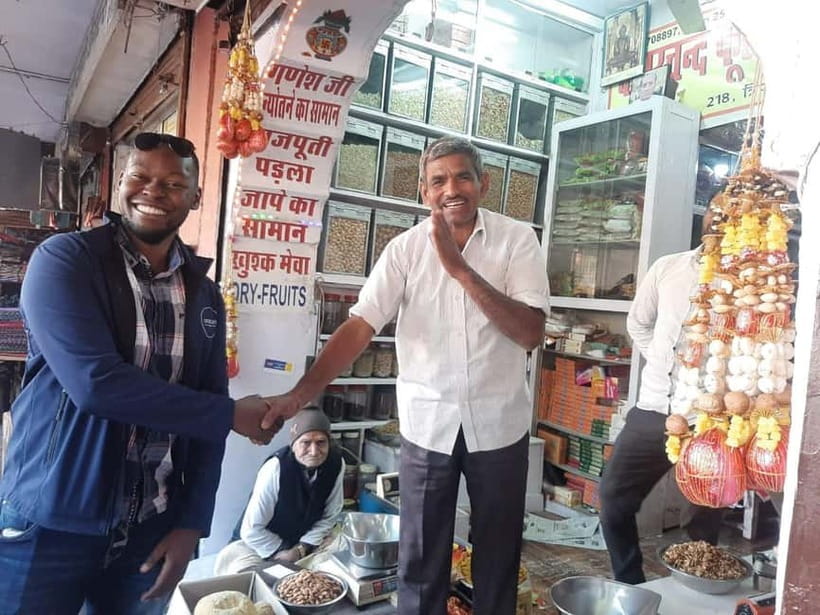
You meet the guide just outside Shri Chandpole Hanuman Ji Temple, in Jaipur’s old Pink City. The meeting point matters because this tour begins with local street life rather than a hotel pickup or a restaurant introduction. You are quickly on foot, moving into the market streets.
Look for the guide outside the temple, and allow a little patience at the start if the area is crowded. A guide was able to find a group during the heavy Diwali crowds, but busy festival periods can still make meeting up slower than expected.
The English-speaking guides named for this experience include Harshit, Harshita, and Lacey. Their role is more than pointing out food. They explain the names and uses of spices, how they fit into cooking, and, in some cases, their medicinal or Ayurvedic associations. That background turns a row of colored powders into something easier to understand.
More Market Food Tours in India
- Mumbai: Street Food and Night Markets Tour
★ 4.9 · 719 reviews - Jaipur Bazaar & Food Walking Tour
★ 5.0 · 281 reviews - Mumbai Street Food & Night Markets
★ 5.0 · 225 reviews
The spice market: color, noise, and working food culture
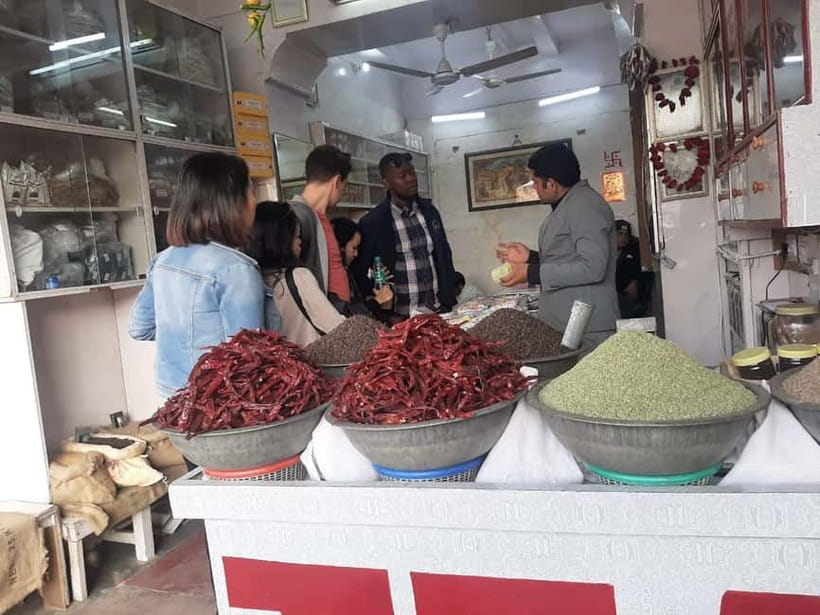
The main walk lasts about two hours and focuses on Jaipur’s oldest and biggest spice market. This is not a quiet market designed for browsing. Expect scooters, voices, shop activity, pungent aromas, bright powders, and people working around you.
The most useful part is seeing spices ground by local workers. You can watch the preparation rather than simply seeing finished packets on a shelf. Your guide explains what you are looking at and how different spices are used in Indian cooking.
This is also a good place to slow down and notice the range of ingredients. One guide pointed out that rice alone comes in more than five types, a small detail that shows how much variety can sit behind familiar foods. If you cook at home, you will likely get more from this section than a simple list of spice names.
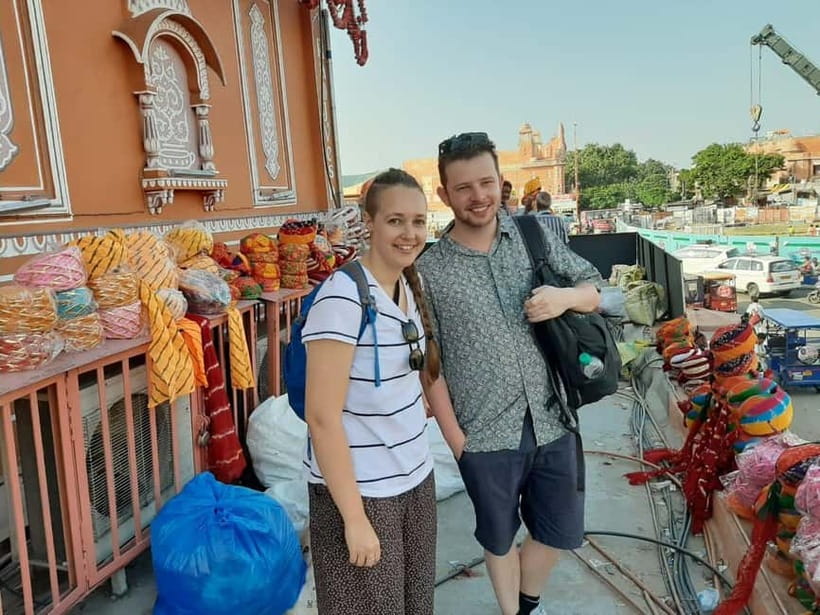
The market is also a strong setting for photography. You get color, texture, faces, machinery, bags, and the movement of the old city in a compact area. Ask before photographing people, and follow your guide’s lead. Photography is encouraged, but the people working here are not props.
Walking past Jaipur’s old-city sights
The route takes you past famous historic sites as you move between the market and food stops. The focus remains on daily life, so do not book this expecting a full palace or monument tour. Instead, you get context as you walk through the streets around the old city.
I like this approach because it links Jaipur’s food to the place where it is bought and prepared. The market is not treated as an isolated attraction. It sits within the city’s traffic, temples, shopfronts, and old streets, and the walk lets you see how those pieces work together.
The tradeoff is that the surroundings can feel chaotic. You need to watch your footing, stay aware of vehicles, and keep track of the group. This is not a good moment for a relaxed stroll with your eyes fixed on your camera screen.
Two short tuk-tuk rides through the Pink City
After the spice market walk, the tour includes a short tuk-tuk ride of about 10 minutes, with two short rides included overall. The route includes Tripolia Gate, one of the old-city landmarks mentioned in the tour plan.
These rides are brief, but they add value. You get to experience Jaipur’s common street transport and cover part of the route without walking every block. For a first visit, even a short tuk-tuk trip helps you understand the pace and close traffic of the Pink City.
Do not mistake this for a tuk-tuk sightseeing tour. The rides are transfers between walking sections, not long scenic drives. If you want extended views from a vehicle, you will need a different activity.
More Market Walking Tours in India
- Private Heritage Walking Tour in Jaisalmer Fort and Old Bazaar
★ 5.0 · 306 reviews - Old Delhi: Spices, Heritage and Bazaars Walking Tour
★ 5.0 · 173 reviews - Bengaluru Pete City Market Half-Day Walking Tour
★ 5.0 · 163 reviews - Agra: Street Food Walking Tour, Spice Market, & Tuk-tuk Ride
★ 4.9 · 102 reviews
Five or six food stops in the old city
The food portion visits five or six authentic food shops, with a focus on vegetarian dishes. Your guide leads you to places that can be hard to identify on your own, then explains what you are eating and how it fits into local food culture.
The stops may feel simple. You might sit in a local Indian cafe rather than at a restaurant with table service and a tourist menu. That is part of the point, but it also means you should expect a working food setting, limited room, and a pace shaped by the stall or shop.
The tasting is useful for cautious eaters because you are not left to order blindly. Harshit has been especially good at explaining food choices, spice use, and the places he recommends. The guide’s help matters here: without local direction, it would be easy to walk past a small stall without knowing what to try.
The tour description does not specify every dish, so you should not book it expecting a fixed menu of named specialties. The clear promise is vegetarian street food, several tasting stops, and a final chai and snack break.
Chai and snacks near the end of the route
One of the final stops is a famous street food stall for chai and snacks. This gives you a chance to sit for a while after the market walk, talk with the guide, and let the food portion slow down.
Chai is a fitting end to this kind of outing. It is familiar enough to be approachable, but the setting gives it more character than a cup ordered in a hotel. The final snack stop is also where the tour’s two themes meet: you have learned about ingredients, then tasted some of the food they support.
The experience ends at Raj Mandir Cinema, near Chaura Rasta Street and Tripolia Gate. That location is useful if you want to continue exploring the old city afterward, although hotel drop-off is not included. Plan your next move before the tour ends, especially if you are unfamiliar with Jaipur.
What the $21 price buys you
At $21 per person, this is a strong value if you want several things in one short outing. You get a live English-speaking guide, about two hours of walking, two short tuk-tuk rides, tastings at five or six food shops, chai and snacks, and a water bottle.
The food alone is not the main measure of value. Small street snacks are usually inexpensive, so the bigger benefit is having someone explain the market, select stops, translate the setting, and guide you through streets that can feel confusing at first.
The tour also saves research time. You do not need to find a spice market, compare food stalls, work out tuk-tuk routes, and decide which places are suitable for a first visit. If you enjoy planning every meal yourself, the price may feel less important. If you want a guided first look at Jaipur’s food culture, it is reasonable.
The experience is not designed around luxury. You are paying for access, explanation, and local direction, not air conditioning, private transport, or a formal meal.
Who will enjoy this walk most
I would choose this for food lovers, photographers, cooks, bloggers, and anyone who wants a first look at everyday Jaipur. It is particularly useful early in your stay, when you are still learning how the old city works and want ideas for what to eat later.
It also suits solo visitors who want company without committing to a full-day tour. The 2.5-hour length leaves room for a palace visit, shopping, or an evening plan.
You should think twice if you have difficulty walking, use a wheelchair, or find dense crowds stressful. The tour is explicitly not suitable for people with mobility impairments or wheelchair users. Comfortable shoes are essential, and you should be ready for crowded places, traffic, and uneven streets.
Food restrictions deserve a practical check before booking. The tour is described as vegetarian, but the supplied details do not specify allergy handling or a full ingredient list. Tell the guide about your needs before tasting anything, and do not assume every snack is suitable for every diet.
Timing, comfort, and useful preparation
The activity lasts 2.5 hours, with starting times available when you check dates. Since the route includes a long walking section and several food stops, choose a time when you can eat small portions rather than arriving extremely full.
Wear shoes that can handle two hours on old-city streets. Loose, comfortable clothing will make the walk easier, and a phone with room for photos is useful. A water bottle is included, but carrying extra water can still be sensible in hot weather.
Keep your valuables secure in the crowd, and stay close to the guide near traffic. The old city can be loud and tightly packed, so a small bag is easier than bulky luggage.
The tour has free cancellation up to 24 hours in advance, and you can reserve now and pay later. Those terms help if your Jaipur schedule is still changing, but the practical question is still whether you want a walking food tour rather than a monument-focused outing.
What the high ratings suggest about the guiding
The strongest pattern in the feedback is the quality of the guiding. Paul specifically praised the guide’s punctuality, clear English, food advice, and explanations about Jaipur and the spices. Sarah Emily found Harshit particularly strong on spice uses and Ayurvedic information.
That matters because the market can overwhelm you without context. A guide who explains why an ingredient matters, how it is used, and where to try it makes the experience easier to follow.
The feedback also points to a friendly, reassuring style. Harshit was described as professional and careful, while Harshita was praised for being helpful and easy to spend time with. Lacey received warm comments for being friendly and effective at guiding.
Guide assignments can change, so you should not assume you will receive a particular person. Still, the named guides give you a useful sense of the experience: expect a conversational walk with food and spice explanations, rather than a memorized speech delivered at each stop.
Should you book the Jaipur spice market tour?
Book it if you want to understand Jaipur through its ingredients, small food shops, and street traffic. The combination of spice grinding, local explanations, short tuk-tuk rides, vegetarian tastings, and chai gives you a lot in 2.5 hours.
I would especially recommend it as an early Jaipur activity for curious eaters. You will finish with a better sense of what spices look like before they reach a kitchen, where locals buy snacks, and how to move around the old city.
Skip it if you want a quiet tour, a full historic-site itinerary, a long tuk-tuk ride, or a formal restaurant meal. The streets are crowded, the walking is real, and the food stops are local rather than polished. For the right visitor, that is exactly why the $21 price makes sense.
FAQ
Where does the Jaipur spice market tour start?
The tour starts just outside Shri Chandpole Hanuman Ji Temple in Jaipur’s Pink City.
Where does the tour finish?
It finishes at Raj Mandir Cinema, near Chaura Rasta Street and Tripolia Gate.
How long does the tour last?
The full experience lasts 2.5 hours. About two hours are devoted to the guided walk, followed by a short tuk-tuk ride and food stops as part of the route.
What food is included?
You receive vegetarian food tastings at five or six authentic food shops, along with chai and snacks at a famous street food stall.
Is tuk-tuk transport included?
Yes. The tour includes two short tuk-tuk rides, including a ride of about 10 minutes.
Is the tour suitable for wheelchair users?
No. The experience is not suitable for wheelchair users or people with mobility impairments. Comfortable walking shoes are required.
More Spice Market and Bazaar Tours around India
- Old Delhi Food-Spice Market-Temples Tour Soon Featured on NETFLIX
★ 5.0 · 304 reviews - Old Delhi Odyssey: A Tour of Religion, Spice Market, & Best Food
★ 5.0 · 284 reviews - Delhi: Old Delhi & Spice Market Tour
★ 4.8 · 45 reviews - Delhi: Old Delhi’s Street Food, Temples & Spice Market Tour
★ 5.0 · 30 reviews
New market tours around India
- Mumbai: Local Markets & Temples Tour★ 4.6 · 45 reviews
- Old Delhi: Spices, Heritage and Bazaars Walking Tour★ 5.0 · 173 reviews
- Old Delhi Street Food and Spice Market Tour★ 5.0 · 12 reviews
- Old Delhi Temples and Spice Market Tour★ 5.0 · 5 reviews
- Old Delhi: Khari Bawli – Asia’s Largest Spice Market★ 5.0 · 3 reviews
- Night Tour: Mumbai’s Nights & Buzzing Bazaars★ 5.0 · 7 reviews
- Mysore: Palace, Art Gallery & Devaraja Market Walking Tour★ 5.0 · 7 reviews
- Mumbai:Dhobi Ghat Laundry,Dharavi Slum & Flower market Tour★ 5.0 · 12 reviews
Jaipur Market Tours, side by side.
Jaipur Market Tour & Vegetarian Rajasthani Home Cooking Class
Read our review →
Jaipur: Half or Full-Day Sightseeing Tour with Flower Market
Read our review →
Jaipur Sightseeing by Tuk-Tuk: Temples, Palaces & Markets
Read our review →