Review · MUMBAI
Mumbai:Dhobi Ghat Laundry,Dharavi Slum & Flower market Tour
Mumbai’s daily life comes into sharp focus on this low-cost tour. You ride a local train to Dhobi Ghat, watch hundreds of clothes being washed and dried, then continue to a flower market and through Dharavi’s narrow lanes, workshops, homes, and small businesses.
I like the train ride because it gives you a useful look at how Mumbai moves, not just a ride between tourist stops. I also like the focus on Dharavi’s working community, from recycling and leather to garments and pottery, plus the chance to see the flower market at its busiest.
The main consideration is that this is a close-up walking tour through crowded, modest areas. You need comfortable shoes, patience, and a respectful attitude. The lanes can feel tight, the subject matter can be confronting, and snacks are not included.
Key points to know before you book
- Dhobi Ghat by local train: Ride from Churchgate with your guide to see Mumbai’s famous open-air laundry.
- Three very different stops: Combine laundry workers, a flower market, and Dharavi’s homes and workshops in one outing.
- Dharavi beyond the stereotype: See recycling, leather, garments, pottery, local markets, schools, and small-scale businesses.
- Local English-speaking guidance: Guides such as Shivam explain the areas clearly and know Dharavi well.
- Strong value at $9: Train fare, taxi fare, a guide, and bottled water are included.
- Bring practical footwear: You will walk through narrow lanes and busy working areas, so comfort matters more than style.
Why this $9 Mumbai tour feels different
Many Mumbai outings keep you near grand buildings, waterfront views, and polished shopping streets. This one points your attention toward the people and systems that keep the city running.
For $9 per person, you get a guide, train ticket, taxi fare, and bottled water. That is a strikingly low price for a tour combining three separate parts of Mumbai. The real value is not a long list of sights. It is the access to ordinary work and community life that can be difficult to understand on your own.
I would not choose this tour if you want a relaxed morning with plenty of open space. I would choose it if you want to see how laundry is handled at a huge urban scale, how a flower market begins the day, and how Dharavi’s residents run homes and businesses within a crowded part of the city.
The outing also keeps the transport practical. You start at Churchgate station, use the train for part of the route, and then take a short taxi ride onward. Since the train ticket and taxi fare are covered, you do not have to work out each small payment as you go.
More Flower and Flea Market Tours in India
- Jaipur Tuk-Tuk Tour with Flower Market Visit
★ 5.0 · 124 reviews - Jaipur Tour by Tuk-Tuk or Car with Flower Market
★ 5.0 · 120 reviews - Jaipur: Half-Day Guided Sightseeing Tour with Flower Market
★ 4.9 · 119 reviews
Meeting your guide at Churchgate station
The meeting point is inside Churchgate station, at the train ticket counter near the Wheelers bookstall. This is a useful detail because a major railway station can be confusing when you are looking for a guide in a crowd.
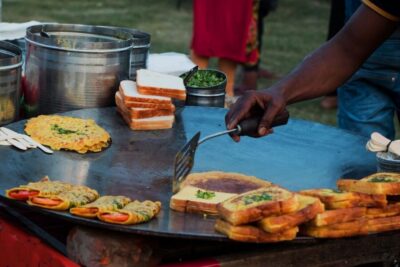
You should arrive with comfortable shoes and a camera if you want photographs. Water is supplied, but it is still sensible to bring your own water as well. Snacks are not included, so eat beforehand or plan to buy food separately.
The tour is offered in English. Shivam is one of the guides associated with this experience, and the guidance is especially important here. A good explanation helps you understand what you are seeing without reducing Dharavi or its residents to a quick photo stop.
The local train ride to Dhobi Ghat
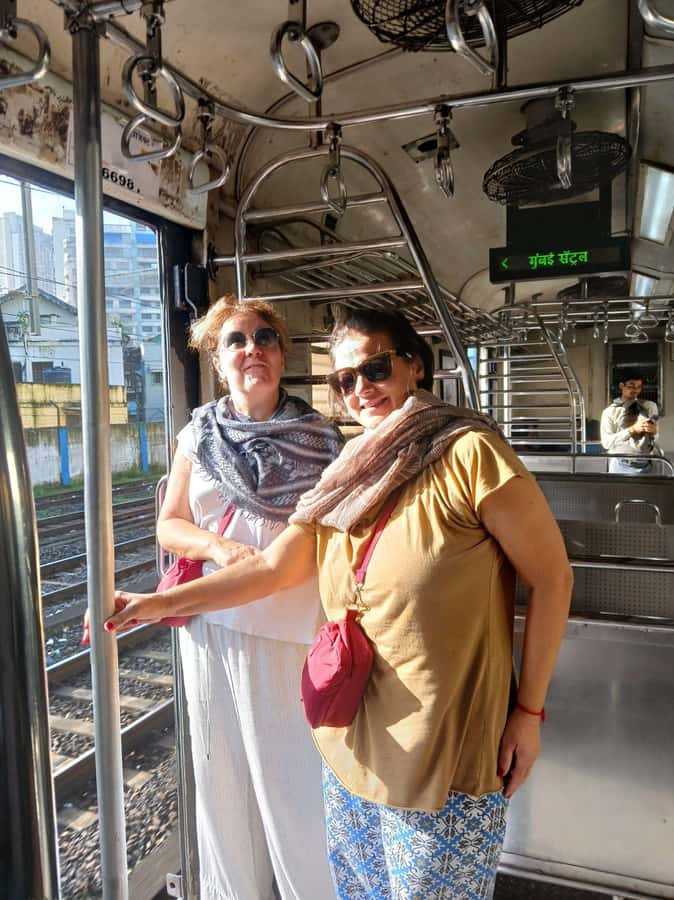
The train ride is more than a way to save money on transport. It gives you a short look at Mumbai’s everyday rhythm, with commuters using the railway as part of normal city life.
Your guide handles the included train ticket and takes you toward Dhobi Ghat. For someone unfamiliar with Mumbai, this makes the journey less stressful. You can watch the city pass by while your guide explains the route and what you are about to see.
The train may be crowded, and this is not a private vehicle experience. That is part of its value, but it also means you should keep your belongings secure and stay close to the guide. If you prefer quiet, private transport, this may not be your ideal tour.
The journey sets up the first major stop well. You are not simply dropped at a famous attraction. You arrive using the same kind of transport that millions of people depend on each day.
Dhobi Ghat and the work behind the clothes
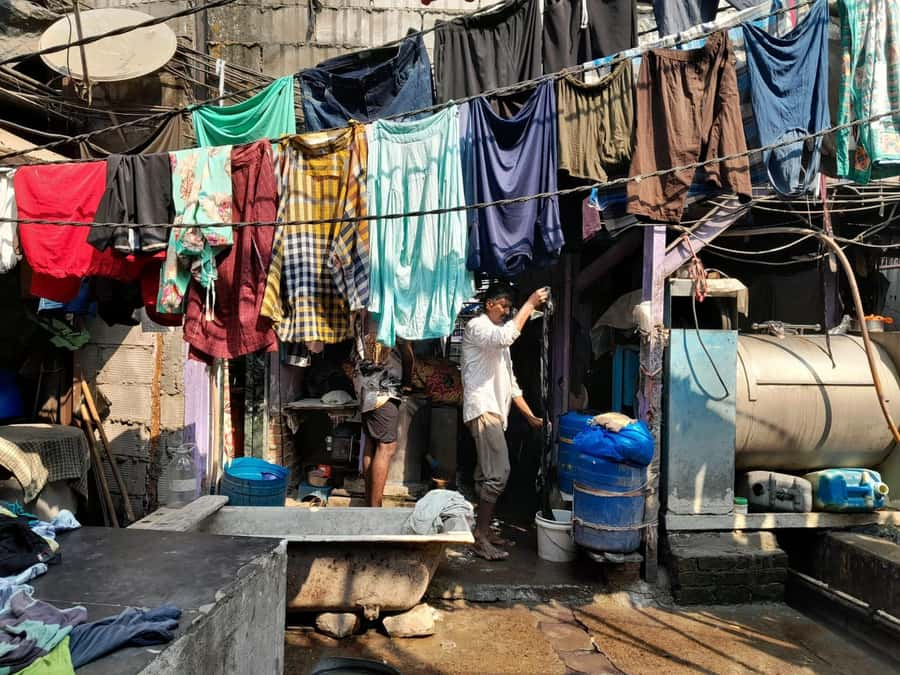
Dhobi Ghat is presented as the world’s largest open-air laundry. Here, hundreds of clothes are washed and dried in an organized working area.
The striking feature is the scale. Laundry is usually a private chore or a small commercial service. At Dhobi Ghat, it becomes a large coordinated operation, with clothes moving through repeated stages of washing and drying.
You can expect to see rows of laundry work and the physical effort behind clean clothing in Mumbai. The visit gives meaning to something most people take for granted. Every shirt, sheet, and uniform requires labor before it returns to a home or business.
This stop is best approached as a working place, not a stage set. People are carrying out their jobs, so your guide’s instructions matter. Listen before taking photographs, keep out of the way, and avoid treating the workers as decoration.
I like this part because it connects a famous sight to a useful question: who does the city’s daily work? The answer is not abstract. You see the system, the people, and the coordination in front of you.
More Flower and Flea Market Tours in Mumbai:
- Bangkok: Night Bike Tour with Temples & Flower Market Visit
★ 4.8 · 751 reviews - Bangkok: Night Bike Tour with Temples & Flower Market Visit
★ 5.0 · 223 reviews - Jaipur: Half or Full Day Sightseeing Tour with Flower Market
★ 5.0 · 94 reviews - Paris: Flea Market Insider’s Tour in Extra-Small Group
★ 4.6 · 73 reviews
A short taxi ride to Mumbai’s flower market
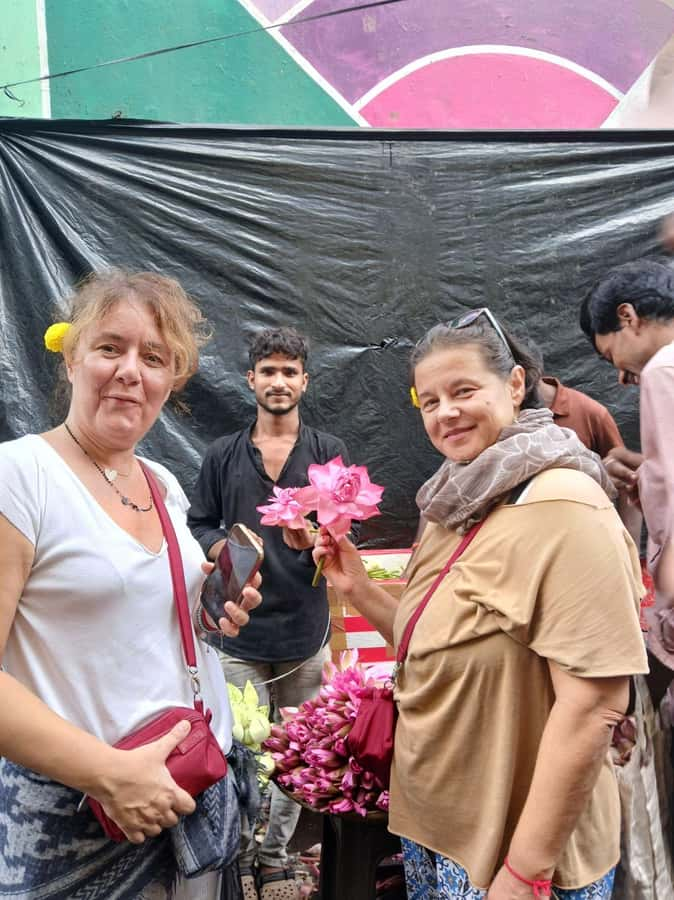
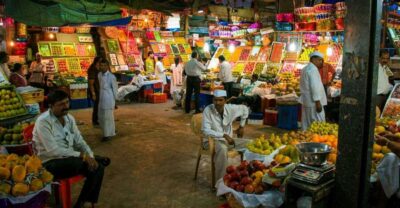
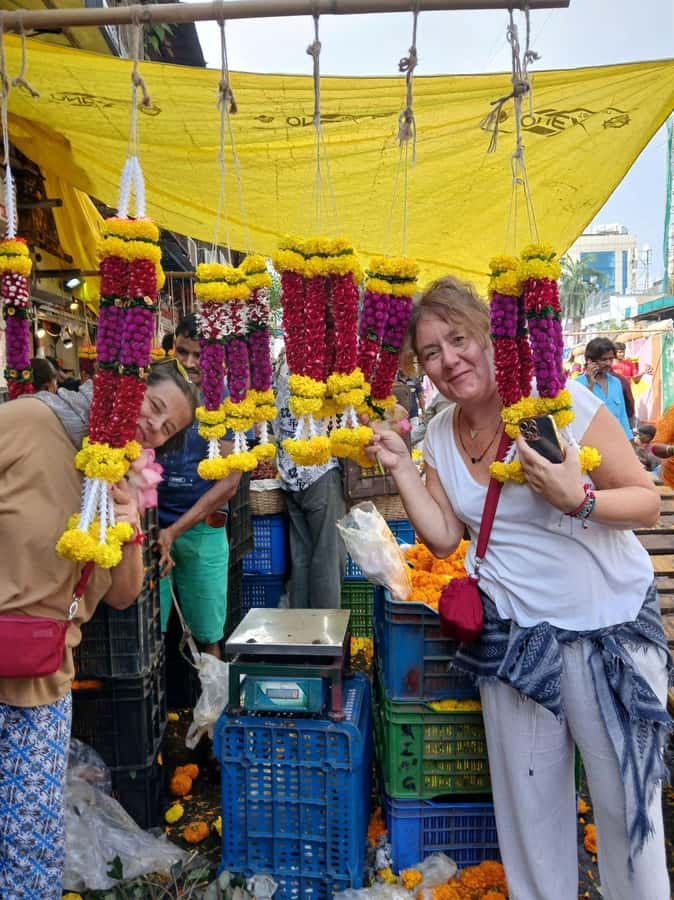
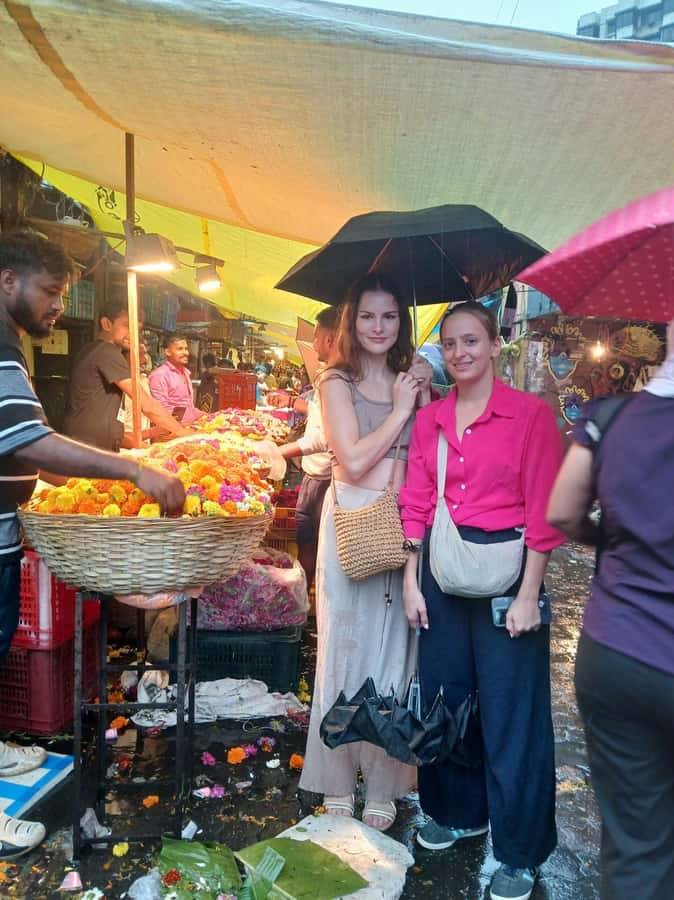
After Dhobi Ghat, a short taxi ride brings you to a colorful and busy flower market. The change in mood is immediate. The laundry stop is about repetition and physical labor, while the market brings together color, scent, movement, and trade.
The market is important because it shows another daily cycle in Mumbai. Flowers are not presented only as an attraction for photographers. They are part of local commerce and the start of the day for many people.
You can expect a lively setting with many people working around flowers. The visit is relatively brief in the overall route, but it adds variety and gives you a different view of the city’s economy.
Bring your camera, but be thoughtful. Markets are working environments, and people may be carrying loads or negotiating sales. Stay with your guide and make room when needed.
This stop also makes the tour easier to appreciate as a whole. You are not seeing one isolated community. You are moving between different forms of work, from laundry to flower selling to the industries found in Dharavi.
Entering Dharavi through its narrow lanes
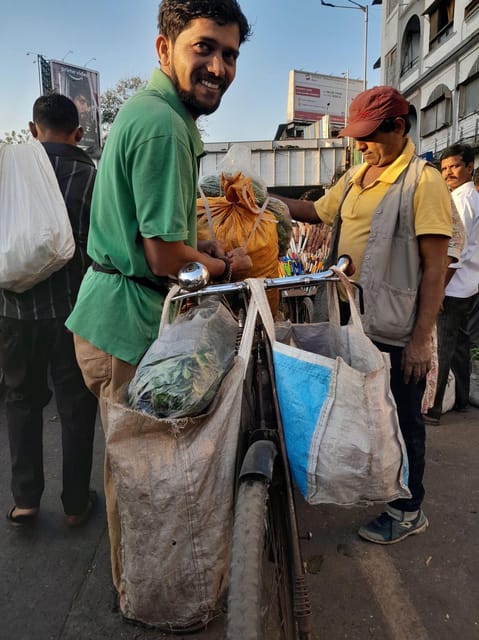
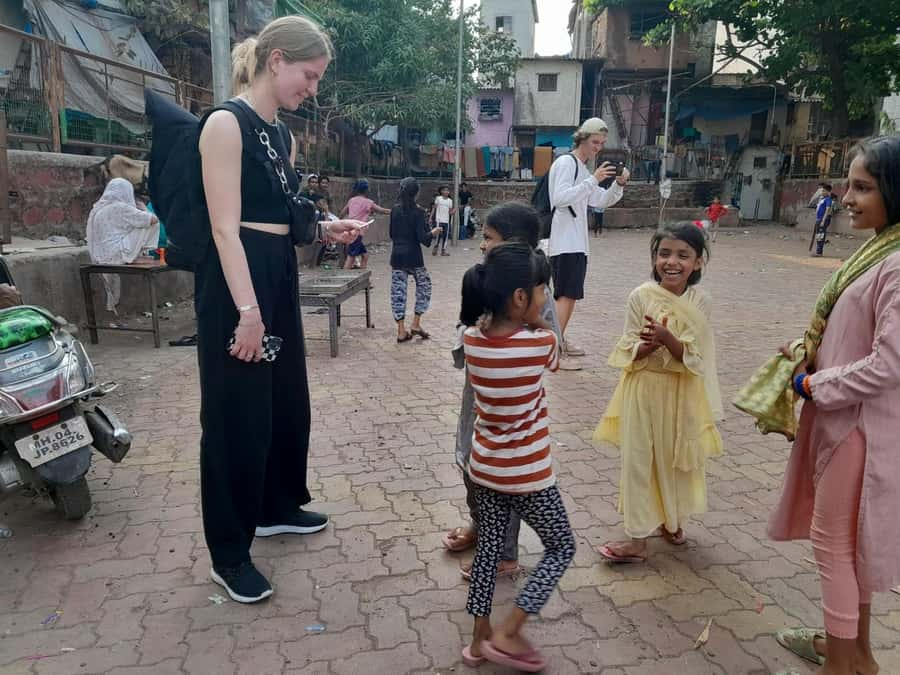
The Dharavi section is the longest and most personal part of the experience. The tour takes you through narrow lanes to see small homes, local markets, a school, recycling industries, leather work, garments, and pottery.
The area is often described in simple terms, but that description misses its working character. Dharavi is home to a large number of small businesses and households operating close together. The tour presents it as a place where people live, make things, repair things, trade, and build livelihoods.
You may see the contrast between very small houses and active workspaces. That contrast is central to understanding the area. Dharavi is not only a residential district, and it is not only an industrial area. Homes and businesses share the same tight setting.
The tour information describes Dharavi’s economy as generating more than $1 billion annually and refers to its reputation as a five-star slum. I would treat that wording carefully. The economic figure points to the scale of local enterprise, but the phrase should not hide the difficult living conditions you may see.
A better reason to visit is to understand the resourcefulness of the community without pretending that poverty is attractive. You will see residents creating income, supporting families, and running businesses in a place with very limited space.
Recycling, leather, garments, and pottery
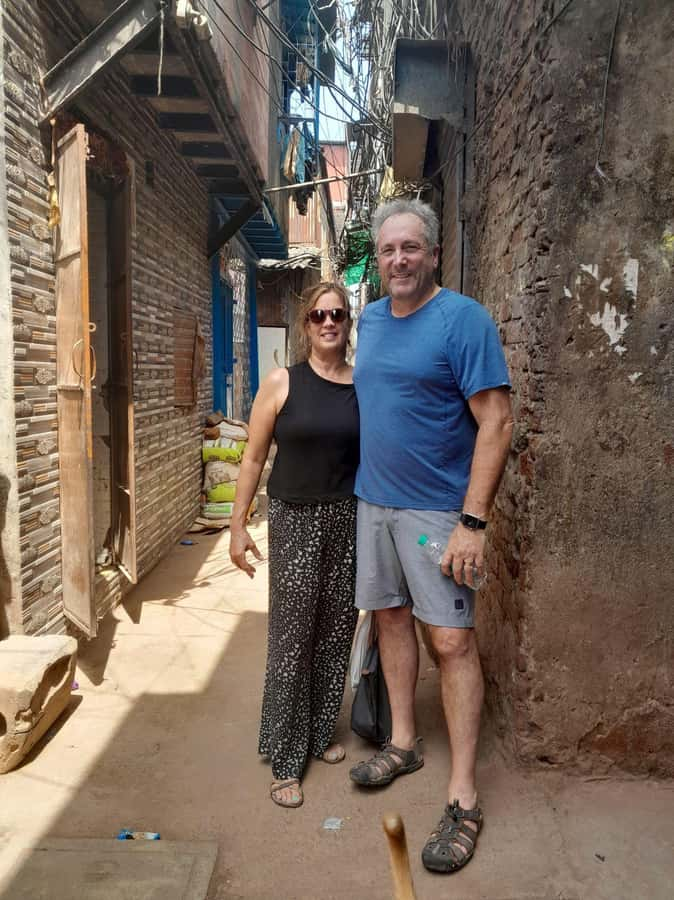
The work areas give the Dharavi visit its substance. Recycling, leather, garments, and pottery are not just names on a route. They show how specialized production can operate through small workshops and family businesses.
Recycling is particularly useful for understanding the area’s economic role. Materials that might otherwise be discarded can become part of a local trade network. The tour gives you a chance to see this work as an organized source of income rather than as a vague image of waste.
Leather and garment production show another side of Dharavi’s commercial life. Small industries can serve wider markets while remaining tied to local streets and homes. The pottery section adds a traditional craft element to the more industrial work.
You should expect a practical explanation rather than a polished museum display. The value comes from seeing working spaces and hearing how the area functions. Conditions may be cramped, and you should not expect every stop to be comfortable or tidy.
The guide’s role is central here. Shivam is described as having clear English and a strong knowledge of Dharavi. That matters because the lanes can look confusing, and the purpose of each workspace may not be obvious without context.
The community behind the statistics
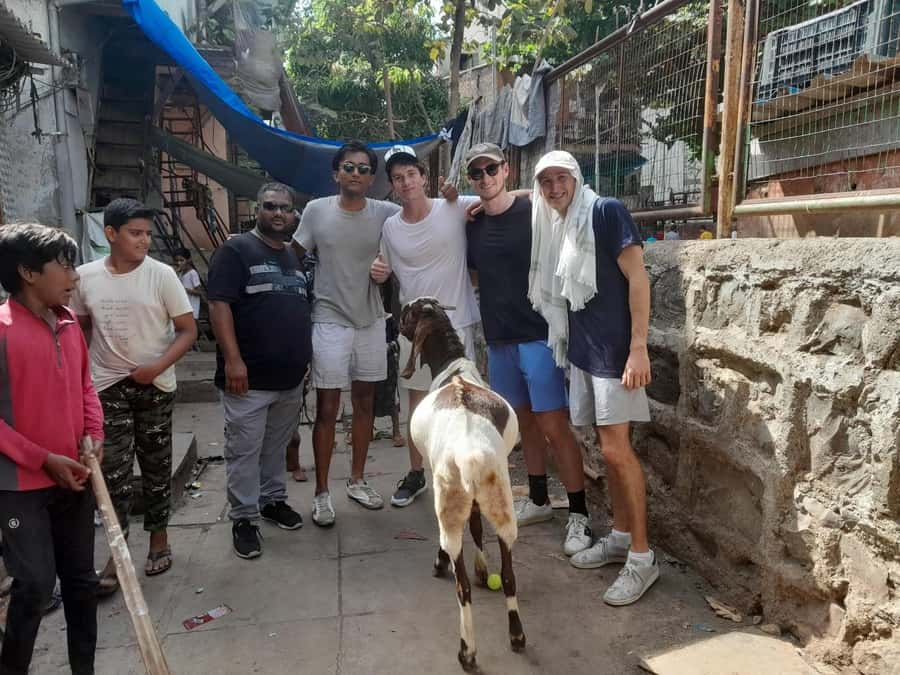
Dharavi is home to families from many parts of India, with different languages spoken within the community. That diversity helps explain why the area has such a broad mix of trades, customs, and daily routines.
You will also see how closely community life and business can be linked. A school, market, workshop, and home may all be close together. This is not a detached commercial district where people leave at the end of the workday.
The tour’s most useful message is that residents are not defined only by hardship. They are also business owners, craftspeople, workers, parents, students, and neighbors. At the same time, you should not let a positive description erase the challenges of living in a very crowded setting.
That balance is worth keeping in mind during the walk. You are there to learn, not to judge or to collect dramatic images. Follow the guide, keep your voice low in residential areas, and ask questions with care.
What the guide adds to the experience
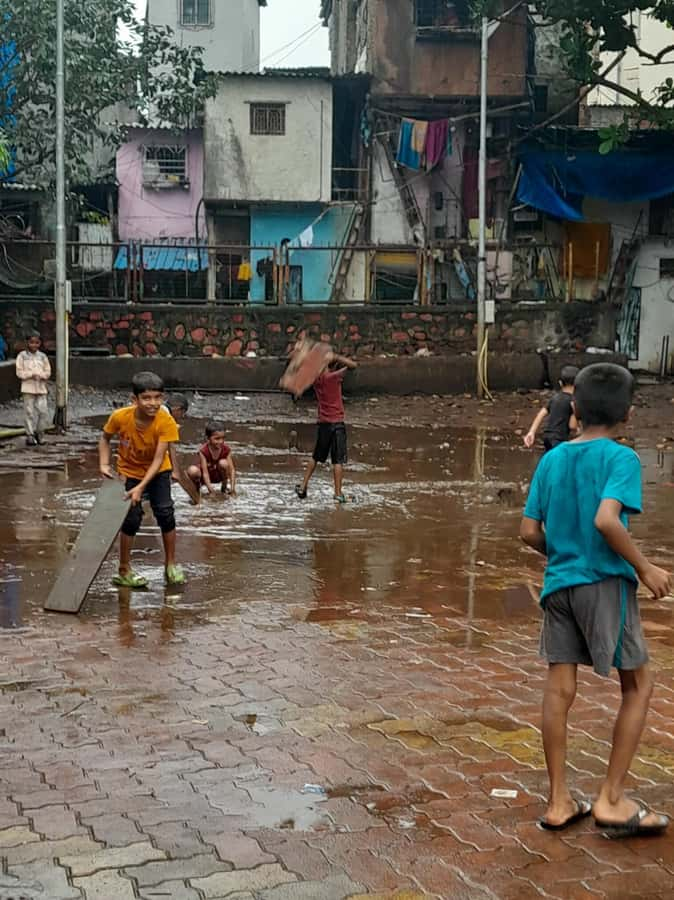
The guide can make or break this tour. The route crosses busy public areas and a community where signs and visual clues may not explain what is happening.
The strongest feedback about the guiding centers on friendly service, clear English, and detailed explanations. Shivam is specifically associated with the tour and is described as knowing Dharavi extremely well. That suggests you can expect help making sense of the area, rather than simply being led from one point to another.
The guides are local and have long-standing ties to Mumbai’s slum communities. This gives the tour a more personal connection than a generic city walk, though you should still remember that a short visit cannot capture every part of Dharavi.
I like the fact that the guide links the three stops. Dhobi Ghat, the flower market, and Dharavi can seem unrelated at first. Together, they show different kinds of work that support Mumbai’s daily life.
Practical value, costs, and comfort
At $9, this is one of the easier Mumbai experiences to justify financially. The ticket includes the guide, train ticket, taxi fare, and bottled water. You only need to budget for snacks and a tip if you choose to give one.
The price does not mean the tour is effortless. You should wear walking shoes and be ready for a train ride, a taxi transfer, and walking through narrow lanes. The activity ends back at the Churchgate meeting point, which is helpful for planning your next stop.
No duration is provided, so I would avoid scheduling an important appointment immediately afterward. The route includes several neighborhoods and transport stages, and the pace may depend on local conditions.
The cancellation policy is flexible: you can cancel up to 24 hours in advance for a full refund. You can also reserve now and pay later, which helps if your Mumbai plans are still changing.
Who should book this tour?
I would recommend it to first-time Mumbai visitors who want more than landmark photographs. It suits people interested in local transport, working communities, urban economics, and the human side of the city.
It is also a good choice if you are watching your budget. Few tours at this price include both public transport and a taxi, along with a local guide and water.
I would think twice if you need a spacious, slow-paced outing or if you are uncomfortable walking through poor neighborhoods. Dharavi should be visited with respect, and some parts of the experience may feel confronting.
The tour is also a good match for photographers, but photography should come second to courtesy. Ask before taking close-up pictures, follow the guide’s advice, and remember that the people you see are at work or at home.
Should you book it?
Book this tour if you want a direct look at Mumbai’s working life and you are comfortable with public transport, crowded streets, and a socially sensitive subject. The combination of Dhobi Ghat, the flower market, and Dharavi gives you three distinct views of the city in one affordable outing.
Skip it if you want polished sightseeing, private transport throughout, or a relaxed schedule with little walking. For the right visitor, the $9 price is excellent value, especially because the train ticket, taxi fare, guide, and water are included. The best reason to go is not the label attached to Dharavi, but the chance to see the skill, effort, and enterprise that shape everyday Mumbai.
FAQ
How much does the tour cost?
The tour costs $9 per person.
What is included in the price?
The price includes a tour guide, train ticket, taxi fare, and bottled water.
Are snacks included?
No. Snacks are not included, so you should eat before the tour or budget separately for food.
Where does the tour start?
The guide meets you inside Churchgate station at the train ticket counter, near the Wheelers bookstall.
Where does the tour end?
The activity ends back at the meeting point at Churchgate station.
Is the train ticket included?
Yes. The train ticket is included in the tour price.
Is the taxi fare included?
Yes. The taxi fare for the short ride after Dhobi Ghat is included.
What language is the tour offered in?
The tour is offered in English.
What should you bring?
Bring comfortable shoes, a camera, and water. Bottled water is also included.
Can you cancel for a full refund?
Yes. You can cancel up to 24 hours in advance for a full refund. You can also reserve and pay later.
New market tours around Mumbai
- Mumbai: Local Markets & Temples Tour★ 4.6 · 45 reviews
- Night Tour: Mumbai’s Nights & Buzzing Bazaars★ 5.0 · 7 reviews
- Mumbai Morning Market Tour of Flowers, Fish, and More★ 5.0 · 100 reviews
- Mumbai Street Food Tour with Evening Bazaar Walk★ 4.9 · 79 reviews
- Mumbai Heritage, Street Food & Bazaar Walking Tour★ 5.0 · 4 reviews
- Mumbai Market and Temple Tour With Cow Shelter Visit★ 4.3 · 3 reviews
- Mumbai: Magical Markets Tour★ 4.5 · 23 reviews
- Mumbai Market Tour★ 4.6 · 12 reviews
Mumbai Market Tours, side by side.


Ultimate Mumbai Full Day: Sights, Bollywood Dance, Lunch & Spices
Read our review →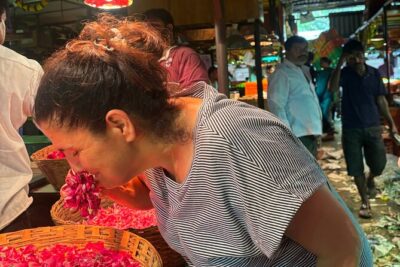
Mumbai Morning Market Tour of Flowers, Fish, and More
Read our review →