
Review · KATHMANDU
Kathmandu Food Crawl & Market Tour
Kathmandu’s food story is easiest to understand one bite at a time. This two-hour walk takes you from Chhaya Center into Ason Bazar, where food stalls, old trading lanes, crafts, religious traditions, and everyday shopping all share the same crowded space. The central draw is local food served in local places, not a polished restaurant menu.
I like two things here. First, Santosh Pandey gives the walk a personal touch, explaining ingredients, Nepalese food habits, religion, and daily life as you move through the market. Second, the food allowance is generous: at least five items with drinks, and the tasting portions may add up to nearly two full meals. The main consideration is time. Two hours passes quickly, and the narrow market lanes can feel intense if you prefer slow, spacious sightseeing.
Key points to know before you book
- Ason Bazar is the main setting: You visit one of Kathmandu’s oldest local markets rather than staying in a tourist-only food area.
- Santosh Pandey leads the walk: He speaks English and explains food, culture, history, religion, and ordinary life in Nepal.
- At least five foods and drinks are included: Portions can be much larger than simple samples, so arrive hungry but not starving.
- Newari cooking is central: You may taste foods such as yomari, samay baji, chatamari, and other local specialties described in the experience.
- The route includes narrow market passages: That adds a sense of discovery, but it may not suit you if you dislike tight, busy lanes.
- The walk begins and ends at Chhaya Devi Complex: You do not need to arrange separate transport between the meeting point and market.
Why Kathmandu’s market food tells the better story
A restaurant can give you a good meal. A market gives you the setting around it: the ingredients, the shoppers, the old customs, and the quick exchanges between vendors and locals. That is what makes this experience useful during a first visit to Kathmandu.
Ason Bazar is not presented as a staged food show. It is a working market with food, crafts, religious items, and daily shopping taking place around you. You get a glimpse of Newar traditions along with the influence of Tibetan, Indian, and wider Nepali cooking.
The cultural side matters because Kathmandu food is not one single cuisine. Newari dishes reflect the traditions of the indigenous Newar community, while popular street foods show influences from nearby regions and communities. A guide can help you understand why a dish is eaten, how it is prepared, and what its ingredients mean in everyday cooking.
I also like that the walk includes crafts and traditions, not just plates of food. You can connect the food to the people who make, sell, and eat it. That gives the two hours more substance than a simple list of snacks.
More market tours around the world:
- Bangkok: Damnoen Saduak Market and Maeklong Railway Market
★ 4.5 · 26,723 reviews - The Old Siam: Damnoen Saduak and Maeklong Railway Market
★ 4.5 · 10,992 reviews - Dubai: Old Town, Creek, Museums, Souks, & Street Food Tour
★ 4.8 · 10,816 reviews
Meeting at Chhaya Devi Complex
The starting point is the main gate of Chhaya Devi Complex, also called Chhaya Center. This is important because the market streets themselves can be confusing, and meeting at a clear landmark makes the beginning easier.
From there, the group heads toward the market area for the food walk. No separate sightseeing transfer is included or needed during the stated route. The experience returns to Chhaya Center at the end, so you can plan another activity from the same general area.
The tour lasts two hours. That is a good length for an introduction, especially if you are new to Nepali food and want a guided start rather than a full-day food expedition. At the same time, you should not expect an extensive tour of every market lane or a long sit-down meal. The pace needs to keep moving so you can fit in several tastings and the cultural explanation.
Walking through Ason Bazar
Ason Bazar is the heart of the outing. It is described as Kathmandu’s oldest local market, and the value of visiting it comes from seeing ordinary commerce mixed with older traditions.
You may pass food sellers, local shoppers, craft displays, and religious or cultural details as the walk unfolds. The market is not simply a backdrop for eating. It is part of the lesson, showing you how food fits into city life.
The narrow passages add character and a little adventure. One food stop may be tucked into a lane you would not think to enter on your own. That is a real benefit of having Santosh with you, since a guide can lead you through places that are not obvious from the main street.
There is a trade-off. Tight market lanes are not the place for a relaxed, open-air stroll. You may need to pay attention to where you step and keep close to the group. If you enjoy active city walks, this adds energy. If you prefer quiet streets and plenty of personal space, the market may feel crowded.
The Newari dishes worth understanding
Newari food is one of the most distinctive parts of the experience. You are introduced to dishes tied to the Newar community, rather than receiving only familiar versions of momo or generic South Asian snacks.
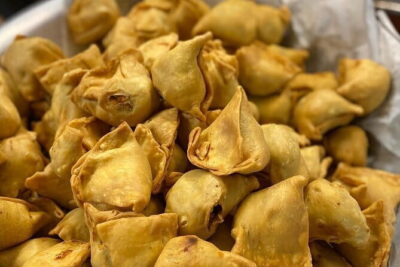
Yomari is a steamed dumpling with a sweet filling of molasses and sesame seeds. It gives the food walk a dessert-like note and shows how simple ingredients can produce a dish with a strong local identity.
Samay baji is a ceremonial platter rather than one small snack. It can include beaten rice, spiced buffalo meat, and several kinds of pickles. The combination gives you a better sense of how texture and spice work together in Newari cooking.
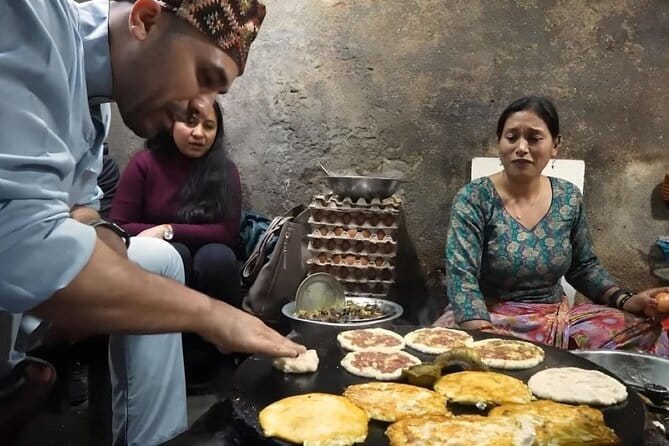
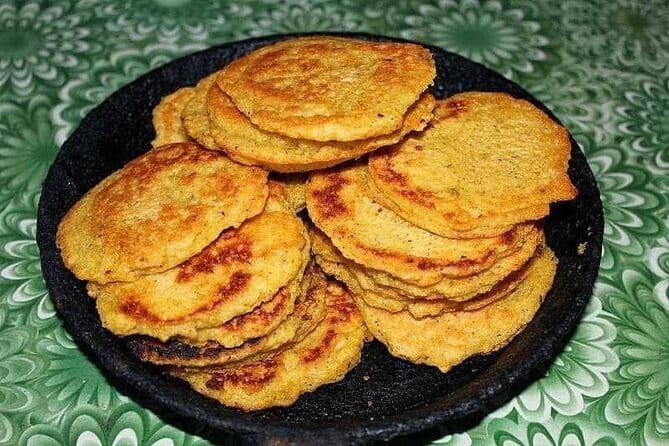
You may also encounter chatamari, often described as Newari pizza. The comparison helps first-time eaters understand its general form, but it should not make you expect Italian pizza. It is a local dish with its own ingredients and cooking tradition.
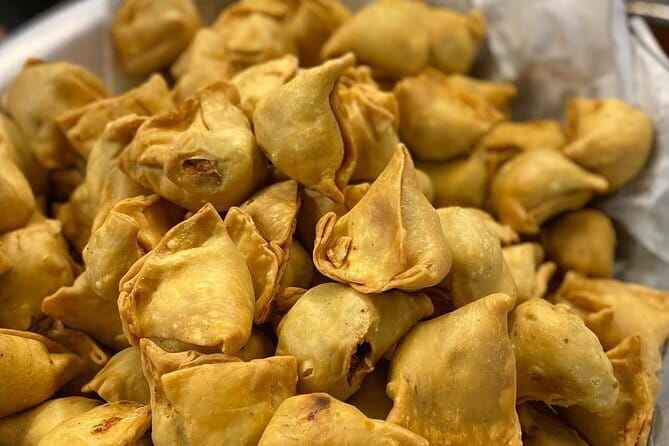
Momo dumplings are another likely highlight. Kathmandu serves them in many forms, and a guide can help you notice differences in filling, seasoning, and preparation. They are familiar enough for cautious eaters but still firmly connected to the city’s food culture.
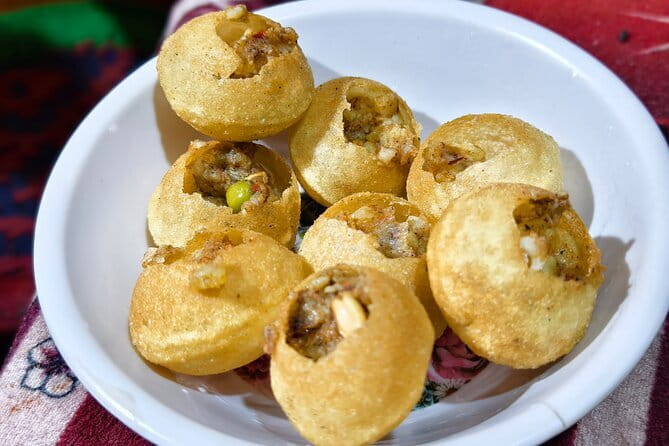
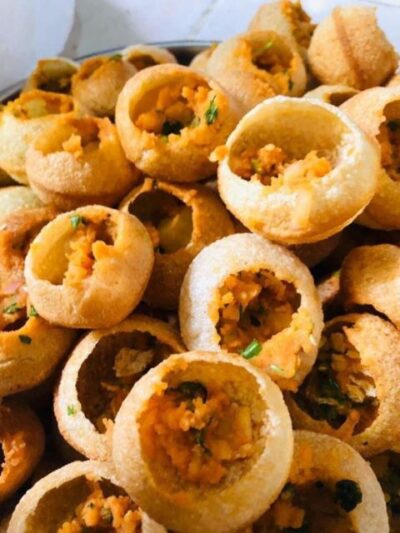
Laphing adds something quite different. This cold, spicy mung bean noodle dish is popular with locals and may appeal to you if you enjoy sharp heat and unusual textures. It is not the safest first choice for someone who avoids spice, though the tour gives you a chance to ask about ingredients before eating.
The exact sequence of dishes can vary, so you should treat these foods as examples of what the experience focuses on, not a guaranteed fixed menu. The confirmed promise is at least five food items with drinks.
Same city, another market:
- Bangkok: Train Market & Floating Market with Boat Ride
★ 4.7 · 9,547 reviews - Dubai: Old Town, Souks, Street Food, Guided Tour & Abra Ride
★ 4.9 · 7,170 reviews - From Bangkok: Ayutthaya & Ayothaya Floating Market Day Trip
★ 4.7 · 6,084 reviews - Dubai: Frame Tickets, Creek, Souks & Blue Mosque Guided Tour
★ 4.8 · 5,980 reviews
What the tasting format is really like
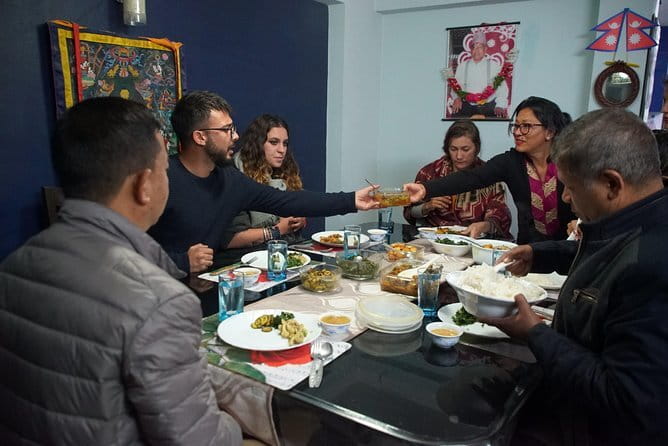
The word tasting can make you picture tiny bites. That may not be the case here. The food included can be plentiful, with several samplings together approaching two full meals.
This is excellent value for people who want to try widely without paying separately at each stop. You can sample dishes that you might hesitate to order in a restaurant, then decide what you like enough to seek out again.
The generous portions also create one practical problem: do not eat a large meal immediately before meeting the guide. You will get more from the walk if you leave room for several dishes. At the same time, a completely empty stomach is not ideal if you are unsure how strongly spiced food will affect you.
Drinks are included, which makes the $28 price easier to assess. You are paying for food, drinks, a guide, and access to places that may be difficult to find without local help. Government taxes and official expenses are also included, while personal expenses are not.
Personal spending is worth remembering. If you want to buy crafts, extra food, or other items in the market, those purchases are separate. That is not a flaw, but you should carry some room in your budget if browsing turns into shopping.
Santosh Pandey’s role in the walk
A food guide is most useful when the conversation goes beyond naming dishes. Santosh Pandey is described as an English-speaking guide who explains the food as well as Kathmandu and Nepal.
His role includes pointing out ingredients, discussing local food preferences, and giving context about religion, customs, and daily life. This is particularly helpful in Ason Bazar, where it can be hard to know what you are looking at or why a particular item matters.
The walk also allows room for conversation. You can ask questions about Nepalese life while moving between food stops rather than listening to a long speech in one place. That makes the experience feel more like a local introduction than a standard sightseeing circuit.
The guide’s presence is also useful for dietary questions, though the available information does not promise special menus or allergy accommodations. If you have food restrictions, explain them before tasting anything and confirm the ingredients directly with the guide.
Value at $28 per person
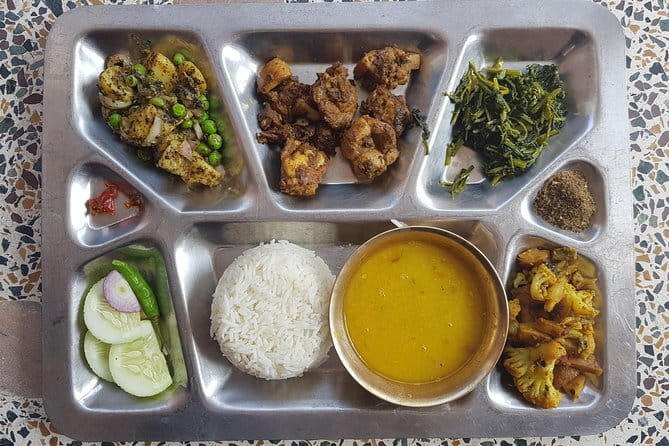
At $28 per person, this is a reasonable price for a short, food-focused introduction to Kathmandu. The value comes from the combination of at least five foods, drinks, a private local perspective on the market, and English-language guiding.
If you visited restaurants alone, you might spend less or more depending on what you ordered, but you would not automatically get the route through Ason Bazar or the explanations about Newari culture. You would also risk missing food stalls tucked away from the main streets.
The strongest value is for someone who wants variety. Instead of committing to one large plate, you can try sweet yomari, savory chatamari, momo, spicy laphing, and dishes associated with samay baji. The more adventurous your appetite, the more useful the price becomes.
The value is weaker if you want a formal cooking lesson, a long historical tour, or a full afternoon of eating. The experience is only two hours, and its purpose is sampling and orientation. Think of it as a focused introduction that can guide your later food choices in Kathmandu.
Who will enjoy this most
I would recommend the walk to first-time visitors who want an easy entry into local food without having to plan every stop. It also suits people who enjoy city walks, markets, conversation, and trying dishes they may not recognize.
It is a good fit for couples and small groups who want a shared food experience. The included quantity is especially helpful if you would rather sample several things than order one dish each at a restaurant.
Food-focused explorers will get the most from it. You can use the walk to identify flavors, dishes, and market areas worth revisiting later. It is also useful for cautious eaters because the guide can explain what is on the plate before you take a bite.
I would think twice if you dislike crowded markets, narrow lanes, or unfamiliar foods. The tour is not built around luxury, quiet seating, or a controlled dining room. It is built around local streets and ordinary market life, with all the movement that involves.
Timing, cancellation, and practical planning
Starting times should be checked when you book, since the listed duration is two hours rather than a fixed daily departure. The activity is conducted in English with a live guide.
You can cancel up to 24 hours in advance for a full refund. You can also reserve now and pay later, which helps if your Kathmandu schedule is still changing.
Wear comfortable shoes because the experience involves walking through market areas. Keep your belongings secure and avoid carrying more than you need in crowded lanes. Those are sensible precautions for any busy city market, and they help you focus on the food and conversation.
The tour includes all food and drinks promised by the operator, but personal purchases are not covered. Bring extra money only if you plan to shop or buy additional items.
A few limits to keep in mind
The menu is not presented as a fixed, printed list. The experience describes several likely Newari and street-food specialties, but availability can vary. If one particular dish is your main reason for booking, ask about it before the walk begins.
The two-hour length also limits the amount of history and market exploration you can cover. You will receive cultural context, but this is not a full historical tour of Kathmandu.
The portions can be surprisingly large. That is good value, yet it means the experience may feel more like a substantial meal than a light snack crawl. Plan your day accordingly, especially if you have a dinner reservation soon after.
Finally, the quality of the experience depends partly on your willingness to try. You do not need to eat everything, but the tour makes more sense if you are open to unfamiliar spices, textures, and ingredients.
Should you book the Kathmandu Food Crawl?
Book it if you want a short, affordable way to meet Kathmandu through its food and markets. The strongest reasons are the generous food allowance, the visit to Ason Bazar, the focus on Newari traditions, and Santosh Pandey’s conversational guidance.
I would choose this early in a Kathmandu visit. The walk can help you recognize dishes and understand the city before you start eating on your own. It is less suitable for anyone seeking a polished restaurant meal or a quiet cultural lecture.
At $28, the experience offers more than five tastings, drinks, a market walk, and local explanation in two hours. Arrive hungry, wear comfortable shoes, and keep an open mind. If those sound like good travel rules to you, this is a practical first taste of Kathmandu.
FAQ
Where does the Kathmandu food crawl begin?
The meeting point is the main gate of Chhaya Devi Complex, also known as Chhaya Center.
How long does the tour last?
The food crawl and market visit last two hours.
Where does the tour go?
The experience visits Kathmandu’s Ason Bazar and nearby local market areas before returning to Chhaya Center.
Who guides the tour?
The experience provider is Santosh Pandey. The tour includes an experienced, friendly English-speaking guide.
How many foods and drinks are included?
At least five food items with drinks are included. The portions may be large enough to add up to nearly two full meals.
Which foods may I taste?
The experience focuses on local foods and Newari cuisine. Examples include yomari, samay baji, momo, chatamari, and laphing, though the exact selection is not listed as a fixed menu.
Can I cancel the booking?
You can cancel up to 24 hours in advance for a full refund. You can also reserve now and pay later.
New market tours around the world
- Tel Aviv: 2-Hour Carmel Market Tour in English with Lunch★ 4.8 · 23 reviews
- Tel Aviv: Carmel Market & Neighborhood Guided Walking Tour★ 4.7 · 3 reviews
- Tel Aviv: 2-Hour Jaffa Flea Market Tour with Tastings★ 4.9 · 8 reviews
- Tel Aviv: Carmel Market Food Tasting Tour “Shuk Hacarmel”★ 4.0 · 8 reviews
- Tel Aviv: 2-Hour Levinsky Market Tour with Full Lunch★ 4.7 · 10 reviews
- Tbilisi 2 Parks: Turtle Lake & Dedaena Park with Flea Market★ 5.0 · 3 reviews
- Tbilisi: Street Food & Sightseeing Tour with Local Markets★ 5.0 · 8 reviews
- Teguise: Market and César Manrique Foundation Tour★ 4.3 · 39 reviews
Kathmandu Market Tours, side by side.
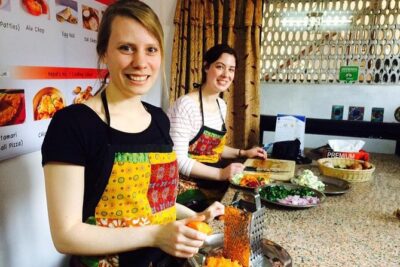
Best Nepali Cooking Class in Thamel with Local Market Trip
Read our review →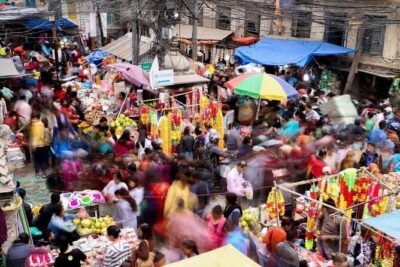
Oldest Local Market Walking Tour With Living Goddess Kumari
Read our review →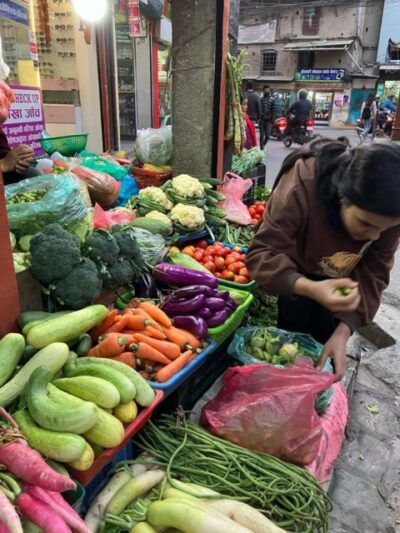
Half Day Cooking Class in Thamel with Local Market Visit
Read our review →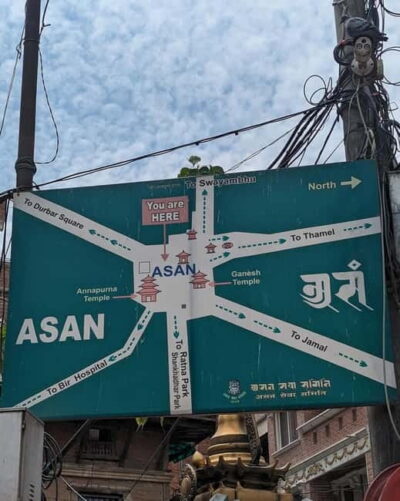
From Bazaar to Hippie Hub: Ason & Freak Street in Kathmandu
Read our review →This tour also appears in