Review · INDIA
London of Orient Heritage Walking Tour With Flower Market
Kolkata’s colonial core and its flower market make an excellent pair. You begin at Writer’s Building, once the headquarters of British power in India, then walk past grand 19th-century buildings before taking a yellow cab to Mullick Ghat beside the Hooghly River. I like the clay-cup tea and the way the tour joins political history with everyday Kolkata life. I also like the short cab ride, which gives your feet a rest and adds a local touch.
The main drawback is the walking itself. You are on your feet for 2.5 to 3 hours, and the route is not suitable for people with mobility impairments or pregnant women. Wear closed, comfortable shoes, since open-toed footwear is not allowed.
Key points to know before booking
- Begin at Writer’s Building: Start at Gate 5 and hear how Kolkata became the center of British administration in India.
- Sip tea in a clay cup: Kolkata special khullar tea is included, giving you a small but memorable local custom along the way.
- See the colonial business district: Tank Square, the Grand Post Office, and old insurance buildings fill the walk with architecture and stories.
- Ride a yellow cab: Your included local taxi connects the walking route with the flower market.
- Finish at Mullick Ghat: The market supplies flowers for pujas, weddings, birthdays, funerals, and other ceremonies.
- Plan for a real city walk: Bring sunglasses, use closed shoes, and expect an English-language tour lasting about three hours.
Starting at Writer’s Building, the former seat of power

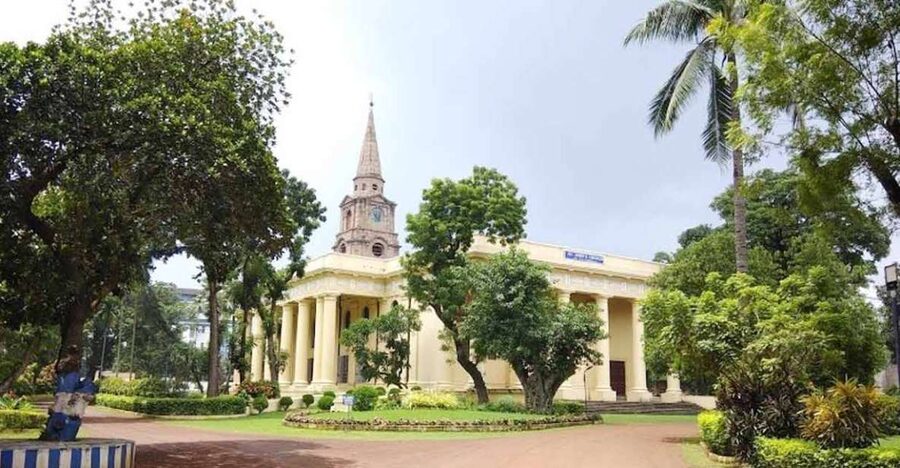
Meet your guide at Gate 5 of Writer’s Building. This landmark gives the tour a strong opening because it was not simply an attractive old building. It was the headquarters of the British administration when Kolkata, then Calcutta, served as the capital of British India.
That background gives the first part of the walk a clear purpose. You are not looking at old facades one by one without context. You are tracing the part of the city built to govern an empire, manage trade, and handle the paperwork of colonial rule.
The tour description places the walk in the 19th century, a period when British Calcutta took shape through offices, banks, insurance companies, postal services, and other institutions. Your guide explains how these buildings worked together, while pointing out the architectural details that remain.
The opening tea is a good touch. You receive Kolkata special khullar tea in a small clay cup, a traditional style of serving tea that makes a simple refreshment feel tied to the place. The tour information also refers to hot Calcutta tea and bubble tea, but the included drink is specifically described as Kolkata tea served in a clay cup. If the tea matters to you, this is the version to expect.
More Flower and Flea Market Tours in India
- Jaipur Tuk-Tuk Tour with Flower Market Visit
★ 5.0 · 124 reviews - Jaipur Tour by Tuk-Tuk or Car with Flower Market
★ 5.0 · 120 reviews - Jaipur: Half-Day Guided Sightseeing Tour with Flower Market
★ 4.9 · 119 reviews
Tank Square and the shape of British Calcutta
From Writer’s Building, the route continues through the old colonial district toward Tank Square. The square gives you a useful sense of scale. Instead of seeing isolated buildings, you begin to understand how public spaces, offices, and commercial structures were arranged around the center of administration.
The architecture is one of the main reasons to choose this walk. The buildings reflect several 19th-century styles, and the guide connects their appearance with the city’s role as the capital of British India until 1911. You will hear stories about the people and institutions that shaped this part of the city, not just dates and construction details.
I like this approach because colonial architecture can become dull when it is treated as a parade of facades. Here, the story is meant to explain what went into making Calcutta a colonial capital. That makes the route useful for a first look at the city, especially if you want a framework for later sightseeing.
The area is also part of an ongoing effort to restore and beautify the heritage district. That means you may see a mix of carefully maintained buildings, weathered surfaces, and work still waiting to be done. Do not expect a polished open-air museum. The charm is in seeing an old administrative quarter still woven into a working city.
The Grand Post Office and former insurance buildings
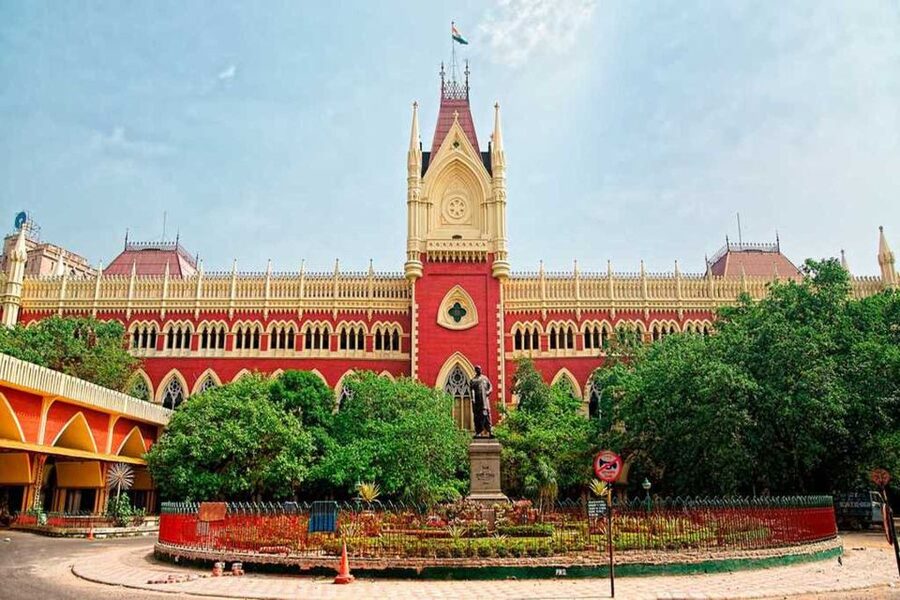
The Grand Post Office is another major stop. Postal systems were essential to government and commerce, so this building helps widen the story beyond military and political power. You get a sense of how messages, documents, money, and official business moved through the colonial capital.
The route also passes numerous insurance buildings from the British period. These are easy to overlook if you are walking alone. A guide gives you a reason to pause and examine them, especially their entrances, upper levels, columns, and other design details.
The supplied information does not name the individual guide, so you should not book expecting a particular person. What is clear is that the tour is conducted in English and relies heavily on spoken explanation. The quality of your visit will depend on how well the guide brings the buildings to life, but the planned route gives that conversation plenty to work with.
A practical point: this is a sightseeing walk, not a tour centered on entering every building. Entry fees are included, though the itinerary mainly describes seeing the colonial district and visiting the Grand Post Office. Ask your guide on the day if a particular interior visit is part of the route.
A yellow cab ride to Mullick Ghat
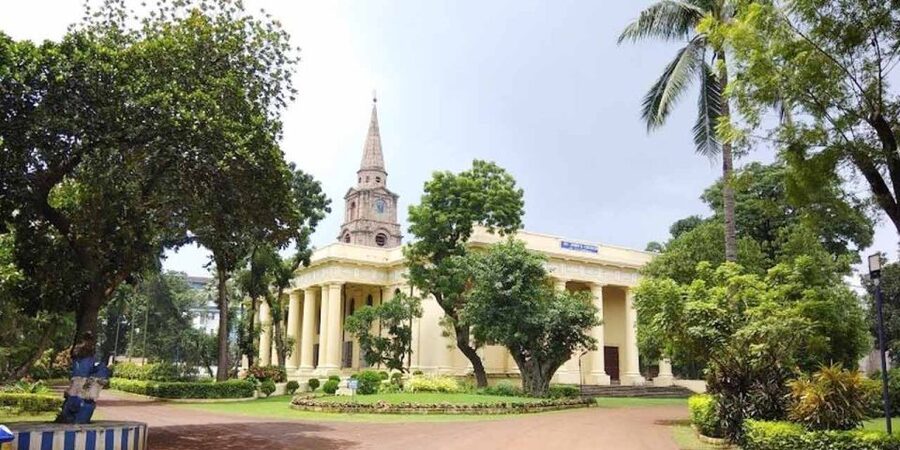
After the walking portion, you take a local yellow cab to Mullick Ghat flower market. The cab ride is included, and it is more than a transport detail. Kolkata’s yellow taxis are part of the city’s visual identity, so the ride adds a small piece of ordinary local life between the colonial district and the market.
It also breaks up the pace. After several hours on foot, a short ride is welcome. The exact length of the cab journey is not given, so do not treat it as a sightseeing drive with a set list of stops. Its purpose is to connect the two main parts of the experience.
Pick-up and drop-off can be arranged, but the stated meeting point is Writer’s Building Gate 5, and the activity ends back at the meeting point. Since the return arrangement may depend on what you book, confirm it before paying if you need transport to or from your hotel.
More Market Walking Tours in India
- Private Heritage Walking Tour in Jaisalmer Fort and Old Bazaar
★ 5.0 · 306 reviews - Jaipur Bazaar & Food Walking Tour
★ 5.0 · 281 reviews - Old Delhi: Spices, Heritage and Bazaars Walking Tour
★ 5.0 · 173 reviews - Bengaluru Pete City Market Half-Day Walking Tour
★ 5.0 · 163 reviews
Mullick Ghat, Kolkata’s flower center
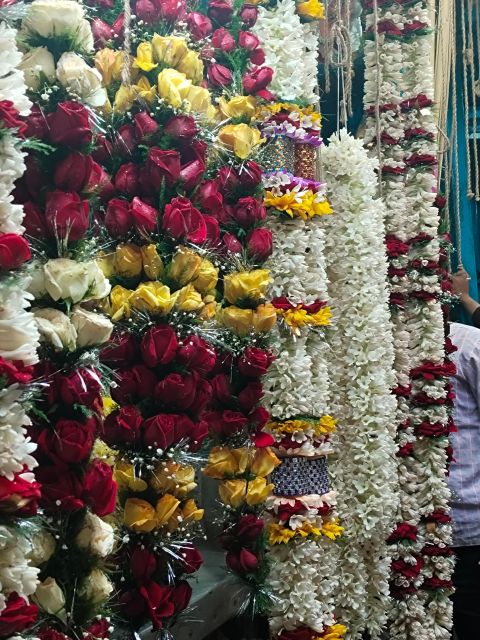
Mullick Ghat is the tour’s most colorful finish. The market sits beside the Hooghly River and supplies flowers for pujas, weddings, birthdays, funerals, and other ceremonies. That range of uses tells you why the market matters. Flowers here are not only decoration. They are part of family events, religious practice, public ritual, and daily commerce.
This is a very different experience from the formal colonial quarter. At Writer’s Building, you focus on government, architecture, and empire. At Mullick Ghat, you see a marketplace tied to local custom and celebration. The contrast is the point.
Expect a busy market setting rather than a quiet garden visit. The supplied details do not promise a guided shopping session, flower arranging, or a set amount of free time. You are going to see the market and learn why it matters to Kolkata. If you want to take photographs, bring sunglasses and keep your belongings secure in the crowd.
The market also gives the tour an ending with more human energy than another colonial building would provide. You finish with a sense of how the city’s past and present sit close together: formal offices and grand facades on one side, flowers prepared for ceremonies on the other.
Why the tea and market combination works

The included tea is a small feature, but it helps set the tone. A clay cup connects the refreshment to a local habit, and the pause gives you time to settle into the walking pace. It is not a meal, and no food or other drinks are included, so eat beforehand or plan another meal afterward.
The flower market then provides the strongest sensory contrast. The tour moves from stone buildings and administrative stories to flowers, ritual, commerce, and the riverside setting. I like that the experience does not treat colonial history as the whole story of Kolkata. You get one chapter of the city, then a glimpse of another world that still shapes local life.
That said, the tour is not designed as a food walk or a broad introduction to every side of Kolkata. The tea is the only included refreshment, and the focus remains on the colonial district and Mullick Ghat. Choose it for this particular pairing rather than expecting a general city tour.
What $36 gets you
At $36 per person, the value comes from the guide, the planned route, the included entry fees, tea, and yellow cab ride. The price is reasonable if you would otherwise need to arrange transport between the colonial center and Mullick Ghat, while also finding the right buildings and understanding their role.
A self-guided walk would cost less, of course. But it would be easy to pass Tank Square, the Grand Post Office, and the old insurance buildings without knowing why they matter. The guide is the main reason to pay for this experience.
The tour is also a manageable length. At 2.5 to 3 hours, it is long enough to give the colonial quarter real attention but short enough to fit into a busy Kolkata itinerary. You still need to allow extra time for getting to Gate 5 and for any onward plans after the activity ends.
All entry fees are included. Food and drinks beyond the Kolkata tea are not included. Reserve and pay later is available, which can help if your plans are still changing, and cancellation is allowed up to 24 hours before the tour for a full refund.
Who will enjoy this walk most
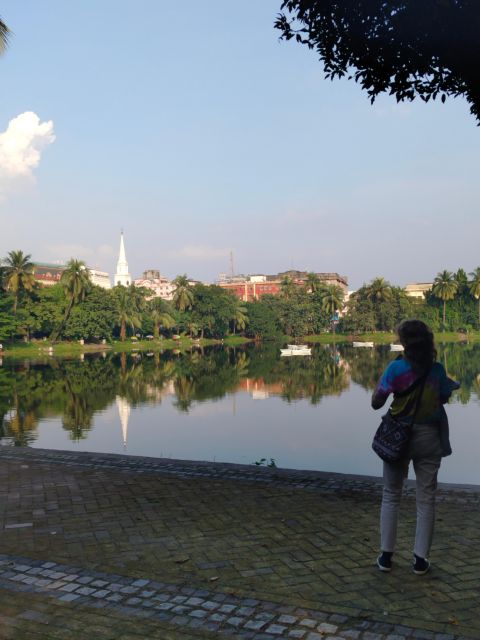
I would choose this tour if you like urban history, old architecture, and tours where the guide’s explanation matters as much as the sights. It is especially useful for a first visit because it gives you a clear introduction to British Calcutta before showing you a very different working market.
It also suits anyone who wants a short, focused activity rather than a full-day excursion. The clay-cup tea and yellow cab make it feel less formal than a museum visit, while the flower market adds a strong local element.
You should think twice if long walks are difficult for you. The tour is not suitable for people with mobility impairments or pregnant women, and open-toed shoes are not allowed. Wear closed shoes with good comfort, bring sunglasses, and remember that the experience includes a city market rather than a quiet, controlled attraction.
The two available ratings are both five out of five. One highlights a guide who was attentive to personal needs and provided plenty of information. Another points to the historical facts, tea, flower market, and yellow cab as the best parts. Those comments match the design of the experience: the guide and the contrast between stops are its strongest features.
Should you book the London of Orient Heritage Walking Tour?
Book it if you want to understand Kolkata through two sharply different settings: the former center of British administration and the flower market that serves the city’s ceremonies. The route is compact, the cab ride is included, and the tea in a clay cup gives the morning or afternoon a local detail that costs little but adds character.
Skip it if you want a food tour, a long list of museum interiors, or a relaxed outing with very little walking. For the right visitor, $36 is a fair price for the guide’s historical explanation, entry fees, tea, and taxi connection. Just arrive ready to walk, wear closed shoes, and leave room in your schedule for the market to be the lively final stop.
FAQ
Where does the tour start?
The tour starts at Gate 5 of Writer’s Building in Kolkata.
Where does the tour end?
The activity ends back at the meeting point.
How long does the walking tour last?
The walk lasts about 2.5 to 3 hours.
What language is the tour conducted in?
The tour is conducted in English.
Is tea included?
Yes. Kolkata special khullar tea served in a clay cup is included as a refreshment.
Is the yellow cab ride included?
Yes. A local yellow cab ride to Mullick Ghat flower market is included.
Is food included?
No. Food and drinks other than the included tea are not included.
What should I bring and wear?
Bring sunglasses and comfortable shoes. Open-toed shoes are not allowed.
More market history around India
- Experience Bangalore – City Tour, Authentic Food & market (Food/Culture/History)
★ 5.0 · 156 reviews - Heritage Walk, Local Markets & Food Tasting – Non Touristy
★ 5.0 · 11 reviews - Mumbai Heritage, Street Food & Bazaar Walking Tour
★ 5.0 · 4 reviews - Private Excursion to Floating Market and Ayutthaya World Heritage
★ 5.0 · 515 reviews
New market tours around India
- Mumbai: Local Markets & Temples Tour★ 4.6 · 45 reviews
- Old Delhi: Spices, Heritage and Bazaars Walking Tour★ 5.0 · 173 reviews
- Old Delhi Street Food and Spice Market Tour★ 5.0 · 12 reviews
- Old Delhi Temples and Spice Market Tour★ 5.0 · 5 reviews
- Old Delhi: Khari Bawli – Asia’s Largest Spice Market★ 5.0 · 3 reviews
- Night Tour: Mumbai’s Nights & Buzzing Bazaars★ 5.0 · 7 reviews
- Mysore: Palace, Art Gallery & Devaraja Market Walking Tour★ 5.0 · 7 reviews
- Mumbai:Dhobi Ghat Laundry,Dharavi Slum & Flower market Tour★ 5.0 · 12 reviews
India Market Tours, side by side.


Old Delhi Food-Spice Market-Temples Tour Soon Featured on NETFLIX
Read our review →Old Delhi Odyssey: A Tour of Religion, Spice Market, & Best Food
Read our review →

Ultimate Mumbai Full Day: Sights, Bollywood Dance, Lunch & Spices
Read our review →
Old Delhi: Spices, Heritage and Bazaars Walking Tour
Read our review →